The MHA Board of Trustees’ Nov. 12 meeting featured presentations from board members Ed Ness, president and CEO, Munson Healthcare; Lydia Watson, president and CEO, MyMichigan Health; and Karen Cheeseman, president and CEO, Mackinac Straits Health System, on their organizations’ response to the ice storm that struck northern Michigan in spring 2025.
The three board members shared photos and provided details on how each health system acted quickly to obtain alternate fuel sources, safely store and distribute food and medication, provide warming centers, and secure transportation for staff and patients. They also described the transportation challenges caused by the extended closure of the Mackinac Bridge and widespread road closures from downed power lines, many of which took weeks to clear and restore. The board members commended the dedication and resourcefulness of their staff and communities, emphasizing the importance of developing detailed emergency preparedness plans that address long-term scenarios.
The board welcomed James Holcomb, president and CEO, Michigan Chamber of Commerce, who outlined the Chamber’s legislative priorities and opportunities for collaboration with the MHA on key issues aimed at preserving and promoting economic growth. Holcomb highlighted the essential role hospitals and healthcare providers play as major employers across Michigan. Board members reviewed the MHA’s 2025-26 Strategic Action Plan, which identifies the protection of patient access to care, workforce support, support for mental and behavioral health, and creating healthy communities as its key priorities. The board approved a new Type 1 member, Southridge Behavioral Hospital; two Type 2 members, The Morel Company and Skill Trade; and six new individual physician members.
Questions about MHA Board of Trustees meetings should be directed to Amy Barkholz at the MHA.
The MHA has granted funding to seven institutions to support development or expansion of hospital-based peer recovery coach (PRC) programs. The funding will support the addition of 18 new hospital-based PRCs and expand treatment options for patients with a substance use disorder (SUD).
The MHA recently issued a request for proposals for a competitive grant program for Michigan healthcare entities aimed at developing or expanding hospital-based peer recovery coach programs. Funding for this effort was made available by the Michigan Legislature as part of the state fiscal year 2025 budget to expand access to hospital-based PRC services.
The MHA received nine applications from organizations in seven distinct regions of the state, encompassing many innovative approaches to provide high-quality care for individuals experiencing substance use disorders.
These seven organizations, which were granted funding, are as follows:
The MHA appreciates the time and effort that went into developing applications and looks forward to partnering to expand access to SUD services across the state.
“Be sure you put your feet in the right place, then stand firm.” – Abraham Lincoln
While snow continues to fall in northern Michigan, spring is officially here, and for many, that means our weekend travel plans shift from skiing and snowmobiling to camping, hiking and boating. Rural Michigan is an amazing travel destination for many, but it also is home year-round to 20% of our state’s population, and access to affordable, high-quality healthcare remains absolutely crucial. Rural hospitals are an integral part of the local fabric of their communities, treating the ill and improving the health and well-being of their residents. They work extremely hard to make sure they’re able to provide the best quality of care, while operating on a budget with slim to nonexistent margins. In a small town, there is nowhere to hide when the hospital is experiencing challenges of any kind. This is especially true when the hospital is the largest employer in the community and a vital economic engine, which is very often the case in rural Michigan.
I recently had the opportunity to attend the annual American Hospital Association (AHA) Rural Health Care Leadership Conference, along with a number of MHA senior staff and Michigan rural healthcare leaders, including Tina Freese Decker, CEO of Corewell Health and current chair of the AHA Board of Trustees; Julie Yaroch, DO, CEO of ProMedica Charles and Virginia Hickman Hospital and current chair of the MHA Board of Trustees; and JJ Hodshire, CEO of Hillsdale Hospital, current MHA Board member and host of the Rural Health Today podcast. We focused on the latest rural health challenges and innovations, as well as our shared federal advocacy priorities. Key topics included rural obstetrical care, cybersecurity, long-term care transformation and strategic partnerships.
According to the latest U.S. census and other demographic resources, rural Americans are notably older, sicker and poorer than their urban and suburban counterparts. While rural areas currently cover 97% of the nation’s land, they are home to only 19.3% of the total population. Demographers believe that we are moving toward a future state in which an even higher concentration of the population will be in non-rural settings – and that in the next five years, more than 40% of Michigan counties will have more than a quarter of their population older than 65, with nearly all of those counties being rural. As we have learned – especially during the COVID pandemic – traditional volume-based healthcare reimbursement methods do not adequately address the fixed costs inherent in healthcare delivery, a reality that is exacerbated for rural hospitals with smaller patient volumes and more constricted resources and economies of scale.
Although Medicaid expansion (a major accomplishment resulting from MHA advocacy) improved the viability of rural hospitals – a fact that is borne out when benchmarking Michigan to non-expansion states – that funding is currently in severe jeopardy given the current state of play in Washington, D.C., as discussed at length in last month’s CEO Report. In addition, the 340B program is another critically important part of the rural healthcare ecosystem, as the cost savings from the program are used by healthcare providers to offer critically important services to everyone in their respective communities, regardless of their socioeconomic status. The MHA continues to advocate at the state and federal level, in the legislative arena and in the courts, to protect and defend the 340B program.
With guidance from the MHA Council on Small or Rural Hospitals, currently chaired by Peter Marinoff, CEO of Munson Healthcare Southern Region (see Peter’s recent insights on rural healthcare), and staffed by Lauren LaPine, MHA senior director of Legislative and Public Policy, the MHA is also advocating for continuation of the rural access pool and obstetrical stabilization fund in the state budget, and promoting good public policy with respect to critical access hospitals, rural emergency hospitals and a host of other key issues.
Our rural healthcare leaders continue to prove they are exceptional at delivering extraordinary value, despite challenging circumstances. I know from first-hand experience that our rural hospitals provide high quality care and deserve to be fully supported. And we absolutely must support them, as the fragility of the current environment is real: there have been some 151 rural hospitals that have closed across the country since 2010 due to financial variables that make it extremely difficult to maintain hospital facilities in rural areas.
Now more than ever, we need to think about our rural hospitals, stand firm and do all we can to protect these vital institutions.
The following article was written by Peter Marinoff, president and CEO, Munson Healthcare’s Southern Region and MHA Small and Rural Hospital Council Chair. National Rural Health Day celebrates the remarkable efforts of hospitals, healthcare teams, community organizations and many others who are dedicated to meeting the unique needs of rural patients and communities.
Peter Marinoff is president and CEO of Munson Healthcare’s Southern Region.
Every day, I have the honor and privilege of working alongside committed, mission-minded individuals who provide compassionate and patient-centered care to the communities we serve at Munson Healthcare. As I reflect on National Rural Health Day, I want to highlight some of the areas that continue to be top of mind, along with innovative efforts underway to support Michigan’s rural healthcare providers.
Workforce Support
Rural hospitals continue to face staffing shortages in primary care, specialized services and other clinical and non-clinical areas. With this in mind, we’re working to strengthen recruitment and retention efforts while prioritizing healthcare worker well-being.
One notable success from last year was working with the MHA to secure $75 million in workforce funding, which was designed and distributed with small and rural hospitals in mind. Additionally, we worked with the association to successfully advocate for legislation that modernized the scope of practice for certified registered nurse anesthetists (CRNAs) and allows Michigan hospitals to be flexible in choosing the anesthesia care model that best fits their patient and staff needs.
Protecting Access
Knowing our patient population is aging and often required to travel significant distances for care, we’ve had to find innovative ways to keep critical service lines accessible.
We have a phenomenal Ask-A-Nurse program at Munson Healthcare, which is a free, 24/7 call center staffed year-round by registered nurses that offer easy access to health-related information and triage services. I’d also be remiss not to mention our Virtual Urgent Care,which helps deliver care guidance to patients with non-life-threatening symptoms or illness.
Another tool rural providers often tap is the 340B Drug Pricing Program, a cost-savings initiative that helps eligible hospitals spread scarce resources to vulnerable patients with limited or no access to healthcare. My colleagues at Mackinac Straits utilize savings from the program to operate a 24-hour pharmacy, so I know they – along with many others – would echo the sentiment that 340B is essential to making care accessible in our rural communities.
Enhancing Mental and Behavioral Health Services
While there are gaps in mental and behavioral healthcare services across the state, more than 60% of rural Americans live in designated mental health provider shortage areas. With this in mind, we’ve continued to put our heads together to address the disparities impacting rural communities specifically. This includes:
Working with the MHA to advocate for an investment of $8.3 million in the 2025 fiscal year state budget to address demand for substance use disorder (SUD) services.
Utilizing grant funding specific to small and rural hospitals to expand access to pediatric inpatient psychiatric care.
Collaborating with community partners, like our Regional Community Health Opioid Initiative, to focus on efforts that address stigma, ensure safe prescribing and educate both patients and providers on SUD.
Advocating for legislation that adds nurse practitioners and physicians’ assistants into the mental health code in rural areas.
Strengthening Cybersecurity
Making sure rural hospitals have the tools and infrastructure to prevent cybercrime is critical in today’s world. Addressing vulnerabilities helps us avoid disruption to care, protect our data and avoid the financial and legal burdens that often fall on hospitals as a result of these crimes.
Thankfully the White House announced in June collaborative efforts aimed at strengthening cybersecurity for rural hospitals across the United States. When it comes to this issue, it’s important that the facilities with less resources are granted the tools necessary to safeguard data to the same degree as our urban counterparts.
I strongly believe what challenges us in rural healthcare is also what sets us apart. Join me in honoring National Rural Health Day by celebrating the compassionate, resilient and community-driven teams I’m inspired by every day.
Laura Appel, executive vice president of government relations and public policy, MHA (middle) pictured during a presentation at the Midwest Zone meeting of NAIC.
Michigan Department of Insurance and Financial Services Director Anita Fox invited the MHA and Munson Healthcare to present to the Midwest Zone meeting of the National Association of Insurance Commissioners (NAIC) held Sept. 25. The topic was the impact of pharmaceutical costs and complexities on rural hospitals.
Bradley Beaman, clinical utilization pharmacist at Munson Healthcare, shared specific examples of the pharmacy overhead costs confronting all hospitals and how small, rural hospitals have fewer financial resources to manage these costs. The insurance commissioners also heard from Kelly Anderson, Ph.D., MPP, about the patient impact of reducing access to pharmacy services. Kelly Edmiston, policy research manager at the NAIC Center for Insurance Policy and Research, presented on the financial risks facing rural hospitals and the past and current rates of rural hospital closures.
The NAIC Midwest Zone is made up of insurance commissioners and department directors from 13 states. The Commissioners engaged in a lengthy discussion about the fixed costs of hospital pharmacy operations and the role of insurance coverage in assuring access to care for prescription drugs and other services in rural areas of their states. Recommendations from the NAIC Zones become part of the full NAIC policy-making discussion. The MHA is committed to growing its involvement with the NAIC and other national policy-making organizations to influence decision-making that impacts Michigan hospitals.
For more information about this recent meeting and the NAIC, members may contact Laura Appel at the MHA.
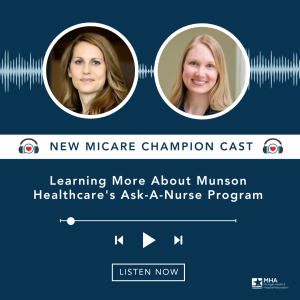
The MHA released a new episode of the MiCare Champion Cast focused on Munson Healthcare’s innovative Ask-A-Nurse program. The free, 24/7 call center is staffed year-round by registered nurses and offers easy access to health-related information and triage services.
The episode features Bonnie Kruszka, DNP, FNP-C, ENP-BC, RN, Chief Operating Officer, Munson Physician Network, Chief Advanced Practice Provider, Munson Healthcare; and Allison Passinault, RN, BSN, Ambulatory Nursing Manager, Ask-A-Nurse and Centralized Nurse Triage.
As leaders of the program, Kruszka and Passinault share more about how Ask-A-Nurse came to be, how it works and how it has helped Munson and non-Munson patients make more informed healthcare decisions.
“Access to healthcare continues to rise to the top of our community needs assessment year after year,” said Kruszka, who served as a founder of the program and continues to oversee operations. “Sometimes that means physical access, but it can also relate to travel times, limited transportation or not having internet service.”
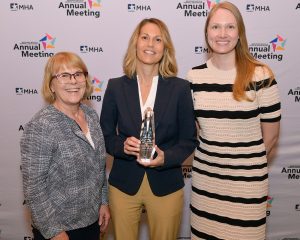
Since its inception, the nurse line has handled more than 178,000 calls with an average speed to answer of 36 seconds. The program was awarded a 2024 Ludwig Community Benefit Award, which is presented to MHA-member organizations integrally involved in collaborative programs to improve the health and well-being of area residents.
In addition to helping patients, it offers a unique, remote job opportunity in nursing.
“One of the many things I enjoy about working in rural healthcare is that we really do feel like one big community,” said Passinault. “It’s hard work, it can be exhausting at times, but the reward is great. It’s a worthwhile career – even in a virtual environment.”
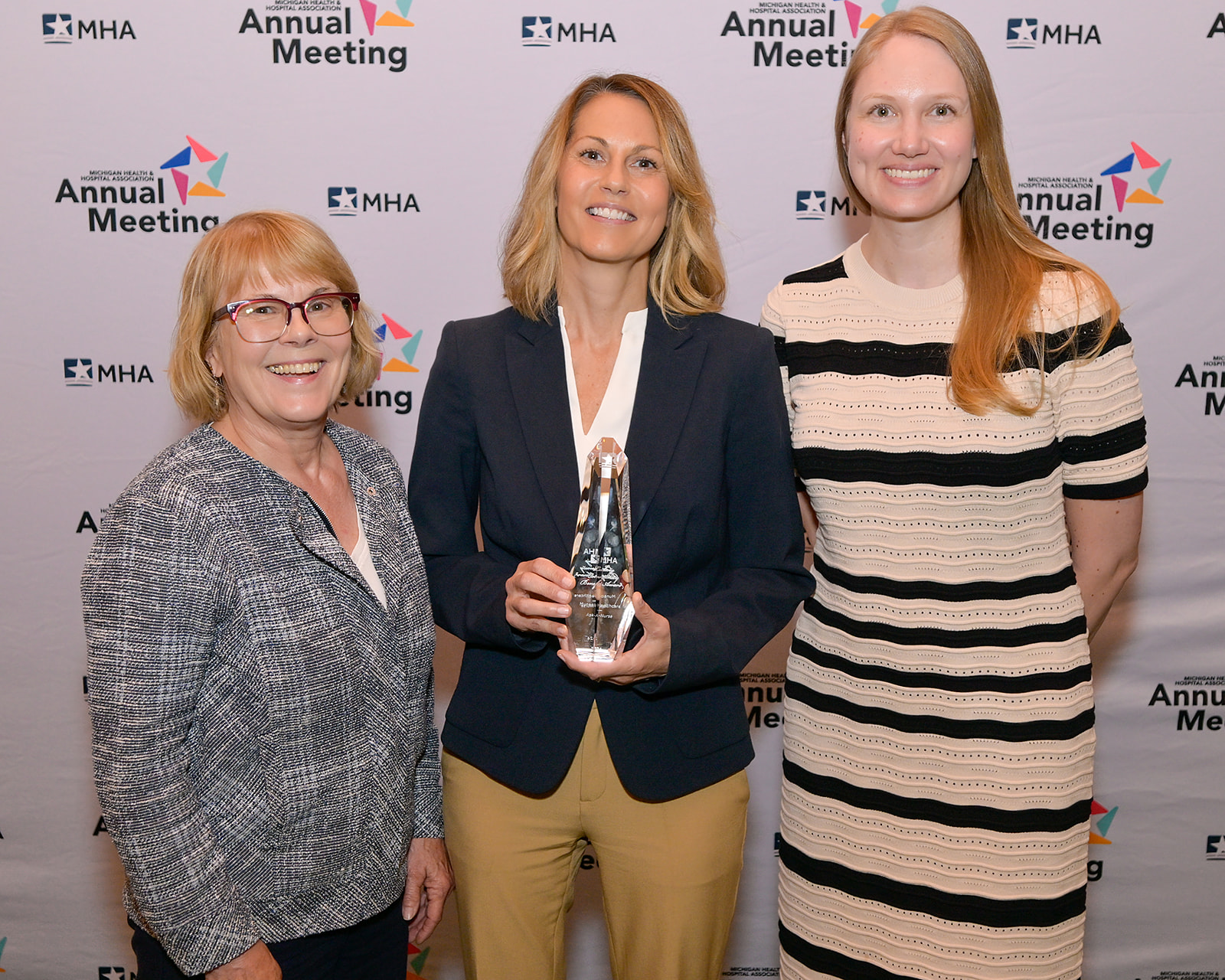
The MHA announced the winners of its 2024 Ludwig Community Benefit Award during the association’s Annual Membership Meeting June 27. The honorees include programs supported by Corewell Health William Beaumont Hospital, Royal Oak; Insight Surgical Hospital, Warren; and Munson Healthcare, Traverse City. The award is named in memory of Patric E. Ludwig, a former MHA president who championed investing in the community’s overall health, and is presented to member organizations integrally involved in collaborative programs to improve the health and well-being of area residents. Each winner will receive $5,000 from the MHA Health Foundation to assist in its health improvement efforts.
Corewell Health William Beaumont Hospital receives the Ludwig Community Benefit Award.
Corewell Health William Beaumont Hospital, in collaboration with the Oakland University William Beaumont School of Medicine, established Street Medicine Oakland, a collaborative community outreach program that provides free medical care to patients experiencing homelessness in Oakland County. The program provides direct, free medical care to the estimated 1,200 individuals in the county experiencing homelessness. Street Medicine Oakland is comprised of a team of volunteer medical students, medical residents and attending physicians who go outside the traditional walls of a hospital weekly to meet patients where they are, including on the street or in a shelter.
The clinicians focus on building trust with these vulnerable populations and provides essential care for acute and chronic conditions that may have otherwise gone untreated, intervening before a patient requires a costly emergency department or hospital visit. The team also partners with other community organizations and resources to address social determinants of health so patients continue to have access to medical care, health insurance, housing, food and transportation.
For more information on Street Medicine Oakland, contact Brian Felice, MD, medical director – Street Medicine Oakland, Corewell Health.
Insight Surgical Hospital receives the Ludwig Community Benefit Award.
Insight Surgical Hospital partnered with the Sylvester Broom Empowerment Village to launch the Triple-A Affect program, designed to dismantle significant barriers to success for at-risk youth. This multifaceted program incorporates arts, academics and athletics to educate and empower children aged five to 17, focusing on behavioral health, general health and wellness. The program engages more than 200 students daily and reaches more than 10,000 families annually, with activities aimed at enhancing food security, promoting health and wellness and empowering youth. It includes community, social and restorative programs that are pivotal in fostering a supportive environment.
Volunteers from Insight dedicate their time in various capacities, including providing mentorship, participating in social work groups, hosting educational seminars and engaging in healthcare support programming. These activities emphasize general wellness, healthy living, nutrition and identification of local resources, potentially leading to referrals for further evaluation and treatment at the Insight.
In addition to programmatic contributions, the hospital also extends administrative and financial support to enhance the health and well-being of community members. The program’s interventions, such as tutoring services, vocational training and initiatives aimed at improving living conditions, tackle the social determinants of health that are prevalent in Flint. These include economic instability, inadequate housing and limited access to educational resources. The initiative also prioritizes preventive health education, promoting healthy lifestyles, mental health awareness and addressing substance abuse issues.
For more information on the Sylvester Broom Empowerment Village, contact Nadir Ijaz, chief operating officer, Insight Health System.
Munson Healthcare receives the Ludwig Community Benefit Award.
Munson Healthcare operates the Ask-A-Nurse program, a free 24/7, year-round phone line staffed by registered nurses which offers free and easy access to health-related information and triage services. It has handled more than 178,000 calls since its inception, with an average speed to answer of 36 seconds. It has been very successful at connecting community members with the appropriate care including preventing avoidable emergency department visits for some 53% of callers who intended to go to the ED. Overall, the program has influenced 38% of callers’ intended actions. 1,200 patients have been connected with a healthcare provider through the program in the last year.
The Ask-A-Nurse program originally began as a COVID-19 hotline to support some of the state’s most rural areas across Munson’s 24 county coverage area, serving as a point of healthcare access for 38,000 callers from nearly every zip code in Michigan during the first year. Munson transitioned the hotline to a more generalized service to address healthcare literacy by making information accessible, understandable and useful for callers so they could make informed decisions about their healthcare.
Team members are experts in local resources and connect patients to services including mental health organizations, area agencies on aging, addiction treatment service, regional response centers for cases of child abuse and violence, local Sheriff’s departments for wellness checks and 3-way calling when crisis or emergency medical services are needed. The program also partners with local tourism businesses, such as hotels and visitor centers, to promote the free service to visitors and seasonal residents who may need healthcare access. Call summaries are also generated and provided to the caller’s primary care provider to ensure completeness of the caller’s medical record and continuity of care.
For more information about the Munson Healthcare Ask-A-Nurse program, contact Allison Passinault, manager, Ask-A-Nurse, Munson Healthcare.
Sue Tetzlaff, co-founder, Capstone Leadership Solutions; Emily R. Sexton, communications coordinator, Holland Hospital; Hannan Deep, director of strategic communications operations, Henry Ford Health; and Lauren Zakalik, director, public & media relations strategy, Henry Ford Health, during a panel discussion.
The 2024 MHA Communications Retreat brought together nearly 100 communications, marketing and public relations professionals from MHA-member facilities May 7 to network and learn from peers across the state. Topics on the agenda included artificial intelligence (AI), behavioral health, the healthcare workforce and internal communications.
The event began with several speakers presenting on how they are using communications tools to assist in reacting to the behavioral health crisis. Speakers included Kara Gavin, lead public relations representative, Michigan Medicine; and research & policy media relations manager, U-M Institute for Healthcare Policy and Innovation; Jim Rose, director of marketing and communications, Pine Rest Christian Mental Health services; Dallas Rau, executive director, Great Lakes Bay Region Mental Health Partnership; and Tera Szeliga, director of marketing, communications and Institute for Leaders, Great Lakes Bay Regional Alliance.
A panel discussion was conducted discussing communications strategies to address the healthcare workforce and the importance of engaging with government relations and advocacy efforts. Angela Minicuci, APR, partner, Martin Waymire, moderated the panel comprised of Laura Appel, executive vice president of government relations and public policy, MHA, and Megan Brown, chief marketing and communications officer, Munson Healthcare. MHA CEO Brian Peters followed the panel with an update on the MHA strategic action priorities.
AI industry experts Joshua Wilda, chief digital and information officer, University of Michigan Health – Regional Network; and Tony Lambert chief technology officer, TechSmith, presented on the AI trends in healthcare and hospitals and how its impacting communications and marketing.
The event concluded with a topic focused on internal communications strategies hospitals can implement to celebrate their workforce and tactics they can use to address employee morale, support recruiting and improve brand perception. Each speaker shared strategies for different sized hospitals. Those speakers included Sue Tetzlaff, co-founder, Capstone Leadership Solutions; Emily R. Sexton, communications coordinator, Holland Hospital; Hannan Deep, director of strategic communications operations, Henry Ford Health; and Lauren Zakalik, director, public & media relations strategy, Henry Ford Health.
The event was sponsored by Martin Waymire and MHA Data Services, who attended the event and provided resources about their products and services. Photos from the event are available on the MHA Facebook page. For more information and resources from the event, contact John Karasinski at the MHA.