
Hospitals Help Michigan Students Pursue Healthcare Careers

Healthcare remains the state’s largest employer of direct, private-sector jobs. With this in mind, hospitals are finding innovative ways to give Michigan students the opportunity to gain real-world exposure to clinical and non-clinical healthcare roles. Some examples of these efforts are outlined below.

McKenzie Health System Hosts Healthcare Career Exploration Tours for Local Students

McKenzie Health System hosts an immersive hospital tour for local ninth and tenth grade students.

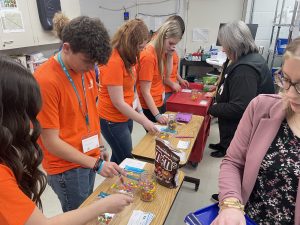
McKenzie Health System recently welcomed ninth and tenth grade students from all seven Sanilac County school districts for an immersive hospital tour as part of the Thumb Community Health Partnership’s High School Pipeline Program.

The eight-week program provides hands-on exploration of health and human service careers across the Thumb region. During their visit to McKenzie, students gained a behind-the-scenes look at how a rural hospital operates and the many career paths available within healthcare.

The tour itself involved rotating through several departments – pharmacy, dietary, nursing, diagnostic imaging, and cardiopulmonary rehabilitation – and participating in interactive learning experiences designed to bring healthcare careers to life.

“These tours give students a meaningful look at the many career opportunities available in healthcare, right here in their own community,” said Nina Barnett, Public Relations. “We are proud to support the exploration of healthcare careers for local youth and to partner with the Thumb Community Health Partnership in building a strong future workforce.”

By partnering with the Thumb Community Health Partnership and local school districts, McKenzie continues to invest in programs that encourage students to explore rewarding careers in healthcare close to home.

Trinity Health Muskegon Hosts Schools for a “A Day in the Life of an Injured Student”

Educators and students from Muskegon High School and Spring Lake High School recently visited Trinity Health Muskegon to participate in an interactive activity titled, “A Day in the Life of an Injured Student,” where they followed the medical journey of a student athlete hurt during a football game.

From the initial scene with paramedics to the operating room alongside surgical technicians, students observed each step of care and were introduced to roughly 40 different medical and health-related professions along the way.

Trinity Health Muskegon colleagues shared more about their roles, required education, career pathways and practical advice. Representatives from healthcare colleges and Trinity Health Muskegon’s Talent Acquisition team were also present to serve as resources for the students.

“Many of these students have no idea how many career options exist within various healthcare settings,” said Jerry Evans, MD, emergency medicine provider, Lake Michigan Emergency Specialists and immediate past chief of staff, Trinity Health Muskegon. “Athletic trainers, paramedics, physicians, nurses, radiology and lab technicians, emergency department teams, operating room staff, computer support, dietary services, facilities personnel and so many others. Trinity Health Muskegon is devoted to strengthening our community and inspiring our youth to consider careers in healthcare.”

The event supports Trinity Health’s Growing Our Own initiative, a program designed to engage Muskegon students from third through twelfth grade and help them see a future working in health care as attainable for them. The initiative, made possible by partnerships with the Muskegon Area Career Tech Center (CTC)Muskegon Area Intermediate School District (MAISD), Boys and Girls Club of the Muskegon Lakeshore and Michigan Works, will continue outreach to Muskegon County students through additional education, career fairs and more.

Covenant HealthCare Invites Recent Grads to Explore Hospital Careers

Covenant HealthCare created “Discover Covenant” in 2024 to expand knowledge of hospital jobs, grow local talent and help future generations make informed career decisions.

The summer program is a paid opportunity designed for recent high school graduates interested in healthcare. It runs from early June to late August, giving participants the opportunity to explore areas of interest along with those they’re unfamiliar with. Exploration periods are done in three-week rotations from 8 a.m. to noon, Monday through Thursday.

“As I worked through Discover Covenant, my love of helping people and feeling a sense of accomplishment was ignited during the nursing rotation,” said one participant. “I have now willingly changed my college major to nursing, and I am grateful for the time and money saved due to my experience with Discover Covenant.”

Since 2024, hospital employees and volunteers have hosted approximately 30 students – a handful of which have since sought employment or additional learning at Covenant. Those interested in learning more are encouraged to contact the Covenant team.

“This program has given young adults from our community the opportunity to learn more about healthcare careers and engage with our organization,” said Jill Jarvis, BSN, RN, manager, clinical development & education, Covenant HealthCare. “It has been a win-win for both participants seeking knowledge and guidance about their futures and for our organization, which is working to build pipelines for future employees.”

Hillsdale Hospital Awards Up to $50,000 in Educational Support to High School Seniors Pursuing Nursing Careers

Hillsdale Hospital’s Doris Whorley Nursing Scholarship allows eligible high school seniors to apply for tuition assistance of up to $10,000 per year for up to five years for an associate degree in nursing (ADN) or a bachelor of science in nursing (BSN).

“Our hospital depends on nurses across every point of care and our mission with this scholarship program is to support their education, on-the-job training and long-term career development,” said Randy Holland, chief nursing and infection control officer.

The scholarship was named after Doris Whorley, Hillsdale’s longest working nurse who has been in the profession for nearly 58 years.

“Doris Whorley has made such an incredible and enduring impact on our hospital’s staff and patients,” added Holland. “On behalf of Hillsdale Hospital’s nursing staff, we are honored to carry her legacy forward as we train and guide future nurses.”

Program application announcements can be found on Hillsdale Hospital’s website.

Eaton Rapids Medical Center Hosts Themed Hospital Tour

The team at Eaton Rapids Medical Center recently hosted a two-day hospital tour for local second graders. To keep things engaging, the event was pirate-themed and included exploring the “Emergency Deck,” emergency department, a visit to ”Clean Hands Island” to learn more about the importance of handwashing and a trip to “X-Ray Bay” to see the hospital’s radiology equipment.

The tours are designed not only to ease fears associated with medical care, but also educate students on healthy habits and see members of the hospital team in action.

“We are so grateful for the opportunity to partner with our local schools to bring this experience to our second graders every year,” said Eleni Danford, MSN, RN, clinical education, Eaton Rapids Medical Center. “By opening our doors and giving students the chance to explore our departments, meet our care team and have a genuinely fun and memorable experience, we hope to build a sense of familiarity and trust between our hospital and the community we serve.”

Pine Rest Charts Careers in Mental Health

Through personal narratives, reenactments and hands-on activities, more than 200 Kent County students explored career opportunities in the mental health field at an event recently hosted by Pine Rest Christian Mental Health Services.

“Pine Rest Beyond the Books — The High School Edition,” was an immersive program designed to introduce teens to behavioral health careers. Students from Kent Career Tech Center and several local high schools, including Byron Center, Kenowa Hills, Kelloggsville, Kentwood, Lowell and Northview, attended the event.

Amy Pierce-Danders, Pine Rest workforce development manager, said many students entering the medical field focus on traditional roles, such as nurse or doctor, without realizing the breadth of opportunities available. Other behavioral health job options include counselor, social worker, psychiatric technician, behavioral analyst and recreational therapist, she said.

“The goal is to get the students on campus where they can learn about behavioral health issues and discover these healthcare pathways,” Pierce-Danders said.

MI Hospital Careers Campaign

As a complement to the local efforts of Michigan hospitals, the MHA’s MI Hospital Careers campaign launched in June 2023 to expand interest in Michigan health careers. The campaign targets high school and college students, as well as working professionals looking for a rewarding career. To learn more, contact Katelin Wiersma at the MHA.

Members with questions or content ideas for the Hospitals Help series may contact Lucy Ciaramitaro at the MHA.

MHA Monday Report Oct. 20, 2025

DIFS Releases Bulletin Protecting COVID-19 Vaccinations

The Michigan Department of Insurance and Financial Services (DIFS) issued a bulletin on Oct. 16, advising health insurers in the individual and small group markets to continue covering COVID-19 vaccinations without cost-sharing. The bulletin was …


McLaren Greater Lansing Hospital Nurse Honored with MHA Keystone Center Speak-up! Award

The MHA Keystone Center recognized Rachel Heise, BSN, RN at McLaren Greater Lansing Hospital, as its MHA Keystone Center Speak-up! Award recipient for the second quarter of 2025. The Speak-up! …


FBCM Hosts Inaugural Michigan Food as Medicine Summit

The Food Bank Council of Michigan (FBCM) brought together over 250 healthcare, community organization, government and other key industry leaders for the state’s inaugural Food as Medicine Summit. The two-day event aimed to build cross-sector …


MHA’s Lauren LaPine-Ray Recognized in 40 Under 40 in Public Health

Lauren LaPine-Ray, vice president, policy and rural health, has been recognized as one of the 40 Under 40 in Public Health in recognition of her work at the MHA. The de Beaumont Foundation announced the …


Rural Health Today Podcast on Breaking Down Barriers for Rural Health Providers

MHA Endorsed Business Partner ModusOne Health was recently featured on the Rural Health Today, hosted by JJ Hodshire, president and CEO, Hillsdale Hospital. The episode “Breaking Down Barriers for Rural Healthcare Providers with …


AHA Trustee Insights Highlights Aging Population and Cybersecurity Oversight

The October edition of Trustee Insights, the monthly digital package from the American Hospital Association, highlights podcasts, videos, webinars and other resources on today’s most pressing issues. The issue examines the nation’s aging population and …


Keckley Report

Healthcare’s Biggest Blindspot: Household Financial Insecurity

“The U.S. health industry revolves around a flawed presumption: individuals and families are dependent on the health system to make health decisions on their behalf. It’s as basic as baseball and apple pie in our collective world view. …

Healthcare organizations must rethink their orientations to patients, enrollees and users. All must embrace consumer-facing technologies that empower individuals and households to shop for healthcare products and services deliberately. In this regard, some insurers and employers seem more inclined than providers and suppliers, but solutions are not widely available. And incentives to stimulate households to choose “high value” options are illusory. Data show carrots to make prudent choices work some, but sticks seem to stimulate shopping for most preference-sensitive products and services.

The point is this: the U.S. economy is slowing. Inflation is a concern and prices for household goods and necessary services are going up. The U.S. health industry can ill-afford to take a business-as-usual approach to how our prices are set and communicated, consumer debt collection (aka “rev cycle”) is managed and how capital and programmatic priorities are evaluated. …”

Paul Keckley, Oct. 12, 2025


New to KnowNews to Know

MHA Endorsed Business Partner Wakely recently released its quarterly insights including the white paper, ACO Foundations: Four Pillars for Successful Risk Management in Value-based Contracts.

Rural Health Today Podcast on Breaking Down Barriers for Rural Health Providers

MHA Endorsed Business Partner (EBP) ModusOne Health was recently featured on the Rural Health Today podcast hosted by JJ Hodshire, president and CEO, Hillsdale Hospital. The episode “Breaking Down Barriers for Rural Healthcare Providers with Dr. John Crongeyer” highlights innovative strategies for engaging clinicians and improving risk management in rural hospitals.

Rural Health Today connects listeners to what truly matters in rural healthcare through expert interviews and real-world insights. Hodshire and Dr. Crongeyer discuss how rural hospitals are overcoming documentation and engagement challenges by shifting the narrative: clinicians are not the problem—they are the solution.

“With the looming threats of Medicaid, what steps can hospitals take to redefine their mission, to identify new ways of growth, and to look at existing processes (like ModusOne) and make some types of adjustments that can be a winner,” said Hodshire.

“Many rural hospitals face an existential financial crisis,” said Dr. Crongeyer, “one that can only be solved with a financial solution.”

ModusOne Health’s Solution: Proven Results for Rural Hospitals

ModusOne Health’s unique layover solution is pioneering clinical documentation and diagnosis improvement (CDxI) with measurable impact:

  • 10–22x ROI.
  • Zero disruption to staffing or workflows.
  • Improved compliance and coding accuracy.
  • Provider ranking by clinical accuracy for leadership insights.
  • Reduced length of stay and readmissions.
  • Enhanced leapfrog and quality scores.
  • Rapid deployment.

As healthcare continues its shift toward value-based care, CDI is no longer just a compliance tool, it’s a revenue and quality amplifier. ModusOne’s holistic CDxI approach combines simplified AI-Powered technology, advanced data analytics and enhanced documentation accuracy to empower providers in delivering higher-quality care and achieving stronger clinical and financial outcomes.

Members seeking more information about ModusOne Health may contact Dr. John Crongeyer or Stephanie Patsalis.

Members seeking information about the MHA’s EBP program may contact Rob Wood at the MHA.

MHA Monday Report Oct. 13, 2025

Healthcare Funding Protected in New State Budget Signed by Gov. Whitmer

The Michigan Legislature’s newly passed state budget, which protects all existing healthcare funding, was signed into law Oct. 7 by Gov. Whitmer. Public Act 22 of 2025, sponsored by Rep. Ann Bollin (R-Brighton), passed by both …


Community Benefit Collaborative Members Gather for Kickoff Event

The MHA brought together the Community Benefit Collaborative members for a daylong kickoff event on Oct. 2 to network and learn from peers across the state conducting community benefit work in chronic disease, behavioral health …


CDC Updates Guidance for COVID-19 and Chickenpox Vaccines

The Centers for Disease Control and Prevention (CDC) recently updated its guidance for the COVID-19 and varicella (chickenpox) vaccines. The CDC’s decision uses an individual-based decision-making framework, referring to vaccination decisions made through shared clinical …


Strengthening Rural Healthcare Through Smarter Physician Recruitment

MHA Endorsed Business Partner AMN Healthcare recently released the Rural Physician Recruiting Challenges and Solutions white paper, produced by its Physician Solutions division (formerly Merritt Hawkins). The resource identifies several approaches to address these challenges: Recruiting physicians …


Investing in Rural Hospitals Means Investing in Rural Michigan

When the One Big Beautiful Bill Act was signed into law in July, it created the Rural Health Transformation Program, a five-year, $50 billion investment in rural healthcare. The MHA Board of Trustees took swift action empowering an MHA board-appointed task force charged with creating …


Keckley Report

Shutdown Impact: The Affordable Care Act 2.0 Takes Center Stage

“In 2009, I facilitated discussions with key health industry trade associations and the White House Office of Health Reform focused on reforms to reduce costs, increase insurance coverage and improve quality by 2019. It was the Obama administration’s aim to use the health system’s bulk as a lever to stimulate recovery from the 2008-2009 recession and simultaneously increase coverage through Medicaid expansion and marketplace subsidies that for lower-income households. …

The current federal government shutdown is a tipping point for healthcare in the U.S. It’s about more than extended subsidies per Dem’s and holding the line on spending per Republicans. It’s about a growing sense of helplessness among the majority and resentment among many that institutions like the federal government, higher education, big business and healthcare are no longer motivated to serve interests beyond themselves. …

Some will harken back to the Affordable Care Act in 2010 when coverage was also the issue. We’re there again. But the bigger issue is this: extending subsidies and maintaining coverage will not lower spending or transform U.S. healthcare to an affordable, accessible, appropriately structured system of health.

The moral high ground for healthcare is in jeopardy and its direction unclear. Perhaps PPACA 2.0 is an answer. Doing nothing isn’t.”

Paul Keckley, Oct. 5, 2025

Investing in Rural Hospitals Means Investing in Rural Michigan

By Jeremiah Hodshire, President & CEO of Hillsdale Hospital

When the One Big Beautiful Bill Act was signed into law in July, it created the Rural Health Transformation Program, a five-year, $50 billion investment in rural healthcare. The MHA Board of Trustees took swift action empowering an MHA board-appointed task force charged with creating recommendations that the Michigan Department of Health & Human Services (MDHHS) could use when submitting the one-time application for funding.

I’ve had the pleasure of chairing the task force and working alongside my colleagues Tonya Darner, UP Health System; Karen Cheeseman, Mackinac Straits Health System; Dr. Ross Ramsey, Schuerer Health; Michael Rose, MyMichigan Health; and Peter Marinoff, Munson Healthcare. This process has been collaborative and informed by other rural hospital leaders across the state through the Rural CEO Town Hall the MHA hosted in late September. I am also deeply indebted to the MHA staff, specifically the driving force behind keeping our committee on task, Lauren LaPine-Ray, who has served as an outstanding ambassador, facilitator, researcher and connector as we navigate the federal guidelines! A few key themes emerged through this process and informed the recommendations shared with MDHHS.

When I look out across our community, I see the same faces that fill our hospital’s halls — farmers, teachers, small business owners and families who trust us to care for them when it matters most. Yet every year, it becomes harder to keep our doors open. Recruiting and retaining obstetricians, gynecologists, social workers, psychologists and primary care physicians has turned into an uphill push. Technology that could connect us to specialists hundreds of miles away remains out of reach due to inadequate broadband and out-of-date electronic medical records platforms. And the gap between what it costs to provide care and what we’re paid to deliver it keeps widening. That’s why the Centers for Medicare & Medicaid Services’ Rural Health Transformation Program matters so much right now. This new federal funding opportunity isn’t just a policy line item — it’s a lifeline. But for Michigan’s small and rural hospitals, it will only make a difference if the dollars actually reach us, the people on the ground.

Our Greatest Need: People

Every rural hospital leader will tell you the same story: we can’t hire fast enough to replace those who’ve left. Nearly 70% of Michigan hospitals report difficulty filling clinical vacancies and rural areas face the longest recruitment times in the state. Nursing wages in large systems have soared, while young physicians are drawn to urban centers where they can earn more and work less on call. Meanwhile, small hospitals like ours are paying bonuses we can’t afford just to keep labor and delivery open or to cover an emergency room shift. The costs to maintain OB/GYNs in rural areas are significant.

If the Rural Health Transformation funds are truly meant to “right-size” care delivery, they must start with stabilizing the workforce that keeps that system running. Rural hospitals should be able to use these funds for loan repayment programs, housing stipends and retention bonuses that reflect the realities of rural practice. Without people, no transformation is possible.

Technology Should Connect, not Divide

Michigan’s rural hospitals have led the way in adopting telehealth, but we are still too often left behind. Broadband is patchy and many of our systems don’t integrate with the larger hospitals where we refer patients. CMS should allow states to dedicate transformation dollars toward technology innovation — helping rural providers invest in electronic health record interoperability, remote patient monitoring and telepsychiatry tools that expand access without expanding costs. When technology works across the system, it saves time, reduces burnout and lets us keep more care local.

Payment Equity Must be Part of Transformation

Even before inflation and staffing shortages, the math didn’t add up. Rural hospitals serve older, sicker populations and depend heavily on Medicare and Medicaid. The number of births occurring in rural hospitals continues to decline, making the ability to cover costs and provide critical care even more challenging. When reimbursement rates don’t cover the cost of care, rural hospitals can’t sustain basic services like obstetrics or behavioral health. Between 2010 and 2023, 11 rural hospitals in Michigan closed or stopped providing inpatient services. Rural Transformation funds should explicitly support provider payments and shared-savings models to ensure critical healthcare access in rural areas is maintained. If rural hospitals can’t afford to pay their doctors and nurses, innovation will stall before it starts.

The Stakes for Michigan

More than 60% of Michigan’s counties are considered rural, with nearly 30 hospitals serving as the only point of care for miles. Every time one closes, an entire region loses not just its emergency room, but also its largest employer and a key part of its safety net. The Michigan Senate Fiscal Agency recently reported nearly 22% of Michigan counties are considered maternity deserts. Michigan needs true investments in rural healthcare to reverse these trends — but only if the funds flow to where they can have the greatest impact: rural hospitals themselves.

These dollars should not get lost in bureaucracy or redirected to administrative projects. They should go toward the people and places that make healthcare possible: our workforce, our technology and our providers.

If we want to build a stronger, more equitable Michigan, we must start by keeping care local, and that begins with investing in the hospitals that keep our communities alive.

MHA Provides Powerful Testimony on Federal Threats to Medicaid

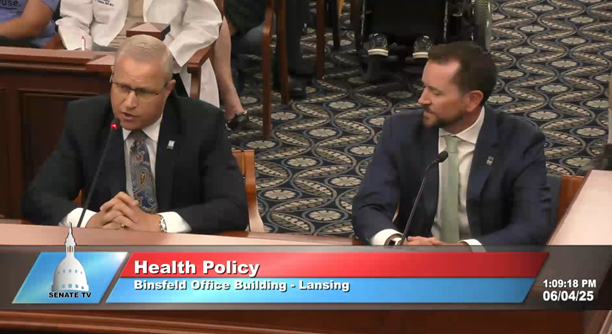
The Senate Health Policy Committee held a nearly two-hour hearing June 4 on federal threats to Medicaid.

The Senate Health Policy Committee heard from several healthcare stakeholders and members of the Protect MI Care Coalition on the potential impacts of federal Medicaid cuts. Adam Carlson, senior vice president, advocacy, MHA and JJ Hodshire, president and CEO, Hillsdale Hospital, testified on behalf of the MHA to discuss key impacts for hospitals and communities if currently proposed cuts to Medicaid are fully passed by Congress.

Image
Adam Carlson, senior vice president, advocacy, MHA, and JJ Hodshire, president and CEO, Hillsdale Hospital, testified on behalf of the MHA to discuss key impacts of federal Medicaid cuts.

Carlson shared how the reconciliation package passed by the U.S. House of Representatives will result in more than 13 million people losing their healthcare coverage. Other restrictions in the legislation will reduce state revenues that help fund Medicaid and have been in place for years. Carlson noted that Medicaid is vital for continued access to healthcare for all Michiganders, not just those covered by Medicaid.

Hodshire spoke about the impact to rural communities. Medicaid recipients in rural counties are essential to keeping hospital doors open because they make up nearly 40% of patient volume. Hodshire spoke about how Medicaid helps enrollees get and keep jobs and how the state’s Healthy Michigan program reduces the uninsured rate and supports economic stability. Hospitals are often the largest employer in rural areas, as it was emphasized that cuts to Medicaid could result in hospitals closing units like labor and delivery or psychiatric, or in some cases – closing their doors completely. Hodshire made it clear that making cuts to Medicaid at the federal level would be devastating for rural patients, hospitals and communities.

Members with questions regarding Medicaid may contact Adam Carlson at the MHA.

MHA CEO Report — Prioritizing Rural Health

MHA Rounds graphic of Brian Peters

“Be sure you put your feet in the right place, then stand firm.” – Abraham Lincoln

MHA Rounds graphic of Brian PetersWhile snow continues to fall in northern Michigan, spring is officially here, and for many, that means our weekend travel plans shift from skiing and snowmobiling to camping, hiking and boating. Rural Michigan is an amazing travel destination for many, but it also is home year-round to 20% of our state’s population, and access to affordable, high-quality healthcare remains absolutely crucial. Rural hospitals are an integral part of the local fabric of their communities, treating the ill and improving the health and well-being of their residents. They work extremely hard to make sure they’re able to provide the best quality of care, while operating on a budget with slim to nonexistent margins. In a small town, there is nowhere to hide when the hospital is experiencing challenges of any kind. This is especially true when the hospital is the largest employer in the community and a vital economic engine, which is very often the case in rural Michigan.

I recently had the opportunity to attend the annual American Hospital Association (AHA) Rural Health Care Leadership Conference, along with a number of MHA senior staff and Michigan rural healthcare leaders, including Tina Freese Decker, CEO of Corewell Health and current chair of the AHA Board of Trustees; Julie Yaroch, DO, CEO of ProMedica Charles and Virginia Hickman Hospital and current chair of the MHA Board of Trustees; and JJ Hodshire, CEO of Hillsdale Hospital, current MHA Board member and host of the Rural Health Today podcast. We focused on the latest rural health challenges and innovations, as well as our shared federal advocacy priorities. Key topics included rural obstetrical care, cybersecurity, long-term care transformation and strategic partnerships.

According to the latest U.S. census and other demographic resources, rural Americans are notably older, sicker and poorer than their urban and suburban counterparts. While rural areas currently cover 97% of the nation’s land, they are home to only 19.3% of the total population. Demographers believe that we are moving toward a future state in which an even higher concentration of the population will be in non-rural settings – and that in the next five years, more than 40% of Michigan counties will have more than a quarter of their population older than 65, with nearly all of those counties being rural. As we have learned – especially during the COVID pandemic – traditional volume-based healthcare reimbursement methods do not adequately address the fixed costs inherent in healthcare delivery, a reality that is exacerbated for rural hospitals with smaller patient volumes and more constricted resources and economies of scale.

Although Medicaid expansion (a major accomplishment resulting from MHA advocacy) improved the viability of rural hospitals – a fact that is borne out when benchmarking Michigan to non-expansion states – that funding is currently in severe jeopardy given the current state of play in Washington, D.C., as discussed at length in last month’s CEO Report. In addition, the 340B program is another critically important part of the rural healthcare ecosystem, as the cost savings from the program are used by healthcare providers to offer critically important services to everyone in their respective communities, regardless of their socioeconomic status. The MHA continues to advocate at the state and federal level, in the legislative arena and in the courts, to protect and defend the 340B program.

With guidance from the MHA Council on Small or Rural Hospitals, currently chaired by Peter Marinoff, CEO of Munson Healthcare Southern Region (see Peter’s recent insights on rural healthcare), and staffed by Lauren LaPine, MHA senior director of Legislative and Public Policy, the MHA is also advocating for continuation of the rural access pool and obstetrical stabilization fund in the state budget, and promoting good public policy with respect to critical access hospitals, rural emergency hospitals and a host of other key issues.

Our rural healthcare leaders continue to prove they are exceptional at delivering extraordinary value, despite challenging circumstances. I know from first-hand experience that our rural hospitals provide high quality care and deserve to be fully supported. And we absolutely must support them, as the fragility of the current environment is real: there have been some 151 rural hospitals that have closed across the country since 2010 due to financial variables that make it extremely difficult to maintain hospital facilities in rural areas.

Now more than ever, we need to think about our rural hospitals, stand firm and do all we can to protect these vital institutions.

As always, I welcome your thoughts.

Media Recap: State of Healthcare, State Budget & Public Health Partnerships

MHA CEO Brian Peters

The MHA received media coverage the week of July 15 on healthcare priorities in Michigan, the state budget and the intersection between public health and healthcare.

Hillsdale Hospital published an episode of the Rural Health Rising podcast July 18 featuring an interview with MHA CEO Brian Peters discussing the state of healthcare in Michigan and efforts underway to support rural hospitals.

“We have to really focus on the right strategies – the right tactics – to make sure we can continue providing access to care for all rural Michiganders,” said Peters. “It’s really an honor to be a part of that journey.”

Laura Appel, Executive Vice President, Government Relations and Public Policy, MHA, was also featured as a guest on Hillsdale’s podcast July 11 discussing the fiscal year 2025 state budget.

“The passage [of the state budget] is a culmination of many months,” said Appel. “The big thing we got is direct funding for hospitals to have peer recovery coaches to help people who have substance use issues that come to the ED or into the hospital for any reason.”

Lauren LaPine, Senior Director, Legislative and Public Policy, MHA, was featured July 16 in a story from Model D and Flintside exploring how collaboration between hospitals and public health partners benefits Michigan communities.

“Public health and hospitals working in tandem really protects and promotes community health,” said LaPine. “Public health focuses on prevention while hospitals focus on health intervention.”

Members with any questions regarding media requests should contact John Karasinski at the MHA.