House Passes 2026 Farm Bill with Rural Health Provisions

The U.S. House of Representatives passed H.R. 7567, the Farm, Food and National Security Act of 2026, on April 30, which includes several provisions supporting rural healthcare infrastructure, broadband expansion and behavioral health services. The legislation includes six provisions championed by the National Rural Health Association (NRHA), several of which directly affect rural hospital operations, financial sustainability and patient care. All programs would be reauthorized through fiscal year 2031, a meaningful commitment to rural health infrastructure.

Key Provisions for Rural Hospitals

Technical Assistance for Rural Providers

The legislation codifies and expands the existing U.S. Department of Agriculture Rural Health Care Facility Technical Assistance Program, which supports rural facilities in preventing closures, strengthening essential services and improving financial sustainability. Eligible facilities would include critical access hospitals, rural emergency hospitals, rural health clinics, community health centers, home health agencies and psychiatric hospitals.

This change ensures more Michigan rural providers can access support before reaching a crisis point. The program is authorized at $2 million annually for fiscal years 2026-2030. The bill also expands the use of the Community Facilities Loan and Grant Program to help rural hospitals access capital funding.

Broadband and Telehealth Expansion

The legislation includes several broadband and telehealth investments aimed at improving connectivity in rural communities.

The ReConnect Program would transition into a new ReConnect Rural Broadband Program authorized at $350 million annually for five years, with minimum eligibility speeds raised to 50/25 Mbps. The program prioritizes underserved rural communities.

The Distance Learning and Telemedicine (DLT) Program would be reauthorized at $82 million annually to support telehealth infrastructure and equipment for rural hospitals and health systems. The Community Connect Grant Program would also be reauthorized at $50 million annually to support the construction of broadband networks in unserved communities.

Rural Behavioral Health Services

The bill extends the existing 20% set-aside in the DLT Program and prioritizes substance use disorder projects in the Community Facilities Loan and Grant Program. The legislation also expands eligibility to include mental health, behavioral health and maternal health treatment services.

According to NRHA, the provisions would help rural hospitals strengthen behavioral health services and expand access to care in underserved communities.

The legislation also includes broader rural health-related provisions supporting agricultural workforce development, rural food security programs and farmer mental health initiatives through reauthorization of the Farm and Ranch Stress Assistance Network.

Next Steps

The Senate Agriculture Committee has not yet released its version of the Farm Bill, though the committee leadership has indicated legislative text is expected in the coming weeks. Differences between the House and Senate versions will need to be reconciled before final passage.

The NRHA is urging rural hospitals and health advocates to contact members of Congress and press the Senate to act. MHA rural members are encouraged to engage through the NRHA’s Farm Bill Advocacy Campaign.

Members with questions may contact Caroline Stoner at the MHA Center of Rural Excellence.

Bridge Highlights Challenges in Rural Medical Transport

Bridge Michigan published a story May 7 detailing how federal funding cuts to Medicaid will further exacerbate rural hospitals’ capacity to treat and transport patients requiring more specialized care.

Lauren LaPineLauren LaPine-Ray, DrPH, MPH, vice president, policy & rural health, MHA, and executive director, MHA Center of Rural Excellence, is featured throughout the story highlighting existing barriers with medical transport and warning how Medicaid cuts could further limit local services, increasing the need to transfer more patients to higher-acuity facilities.

In the article, LaPine-Ray outlines how lawmakers can reduce strain on hospitals and EMS providers:

  • Create a new license type specifically for transporting psychiatric patients, freeing ambulances for other needs. Two bills pending in the state Senate would do so.
  • Review regulations surrounding ambulance services — both ground and air — to cut red tape.
  • Invest in paramedic and emergency medical technician training and recruitment to help reduce the shortages straining the system.

Members with questions regarding media requests should contact Elise Gonzales at the MHA.

Rural Hospital Leaders Appointed to MHA Center of Rural Excellence Board of Trustees

Seven rural Michigan hospital leaders were recently appointed as inaugural board members to the newly established MHA Center of Rural Excellence by the Michigan Health & Hospital Association (MHA) Board of Trustees. These members are responsible for providing formal governance for the new organization.

Jeremiah J. Hodshire, president and chief executive officer, Hillsdale Hospital, will serve as the center’s chair and the MHA Board of Trustees representative for a three-year term.

In addition to Hodshire, the MHA Board of Trustees approved the appointment of six rural healthcare leaders to serve on the MHA Center of Rural Excellence Board:

  • Thomas Kurtz, Ph.D., president and chief executive officer, Memorial Healthcare, will serve a three-year term. Andrew Raymond, chief executive officer, Kalkaska Memorial Health Center, represents Michigan’s independent hospitals alongside Kurtz and will serve a two-year term.
  • Amanda Shelast, Marshfield Clinic Network President, Michigan and South, will serve a one-year term. Wendy Frush, RN, chief executive officer, Munising Memorial Hospital will serve a two-year term. Shelast and Frush represent the association’s rural members in Michigan’s Upper Peninsula.
  • Peter Marinoff, chief executive officer, Munson Healthcare Southern Region, will serve a one-year term and represent the state’s critical access hospitals.
  • Ross Ramsey, MD, chief executive officer, Scheurer Health, will serve a three-year term as the board’s physician representative.

“This board brings together rural healthcare leaders from across the state who share a commitment to preserving care close to home for Michiganders,” said MHA CEO Brian Peters. “Under their leadership, the MHA Center of Rural Excellence will prioritize policies and initiatives that allow rural hospitals to remain resilient and responsive to the needs of their communities.”

The MHA Center of Rural Excellence, a 501(c)(6) organization, was created to formalize and strengthen the collective voice of rural hospitals through support tailored to the unique challenges of Michigan’s rural providers.

MHA Monday Report April 20, 2026

House Budget Proposal Advances; Other Hospital Bills See Action

Several healthcare bills, including mandatory nurse overtime, medical debt collections, prescribed pediatric extended care facilities and the Michigan Department of Health and Human Services budget, saw action in the legislature during the week of April 13. The Michigan Senate voted in support …


MHA Unemployment Compensation Program Receives Fifth Consecutive Award for Outstanding Performance

The MHA Unemployment Compensation Program was recognized by the National Association of State Workforce Agencies April 17 for its continued commitment to using the State Information Data Exchange System to receive new claims and respond to …


Trinity Health Michigan Team Members Recognized with MHA Keystone Center Speak-up! Award

The MHA Keystone Center recognized Camryn Smith and Alicia Evans, medical assistants at Trinity Health IHA Medical Group, as its quarterly MHA Keystone Center Speak-up! Award recipients. The Speak-up! Award …


MDHHS Convenes Statewide RHTP Advisory Council

The Michigan Department of Health and Human Services (MDHHS) convened the first Rural Health Transformation Program (RHTP) Advisory Council meeting on April 13. Three rural hospital leaders from MHA-member hospitals serve on the council: Julie …


CMS Releases FY 2027 Hospital Inpatient Prospective Payment System Proposed Rule

The Centers for Medicare & Medicaid Services (CMS) recently released a proposed rule to update the Medicare fee-for-service inpatient prospective payment system for fiscal year (FY) 2027. Highlights of the proposed rule include: …


LARA to Host Webinar on Proposed Psychiatric Hospital Licensing Rule Changes

The Michigan Department of Licensing and Regulatory Affairs (LARA), through its Bureau of Community Health Systems, will host a webinar from 3 to 3:30 p.m., May 7, to review proposed updates to administrative rules …


MEJI Seeks Input on Guardianship Training Initiative

The Michigan Elder Justice Initiative (MEJI) is seeking feedback from members to help shape upcoming guardianship training. Members are encouraged to complete a brief survey to share input on what is needed, how it should …


Upcoming Opportunities to Prioritize Workplace Safety

As MHA CEO Brian Peters stated in his April CEO Report, it’s critical – especially during Workplace Violence Prevention Month – to prioritize the safety and well-being of healthcare workers. The MHA Keystone Center and …


Hospitals Help: Bronson Drives Change in Maternal and Infant Health

From prenatal care and labor and delivery to neonatal intensive care and postpartum follow-up, Bronson Healthcare plays a critical role in influencing health outcomes for mothers and babies across Southwest Michigan. In celebrating a historic …


Keckley Report

The AHA Annual Membership Meeting: Three Issues that Require Attention

“This weekend, the American Hospital Association will convene its 2026 Annual Membership Meeting in DC. Its purpose is to equip leaders to engage with lawmakers and government officials on issues of consequence to hospitals.

The agenda includes panels on age-friendly health systems, post-acute services, AI and more, interspersed with punditry from members of Congress and political commentators. It’s a federally-focused meeting at a time when the current administration has signaled distaste for healthcare and frustrations with hospitals. …

Key questions for hospitals: What does value mean in our organization? To whom is our value focus directed? Is quality in our organization an end in itself or a means to a financial result? Is participation in VBC projects helpful to our organization or is watchful waiting prudent?

The American Hospital Association, its state affiliates and its members face unprecedented challenges in 2026 and beyond. While attention is focused on short-term rules and regulations that protect hospital revenues (340B, site neutral payments, Medicaid cuts, et al), equal consideration is needed to the long-term role and scope of hospitals in emergent systems of health. That makes the AHA Board’s selection of retiring CEO Rick Pollock’s successor and the deliberation of the AHA Board about the long-term future for hospitals even more consequential.”

Paul Keckley, April 12, 2026


New to Know

News to Know

  • Applications are being accepted for the 2026-27 MHA Excellence in Governance Fellowship for hospital and health system trustees.
  • MHA Endorsed Business Partner SmarterDx is hosting the webinar “Making the Case for AI-Powered CDI” May 7 at 1 p.m. ET in partnership with ACDIS.

MHA in the News

Recent coverage of the Michigan Senate’s April 15 action on mandatory nurse overtime highlighted the MHA’s active engagement in ensuring hospital concerns were reflected in the final package. MHA Chief Nursing Officer Amy Brown was …

MDHHS Convenes Statewide RHTP Advisory Council

The Michigan Department of Health and Human Services (MDHHS) convened the first Rural Health Transformation Program (RHTP) Advisory Council meeting on April 13.

Three rural hospital leaders from MHA-member hospitals serve on the council: Julie Yaroch, DO, CEO, ProMedica Charles and Virginia Hickman Hospital; Jeremy Cannon, vice president, chief nursing officer, Kalkaska Memorial Hospital; and Robert Mach, MBA, FACHE, ARRT, CEO, Schoolcraft Memorial Hospital. Lauren LaPine-Ray, DrPH, MPH, vice president, policy & rural health, executive director, MHA Center of Rural Excellence, represents the association on the council.

The meeting opened with welcome remarks and introductions from MDHHS RHTP staff, followed by a high-level overview of the program and members’ orientation to the advisory council, including a review of its charter and governance structure to clarify roles, expectations and decision-making processes.

The remainder of the meeting focused on a facilitated virtual breakout session to define what success will look like for the advisory council in one year. The session concluded with the next steps and time for questions and reflections.

Members with questions may contact Lauren LaPine-Ray at the MHA.

MHA Monday Report April 13, 2026

Michigan Health & Hospital Association Establishes MHA Center of Rural Excellence

The Michigan Health & Hospital Association (MHA) announced April 10 the establishment of the MHA Center of Rural Excellence, a 501(c)(6) organization created to formalize and strengthen the collective voice of rural hospitals through support tailored …


State Senate Majority Leader Winnie Brinks Addresses MHA Board

The MHA Board of Trustees welcomed Senate Majority Leader Winnie Brinks (D-Grand Rapids) as a guest speaker at its April 8 board meeting at the MHA Capitol Advocacy Center in downtown Lansing. Sen. Brinks shared …


CMS Releases FY 2027 Proposed Rules Across Care Settings

The Centers for Medicare & Medicaid Services (CMS) recently released several proposed rules for fiscal year (FY) 2027 that update Medicare payment systems and quality reporting requirements.


MDHHS Recommends Early Measles Vaccination in Select Counties and Extends RSV Immunization Season

The Michigan Department of Health and Human Services (MDHHS) is recommending early measles vaccination for infants in select southeast Michigan counties and extending the respiratory syncytial virus (RSV) immunization season through April 30, in …


Keystone Quality and Safety Dashboard Provides At-a-Glance Insights

The MHA Keystone Center recently rolled out its Quality and Safety Dashboard, a resource that helps Michigan hospitals monitor performance, identify improvement opportunities and reduce patient harm. The dashboard provides an at-a-glance view of performance …


MHA Submits Comments on Proposed Behavioral Health Medicaid Policy

The MHA recently submitted comments to the Michigan Department of Health and Human Services on proposed policy 2553-BH, which addresses reimbursement for specialty behavioral health services based on service location. While the policy largely reflects …


Council Workgroups Advance Care Delivery Strategies

The MHA Council on Health Access and Community Impact, established in June 2024, brings together voices from across the MHA membership to advance a shared commitment to improving healthcare and health outcomes. Over the past …


MDHHS Seeks Applications for Loan Repayment Program to Expand Substance Use Disorder Treatment

The MDHHS is accepting applications through April 30 for the Michigan Opioid Treatment Access Loan Repayment Program, which supports providers who offer or expand access to opioid addiction …


YesRx Donation Drive Expands Access to Cancer Medications

The MHA continues to support the YesRx statewide cancer medication donation drive, taking place April 20-24, to help expand access to treatment and reduce medication waste across Michigan. YesRx is a statewide cancer drug repository …


Hospitals Help: Hillsdale Works to Improve Access for Rural Residents

Rural hospitals are the heart of their communities, providing care close to home in addition to jobs, stability and reassurance that help is nearby in life’s most pivotal moments. Despite their essential role, rural providers …


Keckley Report

In OMB’s FY 2027 Proposed Budget, Healthcare is the Big Loser

“In 1970 before there was ESPN Sports Center, there was ABC’s “Wide World of Sports” and its iconic montage opening featuring a disastrous ski jump attempt by Yugoslavia’s Vinko Bogataj and Jim Kay’s voice-over “the thrill of victory and agony of defeat.” It’s an apt framework for consideration of current affairs in the U.S. today and an appropriate juxtaposition for consideration the winners and losers in the White House Office of Management and Budget FY2027 released Friday. …

In its current form, this budget is unlikely to be enacted October 1, 2026: it’s best viewed as a signal from the White House about priorities it deems most important to the MAGA faithful in Congress, 28 state legislatures and 26 Governors’ offices controlled by Republicans. Though its explosive growth in of War Department funding to $1.5 trillion is eye-popping, cuts to healthcare are equally notable. Both are calculated bets as the mid-term election draws near (six months) and clearly OMB is betting healthcare cuts will be acceptable to its base. …

This budget proposal clearly illustrates why state legislators and Governors will play a bigger role in its future at home and abroad. And it means consumer (voter) awareness and understanding on key issues will be key to the system’s future, lest it is remembered for the agony of its defeat than the thrill of its victory.”

Paul Keckley, April 6, 2026


New to KnowNews to Know

The MHA will host a Health Access and Community Impact Office Hours session April 29 from noon to 12:45 p.m. ET, featuring Michigan 211.


MHA in the News

Elizabeth Kutter, vice president and deputy general counsel, MHA, joined Paul W. Smith for a WJR Spotlight interview April 9 about the value the federal 340B Drug Pricing Program brings to Michigan communities. The conversation …


State Senate Majority Leader Winnie Brinks Addresses MHA Board

The MHA Board of Trustees welcomed Senate Majority Leader Winnie Brinks (D-Grand Rapids) as a guest speaker at its April 8 board meeting at the MHA Capitol Advocacy Center in downtown Lansing. Sen. Brinks shared perspectives on navigating the political environment in Lansing, expressed support for the care hospitals provide, and highlighted the role hospitals play as major employers and economic drivers in the state. The MHA continues to work with the Majority Leader and other legislative leaders to support critical healthcare funding in the FY 2027 budget this spring, as well as other key priorities.

The board also approved the establishment of the MHA Center of Rural Excellence, a new subsidiary organization within the association to provide coordinated support for rural hospitals. Establishing the MHA Center of Rural Excellence will enable the MHA to create a board of rural hospital CEOs to provide leadership on funding opportunities, technical expertise and operational support.

The board approved the Type 3 membership applications of Brogan, Great Lakes Radiology Services, PLC and The North Group, as well as three individual physician members. Members with questions about the actions of the MHA Board of Trustees may contact Amy Barkholz at the MHA.

Hospitals Help: Hillsdale Works to Improve Access for Rural Residents

Rural hospitals are the heart of their communities, providing care close to home in addition to jobs, stability and reassurance that help is nearby in life’s most pivotal moments. Despite their essential role, rural providers across the state and country are challenged by limited resources, workforce shortages and constrained infrastructure.

Knowing this reality first-hand, the teams at Hillsdale Hospital are focused on advocating for rural communities and ensuring patients don’t lose access to routine or specialty care.

Personalized Primary Care

To address the unique needs of local residents, Hillsdale starts by listening. The hospital’s primary care team – spread across five local clinics – does this by focusing on understanding each patient’s needs to develop individualized health plans.

“Hillsdale Hospital’s core values include local access to care for our patients,” said Jeremiah J. Hodshire, president and chief executive officer, Hillsdale Hospital. “Everyone deserves access to healthcare, when and where they need it. That’s why expanding our primary care options is so important to us.”

In understanding that it can be difficult and time-consuming for patients to get to the hospital for lab draws, Hillsdale also decided to install outpatient laboratories inside their clinics. The decision has been well-received by community members and streamlines testing protocol for providers.

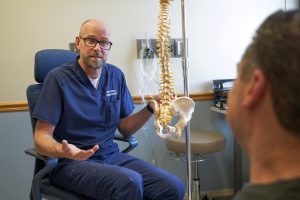
Hillsdale Spine Center was announced in January 2026 to provide a full continuum of neurosurgical spine care.

Addressing Specialty Needs

Knowing there was a local need for advanced neurosurgical care, Hillsdale responded by onboarding a neurosurgeon and opening their Hillsdale Spine Center. Residents can now receive a full spectrum of care, including minimally invasive spine surgery, spine fusion, spine fracture treatments and treatment for herniated discs. The team also recently completed their first lumbar total disc replacement, an innovative treatment that isn’t widely available.

“I couldn’t imagine where I’d be at if I didn’t get the surgery,” said the patient, who previously struggled with severe back pain for more than 15 years. “[The procedure] was the best thing I’ve ever done.”

Uplifting Rural Voices

Hillsdale teams are also finding meaningful ways to speak up for rural patients and providers. In a new podcast series titled, “Rural Health Fractured,” conversations center around sustainable solutions to today’s pressing rural healthcare issues.

Additionally, Hodshire will serve as board chair of the MHA Center of Rural Excellence, a 501(c)(6) organization created to formalize and strengthen the collective voice of rural hospitals through targeted advocacy and support tailored to the unique challenges Michigan’s rural providers face.

Those with questions or content ideas for the Hospitals Help series may contact Lucy Ciaramitaro at the MHA.

Michigan Health & Hospital Association Establishes MHA Center of Rural Excellence

The Michigan Health & Hospital Association (MHA) today announced the establishment of the MHA Center of Rural Excellence, a 501(c)(6) organization created to formalize and strengthen the collective voice of rural hospitals through support tailored to the unique challenges of Michigan’s rural providers, including targeted advocacy efforts on their behalf.

“Rural hospitals are navigating increasing financial strain, workforce shortages and complex funding structures that were not developed with rural realities in mind,” said MHA CEO Brian Peters. “The MHA Center of Rural Excellence is designed to provide dedicated advocacy and governance to give rural hospitals the support needed to manage these challenges and continue caring for their communities.”

Michigan ranks fourth for the number of residents living in rural counties with a full or partial primary care workforce shortage and sixth for residents living in rural counties with a shortage of mental health professionals, according to the University of Michigan’s Institute for Healthcare Policy & Innovation.

The MHA Center of Rural Excellence will elevate rural‑specific perspectives to policymakers, ensuring rural hospitals’ distinct challenges receive the attention they deserve. This approach will position rural hospital leaders at the center of state policy decisions that directly affect the communities they serve.

The MHA Center of Rural Excellence will also have a specific focus on Rural Health Transformation Program (RHTP) funding, including efforts to maximize the amount of available resources that can be dedicated to rural Michigan hospitals.

Lauren LaPine-Ray, DrPH, MPH, will serve as executive director of the MHA Center of Rural Excellence. Jeremiah J. Hodshire, president and chief executive officer, Hillsdale Hospital, will chair the member-led board.

For more information, visit the MHA Center of Rural Excellence webpage.