
MHA Monday Report May 4, 2026

Senate Approves Fiscal Year 2026-2027 Budget, Organ Donor Tax Credit Legislation Advances

Several healthcare-related measures, including the full Senate budget and legislation on tax credits for organ donation, saw action during the week of April 27. The Senate advanced its full budget proposal under Senate Bill …


CMS Releases FY 2027 LTCH Prospective Payment System Proposed Rule

The Centers for Medicare & Medicaid Services (CMS) recently released a proposed rule to update the Medicare fee-for-service (FFS) long-term care hospital (LTCH) prospective payment system (IPPS) for fiscal year (FY) 2027. Highlights of the proposed rule …


Senate Introduces Legislation on Behavioral Health Transport Vehicles

Michigan’s behavioral health system has long faced a critical transportation gap — and the MHA is supporting efforts to close it. Last week, the legislature introduced two bills that represent a significant step forward for patients in crisis and the hospitals …


Fact Check: Drug Pricing Savings Are the Lifeline to Community Healthcare Services

Recent headlines have taken aim at the 340B Program – a federal drug savings initiative that serves as a lifeline to important community healthcare services. As a long-time cardiothoracic surgeon …


MDHHS Gun Lock Distribution Map Expands Access to Safe Storage

The Michigan Department of Health and Human Services (MDHHS) launched a new interactive Gun Lock Distribution Map to help residents locate free firearm safety devices and connect community partners with safe storage resources. The tool identifies more …


UnitedHealth to Expand Rural Payment Pilot Program

UnitedHealthcare Group announced changes to eliminate prior authorization barriers and accelerate payments for rural hospitals nationwide to improve access to care and lower costs. In January 2026, UnitedHealthcare implemented the Rural Payment Acceleration …


Rural Hospital Leaders Appointed to MHA Center of Rural Excellence Board of Trustees

Seven rural Michigan hospital leaders were recently appointed as inaugural board members to the newly established MHA Center of Rural Excellence by the Michigan Health & Hospital Association (MHA) Board of Trustees. These members are responsible for …


Hospitals Help: Mary Free Bed Partnership Addresses Nursing Shortage, Offers Tuition Assistance

Every hour of every day, nurses provide care Michiganders can count on. As staffing shortages continue to impact various sectors of healthcare, Michigan hospitals are focused on creative solutions to …


Webinar Recap: Michigan 211 Community Materials Now Available

A recent webinar hosted by the MHA explored regional trends and emerging community needs across Michigan using statewide 2‑1‑1 call data. The event explored insights on call volume, caller demographics and service requests that reflect evolving pressures on individuals …


MHA Keystone Center PSO Dashboard: Turning Safety Data into Action

The MHA Keystone Center Patient Safety Organization (PSO) Dashboard in KeyMetrics provides member hospitals with secure access to harm reporting data sourced from Press Ganey’s NextPlane platform. Designed to support patient safety improvement …


News to KnowNew to Know

The MHA membership will convene in person for the MHA Annual Membership Meeting June 24–26.


Keckley Report

Why Those Outside Healthcare Control its Future

“I study the future of the U.S. health system. The framework I use is based on monitoring trends, lag and lead indicators in five zones of unique relevance in the health industry at home and abroad.

Based on 30 years-plus years of applying this framework to my industry surveillance process, it’s clear that traditional lag indictors like enrollment, utilization, spending, workforce supply-demand et al are less useful in predicting its future. Instead, indicators from outside healthcare seem more aligned to its future than indicators from within.

Objectively, the reality is this: the players outside healthcare including Big Tech, Big Banks and Big Employers are forcing changes faster than healthcare insiders are comfortable and the health system’s future is uncertain as a result.”

Paul Keckley, April 26, 2026


MHA in the News

The MHA received media coverage the week of April 27 covering behavioral health and 340B. Common Ground published a story April 28 detailing Michigan’s behavioral health landscape. Lauren LaPine-Ray, DrPH, MPH, vice president, policy & …

Media Recap: Behavioral Health and Drug Manufacturer Pressures

Common Ground published a story April 28 detailing Michigan’s behavioral health landscape. Lauren LaPine-Ray, DrPH, MPH, vice president, policy & rural health, was cited throughout the article highlighting growing concern about emergency department (ED) boarding. LaPine-Ray notes that hospitals are increasingly serving as the default entry point for patients experiencing mental health crises due to gaps in the behavioral health system. She shared the staggering number of patients – more than 155 – in Michigan emergency departments each day waiting for behavioral health services.

MHA CEO Brian Peters pushed back on a Michigan Health Purchasers Coalition report that falsely represents the federal 340B drug discount program in an article published by MIRS April 29.

Peters highlights the report’s flawed methodology and urges the coalition’s members to engage with Michigan hospitals on solutions that address the real drivers behind rising healthcare costs like the prices set by drug manufacturers.

Members with questions regarding media requests should contact Elise Gonzales at the MHA.

MDHHS Convenes Statewide RHTP Advisory Council

The Michigan Department of Health and Human Services (MDHHS) convened the first Rural Health Transformation Program (RHTP) Advisory Council meeting on April 13.

Three rural hospital leaders from MHA-member hospitals serve on the council: Julie Yaroch, DO, CEO, ProMedica Charles and Virginia Hickman Hospital; Jeremy Cannon, vice president, chief nursing officer, Kalkaska Memorial Hospital; and Robert Mach, MBA, FACHE, ARRT, CEO, Schoolcraft Memorial Hospital. Lauren LaPine-Ray, DrPH, MPH, vice president, policy & rural health, executive director, MHA Center of Rural Excellence, represents the association on the council.

The meeting opened with welcome remarks and introductions from MDHHS RHTP staff, followed by a high-level overview of the program and members’ orientation to the advisory council, including a review of its charter and governance structure to clarify roles, expectations and decision-making processes.

The remainder of the meeting focused on a facilitated virtual breakout session to define what success will look like for the advisory council in one year. The session concluded with the next steps and time for questions and reflections.

Members with questions may contact Lauren LaPine-Ray at the MHA.

Michigan Health & Hospital Association Establishes MHA Center of Rural Excellence

The Michigan Health & Hospital Association (MHA) today announced the establishment of the MHA Center of Rural Excellence, a 501(c)(6) organization created to formalize and strengthen the collective voice of rural hospitals through support tailored to the unique challenges of Michigan’s rural providers, including targeted advocacy efforts on their behalf.

“Rural hospitals are navigating increasing financial strain, workforce shortages and complex funding structures that were not developed with rural realities in mind,” said MHA CEO Brian Peters. “The MHA Center of Rural Excellence is designed to provide dedicated advocacy and governance to give rural hospitals the support needed to manage these challenges and continue caring for their communities.”

Michigan ranks fourth for the number of residents living in rural counties with a full or partial primary care workforce shortage and sixth for residents living in rural counties with a shortage of mental health professionals, according to the University of Michigan’s Institute for Healthcare Policy & Innovation.

The MHA Center of Rural Excellence will elevate rural‑specific perspectives to policymakers, ensuring rural hospitals’ distinct challenges receive the attention they deserve. This approach will position rural hospital leaders at the center of state policy decisions that directly affect the communities they serve.

The MHA Center of Rural Excellence will also have a specific focus on Rural Health Transformation Program (RHTP) funding, including efforts to maximize the amount of available resources that can be dedicated to rural Michigan hospitals.

Lauren LaPine-Ray, DrPH, MPH, will serve as executive director of the MHA Center of Rural Excellence. Jeremiah J. Hodshire, president and chief executive officer, Hillsdale Hospital, will chair the member-led board.

For more information, visit the MHA Center of Rural Excellence webpage.

Media Recap: Coverage Highlights MHA Insights on Access, Affordability and Innovation

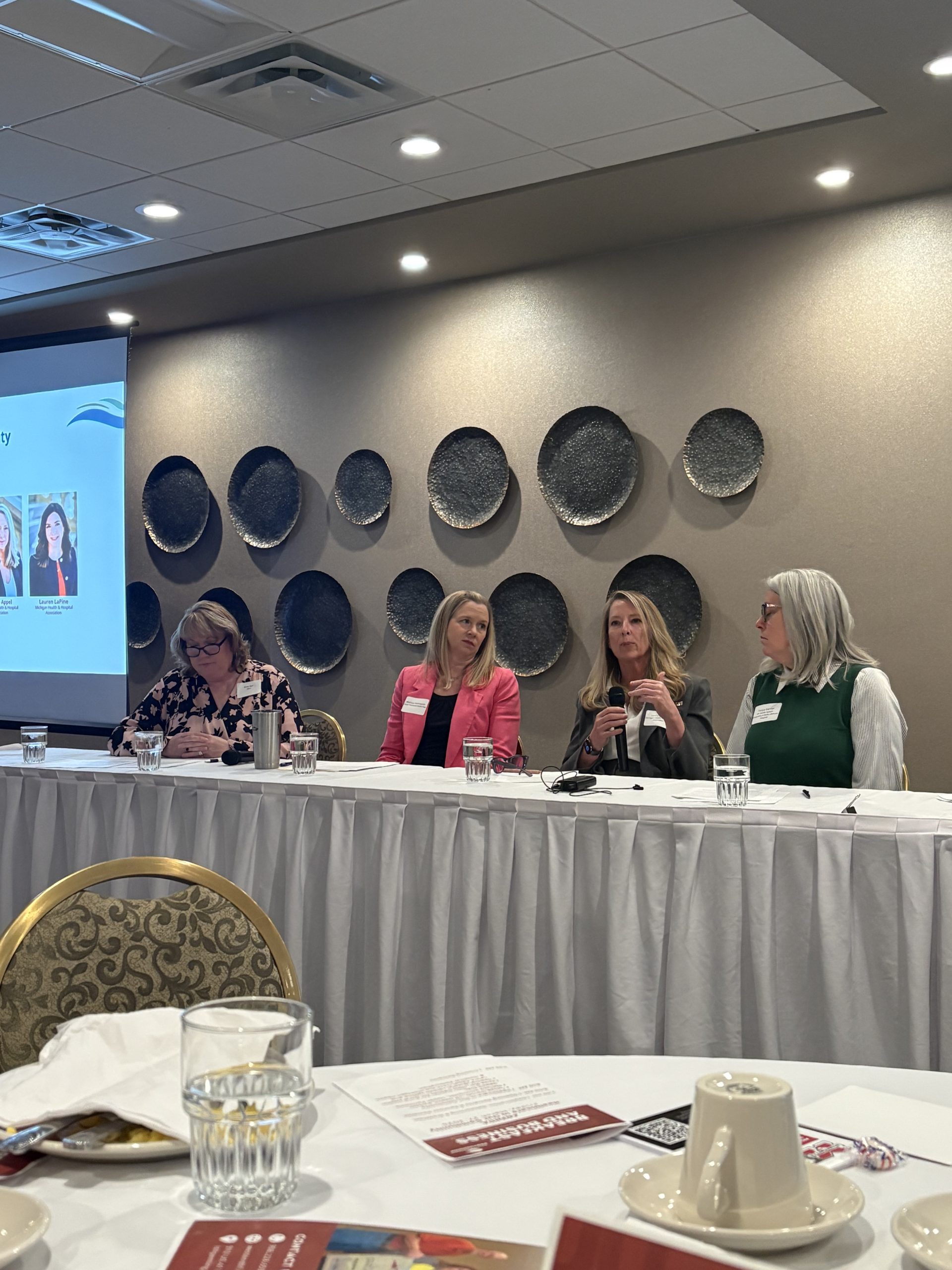
Laura Appel, executive vice president, government relations and public policy, MHA, during a panel discussion at the Lake Superior Community Partnership Breakfast & Business event.

The MHA received media coverage during the week of March 30 following Executive Vice President of Government Relations and Public Policy Laura Appel’s participation in two panels focused on key healthcare challenges and opportunities.

WZMQ covered the Lake Superior Community Partnership’s Breakfast & Business event, where Appel and Lauren LaPine-Ray, DrPH, MPH, vice president, policy & rural health, MHA, discussed the unique healthcare landscape and challenges in the Upper Peninsula. Appel and LaPine-Ray emphasized how federal policy decisions could impact access to care and economic stability in the region.

The Michigan Daily reported on the Blueprints for Pangaea Healthcare Business Gala, which included a panel presentation in which Appel discussed the need for cross‑sector collaboration to address healthcare access and affordability.

MLive published a story on projected Medicaid coverage losses following the passage of H.R. 1. MHA CEO Brian Peters was quoted in the article discussing the long-term impact on Michigan hospitals.

“For Michigan hospitals alone, that number is north of $6 billion in negative impact over that 10-year horizon,” said Peters. “You cannot take $6 billion out of the hospital funding line without severe consequences in terms of access to patient care.”

Members with questions regarding media requests should contact Elise Gonzales at the MHA.

KFF Health News: Rural Health Transformation Program Fund Allocation

KFF Health News published a story March 4 detailing concerns from hospital leaders and lawmakers across the country about how states plan to spend new federal rural health funding.

The $50 billion Rural Health Transformation Program (RHTP) is designed to drive innovation and maintain access in rural communities following significant federal Medicaid cuts.

Lauren LaPineLauren LaPine-Ray, DrPH, MPH, vice president, policy and rural health, MHA, is quoted in the article, raising concerns about rural hospitals’ ability to access critical funds due to the complexity and competitiveness of state grants.

The article was syndicated by CBS News and Fierce Healthcare.

LaPine-Ray was also featured in Modern Healthcare’s article discussing the challenges associated with securing RHTP dollar. She notes how specific grant requirements surrounding population health data analytics-backed care coordination programs and technology implementation will negatively impact rural hospitals.

“Funding care coordination and community initiatives is a wonderful thing, but given the short timeframe and the fact CMS will judge programs over one year, rural hospitals are worried about funds being retroactively pulled back,” she said. “With Medicaid redeterminations and Medicaid cuts coming in 2027, rural hospitals may not have the luxury to choose between committing to do something new or trying to keep their doors open.”

Members with questions regarding media requests should contact Elise Gonzales at the MHA.

MHA Monday Report Feb. 9, 2026

IMLC Legislation Clears House, Continuing Education and Credentialing Bills Advance

The Michigan House of Representatives voted in support of House Bill 5455, sponsored by Rep. Rylee Linting (R-Grosse Ile Township), which would restore Michigan to the IMLC. The compact supports access to care, particularly in rural …


Former U.S. Senator Debbie Stabenow Addresses MHA Board

The MHA Board of Trustees’ Feb. 4 meeting featured a discussion with former U.S. Senator Debbie Stabenow, who is now a senior policy advisor with DC-based Liberty Partners Group, a bipartisan strategic consulting firm. Stabenow …


MHA Releases FAQ on Rural Health Transformation Program Funding

The MHA recently released a new frequently asked questions (FAQ) document to help members better understand allowable uses, limitations and compliance requirements related to Michigan’s Rural Health Transformation Program (RHTP). The FAQ clarifies that RHTP …


CMS Releases 2025 Occupational Mix Survey for Hospitals

The Centers for Medicare & Medicaid Services (CMS) recently released the 2025 occupational mix survey to collect data from hospitals paid under the Medicare inpatient prospective payment system. Survey results will be used to adjust …


MHA Reinforces Evidence-Based Vaccination Guidelines

The MHA is strengthening its commitment to evidence-based immunization practices under the guidance of the MHA Healthcare and Public Health Integration Council and chief medical and nursing leaders. Efforts include distributing educational resources, reaffirming alignment …


Initiative Seeks to Expand Perinatal and Infant Mental Health Services in Michigan

Providers who serve pregnant people, infants and families are encouraged to complete a brief survey to help build Michigan’s first statewide Perinatal and Infant Early Childhood Mental Health (PIECMH) Provider Directory. The initiative is led …


HHS Announces $100M Investment in Substance Use and Mental Health Treatment

U.S. Department of Health and Human Services (HHS) Secretary Robert F. Kennedy Jr. announced a $100 million investment to expand substance use disorder treatment, mental health services and housing-related supports under the administration’s Great American Recovery initiative. …


MDHHS Withdraws PIHP Procurement

The Michigan Department of Health and Human Services (MDHHS) has withdrawn its request for proposals (RFP) to competitively procure Prepaid Inpatient Health Plans (PIHPs), ending the planned rebid process. The decision follows a Jan. 8 …


Hospitals Help: Youth Safety Event Teaches UP Students Emergency Preparedness

Camp 911 is a hands-on, youth-focused safety event supported by Marshfield Medical Center-Dickinson hospital that is designed to teach school-aged children essential emergency response skills. The camp brings together professionals from various fields to demonstrate …


News to Know

  • MHA Endorsed Business Partner Wakely is hosting the webinar Summary and Impacts of the 2027 Medicare Advantage Advance Notice Feb. 12 from 1 – 2 p.m. ET.
  • The 2026 MHA Human Resources Conference, scheduled for March 24 at the Crowne Plaza Lansing, will convene human resources leaders and professionals who are shaping the future of the healthcare workforce.
  • MHA Endorsed Business Partner CyberForce |Q is hosting an in-person Coffee & Collab for Cybersecurity Leaders Feb. 10 from 8:30 – 10:00 a.m. ET at CyberForce|Q headquarters in Plymouth, MI.

MHA in the News

The Mining Journal published a statement from the MHA chief medical officer following the distribution of guidance to

Michigan families departing from established standards. Dr. Roth emphasizes the efficacy of vaccines and urges families to seek medical guidance from their providers. “Vaccines remain …

MDHHS Withdraws PIHP Procurement

The Michigan Department of Health and Human Services (MDHHS) has withdrawn its request for proposals (RFP) to competitively procure Prepaid Inpatient Health Plans (PIHPs), ending the planned rebid process.

The decision follows a Jan. 8 ruling that found key elements of the RFP conflicted with provisions of the Michigan Mental Health Code. The court determined that the RFP, as drafted, restricted the ability of Community Mental Health Services Programs to carry out certain statutorily required functions, including entering financial contracts necessary to support managed care responsibilities.

While the court did not issue an injunction directing the state to withdraw the RFP, it identified multiple legal conflicts and left it to MDHHS to determine how to proceed. MDHHS has now opted to rescind the RFP rather than revise or reissue it.

With the withdrawal of the RFP, the existing PIHP structure will remain in place. It is unclear whether MDHHS will pursue a revised procurement approach or other policy changes moving forward.

Members with questions may contact Lauren LaPine-Ray at the MHA.

MHA Releases FAQ on Rural Health Transformation Program Funding

The MHA recently released a new frequently asked questions (FAQ) document to help members better understand allowable uses, limitations and compliance requirements related to Michigan’s Rural Health Transformation Program (RHTP).

The FAQ clarifies that RHTP funding is temporary and intended to support specific care transformation activities. Funds cannot be used to cover routine operating costs, financial losses or to replace existing funding. Repayment may be required if funds are used for purposes not approved or if required documentation and reporting are not completed.

The document also addresses common questions raised by hospitals, including the use of RHTP funds for provider payments, health information technology investments, electronic medical record upgrades and limited facility improvements. In all cases, expenses must be directly connected to transformation activities approved by the Centers for Medicare & Medicaid Services (CMS).

Additional RHTP information and resources are available on the MHA’s Rural Health Transformation Program webpage. The MHA will continue to update both the FAQ and the webpage as more guidance becomes available from the Michigan Department of Health and Human Services and CMS.

Members with questions may contact Lauren LaPine-Ray at the MHA.

Media Recap: Rural Health Transformation Project Fund Distribution

The Detroit News published a story Jan. 29 on two recent House Appropriations Committee hearings on the distribution of Rural Health Transformation Program (RHTP) funds.

The article details concern from House lawmakers and rural providers surrounding the program, particularly the designation of Wayne and Oakland counties as partially rural in the Michigan Department of Health and Human Services (MDHHS) RHTP application.

Lauren LaPineLauren LaPine-Ray, DrPH, MPH, vice president, policy and rural health, MHA, is quoted in the story clarifying the department’s commitment expressed to the MHA to ensure rural communities benefit from the funding.

“The state is juggling varying state and federal definitions of rural as it applies for and administers the program,” LaPine-Ray said.

“I can say, very transparently, in our conversations with MDHHS, they did not intend to define a rural community as being one within Wayne or Oakland County,” she said. “They were very specific and intentional in making sure the definition that they used really focused on rural community and rural populations.”

The MHA also received coverage from MIRS and Bridge on 340B and medical debt collection legislation.

Members with questions regarding media requests should contact Elise Gonzales at the MHA.