
Media Attends Press Conference Highlighting Impacts of Medicaid Cuts

Adam Carlson, senior vice president, advocacy, MHA, joined JJ Hodshire, president and chief executive officer, Hillsdale Hospital, for a press conference April 17 to discuss how proposed cuts to Medicaid will further destabilize hospitals already experiencing financial strain.

Carlson urged Congress to reconsider or delay cuts outlined in H.R.1.

“Congress can still take action as these cuts continue to ramp up to stop them, to delay them, to look at other measures where they can support health care and really support rural health care across our state,” Carlson told WLNS-TV.

WILX-TV also covered the round table discussion.

Members with questions regarding media requests should contact Elise Gonzales at the MHA.

WJR Spotlight Highlights the Importance of the 340B Drug Pricing Program

Elizabeth Kutter, vice president and deputy general counsel, MHA, joined Paul W. Smith for a WJR Spotlight interview April 9 about the value the federal 340B Drug Pricing Program brings to Michigan communities.

The conversation explored how hospitals use 340B savings to reinvest directly into patient care by maintaining or expanding services, lowering out-of-pocket costs and supporting community health initiatives.

The segment also addressed ongoing pressure from drug manufacturers to enact policy changes that would weaken the program through restrictions that would impact healthcare access, especially in rural communities. Kutter emphasized how the program operates at no cost to taxpayers and allows hospitals to stretch limited resources as drug, labor and supply costs continue to rise.

Members with questions regarding media requests should contact Elise Gonzales at the MHA.

Media Recap: Coverage Highlights MHA Insights on Access, Affordability and Innovation

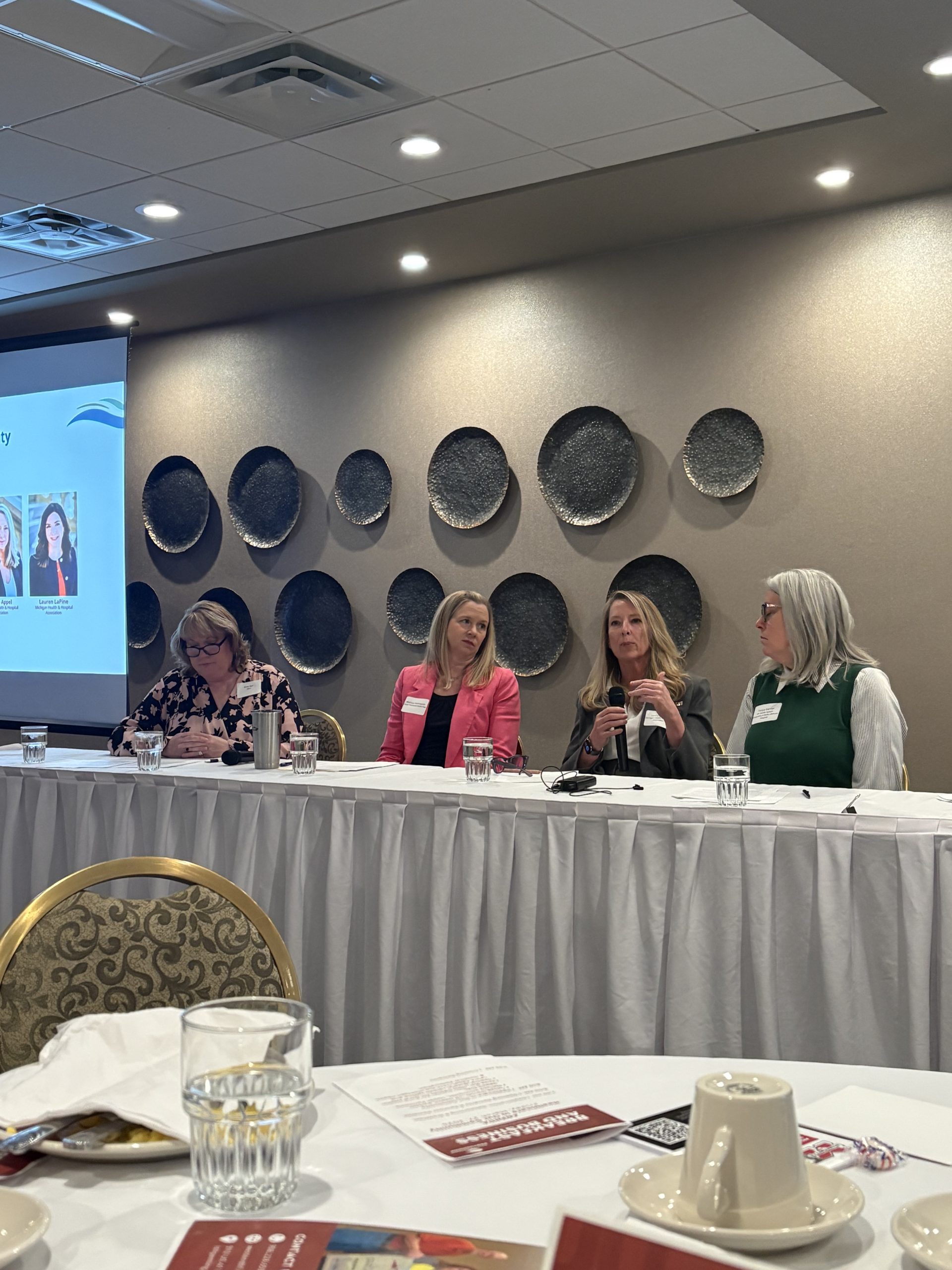
Laura Appel, executive vice president, government relations and public policy, MHA, during a panel discussion at the Lake Superior Community Partnership Breakfast & Business event.

The MHA received media coverage during the week of March 30 following Executive Vice President of Government Relations and Public Policy Laura Appel’s participation in two panels focused on key healthcare challenges and opportunities.

WZMQ covered the Lake Superior Community Partnership’s Breakfast & Business event, where Appel and Lauren LaPine-Ray, DrPH, MPH, vice president, policy & rural health, MHA, discussed the unique healthcare landscape and challenges in the Upper Peninsula. Appel and LaPine-Ray emphasized how federal policy decisions could impact access to care and economic stability in the region.

The Michigan Daily reported on the Blueprints for Pangaea Healthcare Business Gala, which included a panel presentation in which Appel discussed the need for cross‑sector collaboration to address healthcare access and affordability.

MLive published a story on projected Medicaid coverage losses following the passage of H.R. 1. MHA CEO Brian Peters was quoted in the article discussing the long-term impact on Michigan hospitals.

“For Michigan hospitals alone, that number is north of $6 billion in negative impact over that 10-year horizon,” said Peters. “You cannot take $6 billion out of the hospital funding line without severe consequences in terms of access to patient care.”

Members with questions regarding media requests should contact Elise Gonzales at the MHA.

Healthcare Access Policy Developments Draw Media Attention

The MHA received media coverage during the week of March 23 on key issues affecting access to care and the healthcare workforce.

MLive, Gongwer and the Michigan Advance reported on the bipartisan agreement to extend Michigan’s participation in the Interstate Medical Licensure Compact. MHA CEO Brian Peters was quoted in the articles emphasizing how the compact helps hospitals recruit qualified physicians more efficiently while maintaining critical state oversight.

Peters underscored the importance of participation in the compact, especially in areas where workforce shortages can limit patient access to specialty services.

“For many hospitals, especially those serving rural or border communities, the compact supports access to care in high-demand specialties such as emergency medicine, psychiatry, obstetrics and primary care,” he said.

Laura AppelLaura Appel, executive vice president, government relations & public policy, was featured in Michigan Independent’s coverage surrounding Gov. Whitmer’s executive budget recommendations to fund Michigan’s Medicaid program.

Appel highlights the challenges hospitals will face if more Michiganders lose healthcare coverage.

The MHA was also quoted in a Bridge Michigan story examining increased federal immigration enforcement activity near healthcare facilities, reiterating that hospitals remain focused on caring for every patient who seeks treatment. Meanwhile, Peters also appears in an MLive article about sharing the impact of Medicaid funding cuts to hospitals.

Members with questions regarding media requests should contact Elise Gonzales at the MHA.

MHA Members and Business Leaders Join Crain’s for Healthcare Affordability Roundtable

The MHA partnered with Crain’s Content Studio to facilitate a healthcare affordability discussion, which was highlighted in its Detroit and Grand Rapids publications.

Healthcare and business leaders examined the complex factors driving healthcare costs and its impact on both patients and employers. Participants emphasized that meaningful change will require coordination across the healthcare system, including providers, insurers, businesses and policymakers.

Hospital leaders highlighted existing efforts to improve efficiency, reduce administrative burden and expand new care models that help keep patients healthier and out of the hospital.

The discussion reinforced Michigan hospitals’ commitment to addressing affordability while maintaining access to high-quality care.

Members with questions regarding media requests should contact Elise Gonzales at the MHA.

Media Recap: Healthcare Affordability and Access

MHA CEO Brian Peters bylined an op-ed Feb. 16 in The Detroit News, highlighting Michigan hospitals’ understanding of the financial strain that rising healthcare costs are creating and reinforcing their commitment to being part of the solution.

Peters outlines how hospitals are confronting the same cost pressures affecting households and businesses, including workforce shortages, supply chain costs and increased cybersecurity demands. He emphasizes that amid these challenges, hospitals are committed to collaboration, working alongside policymakers, employers and community partners to advance solutions that improve affordability while protecting access to care for all Michiganders.

Lauren LaPineLauren LaPine-Ray DrPH, MPH, vice president, policy and rural health, MHA, was quoted in a Feb. 17 Bride Magazine story expressing concern for emergency room (ER) capacity following Oakland Community Health Network’s recommendation to direct mental health patients to the ER amid paused operations at the county’s resource and crisis center.

Members with questions regarding media requests should contact Elise Gonzales at the MHA.

The Mining Journal: MHA Chief Medical Officer Affirms AAP Immunization Schedule

The statement was issued following the distribution of guidance to Michigan families departing from established standards.

Dr. Roth emphasizes the efficacy of vaccines and urges families to seek medical guidance from their providers.

“Vaccines remain among medicine’s most effective tools to keep people healthy and out of the hospital with severe illness,” said Roth. “We encourage Michigan families to speak with their medical provider with questions about immunizations.”

Members with any questions regarding media requests should contact Elise Gonzales at the MHA.

Media Recap: Rural Health Transformation Project Fund Distribution

The Detroit News published a story Jan. 29 on two recent House Appropriations Committee hearings on the distribution of Rural Health Transformation Program (RHTP) funds.

The article details concern from House lawmakers and rural providers surrounding the program, particularly the designation of Wayne and Oakland counties as partially rural in the Michigan Department of Health and Human Services (MDHHS) RHTP application.

Lauren LaPineLauren LaPine-Ray, DrPH, MPH, vice president, policy and rural health, MHA, is quoted in the story clarifying the department’s commitment expressed to the MHA to ensure rural communities benefit from the funding.

“The state is juggling varying state and federal definitions of rural as it applies for and administers the program,” LaPine-Ray said.

“I can say, very transparently, in our conversations with MDHHS, they did not intend to define a rural community as being one within Wayne or Oakland County,” she said. “They were very specific and intentional in making sure the definition that they used really focused on rural community and rural populations.”

The MHA also received coverage from MIRS and Bridge on 340B and medical debt collection legislation.

Members with questions regarding media requests should contact Elise Gonzales at the MHA.


Media Covers Increasing Rate of Flu-Related Hospitalizations

The MHA received media coverage during the week of Jan. 5, covering the increasing rate of flu-related hospitalizations in Michigan.

Jim LeeBoth Bridge and Michigan Public published stories during the week based on interviews with Jim Lee, senior vice president, policy & data analytics, MHA.  The stories address the overall growth in influenza cases and compares how the 2025-26 flu season in Michigan started earlier than during the prior year.

“It’s too early to tell when that peak will occur, but we’re definitely experiencing flu season a little bit earlier this year in our hospitals,” said Lee to Michigan Public.

Members with any questions regarding media requests should contact John Karasinski at the MHA.

Common Ground: Statewide effort tackles postpartum depression and perinatal mood disorders

Lauren LaPineCommon Ground published a story Dec. 9 on the behavioral health collaborative that the MHA has launched to address postpartum depression and perinatal mood disorders.

Lauren LaPine-Ray, vice president, policy and rural health, MHA, is quoted in the story discussing the MHA’s role in convening the collaborative and the need to address these issues.

“For mothers, depression rates continue to increase,” said LaPine-Ray. “Making sure we have real support for behavioral-health services in this state is somewhere we urgently need to see change and investment.”

The story also highlights collaborative partners, including Pine Rest Christian Mental Health Services, with their Mother & Baby Day perinatal mood disorder program, and Michigan State University’s ROSE (Reach Out, Stay, Strong, Essentials) postpartum depression prevention program.

Members with any questions regarding media requests should contact John Karasinski at the MHA.