CEO Report — No One Knows Healthcare Better than Hospitals

MHA Rounds image of Brian Peters

“The price of greatness is responsibility.” — Winston Churchill.

Skyrocketing healthcare costs are impacting families and communities across the state. No one is more committed to addressing this problem than those providing care around the clock.MHA Rounds image of Brian Peters

Despite being on the frontlines, hospitals are under fire. What’s worse is that conversations around healthcare affordability often involve those who don’t understand how policy decisions will play out in practice. When legislators listen to hospital voices, they gain firsthand insight on the needs of Michigan communities while better understanding the barriers that providers face.

Addressing healthcare affordability starts with taking a closer look at the largest cost drivers, many of which are beyond hospitals’ control. While they are often blamed, hospitals do not manufacture or determine drug prices. Similarly, reimbursement rates are ultimately determined by public and private insurers. Although the figures are often taken out of context, hospitals only collect a fraction of what is listed on publicly posted pricing files.

At the end of the day, nobody sees the impact of rising costs quite like hospitals do. Their teams deliver care 24/7 to anyone who walks through their doors, regardless of their ability to pay. They do this while facing acute workforce shortages, rising labor costs, mounting regulatory pressures, cybersecurity threats and more.

Our MHA affordability webpage does a great job outlining cost drivers, visualizing hospital spending and proposing meaningful solutions.

In order to keep putting communities first, hospitals need our state and federal leaders to confront the external pressures dictating how much cost they can realistically absorb. We applaud Senate Majority Leader Winnie Brinks and Sen. Hertel for bringing forth legislation last month focused on expanding coverage options, strengthening continuity of care and addressing costs drivers. Passing this bill package would be an important step toward lowering costs, but it must be part of an ongoing commitment from our lawmakers to collaborate with hospitals on strategies that keep patients at the center of every solution.

During National Hospital Week, we’re asking lawmakers who are serious about addressing healthcare affordability to give local hospitals a seat at the table to help inform decisions, identify solutions and avoid outcomes that ultimately harm Michigan patients and communities.

As always, I welcome your thoughts.

Fact Check: Drug Pricing Savings Are the Lifeline to Community Healthcare Services

Gary L. Roth, DO, Chief Medical Officer, MHA

Recent headlines have taken aim at the 340B Program – a federal drug savings initiative that serves as a lifeline to important community healthcare services. As a long-time cardiothoracic surgeon, it’s time to set the record straight on 340B.

Here’s the reality: doctors, nurses and healthcare leaders share patient’s frustration over rising healthcare costs. Michigan hospitals and health systems employ 222,000 residents, while healthcare is the largest employer in the state. We experience rising healthcare costs and premiums in lockstep with other businesses; while seeing those costs in the faces of every patient who walks through our doors and how cost can influence a person’s decision to seek care.

But attacking the 340B program is the wrong answer to a real problem.

What 340B Actually Does

The 340B program allows eligible hospitals and safety-net healthcare providers – those serving disproportionately high numbers of low-income and uninsured patients – to purchase certain outpatient drugs at reduced prices. The savings are directly reinvested into patient care: keeping rural emergency departments open, funding behavioral health services, expanding pharmacy access in underserved communities and subsidizing care for patients who cannot pay.

Hospitals located in 340B-eligible communities are reimbursed at levels below the full cost to deliver care. This federal program was created to financially support community-based healthcare services without spending any taxpayer dollars.

In Michigan, where rural hospital closures remain a persistent threat and safety-net institutions serve our most vulnerable neighbors, 340B is a lifeline to keeping healthcare close to home. For myself, who spent my career caring for critical care patients in the Greater Lansing area, 340B is a key part of supporting the healthcare we can receive in our community. I know 340B works because of my lived experience providing care because of it. Without 340B savings, some Michigan hospitals would face an impossible choice: cut lifesaving services or close their doors.

Let’s examine what these recent headlines are doing – distracting attention from the reality that drug companies are significantly driving healthcare costs. Their solution is to blame the caregivers and their hospitals that care for everyone who walks through their doors, year-round.

Drug prices in the United States have risen at rates that far outpace inflation. The cost of drugs for hospitals grew 13.6% last year, while hospital prices only increased 3.3%.

Unlike hospitals, drug companies set their own prices with virtually no regulatory check. Unlike hospitals, drug companies boast nearly 23% annual increases in revenue while still raising drug costs. Unlike hospitals, they don’t have to be open at 3 a.m. when someone’s child is struggling to breathe. Hospitals are the ones staying through the night to treat emergency aneurysms, heart attacks and strokes. I know this because I’ve treated far more than I can count.

Hospitals are always there. Always caring. Always working to advance care, regardless of ability to pay, regardless of the hour, regardless of the complexity.

This tension between drug pricing and healthcare affordability was exactly the kind of issue raised at a recent Crain’s Detroit Business Healthcare Affordability Roundtable, where Michigan hospitals and business leaders gathered to confront the systemic forces driving costs higher. The consensus was clear: meaningful reform requires looking at the full picture, including the drug supply chain, and not taking a scalpel to programs that help hospitals keep their doors open around the clock to serve the patients who need them most.

Let’s Solve the Right Problem Together

Accountability and transparency matter and the MHA support both. What I know from meeting and caring for patients is that meaningful solutions are those that impact their pocketbook without touching their healthcare services. Dismantling 340B as drug companies and their partners wish to do fails to achieve either of those outcomes. It instead pads drug company profits while risks community healthcare services.

The MHA is ready to be at the table. We invite lawmakers, business leaders, insurers and drug companies to join us in pursuing real, collaborative solutions to the cost challenges facing Michigan families.

MHA CEO Report — Violence Is Not Part of the Job

MHA Rounds graphic of Brian Peters

“Fear is not a good motivator.” — Edgar Schein

MHA Rounds graphic of Brian PetersHealthcare workers accept extraordinary responsibility in their role as caregivers for their community, but fearing for their own safety is never something they should have to accept as part of the job.

During Workplace Violence Prevention Month, we must be clear in our conviction that ensuring the safety of healthcare workers is not optional.

Violence against healthcare workers is rising at a concerning rate. According to a 2025 American Hospital Association report, up to 76% of healthcare workers have reported experiencing violence. Hospitals refuse to accept this as the status quo. Across the state, our members are investing in security enhancements, strengthening de‑escalation training and reinforcing the message that hospitals are places of healing.

But hospitals cannot solve this growing crisis on our own.

Without intentional policy solutions, efforts to reduce violence against healthcare workers will not meet the scope and severity of the problem. Healthcare workers deserve the same legal and workplace safeguards afforded to others who serve the public, like flight attendants and first responders. The MHA continues to advocate for legislation that will cement the expectation that assaulting healthcare workers will not be tolerated into law.

A fragmented approach to addressing workplace violence isn’t sustainable, which is why our members remain actively engaged in coordinated statewide mitigation efforts. Just last month, hospital HR leaders gathered at our annual HR conference and participated in a workplace violence reduction panel discussion. This October, our Safety & Quality Symposium will continue that focus with programming centered on worker safety. The MHA Keystone Center, a certified patient safety organization, supports this work year‑round by facilitating a member‑led workplace safety collaborative and offering educational opportunities, security risk assessments and trainings in partnership with MHA‑endorsed business partner Tarian.

Healthcare workers are there for us during our most vulnerable moments. It is our responsibility to be there for them as well by building cultures of safety that extend not only to patients, but to those supporting and providing care.

During Workplace Violence Prevention Month, and every month thereafter, we must reaffirm our commitment to prioritizing safety and advancing comprehensive solutions that support staff well-being. Protecting healthcare workers is not only fundamental to our values, but also to our ability to deliver the care our communities deserve.

As always, I welcome your thoughts.

Member Resource Available – Workplace Safety Posters

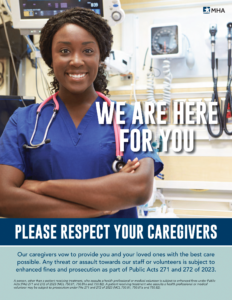
The MHA developed workplace safety posters for members to display throughout their facilities communicating the consequences of committing physical harm toward healthcare workers or hospital property. The informational posters are geared toward patients, families and visitors, with a couple of creative options available in two sizes. With the help of MHA Endorsed Business Partner AMN Healthcare Language Services, Spanish and Arabic versions are also available. Complimentary copies of the materials are available to MHA members by request through an online order form. Non-members may purchase materials at cost. Questions about materials may be directed to the MHA.

Food as Medicine: How Trinity Health Is Advancing Health Through Nutrition

This article is published in observance of National Nutrition Month.

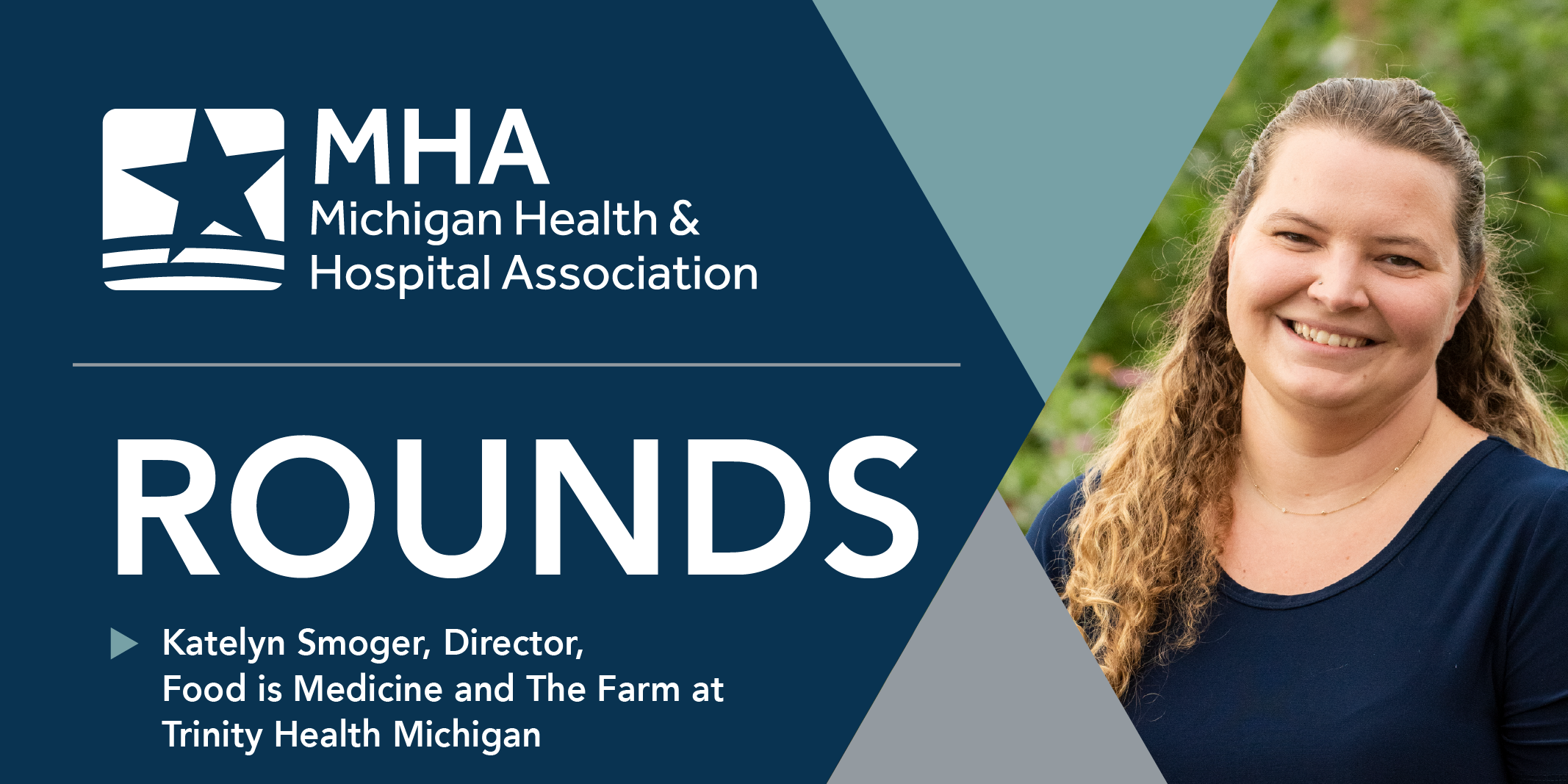
Byline: Katelyn Smoger, director, Food is Medicine and The Farm, Trinity Health Michigan

Food is Medicine. Health by Food. ProduceRx. The integration of healthy food into healthcare is gaining attention under many names, but the message remains the same: access to healthy foods as a part of care.

Programs such as produce prescriptions, healthy food packs and medically tailored meals are gaining attention as cost-effective ways to treat and prevent diet-related chronic illnesses.

In Michigan, 55% of residents have a diet-related chronic condition, and nearly 20% are managing that condition while living below 200% of the federal poverty level. In 2026, that income is less than $30,000 for a single adult. Economic instability, food insecurity, limited access to transportation and housing instability are all factors that affect overall health.

Trinity Health Michigan’s Food is Medicine program, a core pillar of community health and well-being, combines social and clinical care by offering locally grown food to patients experiencing food or nutrition insecurity or managing a diet-related chronic disease. This integration addresses underlying barriers to good health while improving outcomes, reducing the cost of care and enhancing the patient experience.

Our program operates out of three locations: Muskegon, Pontiac and Ypsilanti. Each location offers five core areas of integration, offering providers, patients and community members a range of interventions that meet them where they are.

Produce to Patients

Food produced at the hospital-based farm is donated to clinical partners. In 2025, 30,000 lbs. of food was harvested at The Farm and distributed to clinical partners, becoming a tool for providers to have authentic, human-centered conversations about healthy eating and access to food, while supporting improved health screenings. Patients identified with food-related needs are then referred to the Food is Medicine team within Epic, where they can access additional resources.

Client Choice, On Campus Food Pantries

Offering healthy food items such as dairy, shelf-stable proteins, dry goods, fruits and vegetables at campus food pantries creates opportunities for patients and community members to eat a nutritious diet regardless of their economic situation. Pantries can be accessed by recipients themselves or supported by acute care teams, ensuring that there is food available at discharge for patients in need. The food pantries were shopped more than 6,000 times in 2025.

Farm Markets

In-season, weekly markets offer fresh, local food for purchase, creating access points for high-quality fruits and vegetables in communities identified by the USDA as having limited access by foot or vehicle. In addition to cash, credit and payroll, the market also accepts SNAP, Double Up Food Bucks and Produce Prescriptions.

Education

Education and engagement are interwoven throughout Food is Medicine. Nutrition education, medical resident rotations, youth education and field trips, workshops and weekly engagement tables make Food is Medicine programming fun, approachable and meaningful, keeping children and adults alike trying new foods and developing an understanding of how those foods impact their health.

The Farm Share

A weekly box of locally grown produce is offered to participating members from April through December. Designed to make Food is Medicine accessible, The Farm Share offers nine types of membership, a five-day pick-up window and a weekly newsletter that includes healthy recipes, information on the farmers and storage tips. In 2025, nearly 900 unique members participated in the program across the state. More than 60% of those members received the program at no cost after being screened for food insecurity. A 2024 evaluation of the program, funded by The Michigan Health Endowment Fund, found that participants’ food security increased by 125%.

Food is Medicine programs can serve as economic drivers that support and strengthen the communities we serve when implemented in ways that prioritize the procurement and distribution of locally grown food. The Michigan Department of Health and Human Services’ In lieu of services policy, which offers food and nutrition services to eligible Medicaid enrollees, is among the first in the nation to require Medicaid Health Plans to utilize local vendors participating in the Michigan food economy. From Farm to FIM, a recent report published by The Rockefeller Foundation identified that Food is Medicine programs in Michigan have the potential to add 13,330 jobs and more than $2 billion to the state’s gross domestic product.

As Food is Medicine programs are implemented across the state, I encourage healthcare leaders to recognize the opportunity at hand: clinical integration, cross-sector collaboration and community-based partnerships can transform how the world thinks about and participates in healthcare.

The MHA Community Benefit Collaborative for combating Chronic Disease is using the Food Is Medicine program model to address barriers identified through Community Health Needs Assessments and improve health outcomes for Michiganders.

MHA CEO Report — Sustaining Hospital Funding is Key to Meaningful Reform

MHA Rounds image of Brian Peters

“We can’t become what we need to be by remaining what we are.”  — Oprah Winfrey

Michiganders heard a clear message from our state and federal leaders last week: healthcare is too expensive and the system is flawed. We agree. Michigan hospitals are deeply invested in providing timely and accessible care, reducing unnecessary administrative burden and improving transparency.MHA Rounds graphic of Brian Peters

The healthcare landscape in our country is incredibly complex, so it’s imperative to recognize no single action or one-size-fits all approach will create the substantial change we need. For decades, good-faith, reactive polices have attempted to manufacture financial stability for patients and providers by addressing immediate cost pressures, but this approach has only delayed the inevitable conversations we must have about healthcare affordability and sustainability.

Michigan hospitals continue to experience reimbursement rates that fall far below the cost of providing care and our patient population is simultaneously growing older and sicker. Hospitals are continually being asked to do more with less, but even their most innovative efficiency efforts cannot overcome reimbursement that lags far behind the growing cost and complexity of patient care. For example, general inflation rose by 14.1% from 2022 to 2024, while Medicare net inpatient payment rates increased by only 5.1% during the same time period. Access to important healthcare services is at risk when providers are reimbursed at less than the cost of care.

We’re eager to discuss long-term solutions with employers, lawmakers and other healthcare stakeholders, but we cannot address these systemic issues from our back foot. Labor, drug and supply costs are forcing hospitals, especially those in rural areas of the state, to limit services. Maintaining healthcare funding is about protecting access to care in communities across Michigan and not about preserving the status quo.

To create a more affordable system, we need one that is strong enough to withstand change. If we can pair reform and sustainability actions, we can strengthen care and lower costs for everyone long-term.

As always, I welcome your thoughts.

Building Excellence Without Barriers

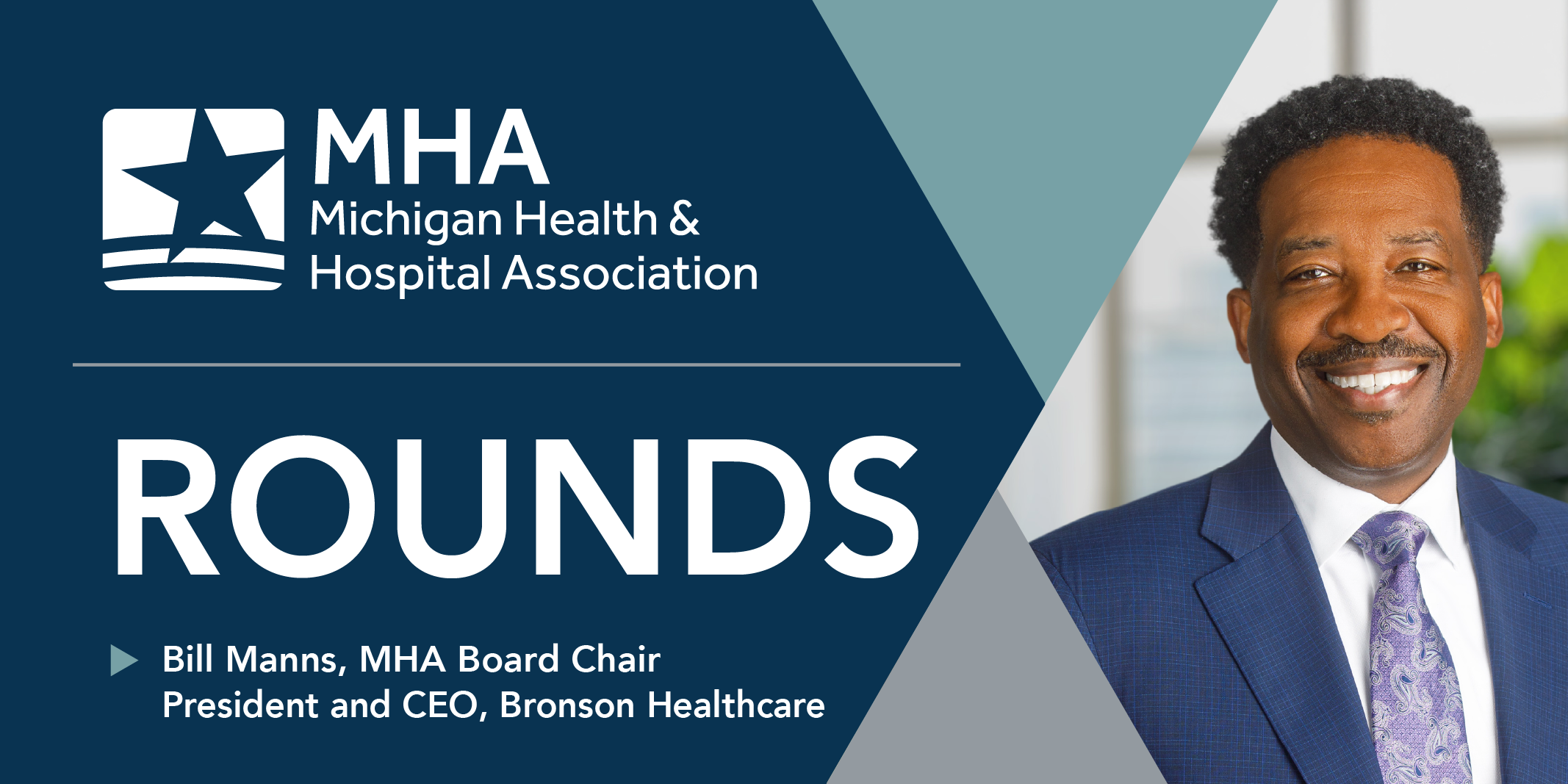
MHA Board Chair Bill Manns, president and CEO, Bronson Healthcare

“Of all the forms of inequality, injustice in health is the most shocking and the most inhuman.” – Martin Luther King Jr.

Every February, Black History Month invites us to pause and reflect on the pioneers who have redefined what’s possible for communities across the country — often in systems that were not designed with them in mind.

This rings especially true in healthcare.

Dr. Joseph Ferguson, for example, was Detroit’s first Black doctor who practiced medicine through the Civil War and offered aid during the city’s race riots. Dr. Ethelene Crockett, Michigan’s first Black board-certified OB/GYN, grew up during the depression and committed herself to becoming an activist and humanitarian. Dr. C. Allen Alexander, Kalamazoo’s first Black surgeon, pursued his career through the racial turbulence of the 1920s.

These stories, among thousands of others, are reminders that excellence has existed in every community, even when opportunity has not.

In my own career, I’ve learned that credentials alone don’t tell a person’s full story. I’ve met brilliant clinicians and administrators whose resumes didn’t follow a straight line — colleagues who worked their way through school, who supported families while earning degrees, who became leaders within their local communities long before becoming executives.

When I stepped into my role at Bronson Healthcare, staffing demands were at their peak. Still, it was imperative that we approach recruitment in a way that was innovative and committed to recognizing talent in all forms.

We cast a wide net to recruit exceptional talent that reflects the communities we serve, partnering with regional universities and community colleges, community organizations, professional associations and local workforce programs to reach candidates whose paths into healthcare may differ from traditional pipelines. This work extends through K–12 community school partnerships and strengthened internal mentorship and advancement pathways, ensuring opportunity is not limited to linear careers.

As a result, 32.8% of our 2025 new hires identify as people of color. In healthcare, that matters. When our workforce reflects the diverse lived experiences of our patients, communication improves, trust deepens and outcomes are stronger. Healthcare is personal—and strongest when those delivering care understand the people they serve.

Honoring the pioneers who came before me means ensuring that our methods for attracting new talent are rooted in skills, ability, character and the broad range of perspectives that help us strengthen patient care.

This approach has paid off. Not only have we grown a more diversified team, but in 2025 the National Association for Business Resources named Bronson one of the Best and Brightest Companies to Work For® in the nation for the third consecutive year. We also earned elite status as West Michigan’s Best of the Best, scoring in the top 5% across every category.

Representation in healthcare shapes how we listen and lead. When our teams represent the communities they serve, decisions are inherently more informed. When a variety of voices are at the table, we reduce blind spots and can create a system that works better for everyone.

Since joining Bronson in 2020, Manns oversees a full range of services from primary care to critical care across more than 100 locations. With over 9,000 employees and more than 1,500 medical staff members, Bronson is the largest employer in southwest Michigan.

MHA CEO Report — The Reality Behind a Hospital Ribbon-Cutting

MHA Rounds graphic of Brian Peters

MHA Rounds graphic of Brian Peters

Hospital ribbon-cutting ceremonies tend to spotlight the new and modern elements of a hospital expansion: bright windows, sleek patient rooms or advanced diagnostic technology. But what you don’t see is often more important than what you do.

Behind nearly every new facility is a story of aging infrastructure, outdated equipment and community needs that have outgrown what a hospital’s existing buildings can provide. Many hospitals operate buildings that are decades old – some built long before today’s medical technology, infection control standards or patient-centered design principles even existed.

Aging facilities often have electrical systems that can’t support modern equipment, rooms that limit the physical safety and efficiency of frontline workers, HVAC systems not suitable for infection control, or layouts that slow down emergency response or patient flow. Hospitals replace facilities because community needs can no longer be met with outdated structures, not because they want something new.

Expansion of facilities or technology, also referred to as capital projects, are funded through a mix of sources. These often include donors and philanthropic gifts, grants from foundations or government programs, bond financing, occasional state or federal appropriations and hospital capital budgets, which are built from small operating margins over the course of multiple years. These new facilities are not paid for directly from patient bills.

Even in years when hospitals have positive margins, these average margins are typically around only one to three percent and are reinvested directly back into patient care, safety improvements and facility upgrades. These reinvestments in new construction are about preserving access and modernizing care; not profit.

New buildings or service lines often emerge because patients travel long distances for essential care, equipment is too outdated to repair, demand for services like cancer care, imaging or behavioral health has grown, or because safety standards require major updates. A hospital that upgrades its cancer center or brings 3D digital mammography closer to home is reducing travel burdens, improving outcomes and keeping care local.

Behind Every Ribbon are Years of Work and Analysis

Before any groundbreaking, hospitals spend years evaluating whether renovation is possible or if replacement is more cost-effective. Hospitals also consider how to minimize disruption to patient care and what community health data shows about long-term needs. Finally, with all those factors considered, hospitals and health systems then determine how to secure funding without burdening patients.

The result may look like a brand-new facility, but it represents years of planning, prudent budgeting and community-focused decision-making.

In an era when headlines move fast, communities may question why hospitals announce expansions at the same time they face workforce shortages or reimbursement challenges. The answer is simple: capital investments and operational budgets are not the same.

A hospital can be financially strained day to day while still needing to replace unsafe or outdated infrastructure. So next time you see your local hospital celebrating the grand opening or ribbon cutting of a new facility or technology, you can join in the celebration by knowing that your community, family and friends are receiving high-quality, modern care for decades to come, all close to home.

As always, I welcome your thoughts.

MHA CEO Report — 2026, A Pivotal Year for Healthcare

MHA Rounds graphic of Brian Peters

MHA Rounds graphic of Brian Peters“The best way to predict the future is to create it.” — Peter Drucker

As we look toward the year ahead, one thing is clear: healthcare will remain at the forefront of public debate. We’ve seen time and again how healthcare delivery is shaped by policy decisions. In an election year, and at a time when families and employers alike are feeling the strain of rising healthcare costs, it is more important than ever to prioritize electing policymakers who are committed to working alongside those serving our communities every day to develop thoughtful, informed solutions.

Despite rising costs for highly skilled clinical and non-clinical labor, medications, medical supplies, emerging medical technology and cybersecurity, along with persistent workforce shortages and supply chain challenges, hospitals continue to put patients first. They remain committed to delivering safe, high-quality care, even as they treat older, sicker patient populations – many of whom experience food insecurity, housing challenges and transportation barriers. Hospitals are open 24/7/365.  There are no days off.  We treat the most complex cases, often with multiple comorbidities and the attendant risk that accompanies them.  And we don’t refuse care to patients based on their ability – or inability – to pay.

All of this comes at a cost, and while we own our share of the affordability crisis, as we pointed out in a recent op-ed, pointing the finger solely at hospitals is patently unfair.  As healthcare takes center stage this election cycle, it is critical that these realities are reflected in policy discussions.

Toward the end of 2025, we saw a preview of how legislation will influence coverage, reimbursement and accessibility in 2026. More than a half a million Michiganders received healthcare coverage through an Affordable Care Act health plan in 2025. With the loss of enhanced premium tax credits, more than 50 percent of those individuals are expected to forgo coverage due to costs.  We’ve seen this movie before: loss of coverage and rising levels of uncompensated care is what led directly to the passage of the Affordable Care Act.

We know that when individuals delay or opt out of care because of cost, the consequences are far-reaching. Patients who could have received lifesaving, preventive care from a primary care provider instead arrive in emergency rooms needing more complex, intensive treatment after their condition worsens. This system does not work for anyone. As more individuals seek emergency and hospital care without coverage, it drives up costs and limits access to care for patients and families throughout our communities.

As we repeatedly pointed out during the debate over the federal reconciliation bill, H.R. 1, the healthcare ecosystem is complex and interrelated.  When hospital reimbursement is cut in the Medicaid or Medicare programs – or if insurance market changes result in fewer individuals with comprehensive coverage – the resulting service line reductions or eliminations affect everyone in the community.  As a result, everyone involved in delivering and supporting healthcare has a shared responsibility to address the affordability crisis. In 2026, we have the opportunity to come together for critical conversations about the future of healthcare. Hospitals remain committed to uplifting solutions that ensure healthcare remains within reach for all.

As always, I welcome your thoughts.

MHA CEO Report — Dedicated to Care Every Day of the Year

MHA Rounds image of Brian Peters

MHA Rounds image of Brian Peters“Love and compassion are necessities, not luxuries. Without them, humanity cannot survive.” — Dalai Lama

During the holiday season, we look forward to annual traditions and time spent with loved ones. While many of us gather around our tables this season, we are all aware of individuals who sacrifice this special time with cherished company to keep the places of healing in our communities open.

Hospitals don’t close for the holidays. They are open 24 hours a day, 7 days a week, 365 days a year. Emergencies don’t check the calendar, and neither do the people who dedicate their lives to responding to them.

Every hospital in Michigan can provide round-the-clock service because of the remarkable network of professionals working there. There are teams of highly skilled clinicians ready at the bedside, but there is also a deep bench of essential staff working diligently behind the scenes. Nurses, physicians, medical assistants and countless other care providers are able to deliver comfort and support when it matters most thanks to the help of many colleagues whose work often goes unseen.

There are environmental services teams who ensure every room is safe and clean, maintenance workers who manage essential systems for heat, power and water, food service workers making meals for staff and patients, and lab technicians providing fast, accurate, results. Our hospitals employ accountants, attorneys, communications and IT professionals, and so many more.

And these individuals aren’t strangers. They are our neighbors, our friends and our family members. They are the people we see at the grocery store, at school events or in line for our morning coffee.

Their commitment means that when a baby spikes a fever or a parent slips on ice, help is always there. Their presence brings reassurance to every family in our community: no matter the hour or the day, hospitals stand ready.

To all those working this holiday season, thank you. You are there when we need you most, and our communities are stronger because of you.

As always, I welcome your thoughts.

Centering Lived Experiences to Improve Maternal Care: Reflections from the Birth Experience Project

By: Lenise Freeman, health policy analyst, MHA

Over the past year, I supported the Birth Experience Project, a mixed-methods study examining how Black women across Michigan experience pregnancy, labor and delivery, and postpartum care. As part of this effort, I assisted in analyzing and coding more than 50 hours of interview and focus group data to better understand the patterns, experiences and needs that emerged across regions. This fall, I presented our findings at the 2025 American Public Health Association (APHA) Annual Meeting in Washington, D.C., where the work informed meaningful conversations about how hospitals can more effectively center the voices of Black women in maternal health improvement efforts.

The project engaged four focus groups and 37 individual interviews with women from the Midwest region, Southeast Michigan and Mid-Michigan. In partnership with the Michigan Council for Maternal and Child Health and Michigan State University’s Pediatric Public Health Initiative, our team aimed to capture mothers’ lived experiences directly and translate them into actionable insights for health systems.

Through coding and analysis, several themes surfaced consistently across all geographic areas. Women shared both positive and challenging care experiences that shaped their perceptions of safety, trust and autonomy. Many described moments when their concerns or pain were dismissed, minimized, or not addressed in a timely manner, which negatively impacted their ability to feel heard. Others emphasized how attentive listening, compassionate care and clear communication led to safer and more supportive hospital experiences.

Birth plans were another key theme. While some mothers shared that their preferences were honored, many experienced changes without adequate explanation or felt pressured into medical interventions that differed from their original plans. Across one participating region, only three of the 14 women who developed birth plans said their plans were thoroughly followed, with others noting limited options or confusion about what support the hospital could provide.

Hospital experiences varied widely. Mothers described moments of compassionate and responsive care, as well as instances where care felt rushed or impersonal due to staffing turnover, student rotations or limited coordination among providers. Some waited extended periods for updates, while others reported feeling like “just another patient,” rather than an individual with unique needs. These inconsistencies shaped how they felt supported or respected during their care.

Postpartum support was consistently identified as a gap in care. Many women reported minimal follow-up contact, limited mental health screening or unclear guidance about symptoms to monitor once they returned home. Several stated they “didn’t know what symptoms to look for,” highlighting the need for earlier, more proactive postpartum engagement.

Notably, the women in our study offered straightforward, realistic suggestions for improvement, recommendations that mirror ongoing maternal health efforts across the state. They emphasized the need for stronger communication and transparency, including more precise explanations of procedures and changes in care. They wanted birth plans reviewed and communicated across shifts—not forgotten or overridden. Many highlighted the importance of culturally responsive care and noted that they felt more comfortable advocating for themselves when staff reflected their identity or demonstrated cultural awareness. Doulas and midwives were described as critical sources of support, helping women feel heard when providers were limited or communication fell short. Women also expressed a need for more robust postpartum support, earlier follow-up visits, improved mental health screening, and accessible lactation and community-based resources.

Presenting this research at APHA reaffirmed the importance of hospitals in elevating patient voices within maternal care quality work. The themes that emerged through coding reveal both opportunities and strengths across Michigan hospitals. They also make clear the steps we can take to improve communication, strengthen autonomy and support mothers through the full continuum of care.

As Michigan continues implementing Maternal Levels of Care, advancing AIM bundles and supporting community-based maternal health initiatives, this research offers direction grounded in lived experience. I remain committed to ensuring that the insights shared through this project drive meaningful change, strengthening communication, honoring autonomy and supporting patient-centered care for every birthing person across Michigan.