CEO Report — No One Knows Healthcare Better than Hospitals

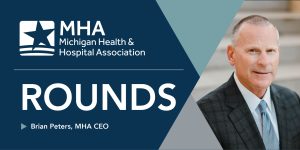
MHA Rounds image of Brian Peters

“The price of greatness is responsibility.” — Winston Churchill.

Skyrocketing healthcare costs are impacting families and communities across the state. No one is more committed to addressing this problem than those providing care around the clock.MHA Rounds image of Brian Peters

Despite being on the frontlines, hospitals are under fire. What’s worse is that conversations around healthcare affordability often involve those who don’t understand how policy decisions will play out in practice. When legislators listen to hospital voices, they gain firsthand insight on the needs of Michigan communities while better understanding the barriers that providers face.

Addressing healthcare affordability starts with taking a closer look at the largest cost drivers, many of which are beyond hospitals’ control. While they are often blamed, hospitals do not manufacture or determine drug prices. Similarly, reimbursement rates are ultimately determined by public and private insurers. Although the figures are often taken out of context, hospitals only collect a fraction of what is listed on publicly posted pricing files.

At the end of the day, nobody sees the impact of rising costs quite like hospitals do. Their teams deliver care 24/7 to anyone who walks through their doors, regardless of their ability to pay. They do this while facing acute workforce shortages, rising labor costs, mounting regulatory pressures, cybersecurity threats and more.

Our MHA affordability webpage does a great job outlining cost drivers, visualizing hospital spending and proposing meaningful solutions.

In order to keep putting communities first, hospitals need our state and federal leaders to confront the external pressures dictating how much cost they can realistically absorb. We applaud Senate Majority Leader Winnie Brinks and Sen. Hertel for bringing forth legislation last month focused on expanding coverage options, strengthening continuity of care and addressing costs drivers. Passing this bill package would be an important step toward lowering costs, but it must be part of an ongoing commitment from our lawmakers to collaborate with hospitals on strategies that keep patients at the center of every solution.

During National Hospital Week, we’re asking lawmakers who are serious about addressing healthcare affordability to give local hospitals a seat at the table to help inform decisions, identify solutions and avoid outcomes that ultimately harm Michigan patients and communities.

As always, I welcome your thoughts.
MHA Members and Business Leaders Join Crain’s for Healthcare Affordability Roundtable

The MHA partnered with Crain’s Content Studio to facilitate a healthcare affordability discussion, which was highlighted in its Detroit and Grand Rapids publications.

Healthcare and business leaders examined the complex factors driving healthcare costs and its impact on both patients and employers. Participants emphasized that meaningful change will require coordination across the healthcare system, including providers, insurers, businesses and policymakers.

Hospital leaders highlighted existing efforts to improve efficiency, reduce administrative burden and expand new care models that help keep patients healthier and out of the hospital.

The discussion reinforced Michigan hospitals’ commitment to addressing affordability while maintaining access to high-quality care.

Members with questions regarding media requests should contact Elise Gonzales at the MHA.

Legislative Policy Panel Hears Legislative Updates

The MHA Legislative Policy Panel met virtually Jan. 21 to develop recommendations on legislative and policy issues impacting Michigan hospitals.

The meeting began with guest speakers from the Michigan Chamber of Commerce and The Cornerstone Group. Wendy Block, senior vice president of business advocacy, Michigan Chamber of Commerce, provided an overview on the Money Out of Politics ballot proposal. Laura Bozell, principal, Cornerstone Group, delivered a federal update on current activity in Congress.

John Karasinski, vice president, communications, MHA, presented on the MHA’s communications and marketing strategy supporting the program year’s Strategic Action Plan.

Jim Lee, senior vice president, data policy & analytics, MHA, shared next steps for the Rural Health Transformation Program, following Michigan’s $173 million award from the Centers for Medicare & Medicaid Services for fiscal year 2026, which will be administered by the Michigan Department of Health and Human Services (MDHHS) through grant programming identified in the state’s application. The MHA remains engaged and will continue advocacy with MDHHS on behalf of rural hospitals as next steps are shared.

The MHA advocacy and health finance teams shared a state legislative update, including a recap on hospital financial assistance policies, medical debt and affordability.

For more information on the MHA Legislative Policy Panel, contact Adam Carlson at the MHA.