MHA Monday Report Jan. 26, 2026

House Appropriations Committee Hears RHTP Testimony, IMLC Bill Advances
The Michigan House Appropriations Committee heard testimony on federal funding awarded through the Rural Health Transformation Program (RHTP), and legislation to add Michigan back into the Interstate Medical Licensure Compact (IMLC) advanced during the week of Jan. 19.  The House Appropriations Committee heard …


Legislative Policy Panel Hears Legislative Updates

The MHA Legislative Policy Panel met virtually Jan. 21 to develop recommendations on legislative and policy issues impacting Michigan hospitals. The meeting began with guest speakers from the Michigan Chamber of Commerce and The Cornerstone …


CMS Implements New Online Form for Medicare Advantage Complaints

The Centers for Medicare & Medicaid Services (CMS) recently implemented a new online form for providers to submit complaints related to Medicare Advantage plans. A CMS memorandum announced the implementation of the form, which is …


MHA Launches Rural Health Transformation Program Webpage

The MHA has launched a new webpage dedicated to the Rural Health Transformation Program, providing members with a centralized source of information on Michigan’s participation in the program. The webpage includes an overview of …


Updates to Michigan’s Reporter Protocols for Infants Born Exposed to Substances

Michigan has updated its mandated reporter guidance for infants born exposed to substances, establishing distinct reporting requirements for exposure to non-medically prescribed substances and exposure related to prescribed treatment. The updates are intended to clarify …


Webinar Explores Strategies to Strengthen Revenue Integrity

The MHA and MHA Endorsed Business Partner AMN Healthcare Revenue Cycle Solutions will host A Tale of Three Health Systems: Their Mid-Revenue Cycle Insights and Road to Revenue Integrity webinar from 11 to 11:50 …


Hospitals Help: Corewell Health Program Addresses Youth Vaping Prevention, Cessation

Rural schools in Newaygo County, like so many across Michigan, were seeing an increase in the number of students caught vaping. To address this community-wide concern, Corewell Health Gerber Hospital established the Corewell Health Gerber …


Keckley Report

CMS’ 2024 Health Spending Report: Key Insights

“As media attention focused on Minneapolis, Greenland and Venezuela last week, the Center for Medicaid & Medicare Services (CMS) released its 2024 Health Expenditures report Thursday: the headline was “Health care spending in the US reached $5.3 trillion and increased 7.2% in 2024, similar to growth of 7.4% in 2023, as increased demand for health care influenced this two-year trend. “…

The current environment for the healthcare economy is increasingly hostile to the status quo. Voters think the system is wasteful, needlessly complicated and profitable. Lawmakers think it’s no man’s land for substantive change, defaulting to price transparency, increased competition and state regulation in response. Private employers, who’ve bear the brunt of the system’s ineffectiveness, are timid and reformers are impractical about the role of private capital in the health economy’s financing.

The healthcare economy will be an issue in Campaign 2026 not because aggregate spending increased 7-8% in 2025 per CMS, but because it’s no longer justifiable to a majority of Americans for whom it’s simply not affordable. Regrettably, as noted in Corporate Board Member’s director surveys, only one in five healthcare Boards is doing scenario planning with this possibility in mind.

Paul Keckley, Jan. 18, 2026


New to KnowNews to Know

  • The MHA Person & Family Engagement Advisory Council met virtually Jan. 15 to identify ways to support the MHA strategic action plan.
  • MHA Endorsed Business Partner CyberForce|Q is hosting the webinar Proactive Cyber Risk Measures from 11 a.m. to noon ET on Jan. 29.
  • The enrollment deadline for the MHA Healthcare Leadership Academy is Feb. 6. The cohort meets Feb. 25–27 and May 7–8 at the MHA headquarters in Okemos.


 

MHA Monday Report Jan. 19, 2026

Michigan Legislature Resumes Session, International Medical Graduate Bills Clear House Rules

The 103rd Michigan Legislature resumed session for the 2025-26 term during the week of Jan. 12, with the MHA continuing to work with lawmakers on initiatives that prioritize patients, providers, and hospitals and improve the health of …


MHA EventsRegistration is Now Open for the 2026 MHA Human Resources Conference

Registration is now open for the upcoming MHA Human Resources Conference scheduled from 8:30 a.m. – 4 p.m. March 24 at the Crowne Plaza, Lansing, a must-attend event for HR leaders, talent professionals and executives …


MDHHS Opens Applications for RHT Advisory Council

The Michigan Department of Health and Human Services (MDHHS) is accepting applications to serve on the Rural Health Transformation (RHT) Advisory Council, which will support implementation of Michigan’s RHT Program to improve rural health. The …


HHS Updates Childhood Immunization Schedule

Health and Human Services Secretary Robert F. Kennedy Jr. directed Jan. 5 the Centers for Disease Control and Prevention to revise the U.S. child and adolescent immunization schedule, reducing the number of universally recommended …


MDHHS Seeks Proposals for Children Trust Michigan Primary Prevention Program Grants

The Michigan Department of Health and Human Services (MDHHS) recently released a grant funding opportunity to prevent child abuse and neglect. This funding opportunity aims to prevent child abuse and neglect by developing protective factors that promote healthier and resilient …


Speaking Health Care™: A Guide to Understanding Healthcare Language

Orienting new trustees extends far beyond a single session. New members usually require months to get fully up-to-speed on strategic priorities and the basic expectations for trustees. A daunting challenge is interpreting language about operations, …


Michigan State Loan Repayment Program 2026 Application Period Opens March 2

The Michigan Department of Health and Human Services (MDHHS) recently announced an updated application period for the 2026 Michigan State Loan Repayment Program (MSLRP), which will be open from March 2 through April 30, 2026. …


Hospitals Help: MyMichigan Clinics Improve Access to Timely Care

MyMichigan Health established the Continuing Care Clinics in 2023 to serve residents across its 26-county service region who lack timely access to primary care physicians. These clinics are pivotal during critical health transitions, offering responsive …


Keckley Report

JPM Health Conference 2026: The Trump Effect

“This week, 8000 healthcare operators and investors will head west to the 44th Annual JP Morgan Health Conference in San Francisco. Per JPM: “The (invitation-only) conference serves as a vital platform for networking, deal-making, and discussing the latest innovations in healthcare, attracting global industry leaders, emerging companies, and members of the investment community.” Daily media coverage will be provided by Modern Healthcare and STAT and most of the agenda will be at the St. Francis Hotel at Union Square. …

It’s populism vs. corporatization. Healthcare’s proclivity for self-praise, addiction to “Best of…” recognition, celebrity CEOs and handsome executive compensation have postured it as “Big Business” in the eyes of most. Business practices associated with corporatization are fair game to the administration’s corrective agenda: hearings in the House Ways and Means and Energy and Commerce and Senate Health, Education, Labor and Pensions (HELP) committees will showcase the administration’s populist grievances. The administration will lavish advantages on private organizations that demonstrate support for its policies. …

The health system’s role in making matters better or worse for consumers will be front and center alongside housing and costs of living. That context will be key to discussions between health investors and companies seeking their funds, though subordinate to term sheets.

In 2026, the Trump effect on dealmaking in healthcare will be significant.”

Paul Keckley, Jan. 11, 2026


New to KnowNews to Know

MHA offices will be closed and no formal meetings will be scheduled Jan. 19, in honor of Martin Luther King Jr. Day.


MHA in the News

MHA CEO Brian Peters joined the Michigan Association of State Universities Jan. 13 in a media roundtable to discuss the economic impact of Michigan’s public universities, which generate nearly $45 billion in net new economic …

MHA Monday Report Dec. 22, 2025

Healthcare Bills Advance During Final State Legislative Session Week of 2025

Enforcement of hospital price transparency measures, removal of mental health questions on health professionals’ license applications, and the creation of a palliative care advisory task force were among the healthcare-related bills that advanced in the …


State’s Chief Medical Executive Shares Standing Recommendation Regarding Children’s Vaccines

Michigan’s Chief Medical Executive Natasha Bagdasarian, MD, issued a standing recommendation Dec. 18, encouraging healthcare providers to follow the children’s immunization schedules developed by the American Academy of Pediatrics or the American Academy of …


CMS Announces MAHA ELEVATE Model

The Centers for Medicare & Medicaid Services (CMS) is inviting healthcare organizations nationwide to apply for the Make America Healthy Again: Enhancing Lifestyle and Evaluating Value-Based Approaches Through Evidence (MAHA ELEVATE) model, a new initiative scheduled …


AHA Releases 2025 National Governance Report

The American Hospital Association (AHA) has released its 2025 National Governance Report. The report, based on data collected from August to December 2024, continues to develop a comprehensive picture of the state of healthcare…


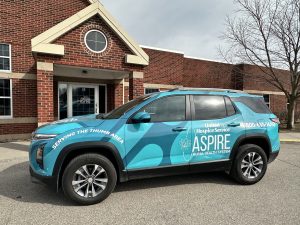
Hospitals Help: Aspire Rural Health System Offers Lifeline to Families in the Thumb

Transitions, offered through Aspire Rural Health System, is a free community-based program dedicated to supporting individuals with chronic or life-limiting illnesses, as well as their families, across Michigan’s thumb region. The program provides a compassionate …


Mid-Program Year Highlights: Resources & Reports

Below is a compilation of resources shared during the first half of the 2025-26 program year to provide members with relevant tools, updates and insights.

Michigan Hospital Collaboratives Launch to Improve Community Health

More than 50 Michigan hospitals are coming together to improve outcomes in maternal health, behavioral health and chronic disease across the state through new community benefit collaboratives launched by the Michigan Health & Hospital Association …


MHA Keystone Center Annual Report Highlights Safety and Quality Initiatives


The MHA Keystone Center recently released its 2024-25 annual report, which demonstrates Michigan hospitals’ commitment to improving outcomes and advancing care. The report highlights MHA Keystone Center-led safety and quality initiatives, including: A five-year collaboration with …


Report: Access, Affordability & Community Health Improved by Hospital Programming, Investments

The MHA released its 2025 Community Impact Report highlighting community programming and investments from Michigan hospitals that are improving access to care, addressing affordability and advancing the health of …


New MHA Infographic Showcases Rural Michigan Healthcare Impact

The MHA recently released the infographic Healthcare Impact in Rural Michigan, which highlights how critical access hospitals, sole community hospitals, rural emergency hospitals and birthing hospitals support communities across the state. The infographic highlights the …


2025 Michigan Caregiver Navigation Toolkit Available

In alignment with National Caregiver Month, the MHA Keystone Center recently created the 2025 Michigan Caregiver Navigation Toolkit to support hospitals in their efforts to initiate and enhance caregiver support programming across the state. …


News to Know

  • The MHA will offer the Healthcare Leadership Academy in 2026, with cohorts meeting Feb. 25–27 and May 7–8 at the MHA Headquarters in Okemos.
  • MHA Endorsed Business Partner CyberForce|Q is hosting the Proactive Cyber Risk Measures Webinar on Jan. 29 with speakers from Trinity Health, the Michigan State Cyber Command Center and other organizations.
  • The MHA offices will be closed and no formal meetings will be scheduled Dec. 24, 2025–Jan. 1, 2026.
  • Due to the holidays, Monday Report will not be published Dec. 29 and Jan. 5 and will resume its normal schedule Jan. 12.

MHA Monday Report Dec. 15, 2025

Unemployment Benefit Waiver Bill Clears Senate; International Physician Legislation Advances

Legislation to waive the collection of improper unemployment benefits cleared the Michigan Senate in a unanimous vote, while bills creating a new pathway for internationally educated physicians advanced in the House during the week of …


2026 MHA Healthcare Leadership Academy Registration Now Open

The MHA is pleased to offer its popular Healthcare Leadership Academy in 2026. In partnership with Executive Core, two power-packed modules in February and May will feature leadership 360 feedback with personalized executive coaching, the …


Survey Seeks Insights on Rural Veterans’ Healthcare Needs

A needs assessment survey supported by the Michigan Center for Rural Health, the Improving Veterans Access to Healthcare and the Frontier Veterans program is seeking to identify the needs of veterans and their providers in …


MDHHS Launches 2025 Customer Satisfaction Survey for Public Health Laboratory Partners

The Michigan Department of Health and Human Services (MDHHS) Bureau of Laboratories is inviting public health partners to complete the 2025 Customer Satisfaction Survey by Dec. 31, 2025, to gather feedback that will help improve statewide …


Building Trust and Access to Key Services Addressed by MHA Health Access & Community Impact Council

The MHA Health Access & Community Impact Council held its second meeting of the program year Dec. 4, diving into priority areas outlined in the 2025-26 MHA Strategic Action Plan. Guided by co-chairs Jeremy Cannon, …


Members of the Henry Ford Health Doula Program team.

Hospitals Help: Henry Ford Health’s Hospital-Based Doula Program

To help address the alarming rate of maternal and infant mortality, Detroit-based Henry Ford Health established a hospital-based doula program in 2024 that makes a trained professional available to provide emotional, physical and educational support …


Keckley Report

Health system transformation: why outsiders want it and insiders resist

“Key Takeaways:

  • A challenging economic climate means continuing health industry profitability is unlikely.  
  • The majority of Americans want systemic changes the system’s insiders resist.
  • Longterm, inattention to structural flaws will result in an inadequate public utility that serves all but a few that can afford more. …

As a result, the health industry’s become an enemy to the population it’s pledged to serve. Institutional distrust for government, organized religion and big business now includes the health system, especially among young Americans. …”

Paul Keckley, Dec. 7, 2025


News to Know

MHA Endorsed Business Partner CorroHealth is offering an opportunity to help members get ahead of 2026 budget pressures in coding and clinical documentation improvement.


MHA in the News

Common Ground published a story Dec. 9 on the behavioral health collaborative that the MHA has launched to address postpartum depression and perinatal mood disorders. Lauren LaPine-Ray, vice president, policy and rural health, MHA, is …

Survey Seeks Insights on Rural Veterans’ Healthcare Needs

A needs assessment survey supported by the Michigan Center for Rural Health, the Improving Veterans Access to Healthcare and the Frontier Veterans program is seeking to identify the needs of veterans and their providers in rural communities. The effort aims to improve rural enrollment, access and health for veterans and their caregivers, with a key focus on strengthening the capacity of critical access hospitals and other rural healthcare organizations to better serve rural and underserved Veterans.

Members across rural regions are encouraged to complete the brief survey by Jan. 1, 2026. Survey questions are geared toward clinicians, billing staff, community health workers, social workers, referral navigators and quality management professionals representing rural areas.

Members with questions may contact Ewa Panetta, director of community health impact and engagement at the MHA.

Rural Health Highlights MHA Media Coverage

The MHA received media coverage during the week of Nov. 17 covering the Rural Health Transformation Program, the MHA’s Community Impact Report and medical debt.

Bridge published a story Nov. 19 on the Rural Health Transformation Program application submitted by the Michigan Department of Health and Human Services. The article covers the lack of specific focus on rural hospitals in the application, as well as the challenges facing rural hospitals, particularly following the federal H.R. 1 Reconciliation Bill. MHA Executive Vice President Laura Appel is quoted in the article, as well as members of the MHA’s Rural Health Transformation Program Task Force.

“There is nothing here. There was an opportunity to direct as much as 10% of Michigan’s funding towards health care services delivered in hospitals and none of that happened,” said Appel.

The story was also highlighted by The Washington Post in the publication’s Nov. 21 daily newsletter.

Other coverage during the week included a Gongwer article on the MHA’s 2025 Community Impact report, as well as stories from Crain’s Grand Rapids and Michigan Public on medical debt legislation.

Members with any questions regarding media requests should contact John Karasinski at the MHA.

Michigan Rural Health Transformation Program Application Diminishes Potential Impact

The following statement can be attributed to Brian Peters, CEO of the Michigan Health & Hospital Association.

We are disappointed the Michigan Rural Health Transformation Program application submitted by the Michigan Department of Health and Human Services does not include explicit support for Michigan’s 73 rural hospitals.

The application lists four initiatives, none of which include recommendations from Michigan’s rural hospital leaders, who know rural healthcare needs best. Michigan hospitals are set to lose more than $6 billion over the next 10 years due to the federal H.R. 1 Reconciliation Bill. It’s unfortunate Michigan’s application ignored this impact and the intent of Congress to assist rural hospitals most impacted by these federal changes through this program.

This application provided an opportunity to maximize the healthcare impact for rural communities by providing the resources needed by rural Michigan’s leading healthcare providers. While the four initiatives are well intended, the application as submitted fails to maintain access to care in the most meaningful way.

New MHA Infographic Showcases Rural Michigan Healthcare Impact

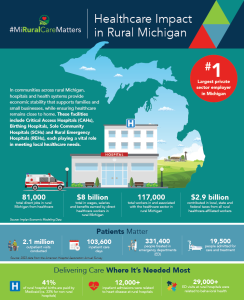
The MHA recently released the infographic Healthcare Impact in Rural Michigan, which highlights how critical access hospitals, sole community hospitals, rural emergency hospitals and birthing hospitals support communities across the state. The infographic highlights the crucial role of rural hospitals in providing care close to home while supporting Michigan’s economy.

Healthcare is the largest private employer in Michigan, providing jobs, stability and essential services to residents statewide. In rural areas, hospitals and health systems are key economic drivers supporting workers, families and local businesses.

Key highlights include:

  • 117,000 total workers in and associated with the healthcare sector in rural Michigan
  • One million outpatient visits conducted each year
  • Over 300,000 people treated in emergency departments (ED) annually
  • 41% of rural hospital births are paid by Medicaid, compared with 33% at non-rural hospitals
  • 12,000 inpatient admissions related to heart disease at rural hospitals
  • 29,000+ ED visits related to behavioral health

The infographic features a map that categorizes the types of rural hospitals and visually illustrates the distance Michiganders in rural areas may need to travel for specific services, such as labor and delivery or acute care. This visual representation highlights the central role rural hospitals play in maintaining access to care in Michigan’s smallest communities.

This resource also aims to support conversations with Michigan legislators by highlighting the importance of continued investment in rural hospitals to preserve access and strengthen community well-being.

Printed copies are available upon request. Members with questions may contact Lauren LaPine-Ray at the MHA.

MHA CEO Report — Prioritizing Rural Health

MHA Rounds graphic of Brian Peters

“Be sure you put your feet in the right place, then stand firm.” – Abraham Lincoln

MHA Rounds graphic of Brian PetersWhile snow continues to fall in northern Michigan, spring is officially here, and for many, that means our weekend travel plans shift from skiing and snowmobiling to camping, hiking and boating. Rural Michigan is an amazing travel destination for many, but it also is home year-round to 20% of our state’s population, and access to affordable, high-quality healthcare remains absolutely crucial. Rural hospitals are an integral part of the local fabric of their communities, treating the ill and improving the health and well-being of their residents. They work extremely hard to make sure they’re able to provide the best quality of care, while operating on a budget with slim to nonexistent margins. In a small town, there is nowhere to hide when the hospital is experiencing challenges of any kind. This is especially true when the hospital is the largest employer in the community and a vital economic engine, which is very often the case in rural Michigan.

I recently had the opportunity to attend the annual American Hospital Association (AHA) Rural Health Care Leadership Conference, along with a number of MHA senior staff and Michigan rural healthcare leaders, including Tina Freese Decker, CEO of Corewell Health and current chair of the AHA Board of Trustees; Julie Yaroch, DO, CEO of ProMedica Charles and Virginia Hickman Hospital and current chair of the MHA Board of Trustees; and JJ Hodshire, CEO of Hillsdale Hospital, current MHA Board member and host of the Rural Health Today podcast. We focused on the latest rural health challenges and innovations, as well as our shared federal advocacy priorities. Key topics included rural obstetrical care, cybersecurity, long-term care transformation and strategic partnerships.

According to the latest U.S. census and other demographic resources, rural Americans are notably older, sicker and poorer than their urban and suburban counterparts. While rural areas currently cover 97% of the nation’s land, they are home to only 19.3% of the total population. Demographers believe that we are moving toward a future state in which an even higher concentration of the population will be in non-rural settings – and that in the next five years, more than 40% of Michigan counties will have more than a quarter of their population older than 65, with nearly all of those counties being rural. As we have learned – especially during the COVID pandemic – traditional volume-based healthcare reimbursement methods do not adequately address the fixed costs inherent in healthcare delivery, a reality that is exacerbated for rural hospitals with smaller patient volumes and more constricted resources and economies of scale.

Although Medicaid expansion (a major accomplishment resulting from MHA advocacy) improved the viability of rural hospitals – a fact that is borne out when benchmarking Michigan to non-expansion states – that funding is currently in severe jeopardy given the current state of play in Washington, D.C., as discussed at length in last month’s CEO Report. In addition, the 340B program is another critically important part of the rural healthcare ecosystem, as the cost savings from the program are used by healthcare providers to offer critically important services to everyone in their respective communities, regardless of their socioeconomic status. The MHA continues to advocate at the state and federal level, in the legislative arena and in the courts, to protect and defend the 340B program.

With guidance from the MHA Council on Small or Rural Hospitals, currently chaired by Peter Marinoff, CEO of Munson Healthcare Southern Region (see Peter’s recent insights on rural healthcare), and staffed by Lauren LaPine, MHA senior director of Legislative and Public Policy, the MHA is also advocating for continuation of the rural access pool and obstetrical stabilization fund in the state budget, and promoting good public policy with respect to critical access hospitals, rural emergency hospitals and a host of other key issues.

Our rural healthcare leaders continue to prove they are exceptional at delivering extraordinary value, despite challenging circumstances. I know from first-hand experience that our rural hospitals provide high quality care and deserve to be fully supported. And we absolutely must support them, as the fragility of the current environment is real: there have been some 151 rural hospitals that have closed across the country since 2010 due to financial variables that make it extremely difficult to maintain hospital facilities in rural areas.

Now more than ever, we need to think about our rural hospitals, stand firm and do all we can to protect these vital institutions.

As always, I welcome your thoughts.

Rural Health Research Gateway Releases Report on the First Year of REHs

The Rural Health Research Gateway recently published a report on Rural Emergency Hospitals (REHs) highlighting data from the first year of the designation. Under the Consolidated Appropriations Act of 2021, the Rural Emergency Hospital provider type was created to address rural hospital closures. There is one REH in the state of Michigan, Sturgis Hospital located in Sturgis, MI. Additionally, there are 18 other REHs across the country (four REHs in Texas, three in Mississippi, three in Oklahoma, two in Arkansas, two in Georgia, and one in each of Kansas, Louisiana, New Mexico and Tennessee).

The report found that a majority of the REHs operating at the end of 2023 were in the south. The brief also found that REHs tend to serve under resourced counties that face a myriad of challenges, such as increased poverty and uninsured rates, along with a shortage of primary care and mental health providers. Counties with REHs also tend to have higher rates of premature deaths. These findings suggest that counties with REHs are facing more severe challenges than their other rural counterparts.

As REHs continue into their second year, further monitoring will provide more information on the long-term impact of REHs on healthcare outcomes in rural areas.

Members with questions may contact Lauren LaPine at the MHA.