
MHA Monday Report June 8, 2026

House Judiciary Hears Testimony on Violence Against Healthcare Workers Legislation

Legislation addressing violence against healthcare workers heard testimony in the House Judiciary Committee during the week of June 1, while other MHA-backed bills saw action in the legislature. House Bills 4532–4534, which aim to …


MDHHS Finalizes Specialty Behavioral Health Services Location Policy
The Michigan Department of Health and Human Services (MDHHS) recently finalized Medicaid Policy Bulletin MMP 26-17, effective July 1, 2026, which clarifies reimbursement requirements for specialty behavioral health services provided through Prepaid Inpatient Health Plans …


MDHHS Expands Medicaid Coverage for Pharmacist-Provided Services

The MDHHS recently issued Medicaid Policy Bulletin MMP 26-20, expanding coverage for pharmacist-provided services effective July 1, 2026, pending approval of a state plan amendment by the Centers …


MDHHS Accepting Applications for Opioid Treatment Access Internship Stipend Program

The MDHHS is accepting applications through June 15 for the Michigan Opioid Treatment Access Internship Program, which provides financial support to students completing unpaid internships that prepare them …


Workforce Resources and Webinar Available for Healthcare Providers

The MHA and Endorsed Business Partner AMN Healthcare continue to support workforce strategies that improve access to care for hospitals and health systems. AMN will host a webinar, “Maximizing Every Dollar: Using AI and Data …


Michigan Hospitals Help Advance Care for Sickle Cell Patients
Michigan hospitals are committed to investing in efforts that advance the health of the patients and communities they serve every day. With grant funding from the MDHHS,  the Bronson Health Foundation, Children’s Hospital …


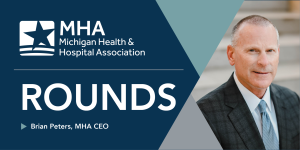
MHA Rounds graphic of Brian PetersMHA CEO Report — A Call to Strengthen Healthcare Through Collaboration

Our nation’s healthcare system is at a crossroads. Rising costs, workforce shortages and expanding patient needs are placing unprecedented pressure on hospitals and the communities that depend on them. Accepting this strain as status quo is not an option. …


Michigan Hospitals, Always caring, always advancing.


The Keckley Report

In Healthcare: 10 Issues where States are Accelerating Policy Changes

“In the United States, laws that define how our health system operates have evolved over our 250-year history. They’re built on allopathic medical pedagogy borrowed from our European roots and evolve around clinical innovations and technologies that improve outcomes and extend life. …

Healthcare’s future in the U.S. will continue to be framed by federal policies and the political system from which its laws originate, but its transformational changes will increasingly originate in states where affordability, funding and system effectiveness issues are tackled head-on.”

Paul Keckley, May 31, 2026


News to Know

The MHA recently launched Always Caring, Always Advancing, a new multi-year, statewide public affairs campaign highlighting the powerful stories of caregivers and patients across Michigan.


MHA in the News

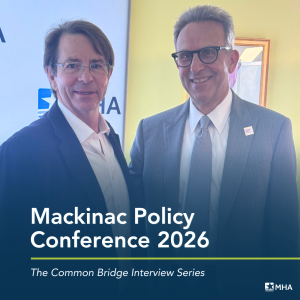
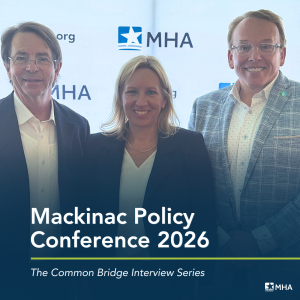
During the Mackinac Policy Conference MHA CEO Brian Peters sat down with leaders across the state to discuss advancing more collaborative, affordable and outcomes-driven care across Michigan. Peters joined Paula Cunningham, Michael Patrick Shields and …

Workforce Resources and Webinar Available for Healthcare Providers

The MHA and Endorsed Business Partner AMN Healthcare continue to support workforce strategies that improve access to care for hospitals and health systems. AMN will host a webinar, “Maximizing Every Dollar: Using AI and Data to Strategically Plan Your Workforce and Eliminate Administrative Barriers” from 11 a.m. to noon ET July 15. The webinar will explore how AI-driven insights and data strategies can support workforce planning, improve decision-making and reduce administrative burden. The webinar is free of charge and members are encouraged to register.

AMN also recently shared the case study, “The Real Cost of Overtime: Contingent Labor vs. Incentive Pay,” highlighting how a large, multi-site health system addressed financial and operational strain tied to overtime and shift incentives. The case study outlines how a strategic staffing model can improve cost control, workforce visibility and overall performance while helping reduce staff burnout. For more information about AMN’s strategic workforce solutions, including managed services programs, technology solutions, and more, members may contact Logan Breisinger at AMN.

In addition, Tessa Misiaszek, president of AMN Leadership Solutions, joined the Becker’s Healthcare Podcast to discuss the Rural Health Transformation Program and how rural healthcare organizations can prepare for requirements set by the Centers for Medicare and Medicaid Services. The conversation highlights the importance of data infrastructure, leadership capacity, workforce strategy and operating models in supporting long-term performance.

Members who want to learn more may visit the AMN Healthcare profile page or contact Ben Jones, regional vice president, physician/APP search solutions. Members interested in solutions offered through the MHA EBP program may contact Rob Wood at the MHA.

MHA Monday Report March 23, 2026

Mandatory Overtime, Assisted Outpatient Treatment Legislation Advances

Several key healthcare bills, including mandatory nurse overtime, assisted outpatient treatment, Certificate of Need and site-neutral payment policies, saw action in the legislature during the week of March 16. The Senate Regulatory Affairs …


Michigan Legislature Announces Commitment to Pass the IMLC Before March 28 Deadline

Following negotiations finalized March 19, Senate Majority Leader Winnie Brinks (D-Grand Rapids) announced plans to pass legislation authorizing Michigan’s continued participation in the Interstate Medical Licensure Compact (IMLC). The MHA thanks state lawmakers for their commitment …


MHA Shares Latest Medicare and Medicaid Enrollment Analysis

The MHA recently updated its analysis of Medicaid and Medicare enrollment based on February 2026 data. The analysis includes program enrollment as a percentage of each county’s total population and the split between fee-for-service and …


The MHA Annual Membership Meeting Offers Learning and Networking

The MHA membership will convene in person for the MHA Annual Membership Meeting June 24-26 on Mackinac Island. The event provides an opportunity to learn, network and celebrate …


Federal Court Pauses Vaccine Policy Changes

A U.S. District Court judge issued a ruling March 16 in American Academy of Pediatrics v. Robert F. Kennedy Jr. that places a hold on several changes to federal vaccine policy made over the past …


Health Access & Community Impact Office Hours Highlight 211 Data

The MHA will host the next Health Access & Community Impact Office Hours session on April 29 from noon to 12:45 p.m., featuring Michigan 211. The session, Understanding Regional Needs: A Data Driven Look at Michigan’s …


Applications Open for Governance Fellowship, Current Class Convenes

The MHA is now accepting applications for the Excellence in Governance Fellowship which will be held from October 2026 through June 2027. The comprehensive program is designed to support hospital and health system trustees in strengthening governance …


The State of Healthcare Leadership: Risks, Reality and Readiness

MHA Endorsed Business Partner AMN Healthcare and B.E. Smith recently released the Healthcare Leadership Trends for 2026 Report, based on a national survey of more than 700 healthcare executives across hospitals and health systems. The report …


Hospitals Help Michigan Students Pursue Healthcare Careers

Healthcare remains the state’s largest employer of direct, private-sector jobs. With this in mind, hospitals are finding innovative ways to give Michigan students the opportunity to gain real-world exposure to clinical and non-clinical healthcare roles. …


Keckley Report

Health Literacy: Out of Sight, Out of Mind in the Healthcare Industry

“Of industries monitored in the Bureau of Labor Statistics’ industry classifications (NAICS), healthcare is unique: its business model is based on business to business (B2B) transactions between suppliers (drugs, devices, technology, hospitals, ancillary facilities), intermediaries (GPOs, PBMs, insurers, brokers) and retail distributors (physicians, pharmacists, therapists, et al) in which end-users (consumers) have limited influence and unpredictable financial responsibility. The acceptance of low health literacy is institutionalized in state and federal regulatory oversight, labor rules and scope of practice determinations and funding by private investors, public appropriations, employer contributions and out-of-pocket payments by consumers. Its acceptance is inconsistent with aims to make it more accessible, affordable and effective. …

For too long, health literacy has been relegated to discussions among public health officials. Its neglect is harmful to every organization in healthcare and to its long-term sustainability. Boards should weigh in, and policymakers should act. Health literacy can ill-afford being out of sight, out-of mind in the U.S. health system and in the society we serve.”

Paul Keckley, March 15, 2026

The State of Healthcare Leadership: Risks, Reality and Readiness

MHA‑Endorsed Business Partner AMN Healthcare and B.E. Smith recently released the Healthcare Leadership Trends for 2026 Report, based on a national survey of more than 700 healthcare executives across hospitals and health systems. The report examines the state of healthcare leadership, highlighting the risks, realities and readiness that will shape the year ahead.

Healthcare Organizations Are Navigating Growing Complexity and Uncertainty. 

While nearly three-quarters of healthcare leaders expect their organization’s performance in 2026 to remain stable or improve, confidence in the broader healthcare industry is declining. In fact, 52% of leaders anticipate a worse year ahead for the industry, driven by financial pressures, reimbursement uncertainty and workforce challenges.

Financial Pressures Are Reshaping Leadership Priorities. 

Despite revenue growth in 2025, rising labor and operating expenses continue to strain margins. Eighty‑four percent of executives cite financial pressures as their greatest threat in the coming year, while 72% say lowering operating costs is their most critical long‑term priority. These realities are forcing organizations to rethink leadership structures, recruiting strategies and succession planning.

Traditional Leadership Pipelines Are Under Strain. 

Attracting quality leadership talent remains a significant challenge, particularly for smaller and mid‑sized organizations. Nearly four in ten leaders say recruiting director‑level and above candidates is extremely or very challenging, with smaller organizations facing the greatest difficulty. Time‑to‑fill for executive roles also remains longer than historical norms, delaying strategic initiatives and increasing operational risk.

Building a Resilient Leadership Workforce Requires a Multifaceted Approach. 

Healthcare organizations that are positioning themselves for success in 2026 are prioritizing several key strategies:

  • Expanded recruiting scope: Broadening geographic reach and considering non‑traditional leadership backgrounds to increase candidate pools.
  • Competitive and flexible compensation models: Adjusting packages to remain competitive while balancing financial constraints.
  • Leadership development and succession planning: Addressing the fact that fewer than half of organizations maintain formal succession plans across leadership levels.
  • Strategic use of interim leadership: Leveraging experienced interim executives to maintain momentum during leadership transitions and reduce burnout among internal teams.
  • Technology and AI readiness: Preparing leaders for a future where artificial intelligence roles and capabilities are rapidly becoming core leadership requirements.

By investing in these strategies, healthcare organizations can strengthen leadership stability, improve retention and remain agile in an increasingly complex environment.

For deeper insights and actionable leadership strategies, MHA members are encouraged to download the full Healthcare Leadership Trends for 2026 report.

For inquiries regarding The Healthcare Trends Report or to obtain further information about AMN Healthcare and B.E. Smith partnerships, please contact Katy Allen, VP, client partnerships.

MHA Monday Report Jan. 26, 2026

House Appropriations Committee Hears RHTP Testimony, IMLC Bill Advances

The Michigan House Appropriations Committee heard testimony on federal funding awarded through the Rural Health Transformation Program (RHTP), and legislation to add Michigan back into the Interstate Medical Licensure Compact (IMLC) advanced during the week of Jan. 19.  The House Appropriations Committee heard …


Legislative Policy Panel Hears Legislative Updates

The MHA Legislative Policy Panel met virtually Jan. 21 to develop recommendations on legislative and policy issues impacting Michigan hospitals. The meeting began with guest speakers from the Michigan Chamber of Commerce and The Cornerstone …


CMS Implements New Online Form for Medicare Advantage Complaints

The Centers for Medicare & Medicaid Services (CMS) recently implemented a new online form for providers to submit complaints related to Medicare Advantage plans. A CMS memorandum announced the implementation of the form, which is …


MHA Launches Rural Health Transformation Program Webpage

The MHA has launched a new webpage dedicated to the Rural Health Transformation Program, providing members with a centralized source of information on Michigan’s participation in the program. The webpage includes an overview of …


Updates to Michigan’s Reporter Protocols for Infants Born Exposed to Substances

Michigan has updated its mandated reporter guidance for infants born exposed to substances, establishing distinct reporting requirements for exposure to non-medically prescribed substances and exposure related to prescribed treatment. The updates are intended to clarify …


Webinar Explores Strategies to Strengthen Revenue Integrity

The MHA and MHA Endorsed Business Partner AMN Healthcare Revenue Cycle Solutions will host A Tale of Three Health Systems: Their Mid-Revenue Cycle Insights and Road to Revenue Integrity webinar from 11 to 11:50 …


Hospitals Help: Corewell Health Program Addresses Youth Vaping Prevention, Cessation

Rural schools in Newaygo County, like so many across Michigan, were seeing an increase in the number of students caught vaping. To address this community-wide concern, Corewell Health Gerber Hospital established the Corewell Health Gerber …


Keckley Report

CMS’ 2024 Health Spending Report: Key Insights

“As media attention focused on Minneapolis, Greenland and Venezuela last week, the Center for Medicaid & Medicare Services (CMS) released its 2024 Health Expenditures report Thursday: the headline was “Health care spending in the US reached $5.3 trillion and increased 7.2% in 2024, similar to growth of 7.4% in 2023, as increased demand for health care influenced this two-year trend. “…

The current environment for the healthcare economy is increasingly hostile to the status quo. Voters think the system is wasteful, needlessly complicated and profitable. Lawmakers think it’s no man’s land for substantive change, defaulting to price transparency, increased competition and state regulation in response. Private employers, who’ve bear the brunt of the system’s ineffectiveness, are timid and reformers are impractical about the role of private capital in the health economy’s financing.

The healthcare economy will be an issue in Campaign 2026 not because aggregate spending increased 7-8% in 2025 per CMS, but because it’s no longer justifiable to a majority of Americans for whom it’s simply not affordable. Regrettably, as noted in Corporate Board Member’s director surveys, only one in five healthcare Boards is doing scenario planning with this possibility in mind.

Paul Keckley, Jan. 18, 2026


New to KnowNews to Know

  • The MHA Person & Family Engagement Advisory Council met virtually Jan. 15 to identify ways to support the MHA strategic action plan.
  • MHA Endorsed Business Partner CyberForce|Q is hosting the webinar Proactive Cyber Risk Measures from 11 a.m. to noon ET on Jan. 29.
  • The enrollment deadline for the MHA Healthcare Leadership Academy is Feb. 6. The cohort meets Feb. 25–27 and May 7–8 at the MHA headquarters in Okemos.


Webinar Explores Strategies to Strengthen Revenue Integrity

The MHA and MHA Endorsed Business Partner (EBP) AMN Healthcare Revenue Cycle Solutions will host A Tale of Three Health Systems: Their Mid-Revenue Cycle Insights and Road to Revenue Integrity webinar from 11 to 11:50 a.m. ET Feb. 19. This webinar highlights the journeys of three health systems and how they navigated mid-revenue cycle challenges to strengthen revenue integrity. Attendees will gain actionable strategies for C-suite leaders focused on denials management, documentation accuracy and technology adoption—empowering organizations to maximize every dollar.

By attending this session, participants will:

  • Understand key drivers of revenue integrity and their impact on financial performance.
  • Explore strategies to reduce denials and improve reimbursement accuracy through coding and documentation best practices.
  • Evaluate the role of technology and AI – where automation succeeds, where human oversight is essential and how to build ROI for adoption.
  • Gain insights from real-world case studies on clinical revenue cycle improvements, including length of stay and avoidable days.

The webinar is free of charge and members are encouraged to register.

For additional information, visit the AMN Healthcare page or contact Christine Poleon, DVP, revenue cycle solutions, AMN Healthcare. Members seeking information about the MHA’s EBP program may contact Rob Wood at the MHA.

News to Know – Nov. 10, 2025

New to Know
  • MHA offices will be closed and no formal meetings will be scheduled Nov. 11 in honor of Veterans Day.
  • The MHA will host a virtual member forum from 8:30 to 9:30 a.m. Nov. 7 to outline the MHA 2025-26 Strategic Action Plan approved by the MHA Board of Trustees. The member webinar will share the elements of this year’s plan and help members learn effective ways to connect with thought leaders in their community to support hospitals and healthcare providers in these challenging times. There is no cost to attend, but members are asked to register by Nov. 5. Access information for the virtual session will be sent Nov. 6. Questions about the member forum can be directed to Erica Leyko at the MHA.
  • Amy Brown, chief nursing officer, MHA, recently joined MHA Endorsed Business Partner (EBP) AMN Healthcare on the episode “Empowering Nurses Through Advocacy and Innovation” of the Elevate Care Podcast. Brown shared details on her extensive journey in nursing, from her experiences as a chief nursing officer during the pandemic to her current role at the MHA. She discusses the critical issues of workplace violence, improving maternal health quality, empowering nurses to advocate for policy changes and the deep impact of potential healthcare funding cuts on rural areas. The conversation also explores the evolving role of technology in nursing and the importance of nurse engagement in advocacy at both local and federal levels. Members may contact Beth Kisielius, vice president of strategic partnerships at AMN Healthcare to learn more.
  • MHA EBP SunRx is continuing a webinar series about 340B Rebate Model Briefings on Nov 13 and Nov 20. Manufacturers will require complete rebate-ready data through Beacon and 340B ESP® on Jan. 1, 2026, and SunRx is working to engage leaders with updates. These events are intended exclusively for 340B entities. For more information, contact Dwayne Dodd, regional manager at SunRx.

Strengthening Rural Healthcare Through Smarter Physician Recruitment

MHA Endorsed Business Partner AMN Healthcare recently released the Rural Physician Recruiting Challenges and Solutions white paper, produced by its Physician Solutions division (formerly Merritt Hawkins).

The resource identifies several approaches to address these challenges:

Recruiting Physicians to Rural Hospitals is More Challenging than Ever.

According to AMN Healthcare’s 2025 Review of Physician and Advanced Practitioner Recruiting Incentives, the average signing bonus for family medicine physicians has increased by 15% over the past year. This trend underscores the escalating competition for medical talent in underserved areas. For rural hospitals, the stakes are even higher. With limited resources and fewer candidates, attracting and retaining physicians requires innovative strategies.

Traditional Incentives Are No Longer Sufficient.

While competitive salaries and signing bonuses are important, they are no longer the primary drivers for physicians considering rural practice. A recent survey by AMN Healthcare revealed that 70% of physicians prioritize work-life balance and community engagement over financial incentives. This shift necessitates a reevaluation of recruitment strategies.

Building a Sustainable Workforce Requires a Multifaceted Approach.

Successful rural hospitals are adopting comprehensive recruitment strategies that include:

  • Community integration: Engaging physicians in local community activities to foster a sense of belonging.
  • Flexible work arrangements: Offering part-time or telemedicine options to accommodate lifestyle preferences.
  • Educational partnerships: Collaborating with medical schools to create residency programs tailored to rural healthcare needs.

By implementing these strategies, rural hospitals can strengthen recruitment efforts and improve retention.

Members seeking for more insights and detailed strategies may download the full white paper.

Members with questions may contact Ben Jones, regional vice president at AMN Healthcare. Members with questions about the MHA Endorsed Business Partner Program may contact Rob Wood at the MHA.

AMN Physician Incentive Survey Results

MHA Endorsed Business Partner AMN Healthcare recently released the 2025 Review of Physician and Advanced Practitioner Recruiting Incentives, produced by its Physician Solutions division (formerly Merritt Hawkins).

For 32 years, the Review has been a key source of data and insight regarding physician starting salaries, signing bonuses, relocation allowances and other recruiting incentives.

Members interested in a copy of the 2025 Review or those who would like to discuss their hospital’s current physician and APP recruiting needs, may reach out to Ben Jones, regional vice president at AMN.

Members seeking information about the MHA’s EBP program may contact Rob Wood at the MHA.

On Demand Webinar: Balancing the Complexities of the Healthcare Workforce in Rural Markets

MHA Endorsed Business Partner AMN Healthcare recently hosted the webinar Balancing the Complexities of the Healthcare Workforce in Rural Markets. Speakers  John Higgins, vice president of talent management, Essentia Health, and Steven Endsley, vice president of workforce solutions, AMN Healthcare, provided valuable insights on solving workforce challenges and innovative talent strategies. The webinar highlighted effective approaches to talent acquisition, retention and workforce transformation in rural healthcare settings and beyond. The webinar recording is now available to review on demand.

Key takeaways include:

  • Insights on rural and urban healthcare workforce market dynamics.
  • Shaping adaptive workforces with development and flexible workforce pools.
  • Having union labor partners to drive innovation and implement workforce development activities.
  • Best practices and specific-use cases at Essentia Health, including retention strategies and talent acquisition innovations, such as artificial intelligence.

Additional resources from AMN Healthcare include an overview of AMN Workforce Solutions and a client success story describing how its data‑driven technology suite drives cost savings and transforms staffing operations.

For more information, visit the AMN Healthcare page or contact Steven Endsley, vice president of workforce solutions at AMN Healthcare. Members with questions may visit the MHA Business Services page or contact Rob Wood at the MHA.