Strengthening Rural Healthcare Through Smarter Physician Recruitment

MHA Endorsed Business Partner AMN Healthcare recently released the Rural Physician Recruiting Challenges and Solutions white paper, produced by its Physician Solutions division (formerly Merritt Hawkins).

The resource identifies several approaches to address these challenges:

Recruiting Physicians to Rural Hospitals is More Challenging than Ever.

According to AMN Healthcare’s 2025 Review of Physician and Advanced Practitioner Recruiting Incentives, the average signing bonus for family medicine physicians has increased by 15% over the past year. This trend underscores the escalating competition for medical talent in underserved areas. For rural hospitals, the stakes are even higher. With limited resources and fewer candidates, attracting and retaining physicians requires innovative strategies.

Traditional Incentives Are No Longer Sufficient.

While competitive salaries and signing bonuses are important, they are no longer the primary drivers for physicians considering rural practice. A recent survey by AMN Healthcare revealed that 70% of physicians prioritize work-life balance and community engagement over financial incentives. This shift necessitates a reevaluation of recruitment strategies.

Building a Sustainable Workforce Requires a Multifaceted Approach.

Successful rural hospitals are adopting comprehensive recruitment strategies that include:

  • Community integration: Engaging physicians in local community activities to foster a sense of belonging.
  • Flexible work arrangements: Offering part-time or telemedicine options to accommodate lifestyle preferences.
  • Educational partnerships: Collaborating with medical schools to create residency programs tailored to rural healthcare needs.

By implementing these strategies, rural hospitals can strengthen recruitment efforts and improve retention.

Members seeking for more insights and detailed strategies may download the full white paper.

Members with questions may contact Ben Jones, regional vice president at AMN Healthcare. Members with questions about the MHA Endorsed Business Partner Program may contact Rob Wood at the MHA.

Investing in Rural Hospitals Means Investing in Rural Michigan

By Jeremiah Hodshire, President & CEO of Hillsdale Hospital

When the One Big Beautiful Bill Act was signed into law in July, it created the Rural Health Transformation Program, a five-year, $50 billion investment in rural healthcare. The MHA Board of Trustees took swift action empowering an MHA board-appointed task force charged with creating recommendations that the Michigan Department of Health & Human Services (MDHHS) could use when submitting the one-time application for funding.

I’ve had the pleasure of chairing the task force and working alongside my colleagues Tonya Darner, UP Health System; Karen Cheeseman, Mackinac Straits Health System; Dr. Ross Ramsey, Schuerer Health; Michael Rose, MyMichigan Health; and Peter Marinoff, Munson Healthcare. This process has been collaborative and informed by other rural hospital leaders across the state through the Rural CEO Town Hall the MHA hosted in late September. I am also deeply indebted to the MHA staff, specifically the driving force behind keeping our committee on task, Lauren LaPine-Ray, who has served as an outstanding ambassador, facilitator, researcher and connector as we navigate the federal guidelines! A few key themes emerged through this process and informed the recommendations shared with MDHHS.

When I look out across our community, I see the same faces that fill our hospital’s halls — farmers, teachers, small business owners and families who trust us to care for them when it matters most. Yet every year, it becomes harder to keep our doors open. Recruiting and retaining obstetricians, gynecologists, social workers, psychologists and primary care physicians has turned into an uphill push. Technology that could connect us to specialists hundreds of miles away remains out of reach due to inadequate broadband and out-of-date electronic medical records platforms. And the gap between what it costs to provide care and what we’re paid to deliver it keeps widening. That’s why the Centers for Medicare & Medicaid Services’ Rural Health Transformation Program matters so much right now. This new federal funding opportunity isn’t just a policy line item — it’s a lifeline. But for Michigan’s small and rural hospitals, it will only make a difference if the dollars actually reach us, the people on the ground.

Our Greatest Need: People

Every rural hospital leader will tell you the same story: we can’t hire fast enough to replace those who’ve left. Nearly 70% of Michigan hospitals report difficulty filling clinical vacancies and rural areas face the longest recruitment times in the state. Nursing wages in large systems have soared, while young physicians are drawn to urban centers where they can earn more and work less on call. Meanwhile, small hospitals like ours are paying bonuses we can’t afford just to keep labor and delivery open or to cover an emergency room shift. The costs to maintain OB/GYNs in rural areas are significant.

If the Rural Health Transformation funds are truly meant to “right-size” care delivery, they must start with stabilizing the workforce that keeps that system running. Rural hospitals should be able to use these funds for loan repayment programs, housing stipends and retention bonuses that reflect the realities of rural practice. Without people, no transformation is possible.

Technology Should Connect, not Divide

Michigan’s rural hospitals have led the way in adopting telehealth, but we are still too often left behind. Broadband is patchy and many of our systems don’t integrate with the larger hospitals where we refer patients. CMS should allow states to dedicate transformation dollars toward technology innovation — helping rural providers invest in electronic health record interoperability, remote patient monitoring and telepsychiatry tools that expand access without expanding costs. When technology works across the system, it saves time, reduces burnout and lets us keep more care local.

Payment Equity Must be Part of Transformation

Even before inflation and staffing shortages, the math didn’t add up. Rural hospitals serve older, sicker populations and depend heavily on Medicare and Medicaid. The number of births occurring in rural hospitals continues to decline, making the ability to cover costs and provide critical care even more challenging. When reimbursement rates don’t cover the cost of care, rural hospitals can’t sustain basic services like obstetrics or behavioral health. Between 2010 and 2023, 11 rural hospitals in Michigan closed or stopped providing inpatient services. Rural Transformation funds should explicitly support provider payments and shared-savings models to ensure critical healthcare access in rural areas is maintained. If rural hospitals can’t afford to pay their doctors and nurses, innovation will stall before it starts.

The Stakes for Michigan

More than 60% of Michigan’s counties are considered rural, with nearly 30 hospitals serving as the only point of care for miles. Every time one closes, an entire region loses not just its emergency room, but also its largest employer and a key part of its safety net. The Michigan Senate Fiscal Agency recently reported nearly 22% of Michigan counties are considered maternity deserts. Michigan needs true investments in rural healthcare to reverse these trends — but only if the funds flow to where they can have the greatest impact: rural hospitals themselves.

These dollars should not get lost in bureaucracy or redirected to administrative projects. They should go toward the people and places that make healthcare possible: our workforce, our technology and our providers.

If we want to build a stronger, more equitable Michigan, we must start by keeping care local, and that begins with investing in the hospitals that keep our communities alive.

Today’s Students Are Tomorrow’s Workforce

Byline: Katelin Wiersma, Director of Marketing and Branding, MHA

The healthcare workforce has been a top priority for MHA’s members, an active pillar in the annual strategic action plan for several years. The healthcare profession is arguably one of the most rewarding career fields, leaving lasting impacts on communities. With a strong personal connection to the healthcare field with 15 years under my belt, I found myself working in healthcare by chance, I tried leaving the field for one year and quickly came back to it. Even as a non-clinician, I felt a strong sense of purpose in healthcare. It has given me the opportunity to tell remarkable stories of heroism, provide lifesaving education and most recently, help others discover how rewarding a career in healthcare can be.

One of the first projects I embarked on at the MHA was the MiHospitalCareers campaign. An effort to raise awareness and interest in hospital-based careers. This campaign showcases the breadth and depth of positions within a hospital and the sense of purpose and meaning a healthcare career can provide. This campaign began in the spring of 2023 and has grown to reach new and different audiences. One way of reaching people has been attending in-person events with career-minded high school students. The state of Michigan is fortunate to have many organizations with similar missions working together to help students get exposure to professions and the education and training needed to prepare Michigan’s workforce of tomorrow.

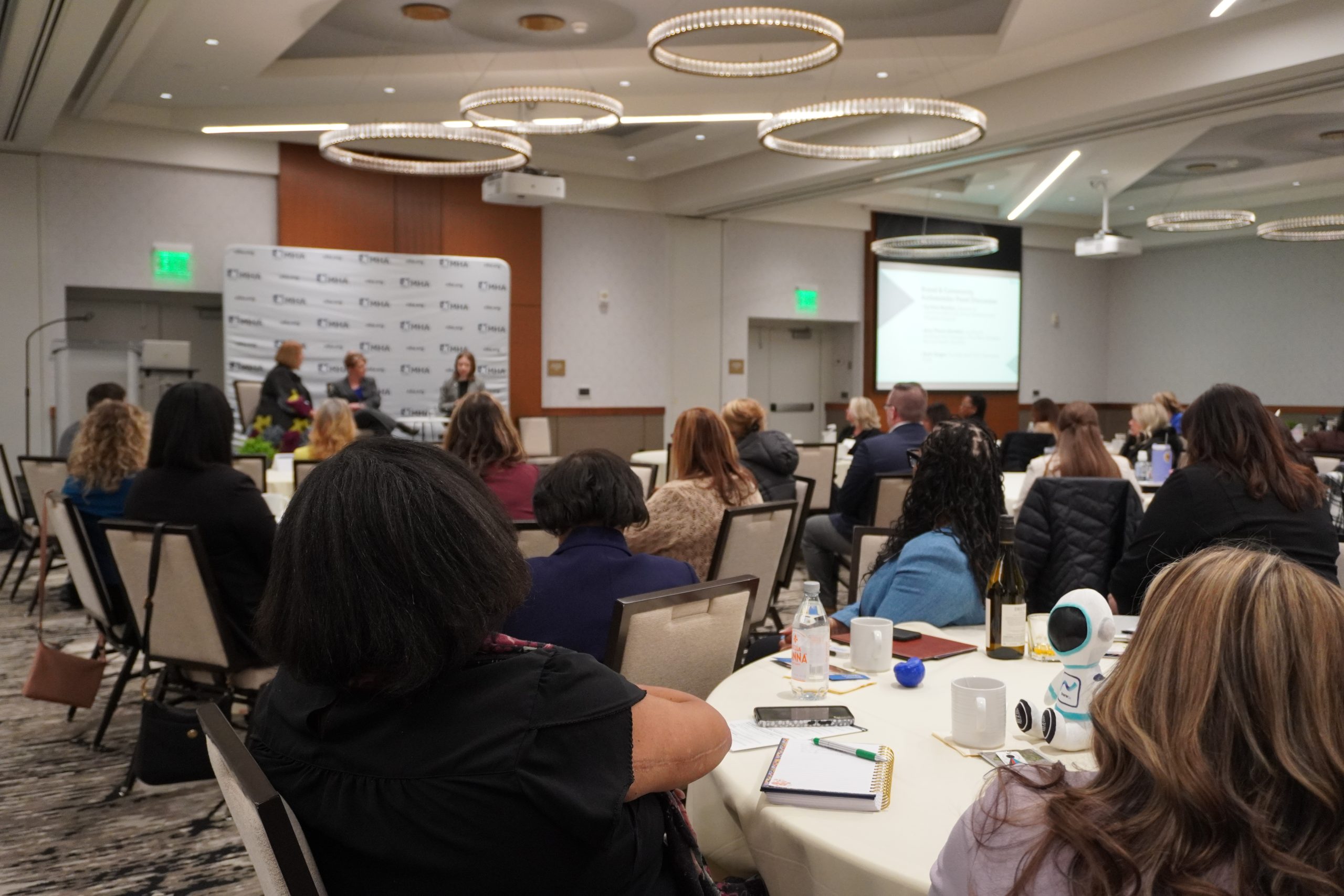
Many of these organizations have events that provide an opportunity to have meaningful conversations and connect directly with students. This spring, I had the opportunity to attend the Michigan HOSA State Leadership Conference held April 17 and 18 in Acme and the Youth Solutions Career Development Conference held May 1 in Lansing. During both events, students offered energy and excitement that is unmatched. They are eager to learn and are still dreaming of what their future will be. I engaged with students who had many questions about opportunities and how their futures may involve healthcare and hospitals. The professionalism and poise exemplified by these students was, to say the least, impressive. Several MHA member hospitals attended these events too, and they shared similar feedback, stating things such as: “I wish I could offer these students jobs on the spot.”

As many of us are entrenched in our daily responsibilities, it is easy to forget that we all have the opportunity to shape the youth and caregivers of tomorrow. It is also easy to overlook that many students are actively seeking guidance, mentorship and insight into their future career and education paths. If you find yourself feeling stuck or lacking enthusiasm for your own career, I encourage you to connect with students in any way you can. Let their excitement for future potential and zest for life be a reminder of why you chose your path.

Students are not only the future of our workforce, they are the future of Michigan and of healthcare itself. Let’s invest in them and make them aware of how we can help guide them. After spending time at several events with these students, I feel proud and at ease knowing that Michigan’s future is in exceptional hands.

Because today’s students truly are tomorrow’s workforce.

Nurses Share Insights on Balance, Technology and the Future of the Profession in New Survey

The MHA has endorsed AMN Healthcare as a national leader in workforce solutions. AMN Healthcare’s 2025 Survey of Registered Nurses measures the insights and direction of the nursing profession using responses from more than 12,000 nurses. MHA members are encouraged to use this information to transform the work environment, take critical steps to address nurse burnout and stress, uplift the nursing profession and improve patient care and outcomes.

Key Findings:

  • Recruitment and retention: Only 39% of nurses indicate they plan to be in their current positions in one year.  Sixty-one percent plan to change employers, seek new positions internally or make other career changes.
  • Flexible scheduling matters: 81% of nurses say schedule flexibility improves working conditions, while 56% highly value self-directed scheduling tools.
  • Generational shifts: With 33% of nurses nearing retirement eligibility, proactive retention strategies are essential to maintaining appropriate staffing levels.
  • The role of technology: While AI offers workforce management opportunities, only 11% of nurses say their employers have integrated AI into nursing operations.

Conclusions and Solutions: 

The survey includes recommendations for addressing nurse workforce challenges, including:

  • Expand workplace flexibility through hybrid roles and self-scheduling systems.
  • Provide training and support for digital transformation, including AI readiness.
  • Prioritize mental health and wellness initiatives to combat burnout and increase job satisfaction.

For more information about AMN Healthcare, members may contact Beth Kisielius at AMN Healthcare. Members seeking information about the MHA’s Endorsed Business Partner program may contact Rob Wood at the MHA.

State of Michigan Launches $10 Million Employer-Assisted Housing Fund

The State of Michigan recently launched the $10 million Employer-Assisted Housing Fund to help address workforce housing shortages and improve employee retention across the state.

The pilot program, in partnership with the Michigan State Housing Development Authority, the Small Business Association of Michigan and the Grand Rapids Area Chamber of Commerce, provides funding for down payment or rental assistance, new housing development or property renovations. To ensure smaller employers can also benefit, $2 million is set aside specifically for businesses with 100 or fewer employees.

This initiative is particularly beneficial for hospitals facing challenges in recruiting and retaining staff due to a lack of affordable housing, especially in high-demand areas like Detroit and Grand Rapids. By encouraging collaboration with local developers, the program aims to ensure long-term affordability, requiring affordable housing to be maintained for five years for homeownership units and 10 years for rentals.

Building on its potential impact, the program could expand with an additional $25 million proposed in the state budget. State officials hope the initiative will strengthen workforce stability while supporting vibrant communities across Michigan.

Members with questions may contact Lauren LaPine at the MHA.

MHA Monday Report Feb. 10, 2025

IMLC Moves Through Committee & Executive Budget Recommendation Presented

Several noteworthy healthcare issues saw attention the week of Feb. 3 by state lawmakers and policymakers, including the Interstate Medical Licensure Compact (IMLC) moving through the Senate Health Policy Committee, a reintroduction of the Momnibus …


The Joint Commission President and CEO Addresses MHA Board

The MHA Board of Trustees welcomed The Joint Commission President and CEO Jonathan B. Perlin, MD, PhD to its Feb. 3 meeting. In his guest presentation, Dr. Perlin shared The Joint Commission’s mission to work …


Workforce Support and Growth Addressed by MHASC Board and HR Council

The MHA Service Corporation (MHASC) board focused its Feb. 5 meeting on supporting the MHA Strategic Action Plan priorities to address workforce support, protecting access, mental and behavioral health, creating healthy communities, strengthening cybercrime/cybersecurity policy …


speak upCorewell Health Trenton Hospital Nurse Honored with Q4 MHA Keystone Center Speak-up! Award
The MHA Keystone Center celebrates Courtney Baumann, RN at Corewell Health Trenton Hospital, as its quarterly MHA Keystone Center Speak-up! Award recipient for February. The Speak-up! Award celebrates individuals or …


MHA Keystone Center Launches Infection Control Quality Improvement Cohort

The MHA Keystone Center is launching an infection control quality improvement cohort, providing high-touch technical assistance to ten long-term care facilities. The Strengthening Long-term Care Infection Prevention and Control Practices to Address Emerging Pathogens …


MHA Rounds image of Brian PetersMHA CEO Report — The Realities of the Earned Sick Time Act
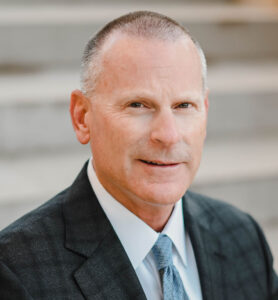
Healthcare continues to be the leading private-sector employer in Michigan. Our latest Economic Impact of Healthcare in Michigan report shows healthcare provided nearly 572,000 direct jobs in Michigan in 2022, with roughly 217,000 of those jobs in hospitals. …


Keckley Report

Is health insurance reform the key to affordability and lower costs?

“For most Americans, having health insurance is still considered a hedge against unexpected or otherwise unaffordable medical bills.

For most elected officials in Congress and state legislatures, Medicare and Medicaid are insurance programs that consume a large and growing piece of public funding, squeezing out other areas of need.

For virtually all hospitals, physicians, ancillary and long-term care providers, insurance is still the unwelcome front door through which all must go to get paid but their administrative hassles and low reimbursement rates are ruining the system for everyone.

And large majorities in each of these groups are unhappy with insurers for a myriad of reasons well-documented in trade publications and polling. …

The blame and shame game to which insiders in healthcare are addicted is a zero-sum game: blaming any single sector for the cumulative deficiencies in affordability and costs is misleading and does not serve the greater good.

Is health insurance reform the key to health system affordability and lower costs? It plays a role but not alone.”

Paul Keckley, Feb. 3, 2025


News to Know

In order to continue sharing with key stakeholders the important impact hospitals make to their communities, the MHA invites members to share examples of strong community impact programming through a brief survey.


MHA CEO Brian Peters

MHA in the News

A MHA media statement published Feb. 5 was included in stories by Michigan news outlets covering the fiscal year 2026 executive budget recommendation. The statement, attributed to MHA CEO Brian Peters, was mentioned by WLNS-TV …

Peters & Other Members Appear in Becker’s Hospital Review

MHA CEO Brian Peters

Becker’s Hospital Review published an article Oct. 31 that includes responses from MHA CEO Brian Peters and other MHA members.

Becker’s asked C-suite executives from hospitals and health systems across the U.S. to share their most beneficial partnerships in 2024.

Peters focused on the close partnerships established between the MHA, higher education and state government to address healthcare workforce job openings.

“Understanding the significant workforce challenges confronted by our member hospitals and health systems, we have partnered closely with the higher education community and state government to lift up healthcare as a career path for young people and mid-careerists, and to provide new programming and support for their educational journey,” said Peters. “We launched a new state-wide campaign featuring billboard, radio, and digital advertising, as well as a new website. These efforts have led to our hospitals’ success in filling over 60,000 open positions over the course of the last year.”

Additional MHA members who contributed to the article include:

  • Aiesha Ahmed, MD, vice president of population health, vice president and chief of neuroscience, Corewell Health West
  • Matthew E. Cox, CFO, Corewell Health
  • Theresa Dawson, DNP, MSN, RN, chief nursing officer, Oaklawn Hospital
  • Marschall S. Runge, MD, PhD., CEO, Michigan Medicine; executive vice president of Medical Affairs, University of Michigan

Members with any questions regarding media requests should contact John Karasinski at the MHA.

MHA Webinar Outlines Strategies to Strengthen Healthcare Worker Well-being

The MHA and the MHA Keystone Center will host the MHA Health Foundation webinar Implementing Evidence-Informed Strategies to Normalize Help-Seeking and Strengthen Wellbeing from 4:30 to 5:30 p.m. Dec 4. This webinar is dedicated to supporting the well-being of healthcare workers across the state. As healthcare professionals face increasing pressures on mental health and resilience, the MHA Health Foundation is offering an opportunity to explore the impactful resources provided by the Dr. Lorna Breen Heroes’ Foundation.

The webinar will outline how hospital licensing and credentialing applications can be updated to remove mental health questions that are potentially stigmatizing, discriminatory or violate privacy. The Dr. Lorna Breen Heroes’ Foundation recognized the Michigan Licensing and Regulatory Affairs medical licensing applications as being consistent with their recommendations.

This webinar is approved for nursing and social work credit. Members may seek more information through the Accredited Continuing Education Accreditation Statement.

This webinar is offered free of charge to MHA members. Members with questions about registration should contact Brenda Carr at the MHA.

MHA Monday Report Sept. 16, 2024

Leaders Convene for Crucial Healthcare Workforce Discussion

The MHA hosted nearly 150 thought leaders from healthcare, post-secondary education and workforce talent development Sept. 11 in Lansing for a discussion to help strengthen connections across the sectors focused on building the pipeline for …


MDHHS Issues Final Maternal Infant Health Services Policy

The Michigan Department of Health and Human Services (MDHHS) issued a final Medicaid Policy Bulletin Sept. 9 to expand coverage for Maternal Infant Health Program services. ​​ The final policy was issued in response …


2024 Election Materials Available for Michigan Hospitals

The MHA is offering election communication materials geared toward hospital staff, volunteers, patients and visitors to encourage voter participation in the 2024 general election. Additionally, the MHA elections webpage will be updated regularly with relevant …


Michigan Doula Advisory Council Membership Application Opens

The Michigan Doula Advisory Council (DAC) invites doulas across the state to apply for membership as its first council term ends in Dec. 2024. The DAC works to improve doula services in Michigan, particularly with …


What’s Ahead in Healthcare? Insights from the American Hospital Association

The MHA released a new episode of the MiCare Champion Cast featuring Rick Pollack, president and CEO of the American Hospital Association. Pollack joined MHA CEO Brian Peters to discuss a variety of topics …


Keckley Report

The Presidential Debate will Frustrate Healthcare Voters

“The healthcare system per se is not a major concern to voters this year, but its affordability is. Out-of-pocket costs for prescription drugs, insurance premiums and co-pays and deductibles for hospitals and physician services are considered unreasonable and inexplicably high. They contribute to public anxiety about their financial security alongside housing and food costs. And majorities think the government should do more by imposing price controls and limiting corporate consolidation. …

Misinformation, disinformation and AI derived social media messaging are standard fare in winner-take-all politics. When used in addressing health issues and policies, they’re effective because the public’s basic level of understanding of the health system is embarrassingly low: studies show 4 in 5 American’s confess to confusion citing the system’s complexity and, regrettably, the inadequacy of efforts to mitigate their ignorance is widely acknowledged. Thus, terms like affordability, value, quality, not-for-profit healthcare and many others can be used liberally by politicians, trade groups and journalists without fear of challenge since they’re defined differently by every user. …

Long-term, the system will proceed incrementally. Bigger players will fare OK and others will fail. I remain hopeful thoughtful leaders will address the near and long-term future with equal energy and attention. Regrettably, the tyranny of the urgent owns the U.S. health system’s attention these days: its long-term destination is out-of-sight, out-of-mind to most. And the complexity of its short-term issues lend to magnification of misinformation, disinformation and public ignorance.

That’s why this debate will frustrate healthcare voters.”

Paul Keckley, Sept. 9, 2024


MHA in the News

WWMT-TV Newschannel 3 aired a story Sept. 9 on the radiology workforce shortage in hospitals, including a shortage of radiologists and radiology technicians. MHA Executive Vice President Laura Appel was interviewed for the story, explaining …

New Hospital Workforce Data Receives Media Attention

MHA CEO Brian PetersThe MHA published a press release May 29 that shares new Michigan hospital workforce data, including information on the number of employees hired in 2023, the number of vacancies in 2024 and updated economic impact information. Crain’s Grand Rapids, Becker’s Hospital Review and Gongwer all published stories covering the data release.

MHA CEO Brian Peters is quoted in each story and conducted an interview with Crain’s.

“We have certainly closed the gap in a very significant way, but I’d be the first to tell you that more work needs to be done,” said Peters. “We still have a very significant number of vacancies that we know we need to fill if we’re going to be able to provide access to everyone in our communities. So, the work continues, but it’s encouraging to see what’s happened over the last 12 months.”

Members with any questions regarding media requests should contact John Karasinski at the MHA.