Medicaid & Pediatric Behavioral Health Media Coverage

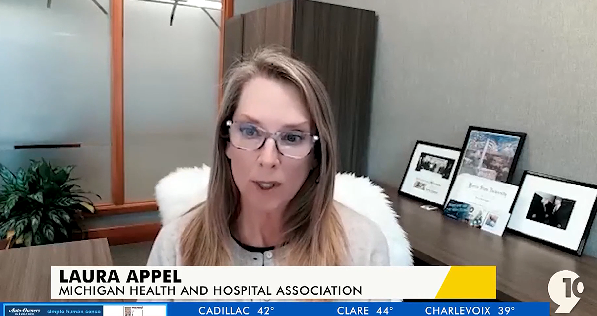
Laura Appel speaks with 9&10 News.

The MHA received media coverage the week of April 7 on potential Medicaid funding cuts, pediatric behavioral health and healthcare costs.

9&10 News aired a story April 9 on potential federal Medicaid funding cuts. MHA Executive Vice President Laura Appel spoke with 9&10 News, explaining how the cuts would specifically impact rural healthcare. Representatives from McLaren Health Care and Munson Healthcare also appeared in the story.

“In our rural areas, we have small populations, and some of them are also shrinking, which makes it that much harder to sustain certain services because of the fixed costs being spread over so few people,” said Appel. “When we lose a labor and delivery unit, we lose it for that entire population.”

Lauren LaPineSecond Wave Michigan published a story April 8 about how Michigan hospitals are improving pediatric behavioral healthcare. Lauren LaPine, MHA senior director of legislative and public policy, spoke with Second Wave Michigan about the MHA’s behavioral health work, focusing particularly on the $50 million state grant the MHA served as the fiduciary for to expand inpatient pediatric behavioral health capacity in the state. LaPine also highlighted the data the MHA collected regarding emergency department boarding, which shows at least 155 people at any point, including 17 children, are in an emergency department awaiting behavioral health care.

“Our data in Michigan reflects some of the trends that we see nationally in terms of the increasing need for behavioral health services for children and youth,” said LaPine. “So, we are paying really close attention to that need and want to make sure that our member hospitals and health systems are able to address the need when pediatric patients and their families come to the hospital in a behavioral health crisis.”

Lastly, Crain’s published a story April 9 about the role of hospitals regarding rising healthcare costs. MHA CEO Brian Peters is quoted in the story, explaining how the majority of rising costs are due to responding to market trends for labor, as well as rising costs for facilities, drugs and supplies.

“The largest expense for hospitals is labor … A large component to increased healthcare costs for hospitals is making sure healthcare workers are appropriately and competitively compensated so they can provide care to patients when and where they need it,” said Peters.

Members with any questions regarding media requests should contact John Karasinski at the MHA.

Virtual Media Roundtable Focuses on Medicaid Funding Cut Consequences

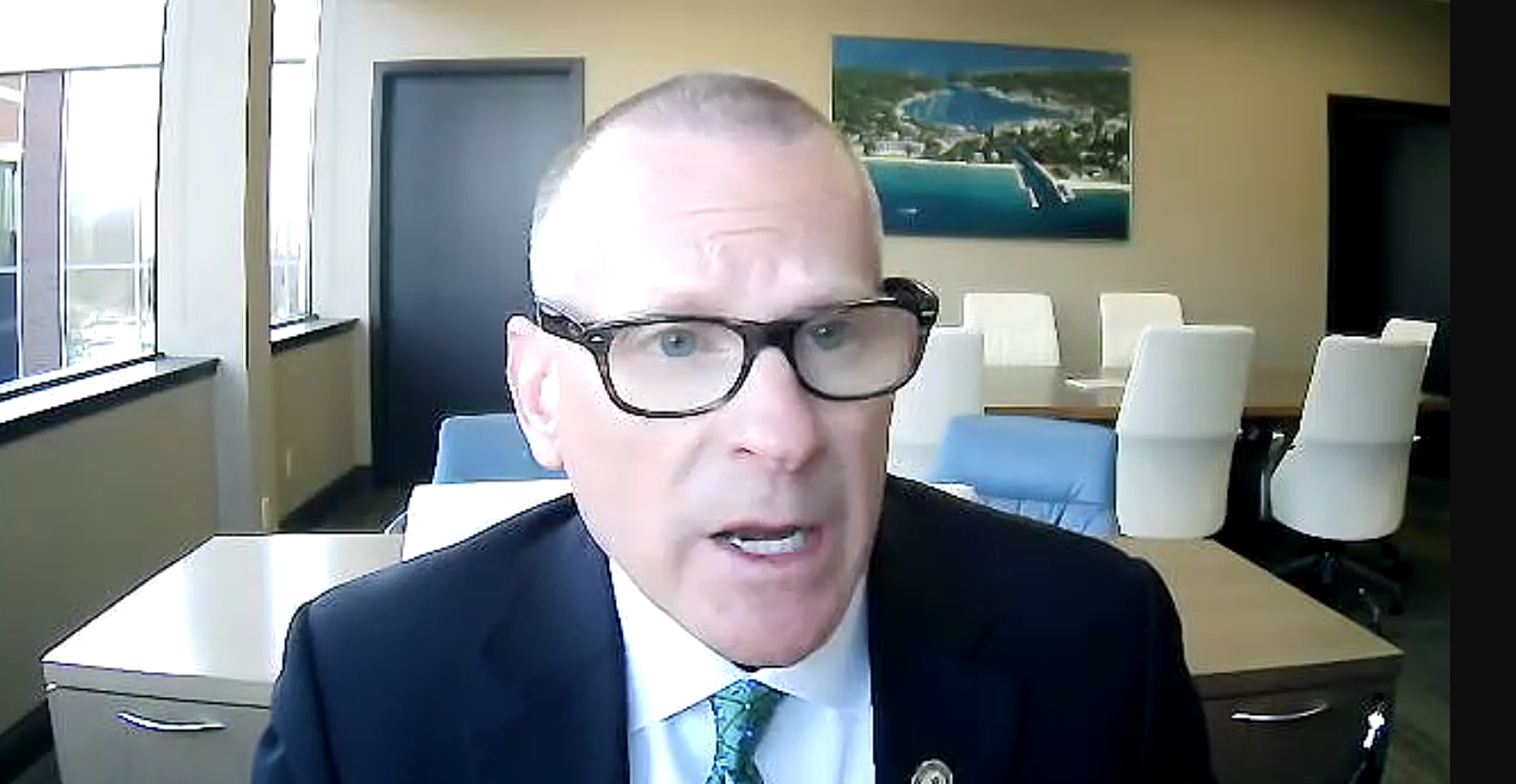
MHA CEO Brian Peters speaks during a virtual media roundtable about Medicaid.
MHA CEO Brian Peters speaks April 3 during a virtual media roundtable about Medicaid funding cuts.

A virtual media roundtable hosted April 3 by the Michigan League for Public Policy included MHA CEO Brian Peters as a panelist, where he discussed the consequences for potential Medicaid funding cuts by Congress.

Crain’s Detroit Business, CBS Detroit and MIRS published stories as a result of the roundtable.

“When Medicaid funding reductions force hospitals to curtail services or in fact eliminate entire service lines or in fact close hospitals … the services are no longer available to Medicaid recipients, but they’re no longer available to anyone in the community, either,” said Peters. “The cuts that are being contemplated in Washington, D.C. right now, if those were to be implemented, they would cost jobs. And more importantly, I can tell you, they would cost lives,”

Monique Stanton from the Michigan League for Public Policy.

Joining Peters during the roundtable were:

  • Monique Stanton, President & CEO, Michigan League for Public Policy
  • Russ Kolski, Interim Executive Director, Ingham Community Health Center
  • Susan Harding, Executive Director, Oakland Livingston Human Services Agency
  • Jenny Wagemann, Manager, Allen Farmers Market and Breadbasket Food Pantry

On a separate note, MLive also published a story April 3 that references the MHA’s healthcare workforce data and the 44% reduction in nursing vacancies in Michigan hospitals from 2023 to 2024. The story shares news on a nursing student loan repayment program announced by the Michigan Department of Health and Human Services. The Detroit Free Press also published an article on the program, citing the MHA’s Economic Impact of Healthcare Report.

Members with any questions regarding media requests should contact John Karasinski at the MHA.
340B & Medicaid Receive Media Coverage

The MHA received media coverage the week of March 10 on the 340B program and potential federal Medicaid funding cuts with outlets including MichMash, Crain’s Grand Rapids Business and 9&10 News.

MHA CEO Brian Peters appeared on the March 14 episode of the MichMash podcast where he discussed MHA advocacy efforts to oppose Medicaid funding cuts, passage of Senate Bills 94 and 95 by the Michigan Senate that safeguard the 340B program and the healthcare workforce. The interview was conducted by hosts Cheyna Roth and Zach Gorchow. MichMash is produced by WDET Detroit Public Radio in collaboration with Gongwer News Service and is part of the NPR Network.

Crain’s Grand Rapids also published an article March 10 about the 340B legislation moving through the Senate. Peters and Elizabeth Kutter, senior director of advocacy, MHA, are quoted in the piece.

“This bill prevents drug manufacturers from continuing to issue arbitrary restrictions on 340B eligible Federally Qualified Health Centers and hospitals,” said Peters. “We continue to be grateful for the Senate’s leadership and collaboration in recognizing the need for strong, quality health care providers over out-of-state prescription drug interest groups.”

9&10 News aired a story March 11 that looked at the impact on Michigan if funding cuts to Medicaid are implemented. MHA Executive Vice President Laura Appel was interviewed and appears in the story.

“We know that work requirements are popular as a concept, but really, we need to focus on people being healthy so that they can work, as opposed to working so that they can become healthy,” said Appel.

Members with any questions regarding media requests should contact John Karasinski at the MHA.

Legislative Policy Panel Acts on Opioid Treatment Policies

The MHA Legislative Policy Panel met virtually March 12 to develop recommendations on legislative and policy issues impacting Michigan hospitals. The MHA advocacy team provided important updates to the panel on healthcare activities at both the federal and state levels.

Adam Carlson, senior vice president, advocacy, shared the federal update, recapping the activities of the Trump administration since inauguration. Topics included a review of several healthcare-related executive orders, federal agency appointments and proposed Medicaid funding cuts.

Elizabeth Kutter, senior director, advocacy, then provided the panel with a state legislative update, recapping the recent passage of 340B contract pharmacy legislation in the Senate and the recently revised Earned Sick Time Act. Senate Bill (SB) 94, sponsored by Sen. Sam Singh (D-East Lansing), passed the Senate 33-3, with overwhelming bipartisan support, on March 6, which safeguards the 340B program in Michigan, ensuring cost savings and preserving access to affordable healthcare services in both urban and rural Michigan communities. The bill is paired with SB 95, sponsored by Sen. Jonathan Lindsey (R-Allen), which requires hospital compliance with federal cost transparency laws.

John Karasinski, senior director, communications, discussed the public communications strategies supporting Medicaid and 340B efforts. Panel members were encouraged to visit the MHA’s Legislative Action Center and to use the action alerts for both topics.

The Panel chose to act on two issues, making recommendations related to opioid treatments. The first recommendation directs the MHA to support efforts to eliminate prior authorization requirements for buprenorphine. The second recommendation is for the MHA to work with state agencies on state regulatory requirements for opioid treatment programs.

For more information on the MHA Legislative Policy Panel, members may contact Adam Carlson at the MHA.

Hospital Medicaid Communications Toolkit Available

The MHA recently released a toolkit of communications resources to support hospitals in advocating against potential Medicaid funding cuts in their local communities.

The toolkit includes:

Michigan hospitals are encouraged to use these tools to express the importance of Medicaid and the value it provides to the entire community. Members are also reminded to share the MHA’s Medicaid action alert within their organizations to share the value of the program with Michigan’s Congressional delegation.

Efforts at the local level will complement MHA activities in both Washington, D.C. and statewide to publicly raise the awareness of the importance of Medicaid.

Members with questions regarding Medicaid communication materials may contact John Karasinski at the MHA.

Media Coverage Includes Focus on 340B, Tariffs & Medicaid

Elizabeth Kutter

The MHA received media coverage the week of March 3 on the Michigan Senate passing legislation that protects the 340B program, the potential impact of tariffs on hospitals and healthcare costs, as well as a radio appearance discussing potential federal Medicaid funding cuts.

Michigan Public aired a story March 6 following the broad bi-partisan passage of Senate Bills 94 and 95 by the full chamber. Senate Bill 94 would safeguard the 340B program, ensuring cost savings and preserves access to affordable healthcare services in both urban and rural Michigan communities. Further, this legislation adds first of its kind drug manufacturer transparency requirements, making Michigan’s legislation the strongest in the nation.

Elizabeth KutterElizabeth Kutter, senior director, government and political affairs, MHA, was interviewed by Michigan Public for the story.

“You have to be an entity that proves their eligibility in the program, which by default means that you are serving patients who are extremely vulnerable,” said Kutter. “You’re serving kids. You’re serving cancer patients. You’re serving people who, if your hospital closes or if healthcare access becomes limited, suddenly you’re seeing a very serious hospital desert for patients.”

Gongwer and MIRS also covered the passage of the bills.

In addition, Crain’s Detroit Business published an article March 3 looking at the impact of potential tariffs on a variety of Michigan industries, including healthcare. MHA CEO Brian Peters is quoted in the story addressing the impact to hospitals.

“Implementing tariffs on Canada, Mexico and China without exceptions for medications and medical supplies could jeopardize the availability and further increase the prices of already-expensive vital medications and health care devices Michigan hospitals need to provide appropriate patient care,” said Peters. “Tariffs will particularly exacerbate existing pharmaceutical shortages. China is responsible for providing a significant number of cardiac and oncology drugs, as well as active pharmaceutical ingredients needed to produce prescription drugs domestically. Many healthcare supplies are also produced in China and the United States does not have existing capacity to meet an increased demand for product.”

Peters also appeared on WJR 760AM March 3 to discuss the impact of potential federal Medicaid funding cuts on Michigan hospitals.

Members with any questions regarding media requests should contact John Karasinski at the MHA.

Appel Joins WJR Live from Lansing Broadcast

MHA EVP Laura Appel with WJR's Guy Gordon and Lloyd Jackson.
MHA EVP Laura Appel with WJR’s Guy Gordon and Lloyd Jackson.

MHA Executive Vice President Laura Appel appeared on Detroit’s WJR 760 AM’s ‘JR Morning with Guy Gordon, Llyod Jackson and Jamie Edmonds’s “Live from Lansing” broadcast Feb. 26 as part of the station’s annual coverage of legislative and policy issues facing the state the morning after Gov. Gretchen Whitmer’s State of the State address. The MHA sponsored the program, with the broadcast hosted at the Courtyard by Marriott Lansing Downtown.

As part of the program lineup, Appel spoke with Gordon and Jackson about the state of hospitals and the many changes they face, including the healthcare workforce, the 340B program and protecting Medicaid from federal funding cuts. Other notable interviewees during the event included Senate Minority Leader Aric Nesbitt (R-Lawton) and Speaker of the House Matt Hall (R-Richland Township).

Relevant healthcare topics included in the State of the State address included expanded attention towards recruiting males to pursue post-secondary education opportunities and increased state support for forgiving patient medical debt.

Additional media stories published during the week of Feb. 24 included an article picked up by both Bridge and MIRS on the challenges of behavioral health transport services for providers in the Upper Peninsula. Lauren LaPine, senior director of Legislative & Public Policy, MHA, was quoted in the article discussing efforts with the Michigan Department of Health & Human Services to implement and fund behavioral health transportation services at hospitals across the state.

“We believe that a patient shouldn’t have to be transported via police transport for behavioral health needs,” said LaPine.

In addition, the MHA received mention in a Feb. 27 article from MIRS recapping a House Health Policy Committee hearing about the 340B program.

Members with questions should contact John Karasinski at the MHA.

Peters Pens Medicaid Detroit News Op-ed

MHA CEO Brian Peters

The Detroit News published an op-ed Feb. 19 from MHA CEO Brian Peters expressing the importance of protecting the Medicaid program from any potential federal funding cuts.

Peters highlighted the high number of people supported by Medicaid, the value of the Healthy Michigan Plan and the harm cuts would have on healthcare providers, particularly in rural Michigan.

“Medicaid expansion under the ACA has saved lives, kept hospitals open and improved the overall well-being of countless individuals,” said Peters. “As the CEO of the Michigan Health & Hospital Association, I know firsthand what Medicaid cuts would do to hospitals, essential services, Michigan’s healthcare industry and the economy as a whole.”

Members with any questions regarding media requests should contact John Karasinski at the MHA.

Executive Budget Recommendation News Coverage

MHA CEO Brian Peters

A MHA media statement published Feb. 5 was included in stories by Michigan news outlets covering the fiscal year 2026 executive budget recommendation.

The statement, attributed to MHA CEO Brian Peters, was mentioned by WLNS-TV and Gongwer. The WLNS article includes the reactions from numerous leaders, while the Gongwer story focuses specifically on the budget recommendation for the Department of Health and Human Services.

“This budget presented by the Whitmer administration today maintains stability for health care providers across Michigan,” said Peters. “We appreciate the continued protection of funding pools that preserve access to care for Michiganders, whether they require obstetrical services, care at rural and critical access hospitals or coverage from the Healthy Michigan Plan and Michigan’s Medicaid health plans. We are also encouraged to see continued attention towards issues that impact Michigan’s talent pipeline and remove barriers towards pursuing health care careers.”

Members with any questions regarding media requests should contact John Karasinski at the MHA.

Peters Addresses Federal Healthcare Issues

MHA CEO Brian Peters

MHA CEO Brian Peters was quoted by media outlets the week of Jan. 27 discussing federal healthcare issues.

Bridge published an article Jan. 27 about the temporary pause of external communications from federal health agencies. Peters shared how hospitals use these communications to inform treatment and staffing practices.

“Hospitals rely on these agencies to share data and guidance on emerging diseases, seasonal disease outbreaks and treatments,” said Peters. “Much of the information is used to inform clinicians, as well as to prepare proper staffing.”

MLive also published a story Jan. 29 about the potential appointment of Robert F. Kennedy Jr. as secretary of Health and Human Services. Peters expressed the issues the MHA is focused on and the importance working with administration officials and lawmakers to address these topics.

“We can say that the MHA and its members are strategically focused on growing the healthcare workforce, protecting access to care, mental and behavioral health, cybersecurity and cybercrime, and creating healthy communities,” said Peters. “We look forward to working with any and all administration officials and legislators on these critical matters.”

Members with any questions regarding media requests should contact John Karasinski at the MHA.