MHA Monday Report March 30, 2026

Governor Whitmer Signs Interstate Medical Licensure Compact Bill
Gov. Whitmer signed House Bill 5455, now Public Act 6 of 2026, into law March 26. This came ahead of the deadline for the state to continue participation in the Interstate Medical Licensure Compact without …


Clinical Laboratory Fee Schedule Data Reporting Period Opens May 1
The Consolidated Appropriations Act of 2026, signed into law Feb. 3, includes updates to the Medicare Clinical Laboratory Fee Schedule under the Protecting Access to Medicare Act. These updates include a data …


MDHHS Finalizes Medicaid Policy Updates to Mental Health Framework

The Michigan Department of Health and Human Services (MDHHS) recently finalized Medicaid policy updates to the Michigan Mental Health Framework. It reflects several changes from the proposed version related to assessment use, timing and provider eligibility. …


Continuum of Care Consortium Seeks Member Participation

The Michigan Department of Licensing and Regulatory Affairs Bureau of Survey and Certification is organizing a Continuum of Care Consortium. This group is designed to bring together hospital and long-term care providers …


Stryker Issues Cyber Incident Response Certification Letter

Following a recent cyberattack at Stryker Corporation, the company issued a Stryker Cyber Incident Response Certification Letter on March 16 to update its customers on the ongoing situation. The letter includes information on product safety, communication with Stryker sales …


Hospitals Help: McLaren Launches AI Tool to Identify Heart Disease Risk Sooner

Michigan hospitals are finding innovative ways to improve patient outcomes and remove barriers to timely care. One example of this comes from McLaren Health Care and its McLaren Heart & Vascular Institute, who recently launched …


Keckley Report

It’s March Madness for Hospitals

“Hospitals represent 31% of total health spending in the U.S. They directly employ 52% of the nation’s 1.1 million physicians and 44% of the 18 million in the healthcare workforce. Many operate ‘related’ businesses including insurance companies, nursing home and long-term care services, fitness facilities and some are investors in private equity funds and joint ventures pursuing innovations in care delivery and more. …

For hospitals, this is March Madness! Strategies to manage demand, reduce costs and leverage favorable operating margins (enjoyed by some) need refreshing because the environment has fundamentally changed. Governing boards and C suites in hospitals face some tough questions about how, and how fast their environment will change. The Big C’s (Costs, Corporatization, Competition, Compliance, Capital, Coverage) are a useful place to start…

These are not comprehensive but they’re directionally accurate: the future for hospitals is not a repeat of the past. The market has fundamentally changed.

The blame and shame game played by the industry’s major sectors—hospitals, insurers, drug companies—has not made life better for the citizens it serves. The public’s asking for something better, and elected officials are on their side.

March Madness is reality for hospitals. It requires fresh thinking and uncomfortable adjustments. It’s not optional.”

Paul Keckley, March 22, 2026


New to KnowNews to Know

The MHA membership will convene in person for the MHA Annual Membership Meeting June 24–26. The annual meeting will feature an outstanding lineup of experts discussing key topics, including public perception and affordability. Members are encouraged to register by …


MHA in the News
The MHA received media coverage during the week of March 23 on key issues affecting access to care and the healthcare workforce. MLive, Gongwer and the Michigan Advance reported on the bipartisan agreement to extend …
Healthcare Access Policy Developments Draw Media Attention

The MHA received media coverage during the week of March 23 on key issues affecting access to care and the healthcare workforce.

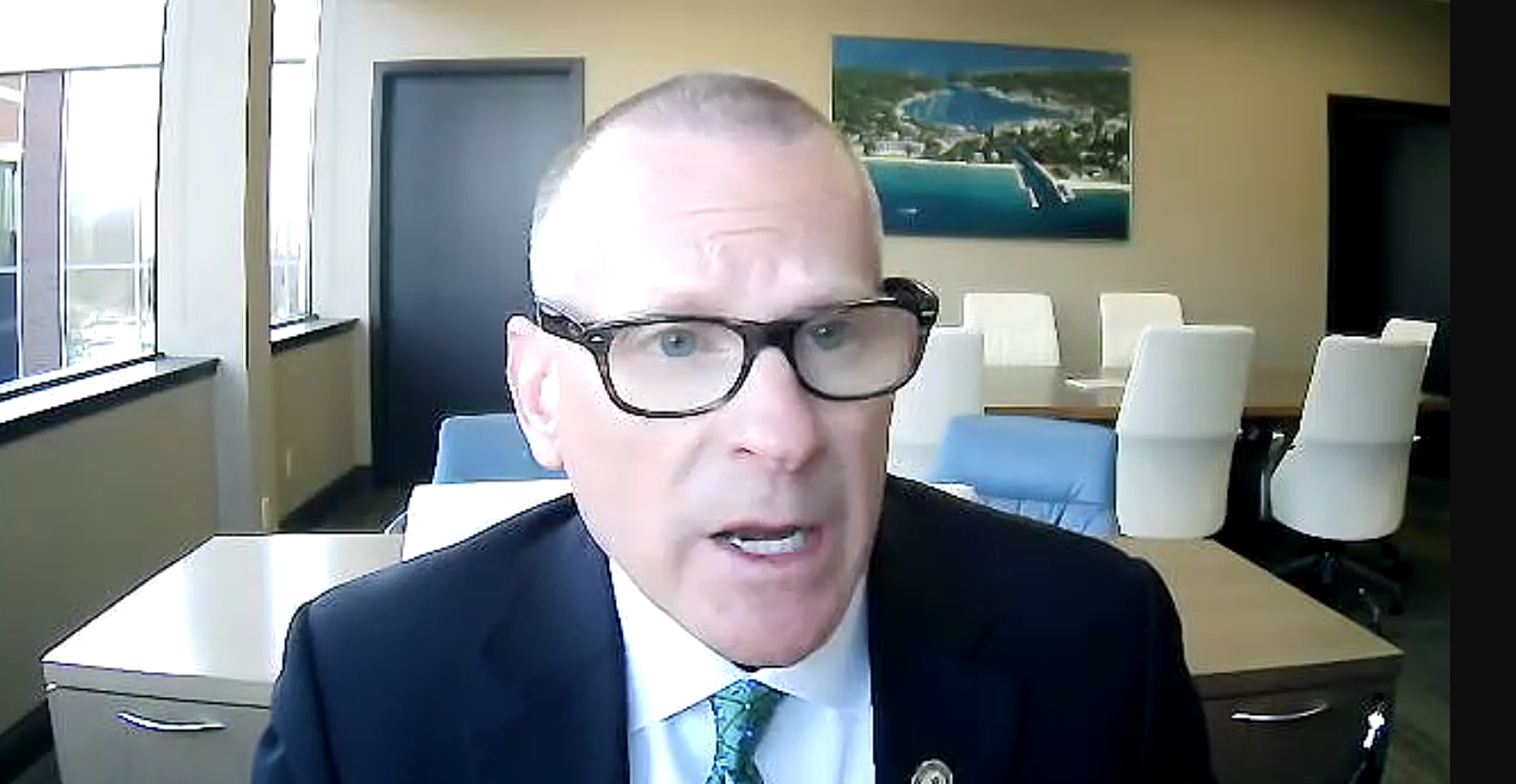
MLive, Gongwer and the Michigan Advance reported on the bipartisan agreement to extend Michigan’s participation in the Interstate Medical Licensure Compact. MHA CEO Brian Peters was quoted in the articles emphasizing how the compact helps hospitals recruit qualified physicians more efficiently while maintaining critical state oversight.

Peters underscored the importance of participation in the compact, especially in areas where workforce shortages can limit patient access to specialty services.

“For many hospitals, especially those serving rural or border communities, the compact supports access to care in high-demand specialties such as emergency medicine, psychiatry, obstetrics and primary care,” he said.

Laura AppelLaura Appel, executive vice president, government relations & public policy, was featured in Michigan Independent’s coverage surrounding Gov. Whitmer’s executive budget recommendations to fund Michigan’s Medicaid program.

Appel highlights the challenges hospitals will face if more Michiganders lose healthcare coverage.

The MHA was also quoted in a Bridge Michigan story examining increased federal immigration enforcement activity near healthcare facilities, reiterating that hospitals remain focused on caring for every patient who seeks treatment. Meanwhile, Peters also appears in an MLive article about sharing the impact of Medicaid funding cuts to hospitals.

Members with questions regarding media requests should contact Elise Gonzales at the MHA.

Headline Roundup: House Budget Reaction

The MHA received a host of media coverage from across the state during the week of Aug. 25 after the MHA issued a media statement reacting to the state budget bill passed Aug. 26 by the Michigan House of Representatives.

House Bill 4706 would institute several harmful changes to hospital funding, which could result in more than 20,000 job losses in Michigan hospitals. The statement from MHA CEO Brian Peters expressed the MHA’s strong opposition to this version of the state budget, expressing the harmful consequences it would bring and the need for a state budget that protects existing hospital funding.

Friday, Aug. 29

Thursday, Aug. 28

Wednesday, Aug. 27

Tuesday, Aug. 26

Members with any questions regarding media requests should contact John Karasinski at the MHA.

Media Recap: Hospital Cost Pressures and Behavioral Health Partnerships

Lauren LaPine

The MHA received media coverage the week of Aug. 4 on hospital cost pressures, behavioral health partnerships and the impact of Medicaid cuts.

Gongwer published a story Aug. 4 about a PricewaterhouseCoopers report that reviews the trends in the medical sector that are continuing to result in higher costs for services that are placing growing pressure on hospitals. The report shows that factors that include growth in drug spending and reductions in federal funding are leading to decreased hospital margins.

“This report confirms what hospitals in Michigan and across the country are living every day: skyrocketing costs, growing demand and shrinking margins,” said MHA CEO Brian Peters. “We cannot afford policies that slash Medicaid funding or shift more financial burden to hospitals and patients. Without sustainable support, hospitals – especially those in rural and underserved areas – face real threats of closure.”

Second Wave Michigan also published an article Aug. 5 about behavioral health partnerships that hospitals have in the state. The story looks at both policy solutions such as Senate Bill 316, as well as the partnership between Network180 and Trinity Health Grand Rapids in establishing The Behavioral Health Crisis Center to divert patients in crisis from emergency departments and jails.

Lauren LaPine“If you come to a hospital emergency department and you’re in some level of a behavioral health crisis, that hospital has to work with the CMH in the area where the patient lives,” said Lauren LaPine, senior director of legislative and public policy, MHA. “That takes a lot of time and a lot of coordination.”

MLive and Michigan Public also published stories that include mentions of the MHA following U.S. Sen. Elissa Slotkin’s visit to Helen DeVos Childre’s Hospital. The stories reference the MHA’s estimate that Michigan hospitals will lose $6 billion over the next ten years from the One Big Beautiful Bill Act.

Members with any questions regarding media requests should contact John Karasinski at the MHA.

Virtual Media Roundtable Focuses on Medicaid Funding Cut Consequences

MHA CEO Brian Peters speaks during a virtual media roundtable about Medicaid.
MHA CEO Brian Peters speaks April 3 during a virtual media roundtable about Medicaid funding cuts.

A virtual media roundtable hosted April 3 by the Michigan League for Public Policy included MHA CEO Brian Peters as a panelist, where he discussed the consequences for potential Medicaid funding cuts by Congress.

Crain’s Detroit Business, CBS Detroit and MIRS published stories as a result of the roundtable.

“When Medicaid funding reductions force hospitals to curtail services or in fact eliminate entire service lines or in fact close hospitals … the services are no longer available to Medicaid recipients, but they’re no longer available to anyone in the community, either,” said Peters. “The cuts that are being contemplated in Washington, D.C. right now, if those were to be implemented, they would cost jobs. And more importantly, I can tell you, they would cost lives,”

Monique Stanton from the Michigan League for Public Policy.

Joining Peters during the roundtable were:

  • Monique Stanton, President & CEO, Michigan League for Public Policy
  • Russ Kolski, Interim Executive Director, Ingham Community Health Center
  • Susan Harding, Executive Director, Oakland Livingston Human Services Agency
  • Jenny Wagemann, Manager, Allen Farmers Market and Breadbasket Food Pantry

On a separate note, MLive also published a story April 3 that references the MHA’s healthcare workforce data and the 44% reduction in nursing vacancies in Michigan hospitals from 2023 to 2024. The story shares news on a nursing student loan repayment program announced by the Michigan Department of Health and Human Services. The Detroit Free Press also published an article on the program, citing the MHA’s Economic Impact of Healthcare Report.

Members with any questions regarding media requests should contact John Karasinski at the MHA.