Hospitals Help: McLaren Launches AI Tool to Identify Heart Disease Risk Sooner

Michigan hospitals are finding innovative ways to improve patient outcomes and remove barriers to timely care. One example of this comes from McLaren Health Care and its McLaren Heart & Vascular Institute, who recently launched a first-of-its-kind cardiovascular screening program to help better detect patients’ risk for heart disease.

Launched in partnership with Bunkerhill Health and its AI-powered Carebricks platform, the tool’s FDA-cleared clinical algorithm detects indicators for coronary heart disease and aortic stenosis – two common forms of heart disease that worsen over time if left untreated.

“This is a very important way of finding the disease before it causes any problems for the patient long-term or short-term,” said Dr. Samar Kazziha, chief medical director, McLaren Heart & Vascular Institute, McLaren Health Care.

Heart disease remains a leading cause of death in Michigan and the U.S. In addition to heeding controllable risk factors, early intervention can significantly reduce the odds of a life-threatening cardiovascular event.

McLaren’s new technology has alleviated the need for time-consuming tests and imaging that traditionally have been performed to detect the presence and risk of heart disease. Now, clinicians can spot signals much sooner – even during routine testing for other, non-heart related conditions.

Launching a screening program of this size and scope would have normally placed added strain on clinical teams, including time spent reviewing charts, checking guidelines and coordinating follow-up care. Bunkerhill Health’s Carebricks makes the process easier by enabling AI-powered workflows that analyze patients’ records already on file, clinical guidelines and McLaren’s own care protocols. As a result, McLaren can expand access to early cardiovascular screening while minimizing added workload for clinicians.

“By using the clinical information already available to us, this program enables us to identify patients who may benefit from earlier follow-up, often before symptoms appear, and ensures they are connected to the right care at the right time — helping to close critical gaps in detection, improving those patients’ long-term outcomes and overall quality of life,” said Kazziha.

To learn more about cardiac care services, visit the McLaren Health Care website. Those with questions or content ideas for the Hospitals Help series may contact Lucy Ciaramitaro at the MHA.

Medicaid & Pediatric Behavioral Health Media Coverage

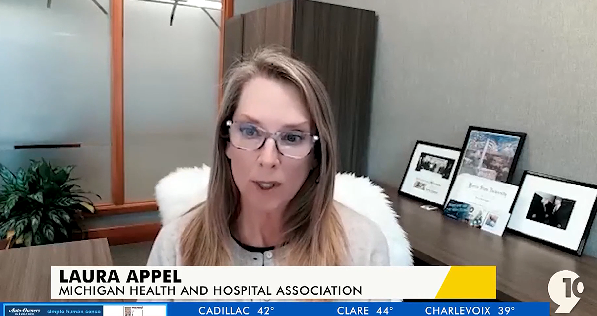
Laura Appel speaks with 9&10 News.

The MHA received media coverage the week of April 7 on potential Medicaid funding cuts, pediatric behavioral health and healthcare costs.

9&10 News aired a story April 9 on potential federal Medicaid funding cuts. MHA Executive Vice President Laura Appel spoke with 9&10 News, explaining how the cuts would specifically impact rural healthcare. Representatives from McLaren Health Care and Munson Healthcare also appeared in the story.

“In our rural areas, we have small populations, and some of them are also shrinking, which makes it that much harder to sustain certain services because of the fixed costs being spread over so few people,” said Appel. “When we lose a labor and delivery unit, we lose it for that entire population.”

Lauren LaPineSecond Wave Michigan published a story April 8 about how Michigan hospitals are improving pediatric behavioral healthcare. Lauren LaPine, MHA senior director of legislative and public policy, spoke with Second Wave Michigan about the MHA’s behavioral health work, focusing particularly on the $50 million state grant the MHA served as the fiduciary for to expand inpatient pediatric behavioral health capacity in the state. LaPine also highlighted the data the MHA collected regarding emergency department boarding, which shows at least 155 people at any point, including 17 children, are in an emergency department awaiting behavioral health care.

“Our data in Michigan reflects some of the trends that we see nationally in terms of the increasing need for behavioral health services for children and youth,” said LaPine. “So, we are paying really close attention to that need and want to make sure that our member hospitals and health systems are able to address the need when pediatric patients and their families come to the hospital in a behavioral health crisis.”

Lastly, Crain’s published a story April 9 about the role of hospitals regarding rising healthcare costs. MHA CEO Brian Peters is quoted in the story, explaining how the majority of rising costs are due to responding to market trends for labor, as well as rising costs for facilities, drugs and supplies.

“The largest expense for hospitals is labor … A large component to increased healthcare costs for hospitals is making sure healthcare workers are appropriately and competitively compensated so they can provide care to patients when and where they need it,” said Peters.

Members with any questions regarding media requests should contact John Karasinski at the MHA.

McLaren Port Huron Nurse Receives Q2 MHA Keystone Center Speak-up! Award

speak up
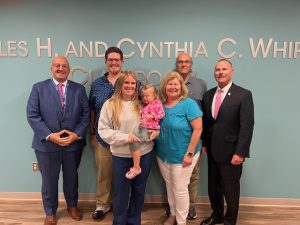
Melissa Burgess, RN at McLaren Port Huron Hospital pictured with her family, McLaren leadership and MHA CEO Brian Peters.

The Michigan Health & Hospital Association (MHA) Keystone Center celebrated Melissa Burgess, RN at McLaren Port Huron Hospital as its quarterly MHA Keystone Center Speak-up! Award recipient in September.

The quarterly MHA Keystone Center Speak-up! Award celebrates individuals or teams in Michigan hospitals demonstrating a commitment to the prevention of patient or staff harm.

Burgess was recognized for her swift intervention for a behavioral health patient. Working closely with the patient, she noticed a status change that prompted her to consult additional team members. Following a reevaluation, the patient was able to be provided with the adequate level of enhanced care they required.

“Melissa’s action is a direct reflection of her dedication to her patients and the trusted care we deliver to our community,” said McLaren Port Huron President and CEO Eric Cecava. “The level of her commitment is inspiring to our organization and empowering to her fellow caregivers, and we are grateful and proud to have her as an influential member of our team.”

Additional award finalists for the second quarter of 2024 include:

  • Tim Carew, Bronson Healthcare
  • Tiffany Holloway, Trinity Health Livonia Hospital
  • Jessica Winkelman, Corewell Health Dearborn Hospital

“We feel honored to celebrate alongside healthcare workers like Melissa who advocate for their patients every day in Michigan hospitals,” said MHA CEO Brian Peters. “Her decisive action demonstrates her commitment to her patient’s well-being and McLaren’s dedication to promoting a safety culture.”

More information about the MHA Keystone Center Speak-up! Award, including criteria and a nomination form, are available online.