Virtual Media Roundtable Focuses on Medicaid Funding Cut Consequences

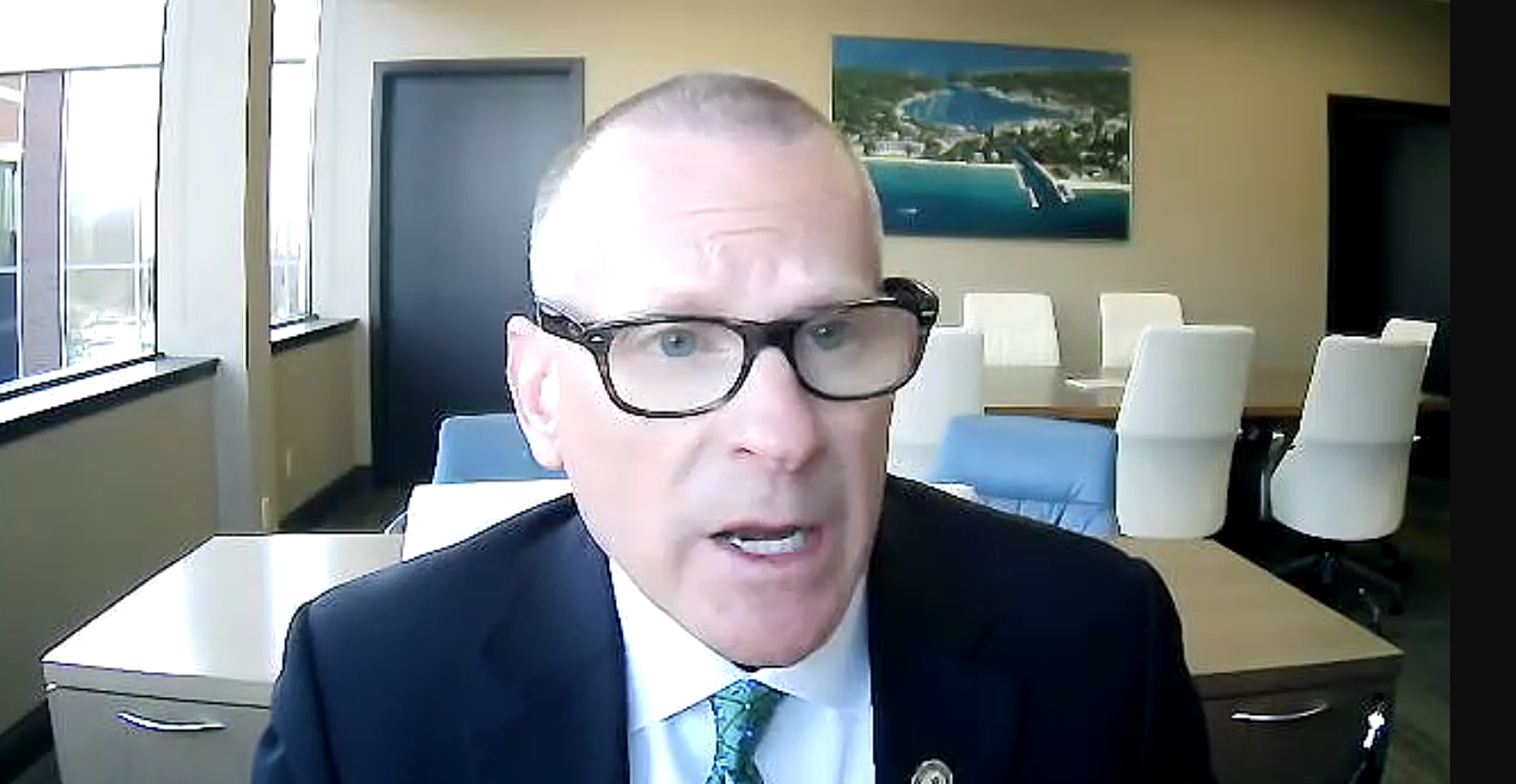
MHA CEO Brian Peters speaks during a virtual media roundtable about Medicaid.
MHA CEO Brian Peters speaks April 3 during a virtual media roundtable about Medicaid funding cuts.

A virtual media roundtable hosted April 3 by the Michigan League for Public Policy included MHA CEO Brian Peters as a panelist, where he discussed the consequences for potential Medicaid funding cuts by Congress.

Crain’s Detroit Business, CBS Detroit and MIRS published stories as a result of the roundtable.

“When Medicaid funding reductions force hospitals to curtail services or in fact eliminate entire service lines or in fact close hospitals … the services are no longer available to Medicaid recipients, but they’re no longer available to anyone in the community, either,” said Peters. “The cuts that are being contemplated in Washington, D.C. right now, if those were to be implemented, they would cost jobs. And more importantly, I can tell you, they would cost lives,”

Monique Stanton from the Michigan League for Public Policy.

Joining Peters during the roundtable were:

  • Monique Stanton, President & CEO, Michigan League for Public Policy
  • Russ Kolski, Interim Executive Director, Ingham Community Health Center
  • Susan Harding, Executive Director, Oakland Livingston Human Services Agency
  • Jenny Wagemann, Manager, Allen Farmers Market and Breadbasket Food Pantry

On a separate note, MLive also published a story April 3 that references the MHA’s healthcare workforce data and the 44% reduction in nursing vacancies in Michigan hospitals from 2023 to 2024. The story shares news on a nursing student loan repayment program announced by the Michigan Department of Health and Human Services. The Detroit Free Press also published an article on the program, citing the MHA’s Economic Impact of Healthcare Report.

Members with any questions regarding media requests should contact John Karasinski at the MHA.

Balancing the Complexities of the Healthcare Workforce in Rural Markets

MHA Endorsed Business Partner AMN Healthcare will host the webinar Balancing the Complexities of the Healthcare Workforce in Rural Markets from 11 a.m. to 12 p.m. ET April 10.

Speakers John Higgins, vice president of talent management at Essentia Health, a hospital system in Wisconsin, North Dakota and Minnesota, and Steven Endsley, vice president of workforce solutions at AMN Healthcare, will provide valuable insights on solving workforce challenges and innovative talent strategies, including in rural healthcare settings. The webinar will highlight effective approaches to talent acquisition, retention and workforce transformation.

Key takeaways will include:

  • Insights on rural and urban healthcare workforce market dynamics.
  • Shaping adaptive workforces with development and flexible workforce pools.
  • Having union labor partners to drive innovation and implement workforce development activities.
  • Best practices and specific-use cases at Essentia Health, including retention strategies and talent acquisition innovations, such as artificial intelligence.

The webinar is free of charge and members are encouraged to register.

For additional information, visit the AMN Healthcare page or contact Steven Endsley, vice president of workforce solutions at AMN Healthcare. Members with questions may visit the MHA Business Services page or contact Rob Wood at the MHA.

Appel Joins WJR Live from Lansing Broadcast

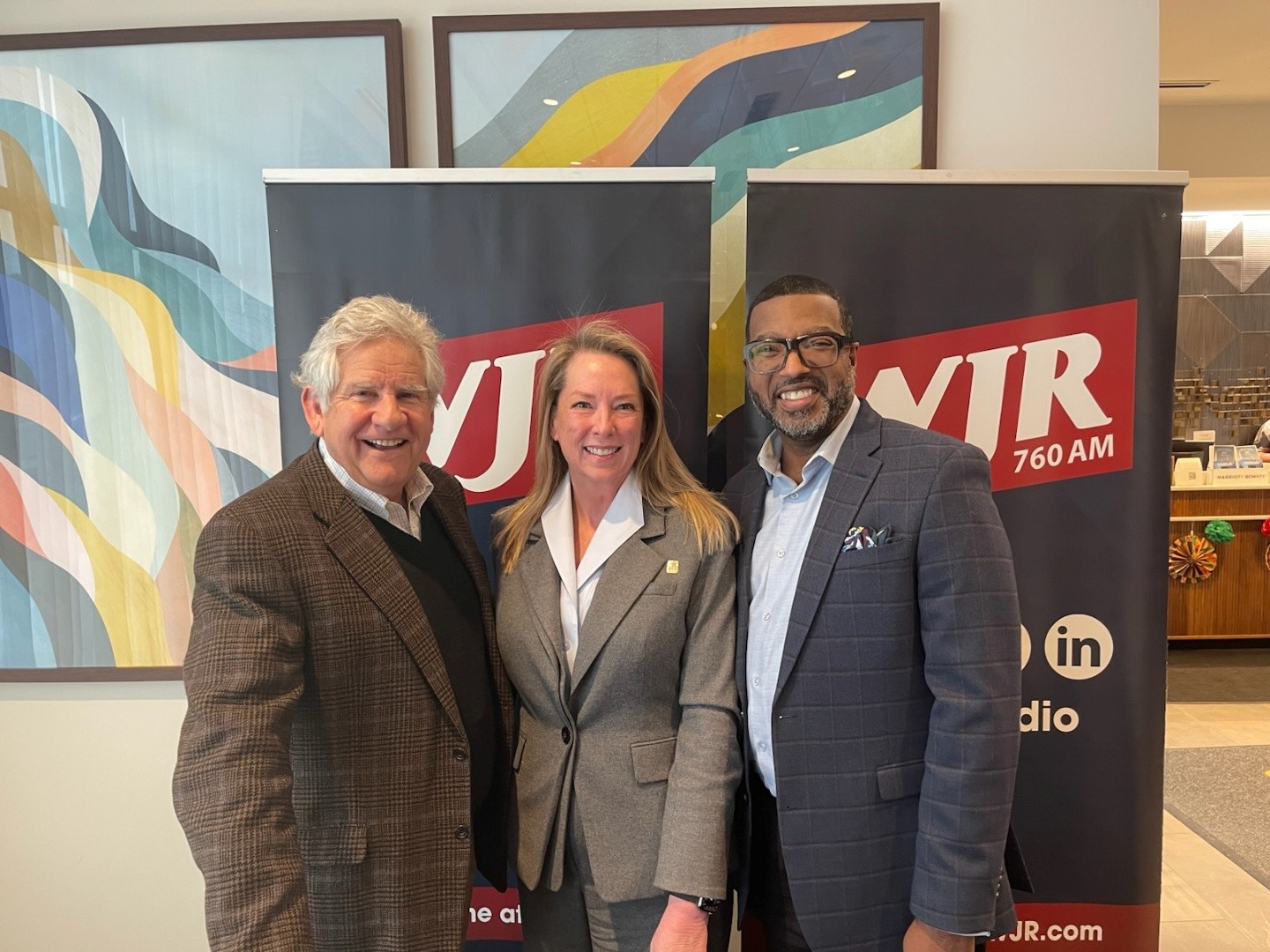
MHA EVP Laura Appel with WJR's Guy Gordon and Lloyd Jackson.
MHA EVP Laura Appel with WJR’s Guy Gordon and Lloyd Jackson.

MHA Executive Vice President Laura Appel appeared on Detroit’s WJR 760 AM’s ‘JR Morning with Guy Gordon, Llyod Jackson and Jamie Edmonds’s “Live from Lansing” broadcast Feb. 26 as part of the station’s annual coverage of legislative and policy issues facing the state the morning after Gov. Gretchen Whitmer’s State of the State address. The MHA sponsored the program, with the broadcast hosted at the Courtyard by Marriott Lansing Downtown.

As part of the program lineup, Appel spoke with Gordon and Jackson about the state of hospitals and the many changes they face, including the healthcare workforce, the 340B program and protecting Medicaid from federal funding cuts. Other notable interviewees during the event included Senate Minority Leader Aric Nesbitt (R-Lawton) and Speaker of the House Matt Hall (R-Richland Township).

Relevant healthcare topics included in the State of the State address included expanded attention towards recruiting males to pursue post-secondary education opportunities and increased state support for forgiving patient medical debt.

Additional media stories published during the week of Feb. 24 included an article picked up by both Bridge and MIRS on the challenges of behavioral health transport services for providers in the Upper Peninsula. Lauren LaPine, senior director of Legislative & Public Policy, MHA, was quoted in the article discussing efforts with the Michigan Department of Health & Human Services to implement and fund behavioral health transportation services at hospitals across the state.

“We believe that a patient shouldn’t have to be transported via police transport for behavioral health needs,” said LaPine.

In addition, the MHA received mention in a Feb. 27 article from MIRS recapping a House Health Policy Committee hearing about the 340B program.

Members with questions should contact John Karasinski at the MHA.

MHA CEO Report — A Program Year in Review

MHA Rounds graphic of Brian Peters

“Winning is not a sometime thing, it is an all the time thing. You don’t do things right once in a while…you do them right all the time.”  — Vince Lombardi

MHA Rounds image of Brian PetersI am pleased to share we just completed a successful MHA Annual Meeting, continuing a long-standing June tradition whereby we celebrate the conclusion of one MHA program year, and prepare for the next. Each program year is unique with the different challenges it presents. At this point five years ago, no one could have predicted how the emergence of COVID-19 would flip healthcare on its head and drastically alter the tactical objectives of our association. However, there is a constant: the MHA continues to rise to any challenge presented to us and we deliver results for our membership to improve the health and wellness of individuals and communities.

The 2023-2024 program year focused intensely on workforce, viability and behavioral health, while addressing the various “wildcard” issues that always come up. We were led with great wisdom and compassion by Shannon Striebich, president and CEO, Trinity Health Michigan, as our board chair. Due to Shannon’s commitment and leadership, the MHA accomplished numerous highly successful and impactful outcomes on behalf of our members.

One of the most significant challenges in this past year was the threat posed by government-mandated nurse staffing ratio legislation. This proposed policy had the potential to dramatically reduce access to care for individuals throughout the state. Our advocacy on the issue lasted throughout the entire year but was highlighted by an Advocacy Day we hosted in September that featured more than 150 hospital representatives, primarily consisting of nurse leaders, who came to the Capitol and conducted 118 meetings with lawmakers that day. Later in the year, the MHA successfully advocated our position at a committee hearing, where more than 60 supporters attended on very short notice to push back on false narratives and to support alternative nurse staffing solutions. As a result of our efforts, no committee votes have been scheduled, and momentum on this harmful legislation has been effectively stalled.

While we had to play defense against this harmful proposed legislation, the MHA spent the program year actively engaged in workforce development and efforts to grow the healthcare talent pipeline. The MHA worked with stakeholders to implement new funding designed to expand access to Bachelor of Science in Nursing degrees through partnerships between community colleges and four-year universities, while also engaged in partnerships with other organizations to promote healthcare careers, increase clinical faculty and nurse preceptors, address high turnover rates in rural areas and promote healthcare career options. We continued our award-winning healthcare career marketing campaign designed to attract future workers and also redeployed our annual hospital workforce survey that shows the efforts of Michigan hospitals to recruit, retain and train healthcare workers is making a real difference. Finally, we hired our first-ever chief nursing officer at the MHA, which is already strengthening our ties to the nursing community throughout the state.

The viability of hospitals was another key focus and was largely supported through our legislative advocacy work. MHA funding priorities continued to be protected in the state budget, which includes $163 million for graduate medical education, $45 million for traditional disproportionate share hospitals, $15 million through the rural access pool and an additional $8 million for the obstetrical stabilization fund. The fiscal year 2024 budget also included $60 million annually to support hospitals with Level I and II trauma centers and $34 million annually to support hospitals that provide inpatient psychiatric care. Besides state funding, the MHA protected Medicaid funding, medical liability, the 340B drug pricing program and certificate of need.

The MHA is also intricately involved in in addressing the behavioral health crisis plaguing our state and country. Expanding access to care is a key focus, which included the MHA administrating a $50 million grant program to expand access to pediatric inpatient behavioral health services. The Michigan Department of Health and Human Services (MDHHS) is a close partner in this work and the MHA participated in the MDHHS Advisory Committee on the creation of a psychiatric bed registry. The MHA launched a new member ED boarding survey to quantify the number of patients struggling with behavioral health access in the emergency department and the MHA is using this data when engaging with lawmakers, stakeholders and the public to explain the scope of the program. These learnings informed the creation of a four-bill package of legislation to address board-identified issues in the behavioral and mental health system, such as coverage parity and community mental health shortcomings.

Much of the work in the past year has focused on maternal and infant health and improving maternal health and birth outcomes. And I am pleased to share that our MHA Board of Trustees just approved the full slate of recommendations emanating from the MHA Community Access to Health Task Force, giving us the support to continue this important journey together.

And as usual, we effectively dealt with a long list of “wildcard” issues that emerged during the program year, including drug shortages, guardianship, infection control, patient transport, population growth and safety and quality. We also continued to strengthen our efforts related to the growing cybersecurity threat. Indeed, the Change Healthcare cyberattack was one of the largest and most impactful attacks ever seen and served as a clear reminder of the importance of our work in this space.

At our Annual Meeting, I spoke to our attendees about “the power of zero.” In the 2023-2024 program year, the following were true:

  • The number of Michigan acute care community hospitals and health systems that are not members of our association is zero. We have everyone at the table, which allows us to speak with one powerful, united voice.
  • We passed 39 MHA-supported bills through the state legislature that were enacted into law, with five more on their way to the governor for her signature. The number of MHA-opposed bills that made their way to the finish line was zero.
  • The MHA now has a full-time chief medical officer and a full-time chief nursing officer (as noted above). How many other state hospital associations can say this? Zero.
  • And most importantly, how many other associations – in any sector – are as relevant, as impactful, as mission-driven and successful as the MHA? I believe that number is zero.

I would like to recognize and thank our outstanding MHA Board of Trustees, our members, sponsors and business partners, but most of all, our incredible MHA staff for coming together to achieve such tremendous results for the patients and communities we collectively serve. I hope you will take the opportunity to celebrate these results with us.

As always, I welcome your thoughts.

Healthcare Advocates Honored with MHA Special Recognition Award

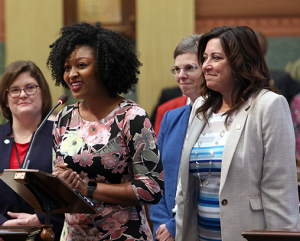
Sen. Anthony and Rep. Witwer

The MHA announced two winners of its Special Recognition Award during the Annual Membership Meeting June 27, recognizing them for extensive contributions to healthcare. Each of the winners has uniquely influenced healthcare in Michigan. The winners include Sen. Sarah Anthony (D-Lansing) and Rep. Angela Witwer (D-Delta Township).

The lawmakers each chair their chamber’s appropriations committee, with Anthony the first Black woman to ever chair the Senate Appropriations Committee. These committees are responsible for determining the annual state budget, covering important healthcare areas including Medicaid, the Healthy Michigan Plan, graduate medical education, the rural access pool and obstetrical stabilization fund, and critical access hospital reimbursement rates. Both lawmakers were strong supporters of Public Act 5 of 2023, sponsored by Witwer, which provided $75 million for hospital workforce recruitment, retention and training in the fiscal year 2023 state budget. In addition, they each fought to include enhanced funding for ongoing Level I and Level II trauma centers, inpatient psychiatric payment rates and maternal health in the fiscal year 2024 budget. Both Anthony and Witwer are strong supporters of funding Medicaid appropriately to ensure adequate reimbursement rates for providers and protect access to healthcare services.

Sen. Sarah Anthony (D-Lansing)

In addition to her committee role, Anthony prioritizes expanding access to healthcare. She sponsored Michigan’s first mental health parity law, signed into law May 21 by Gov. Whitmer. Public Act 41 of 2024 requires insurance coverage for mental health and substance use disorder treatments at the same level as physical health services. This new law eliminates existing disparities and ensure equal access to necessary care for all Michiganders. Anthony also co-sponsored key legislation last session to support the healthcare talent pipeline signed into law by Gov. Whitmer Dec. 22, 2022. Public Acts 251 and 252 of 2022 expanded the Michigan Reconnect program, allowing for several additional certifications to qualify for the post-secondary scholarship program including high-demand healthcare credentials. Other healthcare legislation Anthony sponsors includes Senate Bill 531, which is part of a package of bills supported by the MHA that would improve Michigan’s amended auto no-fault laws. The package would simplify and increase Medicare hospital reimbursements, clarify the definition of Medicare and create a new post-acute care provider fee schedule. The bills passed the Senate in a bipartisan vote and await consideration by the House.

Rep. Angela Witwer (D-Delta Township)

Witwer’s role as a healthcare champion is inspired by more than the 22 years she spent working in healthcare to begin her career. She first started as a clinician, working in University of Michigan Health – Sparrow Lansing’s burn unit and later as the manager of pediatric rehabilitation. She later became manager of the hospital’s community relations and marketing department, before leaving the organization to co-found her own public relations, marketing and advocacy firm. These life experiences inspired Witwer’s support for Public Acts 271 and 272 of 2023, which increase the penalties for assaulting a healthcare worker or volunteer by doubling the financial fines for those found guilty of such a crime.

Expanded AMN Healthcare Partnership Offers Greater Member Solutions

The MHA’s Endorsed Business Partner (EBP) program promotes industry-leading firms that can meet the most pressing needs of our member hospitals and health systems. The MHA recently endorsed a national leader in workforce solutions. The MHA has endorsed several of AMN’s legacy brands for many years, including Merrit Hawkins, BE Smith and AMN Language Services. Effective 2023, AMN Healthcare is now one brand, one AMN, and as they bring their solutions under one brand, the MHA is proud to continue this partnership.

AMN Healthcare is the largest workforce solutions company in the market, which allows them to serve clients more effectively across all levels of healthcare. They offer an extensive network of talent, innovative technologies, recruiting expertise and talent solutions to help healthcare organizations optimize their workforce. They focus on using technology and data to help organizations create a fiscally responsible balance of flexible, core and external labor. With nearly 40 years of industry expertise, AMN provides a customized and tailored approach to meet organizations’ holistic workforce goals.

For more information about AMN Healthcare, members may contact JJ Ewing at AMN Healthcare. Members seeking information about the MHA’s EBP program may contact Rob Wood at the MHA.


MHA CEO Report — Moving the Workforce Needle

MHA Rounds image of Brian Peters

“Luck is not chance, it’s toil; fortune’s expensive smile is earned.” — Emily Dickinson

The healthcare workforce has been one of the MHA’s strategic action priorities for the past several years. As we near completion of our 2023-2024 program year, I’m extremely pleased to see the results of the MHA’s second annual hospital workforce survey, which shows Michigan hospitals are making real progress in reducing staffing shortages. Michigan hospitals hired more than 61,000 employees in 2023, including 13,000 nurses. Overall job vacancies were reduced by 29%, while nursing vacancies dropped by 44%. These gains are seen across nearly all job categories and they’re significant, with double-digit decreases for many of them. I can tell you with certainty: our “luck” in this regard has been earned through extremely hard work.

Michigan hospitals still have 19,000 job openings, including 4,700 for nurses, so more work and investment needs to be done. However, the accomplishments of Michigan hospitals in this area shows the recruitment, retention and training tactics implemented throughout the state are working.

It starts with retaining the existing workforce, which leads to improved morale and reduced recruiting expenses. Michigan hospitals are outperforming hospitals across the country when it comes to registered nurse retention. Michigan’s turnover rate is 3.7 percentage points lower than the national average. Offering better pay, improved benefits, flexible scheduling and integration of technology to improve patient monitoring and reduce the administrative burden on nurses are examples of tactics implemented by Michigan hospitals that are making a difference.

Michigan remains an aging state, and as more people become eligible for Medicare, the demand for healthcare services will continue to grow. In response, our hospitals are very serious about expanding the talent pipeline and increasing awareness of hospital careers to students. Hospitals are expanding educational opportunities and partnerships with higher education institutions to attract more students to healthcare, including clinical positions like nursing. The MHA is assisting by leading the MI Hospital Careers public awareness campaign that targets students and professionals considering a career change to consider healthcare as a great option.

The MHA also recently published the latest results from the Economic Impact of Healthcare in Michigan report, which shows the important role hospitals have in Michigan’s workforce and economy. Healthcare remains Michigan’s largest employer of direct, private-sector jobs. Hospitals provide the largest percentage of healthcare jobs in the state, employing 217,000 full-and part-time employees. Not only are these good-paying, stable jobs, but many offer career pathways that allow employees to further develop their skills and move up the job ladder with additional certifications and/or degrees. Many of Michigan’s communities also depend on their local hospital as one of, if not their very largest, employer.

These results led our conversations last week while a team of MHA staff attended the Detroit Regional Chamber’s annual Mackinac Policy Conference, connecting with business, higher education and political leaders throughout Michigan. In addition to this public announcement, we also produced a palm card and video for event attendees to highlight our work. Our goal is to increase the awareness of the large role hospitals play in the economy and the success they’re having in welcoming new talent to their organizations.

Reducing job vacancies and staffing shortages is a marathon and not a sprint. The Michigan Legislature has played a large part in assisting hospitals, whether it be through direct worker funding or new policies, such as increased penalties for violence committed against healthcare workers or allowing community colleges to offer Bachelor of Science in Nursing degree programs in collaboration with a four-year institution. The MHA is proud to help lead many of these discussions with policymakers to find more ways to reduce barriers to healthcare careers.

Public policy, advocacy and communications are key – but we are using every tool in our toolbox to address our workforce challenges. The MHA Endorsed Business Partner (EBP) program promotes industry-leading firms, carefully vetted by the MHA, that can meet the most pressing needs of our member hospitals and health systems, and we just announced a new endorsement of AMN Healthcare as a national leader in workforce solutions. The MHA has endorsed several of AMN’s legacy brands, including Merritt Hawkins, a physician search division, for many years. As AMN brings its solutions under one brand, we proudly continue this partnership with AMN Healthcare. They are the largest workforce solutions company in the market, which allows them to serve clients more effectively across all levels of healthcare.

Economic development and workforce are not just a one-year strategy. This will continue to remain a priority for hospitals and health systems, and we’re encouraged that at this time next year, we will have a similar story to tell in the reduced number of healthcare vacancies in the state. Until then, please join us and encourage as many people as you can to consider a job in healthcare. Make no mistake: whether clinical or non-clinical, healthcare is hard work; but it truly is one of the most rewarding, mission-driven careers you can pursue.

As always, I welcome your thoughts.

Michigan Hospitals Fill 61,000 Jobs in 2023

Healthcare Remains the Largest
Private-Sector Employer in Michigan

The Michigan Health & Hospital Association (MHA) published results from their second annual Michigan hospital workforce survey that shows hospital recruitment, retention and training efforts in 2023 helped fill 61,000 total positions in 2023, reducing job vacancies by 29% to a total of 19,000 statewide. More than 13,000 nurses were hired during that time, decreasing the number of nursing vacancies by 44%. The survey includes responses from more than 95% of all Michigan acute-care inpatient hospitals.

Nearly all job categories in the survey experienced double-digit percentage decreases in vacancies year-over-year. Hospitals successfully reduced vacancies in the following job categories:

  • Nursing – 44% decrease
  • Operations – 43% decrease
  • Behavioral health – 42% decrease
  • Administration – 34% decrease
  • Clinical assistants – 28% decrease
  • Pharmacists – 26% decrease
  • Technicians – 25% decrease

Bar graph of decline in hospital job vacancy by category.

Amidst a national nursing shortage, the results show Michigan hospitals are outperforming national nurse retention rates. The registered nurse (RN) turnover rate for Michigan hospitals is 3.7 percentage points lower than the national average of 18.4%. Examples of how Michigan hospitals are retaining and recruiting nurses include offering better and faster pay, improved benefits and employee support, and expanding educational opportunities for students to consider a nursing career. State funding obtained through Public Act 9 of 2022 and Public Act 5 of 2023 contributed to these efforts and have directly benefitted at least 69,000 healthcare workers.

To complement the efforts of individual hospitals, the MHA launched the statewide MI Hospital Careers public awareness campaign in 2023 targeting students and professionals considering a career change to express the value of healthcare careers. The MHA also engaged in efforts that ultimately led to four-year Bachelor of Science in Nursing programs at community colleges, expansion of the Michigan Reconnect program to allow funds to support Michiganders accessing healthcare credentials for technician and nursing careers, and new state law that increases the penalties for individuals who commit acts of violence against healthcare workers.

Michigan hospitals remain focused on solutions that build the healthcare workforce that patients need now, and in the future, to fill the remaining 19,000 open hospital positions, including 4,700 in nursing.

These efforts will strengthen healthcare in Michigan, which remains the state’s largest employer of direct, private-sector jobs according to 2024 Economic Impact of Healthcare in Michigan data. More than one million jobs in Michigan were directly or indirectly related to or induced by healthcare in fiscal year 2022, the most recent data available. Hospitals collectively employ 217,000 full- and part-time employees, remaining one of the largest employers in many Michigan communities. In addition, direct healthcare workers in Michigan earned nearly $47 billion in wages, salaries and benefits.

“Retaining and growing the workforce is a top priority shared by hospitals throughout the state,” said Michigan Health & Hospital Association CEO Brian Peters. “We’re extremely encouraged by the data demonstrating the success of hospitals over the past year in increasing the talent pipeline to care for patients and strengthening the healthcare workforce. Hospitals provide Michigan communities with good jobs that help drive our state’s economy and keep residents healthy.”

The 19th edition of The Economic Impact of Healthcare in Michigan was compiled using IMPLAN® cloud software to quantify healthcare’s significant economic impact in the state. The data represents direct, indirect[1] and induced[2] healthcare jobs; taxes paid by those workers and their employers; and salaries, wages and benefits earned. The report is an online, interactive tool that allows users to examine these economic impacts from a statewide perspective and by region, county or congressional district. It is available at www.economicimpact.org.

[1] Indirect jobs are those created to support a larger employer or industry (for example, a laundry that cleans linens for a hospital).

[2] Induced jobs are those created by the spending of people who work in the indirect jobs (for example, a restaurant waiter who serves the laundry workers).

Public Relations Professionals Gather at MHA Communications Retreat

MHA Events
Sue Tetzlaff, co-founder, Capstone Leadership Solutions; Emily R. Sexton, communications coordinator, Holland Hospital; Hannan Deep, director of strategic communications operations, Henry Ford Health; and Lauren Zakalik, director, public & media relations strategy, Henry Ford Health, during a panel discussion. 

The 2024 MHA Communications Retreat brought together nearly 100 communications, marketing and public relations professionals from MHA-member facilities May 7 to network and learn from peers across the state. Topics on the agenda included artificial intelligence (AI), behavioral health, the healthcare workforce and internal communications.

The event began with several speakers presenting on how they are using communications tools to assist in reacting to the behavioral health crisis. Speakers included Kara Gavin, lead public relations representative, Michigan Medicine; and research & policy media relations manager, U-M Institute for Healthcare Policy and Innovation; Jim Rose, director of marketing and communications, Pine Rest Christian Mental Health services; Dallas Rau, executive director, Great Lakes Bay Region Mental Health Partnership; and Tera Szeliga, director of marketing, communications and Institute for Leaders, Great Lakes Bay Regional Alliance.

A panel discussion was conducted discussing communications strategies to address the healthcare workforce and the importance of engaging with government relations and advocacy efforts. Angela Minicuci, APR, partner, Martin Waymire, moderated the panel comprised of Laura Appel, executive vice president of government relations and public policy, MHA, and Megan Brown, chief marketing and communications officer, Munson Healthcare. MHA CEO Brian Peters followed the panel with an update on the MHA strategic action priorities.

AI industry experts Joshua Wilda, chief digital and information officer, University of Michigan Health – Regional Network; and Tony Lambert chief technology officer, TechSmith, presented on the AI trends in healthcare and hospitals and how its impacting communications and marketing.

The event concluded with a topic focused on internal communications strategies hospitals can implement to celebrate their workforce and tactics they can use to address employee morale, support recruiting and improve brand perception. Each speaker shared strategies for different sized hospitals. Those speakers included Sue Tetzlaff, co-founder, Capstone Leadership Solutions; Emily R. Sexton, communications coordinator, Holland Hospital; Hannan Deep, director of strategic communications operations, Henry Ford Health; and Lauren Zakalik, director, public & media relations strategy, Henry Ford Health.

The event was sponsored by Martin Waymire and MHA Data Services, who attended the event and provided resources about their products and services. Photos from the event are available on the MHA Facebook page. For more information and resources from the event, contact John Karasinski at the MHA.