
Report: Access, Affordability & Community Health Improved by Hospital Programming, Investments

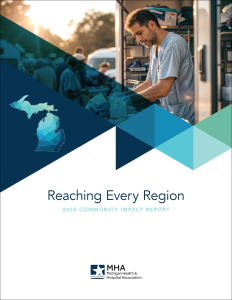
2025 MHA Community Impact Report

The Michigan Health & Hospital Association (MHA) released today its 2025 Community Impact Report highlighting community programming and investments from Michigan hospitals that are improving access to care, addressing affordability and advancing the health of communities across every region of the state.

The report showcases 12 hospital-led programs that go beyond the traditional care setting to address community health needs across the state. It also outlines investments totaling more than $4.5 billion in community benefit activities in fiscal year (FY) 2023, from education and prevention services to clinical research, healthcare workforce support and more.

“Michigan hospitals continue to redefine care delivery and create new, innovative access points across the state,” said MHA CEO Brian Peters. “The MHA Community Impact Report is a strong reminder that our hospitals are committed to listening – and responding – to the needs of their communities.”

Programs featured in the report include University of Michigan Health-Sparrow’s mobile health clinic; Henry Ford Health’s hospital-based doula program; Corewell Health Gerber Hospital’s vaping cessation initiative; Mackinac Straits Health System’s retail pharmacy; and efforts by Bronson Battle Creek Hospital to address food insecurity; among many others. This work is a result of strategic investments, local partnerships and support from state and federal healthcare champions.

“Improving community health goes beyond the bedside,” said MHA Board Chair Bill Manns, president and CEO, Bronson Healthcare. “When we invest in programs that address socioeconomic challenges like food insecurity, we’re helping people overcome the barriers that stand between them and a healthier life.”

The full report and community impact stories from hospitals across the state can be accessed on the MHA website.

Based in Greater Lansing, the MHA is the statewide leader representing all community hospitals in Michigan. Established in 1919, the MHA represents the interests of its member hospitals and health systems in both the legislative and regulatory arenas on key issues and supports their efforts to provide quality, cost-effective and accessible care. The MHA’s mission is to advance the health of individuals and communities.

House Health Policy Hears Testimony on 340B Legislation

The House Health Policy Committee took up recently introduced legislation addressing 340B contract pharmacy arrangements during the week of Sept. 22.

House Bill (HB) 4878, sponsored by Rep. Curt VanderWall (R-Ludington), was recently introduced and referred to the House Health Policy Committee for further consideration. HB 4878 contains necessary language that protects hospitals’ contract pharmacy arrangements under the federal 340B program and includes drug price transparency requirements at the state-level. In addition to this, the bill contains hospital community benefit reporting requirements. The legislation ensures that eligible, participating 340B hospitals can continue to stretch scarce resources to support healthcare providers serving vulnerable patients and communities across the state – without using state or federal taxpayer dollars.

The committee met Sept. 24 to discuss the legislation and heard from various experts and stakeholders. MHA members had the opportunity to testify in support of the legislation and answer committee questions. James (Chip) Falahee, senior vice president of legal and legislative affairs, Bronson Healthcare, shared important background information on the program and why it is vital to protect it long-term at the state-level. Stephanie Field, director of pharmacy business services, Corewell Health West and South, spoke to the technical side of the 340B program and answered specific lawmaker questions on the processes involved in managing the program from a hospital entity perspective.

The MHA will continue to work with its members and state lawmakers on protecting this critical program that supports access to affordable, community-based care across the state.

Members with any questions related to the legislation may contact the advocacy team at the MHA.


Catching Up on All Things Healthcare with Tina Freese Decker

The MHA released a new episode of the MiCare Champion Cast exploring state and federal healthcare priorities with Tina Freese Decker, MHA, MSIE, FACHE, president & CEO, Corewell Health and 2025 chair of the American Hospital Association (AHA).

The episode, hosted by MHA CEO Brian Peters, explores healthcare innovation, affordability and how institutions like Corewell Health are bracing for the impact of the “One Big Beautiful Bill Act (OBBBA).”

“It’s very important to protect and strengthen our hospitals, but we can also look ahead and say, how do we drive healthcare forward to a future that can be more affordable, more exceptional and simpler?” posed Freese Decker. “We all want what is best for our neighbors. When we put people at the center, we can align around what needs to happen and where we need to go.”

Freese Decker leads more than 60,000 within the integrated health system and oversees Corewell Health’s provider-sponsored health plan, Priority Health, which serves 1.3 million members across Michigan.

During the conversation, Freese Decker noted her biggest concern with changes under the OBBBA will be the loss of access to primary care services for patients without healthcare coverage. She noted that embracing a preventative mindset and being mindful of healthcare costs will be critical.

“Our patients do hard things every day and we help them through that,” said Freese Decker. “We need to make sure we’re disrupting the status quo and challenging conventional wisdom. It’s going to be hard, but it’s also an opportunity to advance care and improve the lives of our teams and our communities…it will require significant change. We will not be able to do it the way we’ve always been able to do it.”

Peters and Freese Decker also explore the future of growing the healthcare workforce talent pipeline, the role technology will continue to play in hospitals and the importance of fostering new partnerships across industries.

The episode is available to stream on Apple PodcastsSpotifySoundCloud and YouTube. Questions or idea submissions for future MiCare Champion Cast episodes can be sent to Lucy Ciaramitaro at the MHA.

Ludwig Community Benefit Award Honors Hospital Programs

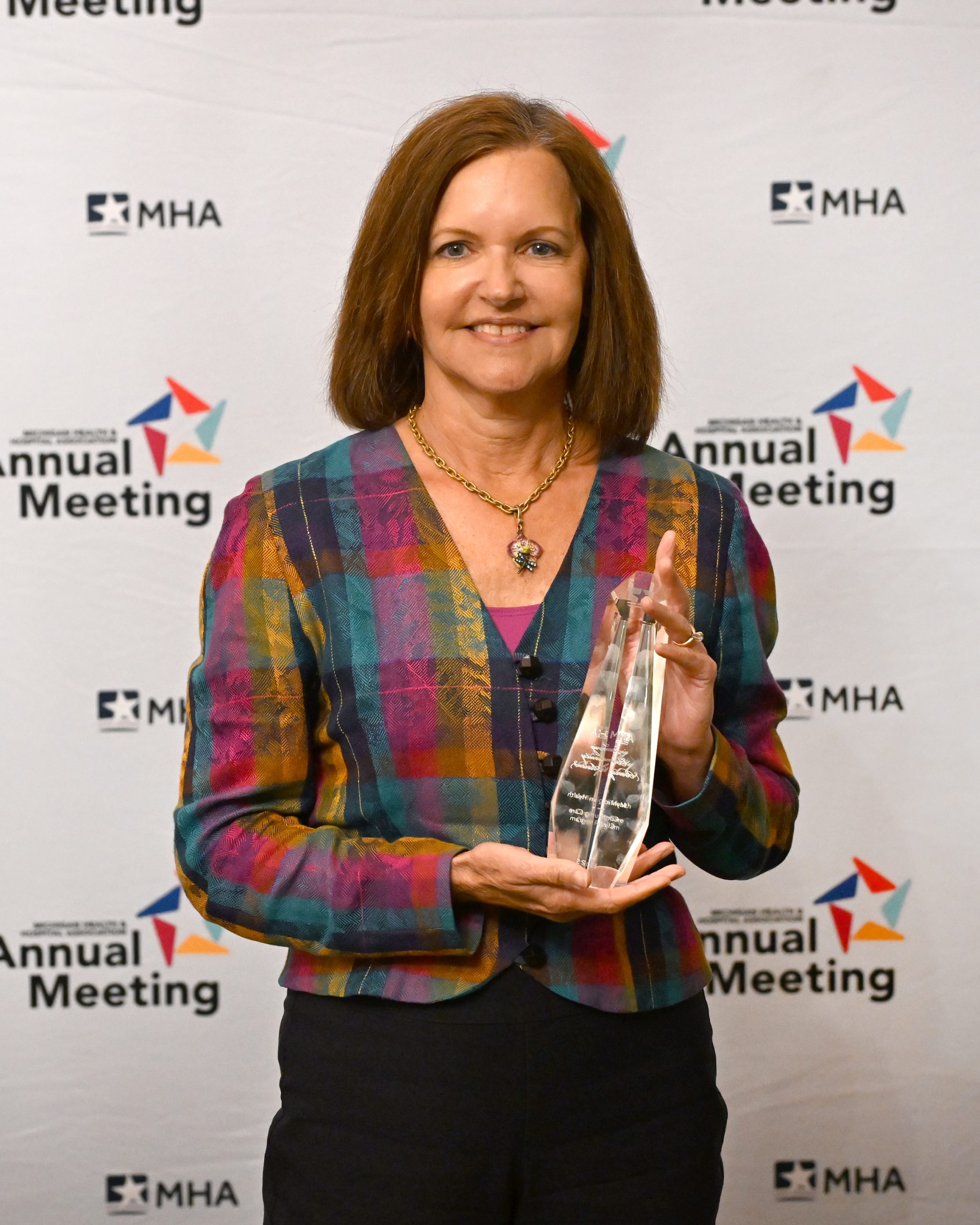
The MHA announced the winners of its 2025 Ludwig Community Benefit Award during the association’s Annual Membership Meeting June 26. The honorees include programs supported by Corewell Health Lakeland Hospitals St. Joseph Hospital; Lake Huron Medical Center, Port Huron; and MyMichigan Health, Midland. The award is named in memory of Patric E. Ludwig, a former MHA president who championed investing in the community’s overall health. The award is presented to member organizations integrally involved in collaborative programs to improve the health and well-being of Michigan residents. Each winner will receive $5,000 from the MHA Health Foundation to reinvest in their programs.

Corewell Health in Southwest Michigan, in collaboration with the Michigan Public Health Institute’s Achieving Birth Equity Through Systems Transformation Taskforce, created the Corewell Health Center for Wellness (CHCW) in Benton Harbor to be a trusted resource to provide education in prenatal, childbirth and postnatal care in Southwest Michigan. The CHCW offers free childbirth education, breastfeeding support, safe sleep education, navigation to essential community resources and culturally informed guidance tailored to the unique needs of their community. The programs served 370 community members in 2024 with a 100% retention rate in classes. The number of families who maintained breastfeeding at two weeks post-partum through the program exceeded the national breastfeeding rate by 20 percentage points.

These results show how the CHCW enhances clinical outcomes and builds a resilient, empowered community where mothers and families can thrive. The childbirth educasstion classes are currently supported by a dedicated team that includes a certified childbirth educator, a community-based doula, a lactation consultant, a community health educator, a community health worker and a senior project specialist.

For more information on the taskforce, contact Kyna King, senior project specialist, Corewell Health in Southwest Michigan.

Lake Huron Medical Center, Port Huron, partners with the People’s Clinic for Better Health, which has been providing life-saving healthcare at no cost to the uninsured and under-insured in St. Clair County for more than 35 years. Located in the St. Clair County Community Mental Health, the clinic is open five days a week as both a free clinic and a Medicaid clinic, accepting patients who are 18 years or older, who are without insurance, or receive Medicaid coverage. The clinic offers routine health screenings, women’s health, non-emergency maintenance care of chronic illness, wellness checkups, specialist referrals, lab and radiology testing, diabetes education and benefits counseling.

The clinic works closely with community and social service partners to best serve its patients and improve health outcomes. The People’s Clinic for Better Health recently added a mobile unit, which goes to locations like the area soup kitchen to help the clinic reach further into the community.  Overall, 63% of patients reported an improvement in their health in 2024-25 and 97% of patients needing specialty referrals were referred to accepting service providers.

For more information on the People’s Clinic for Better Health, contact Mallory Moore, foundation director, Lake Huron Foundation.

MyMichigan Health, Midland, established Continuing Care Clinics to reach the residents throughout MyMichigan Health’s 26-county service region who do not have timely access to a primary care physician. These clinics provide timely care during critical transitions in health, such as after discharge from a hospital, emergency department, long-term care facility or while patients are waiting to establish care with a new primary care provider. New patient appointments and transition-of-care visits are provided within seven days of discharge.

MyMichigan has been successful at reducing poor health outcomes, as patients receiving care through this model have a lower risk of readmission compared to those at other similar clinics in the community. The multidisciplinary team of clinicians creates personalized care plans that help patients successfully transition home and reduce the risk of readmission. Patients also receive referrals for preventative screenings, which further supports community wellness. The Continuing Care Clinics also work closely with community partners to improve patients’ ability to access essential resources, including food, transportation and medication delivery, which helps patients manage their health and improve their recovery.

Visit the MyMichigan Health website for more information about MyMichigan Health’s Continuing Care Clinics.

To learn more about the MHA’s annual Ludwig Community Benefit Award, contact Erin Steward at the MHA.

MHA CEO Report ― Addressing Food and Housing Insecurity

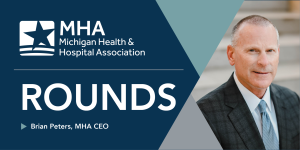
MHA Rounds graphic of Brian Peters

MHA Rounds graphic of Brian Peters“It is our collective and individual responsibility to preserve and tend to the environment in which we all live.” ― Dalai Lama

I recently had the privilege of joining leaders from across the state to discuss the most pressing issues for Michiganders at the annual Detroit Regional Chamber Mackinac Policy Conference. Because our member hospitals and health systems are not only critical providers of care, but also major economic drivers, the MHA once again served as an event sponsor and had a major presence with elected officials, business leaders and the media throughout the week. As you would imagine, we focused our attention on the current Congressional debate over the future of Medicaid and advocated for our 340B legislation and other priorities.

But I was also struck by the airtime given at the conference to the ongoing housing crisis in Michigan, a critical component of health that requires collective action across sectors to address. Over the past year, this has been an issue that our hospital leaders almost always lift up during our site visits, whether in rural or urban settings.  The housing issue affects not only patients but hospital employees as well. Housing, along with food insecurity and transportation challenges, make up the core “social drivers of health” that represent one of the most vexing challenges that we confront as leaders.

More than 40% of households in Michigan struggle to cover basic needs like food, healthcare and housing. We also know there is an inextricable link between food and housing insecurity and health. Research has shown that only 20% of health can be attributed to medical care, while socioeconomic factors account for 40%. Individuals with limited access to adequate food are at increased risk for chronic diseases, behavioral health issues and healthcare underuse – which can lead to higher acute care utilization long-term.

Hospital staff are not immune to these challenges. The rising cost of housing often impacts entry-level and non-clinical personnel, including environmental service workers. We need more accessible options, especially in our state’s rural counties, in order to help hospitals recruit and retain staff to care for our communities.

With all this in mind, the MHA is proud to support U.S. Rep. Haley Stevens’ (D-Birmingham) Healthy Affordable Housing Act, which seeks to create affordable housing in locations with easy access to needed services like public transportation, grocery stores and childcare.

Additionally, we’re proud of the innovative efforts underway across our member hospitals to enhance housing security for residents and staff. For example, we have members vetting opportunities to purchase housing near their facilities to provide employees with affordable rent in an accessible location.

Our members are also engaging in collaborative efforts to meet residents where they are. Here are just a few examples:

  • Corewell Health William Beaumont University Hospital delivers free medical care to individuals experiencing homelessness in Oakland County through their Street Medicine Oakland.
  • ProMedica is prioritizing public health efforts, investing in ProMedica Farms and their Veggie Mobile to improve access to fresh, affordable produce and nutrition education for the communities it serves.
  • Trinity Health’s Food is Medicine program also improves nutrition security by distributing locally grown produce directly to patients at medical appointments and to the community via its farm share, farm stand and food pantry.
  • Henry Ford Health is investing in Detroit’s New Center neighborhood through its campus expansion project, which is a cornerstone of a community-driven plan that will also include a state-of-the-art medical research center alongside mixed-use residential developments offering market-rate and affordable housing, retail spaces, green areas and recreational facilities.

As anchor institutions in their communities, Michigan hospitals will continue prioritizing public health and community benefit efforts. However, we must recognize this is a systemic issue that requires change and investment across industries. The MHA and our members recognize it is our shared responsibility to work alongside partners in the public and private sector to improve the socioeconomic standing of our communities. We look forward to the continued collaboration following the robust conversations on the island.

As always, I welcome your thoughts.

Corewell Health Suicide Care & Prevention Team Receives MHA Advancing Safe Care Award

mha advancing safe care award
MHA CEO Brian Peters, Amy Brown, chief nursing officer, MHA and Gary Roth, chief medical officer, MHA pictured with members of Corewell Health’s Suicide Care and Prevention Team.

The MHA announced the winner of its 2025 Advancing Safe Care Award April 28, honoring Corewell Health’s suicide care and prevention team. The award was announced during the MHA Keystone Center Safety & Quality Symposium.

The MHA Advancing Safe Care Award honors healthcare teams within MHA-member hospitals that demonstrate an unwavering commitment to providing quality care, show evidence of an improved safety culture and demonstrate transparency in their efforts to improve healthcare.

Corewell Health’s behavioral health department launched the Suicide Care & Prevention Team (SPCT) to reduce patient deaths by suicide through increased screening, risk assessment and connectivity with appropriate interventions and services.

The team’s efforts have led to a reduction in suicide deaths – lower than state and national averages. While deaths by suicide were down by 0.89% in Michigan and by 2.53% nationally between 2017 and 2020, Corewell Health in West Michigan saw a 21.64% decrease. When suicide rates increased post-pandemic, deaths in Michigan and nationally were up 5.01% and 4.63% respectively from 2017 to 2023. However, Corewell Health in West Michigan maintained a slight decrease of 0.75%.

“We are so grateful for this recognition for our efforts to decrease suicide deaths,” said Natalia Szczygiel, vice president of behavioral health operations, Corewell Health. “Corewell Health in West Michigan currently administers over 1.2 million suicide screenings, 12,500 safety plans and 10,800 lethal means reduction conversations annually. We are here to care for our patients mind and body.”

The group integrated suicide prevention measures into all aspects of care throughout the system with a focus on accessible training and resources for staff interacting with patients. The SPCT spearheaded the integration of suicide risk assessments into the organization’s electronic health records system and facilitated efforts for improved suicide care workflows within the inpatient, emergency room, primary care and pediatric care settings.

Leaders across the system monitor the organization’s prevention efforts via the SPCT’s suicide prevention dashboard, which tracks screenings, assessments and support services offered.

Members may access further details about the Corewell Health Suicide Care and Prevention Team online.

MHA CEO Report — Prioritizing Rural Health

MHA Rounds graphic of Brian Peters

“Be sure you put your feet in the right place, then stand firm.” – Abraham Lincoln

MHA Rounds graphic of Brian PetersWhile snow continues to fall in northern Michigan, spring is officially here, and for many, that means our weekend travel plans shift from skiing and snowmobiling to camping, hiking and boating. Rural Michigan is an amazing travel destination for many, but it also is home year-round to 20% of our state’s population, and access to affordable, high-quality healthcare remains absolutely crucial. Rural hospitals are an integral part of the local fabric of their communities, treating the ill and improving the health and well-being of their residents. They work extremely hard to make sure they’re able to provide the best quality of care, while operating on a budget with slim to nonexistent margins. In a small town, there is nowhere to hide when the hospital is experiencing challenges of any kind. This is especially true when the hospital is the largest employer in the community and a vital economic engine, which is very often the case in rural Michigan.

I recently had the opportunity to attend the annual American Hospital Association (AHA) Rural Health Care Leadership Conference, along with a number of MHA senior staff and Michigan rural healthcare leaders, including Tina Freese Decker, CEO of Corewell Health and current chair of the AHA Board of Trustees; Julie Yaroch, DO, CEO of ProMedica Charles and Virginia Hickman Hospital and current chair of the MHA Board of Trustees; and JJ Hodshire, CEO of Hillsdale Hospital, current MHA Board member and host of the Rural Health Today podcast. We focused on the latest rural health challenges and innovations, as well as our shared federal advocacy priorities. Key topics included rural obstetrical care, cybersecurity, long-term care transformation and strategic partnerships.

According to the latest U.S. census and other demographic resources, rural Americans are notably older, sicker and poorer than their urban and suburban counterparts. While rural areas currently cover 97% of the nation’s land, they are home to only 19.3% of the total population. Demographers believe that we are moving toward a future state in which an even higher concentration of the population will be in non-rural settings – and that in the next five years, more than 40% of Michigan counties will have more than a quarter of their population older than 65, with nearly all of those counties being rural. As we have learned – especially during the COVID pandemic – traditional volume-based healthcare reimbursement methods do not adequately address the fixed costs inherent in healthcare delivery, a reality that is exacerbated for rural hospitals with smaller patient volumes and more constricted resources and economies of scale.

Although Medicaid expansion (a major accomplishment resulting from MHA advocacy) improved the viability of rural hospitals – a fact that is borne out when benchmarking Michigan to non-expansion states – that funding is currently in severe jeopardy given the current state of play in Washington, D.C., as discussed at length in last month’s CEO Report. In addition, the 340B program is another critically important part of the rural healthcare ecosystem, as the cost savings from the program are used by healthcare providers to offer critically important services to everyone in their respective communities, regardless of their socioeconomic status. The MHA continues to advocate at the state and federal level, in the legislative arena and in the courts, to protect and defend the 340B program.

With guidance from the MHA Council on Small or Rural Hospitals, currently chaired by Peter Marinoff, CEO of Munson Healthcare Southern Region (see Peter’s recent insights on rural healthcare), and staffed by Lauren LaPine, MHA senior director of Legislative and Public Policy, the MHA is also advocating for continuation of the rural access pool and obstetrical stabilization fund in the state budget, and promoting good public policy with respect to critical access hospitals, rural emergency hospitals and a host of other key issues.

Our rural healthcare leaders continue to prove they are exceptional at delivering extraordinary value, despite challenging circumstances. I know from first-hand experience that our rural hospitals provide high quality care and deserve to be fully supported. And we absolutely must support them, as the fragility of the current environment is real: there have been some 151 rural hospitals that have closed across the country since 2010 due to financial variables that make it extremely difficult to maintain hospital facilities in rural areas.

Now more than ever, we need to think about our rural hospitals, stand firm and do all we can to protect these vital institutions.

As always, I welcome your thoughts.

MHA Member Supply Chain Leaders Share Insights and Resources

MHA staff recently attended the Navigating Supply Chain Challenges in the Current Healthcare Environment event hosted March 4 by the Great Lakes Chapter of the American College of Healthcare Executives. This participation represents the MHA’s continued efforts to advocate for member supply chain issues, which also includes supporting the priorities listed in an American Hospital Association letter issued Feb. 5 to the administration.

Chris Giese, senior vice president of AES-MS, the MHA Service Corporation Supply Chain Program Partner, served as moderator during the event. Panelists included MHA Service Corporation board member Andrea Poulopoulos, senior vice president of supply chain, Corewell Health; Christy Nguyen, supply chain manager, Mary Free Bed Rehabilitation Hospital; and Luke Aurner, coordinator, Region 6 Healthcare Coalition.

Insights were shared on innovations to address workforce shortages and improve productivity. Corewell Health currently operates two distribution centers and are in the process of building a 300,000 square foot distribution center with automation in Wyoming, MI to mitigate these issues.

The panelists discussed cyber risks associated with automation, prompting participants to reflect upon and plan for what happens when there is a cyberattack or grid outage. Panelists also shared about creating resilient supply committees that can convene at a moment’s notice to evaluate suitable alternatives, early warning system algorithms and participation in the Healthcare Industry Resilience Collaborative. In addition, speakers covered how having a designated individual on the supply chain team dedicated to environmental sustainability, as well as the challenges and rewards of maintaining a resilient and diverse group of vendors amid cost reductions and changing federal policies.

Other issues addressed by the panelists included how to mitigate potential impacts of the new tariffs, inflation and the rapidly rising costs of pharmaceuticals and medical devices. One strategy shared was to focus on supply chain resilience with high-cost, low-volume items that are not conducive to traditional group purchasing organization negotiations, such as physician preference items, specialty drugs and capital equipment. Addressing this requires intentional focus on medical staff and organizational culture.

The MHA recently launched the Supply Chain Collaborative, which provides members with a complimentary cost analysis in collaboration with AES-MS, with no cost or committment required.

Members with questions or seeking more information may contact Rob Wood at the MHA.

Report: Michigan Hospital Programming, Investments Improve Health and Well-being of Residents

2024 MHA Community Impact Report

The Michigan Health & Hospital Association (MHA) released the 2024 Community Impact Report highlighting how Michigan hospitals are strengthening the healthcare workforce, enhancing access to care and building community health and wellness. This report shares 15 hospital-led community impact programs from nearly every region of the state.2024 MHA Community Impact Report

Michigan hospitals are advancing the health of patients and communities beyond the traditional healthcare setting with a variety of community-focused programs. These efforts are a result of strategic community benefit investments, in addition to local partnerships and support from state and federal healthcare champions.

“The MHA Community Impact Report demonstrates a long-standing commitment by Michigan hospitals to advance the well-being of patients and communities beyond the traditional four walls of the hospital,” said MHA CEO Brian Peters. “It also showcases the strong, lasting impact of investments in health education, community outreach services, clinical research and workforce development.”

Examples of stories include Corewell Health William Beaumont University Hospital’s Street Medicine Oakland program that provides free medical care to patients experiencing homelessness; MyMichigan Health’s Grow Our Own initiative, which provides financial assistance to individuals who want to further their education in healthcare; and Schoolcraft Memorial Hospital’s Community Connect program that is reducing health disparities related to mental health, substance abuse and adverse childhood events.

The investments total more than $4.5 billion in community impact activities in fiscal year (FY) 2022, from education and prevention services to community outreach, research and workforce development.

“At ProMedica Health, we’re always looking for innovative ways to address the specific health needs of our patient population and reach communities where they are,” said MHA Board Chair Julie Yaroch, DO, president of ProMedica Charles and Virginia Hickman Hospital. “It’s inspiring to see the work of other hospitals featured in the report that are focused on bringing solutions to the table, especially when it comes to closing gaps in public health and enhancing access to care in rural communities.”

The full report and community impact stories from hospitals across the state can be accessed on the MHA website.

Webinar Recap: Special Pathogen Response Systems of Care

The MHA hosted a webinar Oct. 23 overviewing the National Special Pathogen System (NSPS) of care. The NSPS is a tiered system with four facility levels that have increasing capabilities to care for suspected or confirmed patients with high consequence infectious diseases.

During the webinar, Julie Bulson, DNP, MPA, RN, NE-BC, HcEM-M, director of business assurance, Corewell Health, overviewed the minimum capabilities of the NSPS system of care, specifically highlighting:

  • Regional opportunities to enhance overall special pathogen preparedness.
  • The pros and cons of joining the system of care at a level two or three.
  • How to align recommendations to advance readiness with The Joint Commission standards and building system-wide awareness.

Several MHA leaders recently visited the Corewell Health Regional Emerging Special Pathogen Treatment Center which serves as a resource hub, training and coordination leader in the region.

Members interested in engaging in the NSPS, may visit NETEC.org or contact Julie Bulson at (616) 391-2244. NETEC will continue to build resources, develop online education and deliver technical training to meet the needs of partners.

Members interested in the on-demand recording and resources from the live webinar may contact Rob Wood at the MHA.