The Majority of Michiganders Oppose Medicaid Cuts, New Statewide Polling Shows

New statewide polling shows 83% of Michiganders want to see Medicaid spending increased or kept about the same as Congress considers cutting hundreds of billions of dollars from the Medicaid program, which would terminate healthcare for thousands of Michigan residents. The local results mirror national polls from the Kaiser Family Foundation, Modern Medicaid Alliance, and others that consistently show a lack of support for Medicaid cuts.

EPIC·MRA, with support from the Community Mental Health Association of Michigan, Michigan Association of Health Plans, Michigan Health & Hospital Association, Michigan Primary Care Association, and Protect MI Care, conducted the new statewide poll to determine where Michiganders stand on proposed cuts to Medicaid.

Across political views and party affiliations, the percentage of Michiganders who want to see Medicaid spending decreased does not exceed 20% for any specific group, with only 19% of self-identifying Republicans seeking reduced Medicaid support.

Results reveal that 62% of Michigan residents believe the changes Congress is considering making to the Medicaid program are more about reducing federal spending than improving how the program works for people. Furthermore, 82% of Michigan residents oppose cutting Medicaid spending to pay for tax cuts, and 71% oppose cutting Medicaid in ways that would create a deficit in Michigan’s state budget.

Reflecting on the significance of Medicaid in Michigan, the poll found that 86% of Michigan residents feel Medicaid is important for people in their local community, and 76% express that Medicaid is important for their family members and friends. Michiganders’ feelings about the impact of Medicaid in their communities showed up statewide, with over 80% of people agreeing that Medicaid is important in their community across all regions of the state (From 86% in Wayne, Oakland, and Macomb Counties to 91% in West Michigan, 80% in Central Michigan, and 87% in Northern Michigan).

“This data sends a clear message: Michiganders from across the state and all walks of life see Medicaid as the important lifeline it is,” said MPCA CEO Phillip Bergquist. “Medicaid cuts under consideration in Congress threaten the health and financial stability of families across our state, and Michiganders don’t support them.”

2.6 million people get their health insurance through Medicaid in Michigan, representing approximately one in four Michiganders. Medicaid provides coverage for 38% of births in Michigan, 2 in 5 children, 3 in 5 nursing home residents, and 3 in 8 working-age adults with disabilities. And, Michigan’s Medicaid program is efficient, with per-enrollee costs among the ten lowest states in the country.

“These results show Michiganders understand that funding cuts to Medicaid are cuts to everyone,” said MHA CEO Brian Peters. “Medicaid allows healthcare providers to continue to offer access to care and healthcare services throughout the state and Michigan residents are clear in expressing the need to protect these services.”

MHA CEO Report — Highlighting Hospitals

MHA Rounds image of Brian Peters

“Sometimes when you sacrifice something precious, you’re not really losing it. You’re just passing it on to someone else.” ― Mitch Albom, The Five People You Meet in Heaven

MHA Rounds image of Brian PetersThis month’s CEO Report is being filed from Washington, DC, where I am honored to join my colleagues from throughout our state and nation at the American Hospital Association’s Annual Meeting. On the agenda are robust conversations about the many challenges confronted by the healthcare field amid a tumultuous and often unpredictable political environment. The timing is fortuitous, as we officially celebrate our healthcare providers with National Nurses Week beginning May 5, followed by National Hospital Week. These honorary weeks shine a spotlight on the amazing dedication of hospital and healthcare workers in service to their patients and communities and encourage us to show our deep appreciation.

Our nurses, and many other healthcare workers, were widely hailed as heroes throughout the pandemic, and the reality is that they continue to show extraordinary commitment to service on a regular basis.  Just one recent example: northern Michigan was ravaged by a devasting ice storm earlier this year and despite power outages that were measured in weeks, the healthcare providers in that region did whatever was necessary to make sure people received the medications and care they needed. This included utilizing snowmobiles and ATVs for patient and staff transport when countless roads remained inaccessible due to downed trees and power lines.

Hospitals annually quantify the benefits they provide to the community through the IRS 990 form, and the MHA disseminates our own Community Impact Report. However, in reality, it is impossible to adequately document or fully do justice to the examples shared above, and countless others.  Healthcare interactions change people forever. And I’m not talking about the physical changes from surgery or treatment, but the emotional impact that saving a life, lending a helping hand or crying shoulder can make for someone. In times of need, emergency and disaster, hospitals – and more specifically, the people who work inside of them – are there WHEN and WHERE you need them. The sacrifices made by these extraordinary people are real, and they do so for our benefit.

Later this month we’ll be able to share our latest economic impact and workforce data for Michigan hospitals and healthcare. While the data may be slightly different, the overall story remains the same: healthcare is the leading private-sector employer in Michigan and the demand and reliance on healthcare has never been greater. So, what can we do to help? May is a time to unite behind our healthcare institutions and the work they do every day to touch and change lives, improving the health and wellness of our communities. While Congress continues to contemplate potential Medicaid funding cuts that would have devasting consequences to healthcare access for all Michiganders, please join us in speaking up and sharing the importance Medicaid plays in our state. You can do so by using the MHA’s action alert to send a personalized message to your member of Congress. Your local hospitals – and more importantly, the nurses, doctors and other healthcare workers who work there – need your help.

As always, I welcome your thoughts.

Medicaid Remains Focus of Healthcare News Coverage

The MHA was successful in placing several news stories during the week of April 28 related to potential federal Medicaid funding cuts.

The Lansing State Journal published an op-ed from MHA CEO Brian Peters that was shared as part of the MHA’s participation in the Protect MI Care coalition that is urging members of Congress to protect Medicaid. The op-ed expressed the importance of Medicaid to Michigan’s healthcare system and the consequences to access to care for all Michiganders if significant funding cuts are implemented.

“The effects would ripple far beyond those who rely on Medicaid — every hospital, mental health clinic and nursing home that depends on Medicaid funding would feel the impact,” said Peters. “When facilities close, it’s not just Medicaid patients who lose out — it’s everyone in the community, regardless of what kind of insurance they have.”

MHA Executive Vice President Laura Appel also sat down with WILX News 10 on April 30 to discuss the potential funding cuts and appeared in a story published by Bridge on May 1 about the impact to rural providers.

“When we close intensive care for newborns, when we close labor and delivery units, they are closing for everyone,” said Appel to Bridge.

In other news, Crain’s Detroit Business published an article April 30 committee testimony on legislation that would have Michigan join the nurse licensure compact. MHA Chief Nursing Officer Amy Brown testified in support of the legislation and is quoted in the article.

“In addition to recruitment and coordination of care in our state’s border areas, joining the compact would positively benefit telehealth access,” said Brown. “Compact licensure means residents in Michigan can access more telehealth professionals in other compact states, increasing access points for our state’s residents.”

Appel also appeared on 760 WJR’s All Talk With Kevin Dietz on May 1 to discuss the compact.

Members with any questions regarding media requests should contact John Karasinski at the MHA.

Lee Discusses AI in Healthcare

Jim Lee speaks with Mid-Michigan NOW about AI.

Jim Lee, senior vice president, data policy & analytics, MHA, appeared in a story about artificial intelligence (AI) in healthcare aired by Mid-Michigan NOW on April 23.

Lee discussed how AI is being used by hospitals and providers to assist with medical data and information and to reduce administrative burden.

“AI and healthcare is sort of like having a super smart assistant that helps doctors and nurses by quickly sorting through mountains of data and medical information,” said Lee.

Lansing political news outlet Gongwer also published two articles on April 23 that quote MHA representatives.

MHA CEO Brian Peters appeared in a story covering the newly launch Protect MI Care coalition to protect against Medicaid funding cuts.

“[Medicaid is] the financial lifeline that keeps hospitals, mental health providers and nursing homes open,” said Peters. “Cuts at this scale would lead to facility closures, creating health care deserts that hurt everyone, regardless of how they’re insured.”

MHA Chief Nursing Officer Amy Brown also appeared in an article following her testimony in the House Health Policy Committee in support of House Bill 4246, which would add Michigan to the nurse licensure compact.

“An important tactic to improve our ability as a state to attract talent and make it easy for nurses to choose Michigan to practice is to join the nurse license compact,” said Brown. “Hospitals continue to prioritize recruitment and retention efforts, but with the aging demographics of our state and the lack of participation in the compact hinder our ability to recruit younger nurses to replace the many nurses nearing and entering retirement.”

Members with any questions regarding media requests should contact John Karasinski at the MHA.

Medicaid & Pediatric Behavioral Health Media Coverage

Laura Appel speaks with 9&10 News.

The MHA received media coverage the week of April 7 on potential Medicaid funding cuts, pediatric behavioral health and healthcare costs.

9&10 News aired a story April 9 on potential federal Medicaid funding cuts. MHA Executive Vice President Laura Appel spoke with 9&10 News, explaining how the cuts would specifically impact rural healthcare. Representatives from McLaren Health Care and Munson Healthcare also appeared in the story.

“In our rural areas, we have small populations, and some of them are also shrinking, which makes it that much harder to sustain certain services because of the fixed costs being spread over so few people,” said Appel. “When we lose a labor and delivery unit, we lose it for that entire population.”

Lauren LaPineSecond Wave Michigan published a story April 8 about how Michigan hospitals are improving pediatric behavioral healthcare. Lauren LaPine, MHA senior director of legislative and public policy, spoke with Second Wave Michigan about the MHA’s behavioral health work, focusing particularly on the $50 million state grant the MHA served as the fiduciary for to expand inpatient pediatric behavioral health capacity in the state. LaPine also highlighted the data the MHA collected regarding emergency department boarding, which shows at least 155 people at any point, including 17 children, are in an emergency department awaiting behavioral health care.

“Our data in Michigan reflects some of the trends that we see nationally in terms of the increasing need for behavioral health services for children and youth,” said LaPine. “So, we are paying really close attention to that need and want to make sure that our member hospitals and health systems are able to address the need when pediatric patients and their families come to the hospital in a behavioral health crisis.”

Lastly, Crain’s published a story April 9 about the role of hospitals regarding rising healthcare costs. MHA CEO Brian Peters is quoted in the story, explaining how the majority of rising costs are due to responding to market trends for labor, as well as rising costs for facilities, drugs and supplies.

“The largest expense for hospitals is labor … A large component to increased healthcare costs for hospitals is making sure healthcare workers are appropriately and competitively compensated so they can provide care to patients when and where they need it,” said Peters.

Members with any questions regarding media requests should contact John Karasinski at the MHA.

Virtual Media Roundtable Focuses on Medicaid Funding Cut Consequences

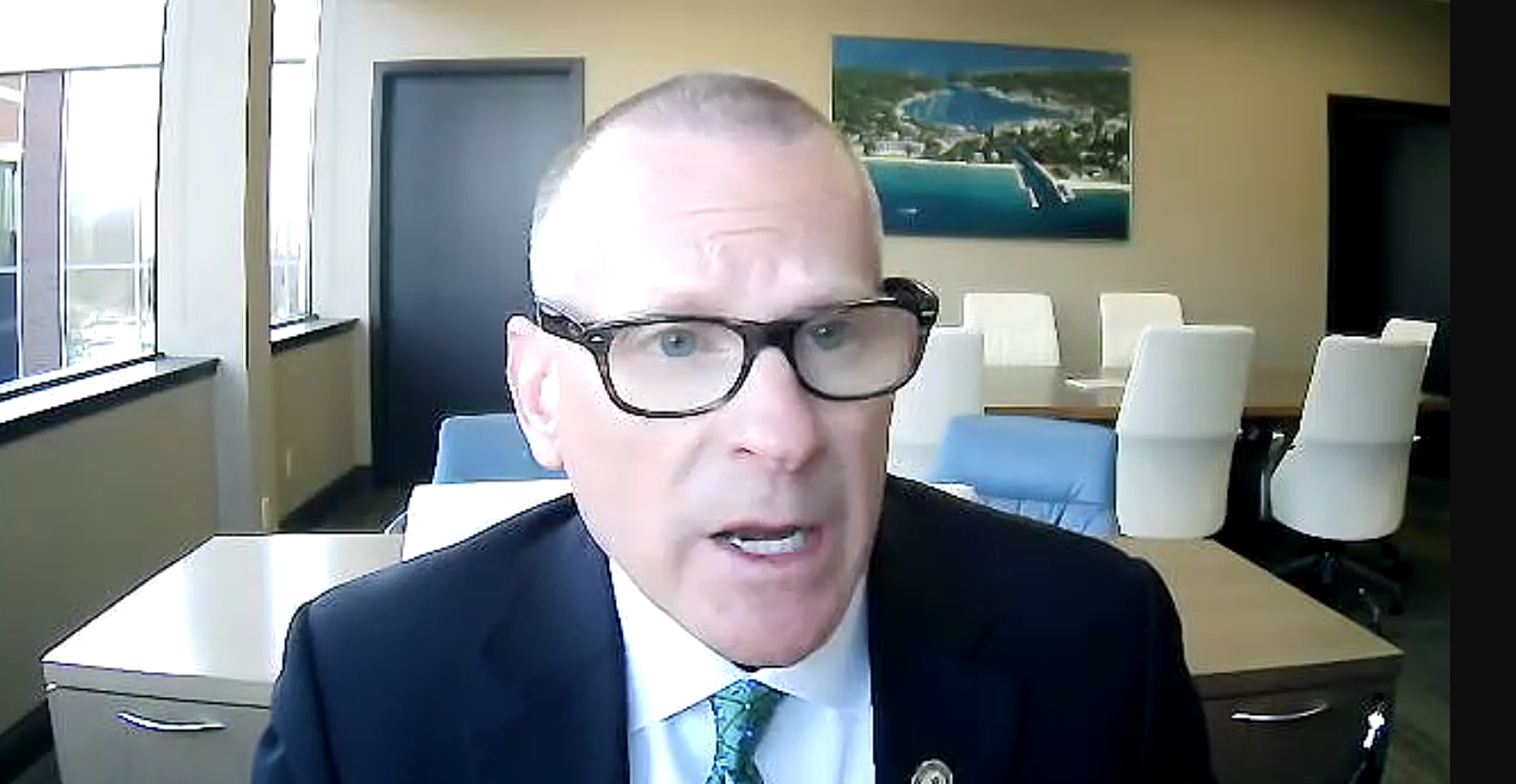
MHA CEO Brian Peters speaks during a virtual media roundtable about Medicaid.
MHA CEO Brian Peters speaks April 3 during a virtual media roundtable about Medicaid funding cuts.

A virtual media roundtable hosted April 3 by the Michigan League for Public Policy included MHA CEO Brian Peters as a panelist, where he discussed the consequences for potential Medicaid funding cuts by Congress.

Crain’s Detroit Business, CBS Detroit and MIRS published stories as a result of the roundtable.

“When Medicaid funding reductions force hospitals to curtail services or in fact eliminate entire service lines or in fact close hospitals … the services are no longer available to Medicaid recipients, but they’re no longer available to anyone in the community, either,” said Peters. “The cuts that are being contemplated in Washington, D.C. right now, if those were to be implemented, they would cost jobs. And more importantly, I can tell you, they would cost lives,”

Monique Stanton from the Michigan League for Public Policy.

Joining Peters during the roundtable were:

  • Monique Stanton, President & CEO, Michigan League for Public Policy
  • Russ Kolski, Interim Executive Director, Ingham Community Health Center
  • Susan Harding, Executive Director, Oakland Livingston Human Services Agency
  • Jenny Wagemann, Manager, Allen Farmers Market and Breadbasket Food Pantry

On a separate note, MLive also published a story April 3 that references the MHA’s healthcare workforce data and the 44% reduction in nursing vacancies in Michigan hospitals from 2023 to 2024. The story shares news on a nursing student loan repayment program announced by the Michigan Department of Health and Human Services. The Detroit Free Press also published an article on the program, citing the MHA’s Economic Impact of Healthcare Report.

Members with any questions regarding media requests should contact John Karasinski at the MHA.

MHA CEO Report — Prioritizing Rural Health

MHA Rounds graphic of Brian Peters

“Be sure you put your feet in the right place, then stand firm.” – Abraham Lincoln

MHA Rounds graphic of Brian PetersWhile snow continues to fall in northern Michigan, spring is officially here, and for many, that means our weekend travel plans shift from skiing and snowmobiling to camping, hiking and boating. Rural Michigan is an amazing travel destination for many, but it also is home year-round to 20% of our state’s population, and access to affordable, high-quality healthcare remains absolutely crucial. Rural hospitals are an integral part of the local fabric of their communities, treating the ill and improving the health and well-being of their residents. They work extremely hard to make sure they’re able to provide the best quality of care, while operating on a budget with slim to nonexistent margins. In a small town, there is nowhere to hide when the hospital is experiencing challenges of any kind. This is especially true when the hospital is the largest employer in the community and a vital economic engine, which is very often the case in rural Michigan.

I recently had the opportunity to attend the annual American Hospital Association (AHA) Rural Health Care Leadership Conference, along with a number of MHA senior staff and Michigan rural healthcare leaders, including Tina Freese Decker, CEO of Corewell Health and current chair of the AHA Board of Trustees; Julie Yaroch, DO, CEO of ProMedica Charles and Virginia Hickman Hospital and current chair of the MHA Board of Trustees; and JJ Hodshire, CEO of Hillsdale Hospital, current MHA Board member and host of the Rural Health Today podcast. We focused on the latest rural health challenges and innovations, as well as our shared federal advocacy priorities. Key topics included rural obstetrical care, cybersecurity, long-term care transformation and strategic partnerships.

According to the latest U.S. census and other demographic resources, rural Americans are notably older, sicker and poorer than their urban and suburban counterparts. While rural areas currently cover 97% of the nation’s land, they are home to only 19.3% of the total population. Demographers believe that we are moving toward a future state in which an even higher concentration of the population will be in non-rural settings – and that in the next five years, more than 40% of Michigan counties will have more than a quarter of their population older than 65, with nearly all of those counties being rural. As we have learned – especially during the COVID pandemic – traditional volume-based healthcare reimbursement methods do not adequately address the fixed costs inherent in healthcare delivery, a reality that is exacerbated for rural hospitals with smaller patient volumes and more constricted resources and economies of scale.

Although Medicaid expansion (a major accomplishment resulting from MHA advocacy) improved the viability of rural hospitals – a fact that is borne out when benchmarking Michigan to non-expansion states – that funding is currently in severe jeopardy given the current state of play in Washington, D.C., as discussed at length in last month’s CEO Report. In addition, the 340B program is another critically important part of the rural healthcare ecosystem, as the cost savings from the program are used by healthcare providers to offer critically important services to everyone in their respective communities, regardless of their socioeconomic status. The MHA continues to advocate at the state and federal level, in the legislative arena and in the courts, to protect and defend the 340B program.

With guidance from the MHA Council on Small or Rural Hospitals, currently chaired by Peter Marinoff, CEO of Munson Healthcare Southern Region (see Peter’s recent insights on rural healthcare), and staffed by Lauren LaPine, MHA senior director of Legislative and Public Policy, the MHA is also advocating for continuation of the rural access pool and obstetrical stabilization fund in the state budget, and promoting good public policy with respect to critical access hospitals, rural emergency hospitals and a host of other key issues.

Our rural healthcare leaders continue to prove they are exceptional at delivering extraordinary value, despite challenging circumstances. I know from first-hand experience that our rural hospitals provide high quality care and deserve to be fully supported. And we absolutely must support them, as the fragility of the current environment is real: there have been some 151 rural hospitals that have closed across the country since 2010 due to financial variables that make it extremely difficult to maintain hospital facilities in rural areas.

Now more than ever, we need to think about our rural hospitals, stand firm and do all we can to protect these vital institutions.

As always, I welcome your thoughts.

LaPine Appears on MIRS Monday Podcast Discussing Behavioral Health

Lauren LaPine

Lauren LaPineLauren LaPine, senior director, legislative and public policy, MHA, appeared on the MIRS Monday podcast published March 24 to discuss the state behavioral health system.

LaPine spoke about the challenges associated with patients boarding in the emergency department (ED) while they await placement for behavioral health services and the impact it has on all patients. She also discussed the current need for specialty psychiatric placements and the need to increase capacity for these beds in the state.

“When we have patients coming to the emergency department that are in a behavioral health crisis, that can cause a backlog and [increased] wait times for critical care,” said LaPine. “We learned that at any one point in time, there are 177 patients stuck in the emergency department waiting for either a behavioral health assessment to determine what kind of care they need, or they’re stuck in the ED waiting for an inpatient bed.”

The episode was hosted by Samantha Shriber from MIRS and joining LaPine during the interview was Constance O’Malley, RN, MSA, FACHE, regional chief operating officer, UM Health Regional Network; and Rep. Greg VanWoerkom (R-Norton Shores), chair of the House’s Medicaid and Behavioral Health appropriations subcommittee.

Members with any questions regarding media requests should contact John Karasinski at the MHA.

Media Coverage Includes Focus on 340B, Tariffs & Medicaid

Elizabeth Kutter

The MHA received media coverage the week of March 3 on the Michigan Senate passing legislation that protects the 340B program, the potential impact of tariffs on hospitals and healthcare costs, as well as a radio appearance discussing potential federal Medicaid funding cuts.

Michigan Public aired a story March 6 following the broad bi-partisan passage of Senate Bills 94 and 95 by the full chamber. Senate Bill 94 would safeguard the 340B program, ensuring cost savings and preserves access to affordable healthcare services in both urban and rural Michigan communities. Further, this legislation adds first of its kind drug manufacturer transparency requirements, making Michigan’s legislation the strongest in the nation.

Elizabeth KutterElizabeth Kutter, senior director, government and political affairs, MHA, was interviewed by Michigan Public for the story.

“You have to be an entity that proves their eligibility in the program, which by default means that you are serving patients who are extremely vulnerable,” said Kutter. “You’re serving kids. You’re serving cancer patients. You’re serving people who, if your hospital closes or if healthcare access becomes limited, suddenly you’re seeing a very serious hospital desert for patients.”

Gongwer and MIRS also covered the passage of the bills.

In addition, Crain’s Detroit Business published an article March 3 looking at the impact of potential tariffs on a variety of Michigan industries, including healthcare. MHA CEO Brian Peters is quoted in the story addressing the impact to hospitals.

“Implementing tariffs on Canada, Mexico and China without exceptions for medications and medical supplies could jeopardize the availability and further increase the prices of already-expensive vital medications and health care devices Michigan hospitals need to provide appropriate patient care,” said Peters. “Tariffs will particularly exacerbate existing pharmaceutical shortages. China is responsible for providing a significant number of cardiac and oncology drugs, as well as active pharmaceutical ingredients needed to produce prescription drugs domestically. Many healthcare supplies are also produced in China and the United States does not have existing capacity to meet an increased demand for product.”

Peters also appeared on WJR 760AM March 3 to discuss the impact of potential federal Medicaid funding cuts on Michigan hospitals.

Members with any questions regarding media requests should contact John Karasinski at the MHA.

MHA CEO Report — Protecting Medicaid Protects Michigan

MHA Rounds graphic of Brian Peters

“Never allow someone to be your priority while allowing yourself to be their option.” – Mark Twain

MHA Rounds graphic of Brian PetersAccessible and affordable healthcare is essential for communities to thrive, yet recent proposals to slash Medicaid funding threaten to destabilize this foundation for nearly three million Michiganders, including 961,000 children whose health and future depend on access to these services.

Medicaid is a cornerstone of our healthcare system and keeps people healthy at every stage of life. It provides coverage for two in five U.S. births, two in five children, one in six non-elderly adults, two in five non-elderly adults with a disability, one in four people with a substance use disorder or mental illness and three in five nursing facility residents.

The Affordable Care Act expanded Medicaid to cover more working Americans who do not make enough to afford other coverage. In Michigan, this expansion is known as the Healthy Michigan Plan, which has been hailed as a success for improving access to care, reducing the uninsured rate and supporting economic stability for families across the state.

Nationwide, 40 states have embraced Medicaid expansion, recognizing its transformative benefits. More than 75% of people approve of Medicaid. However, despite its overwhelming popularity, Medicaid is under threat.

Various proposals aim to cut Medicaid by enacting significant reductions in federal funding that would force states like Michigan to make devastating decisions, directly impacting families and communities. Changes like block grants, per capita caps and reduced federal matching rates could lead to an estimated $1.73 billion funding gap in Michigan, jeopardizing access to healthcare for millions.

Medicaid is the single largest payer for long-term care, maternity care and mental health services. Medicaid expansion under the ACA has saved lives, kept hospitals open and improved the overall well-being of countless individuals.

I know firsthand what Medicaid cuts would do to hospitals, essential services and Michigan’s healthcare industry and the economy as a whole. Medicaid is an important program across all Michigan hospitals, but especially for Michigan’s 65 rural hospitals that depend on it to keep their doors open.

Losing rural hospitals would devastate communities across Michigan, depriving them of access to emergency care, maternity services, mental health treatments, long-term care and other life-saving treatments. It would also eliminate jobs, weaken local economies and force residents to travel longer distances for healthcare, increasing the risk of delayed or missed treatment.

Beyond providing care, rural hospitals are economic anchors in their communities. They create jobs, attract businesses and ensure residents can live and work with the security of accessible healthcare.

Aside from the direct impact that Medicaid funding cuts would have on the functioning of hospitals around Michigan, they would have far-reaching economic consequences that impact the workforce and future health of our state. Healthcare is the largest private-sector employer in Michigan, and Medicaid funding supports thousands of jobs across the state. Hospitals, clinics, nursing homes and home health agencies rely on Medicaid payments to sustain operations and maintain their workforce. If Medicaid funding is reduced, healthcare providers will face difficult choices, including cutting services, laying off staff or even shutting their doors.

Michigan cannot afford cuts to Medicaid funding. Our state budget would face a staggering $1.73 billion shortfall if Medicaid cuts move forward. This funding gap would force the state to make decisions like reducing benefits or removing people from coverage – harming patients, providers and communities alike.

Medicaid is not and should not be a partisan issue, as it serves people in urban and rural Michigan, with no distinction between whether those receiving benefits are Democrats, Republicans or any other political affiliation.

Ensuring access to quality healthcare for all Michiganders should be a shared priority. And supporting the infrastructure to make that possible should not be considered optional.

As always, I welcome your thoughts.