Michigan Legislature Passes State Budget, Preserves Healthcare Funding

The Michigan House of Representatives and Michigan Senate passed a state budget protecting all existing healthcare funding on Oct. 3.

House Bill (HB) 4706, sponsored by Rep. Ann Bollin (R-Brighton), passed by both chambers, includes the following:

  • Full funding for Medicaid and the Healthy Michigan Plan.
    • Complete recognition of hospital provider taxes and the ability to access those funds without additional legislative action or red tape.
  • Restoration of Specialty Network Access Fee (SNAF) funding.
  • Continued support for the rural and OB stabilization pools.
  • Preserved funding to support Maternal Levels of Care verification.
  • Restoration of funding for the Michigan Clinical Consultation and Care (MC3) program.

This funding reinforces support for Michigan hospitals, healthcare workers and patients. Full funding for Medicaid means maintained access to healthcare for all patients across communities, especially in rural and underserved areas. Furthermore, SNAF supports physician reimbursements for those providing care in vulnerable communities, while rural and OB stabilization pools ensure funding for rural areas and for labor and delivery services. Lastly, Maternal Levels of Care and MC3 funding were both sustained, safeguarding hospitals’ ability to collaborate among facilities and providers to guarantee women receive risk-appropriate maternal care as well as provide access to important pediatric behavioral health services in Michigan.

The MHA worked diligently with state lawmakers over the last several weeks to ensure this state budget protected hospitals, providers and patients, which led to the MHA’s full support of the finalized version of HB 4706. Following its passage, HB 4706 will now be sent to the Governor’s desk for her signature and its enactment into law.

The MHA published a media statement celebrating the budget, which was picked up by Gongwer and Michigan Advance.

Members with questions about the state budget should contact the MHA Advocacy Team.

Michigan Legislature Champions Healthcare Funding

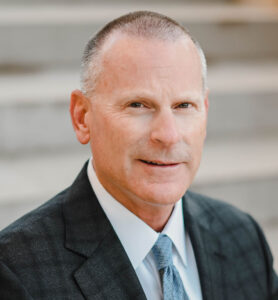
The following statement can be attributed to Brian Peters, CEO of the Michigan Health & Hospital Association.

MHA CEO Brian PetersThe Michigan Legislature passed a state budget that champions crucial healthcare funding and protects access to vital healthcare services across Michigan communities.

The fiscal year 2025 state budget and fiscal year 2024 supplemental proposals continue funding pools that support rural and critical access hospitals, obstetrical services, the Healthy Michigan Plan and Michigan’s Medicaid populations. Each of these pools help maintain access to care for underserved populations throughout the state.

The budget also includes new funding to support peer recovery coaches in hospitals to enhance substance use disorder services. These individuals are specifically trained to provide advanced peer recovery support services and are proven to help patients overcome obstacles in their substance use disorder recovery. Michigan joins the more than 38 other states in supporting this model of providing needed care.

We look forward to Gov. Whitmer signing this budget, which protects access to care and ensures hospitals can continue to advance the health of individuals and communities.

MHA CEO Report — Moving the Workforce Needle

MHA Rounds image of Brian Peters

“Luck is not chance, it’s toil; fortune’s expensive smile is earned.” — Emily Dickinson

The healthcare workforce has been one of the MHA’s strategic action priorities for the past several years. As we near completion of our 2023-2024 program year, I’m extremely pleased to see the results of the MHA’s second annual hospital workforce survey, which shows Michigan hospitals are making real progress in reducing staffing shortages. Michigan hospitals hired more than 61,000 employees in 2023, including 13,000 nurses. Overall job vacancies were reduced by 29%, while nursing vacancies dropped by 44%. These gains are seen across nearly all job categories and they’re significant, with double-digit decreases for many of them. I can tell you with certainty: our “luck” in this regard has been earned through extremely hard work.

Michigan hospitals still have 19,000 job openings, including 4,700 for nurses, so more work and investment needs to be done. However, the accomplishments of Michigan hospitals in this area shows the recruitment, retention and training tactics implemented throughout the state are working.

It starts with retaining the existing workforce, which leads to improved morale and reduced recruiting expenses. Michigan hospitals are outperforming hospitals across the country when it comes to registered nurse retention. Michigan’s turnover rate is 3.7 percentage points lower than the national average. Offering better pay, improved benefits, flexible scheduling and integration of technology to improve patient monitoring and reduce the administrative burden on nurses are examples of tactics implemented by Michigan hospitals that are making a difference.

Michigan remains an aging state, and as more people become eligible for Medicare, the demand for healthcare services will continue to grow. In response, our hospitals are very serious about expanding the talent pipeline and increasing awareness of hospital careers to students. Hospitals are expanding educational opportunities and partnerships with higher education institutions to attract more students to healthcare, including clinical positions like nursing. The MHA is assisting by leading the MI Hospital Careers public awareness campaign that targets students and professionals considering a career change to consider healthcare as a great option.

The MHA also recently published the latest results from the Economic Impact of Healthcare in Michigan report, which shows the important role hospitals have in Michigan’s workforce and economy. Healthcare remains Michigan’s largest employer of direct, private-sector jobs. Hospitals provide the largest percentage of healthcare jobs in the state, employing 217,000 full-and part-time employees. Not only are these good-paying, stable jobs, but many offer career pathways that allow employees to further develop their skills and move up the job ladder with additional certifications and/or degrees. Many of Michigan’s communities also depend on their local hospital as one of, if not their very largest, employer.

These results led our conversations last week while a team of MHA staff attended the Detroit Regional Chamber’s annual Mackinac Policy Conference, connecting with business, higher education and political leaders throughout Michigan. In addition to this public announcement, we also produced a palm card and video for event attendees to highlight our work. Our goal is to increase the awareness of the large role hospitals play in the economy and the success they’re having in welcoming new talent to their organizations.

Reducing job vacancies and staffing shortages is a marathon and not a sprint. The Michigan Legislature has played a large part in assisting hospitals, whether it be through direct worker funding or new policies, such as increased penalties for violence committed against healthcare workers or allowing community colleges to offer Bachelor of Science in Nursing degree programs in collaboration with a four-year institution. The MHA is proud to help lead many of these discussions with policymakers to find more ways to reduce barriers to healthcare careers.

Public policy, advocacy and communications are key – but we are using every tool in our toolbox to address our workforce challenges. The MHA Endorsed Business Partner (EBP) program promotes industry-leading firms, carefully vetted by the MHA, that can meet the most pressing needs of our member hospitals and health systems, and we just announced a new endorsement of AMN Healthcare as a national leader in workforce solutions. The MHA has endorsed several of AMN’s legacy brands, including Merritt Hawkins, a physician search division, for many years. As AMN brings its solutions under one brand, we proudly continue this partnership with AMN Healthcare. They are the largest workforce solutions company in the market, which allows them to serve clients more effectively across all levels of healthcare.

Economic development and workforce are not just a one-year strategy. This will continue to remain a priority for hospitals and health systems, and we’re encouraged that at this time next year, we will have a similar story to tell in the reduced number of healthcare vacancies in the state. Until then, please join us and encourage as many people as you can to consider a job in healthcare. Make no mistake: whether clinical or non-clinical, healthcare is hard work; but it truly is one of the most rewarding, mission-driven careers you can pursue.

As always, I welcome your thoughts.
Michigan Legislature Advances Healthcare and Economic Measures

capitol building

capitol buildingThe Michigan Legislature reviewed, discussed and moved forward legislation the week of March 4 that positively impacts patients, hospitals and health systems. Notably, the legislature took final action a bill related to the Renaissance Zone Act, while committees reported out bills related to scope of practice and organ donation.

House Bill (HB) 5096, sponsored by Rep. Kristian Grant (D-Grand Rapids), makes important changes to the state’s Renaissance Zone Act. These changes allow for more local governments to take advantage of the benefits of a renaissance zone designation and increase flexibility around those designations. Renaissance zones support economic development opportunities and allow for important economic drivers, like hospitals, to thrive in a variety of circumstances. Without these alterations, hospitals who may benefit from their locality being designated as a renaissance zone would be unable to realize significant opportunity to maintain or increase access to care in vulnerable communities. The positive impact this could have on hospitals and health systems in Michigan is why the MHA supported this legislation. HB 5096 passed both chambers and it is on its way to Gov. Whitmer’s desk.

HB 5114, sponsored by Rep. Carrie Rheingans (D-Ann Arbor), aligns the Mental Health Code with the Public Health Code when defining scope for recognized clinical providers. Certified nurse practitioners, clinical nurse specialists-certified and physician assistants are not recognized currently in the Michigan Mental Health Code. This lack of inclusion results in care gaps and confusion regarding the scope of those professionals, depending on the patient they may be serving or the location within a hospital they may be working. The state continues to struggle with healthcare workforce shortages, particularly in the behavioral health space. Alignment throughout Michigan’s compiled laws allows for certified nurse practitioners, clinical nurse specialists-certified and physician assistants to provide care to the fullest extent possible. Without this definitional change, those providers will continue to be precluded from fully participating in the behavioral health care continuum. The House Health Policy Behavioral Health Subcommittee took testimony and recommended the full committee move forward with the change. The MHA supports this legislation and looks forward to further committee activity in the full House Health Policy Committee.

Lastly, the House Tax Policy Committee took testimony on and affirmatively voted out HB 4361 sponsored, by Rep. Felicia Brabec (D-Ann Arbor), which creates a tax credit for living organ donors. The adopted substitute language of the bill allows for an individual who donates an organ to claim a one-time $10,000 tax credit for the costs associated with being a living organ donor. Living organ donations increase the existing organ supply and create opportunities for individuals on the transplant list to receive an organ potentially sooner. Organs available for living donation include whole organs, like a kidney, pancreas intestine, and in rare cases, heart, as well as partial organs like a lung or liver lobe donation. Creating policies at the state level that support individuals choosing to be a living organ donor could result in increased donors and therefore more opportunities for individuals to receive an organ donation. HB 4361 will move on for consideration by the full House of Representatives and is supported by Gift of Life Michigan, Living Liver Foundation and the National Kidney Foundation.

Members with questions may contact Elizabeth Kutter at the MHA.

MHA CEO Report — The State of Healthcare

MHA Rounds image of Brian Peters

“Mankind’s greatest achievements have come about by talking, and its greatest failures by not talking. It doesn’t have to be like this. Our greatest hopes could become reality in the future. With the technology at our disposal, the possibilities are unbounded. All we need to do is make sure we keep talking.”
Stephen Hawking

The new year always brings two traditional speeches from lawmakers: Gov. Whitmer just recently delivered her annual State of the State address, while President Biden will share the annual State of the Union address on March 7. While the economy, housing, education, border security, climate change and other important issues are featured in these speeches, the reality is that healthcare remains a top concern for millions of Americans, and therefore will continue to be front and center for elected officials and candidates at the state and federal level throughout this election year.

The bottom line is that the fragility of the healthcare continuum was exposed during the pandemic and four years later, the aftershocks can still be felt. Let’s touch on just a few issues that dictate the state of healthcare in 2024:

Healthcare Workforce

Michigan hospitals employ roughly 219,000 people and are desperately trying to hire thousands more in every corner of the state. A survey we conducted last year showed there were over 27,000 job openings in Michigan hospitals. Hospitals are often the largest employer in their respective communities and serve as critical economic engines. It takes longer to deliver care when hospitals don’t have enough staff, impacting the experience of patients and families.

Much like other industries in Michigan, healthcare has a supply and demand issue, but we feel it in a uniquely acute manner: the aging population not only contributes to an exodus of talent from the field, but it increases demand for healthcare services at the same time. And because we are classic “price-takers” when it comes to a huge share of our business (i.e. Medicare and Medicaid tell us what they are going to pay), our ability to pass rising labor (and supply chain) costs along to consumers is extraordinarily limited. The financial performance of hospitals across the state and country has been negatively impacted as a direct result, and it fuels our advocacy efforts related to our ongoing viability.

Healthcare needs to continue to refill the talent pipeline and we’re making progress on these efforts. From the MI Hospital Careers campaign to the individual partnerships created between health system and secondary-education institutions, the effort is being made to increase the supply of future professionals. I’m encouraged to hear Gov. Whitmer’s proposal for tuition-free community college for all Michiganders who graduate from a Michigan high school. We have been active in advocating for such a policy to improve the number of students pursuing these pathways to address the nursing shortage.

Behavioral Health

Behavioral healthcare in Michigan continues to be in crisis. We need to fund, support and reform our systems to better meet the behavioral healthcare needs of our communities.  Responding to MHA advocacy, the Michigan Legislature provided $50 million in grant funding last year to increase access to pediatric inpatient behavioral health services. We are encouraged by what our member hospitals have planned to improve access, but more needs to be done. This will be a focus area for us in Lansing through the rest of the year, specifically looking at solutions that include continuing to expand care locations, clarifying insurance coverage policies and increasing the number of providers.

Prescription Drug Affordability

Increasing prescription drug costs are a key driver of escalating healthcare costs. These increased costs are not just experienced by patients at their local pharmacies, but hospitals are also large purchasers of prescription drugs and are experiencing the same costs, threatening their viability. Data shows drug costs rose by 36.9% from 2019 to 2021 and currently account for the largest portion of healthcare insurance premiums, costing 22.2 cents for every dollar.

With these dramatic cost increases, the 340B drug pricing program has never been more important. This critical program allows safety net hospitals and other community care organizations to access certain outpatient prescription drugs at discounted prices. It does not require any state taxpayer dollars and has contributed to supporting access to care to Michigan’s most vulnerable patients for more than 30 years. We’re hopeful to see legislation passed to protect these hospitals and the benefits they provide, such as supporting OB services, financial assistance programs for low-income patients or lowering the cost of prescription drugs.

Emerging Technology and AI

Technology continues to provide many opportunities and growth for healthcare. It can serve as a “force-multiplier” that allows our staff to work smarter, extending their impact. If used correctly, technology can improve the patient experience, care delivery, worker satisfaction and more. We’re already seeing it with the dramatic growth in the utilization of telehealth and the emergence of artificial intelligence (AI) applications throughout healthcare. Technology can help expand access to care for many of our rural or disadvantaged residents who are confronted with a variety of social barriers.

We’re seeing great innovation when it comes to technology and I expect even more in the years ahead. The “disruptors,” that is to say, the large, global companies known for their technological innovation (and deep financial resources) are increasingly turning their attention toward the $4 trillion American healthcare market. These entities could be viewed as a potential threat to traditional healthcare providers, payors and others in the health ecosystem – but could also be viewed as potential collaborators and strategic partners. Without a doubt, the future delivery and financing model will be shaped in some way by this development.

At the same time, the rise of sophisticated technology and the inter-connectedness between healthcare entities, their patients and the rest of the world gives rise to the specter of cybercrime. This topic is worthy of its own special focus (stay tuned for more on that in the months ahead), but for now, let me just point to the fact that the MHA was proud to be ahead of the game in this regard, helping to launch our own healthcare-focused cybersecurity operations center right here in Michigan with MHA Endorsed Business Partner CyberForceQ.

These are just a few of the countless, complex issues that will impact Michigan healthcare in the year ahead. Plenty to be concerned about, for sure. But I remain fundamentally optimistic and hopeful about the future. Our healthcare workers are committed and resilient. And our policymakers continue to acknowledge the dependent relationship their communities have with healthcare. While I know better than to predict much of anything in an election year, I feel confident in predicting healthcare will continue to help make Michigan a better place, no matter what the political winds bring our way. All we need to do is continue our most human connection – let’s keep talking with each other and craft a positive future together.

As always, I welcome your thoughts.