Michigan Rural Health Transformation Program Application Diminishes Potential Impact

The following statement can be attributed to Brian Peters, CEO of the Michigan Health & Hospital Association.

We are disappointed the Michigan Rural Health Transformation Program application submitted by the Michigan Department of Health and Human Services does not include explicit support for Michigan’s 73 rural hospitals.

The application lists four initiatives, none of which include recommendations from Michigan’s rural hospital leaders, who know rural healthcare needs best. Michigan hospitals are set to lose more than $6 billion over the next 10 years due to the federal H.R. 1 Reconciliation Bill. It’s unfortunate Michigan’s application ignored this impact and the intent of Congress to assist rural hospitals most impacted by these federal changes through this program.

This application provided an opportunity to maximize the healthcare impact for rural communities by providing the resources needed by rural Michigan’s leading healthcare providers. While the four initiatives are well intended, the application as submitted fails to maintain access to care in the most meaningful way.

Virtual Media Roundtable Focuses on Medicaid Funding Cut Consequences

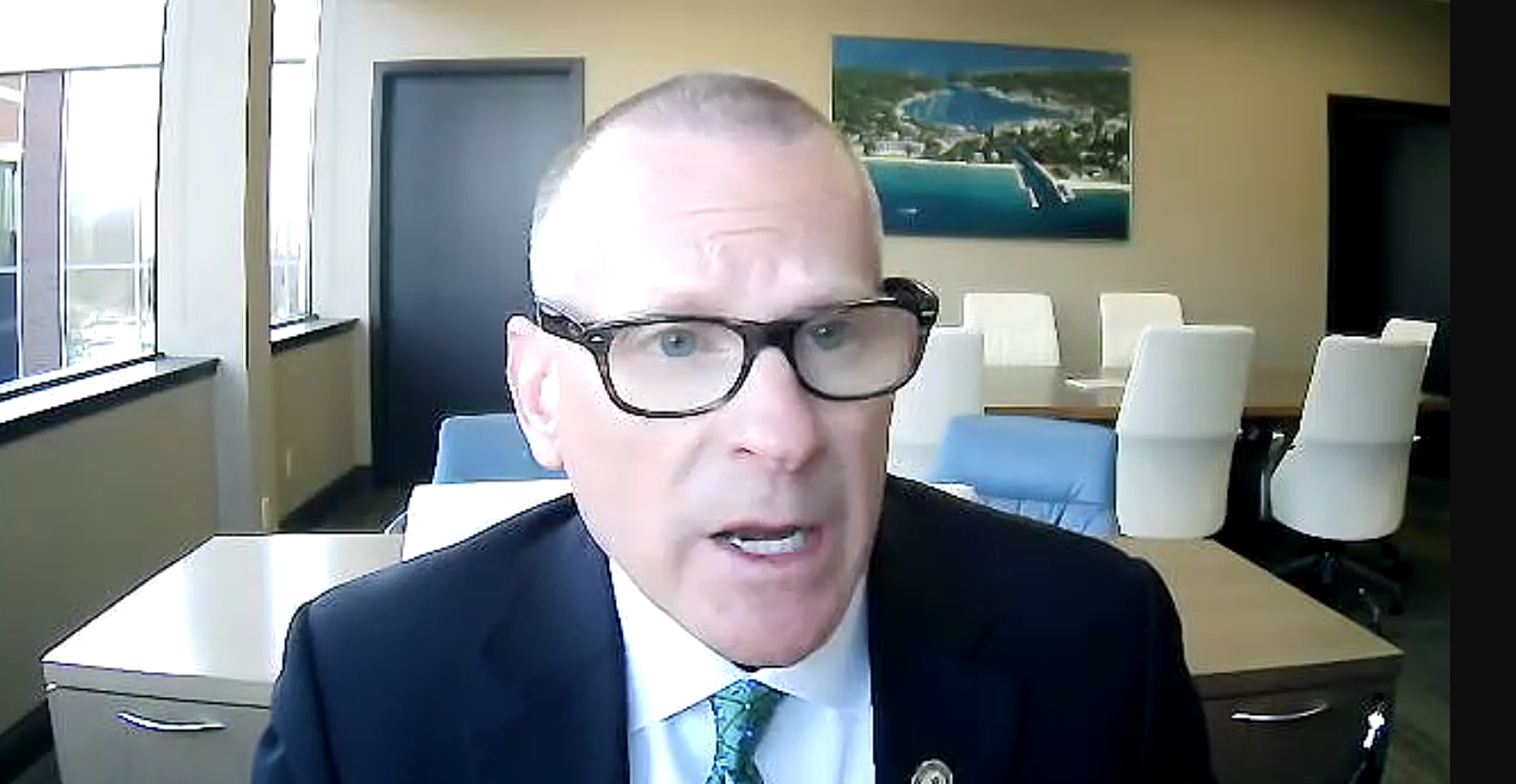
MHA CEO Brian Peters speaks during a virtual media roundtable about Medicaid.
MHA CEO Brian Peters speaks April 3 during a virtual media roundtable about Medicaid funding cuts.

A virtual media roundtable hosted April 3 by the Michigan League for Public Policy included MHA CEO Brian Peters as a panelist, where he discussed the consequences for potential Medicaid funding cuts by Congress.

Crain’s Detroit Business, CBS Detroit and MIRS published stories as a result of the roundtable.

“When Medicaid funding reductions force hospitals to curtail services or in fact eliminate entire service lines or in fact close hospitals … the services are no longer available to Medicaid recipients, but they’re no longer available to anyone in the community, either,” said Peters. “The cuts that are being contemplated in Washington, D.C. right now, if those were to be implemented, they would cost jobs. And more importantly, I can tell you, they would cost lives,”

Monique Stanton from the Michigan League for Public Policy.

Joining Peters during the roundtable were:

  • Monique Stanton, President & CEO, Michigan League for Public Policy
  • Russ Kolski, Interim Executive Director, Ingham Community Health Center
  • Susan Harding, Executive Director, Oakland Livingston Human Services Agency
  • Jenny Wagemann, Manager, Allen Farmers Market and Breadbasket Food Pantry

On a separate note, MLive also published a story April 3 that references the MHA’s healthcare workforce data and the 44% reduction in nursing vacancies in Michigan hospitals from 2023 to 2024. The story shares news on a nursing student loan repayment program announced by the Michigan Department of Health and Human Services. The Detroit Free Press also published an article on the program, citing the MHA’s Economic Impact of Healthcare Report.

Members with any questions regarding media requests should contact John Karasinski at the MHA.

Peters Appears on The Common Bridge Podcast

MHA CEO Brian Peters

MHA CEO Brian Peters joined The Common Bridge podcast for an episode published Aug. 18 to discuss various healthcare policy topics, particularly those impacting rural Michigan. Areas of focus include the Affordable Care Act, the impact of Medicaid provider taxes, clinical scope of practice, telemedicine, hospital-at-home programs, Medicare Advantage and the 340B drug pricing program.

The episode is hosted by Richard Helppie, founder of The Common Bridge. Episodes from the show focus on non-partisan policy discussions. The episode is available through Apple Podcasts and YouTube.

Peters is also quoted in a press release published Aug. 22 by the Michigan Department of Health and Human Services on the record number of Michigan hospitals who applied for the Maternal Levels of Care verification through The Joint Commission.

“We applaud each of the hospitals and their birthing teams for the time and effort they spent over recent weeks to complete the application process,” Peters. “This work signifies the dedication Michigan birthing hospitals have toward providing high quality and safe care to Michigan mothers and babies.”

Members with any questions regarding media requests should contact John Karasinski at the MHA.


MHA CEO Report — A Program Year in Review

MHA Rounds graphic of Brian Peters

“Winning is not a sometime thing, it is an all the time thing. You don’t do things right once in a while…you do them right all the time.”  — Vince Lombardi

MHA Rounds image of Brian PetersI am pleased to share we just completed a successful MHA Annual Meeting, continuing a long-standing June tradition whereby we celebrate the conclusion of one MHA program year, and prepare for the next. Each program year is unique with the different challenges it presents. At this point five years ago, no one could have predicted how the emergence of COVID-19 would flip healthcare on its head and drastically alter the tactical objectives of our association. However, there is a constant: the MHA continues to rise to any challenge presented to us and we deliver results for our membership to improve the health and wellness of individuals and communities.

The 2023-2024 program year focused intensely on workforce, viability and behavioral health, while addressing the various “wildcard” issues that always come up. We were led with great wisdom and compassion by Shannon Striebich, president and CEO, Trinity Health Michigan, as our board chair. Due to Shannon’s commitment and leadership, the MHA accomplished numerous highly successful and impactful outcomes on behalf of our members.

One of the most significant challenges in this past year was the threat posed by government-mandated nurse staffing ratio legislation. This proposed policy had the potential to dramatically reduce access to care for individuals throughout the state. Our advocacy on the issue lasted throughout the entire year but was highlighted by an Advocacy Day we hosted in September that featured more than 150 hospital representatives, primarily consisting of nurse leaders, who came to the Capitol and conducted 118 meetings with lawmakers that day. Later in the year, the MHA successfully advocated our position at a committee hearing, where more than 60 supporters attended on very short notice to push back on false narratives and to support alternative nurse staffing solutions. As a result of our efforts, no committee votes have been scheduled, and momentum on this harmful legislation has been effectively stalled.

While we had to play defense against this harmful proposed legislation, the MHA spent the program year actively engaged in workforce development and efforts to grow the healthcare talent pipeline. The MHA worked with stakeholders to implement new funding designed to expand access to Bachelor of Science in Nursing degrees through partnerships between community colleges and four-year universities, while also engaged in partnerships with other organizations to promote healthcare careers, increase clinical faculty and nurse preceptors, address high turnover rates in rural areas and promote healthcare career options. We continued our award-winning healthcare career marketing campaign designed to attract future workers and also redeployed our annual hospital workforce survey that shows the efforts of Michigan hospitals to recruit, retain and train healthcare workers is making a real difference. Finally, we hired our first-ever chief nursing officer at the MHA, which is already strengthening our ties to the nursing community throughout the state.

The viability of hospitals was another key focus and was largely supported through our legislative advocacy work. MHA funding priorities continued to be protected in the state budget, which includes $163 million for graduate medical education, $45 million for traditional disproportionate share hospitals, $15 million through the rural access pool and an additional $8 million for the obstetrical stabilization fund. The fiscal year 2024 budget also included $60 million annually to support hospitals with Level I and II trauma centers and $34 million annually to support hospitals that provide inpatient psychiatric care. Besides state funding, the MHA protected Medicaid funding, medical liability, the 340B drug pricing program and certificate of need.

The MHA is also intricately involved in in addressing the behavioral health crisis plaguing our state and country. Expanding access to care is a key focus, which included the MHA administrating a $50 million grant program to expand access to pediatric inpatient behavioral health services. The Michigan Department of Health and Human Services (MDHHS) is a close partner in this work and the MHA participated in the MDHHS Advisory Committee on the creation of a psychiatric bed registry. The MHA launched a new member ED boarding survey to quantify the number of patients struggling with behavioral health access in the emergency department and the MHA is using this data when engaging with lawmakers, stakeholders and the public to explain the scope of the program. These learnings informed the creation of a four-bill package of legislation to address board-identified issues in the behavioral and mental health system, such as coverage parity and community mental health shortcomings.

Much of the work in the past year has focused on maternal and infant health and improving maternal health and birth outcomes. And I am pleased to share that our MHA Board of Trustees just approved the full slate of recommendations emanating from the MHA Community Access to Health Task Force, giving us the support to continue this important journey together.

And as usual, we effectively dealt with a long list of “wildcard” issues that emerged during the program year, including drug shortages, guardianship, infection control, patient transport, population growth and safety and quality. We also continued to strengthen our efforts related to the growing cybersecurity threat. Indeed, the Change Healthcare cyberattack was one of the largest and most impactful attacks ever seen and served as a clear reminder of the importance of our work in this space.

At our Annual Meeting, I spoke to our attendees about “the power of zero.” In the 2023-2024 program year, the following were true:

  • The number of Michigan acute care community hospitals and health systems that are not members of our association is zero. We have everyone at the table, which allows us to speak with one powerful, united voice.
  • We passed 39 MHA-supported bills through the state legislature that were enacted into law, with five more on their way to the governor for her signature. The number of MHA-opposed bills that made their way to the finish line was zero.
  • The MHA now has a full-time chief medical officer and a full-time chief nursing officer (as noted above). How many other state hospital associations can say this? Zero.
  • And most importantly, how many other associations – in any sector – are as relevant, as impactful, as mission-driven and successful as the MHA? I believe that number is zero.

I would like to recognize and thank our outstanding MHA Board of Trustees, our members, sponsors and business partners, but most of all, our incredible MHA staff for coming together to achieve such tremendous results for the patients and communities we collectively serve. I hope you will take the opportunity to celebrate these results with us.

As always, I welcome your thoughts.

MHA CEO Report — Vaccinations & Respiratory Illness Season

MHA Rounds image of Brian Peters

“An ounce of practice is worth more than tons of preaching.” Mahatma Gandhi

The last four years have generated tremendous awareness about vaccines, but also a large public health challenge as disinformation has exploded and anti-vaccine sentiment has emerged from the fringes to become widely embraced. This likely isn’t news to any of you, but the issue is once again top of mind because this time of year is respiratory illness season, whether it be the flu, RSV and now COVID. Thankfully, we have vaccines available to blunt the severe impacts of these illnesses, but it falls on both healthcare providers and public health professionals to appropriately communicate the benefits of vaccines to our patients and the public.

The recent reports from the Centers for Disease Control and Prevention (CDC) are concerning, as they are warning providers about the low vaccination rates for each of these diseases. Flu vaccination rates are down across all age groups compared to last year, while COVID vaccine uptake is the same as last year at just 17% of adults; similarly, only 17% of adults 60 years of age and older have received an RSV vaccine.

Due to these low vaccine rates, the CDC reported Dec. 14 that over the past four weeks, hospitalizations across the country increased 200% for the flu, 51% for COVID and 60% for RSV. In Michigan, we need look no further than last year to see how a surge of RSV illness can dramatically challenge the statewide capacity of our children’s hospitals. We know more can be done and it isn’t too late for people to receive their vaccines that are proven to reduce the risk of severe illness and hospitalization.

The MHA has a long history of support for vaccinations, as we continue to work with the Alliance for Immunizations in Michigan, the Parent Information Network, I Vaccinate and others to measure, educate and promote appropriate vaccinations for all Michigan residents. I Vaccinate specifically has been a terrific statewide public awareness campaign to connect with parents on the value of making sure you keep your children up to date on their vaccinations as they grow up. The bottom line is that the safety and efficacy of numerous vaccines has been supported and documented by not only the CDC, but the World Health Organization, and many other academic and clinical organizations.

We also know healthcare personnel play a key role in limiting the spread of illness during these months. For some time, we have collaborated with the Michigan Department of Health and Human Services to encourage vaccination policies for healthcare personnel against preventable diseases, such as the flu and pertussis.

Healthcare personnel are also important messengers when it comes to vaccines. We highly encourage all patients with questions about vaccines to contact their healthcare provider. These are important decisions and healthcare providers are uniquely qualified to provide accurate information about the benefits and any potential risks associated with any treatment. They also do so with care and respect for their patients. The MHA provides additional vaccine resources to healthcare leaders on our MHA vaccinations webpage.

Since the pandemic, the MHA has engaged in numerous ways on healthcare supply chain issues. On that note, another key challenge has been the available supply of Beyfortus, the monoclonal antibody for infants to prevent severe RSV illness. The MHA has been actively collaborating with stakeholders to navigate these supply concerns, as well as to provide reimbursement clarity. The good news is we have plenty of patients wishing to have their infants immunized, but due to manufacturing and distribution issues, there simply is not enough supply for all these young children. Thankfully the Biden administration recently announced 230,000 additional doses of RSV immunizations for infants will be available this month.

Realistically, we know we won’t change declining vaccination trends overnight, in a society that is as polarized as ever. Yet, I’m hopeful that over time we will be able to turn the tides, much as healthcare providers have for over a hundred years in using this valuable tool to eradicate harmful illnesses. It all starts with individual conversations from trusted messengers, but at the end of the day, we need to practice what we preach.

As always, I welcome your thoughts.