MHA Opposes Staffing Ratios on WJR

MHA CEO Brian PetersMHA executives appeared on WJR 760 AM during the weeks of Nov. 25 and Dec. 2 to discuss the association’s opposition to government mandated nurse staffing ratios.

MHA CEO Brian Peters appeared on Focus with Paul W. Smith Nov. 26 while MHA Executive Vice President Laura Appel joined Guy Gordon, Lloyd Jackson and Jamie Edmonds Dec. 4 during the weekly Capital Report segment of WJR’s morning show.

Both Peters and Appel focused on House Bills 4550 – 4552, which would mandate one-size-fits-all nurse staffing ratios for all Michigan hospitals. The bills received a committee hearing Nov. 9 in the House Health Policy Committee and the interviews addressed how these bills remain the MHA’s top priority during the state’s legislative lame-duck session.

Laura AppelIf the bills did become law, Michigan communities would face the loss of important access to healthcare services, as up to 5,100 hospitals beds throughout the state would close.

More information about the proposed legislation is available on the Think it Through website.

Members with any questions regarding media requests should contact John Karasinski at the MHA.

MHA CEO Report — Election Season

MHA Rounds image of Brian Peters

“You want a friend in Washington? Get a dog.”  – Harry S. Truman

MHA Rounds graphic of Brian PetersElection ads and coverage are everywhere, regardless of whether you’re watching television or scrolling on your phone. I don’t have to tell you the presidential election is today, Nov. 5, but I will always remind people of the importance and value of each vote. Elections have consequences and as an advocacy organization, we deal with those consequences daily. The outcome of the 2024 election will determine not just who occupies the White House, but also our state and federal lawmakers, administrative leaders, state supreme court justices and an assortment of local issues and ordinances. Each new legislative session brings new policymakers, who bring with them their plans on potential reform and change.

Michigan clearly took center stage in this election cycle. Nearly every day, one of the presidential candidates, their running mates, spouses or other proxies have made campaign stops throughout the state. We also have some of the most expensive congressional races in the country, particularly our U.S. Senate seat and the 7th and 8th  U.S. House districts. With this extra attention can come hyper-partisan headlines, added emotion and fatigue. During this time, it’s important to remember that there are healthcare champions on both sides of the aisle. Access to quality healthcare is not a partisan issue and its important candidates hear from their clinicians, healthcare workers, administrators, trustees, volunteers and others about the issues impacting healthcare at home. Politics are local and advocacy, at its core, is about relationship building. As Adam Carlson, our MHA Senior Vice President of Advocacy likes to say, “You must be present to win.”

Education and awareness are key during election season. The MHA has been active in making sure our hospitals have all the tools necessary. This includes election posters, a candidate guide, Race of the Week features on our website, multiple podcast episodes and regularly previewing the election throughout our committee, council and task force meetings.

My friend Rick Pollack, president and CEO of the American Hospital Association, joined me in one of our latest podcasts and made an important point that regardless of the election outcome, issues like affordability, drug pricing and value-based payments are not going away. However, what will change are those decision-makers working on these topics and we have a role in both deciding who those individuals are and then educating them and being a resource.

If you have not done so already, please vote today. In preparation, listen to our latest podcast with MHA Executive Vice President Laura Appel to understand all that is at risk this election cycle. And once you’re ready, drop off an absentee ballot, visit your clerk’s office for early voting or plan to stop by your voting precinct on Election Day. Remember, your vote matters – and your engagement in the process well beyond election day matters too. I have a dog and agree with President Truman – they are great. But I would encourage all of us to make friends in the political world as well. Our healthcare future depends on it.

As always, I welcome your thoughts.

MHA Monday Report Oct. 28, 2024

Obtaining Beyfortus through the Vaccines for Children Program

Vaccination remains a key strategy to mitigate the impact of adverse health outcomes on patients and hospital operations during the 2024-2025 respiratory season. The MHA urges all birthing hospitals to become Vaccines for Children …


Webinar Outlines Policies to Remove Stigma from Credentialing Applications

The MHA and the MHA Keystone Center will host the MHA Health Foundation webinar Implementing Evidence-Informed Strategies to Normalize Help-Seeking and Strengthen Wellbeing from 4:30 to 5:30 p.m. Dec 4. The webinar will outline how …


A Healthier Future: Improving Access for Immigrant Families in Michigan

Accessing healthcare can be a daunting experience for anyone, but it poses unique challenges for immigrants and refugees. I recently participated in a breakout session at the Michigan Association for Local Public Health Conference held in …


Keckley Report

U.S. Healthcare in 2025 and Beyond: Three Major Predictions

“With 15 days before voters decide the composition of the 119th U.S. Congress and the next White House occupant, the immediate future for U.S. healthcare is both predictable and problematic:

  1. States will be the epicenter for healthcare legislation and regulation; federal initiatives will be substantially fewer.  …
  2.  Large employers will take direct action to control their health costs. …
  3.  Private equity and strategic investors will capitalize on healthcare market conditions. …

Combined, these three predictions foretell a U.S. healthcare system that faces a significant pressure to demonstrate value. They require every healthcare organization to assess long-term strategies in the likely context of reduced funding, increased regulation and heightened attention to prices and affordability. This is problematic for insiders accustomed to incrementalism that’s protected them from unwelcome changes for 3 decades.

Announcements last week by Walgreens and CVS about changes to their strategies going forward reflect the industry’s new normal: change is constant, success if not. In 2025, regardless of the election outcome, healthcare will be a major focus for lawmakers, regulators, employers and consumers.”

Paul Keckley, Oct. 21, 2024


News to Know

  • The general election is Tuesday, Nov. 5. Polls open at 7 a.m. and close at 8 p.m. Voters in line at 8 p.m. can still cast ballots.
  • MHA endorsed business partner HSS has officially rebranded as Tarian, following its acquisition in 2022.

MHA EVP Laura Appel speaks with WOOD TV about the Baxter IV solutions shortage.

MHA in the News

The MHA received media coverage the week of Oct. 21 regarding the Baxter IV solutions shortage and the impact hospitals have in their local communities. WOOD TV aired a story Oct. 21 about the impact …

Media Recap: IV Solutions Shortage & Community Impact

MHA EVP Laura Appel speaks with WOOD TV about the Baxter IV solutions shortage.

The MHA received media coverage the week of Oct. 21 regarding the Baxter IV solutions shortage and the impact hospitals have in their local communities.

WOOD TV aired a story Oct. 21 about the impact the Baxter IV solutions shortage is having on Michigan hospitals. The story includes quotes from Laura Appel, executive vice president and government relations and public policy, MHA, sharing updates on the situation and how hospitals are managing supply.

“I would say with few exceptions, I believe just about every health system in the state is doing what are called conservation measures,” said Appel.

The MHA is also featured in the October issue of FOCUS Magazine, the Lansing Regional Chamber of Commerce’s monthly business publication. The article, located on page 16, focuses on the role healthcare plays in the community, particularly as an employer, and includes quotes from MHA CEO Brian Peters.

“There’s no single answer,” said Peters about issues the MHA is focused on, including workforce shortages, greater behavioral health demands, workplace violence, health equity concerns and hospital viability. “These are obviously very complex issues, so the answers are multiple.”

Members with any questions regarding media requests should contact John Karasinski at the MHA.

MHA Monday Report Oct. 21, 2024

State Senate Advances Healthcare Legislation

Several bills impacting healthcare and hospitals were advanced through committees in the state Senate during the week of Oct. 14. Senate Housing and Human Services voted out a package of legislation referred to as the …


MHA Continues to Monitor Baxter IV Solutions Shortage

The MHA continues to support Michigan hospitals in response to the Baxter IV solutions shortage that began the week of Sept. 29. Baxter International Inc. temporarily closed its North Cove manufacturing plant in Marion, N.C., …


LARA to Evaluate Non-Long Term Care Provider Licensures

The Department of Licensing and Regulatory Affairs (LARA) is required by MCL 333.20155 to make at least one visit to each licensed Non-Long Term Care provider every three years to evaluate licensure. LARA may waive …


MHA Webinar Explores Leadership Strategic Planning for AI

The MHA will host the webinar How Boards and Leaders Can Deploy AI Responsibly and Ethically, scheduled 4:30 – 6 p.m. ET, Dec. 3. The webinar will cover a framework to govern the approach, policies …


CMS Finalizes Medicare Appeals Process for Beneficiary Status Change

The Centers for Medicare & Medicaid Services (CMS) and the United States Department of Health and Human Services recently released a final rule, effective Oct. 11, 2024, implementing a federal district court order that …


Rural Health Research Gateway Releases Report on the First Year of REHs

The Rural Health Research Gateway recently published a report on Rural Emergency Hospitals (REHs) highlighting data from the first year of the designation. Under the Consolidated Appropriations Act of 2021, the Rural Emergency Hospital provider type …


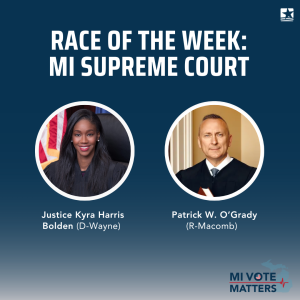
MHA Race of the Week – Michigan Supreme Court

The MHA’s Race of the Week series highlights the most pivotal statewide races for the 2024 General Election. The series will provide hospitals and healthcare advocates with the resources they …


Three Key Takeaways from the MHA Webinar Featuring Health Equity Regulatory Requirements

Earlier this month, the MHA, in partnership with the MHA Keystone Center, hosted a member webinar highlighting the current and future state of health equity priorities and requirements from the Centers for Medicare & Medicaid Services and The Joint Commission that impact …


Keckley Report

Do Healthcare Prices Matter?

“With the election 22 days away and inflation the key issue for voters, the latest Consumer Price Index report from the Bureau of Labor Statistics is especially important. Released last Tuesday, it shows: …

Healthcare prices account for 10.2% of the CPI but attention to these is decidedly less than food, energy, housing and other categories. For consumers, that neglect is harmful’ for industry insiders, it’s a pressure point that’s been avoided. Price estimators, posted chargemasters, open-panel benefits design, website queries and other tactics work OK for now. So…

Do Healthcare Prices Matter? Not much today. But they’re mission critical in healthcare tomorrow.”

Paul Keckley, Oct. 14, 2024


News to Know

The United States Departments of Labor, Health and Human Services and the Treasury issued Sept. 9 a set of final rules on the Mental Health Parity and Addiction Equity Act of 2008.


Laura Appel speaks with NBC25 about the Baxter IV solutions shortage.

MHA in the News

The MHA continued to engage with media requests on the Baxter IV solutions shortage during the week of Oct. 14. NBC25/Fox66 in Flint aired a story Oct. 16 on the shortage, which includes an interview …


MHA Continues to Monitor Baxter IV Solutions Shortage

The MHA continues to support Michigan hospitals in response to the Baxter IV solutions shortage that began the week of Sept. 29. Baxter International Inc. temporarily closed its North Cove manufacturing plant in Marion, N.C., due to flooding caused by Hurricane Helene. As the largest IV solutions plant in the country, North Cove produces 1.5 million bags of IV solution per day and supplies 60% of the nation’s IV solutions, including critical products like saline, sterile water and peritoneal dialysis solutions.

The MHA continues to hold discussions with healthcare leaders across the state to address the ongoing shortage. These conversations allow hospitals to share insights on supply challenges and explore collaborative strategies for managing the shortage. The MHA continues to gather feedback from its members to advocate for solutions and provide updates on the evolving situation.

Baxter launched a new webpage Oct. 14 with resources that hospitals can use for product management and conservation strategies. The webpage contains resources from Baxter, the federal government and other groups. In addition, Baxter said shipments to the U.S. from two Baxter sites abroad “started last week and more are on the way.”

The Centers for Disease Control and Prevention (CDC) issued a Health Alert Network (HAN) Health Advisory Oct. 12 to inform healthcare providers, pharmacists, healthcare administrators and health departments of a supply disruption affecting peritoneal dialysis (PD) and IV solutions. This shortage also stems from damage to the Baxter facility.

In response, the advisory includes recommendations from the Food and Drug Administration (FDA), the American Society of Health-System Pharmacists (ASHP), the American Society of Nephrology, and other key organizations to help healthcare providers manage the shortage. ASHP also updated its conservation resource Oct. 11 to provide guidance for managing fluid shortages and conserving supplies.

The FDA also released guidance Oct. 11 that is effective immediately for compounding certain parenteral drug products in response to the effects of recent hurricanes, including the closure of the Baxter manufacturing plant.

The Baxter Hurricane Helene webpage continues to serve as a single source of information, providing the latest company updates about allocation plans. Updates will be provided on Mondays and Thursdays. Members are encouraged to contact Baxter for questions related to the IV solution situation, particularly if they are in dire need of product. The American Hospital Association is also maintaining a Baxter resource webpage too.

The MHA encourages Michigan residents to consult with their healthcare providers for updates on the shortage and its impact on hospital operations in their area.

Members with questions should contact Laura Appel at the MHA.

Continued Coverage on Baxter IV Solutions Shortage

Laura Appel speaks with NBC25 about the Baxter IV solutions shortage.

The MHA continued to engage with media requests on the Baxter IV solutions shortage during the week of Oct. 14.

NBC25/Fox66 in Flint aired a story Oct. 16 on the shortage, which includes an interview with MHA Executive Vice President Laura Appel. She spoke to the current situation regarding reduced allocations from Baxter to hospitals and how hospitals are managing the shortage.

“Hospitals that use their services would get a smaller allocation than usual,” said Appel. “Many organizations sent out information on how to conserve solutions, how to use less of them all altogether and how to use them differently.”

Michigan Public also published a story Oct. 17 on the topic. The reporting includes sourcing to the MHA and quotes from an association spokesperson.

Members with any questions regarding media requests should contact John Karasinski at the MHA.

MHA Monday Report Oct. 14, 2024

Legislation Impacting Hospitals Advances in State Legislature

A variety of bills impacting hospitals were introduced and discussed in the state legislature during the week of Oct. 7. Gov. Whitmer signed Public Act 132 of 2024, which updates statutory framework for the …


Baxter IV Solutions Shortage Updates

The MHA continues to support Michigan hospitals in response to the Baxter IV solutions shortage that began the week of Sept. 29. Baxter International Inc. temporarily closed its North Cove manufacturing plant in Marion, N.C., …


Reimbursement for Age-Friendly Quality Data Included in FY 2025 Hospital IPPS Final Rule

Included in the Centers for Medicare & Medicaid Services’ Medicare fee-for-service hospital inpatient prospective payment system (IPPS) fiscal year (FY) 2025 final rule is a reimbursement model for hospitals submitting age-friendly quality data. Hospitals …


Healthcare Leaders Discuss Regional Care at Lansing Economic Club

The Lansing Regional Chamber hosted its annual Future of Healthcare in the Lansing Region luncheon Oct. 10 as part of its monthly series of Lansing Economic Club events. This event featured a panel discussion moderated …


New Hospital Reporting Requirements for Respiratory Illness and Bed Capacity

The Centers for Medicare & Medicaid Services recently announced new respiratory disease reporting requirements for hospitals through the National Healthcare Safety Network effective Nov. 1. These requirements replace the previous “Hospital COVID-19 Data” reporting requirements …


MHA Webinar Outlines Strategies to Strengthen Healthcare Worker Well-being

The MHA and the MHA Keystone Center will host the MHA Health Foundation webinar Implementing Evidence-Informed Strategies to Normalize Help-Seeking and Strengthen Wellbeing from 4:30 to 5:30 p.m. Dec 4. This webinar is dedicated to …


MHA Race of the Week – Michigan Supreme Court

The MHA’s Race of the Week series highlights the most pivotal statewide races for the 2024 General Election. The series will provide hospitals and healthcare advocates with the resources they …


MHA Podcast Explores Why Voting Matters to Healthcare in Michigan

The MHA released a new episode of the MiCare Champion Cast featuring Laura Appel, executive vice president of government relations & public policy, MHA, exploring why voting in the 2024 General Election is critical to …


Keckley Report

What is the Medicare Advantage?

“On October 15, the open enrollment period for Medicare begins running through December 7 for coverage starting in January 2025. In this period, 67 million Medicare eligible seniors can review features of Medicare plans offered in their area, switch from traditional Medicare to a Medicare Advantage (MA) plan (or vice versa), change their MA selection and add/change their Medicare Part D prescription drug plans.

In 2024, Medicare Advantage plans enrolled 33 million seniors and Medicare paid private insurers $462 billion to pay for their care. But conditions for Medicare Advantage have changed in recent years prompting many to ask ‘what is the Medicare Advantage?’ …

Its funding comes from payroll taxes paid by employers and their employees, and those who are self-employed PLUS income taxes paid on Social Security benefits, interest earned on the Medicare trust fund’s investments and Part A premiums from people who aren’t eligible for premium-free Part A. …”

Paul Keckley, Oct. 7, 2024


Laura AppelMHA in the News

The MHA received media coverage the week of Oct. 7 that includes coverage on a potential national shortage of IV solutions products, physician retention and rural hospital funding. The closure of a Baxter manufacturing facility …

Baxter IV Solutions Shortage Updates

The MHA continues to support Michigan hospitals in response to the Baxter IV solutions shortage that began the week of Sept. 29. Baxter International Inc. temporarily closed its North Cove manufacturing plant in Marion, N.C., due to flooding caused by Hurricane Helene. As the largest IV solutions plant in the country, North Cove produces 1.5 million bags of IV solution per day and supplies 60% of the nation’s IV solutions, including critical products like saline, sterile water and peritoneal dialysis solutions.

The MHA continues to hold discussions with healthcare leaders across the state to address the ongoing shortage. These conversations allow hospitals to share insights on supply challenges and explore collaborative strategies for managing the shortage. The MHA continues to gather feedback from its members to advocate for solutions and provide updates on the evolving situation.

Baxter announced it is increasing allocation levels of its highest demand IV fluids for direct customers and distributors to 60%, effective Oct. 9. Baxter is also increasing allocation levels for high-concentration dextrose and sterile water and expects to make additional increases for certain products by early November.

The FDA issued a release Oct. 9 sharing information on temporary importation sources to help mitigate shortages for specific products. The release contains information on 19 products, with imports from Canada, China, Ireland and the UK.

The Baxter Hurricane Helene webpage continues to serve as a single source of information, providing the latest company updates about allocation plans. Updates will be provided on Mondays and Thursdays. Members are encouraged to contact Baxter for questions related to the IV solution situation, particularly if they are in dire need of product. The American Hospital Association is also maintaining a Baxter resource webpage too.

The MHA encourages Michigan residents to consult with their healthcare providers for updates on the shortage and its impact on hospital operations in their area.

Members with questions should contact Laura Appel at the MHA.

Headline Roundup: IV Solutions Shortage, Physician Retention & More

Laura Appel
Laura Appel
MHA EVP Laura Appel spoke with WJR, Michigan Public and WILX during the week of Oct. 7, 2024.

The MHA received media coverage the week of Oct. 7 that includes coverage on a potential national shortage of IV solutions products, physician retention and rural hospital funding.

The closure of a Baxter manufacturing facility in North Carolina due to Hurricane Helene led to several media stories, as the plant manufactures approximately 60% of the IV solutions used every day in the U.S.

Meanwhile, Bridge Michigan published a story looking at physician retention while Michigan Radio published a story on the recently signed Senate Bill 701, which eliminates the definition of “critical access hospital” and modifies the definition of “rural hospital.” It also raises the population limit to be considered a “rural hospital” to include counties with 195,000 people or less for the rural hospital funding pool.

Several MHA representatives participated in the news coverage, including Brian Peters, CEO; Laura Appel, executive vice president, government relations & public policy; Elizabeth Kutter, senior director, government & political affairs; and John Karasinski, senior director, communications.

Friday, Oct. 11

Thursday, Oct. 10

Wednesday, Oct. 9

Tuesday, Oct. 8

Monday, Oct. 7

Members with any questions regarding media requests should contact John Karasinski at the MHA.