Baxter IV Solutions Shortage Updates

The MHA continues to support Michigan hospitals in response to the Baxter IV solutions shortage that began the week of Sept. 29. Baxter International Inc. temporarily closed its North Cove manufacturing plant in Marion, N.C., due to flooding caused by Hurricane Helene. As the largest IV solutions plant in the country, North Cove produces 1.5 million bags of IV solution per day and supplies 60% of the nation’s IV solutions, including critical products like saline, sterile water and peritoneal dialysis solutions.

The MHA continues to hold discussions with healthcare leaders across the state to address the ongoing shortage. These conversations allow hospitals to share insights on supply challenges and explore collaborative strategies for managing the shortage. The MHA continues to gather feedback from its members to advocate for solutions and provide updates on the evolving situation.

Baxter announced it is increasing allocation levels of its highest demand IV fluids for direct customers and distributors to 60%, effective Oct. 9. Baxter is also increasing allocation levels for high-concentration dextrose and sterile water and expects to make additional increases for certain products by early November.

The FDA issued a release Oct. 9 sharing information on temporary importation sources to help mitigate shortages for specific products. The release contains information on 19 products, with imports from Canada, China, Ireland and the UK.

The Baxter Hurricane Helene webpage continues to serve as a single source of information, providing the latest company updates about allocation plans. Updates will be provided on Mondays and Thursdays. Members are encouraged to contact Baxter for questions related to the IV solution situation, particularly if they are in dire need of product. The American Hospital Association is also maintaining a Baxter resource webpage too.

The MHA encourages Michigan residents to consult with their healthcare providers for updates on the shortage and its impact on hospital operations in their area.

Members with questions should contact Laura Appel at the MHA.

Headline Roundup: IV Solutions Shortage, Physician Retention & More

Laura Appel
Laura Appel
MHA EVP Laura Appel spoke with WJR, Michigan Public and WILX during the week of Oct. 7, 2024.

The MHA received media coverage the week of Oct. 7 that includes coverage on a potential national shortage of IV solutions products, physician retention and rural hospital funding.

The closure of a Baxter manufacturing facility in North Carolina due to Hurricane Helene led to several media stories, as the plant manufactures approximately 60% of the IV solutions used every day in the U.S.

Meanwhile, Bridge Michigan published a story looking at physician retention while Michigan Radio published a story on the recently signed Senate Bill 701, which eliminates the definition of “critical access hospital” and modifies the definition of “rural hospital.” It also raises the population limit to be considered a “rural hospital” to include counties with 195,000 people or less for the rural hospital funding pool.

Several MHA representatives participated in the news coverage, including Brian Peters, CEO; Laura Appel, executive vice president, government relations & public policy; Elizabeth Kutter, senior director, government & political affairs; and John Karasinski, senior director, communications.

Friday, Oct. 11

Thursday, Oct. 10

Wednesday, Oct. 9

Tuesday, Oct. 8

Monday, Oct. 7

Members with any questions regarding media requests should contact John Karasinski at the MHA.

MHA Podcast Explores Why Voting Matters to Healthcare in Michigan

The MHA released a new episode of the MiCare Champion Cast featuring Laura Appel, executive vice president of government relations & public policy, MHA, exploring why voting in the 2024 General Election is critical to Michigan’s healthcare future.

Appel kicked off the conversation sharing what health policy issues are top of mind at the MHA and what role the association plays when it comes to advocating for Michigan hospitals, health systems, patients and communities. She noted current priorities include a continued focus on strengthening the healthcare workforce, opposing harmful nurse staffing legislation and protecting the 340B Drug Pricing Program.

Later, Appel spoke about how voting directly influences healthcare at the local level and why eligible voters should get to the polls and engage with elected officials before, during and after the election cycle.

“Regardless of who’s in control, there are always healthcare champions on both sides of the aisle,” said Appel. “Those are the people who carry our message. Those are the people who help us get funding for rural labor and delivery services, those are the folks who help us get the Medicaid budget done every year.”

In addition to choosing our country’s next president, voters in Michigan will have a unique opportunity to decide on seats for the following political contests come Nov. 5, 2024:

  • One member of the U.S. Senate.
  • 13 Michigan members of the U.S. House of Representatives.
  • All 110 seats of the Michigan House of Representatives.
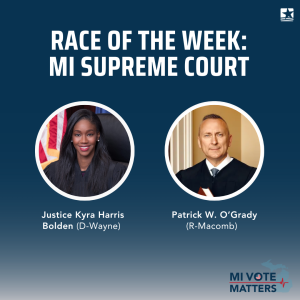
  • Two Michigan Supreme Court seats.

“Michigan is important,” Appel emphasized. “Michigan has a very strong voice…see if you can remove yourself from the hyper-partisan headlines. Your role is electing people who pay attention to healthcare, who care about healthcare, who care about hospitals having the resources that are necessary to take care of folks.”

The MHA is offering election communication materials geared toward hospital staff, volunteers, patients and visitors to encourage voter participation in the 2024 general election. Additionally, the MHA elections webpage offers relevant announcements and Race of the Week spotlights leading up to Election Day. Additional information regarding the 2024 General Election can be found on the Department of the State website.

The episode is available to stream on Apple Podcasts, Spotify, Soundcloud and YouTube.

Those interested in learning more about the MiCare Champion Cast can contact Lucy Ciaramitaro at the MHA. For more information or to request 2024 Election materials, visit the MHA Election webpage or contact the MHA.

MHA Monday Report Oct. 7, 2024

MHA Participates in Southwest Michigan Behavioral Health Healthcare Policy Forum

Southwest Michigan Behavioral Health hosted Oct. 4 the ninth annual regional healthcare policy forum in Kalamazoo. Moderated by Dr. Colleen Allen, CEO, Autism Alliance of Michigan, the forum focused on the theme of “Working Together” …


MHA Webinar Explores How Boards and Leaders Can Deploy AI Responsibly and Ethically

The MHA is hosting the webinar How Boards and Leaders Can Deploy AI Responsibly and Ethically, scheduled 4:30 – 6 p.m. ET Dec. 3 which features respected healthcare leaders in artificial intelligence (AI), healthcare operations …


Fall MI AIM Regional Training Events

The Michigan Alliance for Innovation on Maternal Health (MI AIM) is offering training events across Michigan for inpatient maternal healthcare providers. The events, scheduled from late October to November, will focus on using quality improvement …


MDHHS Releases Medicaid Doula Services Proposed Policy

The Michigan Department of Health and Human Services (MDHHS) recently released a proposed policy updating Medicaid coverage for doula services, effective Oct. 1, 2024. Key updates include increasing the number of covered doula visits to …


MHA Highlights Behavioral Health Priorities at Michigan Children and Families Summit

Lauren LaPine, senior director, legislative and public policy, MHA, participated in a discussion Oct. 3 in Grand Rapids during the Michigan Children and Families Summit hosted by the Steelcase Foundation. The summit explored the results …


MHA Race of the Week – U.S. Senate

The MHA’s Race of the Week series highlights the most pivotal statewide races for the 2024 General Election. The series will provide hospitals and healthcare advocates with the resources they …


MHA Rounds graphic of Brian PetersMHA CEO Report — Protecting Access to Care Through 340B

Protecting access to high quality, affordable healthcare for all Michiganders is a key tenet of the MHA. Stated simply, the 340B drug pricing program, created by Congress in 1992, is absolutely crucial to our member …


Keckley Report

Tax Exemptions for Not-for-Profit Hospitals: Are they Worth it?

It’s a question lots of folks inside and outside of healthcare are asking these days. …

The JAMA study did not focus on a ratio; instead, it focused on quantifying the amount of state and local exemptions that should be considered by policymakers in addition to their federal exemptions.  Notably, this study quantifies wide variation in which hospitals benefit most when local, state and federal exemptions are included and proposes that policies around NFP hospital tax exemptions be delegated in part to state and local determinations (as is already the case in at least 3 states). …

The Boards and leaders in each not-for-profit hospitals must account for the tax exemptions they currently enjoy and anticipate changes that limit them in the future. These studies point clearly to that inevitability. And each must answer this question for their organization objectively: are our tax exemptions truly worth it to the communities we serve, or simply a financial maneuver to use our money elsewhere?

Paul Keckley, Sept. 30, 2024


News to Know

Members looking to support hospitals impacted by Hurricane Helene can contribute to relief efforts through the North Carolina Disaster Relief Fund and the Tennessee Hospital Association Disaster Relief Fund.

MHA Participates in Southwest Michigan Behavioral Health Healthcare Policy Forum

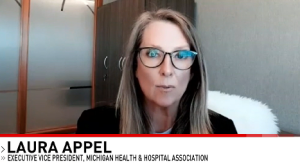
Laura Appel, executive vice president of government relations and public policy, MHA (middle), is pictured during a panel discussion at the SWBH 9th annual regional healthcare policy forum.

Southwest Michigan Behavioral Health (SWMBH) hosted Oct. 4 the ninth annual regional healthcare policy forum in Kalamazoo. Moderated by Dr. Colleen Allen, CEO, Autism Alliance of Michigan, the forum focused on the theme of “Working Together” to discuss the future landscape of Michigan healthcare.

The event convened association leaders, policymakers and behavioral health professionals to focus on fostering collaboration, addressing the needs of mutually served populations and advancing whole person care.

Laura Appel, executive vice president of government relations and public policy, MHA, joined a panel discussion alongside Meghan Groen, senior deputy director, Behavioral and Physical Health Services, Michigan Department of Health and Human Services; Dominick Pallone, executive director, Michigan Association of Health Plans; Phillip Bergquist, chief executive officer, Michigan Primary Care Association; State Representative Julie Rogers, chair, House Health Policy; and Alan Bolter, associate director, Community Mental Health Association of Michigan to discuss Psychiatric Residential Treatment Facilities, opioid settlement dollars and treatment for substance use disorders.

SWMBH is the Prepaid Inpatient Health Plan for eight Michigan counties and is in partnership with the Community Mental Health (CMH) agencies of these counties. SWMBH, in partnership with the CMH’s and local providers, provides mental health services to adults with severe and persistent mental illness, children with severe emotional disturbance, individuals with intellectual/developmental disabilities and individuals with substance use disorders.

The event also held an awards presentation which honored Gov. Gretchen Whitmer and Van Buren County Commissioner Richard Godfrey.

Members with questions about the event or SMBH are encouraged to contact Lauren LaPine at the MHA.

MHA Monday Report Sept. 30, 2024

Legislation Impacting Hospitals Introduced in State Legislature

A variety of bills impacting hospitals and health systems were introduced and discussed in the state legislature during the week of Sept. 23. Senate Bill 701, introduced by Sen. Singh (D-East Lansing), updates the statutory framework for the rural and obstetrical …


NAIC Meeting Evaluates Impact of Pharmaceutical Costs on Rural Hospitals

Michigan Department of Insurance and Financial Services Director Anita Fox invited the MHA and Munson Healthcare to present to the Midwest Zone meeting of the National Association of Insurance Commissioners (NAIC) held Sept. 25. The …


CE Credits Available for Health Equity Regulatory Requirements Webinar

The MHA and the MHA Keystone Center are hosting an educational webinar from 8:30 to 9:30 a.m. Oct. 10 about the current and future state of regulatory and accrediting health equity requirements from the Centers …


2024 Election Materials Available for Michigan Hospitals

The MHA is offering election communication materials geared toward hospital staff, volunteers, patients and visitors to encourage voter participation in the 2024 general election. Additionally, the MHA elections webpage will be updated regularly with relevant …


Keckley Report

The Commonwealth Health System Study in Context: Will it Prompt Meaningful Action in the U.S.?

“Last Thursday, the Commonwealth Fund released its assessment of how the U.S. health system compares to other developed systems of the world. The title says it all: Mirror, Mirror 2024: A Portrait of the Failing U.S. Health System.

The real question prompted by the Commonwealth study is this: is the ineffectiveness of the U.S. system fixable? Private investors, operators and trade groups say yes so long as a transition is smooth and their interests are protected. Systemic change is unwelcome. Healthcare in the U.S. is an industry that does well financially so, for many politicians, pensioners and insiders, they’d prefer it be left alone.

But the majority of Americans, including the majority in the 18-million healthcare workforce, aren’t sure. They see corporate profits, executive compensation, mergers and takeovers as indicators of its corporatization and business acumen but its layoffs, cost-cutting, surprise bills and inexplicable prices as evidence the system puts profit ahead of fixing problems that matter to them.

This study is worth discussion in every Boardroom in healthcare and in every household interested in health reforms. At a minimum, It merits collaborative action led by AHA, AHIP, AMA and others to develop meaningful, long-term solutions to its flaws that subordinate their proprietary preferences for the greater good.”

Paul Keckley, Sept. 23, 2024


MHA CEO Brian Peters

MHA in the News

Detroit’s WJR 760 AM interviewed MHA CEO Brian Peters Sept. 22 for a segment on healthcare as part of “The Capital Report,” a new show focused on exploring issues happening within state politics and Michigan’s …

NAIC Meeting Evaluates Impact of Pharmaceutical Costs on Rural Hospitals

Laura Appel, executive vice president of government relations and public policy, MHA (middle) pictured during a presentation at the Midwest Zone meeting of NAIC.

Michigan Department of Insurance and Financial Services Director Anita Fox invited the MHA and Munson Healthcare to present to the Midwest Zone meeting of the National Association of Insurance Commissioners (NAIC) held Sept. 25. The topic was the impact of pharmaceutical costs and complexities on rural hospitals.

Bradley Beaman, clinical utilization pharmacist at Munson Healthcare, shared specific examples of the pharmacy overhead costs confronting all hospitals and how small, rural hospitals have fewer financial resources to manage these costs. The insurance commissioners also heard from Kelly Anderson, Ph.D., MPP, about the patient impact of reducing access to pharmacy services. Kelly Edmiston, policy research manager at the NAIC Center for Insurance Policy and Research, presented on the financial risks facing rural hospitals and the past and current rates of rural hospital closures.

The NAIC Midwest Zone is made up of insurance commissioners and department directors from 13 states. The Commissioners engaged in a lengthy discussion about the fixed costs of hospital pharmacy operations and the role of insurance coverage in assuring access to care for prescription drugs and other services in rural areas of their states. Recommendations from the NAIC Zones become part of the full NAIC policy-making discussion. The MHA is committed to growing its involvement with the NAIC and other national policy-making organizations to influence decision-making that impacts Michigan hospitals.

For more information about this recent meeting and the NAIC, members may contact Laura Appel at the MHA.

MHA Monday Report Sept. 23, 2024

Speak up awardMcLaren Port Huron Nurse Receives MHA Keystone Center Speak-up! Award

The MHA Keystone Center celebrated Melissa Burgess, RN at McLaren Port Huron Hospital as its quarterly MHA Keystone Center Speak-up! Award recipient in September. The quarterly MHA Keystone Center Speak-up! …


Final Rules Strengthen Access to Mental Health, Substance Use Disorder Benefits

The United States Departments of Labor, Health and Human Services and the Treasury issued a set of final rules Sept. 9 on the Mental Health Parity and Addiction Equity Act of 2008. The rulings …


Upcoming MDHHS Maternal Health Offerings

The Michigan Department of Health and Human Services (MDHHS) Division of Maternal and Infant Health is partnering with the Michigan Perinatal Quality Collaborative yo offer its Statewide Maternal and Infant Health Data Meeting from 4 to 6 …


Latest AHA Trustee Insights Explores AI in Healthcare, Workplace Equity and Community Partnerships

The September edition of Trustee Insights, a monthly digital package from the American Hospital Association (AHA), outlines how artificial intelligence (AI) will change healthcare operations and how trustees can provide meaningful leadership and guidance. The issue …


Keckley Report

The Four Core Beliefs of Hospital-Employed Physicians

“In my report June 10, I wrote: “The major sources of physician discontent are administrative hassles and unwelcome clinical oversight that create dissonance. They conflict with a false sense of autonomy that the majority of physicians imagined when choosing medicine. Cuts to reimbursement, participation in alternative payment models and medical inflation are manifestations of a system in which ‘suits’ are intruders who make rules, exact handsome salaries, generate corporate profits and distance physicians from patient care purposely… “

This assessment remains true today. Discontent among physicians is palpable and it’s magnified by a growing sense of financial despair among many clinicians. And it poses a unique challenge to hospitals that now employ more than half of America’s physician workforce. …

The core beliefs held by employed physicians about their hospitals may not be fair, objective or accurate, but they’re no less deeply felt and impactful. Hospital boards and C suite leaders would be well-served to refresh plans accordingly.”

Paul Keckley, Sept. 16, 2024


Laura AppelMHA in the News

The MHA received media coverage the week of Sept. 16 regarding Michigan healthcare careers and what’s next for digital health. Second Wave Michigan published a story Sept. 17 on healthcare careers and the existing healthcare …


Media Recap: Michigan Healthcare Careers, Digital Health Trends

Laura Appel

Laura AppelThe MHA received media coverage the week of Sept. 16 regarding Michigan healthcare careers and what’s next for digital health.

Second Wave Michigan published a story Sept. 17 on healthcare careers and the existing healthcare workforce shortage. The story includes quotes from Laura Appel, executive vice president and government relations and public policy, MHA, about how shortages impact hospitals, the impact of state funding and the results of the MHA’s annual hospital workforce survey.

“We’re bouncing back. We’re on the rebound for sure,” said Appel. “But it’s going to require a lot of work and staying on top of things. It’s not a one-and-done situation where you work at it for one year and then it will all be fixed. Workforce shortage is a long-term situation, and it’s going to require long-term commitment.”

The story is part of the Yours, Mine, and Ours — Public Health series from Second Wave Media that highlights how Michigan’s public health agencies keep individuals healthy, safe and informed about issues impacting physical and mental health in communities, homes, workplaces and schools.

Becker’s Hospital Review published a story Sept. 20 featuring insight from hospital and health system executives across the U.S. on the future of new technology in healthcare.

“Advancements in artificial intelligence (AI) present many opportunities to improve the delivery of healthcare and reduce administrative burden,” said MHA CEO Brian Peters. “Our association created a member-wide task force to develop a framework for Michigan hospitals focused on the safe, ethical and equitable application of AI within healthcare. This framework includes clear guidance and model policies to help hospital policy makers manage the evolving impact of AI. While hospitals will vary in the implementation of AI and the resources they have available, this framework should help to ensure consistent application across the state so patients can continue to receive quality, accessible healthcare.”

Members with any questions regarding media requests should contact John Karasinski at the MHA.

MHA Monday Report Sept. 16, 2024

Leaders Convene for Crucial Healthcare Workforce Discussion

The MHA hosted nearly 150 thought leaders from healthcare, post-secondary education and workforce talent development Sept. 11 in Lansing for a discussion to help strengthen connections across the sectors focused on building the pipeline for …


MDHHS Issues Final Maternal Infant Health Services Policy

The Michigan Department of Health and Human Services (MDHHS) issued a final Medicaid Policy Bulletin Sept. 9 to expand coverage for Maternal Infant Health Program services. ​​ The final policy was issued in response …


2024 Election Materials Available for Michigan Hospitals

The MHA is offering election communication materials geared toward hospital staff, volunteers, patients and visitors to encourage voter participation in the 2024 general election. Additionally, the MHA elections webpage will be updated regularly with relevant …


Michigan Doula Advisory Council Membership Application Opens

The Michigan Doula Advisory Council (DAC) invites doulas across the state to apply for membership as its first council term ends in Dec. 2024. The DAC works to improve doula services in Michigan, particularly with …


What’s Ahead in Healthcare? Insights from the American Hospital Association

The MHA released a new episode of the MiCare Champion Cast featuring Rick Pollack, president and CEO of the American Hospital Association. Pollack joined MHA CEO Brian Peters to discuss a variety of topics …


Keckley Report

The Presidential Debate will Frustrate Healthcare Voters

“The healthcare system per se is not a major concern to voters this year, but its affordability is. Out-of-pocket costs for prescription drugs, insurance premiums and co-pays and deductibles for hospitals and physician services are considered unreasonable and inexplicably high. They contribute to public anxiety about their financial security alongside housing and food costs. And majorities think the government should do more by imposing price controls and limiting corporate consolidation. …

Misinformation, disinformation and AI derived social media messaging are standard fare in winner-take-all politics. When used in addressing health issues and policies, they’re effective because the public’s basic level of understanding of the health system is embarrassingly low: studies show 4 in 5 American’s confess to confusion citing the system’s complexity and, regrettably, the inadequacy of efforts to mitigate their ignorance is widely acknowledged. Thus, terms like affordability, value, quality, not-for-profit healthcare and many others can be used liberally by politicians, trade groups and journalists without fear of challenge since they’re defined differently by every user. …

Long-term, the system will proceed incrementally. Bigger players will fare OK and others will fail. I remain hopeful thoughtful leaders will address the near and long-term future with equal energy and attention. Regrettably, the tyranny of the urgent owns the U.S. health system’s attention these days: its long-term destination is out-of-sight, out-of-mind to most. And the complexity of its short-term issues lend to magnification of misinformation, disinformation and public ignorance.

That’s why this debate will frustrate healthcare voters.”

Paul Keckley, Sept. 9, 2024


MHA in the News

WWMT-TV Newschannel 3 aired a story Sept. 9 on the radiology workforce shortage in hospitals, including a shortage of radiologists and radiology technicians. MHA Executive Vice President Laura Appel was interviewed for the story, explaining …