MiHIN in Negotiations to Sell Velatura Stake, Refocus Efforts on Michigan

The Michigan Health Information Network Shared Services, the state’s health information exchange, recently announced it is in negotiations to sell its interest in Velatura Public Benefit Corporation to Capernaum Investments.

Velatura was established by MiHIN to extend health information exchange services nationally. The potential sale would allow MiHIN to narrow its focus on serving Michigan-based healthcare organizations and advancing in-state health information sharing.

For Michigan hospitals, services and relationships remain unchanged as MiHIN continues to prioritize tools and support tailored to the state’s unique healthcare needs.

Members with questions may contact Jim Lee at the MHA.

CMS Issues New Guidance on Hospital Price Transparency Requirements

The Centers for Medicare & Medicaid Services (CMS) released updated guidance May 22 related to hospital price transparency requirements under Executive Order 14221, “Making America Healthy Again by Empowering Patients with Clear, Accurate and Actionable Healthcare Pricing Information”.

The new guidance introduces significant changes to existing reporting obligations. Hospitals are now required to include actual dollar amounts for all payer-specific standard charges in their machine-readable files (MRFs), including negotiated rates that were previously allowed to be expressed as percentages or algorithms.

Hospitals may no longer use placeholder values such as “999999999” for estimated allowed amounts. Instead, they must calculate and report the average dollar amount historically received for each item or service using data from electronic remittance advice (835 transactions) from the 12 months prior to the MRF’s posting. If insufficient data exists to calculate the average, hospitals must provide a reasonable estimate along with documentation explaining the methodology used in the MRF notes section.

The MHA encourages hospitals to review their current transparency policies and assess any gaps in their publicly available MRFs.

Members with questions may contact Jim Lee at the MHA


Lee Discusses AI in Healthcare

Jim Lee speaks with Mid-Michigan NOW about AI.

Jim Lee, senior vice president, data policy & analytics, MHA, appeared in a story about artificial intelligence (AI) in healthcare aired by Mid-Michigan NOW on April 23.

Lee discussed how AI is being used by hospitals and providers to assist with medical data and information and to reduce administrative burden.

“AI and healthcare is sort of like having a super smart assistant that helps doctors and nurses by quickly sorting through mountains of data and medical information,” said Lee.

Lansing political news outlet Gongwer also published two articles on April 23 that quote MHA representatives.

MHA CEO Brian Peters appeared in a story covering the newly launch Protect MI Care coalition to protect against Medicaid funding cuts.

“[Medicaid is] the financial lifeline that keeps hospitals, mental health providers and nursing homes open,” said Peters. “Cuts at this scale would lead to facility closures, creating health care deserts that hurt everyone, regardless of how they’re insured.”

MHA Chief Nursing Officer Amy Brown also appeared in an article following her testimony in the House Health Policy Committee in support of House Bill 4246, which would add Michigan to the nurse licensure compact.

“An important tactic to improve our ability as a state to attract talent and make it easy for nurses to choose Michigan to practice is to join the nurse license compact,” said Brown. “Hospitals continue to prioritize recruitment and retention efforts, but with the aging demographics of our state and the lack of participation in the compact hinder our ability to recruit younger nurses to replace the many nurses nearing and entering retirement.”

Members with any questions regarding media requests should contact John Karasinski at the MHA.

HHS Submits New HIPAA Security Proposed Rule

The U.S. Department of Health and Human Services (HHS) recently submitted a proposed rule to update the HIPAA Security Rule and enhance the protection of electronic protected health information. The changes aim to address the growing number of breaches and cyberattacks in healthcare, as well as common deficiencies identified during Security Rule investigations.

The HIPAA Security Rule currently allows entities to bypass “addressable” implementation specifications, if deemed unreasonable due to factors such as risk or cost. The proposed modifications will require entities to meet all standards and implementation specifications and not allow an entity to avoid an addressable implementation specification. The proposed rules also seek to clarify existing standards and provide detailed guidance on compliance.

The MHA is reviewing the proposed changes and will submit comments to HHS. Public comments are open until March 7, 2025. Members with questions may contact Jim Lee at the MHA.

MHA Monday Report Oct. 21, 2024

State Senate Advances Healthcare Legislation

Several bills impacting healthcare and hospitals were advanced through committees in the state Senate during the week of Oct. 14. Senate Housing and Human Services voted out a package of legislation referred to as the …


MHA Continues to Monitor Baxter IV Solutions Shortage

The MHA continues to support Michigan hospitals in response to the Baxter IV solutions shortage that began the week of Sept. 29. Baxter International Inc. temporarily closed its North Cove manufacturing plant in Marion, N.C., …


LARA to Evaluate Non-Long Term Care Provider Licensures

The Department of Licensing and Regulatory Affairs (LARA) is required by MCL 333.20155 to make at least one visit to each licensed Non-Long Term Care provider every three years to evaluate licensure. LARA may waive …


MHA Webinar Explores Leadership Strategic Planning for AI

The MHA will host the webinar How Boards and Leaders Can Deploy AI Responsibly and Ethically, scheduled 4:30 – 6 p.m. ET, Dec. 3. The webinar will cover a framework to govern the approach, policies …


CMS Finalizes Medicare Appeals Process for Beneficiary Status Change

The Centers for Medicare & Medicaid Services (CMS) and the United States Department of Health and Human Services recently released a final rule, effective Oct. 11, 2024, implementing a federal district court order that …


Rural Health Research Gateway Releases Report on the First Year of REHs

The Rural Health Research Gateway recently published a report on Rural Emergency Hospitals (REHs) highlighting data from the first year of the designation. Under the Consolidated Appropriations Act of 2021, the Rural Emergency Hospital provider type …


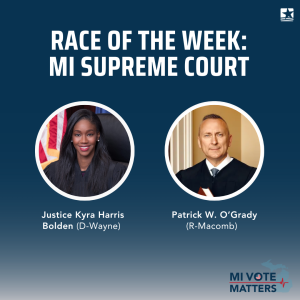
MHA Race of the Week – Michigan Supreme Court

The MHA’s Race of the Week series highlights the most pivotal statewide races for the 2024 General Election. The series will provide hospitals and healthcare advocates with the resources they …


Three Key Takeaways from the MHA Webinar Featuring Health Equity Regulatory Requirements

Earlier this month, the MHA, in partnership with the MHA Keystone Center, hosted a member webinar highlighting the current and future state of health equity priorities and requirements from the Centers for Medicare & Medicaid Services and The Joint Commission that impact …


Keckley Report

Do Healthcare Prices Matter?

“With the election 22 days away and inflation the key issue for voters, the latest Consumer Price Index report from the Bureau of Labor Statistics is especially important. Released last Tuesday, it shows: …

Healthcare prices account for 10.2% of the CPI but attention to these is decidedly less than food, energy, housing and other categories. For consumers, that neglect is harmful’ for industry insiders, it’s a pressure point that’s been avoided. Price estimators, posted chargemasters, open-panel benefits design, website queries and other tactics work OK for now. So…

Do Healthcare Prices Matter? Not much today. But they’re mission critical in healthcare tomorrow.”

Paul Keckley, Oct. 14, 2024


News to Know

The United States Departments of Labor, Health and Human Services and the Treasury issued Sept. 9 a set of final rules on the Mental Health Parity and Addiction Equity Act of 2008.


Laura Appel speaks with NBC25 about the Baxter IV solutions shortage.

MHA in the News

The MHA continued to engage with media requests on the Baxter IV solutions shortage during the week of Oct. 14. NBC25/Fox66 in Flint aired a story Oct. 16 on the shortage, which includes an interview …

MHA Monday Report Oct. 14, 2024

Legislation Impacting Hospitals Advances in State Legislature

A variety of bills impacting hospitals were introduced and discussed in the state legislature during the week of Oct. 7. Gov. Whitmer signed Public Act 132 of 2024, which updates statutory framework for the …


Baxter IV Solutions Shortage Updates

The MHA continues to support Michigan hospitals in response to the Baxter IV solutions shortage that began the week of Sept. 29. Baxter International Inc. temporarily closed its North Cove manufacturing plant in Marion, N.C., …


Reimbursement for Age-Friendly Quality Data Included in FY 2025 Hospital IPPS Final Rule

Included in the Centers for Medicare & Medicaid Services’ Medicare fee-for-service hospital inpatient prospective payment system (IPPS) fiscal year (FY) 2025 final rule is a reimbursement model for hospitals submitting age-friendly quality data. Hospitals …


Healthcare Leaders Discuss Regional Care at Lansing Economic Club

The Lansing Regional Chamber hosted its annual Future of Healthcare in the Lansing Region luncheon Oct. 10 as part of its monthly series of Lansing Economic Club events. This event featured a panel discussion moderated …


New Hospital Reporting Requirements for Respiratory Illness and Bed Capacity

The Centers for Medicare & Medicaid Services recently announced new respiratory disease reporting requirements for hospitals through the National Healthcare Safety Network effective Nov. 1. These requirements replace the previous “Hospital COVID-19 Data” reporting requirements …


MHA Webinar Outlines Strategies to Strengthen Healthcare Worker Well-being

The MHA and the MHA Keystone Center will host the MHA Health Foundation webinar Implementing Evidence-Informed Strategies to Normalize Help-Seeking and Strengthen Wellbeing from 4:30 to 5:30 p.m. Dec 4. This webinar is dedicated to …


MHA Race of the Week – Michigan Supreme Court

The MHA’s Race of the Week series highlights the most pivotal statewide races for the 2024 General Election. The series will provide hospitals and healthcare advocates with the resources they …


MHA Podcast Explores Why Voting Matters to Healthcare in Michigan

The MHA released a new episode of the MiCare Champion Cast featuring Laura Appel, executive vice president of government relations & public policy, MHA, exploring why voting in the 2024 General Election is critical to …


Keckley Report

What is the Medicare Advantage?

“On October 15, the open enrollment period for Medicare begins running through December 7 for coverage starting in January 2025. In this period, 67 million Medicare eligible seniors can review features of Medicare plans offered in their area, switch from traditional Medicare to a Medicare Advantage (MA) plan (or vice versa), change their MA selection and add/change their Medicare Part D prescription drug plans.

In 2024, Medicare Advantage plans enrolled 33 million seniors and Medicare paid private insurers $462 billion to pay for their care. But conditions for Medicare Advantage have changed in recent years prompting many to ask ‘what is the Medicare Advantage?’ …

Its funding comes from payroll taxes paid by employers and their employees, and those who are self-employed PLUS income taxes paid on Social Security benefits, interest earned on the Medicare trust fund’s investments and Part A premiums from people who aren’t eligible for premium-free Part A. …”

Paul Keckley, Oct. 7, 2024


Laura AppelMHA in the News

The MHA received media coverage the week of Oct. 7 that includes coverage on a potential national shortage of IV solutions products, physician retention and rural hospital funding. The closure of a Baxter manufacturing facility …

New Hospital Reporting Requirements for Respiratory Illness and Bed Capacity

The Centers for Medicare & Medicaid Services recently announced new respiratory disease reporting requirements for hospitals through the National Healthcare Safety Network (NHSN) effective Nov. 1. These requirements replace the previous “Hospital COVID-19 Data” reporting requirements and now mandate hospitals to electronically submit data about COVID-19, Influenza, RSV and hospital bed capacity.

All Michigan hospitals, including acute care hospitals, long-term acute care hospitals, critical access hospitals, freestanding rehabilitation facilities and freestanding psychiatric facilities, are required to report these new data elements into the state’s EMResource system.

To help hospitals prepare for the new federal requirements, the state will begin accepting the new data fields in EMResource starting Oct. 16. Although this is optional at this time, providing data to the state in the new format will help hospitals prepare for the Nov. 1 deadline.

Additionally, the state of Michigan is hosting open office hours on Oct. 16 from 10 a.m. to 12 p.m. 

Microsoft Teams Meeting ID: 285 470 477 359

Passcode: PdJdmG

Dial in by phone +1 248-509-0316,,802649168#

Phone conference ID: 802 649 168#

Members with questions should contact Jim Lee at the MHA.

MHA Panelists Featured During 2024 State of Reform Health Policy Conference

MHA staff participated in panel discussions April 4 during the 2024 State of Reform Health Policy Conference in Lansing, MI. MHA speakers included Laura Appel, executive vice president of government relations and public policy; Jim Lee, senior vice president, data policy & analytics; Adam Carlson, senior vice president, advocacy; and Lauren LaPine, senior director, legislative and public policy. Each provided valuable insight on the issues important to hospitals and the role of public policy in identifying solutions.

Topics of discussion included workforce shortages, artificial intelligence, depleted American Rescue Plan Act funding and certified community behavioral health clinics.

Other MHA members participating in the event included Tawana Nettles-Robinson, executive director, Detroit market, Trinity Health Michigan and Michelle Pena, MSN, RN, NEA-BC, chief nursing officer, Trinity Health Grand Rapids. Nettles-Robinson discussed health disparities while Pena focused on workplace violence. Seth Karnes, senior director of risk, consulting and training at HSS, an MHA Endorsed Business Partner, was a guest speaker on the workplace violence panel to share national insights and perspectives. Members may contact HSS to learn more about active violence training, risk assessments, de-escalation training and more.

Members with questions may contact John Karasinski at the MHA.

MHA CEO Report — Cybersecurity Takes Center Stage

MHA Rounds image of Brian Peters

“There are only two types of companies: those that have been hacked, and those that will be.”  Robert Mueller

“Dear Health Care Leaders,

As you know, last month Change Healthcare was the target of a cyberattack that has had significant impacts on much of the nation’s health care system. The effects of this attack are far-reaching; Change Healthcare, owned by UnitedHealth Group (UHG), processes 15 billion health care transactions annually and is involved in one in every three patient records. The attack has impacted payments to hospitals, physicians, pharmacists, and other health care providers across the country. Many of these providers are concerned about their ability to offer care in the absence of timely payments, but providers persist despite the need for numerous onerous workarounds and cash flow uncertainty.”

So began a letter dated March 10 from Xavier Becerra, the Secretary of the U.S. Department of Health and Human Services (HHS), referencing what is emerging as one of the most extensive and impactful cyberattacks in U.S. history. The scrutiny directed at Change’s parent company UnitedHeath Group – from Congress, HHS, the media and others – is only just beginning, and there is no telling what sort of new regulations, penalties and associated policy change will be the end result. In the meantime, the MHA has stepped up to support our members by sharing as much information and intelligence as possible, and by advocating for flexibility and relief from both private payers and the state Medicaid program.

America’s hospitals are no strangers to external events creating seismic upheaval in our daily operations. Sometimes those events emanate from the world of public policy and politics, sometimes they come in the form of a localized natural disaster or tragic mass casualty event, and no one needs to be reminded of the impact of the global COVID-19 pandemic. But in the wake of the Change Healthcare crisis, there is no doubt cybersecurity now deserves to be on the top of the list of concerns for hospital leaders across the country, and right here in Michigan.

For some time now, the FBI has stated that healthcare organizations are the top target of cybercriminals across the globe, and these attacks have increased significantly in the last two years. Data sharing requirements in healthcare and the connectivity of health information – while well-intended – creates many potential risks for cybercriminals to exploit. Hospitals take these attacks extremely seriously. They are threat-to-life crimes because of the impact they can have on patient safety and access to care, and are formally treated as such by the FBI.

Again, this is not a new issue. A year and a half ago, cybersecurity was the topic for my CEO Report, where we expressed the potential for cybercrimes to cripple an organization. At that time, we saw how multi-national organizations with U.S.-based operations were impacted when Ukrainian government and critical infrastructure organizations were victims of cyberattacks during the Russian invasion of Ukraine. Yet again, we saw how the breach of one organization can cause rippling consequences for an entire industry; one that accounts for 17.3% of our nation’s Gross Domestic Product.

This is why the MHA has been engaged on this topic for many years and goes to great lengths to assist our members. The MHA was closely involved in the creation of the Michigan Healthcare Security Operations Center (HSOC) to help monitor and react to cyber risks with participating member organizations. We also partner with MHA Service Corporation Endorsed Business Partner CyberForceQ, a leader in the field, to assist members who need cybersecurity assistance. For the first time, we also have our very own MHA Vice President and Chief Information Security Officer, Mike Nowak, who works closely with the HSOC, our member CISOs and our external partners in this space. And Jim Lee, our senior vice president, data policy & analytics, continues to lead our MHA Health Information Technology Strategy Council, which is providing meaningful insight on the impact of this latest attack.

It can take months for a third-party review to determine what information was breached and ultimately taken. But from the hospital perspective, it is clear the Change Healthcare cyberattack is yet another example of a breach that initiates with an outside vendor, and those vendors are not always completely transparent and forthcoming with those organizations directly impacted by the breach. One thing we know for sure: our hospitals are victims in these situations and should be treated as such. We want to work with state and federal policymakers and regulatory agencies to prevent cyberattacks, and to root out and punish the criminals who perpetrate these crimes. We will be very concerned about any proposals that unfairly punish hospitals or create new barriers to our ability to provide timely access to quality care.

Our members are going to great lengths to mitigate potential risk. However, more can be done at a federal level to thwart bad actors. Hospitals and health systems are part of critical infrastructure, so our law enforcement agencies need the funding and staff to defend against cybercriminals. The American Hospital Association urged the government to use all diplomatic, financial, law enforcement, intelligence and military cyber capabilities to disrupt these criminal organizations, much like what was done in the global fight against terrorism in the wake of 9/11.

Thankfully, it appears our hospitals and health systems in Michigan have been able to manage this crisis better than counterparts in other states. The work of the MHA and our partners has helped make Michigan a leader in this space and to be prepared to respond to these situations. Our cybersecurity efforts are constantly at work, 24/7 year-round, mirroring the same cadence of our hospitals and their patient care. Yet the human component of healthcare is the most vulnerable. It only takes one individual to not notice a phishing or social engineering attempt for yet another failure that can impact hundreds of organizations, thousands of healthcare workers and tens of thousands of patients. This is why we must remain constantly vigilant as the cyber threat landscape continues to grow.

As always, I welcome your thoughts.

Change Healthcare Outage Continues to Impact Members

The MHA has been in close contact with the American Hospital Association (AHA), the Michigan Healthcare Security Operations Center (HSOC) and other partners regarding the Change Healthcare cyberattack that has impacted hospitals nationwide over the past two weeks.

The MHA is gathering, in aggregate, data about the impact of the attack on Michigan hospitals and patients. If your hospital/system hasn’t already done so, please complete this short questionnaire as soon as possible to help the MHA continue to advocate, and tell an accurate story of impact, on members’ behalf. Members with questions about the survey may contact Jim Lee at the MHA.

The latest updates from last week include:

  • Federal Advocacy: The AHA, the MHA and other state hospital associations have been urging Congress and the US Department of Health and Human Services (HHS) to prioritize and expedite hospital requests for Medicare advanced payments; issue guidance to payers about interim payments, waiving of prior authorizations, not denying claims due to lack of prior authorization and more. A letter was sent to HHS Feb. 26, and was followed up with a letter March 5 to House and Senate leadership requesting whole-government response, and that Congress consider any statutory limitations that may exist for agencies assisting hospitals at this critical time. Members with questions about federal efforts should contact Laura Appel at the MHA.
  • Pharmacy: Optum announced that e-prescribing is now fully functional, as are pharmacy claim submission and payment transmission.
  • Payments: Electronic payment functionality should be available for connection again March 15.
  • Medical Claims: Optum will be testing to reestablish connectivity to their claims network and software March 18, restoring service throughout that week.

Optum announced March 1 a Temporary Funding Assistance Program to help bridge the gap in short-term cash flow needs for providers who received payments from payers that were processed by Change Healthcare. UnitedHealthcare stated they will provide further funding solutions for providers. According to their most recent press release, “This applies to medical, dental and vision providers and will involve advancing funds each week representing the difference between their historical payment levels and the payment levels post attack. Advances will not need to be repaid until claims flows have fully resumed. Providers must complete a one-time registration to access funding. For those who receive funding support, there are no fees, interest or other associated costs with the assistance. For repayment, providers will receive an invoice once standard payment operations resume and will have 30 days to return the funds. These terms now apply to both the original and expanded funding programs.”

Providers must register for the program at the website: www.optum.com/temporaryfunding.

More details on these updates are available on the United Health Group’s website dedicated to updates on this issue. This site also has FAQs, contact points for assistance and more.

Resource reminders:

  • AHA tools/updates on Change Healthcare incident.
  • CyberForceQ, an MHA-vetted expert and leader in the field for members who need cybersecurity assistance.
  • Members with questions about cybersecurity and the HSOC may contact MHA Vice President and Chief Information Security Officer Mike Nowak at the MHA.