Hospitals Help: Hillsdale Works to Improve Access for Rural Residents

Rural hospitals are the heart of their communities, providing care close to home in addition to jobs, stability and reassurance that help is nearby in life’s most pivotal moments. Despite their essential role, rural providers across the state and country are challenged by limited resources, workforce shortages and constrained infrastructure.

Knowing this reality first-hand, the teams at Hillsdale Hospital are focused on advocating for rural communities and ensuring patients don’t lose access to routine or specialty care.

Personalized Primary Care

To address the unique needs of local residents, Hillsdale starts by listening. The hospital’s primary care team – spread across five local clinics – does this by focusing on understanding each patient’s needs to develop individualized health plans.

“Hillsdale Hospital’s core values include local access to care for our patients,” said Jeremiah J. Hodshire, president and chief executive officer, Hillsdale Hospital. “Everyone deserves access to healthcare, when and where they need it. That’s why expanding our primary care options is so important to us.”

In understanding that it can be difficult and time-consuming for patients to get to the hospital for lab draws, Hillsdale also decided to install outpatient laboratories inside their clinics. The decision has been well-received by community members and streamlines testing protocol for providers.

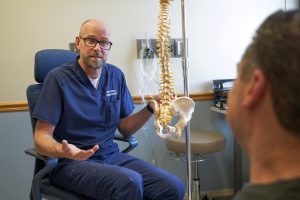
Hillsdale Spine Center was announced in January 2026 to provide a full continuum of neurosurgical spine care.

Addressing Specialty Needs

Knowing there was a local need for advanced neurosurgical care, Hillsdale responded by onboarding a neurosurgeon and opening their Hillsdale Spine Center. Residents can now receive a full spectrum of care, including minimally invasive spine surgery, spine fusion, spine fracture treatments and treatment for herniated discs. The team also recently completed their first lumbar total disc replacement, an innovative treatment that isn’t widely available.

“I couldn’t imagine where I’d be at if I didn’t get the surgery,” said the patient, who previously struggled with severe back pain for more than 15 years. “[The procedure] was the best thing I’ve ever done.”

Uplifting Rural Voices

Hillsdale teams are also finding meaningful ways to speak up for rural patients and providers. In a new podcast series titled, “Rural Health Fractured,” conversations center around sustainable solutions to today’s pressing rural healthcare issues.

Additionally, Hodshire will serve as board chair of the MHA Center of Rural Excellence, a 501(c)(6) organization created to formalize and strengthen the collective voice of rural hospitals through targeted advocacy and support tailored to the unique challenges Michigan’s rural providers face.

Those with questions or content ideas for the Hospitals Help series may contact Lucy Ciaramitaro at the MHA.

Michigan Health & Hospital Association Establishes MHA Center of Rural Excellence

The Michigan Health & Hospital Association (MHA) today announced the establishment of the MHA Center of Rural Excellence, a 501(c)(6) organization created to formalize and strengthen the collective voice of rural hospitals through support tailored to the unique challenges of Michigan’s rural providers, including targeted advocacy efforts on their behalf.

“Rural hospitals are navigating increasing financial strain, workforce shortages and complex funding structures that were not developed with rural realities in mind,” said MHA CEO Brian Peters. “The MHA Center of Rural Excellence is designed to provide dedicated advocacy and governance to give rural hospitals the support needed to manage these challenges and continue caring for their communities.”

Michigan ranks fourth for the number of residents living in rural counties with a full or partial primary care workforce shortage and sixth for residents living in rural counties with a shortage of mental health professionals, according to the University of Michigan’s Institute for Healthcare Policy & Innovation.

The MHA Center of Rural Excellence will elevate rural‑specific perspectives to policymakers, ensuring rural hospitals’ distinct challenges receive the attention they deserve. This approach will position rural hospital leaders at the center of state policy decisions that directly affect the communities they serve.

The MHA Center of Rural Excellence will also have a specific focus on Rural Health Transformation Program (RHTP) funding, including efforts to maximize the amount of available resources that can be dedicated to rural Michigan hospitals.

Lauren LaPine-Ray, DrPH, MPH, will serve as executive director of the MHA Center of Rural Excellence. Jeremiah J. Hodshire, president and chief executive officer, Hillsdale Hospital, will chair the member-led board.

For more information, visit the MHA Center of Rural Excellence webpage.

KFF Health News: Rural Health Transformation Program Fund Allocation

KFF Health News published a story March 4 detailing concerns from hospital leaders and lawmakers across the country about how states plan to spend new federal rural health funding.

The $50 billion Rural Health Transformation Program (RHTP) is designed to drive innovation and maintain access in rural communities following significant federal Medicaid cuts.

Lauren LaPineLauren LaPine-Ray, DrPH, MPH, vice president, policy and rural health, MHA, is quoted in the article, raising concerns about rural hospitals’ ability to access critical funds due to the complexity and competitiveness of state grants.

The article was syndicated by CBS News and Fierce Healthcare.

LaPine-Ray was also featured in Modern Healthcare’s article discussing the challenges associated with securing RHTP dollar. She notes how specific grant requirements surrounding population health data analytics-backed care coordination programs and technology implementation will negatively impact rural hospitals.

“Funding care coordination and community initiatives is a wonderful thing, but given the short timeframe and the fact CMS will judge programs over one year, rural hospitals are worried about funds being retroactively pulled back,” she said. “With Medicaid redeterminations and Medicaid cuts coming in 2027, rural hospitals may not have the luxury to choose between committing to do something new or trying to keep their doors open.”

Members with questions regarding media requests should contact Elise Gonzales at the MHA.

MHA Releases FAQ on Rural Health Transformation Program Funding

The MHA recently released a new frequently asked questions (FAQ) document to help members better understand allowable uses, limitations and compliance requirements related to Michigan’s Rural Health Transformation Program (RHTP).

The FAQ clarifies that RHTP funding is temporary and intended to support specific care transformation activities. Funds cannot be used to cover routine operating costs, financial losses or to replace existing funding. Repayment may be required if funds are used for purposes not approved or if required documentation and reporting are not completed.

The document also addresses common questions raised by hospitals, including the use of RHTP funds for provider payments, health information technology investments, electronic medical record upgrades and limited facility improvements. In all cases, expenses must be directly connected to transformation activities approved by the Centers for Medicare & Medicaid Services (CMS).

Additional RHTP information and resources are available on the MHA’s Rural Health Transformation Program webpage. The MHA will continue to update both the FAQ and the webpage as more guidance becomes available from the Michigan Department of Health and Human Services and CMS.

Members with questions may contact Lauren LaPine-Ray at the MHA.

Media Recap: Rural Health Transformation Project Fund Distribution

The Detroit News published a story Jan. 29 on two recent House Appropriations Committee hearings on the distribution of Rural Health Transformation Program (RHTP) funds.

The article details concern from House lawmakers and rural providers surrounding the program, particularly the designation of Wayne and Oakland counties as partially rural in the Michigan Department of Health and Human Services (MDHHS) RHTP application.

Lauren LaPineLauren LaPine-Ray, DrPH, MPH, vice president, policy and rural health, MHA, is quoted in the story clarifying the department’s commitment expressed to the MHA to ensure rural communities benefit from the funding.

“The state is juggling varying state and federal definitions of rural as it applies for and administers the program,” LaPine-Ray said.

“I can say, very transparently, in our conversations with MDHHS, they did not intend to define a rural community as being one within Wayne or Oakland County,” she said. “They were very specific and intentional in making sure the definition that they used really focused on rural community and rural populations.”

The MHA also received coverage from MIRS and Bridge on 340B and medical debt collection legislation.

Members with questions regarding media requests should contact Elise Gonzales at the MHA.


MHA Launches Rural Health Transformation Program Webpage

The MHA has launched a new webpage dedicated to the Rural Health Transformation Program (RHTP), providing members with a centralized source of information on Michigan’s participation in the program. The webpage includes an overview of the state’s award, key focus areas, implementation timelines and details on how the program is expected to support long-term changes in rural healthcare delivery.

Members may use the webpage as a resource to better understand the scope of the RHTP and what to expect from the Michigan Department of Health and Human Services and the Centers for Medicare & Medicaid Services as additional guidance and funding opportunities are released. The MHA will continue to update the webpage as new information becomes available.

Members with questions may contact Lauren LaPine-Ray at the MHA.

Hospitals Help: Aspire Rural Health System Offers Lifeline to Families in the Thumb

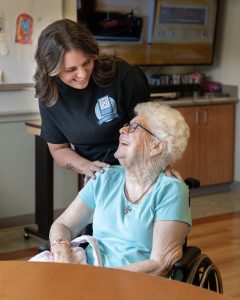
The Transitions program offers case management, referral services and specially trained Transitions volunteers to provide support, friendship, practical assistance and respite breaks for family and caregivers in the thumb region.

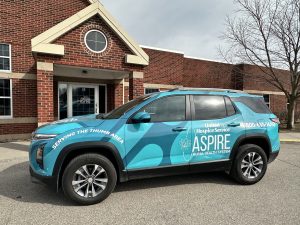
Transitions, offered through Aspire Rural Health System, is a free community-based program dedicated to supporting individuals with chronic or life-limiting illnesses, as well as their families, across Michigan’s thumb region. The program provides a compassionate bridge between healthcare and daily living, ensuring that no one has to navigate these challenges alone.

At the heart of Transitions is a dedicated coordinator who offers case management, referral services and personalized guidance. Specially trained Transitions volunteers extend this support by providing companionship, respite breaks for caregivers and practical assistance with everyday tasks such as light housekeeping, meal preparation and errands.

Families are also guided through advance healthcare directives and connected with community resources, helping them plan ahead and reduce stress during difficult times.

In 2024, the Transitions program supported more than 120 individuals and families to ensure patients received emotional and practical care in addition to medical treatment. These efforts not only improve quality of life but also strengthen community connections by fostering dignity, comfort and peace of mind.

“Transitions has been a lifeline for families in the thumb region,” said Angela McConnachie, co-chief executive officer, Aspire Health System. “By pairing compassionate care and resources for those who need them most, we’re able to provide relief, friendship and advocacy at a time when it matters most.”

For more information and hospital stories, check out the 2025 Community Impact Report. Members with questions may contact Lucy Ciaramitaro at the MHA.

Investing in Rural Hospitals Means Investing in Rural Michigan

By Jeremiah Hodshire, President & CEO of Hillsdale Hospital

When the One Big Beautiful Bill Act was signed into law in July, it created the Rural Health Transformation Program, a five-year, $50 billion investment in rural healthcare. The MHA Board of Trustees took swift action empowering an MHA board-appointed task force charged with creating recommendations that the Michigan Department of Health & Human Services (MDHHS) could use when submitting the one-time application for funding.

I’ve had the pleasure of chairing the task force and working alongside my colleagues Tonya Darner, UP Health System; Karen Cheeseman, Mackinac Straits Health System; Dr. Ross Ramsey, Schuerer Health; Michael Rose, MyMichigan Health; and Peter Marinoff, Munson Healthcare. This process has been collaborative and informed by other rural hospital leaders across the state through the Rural CEO Town Hall the MHA hosted in late September. I am also deeply indebted to the MHA staff, specifically the driving force behind keeping our committee on task, Lauren LaPine-Ray, who has served as an outstanding ambassador, facilitator, researcher and connector as we navigate the federal guidelines! A few key themes emerged through this process and informed the recommendations shared with MDHHS.

When I look out across our community, I see the same faces that fill our hospital’s halls — farmers, teachers, small business owners and families who trust us to care for them when it matters most. Yet every year, it becomes harder to keep our doors open. Recruiting and retaining obstetricians, gynecologists, social workers, psychologists and primary care physicians has turned into an uphill push. Technology that could connect us to specialists hundreds of miles away remains out of reach due to inadequate broadband and out-of-date electronic medical records platforms. And the gap between what it costs to provide care and what we’re paid to deliver it keeps widening. That’s why the Centers for Medicare & Medicaid Services’ Rural Health Transformation Program matters so much right now. This new federal funding opportunity isn’t just a policy line item — it’s a lifeline. But for Michigan’s small and rural hospitals, it will only make a difference if the dollars actually reach us, the people on the ground.

Our Greatest Need: People

Every rural hospital leader will tell you the same story: we can’t hire fast enough to replace those who’ve left. Nearly 70% of Michigan hospitals report difficulty filling clinical vacancies and rural areas face the longest recruitment times in the state. Nursing wages in large systems have soared, while young physicians are drawn to urban centers where they can earn more and work less on call. Meanwhile, small hospitals like ours are paying bonuses we can’t afford just to keep labor and delivery open or to cover an emergency room shift. The costs to maintain OB/GYNs in rural areas are significant.

If the Rural Health Transformation funds are truly meant to “right-size” care delivery, they must start with stabilizing the workforce that keeps that system running. Rural hospitals should be able to use these funds for loan repayment programs, housing stipends and retention bonuses that reflect the realities of rural practice. Without people, no transformation is possible.

Technology Should Connect, not Divide

Michigan’s rural hospitals have led the way in adopting telehealth, but we are still too often left behind. Broadband is patchy and many of our systems don’t integrate with the larger hospitals where we refer patients. CMS should allow states to dedicate transformation dollars toward technology innovation — helping rural providers invest in electronic health record interoperability, remote patient monitoring and telepsychiatry tools that expand access without expanding costs. When technology works across the system, it saves time, reduces burnout and lets us keep more care local.

Payment Equity Must be Part of Transformation

Even before inflation and staffing shortages, the math didn’t add up. Rural hospitals serve older, sicker populations and depend heavily on Medicare and Medicaid. The number of births occurring in rural hospitals continues to decline, making the ability to cover costs and provide critical care even more challenging. When reimbursement rates don’t cover the cost of care, rural hospitals can’t sustain basic services like obstetrics or behavioral health. Between 2010 and 2023, 11 rural hospitals in Michigan closed or stopped providing inpatient services. Rural Transformation funds should explicitly support provider payments and shared-savings models to ensure critical healthcare access in rural areas is maintained. If rural hospitals can’t afford to pay their doctors and nurses, innovation will stall before it starts.

The Stakes for Michigan

More than 60% of Michigan’s counties are considered rural, with nearly 30 hospitals serving as the only point of care for miles. Every time one closes, an entire region loses not just its emergency room, but also its largest employer and a key part of its safety net. The Michigan Senate Fiscal Agency recently reported nearly 22% of Michigan counties are considered maternity deserts. Michigan needs true investments in rural healthcare to reverse these trends — but only if the funds flow to where they can have the greatest impact: rural hospitals themselves.

These dollars should not get lost in bureaucracy or redirected to administrative projects. They should go toward the people and places that make healthcare possible: our workforce, our technology and our providers.

If we want to build a stronger, more equitable Michigan, we must start by keeping care local, and that begins with investing in the hospitals that keep our communities alive.