MHA Board of Trustees Considers Election Impact and Association Priorities

The MHA Board of Trustees began its Nov. 13 meeting with a review of the results from the federal election and its potential impact on key association priorities, led by Carlos Jackson and Mike Goodman with Washington D.C.-based Cornerstone Government Affairs.

The board also received a state election update and discussed the association’s advocacy strategy during lame duck, which is expected to be active due to the shift in party leadership next year from Democratic to Republican control in the Michigan House of Representatives. Opposition to government-mandated staffing ratios, preservation of Michigan’s medical liability law and protecting the 340B drug pricing program remain strong priorities during the remainder of the current session and for the year ahead.

The board reviewed and discussed the MHA 2024-2025 Strategic Action Plan, which sets the association’s priorities for the year and highlights areas needing long-term focus from the MHA and the hospital community. The plan is organized into five key pillars this year:

  • Workforce support
  • Protecting access
  • Support for mental and behavioral health
  • Creating healthy communities
  • Strengthening cybercrime/cybersecurity policy

Board member David Miller, MD, president, University of Michigan Health, executive vice dean for Clinical Affairs, UM Medical School and professor of Urology, University of Michigan Health, provided a safety story that illustrated the important role leaders play in setting an example and in modeling a culture of safety within an organization.

The board concluded with board task force reports, MHA Keystone Center and MHA Service Corporation reports, regional hospital council reports, an AHA report and an update from MHA CEO Brian Peters.

Members with questions about the actions of the MHA Board of Trustees may contact Amy Barkholz at the MHA.

Longtime Associate Member Alliance-HNI Becomes an Endorsed Business Partner

The MHA recently endorsed Alliance-HNI, a longtime MHA associate member, as an Endorsed Business Partner (EBP). Alliance-HNI delivers a full continuum of services, including mobile, fixed-site, comprehensive service line management and joint venture partnerships. The MHA’s EBP program promotes industry-leading firms and connects member hospitals to solutions that alleviate pain points.

Alliance-HNI is a leading provider of outsourced medical services, including radiology and oncology. They are the only Joint Commission-accredited mobile radiology company operating in Michigan and their staff for all modalities is a fully credentialed technical team. Alliance-HNI provides the following exclusive solutions to the market, unavailable through any other provider:

  • Relocatable Linear Particle Accelerator (LINAC): Hospitals can maintain uninterrupted, high-quality care, referrals and revenue while replacing permanent LINAC technologies or vaults.
  • Akumin AXIS Expandable Patient Solutions: This new of its kind transportable imaging suite avoids high construction costs and long implementation timelines with a set-up time of less than one week. It will include either MRI or PET/CT imaging equipment and is specially designed with the patient’s experience in mind. It feels more like brick-and-mortar than other mobile units and obtains the benefits of a fixed asset without the large capital investment.

Alliance-HNI Success Story

Alliance-HNI currently provides quality clinical services for more than 60 hospitals and healthcare partners in Michigan, including providing services to Eaton Rapids Medical Center.

“Over the years, Eaton Rapids Medical Center’s (ERMC) partnership has grown stronger with Alliance-HNI because of their commitment to our success,” said Tim Johnson, CEO of Eaton Rapids Medical Center. “Being integrated into multiple Alliance-HNI-owned CON networks has been incredibly beneficial. It has allowed ERMC to offer supplementary imaging coverage during system downtimes and manage our backlogs effectively.”  

For more information about Alliance-HNI, members may contact Ryan Mysen, territory director of business development at Alliance-HNI, via email or (810) 241-1214. Members seeking information about the MHA’s EBP program may contact Rob Wood at the MHA.

Strategic Planning Session Update with MHA Service Corporation Board

The MHA Service Corporation (MHASC) board met Oct. 24 to discuss healthcare market strategies to identify, diversify and grow solutions for MHA members and clients. The board retreat focused on how the MHASC can support the five key pillars of the MHA Strategic Action Plan: workforce support, protecting access, support for mental and behavioral health, creating healthy communities and strengthening cybercrime/cybersecurity policy.

The MHASC highlighted the MHA Unemployment Compensation Program and its new strategic partnership with Vault Verify for wage and employment verifications. Tim Fessenden, CEO ,Vault Verify, explored how solutions provide employers additional security due to the contractual commitment to never resell any of the data accessed for verifications.

Additionally, the MHASC is creating a new model for piloting “mission-driven” partnerships with organizations that may address improving health outcomes for all, behavioral health and more.

The MHASC is also moving forward with supply chain strategic sourcing opportunities to help address shortages and provide savings. The MHASC continues to work closely with its various business solutions to address the pillars in the MHA Strategic Action Plan.

Members with questions regarding the MHASC Board may contact Ruthanne Sudderth at the MHA.

MHA CEO Report — Adding Value for Hospitals

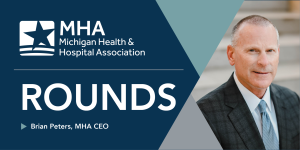
MHA Rounds graphic of Brian Peters

“Our favorite holding period is forever.” Warren Buffett

I discussed last month how the MHA continues to create highly successful and impactful outcomes for our members through our outstanding advocacy in the public policy arena, at both the state and federal levels. This has long been a hallmark of the MHA, as we have established ourselves as a trusted, credible and powerful leader in Lansing and in Washington, DC.

I am forever mindful of the old business axiom, “If all you have is a hammer, everything starts to look like a nail.” I have always believed the very strongest associations are able to carry a full toolbox to the worksite, to tackle complex challenges in multiple ways. The reality is that there are certain issues that don’t lend themselves – either partially or fully – to a solution that emanates from the halls of the legislature, the executive branch or the courts. The historic work of the MHA Keystone Center, which has created positive, life-saving changes through voluntary improvements in hospital-based safety and quality, is one perfect example of this philosophy at work. I would like to shine a light this month on the impactful work of the MHA Service Corporation, which houses several in-house service lines, as well as partnership offerings.

Unemployment claims cost hospitals significant time and money – the MHA Unemployment Compensation Program (UCP) successfully eliminates that burden for Michigan hospitals and over 700 clients throughout the United States. The UCP has processed thousands of unemployment claims, saving clients millions of dollars every year since 1972. The MHA UCP was also recognized in 2024 by the National Association of State Workforce Agencies (NASWA) for the MHA UCP’s commitment to utilizing the NASWA’s nationwide, web-based system for receiving new claims and responding to state unemployment agencies. This national recognition affirms the MHA UCP’s dedicated work to reduce unemployment liability for its clients, decrease unemployment fraud and prevent waste with state unemployment agencies.

Similarly, the MHA Data Services division has been serving Michigan hospitals since 1975, and now has more than 500 healthcare entities nationwide using our products to formulate market strategies, track community benefits and improve care quality. The State of Michigan, academic researchers and others also rely on the robust data contained in our Michigan inpatient and outpatient databases.

The MHA Graphic Design & Print Services division provides services to Michigan hospitals, as well as large and small clients throughout Michigan. Even our state’s two largest universities – the University of Michigan and Michigan State University – are long-time clients. With state-of-the-art equipment and highly skilled professionals on staff, we are able to consistently provide superior customer service, fast turnaround, competitive pricing and a high quality product.

Finally, the most recent offering in our portfolio is the MHA Endorsed Business Partner program. The MHA meticulously vets all partners to ensure they meet best-in-class quality standards, and that they have an established track record demonstrating their capability and trustworthiness. Among our current Endorsed Business Partners are firms specializing in workforce solutions, revenue cycle management, cybersecurity, behavioral health, supply chain and more.

For nearly the last decade, we have had a dedicated governing board overseeing the operations of the MHA Service Corporation, ensuring that all our current and future programs are on point. I would like to thank our current MHASC Board Chair Kent Riddle, CEO of Mary Free Bed Rehabilitation Hospital, for his tremendous leadership.

All these offerings have three things in common. First, they add tangible, direct value to our member hospitals and other clients. Second, they create revenue streams for the association that support our critical functions and moderate the need for membership dues increases. Lastly, consistent with our corporate culture that has intentionally focused on building, fostering and maintaining genuine, trusting relationships with our members, lawmakers, the media and others in the public policy arena, the same philosophy holds true here. As Warren Buffet has famously articulated, we are not in business for quick gains. We are here for the long haul.

As always, I welcome your thoughts.

MHA Monday Report July 15, 2024

MHA Service Corporation Board Highlights Solutions and Mission

The MHA Service Corporation board held its final meeting of the 2023-2024 program year June 26 focused on supporting the MHA Strategic Action Plan priorities of workforce support and innovation, viability, behavioral health and …


2025 Medicare Fee-for-Service Home Health Proposed Rule Released
The Centers for Medicare & Medicaid Services recently released a proposed rule to update the home health prospective payment system for calendar year 2025. The rule includes updates to the Medicare …


What I Learned as a Provider Working in Public Policy

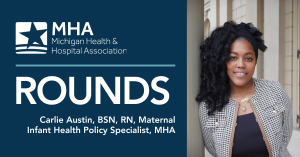
Carlie Austin, BSN, RN, shares her journey serving as the maternal infant health policy specialist at the MHA. As a clinician, what drew you to a role tied to public policy? If I had to …


MHA Webinar Tying Person and Family Engagement to Culture and Performance

The MHA is hosting the webinar Tying Person and Family Engagement to Culture and Performance from noon to 1 p.m. Aug. 20. The webinar will outline a process for structuring value-based employee competencies that …


MHA CEO Report — A Program Year in Review

I am pleased to share we just completed a successful MHA Annual Meeting, continuing a long-standing June tradition whereby we celebrate the conclusion of one MHA program year, and prepare for the next. Each program year is unique with the different challenges it presents. …


The Keckley Report

The Healthcare Workforce Crossroad: Incrementalism or Transformation

“Congress returns from its July 4 break today and its focus will be on the President: will he resign or tough it out through the election in 120 days. But not everyone is paying attention to this DC drama.  In fact, most are disgusted with the performance of the political system and looking for something better. Per Gallup, trust and confidence in the U.S. Congress is at an all-time low.

The same is true of the healthcare system: 69% think it’s fundamentally flawed and in need of systemic change vs. 7% who think otherwise (Keckley Poll). And 60% think it puts its profits above all else, laying the blame at all its major players—hospitals, insurers, physician, drug companies and their army of advisors and suppliers.

These feelings are strongly shared by its workforce, especially the caregivers and support personnel who service patient in hospital, clinic and long-term care facilities. Their ranks are growing, but their morale is sinking. Career satisfaction among clinical professionals (nurses, physicians, dentists, counselors) is at all time low and burnout is at an all-time high. …

It’s easier to talk about healthcare’s workforce issues but It’s harder to fix them. That’s why incrementalism is the rule and transformational change just noise.”

Paul Keckley, July 8, 2024


News to Know

  • July 22 is the deadline to register by mail or online to be eligible to vote in the Primary Election on Aug. 6.
  • The MHA recently submitted comments on the Michigan Department of Licensing and Regulatory Affair’s Psychology proposed rules.


MHA Service Corporation Board Highlights Solutions and Mission

The MHA Service Corporation (MHASC) board held its final meeting of the 2023-2024 program year June 26 focused on supporting the MHA Strategic Action Plan priorities of workforce support and innovation, viability, behavioral health and health equity. The Board explored strategies to invest and diversify products and services, as well as how the MHA could approach “mission-focused” partnerships.

The board was joined by Dr. John Crongeyer, CEO, ModusOne Health, for an overview of the only physician-founded and physician-run Clinical Diagnosis Improvement (CDxI®) company that delivers robust monthly leaderboard-style reporting of provider accuracy in diagnosing patients on the conditions that most directly affect quality metrics and the financial bottom line. The MHASC is planning to launch new endorsed business partnerships in the coming months.

The MHASC board made several appointments and reappointments, adding depth and breadth of expertise by welcoming new board members Brian Brown, regional vice president of marketing & business development, McLaren Health Care, Grand Blanc; Ane McNeil, senior vice president of human resources, Trinity Health, Livonia; and Andrea Poulopoulos, senior vice president of supply chain, Corewell, Grand Rapids. The board affirmed the reappointments of Saju George, regional CEO, Prime Healthcare, Garden City, and vice chair Bill Manns, CEO, Bronson Healthcare, Kalamazoo. The board also recognized outgoing board members for their service, including inaugural chair Gwen MacKenzie, senior advisor, McKinsey and Company; Deloris Hunt, retired chief human resources officer, Michigan Medicine; Scott McLean, former managing director, Corewell Health Ventures; and Brian Connolly, Connolly Associates.

The MHASC mission is to deliver innovative solutions that help improve value and performance through its Unemployment Compensation Program, Data Services and Endorsed Business Partner program. Visit the MHA Business Services webpage to learn more about resources available.

Members with questions regarding the MHASC Board may contact Ruthanne Sudderth at the MHA.

MHA Unemployment Compensation Program Receives National Recognition

Courtney Pontack, vice president and Mark Hagerman, information systems & senior claims representative of the MHA Unemployment Compensation Program, recognized for the team’s dedication to fighting unemployment fraud.

The MHA Unemployment Compensation Program (UCP) was recognized by the National Association of State Workforce Agencies (NASWA) March 14 for the MHA UCP’s commitment to utilizing the NASWA’s nationwide, web-based system SIDES for receiving new claims and responding to state unemployment agencies.

This recognition affirms the MHA UCP’s dedicated work to reduce unemployment liability for its clients, decrease unemployment fraud and prevent waste with state unemployment agencies.

The MHA UCP has a large portfolio of healthcare employer clients throughout the country, including many MHA members.

To learn more about the services available through the MHA UCP, contact Courtney Pontack at the MHA.

MHA CEO Report — Prioritizing our Workforce

MHA Rounds image of Brian Peters

“When people are financially invested, they want a return. When people are emotionally invested, they want to contribute.” – Simon Sinek 

Workforce Support and Innovation is the top priority for the MHA this program year, as identified by our board of trustees and echoed by every member hospital and health system throughout the state. This should come as no surprise, as few sectors of our Michigan economy have been more challenged in this regard. I am proud to say the MHA has tackled this challenge head-on, using every tool in our increasingly diverse association toolbox.

For our members, we know delivering exceptional care begins with hiring, developing and retaining quality talent. We also know that the demographic realities of an aging population and the associated retirements, rising stress and burnout, and increased rates of violence against healthcare workers are all contributing to retention challenges and staffing shortages. Finally, as with any daunting issue, we know the best way for us to be helpful to our members is to first tap their expertise, letting them share the details of their day-to-day experience so we can identify the most impactful solutions both inside and outside of the public policy domain. In short, we listen.

Through our MHA Human Resources & Workforce Council, we convene our HR professionals to discuss issues such as workforce development, the education and training pipeline, diversity, equity and inclusion efforts, workplace safety, and emerging technologies that can aid in the completion of clinical and non-clinical tasks. The council generates robust information sharing on best practices, as well as discussion on HR-related legislative and regulatory proposals at the state and federal level.

Our work with this council does not occur in a vacuum but is instead complemented by our continual engagement with MHA committees, councils and task forces that include chief medical officers, chief nursing officers, hospital and health system attorneys and government affairs leaders. So, what have we accomplished to date? The list is long and impressive. Just a few examples:

  • Over the past two state budget cycles, we secured $300 million in new funding for our member hospitals for the specific purpose of workforce recruitment and retention.
  • We launched the new MI Hospital Careers campaign, which has helped to shine a light on hospitals and healthcare as a viable career path for Michiganders. We also continue to partner with state universities and community colleges to ramp up health-related training programs.
  • We successfully advocated for Public Acts 271 and 272 of 2023, recently signed by Gov. Whitmer, which increase the penalties for violence committed towards healthcare workers or volunteers.
  • Our MHA Keystone Center launched the Well-B workforce well-being initiative, which has now reached thousands of hospital workers and is contributing to enhanced resiliency of our front-line caregivers.
  • Our MHA Graphic Services division designed and produced workplace safety posters, which are now prominently displayed in hospitals throughout Michigan.
  • The MHA is hosting our annual Human Resources Conference this month, which brings together chief human resource officers and leaders to collaborate, strategize and network. The conference is headlined by Kerry Ebersole Singh, the chief talent solutions & engagement officer at the Michigan Economic Development Corporation. Her presence confirms the MEDC’s recognition of the significant role healthcare plays in our state’s labor force and economic success – a fact we annually lift up in our Economic Impact of Healthcare report.
  • The MHA Service Corporation (MHASC) plays a vital role in this realm. Our HR Conference is sponsored by MHA Endorsed Business Partners AMN Healthcare and Salary.com (as well as MHA members Executive Core and HPS, and event sponsor Vault Verify), who are all involved in the workforce solutions space. The MHASC is working with partners who assist hospitals with de-escalation training and staff safety, virtual nursing programs and other emerging technologies, and more.
  • The MHASC is crucial to our work here in yet another way. The MHA Unemployment Compensation Program has a decades-long track record of success, saving millions of dollars every year for their more than 700 clients.

Everything listed is an example of proactive, positive activity. In other words, “playing offense.” Of course, one of our most significant activities in the workforce realm is an example of “playing defense” by ensuring government mandated nurse staffing ratio legislation that would significantly jeopardize patient access to care is not advanced by the state legislature. As discussed at length in a recent CEO Report, the MHA has worked very effectively to explain the complexity associated with hospital staffing and the tangible solutions that will actually address workforce shortages.

There is no silver bullet to solving healthcare’s workforce challenges. Michigan’s population is not growing and there are many market forces at play unique to healthcare. However, I’m extremely pleased by the work our own MHA staff has put forth to best position our members to achieve our workforce goals. And it couldn’t be done without the engagement from our colleagues in hospitals throughout the state who are doing all they can to ensure access to high quality care 24/7/365. Collectively, these are people who are clearly emotionally invested and making significant contributions to this worthy cause.

As always, I welcome your thoughts.