Building Excellence Without Barriers

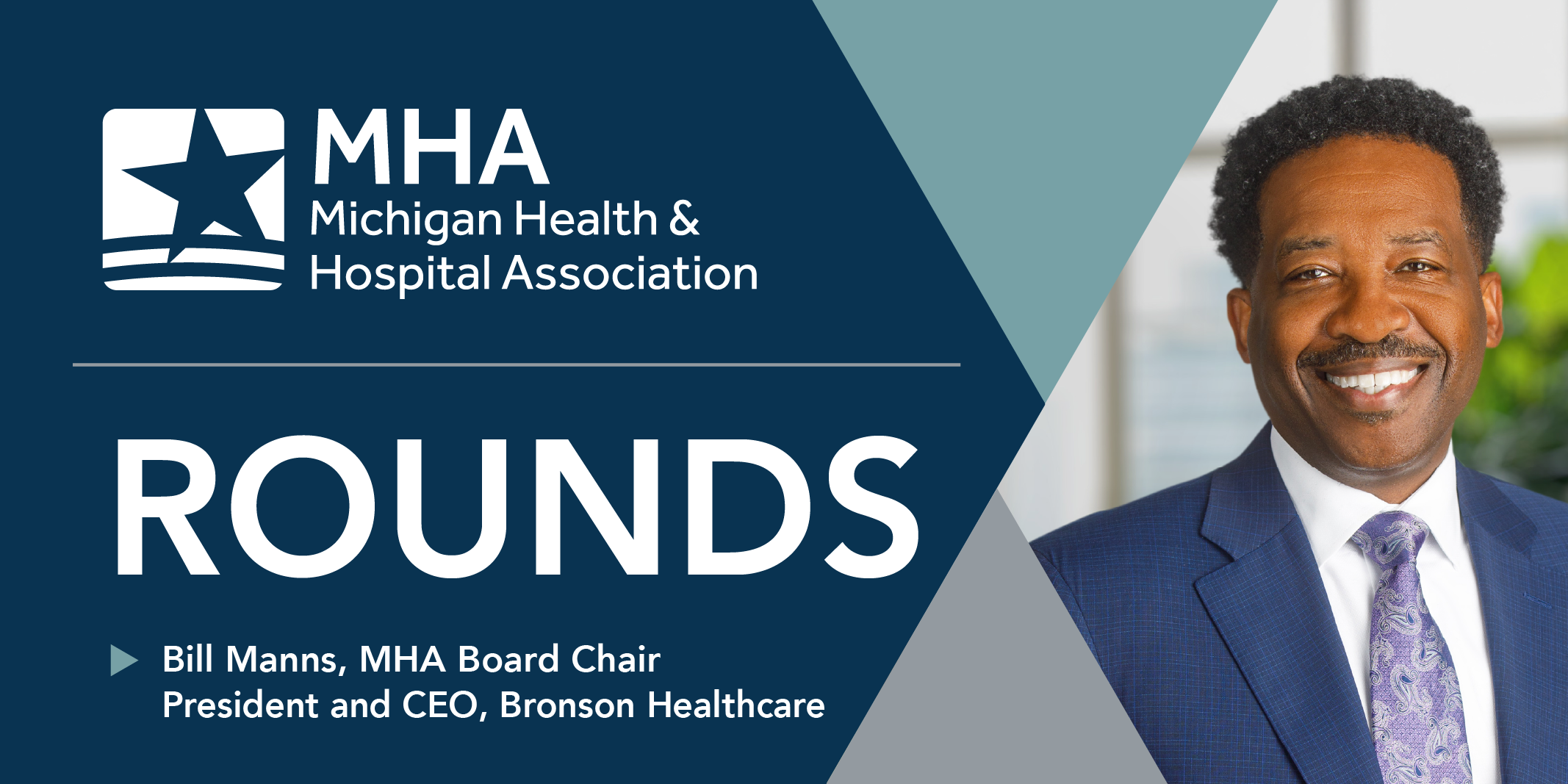
MHA Board Chair Bill Manns, president and CEO, Bronson Healthcare

“Of all the forms of inequality, injustice in health is the most shocking and the most inhuman.” – Martin Luther King Jr.

Every February, Black History Month invites us to pause and reflect on the pioneers who have redefined what’s possible for communities across the country — often in systems that were not designed with them in mind.

This rings especially true in healthcare.

Dr. Joseph Ferguson, for example, was Detroit’s first Black doctor who practiced medicine through the Civil War and offered aid during the city’s race riots. Dr. Ethelene Crockett, Michigan’s first Black board-certified OB/GYN, grew up during the depression and committed herself to becoming an activist and humanitarian. Dr. C. Allen Alexander, Kalamazoo’s first Black surgeon, pursued his career through the racial turbulence of the 1920s.

These stories, among thousands of others, are reminders that excellence has existed in every community, even when opportunity has not.

In my own career, I’ve learned that credentials alone don’t tell a person’s full story. I’ve met brilliant clinicians and administrators whose resumes didn’t follow a straight line — colleagues who worked their way through school, who supported families while earning degrees, who became leaders within their local communities long before becoming executives.

When I stepped into my role at Bronson Healthcare, staffing demands were at their peak. Still, it was imperative that we approach recruitment in a way that was innovative and committed to recognizing talent in all forms.

We cast a wide net to recruit exceptional talent that reflects the communities we serve, partnering with regional universities and community colleges, community organizations, professional associations and local workforce programs to reach candidates whose paths into healthcare may differ from traditional pipelines. This work extends through K–12 community school partnerships and strengthened internal mentorship and advancement pathways, ensuring opportunity is not limited to linear careers.

As a result, 32.8% of our 2025 new hires identify as people of color. In healthcare, that matters. When our workforce reflects the diverse lived experiences of our patients, communication improves, trust deepens and outcomes are stronger. Healthcare is personal—and strongest when those delivering care understand the people they serve.

Honoring the pioneers who came before me means ensuring that our methods for attracting new talent are rooted in skills, ability, character and the broad range of perspectives that help us strengthen patient care.

This approach has paid off. Not only have we grown a more diversified team, but in 2025 the National Association for Business Resources named Bronson one of the Best and Brightest Companies to Work For® in the nation for the third consecutive year. We also earned elite status as West Michigan’s Best of the Best, scoring in the top 5% across every category.

Representation in healthcare shapes how we listen and lead. When our teams represent the communities they serve, decisions are inherently more informed. When a variety of voices are at the table, we reduce blind spots and can create a system that works better for everyone.

Since joining Bronson in 2020, Manns oversees a full range of services from primary care to critical care across more than 100 locations. With over 9,000 employees and more than 1,500 medical staff members, Bronson is the largest employer in southwest Michigan.
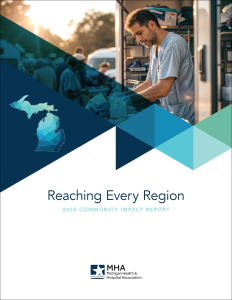
Report: Access, Affordability & Community Health Improved by Hospital Programming, Investments

2025 MHA Community Impact Report

The Michigan Health & Hospital Association (MHA) released today its 2025 Community Impact Report highlighting community programming and investments from Michigan hospitals that are improving access to care, addressing affordability and advancing the health of communities across every region of the state.

The report showcases 12 hospital-led programs that go beyond the traditional care setting to address community health needs across the state. It also outlines investments totaling more than $4.5 billion in community benefit activities in fiscal year (FY) 2023, from education and prevention services to clinical research, healthcare workforce support and more.

“Michigan hospitals continue to redefine care delivery and create new, innovative access points across the state,” said MHA CEO Brian Peters. “The MHA Community Impact Report is a strong reminder that our hospitals are committed to listening – and responding – to the needs of their communities.”

Programs featured in the report include University of Michigan Health-Sparrow’s mobile health clinic; Henry Ford Health’s hospital-based doula program; Corewell Health Gerber Hospital’s vaping cessation initiative; Mackinac Straits Health System’s retail pharmacy; and efforts by Bronson Battle Creek Hospital to address food insecurity; among many others. This work is a result of strategic investments, local partnerships and support from state and federal healthcare champions.

“Improving community health goes beyond the bedside,” said MHA Board Chair Bill Manns, president and CEO, Bronson Healthcare. “When we invest in programs that address socioeconomic challenges like food insecurity, we’re helping people overcome the barriers that stand between them and a healthier life.”

The full report and community impact stories from hospitals across the state can be accessed on the MHA website.

Based in Greater Lansing, the MHA is the statewide leader representing all community hospitals in Michigan. Established in 1919, the MHA represents the interests of its member hospitals and health systems in both the legislative and regulatory arenas on key issues and supports their efforts to provide quality, cost-effective and accessible care. The MHA’s mission is to advance the health of individuals and communities.

MHA Monday Report Aug. 18, 2025

CMS Releases FY 2026 LTCH Prospective Payment System Final Rule

The Centers for Medicare & Medicaid Services (CMS) recently released a final rule to update the Medicare fee-for-service long-term care hospital (LTCH) prospective payment system for fiscal year (FY) 2026. Specifically, the …


MHA Keystone Center and MI AIM Announce Recipients of Maternal Health Education Grant

The MHA Keystone Center, in collaboration with the Michigan Alliance for Innovation on Maternal Health (MI AIM), recently announced a partnership with UnitedHealthcare to offer $25,000 grants to birthing hospitals in Michigan to purchase equipment …


CMS Releases FY 2026 Final Rule for Inpatient Rehabilitation Facilities

The Centers for Medicare & Medicaid Services (CMS) recently released a final rule to update the Medicare fee-for-service prospective payment system for inpatient rehabilitation facilities for fiscal year (FY) 2026. Key provisions include: …


Keckley Report

Health Industry Notoriety is a Two-Edged Sword: Four Considerations as the Mid-Term Elections Near

“Keeping track of all things healthcare is a formidable task.  Last week’s news is no exception: …

These events and actions illustrate the administration’s “flood the zone” strategy and its propensity to dictate news cycles in media coverage. They also reflect the ubiquitous role played by healthcare in our society as an employer and economic engine.

Collectively, they appear to cast the industry in a negative light reinforcing populist’ suspicions about affordability, price transparency, corporatization and cost-containment. And they lend to growing disfavor among lawmakers, employers and critics. …”

Paul Keckley, Aug. 10, 2025


New to KnowNews to Know

  • Registration is open for the 2025 MHA Communications Retreat from 8 a.m. to 4 p.m. on Wednesday, Oct. 1 at the Henry Center for Executive Development in Lansing.
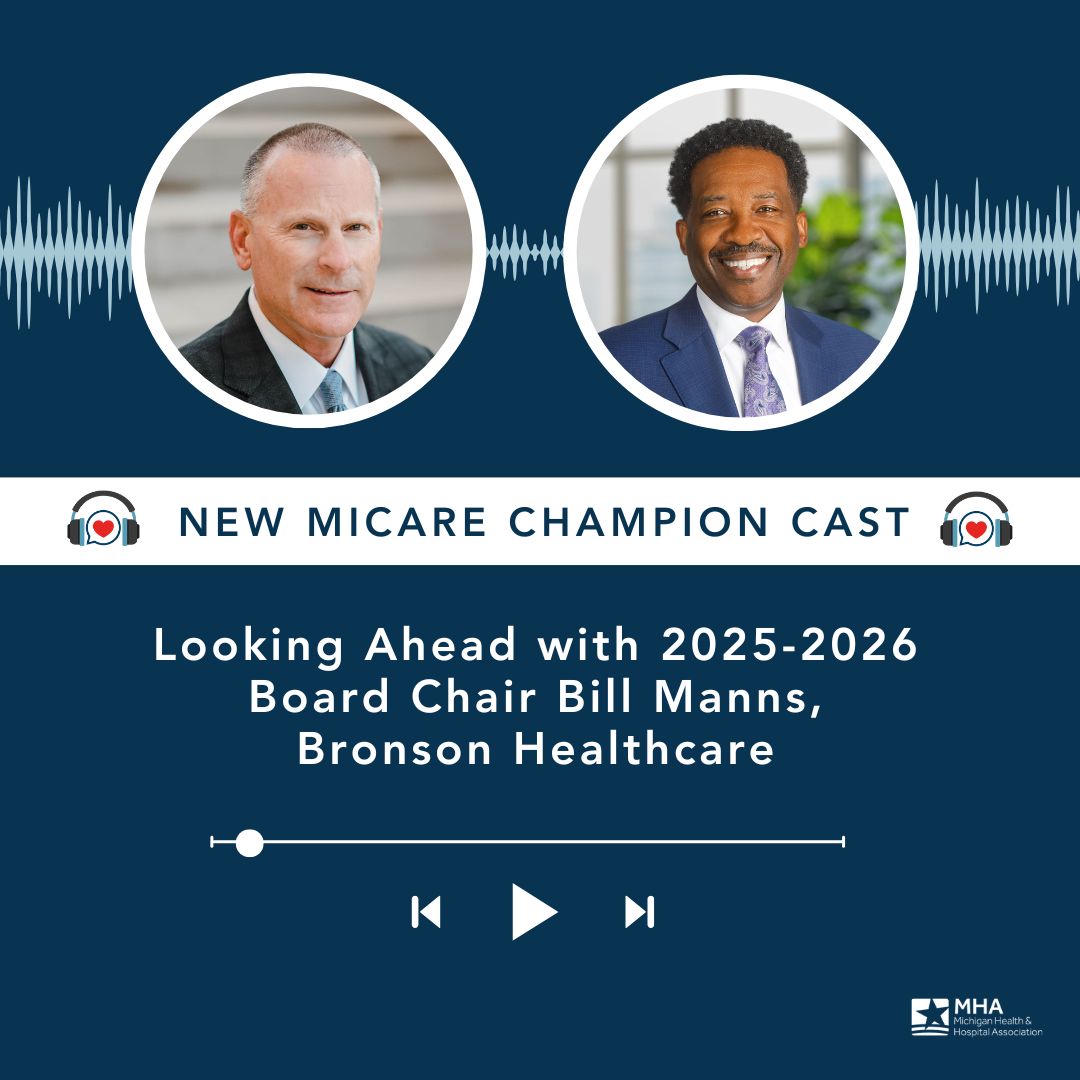
  • In the latest episode of the MiCare Champion Cast, MHA CEO Brian Peters and MHA Board Chair Bill Manns, president and CEO, Bronson Healthcare, explore what’s top of mind in healthcare as the 2025-2026 program year kicks off.

MHA Podcast Explores Healthcare Priorities with 2025-2026 Board Chair Bill Manns

The MHA released a new episode of the MiCare Champion Cast exploring what’s top of mind in healthcare as the 2025-2026 program year kicks off.

The episode, hosted by MHA CEO Brian Peters, features MHA Board Chair Bill Manns, president and CEO, Bronson Healthcare. Manns shares more about his journey to healthcare leadership, current priorities at Bronson and what work lies ahead for hospital leaders given recent activity at the state and federal level.

Since joining Bronson in 2020, Manns oversees a full range of services from primary care to critical care across more than 100 locations. Fellow officers of the 2025-2026 MHA Board of Trustees include Brittany Lavis, chair-elect; and Kent Riddle, treasurer, among many other hospital leaders across Michigan.

Manns noted during the discussion that addressing infant mortality and improving maternal health across the state remain key areas of focus for his team at Bronson Healthcare and hospital leaders across the state.

“Women of color have mortality rates during birth that is, at times, double or triple that of their white counterparts,” said Manns. “As soon as we’re born – without bias or prejudice – if we can get equality there, I think that’s a great footing to build and grow as a community and I think as a nation, quite frankly.”

Over the course of the interview, Peters and Manns discuss the impact of the “One Big Beautiful Bill Act (OBBBA)” on hospitals and patient access to care given cuts to Medicaid funding.

“One, we’ve got to do a better job of educating the public about just what’s coming,” said Manns when discussing how to approach the negative impacts of the OBBBA. “Two, we really have to advocate – even stronger – with our legislators…and three, I think we’ve really got to continue to be optimistic and not panic.”

They also explore the importance of 340B, efforts to address workplace violence and more.

The episode is available to stream on Apple Podcasts, Spotify, SoundCloud and YouTube. Questions or idea submissions for future MiCare Champion Cast episodes can be sent to Lucy Ciaramitaro at the MHA.

MHA Service Corporation Board Highlights Solutions and Mission

The MHA Service Corporation (MHASC) board held its final meeting of the 2023-2024 program year June 26 focused on supporting the MHA Strategic Action Plan priorities of workforce support and innovation, viability, behavioral health and health equity. The Board explored strategies to invest and diversify products and services, as well as how the MHA could approach “mission-focused” partnerships.

The board was joined by Dr. John Crongeyer, CEO, ModusOne Health, for an overview of the only physician-founded and physician-run Clinical Diagnosis Improvement (CDxI®) company that delivers robust monthly leaderboard-style reporting of provider accuracy in diagnosing patients on the conditions that most directly affect quality metrics and the financial bottom line. The MHASC is planning to launch new endorsed business partnerships in the coming months.

The MHASC board made several appointments and reappointments, adding depth and breadth of expertise by welcoming new board members Brian Brown, regional vice president of marketing & business development, McLaren Health Care, Grand Blanc; Ane McNeil, senior vice president of human resources, Trinity Health, Livonia; and Andrea Poulopoulos, senior vice president of supply chain, Corewell, Grand Rapids. The board affirmed the reappointments of Saju George, regional CEO, Prime Healthcare, Garden City, and vice chair Bill Manns, CEO, Bronson Healthcare, Kalamazoo. The board also recognized outgoing board members for their service, including inaugural chair Gwen MacKenzie, senior advisor, McKinsey and Company; Deloris Hunt, retired chief human resources officer, Michigan Medicine; Scott McLean, former managing director, Corewell Health Ventures; and Brian Connolly, Connolly Associates.

The MHASC mission is to deliver innovative solutions that help improve value and performance through its Unemployment Compensation Program, Data Services and Endorsed Business Partner program. Visit the MHA Business Services webpage to learn more about resources available.

Members with questions regarding the MHASC Board may contact Ruthanne Sudderth at the MHA.