MHA Unemployment Compensation Program Receives Award for Outstanding Performance

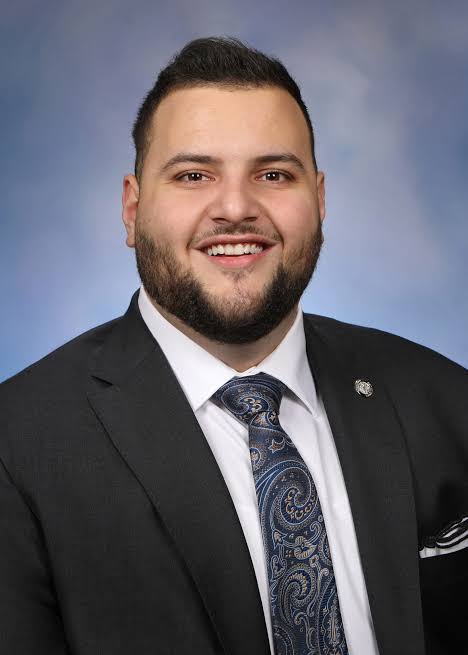
Courtney Pontack, vice president of the MHA Unemployment Compensation Program, recognized for the team’s dedication to fighting unemployment fraud.

The MHA Unemployment Compensation Program (UCP) was recognized by the National Association of State Workforce Agencies (NASWA) April 24 for the MHA UCP’s commitment to utilizing the NASWA’s nationwide, web-based system SIDES for receiving new claims and responding to state unemployment agencies.

This recognition affirms the MHA UCP’s dedicated work to reduce unemployment liability for its clients, decrease unemployment fraud and prevent waste with state unemployment agencies.

The MHA UCP has a large portfolio of healthcare employer clients throughout the country, including many MHA members.

To learn more about the services available through the MHA UCP, contact Courtney Pontack at the MHA.

Celebrate Patient Experience Week with Upcoming Webinars

The MHA is offering ways for hospital staff to engage during Patient Experience Week (April 28-May 2), to support and amplify patient-centered care.

The upcoming Patient and Family Engagement (PFE) Improvement Sprint webinar series, hosted by members of the MHA PFE Advisory Council, includes:

Additionally, a recent MHA Rounds article bylined by Tammy Allen, region director, patient experience and relations, Trinity Health, outlines how patient-centered care can benefit patients and providers while enhancing a hospital’s culture, reputation and viability.

Members with questions about webinar registration should contact Brenda Carr at the MHA. Questions about the MHA Person & Family Engagement (PFE) Advisory Council should be directed to Erin Steward at the MHA.

MHA Virtual Member Forum Focuses on Cyberattack Response

The MHA, in conjunction with its statewide Health Information Technology Strategy Committee, is hosting a cybersecurity and cyberattack response virtual member forum from 9:30 to 11 a.m. May 9.

This free, members-only event features six healthcare leaders who will share what they learned during their hospital’s cyberattack incident response. Speakers will discuss preparing for critical patient care needs after a cyberattack, strengthening cybersecurity resilience, prioritizing communications following a cyber breach, and training staff to efficiently respond to a cyberattack.

Chief executive officers, chief information and security officers, health information leaders, chief financial officers, chief medical and nurse officers, directors of communications, public relations and media relations, financial and data leaders are encouraged to register.

Members with questions about MHA membership or webinar registration may contact Brenda Carr at the MHA.


CMS Releases FY 2026 Proposed Rule for Skilled Nursing Facilities

The  Centers for Medicare & Medicaid Services (CMS) recently released a proposed rule to update the Medicare fee-for-service prospective payment system for skilled nursing facilities (SNFs) for fiscal year (FY) 2026.

Key provisions of the proposed rule include:

  • Increasing the per-diem federal rate by a net 3% after the market basket update, productivity adjustment and other adjustments. SNFs that fail to satisfy Quality Reporting Program requirements will be subject to a 2-percentage point reduction.
  • Updating the labor-related share of the per diem rate from 72% to 71.9%.
  • Making technical changes to the Patient-Driven Payment Model ICD-10 code mapping that assigns patients to clinical categories.
  • Removing items recently adopted as standardized patient assessment data elements under the social determinants of health category.
  • Issuing three Requests for Information regarding future measure concepts, potential revisions to submission deadlines for assessment data collected and advancing digital quality measurement.
  • Removing the health equity adjustment from the SNF Value-Based Purchasing program.

The CMS is seeking comments on opportunities to streamline regulations and reduce administrative burdens on providers, suppliers, beneficiaries and other interested parties participating in the Medicare program.

The MHA will provide SNFs with a facility-specific impact analysis and additional details on the proposed rule in the near future. The MHA also encourages members to submit comments to the CMS by June 10 and to contact Vickie Kunz at the MHA with questions and issues identified by May 27.

GME Capitol Day Approaches May 21

The MHA is hosting the 2025 MHA Graduate Medical Education (GME) Capitol Day from 9 a.m. to 3:30 p.m. May 21 in Lansing. The event is an opportunity for Michigan’s physician residents from teaching hospitals and academic medical centers to meet with legislators to discuss the vital role GME health professionals play in the healthcare continuum and other legislative issues facing physician residents and medical students in Michigan.

Physician residents, GME program administrators and directors are encouraged to register by May 9. Due to legislative schedules and meeting space limitations, each participating group is encouraged to register no more than three physician residents per hospital.

Members with questions may contact Elizabeth Kutter at the MHA.

MHA Monday Report April 21, 2025

MHA Member Provides Testimony to House Health Policy Committee; Occupational Therapy Licensure Compact Bills Clear Committee

The House Health Policy Committee heard testimony from stakeholders on legislation to establish a Physician Assistant Licensure Compact in the state and Occupational Therapy Licensure Compact bills were voted to the House floor …


MHA CEO Brian Peters Joins 2025 State of Reform Health Policy Panel

The 2025 Michigan State of Reform Health Policy Conference convened April 17 in East Lansing, MI. The morning session began with a panel moderated by Farah Hanley, managing principal, Health Management Associates alongside MHA CEO …


MHA Keystone Center Receives Harry L. McKinley Workplace Safety Leadership Award

The MHA Keystone Center was honored April 15 at the Michigan Workplace Safety Conference for providing essential workplace safety resources to Michigan healthcare organizations and their staff. The Harry L. McKinley Workplace Safety Leadership Award …


CMS Releases FY 2026 LTCH Prospective Payment System Proposed Rule

The Centers for Medicare & Medicaid Services (CMS) recently released a proposed rule to update the Medicare fee-for-service long-term care hospital (LTCH) prospective payment system for fiscal year (FY) 2026. Specifically, the rule proposes …


RFP Available for Hospital-Based Peer Recovery Coach Services

The MHA is issuing a request for proposal (RFP) for a $2.5 million competitive grant program for Michigan healthcare entities to expand access to hospital-based peer recovery coach services. The funding was appropriated by …


Updated Hospital Medicaid Communications Toolkit Available

The MHA recently updated a toolkit of communications resources to support hospitals in advocating against potential Medicaid funding cuts in their local communities. The toolkit includes: Talking points Template letter-to-the-editor Template press release Social media …


CMS Releases FY 2026 Hospital IPPS Proposed Rule

The Centers for Medicare & Medicaid Services (CMS) recently released a proposed rule to update the Medicare fee-for-service inpatient prospective payment system (IPPS) for fiscal year (FY) 2026. The rule proposes to: Increase the standard …


MW-TEC to Host Informational Webinar on Social Work Apprenticeship Opportunities

The Michigan Workforce Training & Education Collaborative (MW-TEC) will host an informational webinar at 10 a.m. April 23 discussing social work apprenticeship opportunities. With a growing demand for behavioral health workers, apprenticeship programs can serve …


Latest AHA Trustee Insights Outlines the Value of Nursing Board Leadership and Compliance Duties

The April edition of Trustee Insights, the monthly digital package from the American Hospital Association (AHA), highlights the podcasts, videos, webinar and other resources available on today’s most pressing healthcare issues. National Nurses Week honors the …


Keckley Report

For U.S. Healthcare, Public Reaction to Tariffs is Instructive

“Last week, new cycles paid close attention to the economy with news mixed: The University of Michigan Consumer Sentiment Index hit a five year low of 50.80. But the Consumer Price Index showed a slight decline (2.4% in March) as gas prices continued to drop. And speculation about a recession drew coverage as Goldman, BlackRock, JP Morgan and others raised their estimates of its likelihood. …

While tariffs and trade policy are not understood by the vast majority of the U.S. population, most of the population feels the complicated issues around trade policy, tariffs and the economy beyond their control. The same can be said for views about U.S. healthcare.  Most don’t understand the system and how it operates. They think it’s complicated and expensive and believe corporate interests are playing a larger role.  What they do understand is what they spend and how unpredictable those expenses are. Like tariffs, they’re anxious and concerned. …

As Congress debates Budget Reconciliation aka ‘One Big Beautiful Bill’ this week and the IRS’ Income Tax deadline hits taxpayers tomorrow, what’s spent on healthcare by the government and by taxpayers will not escape notice. The majority of Americans and lawmakers think the system is underperforming and unnecessarily expensive. And acrimony between insurers, hospitals, physicians and drug companies will deepen old wounds and lend to public confusion.

The Trump administration’s first 3 months is getting mixed reviews largely because tariffs are not understood. The same is true for the health system. Its prices and their underlying costs are largely hidden and the public’s tired of excuses.

Tariffs might be a good thing for the economy or something else. Like healthcare, the public’s anxious about the future of the U.S. economy and unsure about what’s next.”

Paul Keckley, April 14, 2025


New to KnowNews to Know

In the latest episode of the MiCare Champion Cast, Laura Appel, executive vice president of government relations & public policy at the MHA, explores how proposed reductions to Medicaid could disrupt access to care and harm Michigan hospitals, patients and communities.


MHA in the News

MHA CEO Brian Peters was quoted in a Crain’s Grand Rapids article pushing back against the release of a Lown Institute report about Michigan nonprofit hospital community benefit spending. The report intentionally omits IRS Form …

News to Know – April 21, 2025

New to Know

In the latest episode of the MiCare Champion Cast, Laura Appel, executive vice president of government relations & public policy at the MHA, explores how proposed reductions to Medicaid could disrupt access to care and harm Michigan hospitals, patients and communities. Listeners can also expect to learn more about the impact proposed cuts would have on rural healthcare and Michigan’s economy. The episode is available to stream on Apple PodcastsSpotifySoundCloud and YouTube.

MHA CEO Brian Peters Joins 2025 State of Reform Health Policy Panel

MHA CEO Brian Peters pictured with Farah Hanley, managing principal, Health Management Associates and Dominick Pallone, executive director, Michigan Association of Health Plans (MAHP) during the 2025 Michigan State of Reform Conference April 17.

The 2025 Michigan State of Reform Health Policy Conference convened April 17 in East Lansing, MI. The morning session began with a panel moderated by Farah Hanley, managing principal, Health Management Associates, alongside MHA CEO Brian Peters and Dominick Pallone, executive director, Michigan Association of Health Plans (MAHP). Discussion focused on the evolving federal landscape and its impact on healthcare and health policy in Michigan.

Panelists explored the impact of recent federal activity and what it means for Michigan communities, hospitals and the healthcare workforce. Throughout the discussion, Medicaid, the 340B program and tariffs were highlighted. Peters emphasized that the current threats to Medicaid go beyond those enrolled in the program, warning that cuts will have a ripple effect across the entire healthcare system.

“This isn’t just about Medicaid recipients,” said Peters. “It’s about every Michigander’s access to care.”

The MHA continues to work with members of Congress to underscore that slashing Medicaid funding puts hospitals, providers and patient care at risk across the state.

Peters and Pallone also discussed partnership between the MHA and MAHP in response to recent proposals and the role tariffs play in healthcare. Peters noted the impact tariffs have on the healthcare supply chain and limitations when it comes to responding to financial shifts in real time, which puts a significant strain on providers trying to maintain care quality amid mounting costs.

Members with questions regarding current legislative activity may contact Laura Appel at the MHA.

Latest AHA Trustee Insights Outlines the Value of Nursing Board Leadership and Compliance Duties

The April edition of Trustee Insights, the monthly digital package from the American Hospital Association (AHA), highlights the podcasts, videos, webinar and other resources available on today’s most pressing healthcare issues. National Nurses Week honors the contribution and dedication of nurses from May 6 through 12 and board service offers nurses an opportunity to apply their expertise to shape patient care at a governance level. This edition shares the stories of three female leaders who have proven the value of having nurses at the board table to bring perspective, elevate the voice of patients, families and staff, and serve as a translator for the lay-person board member on quality, safety and workforce issues.

Another featured article explores the board’s role in compliance oversight. Board members should have an understanding on the various government agencies charged with enforcing laws, and to apply that understanding to take reasonable, good faith steps to ensure that the compliance program is effective, meaning one that identifies and mitigates risk.

For information about MHA trustee resources or webinars, contact Erin Steward at the MHA.

CMS Releases FY 2026 LTCH Prospective Payment System Proposed Rule

The Centers for Medicare & Medicaid Services (CMS) recently released a proposed rule to update the Medicare fee-for-service long-term care hospital (LTCH) prospective payment system (PPS) for fiscal year (FY) 2026.

Specifically, the rule proposes to:

  • Increase the standard LTCH PPS rate by a net 2.7%, after the 0.8% productivity adjustment and budget neutrality adjustment,s from $49,383 to $50,729, for LTCHs that meet the CMS quality program reporting requirements. LTCHs that fail to meet these requirements are subject to a two percentage point reduction to the annual update.
  • Continue paying cases at the site neutral rate if they fail to meet LTCH criteria.
  • Increase the high-cost outlier (HCO) threshold by 18% for standard LTCH cases from the current $77,048 to $91,247, to achieve the target of paying roughly 8% of aggregate LTCH payments as HCO payments.
  • Use the inpatient PPS cost outlier threshold proposed at $44,205 for site-neutral cases.
  • Update the LTCH Quality Reporting Program by removing four standardized patient assessment data elements focused on social determinants of health and modifying the COVID-19 vaccine among patients and residents measure to exclude patients who expire.
  • Seek input through a Request for Information on opportunities to streamline regulations and reduce administrative burdens on providers, suppliers, beneficiaries and other interested parties participating in the Medicare program. Members may submit comments to the CMS.:

The MHA continues to review the proposed rule and will provide LTCHs with an estimated impact analysis in the next few weeks. The MHA encourages hospitals to review the proposed rule and submit comments to the CMS  by June 10 and to notify Vickie Kunz at the MHA regarding questions or issues identified by May 27.