Strengthening Rural Healthcare Through Smarter Physician Recruitment

MHA Endorsed Business Partner AMN Healthcare recently released the Rural Physician Recruiting Challenges and Solutions white paper, produced by its Physician Solutions division (formerly Merritt Hawkins).

The resource identifies several approaches to address these challenges:

Recruiting Physicians to Rural Hospitals is More Challenging than Ever.

According to AMN Healthcare’s 2025 Review of Physician and Advanced Practitioner Recruiting Incentives, the average signing bonus for family medicine physicians has increased by 15% over the past year. This trend underscores the escalating competition for medical talent in underserved areas. For rural hospitals, the stakes are even higher. With limited resources and fewer candidates, attracting and retaining physicians requires innovative strategies.

Traditional Incentives Are No Longer Sufficient.

While competitive salaries and signing bonuses are important, they are no longer the primary drivers for physicians considering rural practice. A recent survey by AMN Healthcare revealed that 70% of physicians prioritize work-life balance and community engagement over financial incentives. This shift necessitates a reevaluation of recruitment strategies.

Building a Sustainable Workforce Requires a Multifaceted Approach.

Successful rural hospitals are adopting comprehensive recruitment strategies that include:

  • Community integration: Engaging physicians in local community activities to foster a sense of belonging.
  • Flexible work arrangements: Offering part-time or telemedicine options to accommodate lifestyle preferences.
  • Educational partnerships: Collaborating with medical schools to create residency programs tailored to rural healthcare needs.

By implementing these strategies, rural hospitals can strengthen recruitment efforts and improve retention.

Members seeking for more insights and detailed strategies may download the full white paper.

Members with questions may contact Ben Jones, regional vice president at AMN Healthcare. Members with questions about the MHA Endorsed Business Partner Program may contact Rob Wood at the MHA.

MHA Keystone Center PSO Hosts Cybersecurity and Regulatory Inspection Safe Table Events

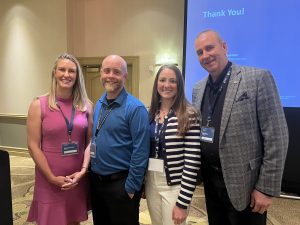
L-R: Max Kwiecien

The MHA Keystone Center Patient Safety Organization (PSO) hosted a safe table focused on Adapting Clinical Risk Management for Cybersecurity June 4 at the MHA Headquarters in Okemos. In partnership with MHA Endorsed Business Partner CyberForce|Q, the session provided practical insights into building and strengthening a cybersecurity program through effective risk management and strategic planning. Attendees explored how to identify and address cybersecurity risks, recognize gaps in current systems and incorporate cybersecurity into organizational budgets and strategic planning.

Safe tables are valuable opportunities for hospital team members to come together, share ideas with peers, engage in safety discussions and obtain advice to improve or eliminate harm. These events are unique in offering a legally protected confidential environment for discussing sensitive topics.

In addition, registration is still available for the virtual safe table Regulatory Inspections: A Strategic Approach scheduled 11:30 a.m. to 1 p.m. June 17. In partnership with the Alliance for Quality Improvement and Patient Safety, this session will guide participants in preparing for regulatory authority visits. Attendees will explore best practices for protecting and disclosing Patient Safety Work Product. The discussion will also focus on how participants can implement CMS Patient Safety Structural Measures and participate in PSOs using Patient Safety Act protections.

Members with questions may reach out to the MHA Keystone Center.

News to Know – Nov. 25, 2024

New to Know
  • The MHA offices will be closed and no formal meetings will be scheduled Nov. 28 and 29 in honor of Thanksgiving.
  • Due to the holiday, Monday Report will not be published Dec. 2 and will resume its normal schedule Dec. 9. Member alerts and MHA newsroom articles will continue to be published during that time to provide relevant updates to the MHA membership, as necessary.
  • MHA Endorsed Business Partner AMN Language Services will host the webinar Section 1557 Readiness Workshop – Guidance and Resources for the 2024 Deadlines Dec. 10 from noon – 1 p.m. ET. This is the first of a three-part series of webinars designed to provide members with the essential tools and insights needed to ensure compliance with the Affordable Care Act’s Section 1557. There is no cost to attend and members are encouraged to register. Members with questions may contact Rob Wood at the MHA.
  • The MHA is offering its popular Healthcare Leadership Academy program Feb. 19 – 21 and April 10 – 11, 2025. Physicians, nurses and other rising leaders who wish to strengthen their leadership skills are encouraged to register for the MHA Healthcare Leadership Academy. Members with questions or seeking more information may contact Jen Sokol at the MHA.

Strategic Planning Session Update with MHA Service Corporation Board

The MHA Service Corporation (MHASC) board met Oct. 24 to discuss healthcare market strategies to identify, diversify and grow solutions for MHA members and clients. The board retreat focused on how the MHASC can support the five key pillars of the MHA Strategic Action Plan: workforce support, protecting access, support for mental and behavioral health, creating healthy communities and strengthening cybercrime/cybersecurity policy.

The MHASC highlighted the MHA Unemployment Compensation Program and its new strategic partnership with Vault Verify for wage and employment verifications. Tim Fessenden, CEO ,Vault Verify, explored how solutions provide employers additional security due to the contractual commitment to never resell any of the data accessed for verifications.

Additionally, the MHASC is creating a new model for piloting “mission-driven” partnerships with organizations that may address improving health outcomes for all, behavioral health and more.

The MHASC is also moving forward with supply chain strategic sourcing opportunities to help address shortages and provide savings. The MHASC continues to work closely with its various business solutions to address the pillars in the MHA Strategic Action Plan.

Members with questions regarding the MHASC Board may contact Ruthanne Sudderth at the MHA.

MHA CEO Report — Adding Value for Hospitals

MHA Rounds graphic of Brian Peters

“Our favorite holding period is forever.” Warren Buffett

I discussed last month how the MHA continues to create highly successful and impactful outcomes for our members through our outstanding advocacy in the public policy arena, at both the state and federal levels. This has long been a hallmark of the MHA, as we have established ourselves as a trusted, credible and powerful leader in Lansing and in Washington, DC.

I am forever mindful of the old business axiom, “If all you have is a hammer, everything starts to look like a nail.” I have always believed the very strongest associations are able to carry a full toolbox to the worksite, to tackle complex challenges in multiple ways. The reality is that there are certain issues that don’t lend themselves – either partially or fully – to a solution that emanates from the halls of the legislature, the executive branch or the courts. The historic work of the MHA Keystone Center, which has created positive, life-saving changes through voluntary improvements in hospital-based safety and quality, is one perfect example of this philosophy at work. I would like to shine a light this month on the impactful work of the MHA Service Corporation, which houses several in-house service lines, as well as partnership offerings.

Unemployment claims cost hospitals significant time and money – the MHA Unemployment Compensation Program (UCP) successfully eliminates that burden for Michigan hospitals and over 700 clients throughout the United States. The UCP has processed thousands of unemployment claims, saving clients millions of dollars every year since 1972. The MHA UCP was also recognized in 2024 by the National Association of State Workforce Agencies (NASWA) for the MHA UCP’s commitment to utilizing the NASWA’s nationwide, web-based system for receiving new claims and responding to state unemployment agencies. This national recognition affirms the MHA UCP’s dedicated work to reduce unemployment liability for its clients, decrease unemployment fraud and prevent waste with state unemployment agencies.

Similarly, the MHA Data Services division has been serving Michigan hospitals since 1975, and now has more than 500 healthcare entities nationwide using our products to formulate market strategies, track community benefits and improve care quality. The State of Michigan, academic researchers and others also rely on the robust data contained in our Michigan inpatient and outpatient databases.

The MHA Graphic Design & Print Services division provides services to Michigan hospitals, as well as large and small clients throughout Michigan. Even our state’s two largest universities – the University of Michigan and Michigan State University – are long-time clients. With state-of-the-art equipment and highly skilled professionals on staff, we are able to consistently provide superior customer service, fast turnaround, competitive pricing and a high quality product.

Finally, the most recent offering in our portfolio is the MHA Endorsed Business Partner program. The MHA meticulously vets all partners to ensure they meet best-in-class quality standards, and that they have an established track record demonstrating their capability and trustworthiness. Among our current Endorsed Business Partners are firms specializing in workforce solutions, revenue cycle management, cybersecurity, behavioral health, supply chain and more.

For nearly the last decade, we have had a dedicated governing board overseeing the operations of the MHA Service Corporation, ensuring that all our current and future programs are on point. I would like to thank our current MHASC Board Chair Kent Riddle, CEO of Mary Free Bed Rehabilitation Hospital, for his tremendous leadership.

All these offerings have three things in common. First, they add tangible, direct value to our member hospitals and other clients. Second, they create revenue streams for the association that support our critical functions and moderate the need for membership dues increases. Lastly, consistent with our corporate culture that has intentionally focused on building, fostering and maintaining genuine, trusting relationships with our members, lawmakers, the media and others in the public policy arena, the same philosophy holds true here. As Warren Buffet has famously articulated, we are not in business for quick gains. We are here for the long haul.

As always, I welcome your thoughts.

MHA Shares State Impacts and Insights at Regional 340B Roundtable

four individuals pictured smiling at conference in Indiana.
Elizabeth Kutter, senior director, government and political affairs, MHA; Rob Wood, senior director, partnerships, MHA; Kelsey Ostergren, director of health policy initiatives, MHA, and John Bretz, director of strategic relations, SunRx pictured during the Regional 340B Roundtable.

MHA staff attended the Regional 340B Roundtable Aug. 7 in Florence, IN to join colleagues from the Indiana Hospital Association, Ohio Hospital Association, Kentucky Hospital Association and endorsed business partner, SunRx, to share best practices for successful 340B administration and advocacy. Nearly 200 340B experts gathered from the four states to discuss the impact the program has on their communities, compliance best practices and opportunities to advocate for 340B at the state and federal levels.

Hospital 340B leaders were able to network, share challenges and discuss opportunities. Compliance experts from PYA and AuthorityRx as well as specialty pharmacy representatives from Optum and BioPlus offered technical advice and solutions in navigating complex 340B relationships.

Elizabeth Kutter, senior director of government and political affairs at the MHA joined Ted Slafsky, 340B Report and Lauren Brown, Indiana Hospital Association for a panel discussion on state 340B legislative and regulatory updates. “The MHA partners with Michigan Primary Care Association and other healthcare leaders to protect 340B to tell the story of how important 340B is to each community, especially our rural communities,” said Kutter. “Every person involved in 340B should tell their story about what 340B means in their community. It’s about local access. Individual patient access,” she added.

Protecting 340B remains a priority for the MHA and its covered entity members. MHA Board Chair, Julie Yaroch, DO, president of ProMedica Charles and Virginia Hickman Hospital joined MHA CEO Brian Peters on the July episode of the MiCare Champion Cast, where 340B is discussed as an association priority. “340B programs help hospitals get drugs that we need to treat patients to keep them healthy to have the best quality of life that they can. It also keeps programs viable inside our four walls and keeps services open, which allows us to support community-based care and community benefit programs,” said Yaroch.

Members with questions about 340B should reach out to Elizabeth Kutter at the MHA. Members interested in learning more about endorsed business partner, SunRx and its offerings, may contact Rob Wood at the MHA.

MHA Podcast Explores the Role of Artificial Intelligence (AI) in Healthcare

MiCare Champion Cast graphic featuring an episode focused on the role of Artificial Intelligence (AI) in Healthcare

The MHA released a new episode of the MiCare Champion Cast exploring the role artificial intelligence (AI) plays in healthcare today and what it will look like in the future. The episode features Bruce Brandes, president of Care.ai and Monica Holmes, a PhD candidate in bioinformatics at the University of Michigan and current member of the MHA AI Task Force.

Early in the discussion, Brandes and Holmes highlighted the ways smart technologies have been used for years when it comes to data analysis, disease diagnosis, radiology, clinical documentation, language processing and more.

“For the first time – maybe in my career in healthcare – it’s obvious that the status quo is no longer an acceptable option,” said Brandes, who has over 30 years of experience in executive management and entrepreneurial thought leadership. “This is real – you need to understand it, you need to be intentional and deliberate and have a strategic plan.”

Both Brandes and Holmes emphasized throughout the episode that AI cannot replace the essential role humans play in healthcare. The goal, in most cases, is to optimize a more efficient workflow, improve healthcare quality, advance diagnostics and enhance medical research.

“On the academic side, it’s improving our ability to do better research, which leads to better insights and ultimately better health outcomes for patients when it’s translated over to the bedside,” said Holmes, who also serves on the board of Trinity Health’s Chelsea Hospital as chair of patient quality and safety.

Listeners can expect to learn more about how patients and providers are responding to AI tools (including virtual nursing) and get answers to commonly asked questions related to transparency, health equity, regulation and cybersecurity.

Care.ai, an MHA endorsed business partner, powers more human care through the first and only AI-enabled Smart Care Facility Operating Platform, which deploys smart sensors throughout care facilities. These sensors continuously and ambiently monitor clinical and operational workflows, learning from them to predict, prevent and protect; alerting and engaging care teams in real-time and improving common challenges such as fall prevention, pressure injury prevention, hand hygiene compliance, rounding adherence, automated documentation, virtual rounding, virtual sitting and more.

The episode is available to stream on Spotify, Apple Podcasts, SoundCloud and YouTube. Those interested in learning more about Care.ai or the MHA EBP program can visit the business services webpage or contact Rob Wood at the MHA. Questions or idea submissions for future MiCare Champion Cast episodes can be sent to Lucy Ciaramitaro at the MHA.

News to Know – June 3, 2024

MHA Endorsed Business Partner CorroHealth will host the webinar From Denials to Recovery: Upgrading Your Approach to DRG Downgrades to share practical solutions to optimize denials management processes and ensure financial stability. There is no cost to attend and members are encouraged to register. Members may contact Laura Penton at CorroHealth or Rob Wood at the MHA with questions.

Rethinking Onboarding: A Crucial Step Towards Employee Success

MHA Endorsed Business Partner (EBP) Medical Solutions recently published a blog post sharing steps for evaluating an organization’s onboarding process.

The onboarding process is pivotal for new employees, demanding a dynamic approach in a rapidly evolving work landscape. Companies must regularly reassess and adapt their strategies to ensure success. Here are three simple steps to keep in mind when evaluating onboarding processes.

  1. Acknowledge the impact of technological advancements and changing workplace paradigms. Regularly reassessing the onboarding process allows organizations to stay agile and align with these changes. Adapt to regulatory, technological and organizational shifts for relevance and effectiveness.
  2. Compliance is foundational. Organizations should consistently review and update compliance items such as employee handbooks and codes of conduct. Proactive reassessment demonstrates commitment to a compliant and ethical workplace culture.
  3. The onboarding journey often involves various tasks, some of which may become redundant. Identify and remove inefficiencies in tasks and training modules. Leverage technology to automate repetitive tasks and provide personalized onboarding experiences.

Beyond compliance, a well-designed onboarding fosters engagement and connection. Align onboarding with current organizational culture to enhance retention and job satisfaction. Rethinking onboarding is not optional; it’s essential for sustained success and a cohesive workforce.

Members with questions may contact Tony Lehman at Medical Solutions.