Healthcare Funding Protected in New State Budget Signed by Gov. Whitmer

The Michigan Legislature’s newly passed state budget, which protects all existing healthcare funding, was signed into law Oct. 7 by Gov. Whitmer.

Public Act 22 of 2025, sponsored by Rep. Ann Bollin (R-Brighton), includes the following:

  • Full funding for Medicaid and the Healthy Michigan Plan.
    • Complete recognition of hospital provider taxes and the ability to access those funds without additional legislative action or red tape.
  • Restoration of Specialty Network Access Fee (SNAF) funding.
  • Continued support for the rural and obstetric (OB) stabilization pools.
  • Preserved funding to support Maternal Levels of Care verification.
  • Restoration of funding for the Michigan Clinical Consultation and Care (MC3) program.

This funding reinforces support for Michigan hospitals, healthcare workers and patients. Full funding for Medicaid means maintained access to healthcare for all patients across communities, especially in rural and underserved areas. Furthermore, SNAF supports physician reimbursements for those providing care in vulnerable communities, while rural and OB stabilization pools ensure funding for rural areas and for labor and delivery services. Lastly, Maternal Levels of Care and MC3 funding were both sustained, safeguarding hospitals’ ability to collaborate among facilities and providers to guarantee women receive risk-appropriate maternal care as well as provide access to important pediatric behavioral health services in Michigan.

The MHA worked diligently with legislators over the last several weeks on the budget and applauds the efforts of Gov. Whitmer, Senate Majority Leader Winnie Brinks and Speaker of the House Matt Hall to pass a bipartisan budget that preserves healthcare funding for hospitals, providers and patients.

MHA CEO Brian Peters is quoted in the press release published by Gov. Whitmer following the signing. Members may refer to the MHA-supported budget corrections summary for more details.

Members with questions about the state budget should contact the MHA Advocacy team.
Bipartisan State Budget Protects Healthcare

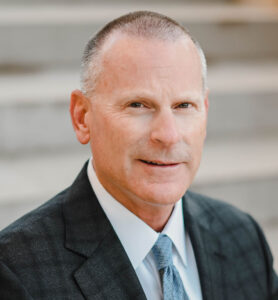
The following statement can be attributed to Brian Peters, CEO of the Michigan Health & Hospital Association.

Michigan’s elected officials demonstrated today a strong, bipartisan commitment to protecting healthcare funding in the state budget. We thank all of those who worked together when it mattered most, especially Gov. Whitmer, Senate Majority Leader Brinks and Speaker of the House Hall for their leadership in agreeing to a budget that will continue to advance the health of individuals and communities throughout the state. Hospitals, healthcare workers and patients have secure state funding for another year, maintaining access to care and protecting important service lines.

MHA CEO Brian Peters Responds to House Speaker Comments

MHA CEO Brian Peters responded to negative comments made by Michigan House Speaker Matt Hall (R-Richland Township) during a press conference on Sept. 3.

Speaker Hall’s press conference presentation included a segment on hospital funding, in which he continually refuted information provided by the MHA regarding House Bill 4706 and its harmful cuts to hospital funding and access to healthcare. Further, the Speaker made direct personal attacks to MHA CEO Brian Peters during the press conference.

Following the press conference, the MHA issued a statement reaffirming Peters’ commitment to protecting healthcare access throughout Michigan.

“The Speaker is wasting Michiganders’ time and resources doubling down on defending these disastrous budget cuts and resorting to personal attacks. Attacking me does not change the real cuts his budget threatens to make against patients, healthcare workers and hospitals. I’m happy to be the target of his outrage and criticism if that distracts him from cutting funding for those who report to work every day to save lives,” said Peters.

The MHA encourages members to contact their lawmakers through its action alert and continue to advocate for a real budget by Sept. 30 that puts patients, providers and hospitals first.

Members with questions may contact the MHA advocacy team.

Appel Joins WJR Live from Lansing Broadcast

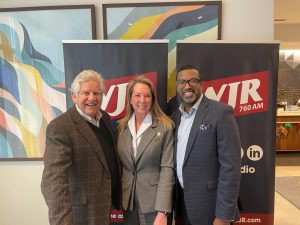
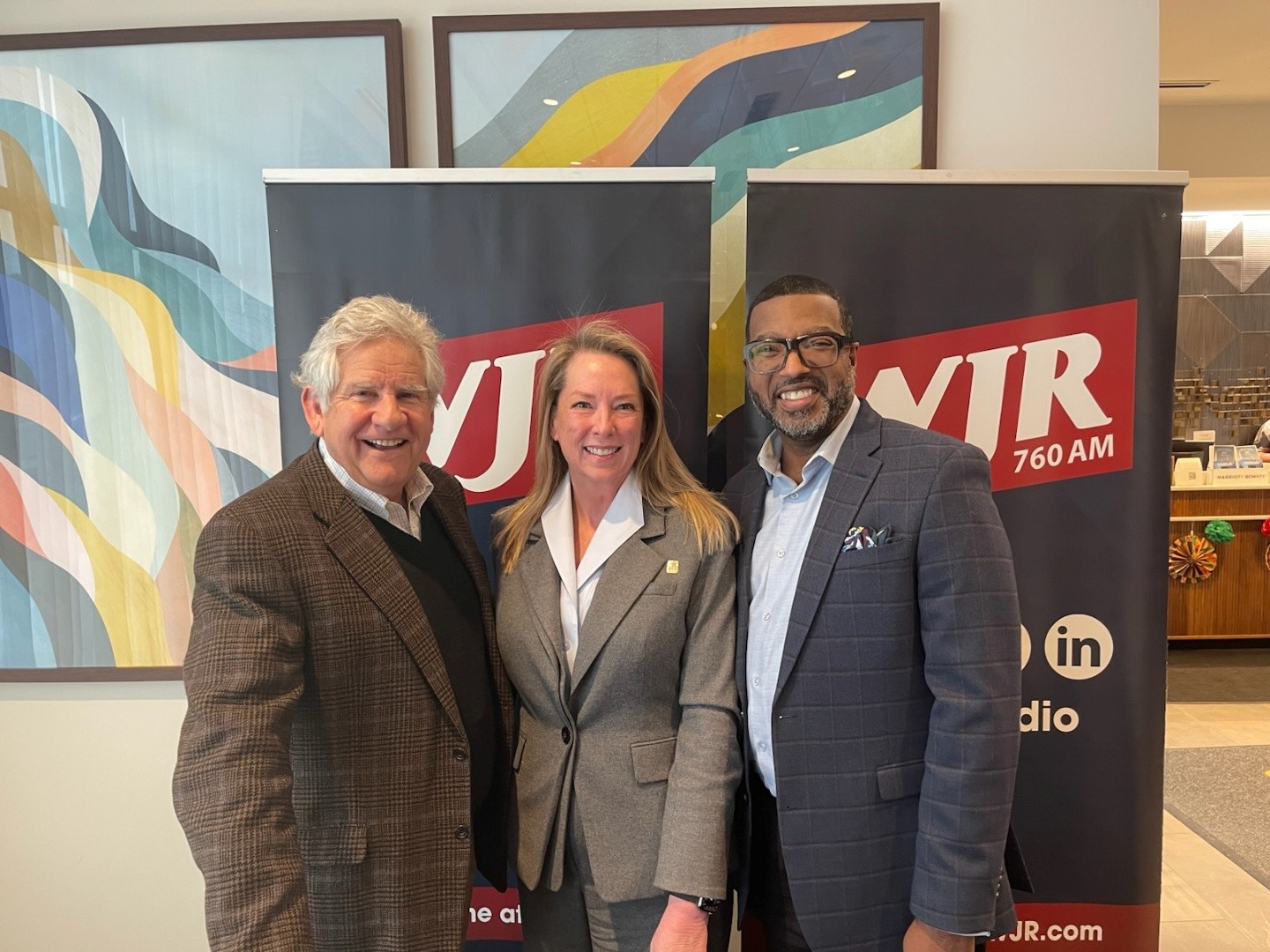
MHA EVP Laura Appel with WJR's Guy Gordon and Lloyd Jackson.
MHA EVP Laura Appel with WJR’s Guy Gordon and Lloyd Jackson.

MHA Executive Vice President Laura Appel appeared on Detroit’s WJR 760 AM’s ‘JR Morning with Guy Gordon, Llyod Jackson and Jamie Edmonds’s “Live from Lansing” broadcast Feb. 26 as part of the station’s annual coverage of legislative and policy issues facing the state the morning after Gov. Gretchen Whitmer’s State of the State address. The MHA sponsored the program, with the broadcast hosted at the Courtyard by Marriott Lansing Downtown.

As part of the program lineup, Appel spoke with Gordon and Jackson about the state of hospitals and the many changes they face, including the healthcare workforce, the 340B program and protecting Medicaid from federal funding cuts. Other notable interviewees during the event included Senate Minority Leader Aric Nesbitt (R-Lawton) and Speaker of the House Matt Hall (R-Richland Township).

Relevant healthcare topics included in the State of the State address included expanded attention towards recruiting males to pursue post-secondary education opportunities and increased state support for forgiving patient medical debt.

Additional media stories published during the week of Feb. 24 included an article picked up by both Bridge and MIRS on the challenges of behavioral health transport services for providers in the Upper Peninsula. Lauren LaPine, senior director of Legislative & Public Policy, MHA, was quoted in the article discussing efforts with the Michigan Department of Health & Human Services to implement and fund behavioral health transportation services at hospitals across the state.

“We believe that a patient shouldn’t have to be transported via police transport for behavioral health needs,” said LaPine.

In addition, the MHA received mention in a Feb. 27 article from MIRS recapping a House Health Policy Committee hearing about the 340B program.

Members with questions should contact John Karasinski at the MHA.

2024 General Election: What’s Ahead in Michigan

Below is a summary of the projected results for Michigan’s top races that will influence healthcare following the 2024 General Election. Official state and local outcomes will be available in the coming days on the Michigan Secretary of State website.

  • U.S. Rep. Elissa Slotkin (D-Holly) will take the U.S. Senate seat following a close race with opponent Mike Rogers (R-White Lake). Slotkin is a former national security official currently serving Michigan’s 7th Congressional District, which includes all of Ingham, Livingston, Shiawassee and Clinton counties, as well as parts of Eaton, Genesee and Oakland counties. In Congress, Slotkin worked across the aisle to help pass legislation to make prescription drug prices more transparent. She also fought to pass laws that capped the cost of insulin for seniors and allowed Medicare to negotiate for lower drug prices. In addition, she worked closely with the MHA and the hospitals in her district during the COVID-19 pandemic.
  • Justice Kyra Harris Bolden (D-Wayne) will serve a partial term on the Michigan Supreme Court after a projected win against Patrick W. O’Grady (R-Macomb). Once elected, Justice Bolden will take office in January 2025 and fill the remainder of a term that is underway. Justice Bolden is an incumbent candidate serving her second year on the Michigan Supreme Court since being appointed in January 2023. After receiving her Juris Doctorate, Justice Bolden became a criminal defense attorney and later a civil litigation attorney. Prior to joining the Supreme Court, she served in the Michigan House of Representatives for two terms, where she sat on the Judiciary Committee.
  • Kimberly Ann Thomas (D-Wayne) will take the full-term seat after a projected win against Andrew Fink (R-Hillsdale). She will take office at the start of the new term and serve for a full eight years. Thomas is a professor at the University of Michigan Law School and co-founder of the university’s Juvenile Justice Clinic. She also served on the bipartisan Michigan Task Force on Juvenile Justice Reform and has been recognized for her service by the Criminal Defense Attorneys of Michigan and has served as an expert for the American Bar Association (ABA) Rule of Law Initiative.
  • Republicans will flip the Michigan House of Representatives from Democratic control beginning in January of 2025. Although official results are not in, Matt Hall (R-Richland Township) is presumed to serve as speaker of the House and Rep. Ranjeev Puri (D-Canton) as minority House leader for the 2025-26 term.

Beyond election cycles, the MHA encourages Michiganders to stay informed on state and federal issues and engage with lawmakers on both sides of the aisle. Attend coffee hours, host facility tours and take the time to educate local decision-makers on what issues impact Michigan hospitals, staff, patients, communities and access to care.

For more information regarding election results, contact the MHA advocacy team.

Peters Featured on WJR Live from Lansing Broadcast

MHA CEO Brian Peters on JR' Morning with Guy Gordon, Jamie Edmonds and LLoyd Jackson.
MHA CEO Brian Peters speaks with LLoyd Jackson as part of the WJR Live in Lansing broadcast.

MHA CEO Brian Peters appeared on Detroit’s WJR 760 AM’s JR’ Morning with Guy Gordon, Jamie Edmonds, and Lloyd Jackson’s “Live from Lansing” broadcast Jan. 25 as part of the station’s annual coverage of legislative and policy issues facing the state the morning after Gov. Gretchen Whitmer’s State of the State address. The MHA sponsored the program, with the broadcast hosted at the Courtyard by Marriott Lansing Downtown.

As part of the program lineup, Peters spoke with Gordon, Edmonds and Jackson about the state of hospitals and the many challenges they face, including the healthcare workforce, behavioral health and prescription drug affordability. Other notable interviewees during the event included Whitmer; Senate Minority Leader Aric Nesbitt (R-Lawton), House Minority Leader Matt Hall (R-Richland Township), Rep. Matt Koleszar (D-Plymouth) and Sandy Baruah, president and CEO, Detroit Regional Chamber.

The State of the State address the previous evening primarily focused on 2023 policy achievements achieved by the first Democratic Legislature in 40 years and shared several policy proposals focused on lowering costs for Michiganders, improving education and strengthening economic development. One specific item mentioned by Whitmer relevant to hospitals is the intention to make the first two years of community college tuition-free for every high school graduate. Doing so would remove any financial barrier that may prevent students from pursuing healthcare degree, certificate and credentialing programs at community colleges. This policy item has been a solution offered by the MHA since last year to address nursing shortages.

As a sponsor of the event, the MHA developed a 60-second message for airing before and during the broadcast. Members with questions should contact John Karasinski at the MHA.