Leaders Convene for Crucial Healthcare Workforce Discussion

Crowd of attendees at The MHA Healthcare Workforce Conversation event in Lansing, MI.
Attendees at the MHA Healthcare Workforce Conversation event Sept. 11 in Lansing, MI.

The MHA hosted nearly 150 thought leaders from healthcare, post-secondary education and workforce talent development Sept. 11 in Lansing for a discussion to help strengthen connections across the sectors focused on building the pipeline for Michigan’s future healthcare workforce.  

Leaders engaged in the day-long summit, moderated by Elizabeth Kutter, senior director, government & political affairs, MHA, which highlighted panel discussions on healthcare workforce data, partnerships and best practices between hospitals and academia, guided discussions on addressing barriers to upskilling and reskilling current the workforce, challenges and opportunities in clinical placements and early career attraction. Each panel brought incredible knowledge and expertise to the topic areas, spurring robust conversations between panelists and attendees.

The event began with reviewing data indicating that more than 48,000 jobs in healthcare will be necessary in the next 10 years. That data highlighted the need to gather this diverse stakeholder group to push new, creative solutions to career attraction, educational enrollment and attainment, career readiness and retention. Colby Cesaro, vice president, Independent Colleges and Universities, moderated the panel comprised of John Karasinski, senior director, communications, MHA; Craig Donahue, CEO, Michigan Health Council; and Sarah Szurpicki, director, Michigan office of Sixty by 30.

Following the discussion, participants spent time sharing partnership best practices. Russ Kavalhuna, president, Henry Ford College; Don MacMaster, president, Alpena Community College; John Kaczynski, executive director of external governmental affairs, Saginaw Valley State University; Kelley McMillian, senior director of professional nursing practice, Corewell Health; and Brandy Johnson, president, Michigan Community College Association, shared how to develop direct partnerships between hospitals and post-secondary institutions, how to bring new programs to rural Michigan and how to structure a successful academic and healthcare employer partnership.

Over lunch, the group participated in a guided discussion led by Ryan Hundt, CEO, Michigan Works! and Christi Taylor, director of talent initiatives, Detroit Regional Chamber. The discussion encouraged attendees to network while discussing guided prompts on barriers to upskilling, reskilling and recruiting talent from within existing employee bases.

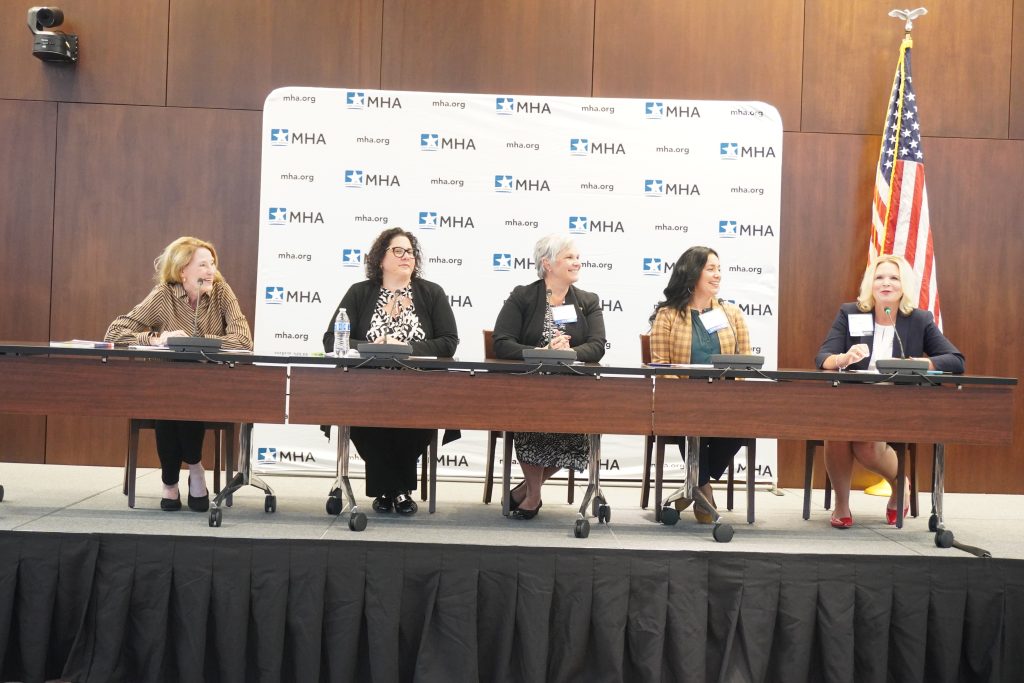
Following the guided networking lunch, the group dove deeply into the challenges academic institutions and hospitals alike are facing in undergraduate and graduate nursing clinical rotation placements. Immersive in-person clinical education is imperative to nursing licensure and long-term success. Without it, students lack preparedness for bedside practice, contributing to concerns about nursing turnover. This topic area teed up further need to specifically convene on ways to disrupt the current placement framework. Amy Brown, chief nursing officer, MHA, lead the  panel of experts featuring Cynthia McCurren, dean of the school of nursing UM-Flint; Amy Stahley, dean of the college of health professions, Davenport University; Maria Vitale, administrative manager of students of nursing and physician assistant studies, Corewell Health; and Deborah Lopez, clinical liaison, UM Health-Sparrow.

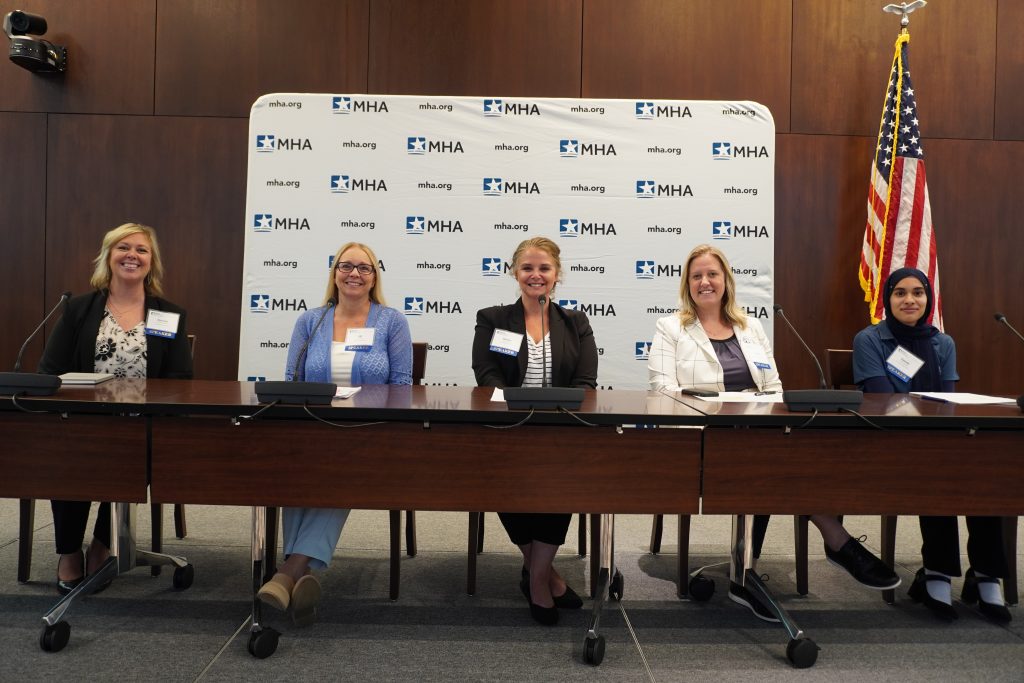
The event concluded with Mark Burley, state director, HOSA Michigan, leading a discussion with Christin Tenbusch, director, care experience and organizational development, Covenant Healthcare; Jill Jarvis, manager, clinical development and education, Covenant HealthCare; Ashlee Offord, Corewell Health Lakeland GROWTH Internship Program; Jamie Jacobs, Michigan College Access Network; and HOSA’s state student director Zainab Ahmed. The group focused on how to attract younger generations to healthcare careers and career pathways, with conversations on impactful paid internship programs, early healthcare career exposure and the role leaders play in ensuring positive recognition of the profession.

Members with questions about the event or interest in future engagements are encouraged to contact Elizabeth Kutter at the MHA.
MHA Monday Report Aug. 12, 2024

MHA Shares State Impacts and Insights at Regional 340B Roundtable

MHA staff attended the Regional 340B Roundtable Aug. 7 in Florence, IN to join colleagues from the Indiana Hospital Association, Ohio Hospital Association, Kentucky Hospital Association and endorsed business partner, SunRx, to share best practices …


MHA Keystone Center Offers Learning Collaboratives for Peer Recovery Services

The MHA Keystone Center is partnering with the Community Foundation of Southeast Michigan to host a two-part, virtual series about peer recovery services for substance and opioid use disorders from 10 a.m. to 12 p.m. …


CMS Releases FY 2025 Final Rule for Skilled Nursing Facilities

The Centers for Medicare & Medicaid Services (CMS) recently released a final rule to update the Medicare fee-for-service prospective payment system for skilled nursing facilities for federal fiscal year (FY) 2025. Key provisions …


Kelley Cawthorne Ad


MHA Webinar Tying Person and Family Engagement to Culture Performance Deadline Approaching

One week remains before the registration deadline for the MHA webinar Tying Person and Family Engagement to Culture and Performance. Scheduled from noon to 1 p.m. Aug. 20, the webinar provides an opportunity for hospitals to …


CMS Releases FY 2025 LTCH Prospective Payment System Final Rule

The Centers for Medicare & Medicaid Services (C recently released a final rule to update the Medicare fee-for-service long-term care hospital (LTCH) prospective payment system for fiscal year 2025. Specifically, the final rule: Increases …


CMS Releases FY 2025 Hospital Inpatient Prospective Payment System Final Rule

The Centers for Medicare & Medicaid Services recently released a final rule to update the Medicare fee-for-service hospital inpatient prospective payment system for fiscal year (FY) 2025. Highlights of the final rule include: …


The Keckley Report

Big Sky is Cloudy for Hospitals

“As state hospital association leaders assemble in Big Sky, Montana this week, the environment for hospital-friendly legislation is threatening at best:

The public’s trust in hospitals has eroded. Hospital financial performance is a mixed bag: some are profitable and many aren’t. Congress thinks hospitals need more regulation to increase price transparency, require ownership disclosure, verify community benefits that justify tax exemptions and impose restrictions on hospital private equity investments. And programs through which state and federal health policies are authorized—HHS, CMS, FTC, FDA, CMMI et al—are in limbo as a result of the June 28, 2024 Chevron ruling by the Supreme Court. …

For hospitals, effective advocacy is imperative: the reservoir of good will enjoyed for decades is evaporating. Advertising “we’re there for you” is timely as rural providers need a lifeline, and public castigation of “corporate insurers and billionaire critics” necessary to rally supporters. But beyond these, two things are clear:

  • The marketplace for “hospitals” is fundamentally different than the past requiring a clearer value proposition and fresh messaging.
  • And in states, hospitals will encounter unique opportunities and challenges in plotting strategies for their future. No two are alike.

Big Sky is a symbolic locale for this week’s meeting of state health executives: the Big Sky over hospitals is cloudy.”

Paul Keckley, Aug. 5, 2024

MHA Shares State Impacts and Insights at Regional 340B Roundtable

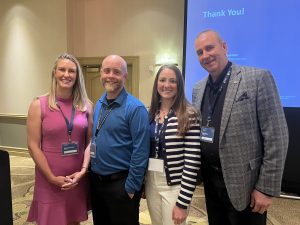
four individuals pictured smiling at conference in Indiana.
Elizabeth Kutter, senior director, government and political affairs, MHA; Rob Wood, senior director, partnerships, MHA; Kelsey Ostergren, director of health policy initiatives, MHA, and John Bretz, director of strategic relations, SunRx pictured during the Regional 340B Roundtable.

MHA staff attended the Regional 340B Roundtable Aug. 7 in Florence, IN to join colleagues from the Indiana Hospital Association, Ohio Hospital Association, Kentucky Hospital Association and endorsed business partner, SunRx, to share best practices for successful 340B administration and advocacy. Nearly 200 340B experts gathered from the four states to discuss the impact the program has on their communities, compliance best practices and opportunities to advocate for 340B at the state and federal levels.

Hospital 340B leaders were able to network, share challenges and discuss opportunities. Compliance experts from PYA and AuthorityRx as well as specialty pharmacy representatives from Optum and BioPlus offered technical advice and solutions in navigating complex 340B relationships.

Elizabeth Kutter, senior director of government and political affairs at the MHA joined Ted Slafsky, 340B Report and Lauren Brown, Indiana Hospital Association for a panel discussion on state 340B legislative and regulatory updates. “The MHA partners with Michigan Primary Care Association and other healthcare leaders to protect 340B to tell the story of how important 340B is to each community, especially our rural communities,” said Kutter. “Every person involved in 340B should tell their story about what 340B means in their community. It’s about local access. Individual patient access,” she added.

Protecting 340B remains a priority for the MHA and its covered entity members. MHA Board Chair, Julie Yaroch, DO, president of ProMedica Charles and Virginia Hickman Hospital joined MHA CEO Brian Peters on the July episode of the MiCare Champion Cast, where 340B is discussed as an association priority. “340B programs help hospitals get drugs that we need to treat patients to keep them healthy to have the best quality of life that they can. It also keeps programs viable inside our four walls and keeps services open, which allows us to support community-based care and community benefit programs,” said Yaroch.

Members with questions about 340B should reach out to Elizabeth Kutter at the MHA. Members interested in learning more about endorsed business partner, SunRx and its offerings, may contact Rob Wood at the MHA.

Michigan Supreme Court Issues Ruling on Paid Sick Leave & Minimum Wage

The Michigan Supreme Court issued a ruling July 31 in Mothering Justice v. Attorney General that upholds voter initiative petitions on paid sick leave and minimum wage. Those laws, as originally enacted, will go into effect Feb. 21, 2025.

As a practical result, hospital employers should be aware of forthcoming changes to sick leave and minimum hourly wages starting in February 2025. The Improved Workforce Opportunity Wage Act, as enacted Public Act (PA) 337 of 2018, increases the state minimum hourly wage annually until 2030 and applies to all employers, regardless of size. Current estimates place the minimum hourly wage at $12.25 per hour, starting in February 2025, and reaching $15 by 2030.

The Earned Sick Time Act, as enacted PA 338 of 2018, applies to all employers and requires that an employee be provided one (1) hour of earned sick time for every 30 hours worked. That sick time may carry over year to year and allows increased usage of paid earned sick time for an employee of up to 72 hours per year. In addition, employers will be required to update their displayed informational posters on earned sick time.

Members with questions should contact Nancy McKeague at the MHA. Members with questions about Michigan’s existing laws should contact Elizabeth Kutter at the MHA.
Help Protect 340B in Michigan: MHA Action Alert Available

Hospitals throughout Michigan rely on savings from the 340B Prescription Drug Pricing Program every day to spread scarce resources and care for those with limited or no access to healthcare. As manufacturers and other players at the state and federal level work to scale back the program, the MHA team is engaged in efforts to protect 340B and generate public awareness about the benefits it provides to Michigan patients and communities. Those interested in advocating for the 340B program are encouraged to contact House Insurance and Financial Services Committee members in a few quick steps through an MHA Action Alert.Two women hugging in a hospital setting with overlay text that reads, "340B Protects Access to Lifesaving Care" with text below that says learn more at MHA.org

The action alert requests committee members pass House Bill (HB) 5350, introduced by Rep. Alabas Farhat (D-Dearborn), to protect the 340B program and preserve healthcare cost-savings for Michigan hospitals and the communities they serve. The House Insurance and Financial Services Committee convened June 5 to hear testimony on the bill, allowing representatives from Henry Ford Health, Memorial Healthcare, McLaren Healthcare and Trinity Health to speak in support of the legislation.

Additionally, the MHA created a 340B webpage, downloadable infographic, digital ads and informational social media content. Targeted messages have been displayed more than 150,000 times to audiences in the downtown Lansing region.

Elizabeth Kutter, senior director of government and political affairs, MHA, provided first-hand insight on the strong impact of the 340B program in an MHA Rounds article.

“I’ve had countless conversations with our members about the benefits of 340B,” said Kutter. “The sentiment across the board – especially among rural hospitals and urban safety net hospitals – is that the program is essential for meeting patients where they are…every effort spent to manage the new onslaught of administrative burden created by manufacturers, is less savings going directly into communities in need of affordable care.”

The MHA continues to advocate for 340B and uplift the efforts of Michigan hospitals to expand access to quality, community-based care. Members with questions should contact Elizabeth Kutter at the MHA.
MHA Monday Report June 17, 2024

Cybersecurity Resources Available to Assist Rural Hospitals

The White House announced collaborative efforts June 10 aimed at strengthening cybersecurity for rural hospitals across the United States. Through this collaboration, Microsoft and Google announced a series of initiatives to provide free or discounted …


New Drug Linked to Overdose Deaths Across Michigan

The Michigan Department of Health and Human Services is warning Michigan residents and healthcare providers about medetomidine, a new drug identified in overdose deaths across the state. Medetomidine is a veterinary tranquilizer, similar to …


New Endorsed Business Partner Vault Verify Provides HR Data Solutions

The MHA’s Endorsed Business Partner (EBP) program promotes industry-leading firms. The EBP program connects member hospitals to solutions that alleviate pain points. The MHA recently endorsed Vault Verify, which is a leader in automated employment …


COMPACT Act Expands Emergent Suicide Care to Veterans

Effective January 2023, section 201 of the Veterans Comprehensive Prevention, Access to Care and Treatment (COMPACT) Act of 2020 allows eligible veterans to receive emergent suicide care in any Veterans Affairs (VA) or non-VA facility …


Protecting Community-based Care Through 340BMHA Rounds graphic, indicating thought leadership blog style post. Featuring Elizabeth Kutter pictured, woman with blonde hair smiling on the right.

Right now, a low-income patient in Northern Michigan is picking up a drug at a discounted price that they wouldn’t otherwise have access to. In another corner of the state, a cancer patient is receiving lifesaving treatment …


The Keckley Report

Can Medical Schools be Part of the Physician Discontent Solution?

“Friday, the House of Delegates of the American Medical Association began their Annual Meeting in Chicago where payment reforms will headline the meeting and resolutions to strengthen the profession voted on by the 1000 attendees. This meeting falls on the heels of welcome attention from Congress which seems sympathetic to physician pay issues as documented most recently in the Senate Finance Committee’s White Paper on Physician payment reforms. …

Modernizing medical school training to better prepare physicians for practice in the 21 century is needed in medical schools. As Deans are reducing lectures, implementing collaborative instructional methods, incorporating technology-enabled clinical decision support tools, expanding team-based learning experiences and expanding student exposure to non-hospital-based practice environments, resources should also be invested to prepare students to operate effectively as leaders and managers. …”

Paul Keckley, June 10, 2024


News to Know

  • MHA offices will be closed and no formal meetings will be scheduled June 19 in honor of Juneteenth.
  • The MHA is hosting office hours virtually from 2 to 3 p.m. every Thursday through June 27 to assist hospitals in completing an application for The Joint Commission’s Maternal Levels of Care  Verification.
  • MHA Endorsed Business Partner CorroHealth will host two free webinars for members to register.

Protecting Community-based Care Through 340B

MHA Rounds graphic, indicating thought leadership blog style post. Featuring Elizabeth Kutter pictured, woman with blonde hair smiling on the right.

MHA Rounds graphic, indicating thought leadership blog style post. Featuring Elizabeth Kutter pictured, woman with blonde hair smiling on the right. Byline: Elizabeth Kutter, Senior Director, Government & Political Affairs 

Right now, a low-income patient in Northern Michigan is picking up a drug at a discounted price that they wouldn’t otherwise have access to. In another corner of the state, a cancer patient is receiving lifesaving treatment, without having to make decisions between their care and their family’s needs.

Michigan hospitals care for our communities every day because of the savings they receive from the 340B Prescription Drug Pricing Program. Since being established by Congress in the early 1990s, this cost-saving program helps to spread scarce resources and provides a safety net to vulnerable patients and communities with limited or no access to healthcare.

The impact of 340B goes far beyond drug prices. It helps maintain community-based services at Federally Qualified Health Centers, cancer hospitals, HIV/AIDs clinics, critical access hospitals and tribal health centers among many other organizations. The program savings help eligible entities support mobile health clinics, cancer care access, financial assistance programs, meals on wheels, neonatal intensive care transports, behavioral health access and many other programs informed by the communities that benefit from the eligible program participants being in their backyard. 340B hospitals support community informed opportunities to positively impact public health.

In my role at the MHA, I’ve had countless conversations with our members about the benefits of 340B. The sentiment across the board – especially among rural hospitals and urban safety net hospitals – is that the program is essential for meeting patients where they are. The American Hospital Association shares a similar message, noting that 340B generates valuable savings for eligible hospitals to invest in programs that enhance patient services and access to care. The program’s design speaks directly to the ability for 340B covered entities to reflect on their community needs, it’s not a program that attempts to decide where savings need to go but instead focuses on the individual needs of every community being served resulting in increased quality of care and access to healthcare in all corners of Michigan.

Unfortunately, manufacturers and other players at the state and federal level are working to scale back the program and put arbitrary limits on program participation. The most recent and current attempt being to condition 340B contractual pharmacy relationships, harming the program’s ability to extend to patients in the places they live. Because of these attempts to frustrate the program, Michigan hospitals are at risk of losing their ability to provide affordable, accessible care to those in need. Every effort spent to manage the new onslaught of administrative burden created by manufactures, is less savings going directly into communities in need of affordable care.

Rarely are we presented with the opportunity to support meaningful access to drug cost reductions and affordable community care access, but House Bill 5350 allows us to do just that. The proposed legislation helps protect 340B at the state level to maintain healthcare cost-savings for our hospitals and the communities they serve. Contact your lawmaker and tell them how important 340B is to you, your community, and most importantly the patients you serve. Protecting our ability to care for our state’s most vulnerable patients is of the utmost importance, and HB 5350 does just that.

It’s our job to safeguard resources that advance the health of Michigan communities. I hope you’ll join me – and many others – in advocating for my favorite combination of numbers and letter: 340B.

Members with questions may contact me.

MHA Monday Report June 10, 2024

House Insurance Committee Hears Testimony on Bill to Protect 340B

The House Insurance and Financial Services Committee convened June 5 to hear testimony on House Bill 5350, introduced by Rep. Alabas Farhat (D-Dearborn), which would protect access to affordable prescription drugs and healthcare services …


Governor Signs Telehealth Parity & Behavioral Health Licensing Clarification Bills

Gov. Whitmer signed several MHA-supported bills during the week of June 3 related to telehealth services and behavioral health licensing. House Bills 4131, 4213, 4579 and 4580 (now referred to as Public Acts 51 – 53 of 2024) establish …


Maternal Levels of Care Toolkit Created to Assist with TJC Verification

A toolkit of resources is now available to assist hospitals with the application process for The Joint Commission’s (TJC’s) Maternal Levels of Care Verification. The toolkit contains resources from TJC and the Florida Perinatal …


MDHHS Distributes Funding to Michigan Universities to Support Behavioral Health Workforce

The Michigan Department of Health and Human Services (MDHHS) recently allocated $5 million to 12 Michigan universities to provide stipends to students pursuing a Bachelor of Social Work to Master of Social Work …


Expanded AMN Healthcare Partnership Offers Greater Member Solutions

The MHA’s Endorsed Business Partner program promotes industry-leading firms that can meet the most pressing needs of our member hospitals and health systems. The MHA recently endorsed a national leader in workforce solutions. The …


Health Facility State License Renewals Due July 31

The Michigan Department of Licensing and Regulatory Affairs announced the start of the 2024-2025 renewal cycle for health facilities operating under state licenses. This renewal applies to hospitals, psychiatric units, hospices, outpatient surgical facilities …


The Keckley Report

Handicapping the Players in the Quest for Healthcare Affordability

“As campaigns for November elections gear up for early voting and Congress considers bipartisan reforms to limit consolidation and enhance competition in U.S. healthcare, prospective voters are sending a cleat message to would-be office holders:

Healthcare Affordability must be addressed directly, transparently and now. …

Getting consensus to address affordability head on is hard, so not much is done by the sectors themselves. And none is approaching the solution in its necessary context—the financial security of a households facing unprecedented pressures to make ends meet. In all likelihood, the bigger, more prominent organizations in their ranks of these sectors will deliver affordability solutions well-above the lowest common denominators that are comfortable for most Thus, health care affordability will be associated with organizational brands and differentiated services, not the sectors from which their trace their origins. And it will be based on specified utilization, costs, outcome and spending guarantees to consumers and employers that are reasonable and transparent.”

Paul Keckley, June 3, 2024


MHA in the News

The MHA received media coverage the week of June 3 that includes coverage on the 340B drug pricing program and from the Mackinac Policy Conference on the healthcare workforce. Michigan Advance published an article June …

Governor Signs Telehealth Parity & Behavioral Health Licensing Clarification Bills

Gov. Whitmer signed several MHA-supported bills during the week of June 3 related to telehealth services and behavioral health licensing. House Bills 4131, 4213, 4579 and 4580 (now referred to as Public Acts 51 – 53 of 2024) establish payment parity for telehealth services and protections for telemedicine access through Medicaid and state regulated insurance products. The bills support a provider’s ability to serve patients and protect in-person visits that are vital to health outcomes.

Public Act 50 of 2024 (originally Senate Bill 227), sponsored by Sen. Dan Lauwers (R-Brockway), was supported by the MHA and updates the state’s child caring institution licensing laws to align with emergency intervention language used in the Mental Health Code. Specifically, this legislation is important to any facility interested in becoming licensed as a Pediatric Residential Treatment Facility and creates additional alignment between the Mental Health Code and the licensing structure for child caring institutions.

Members with questions may contact Lauren LaPine or Elizabeth Kutter at the MHA.

House Insurance Committee Hears Testimony on Bill to Protect 340B

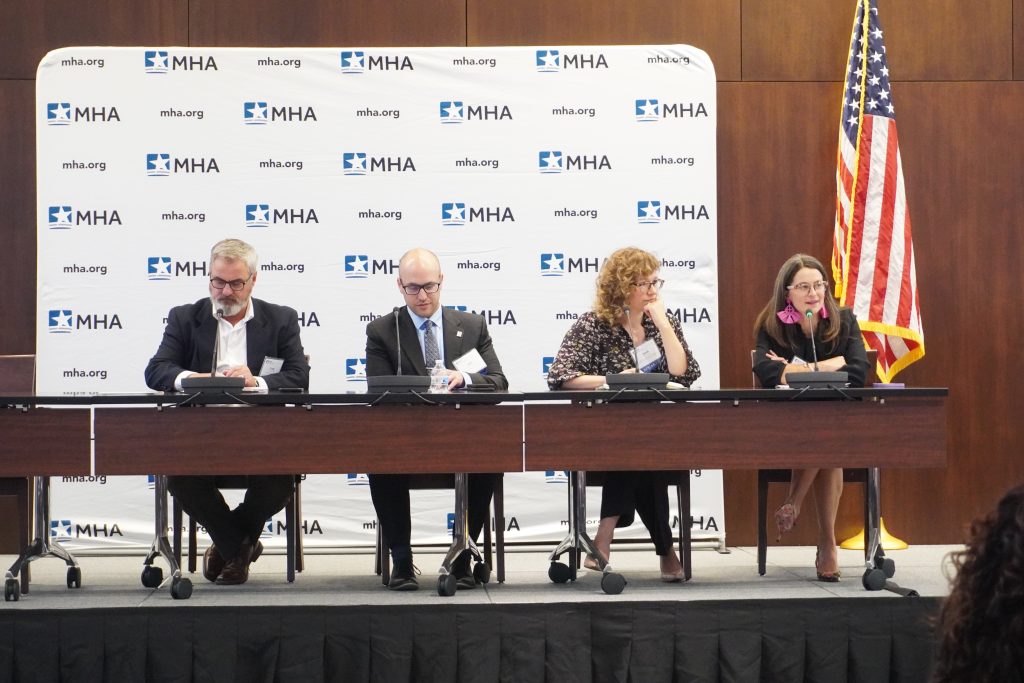
Maureen D’Agostino, vice president of accreditation and regulatory CMS programs and provider and facility enrollment at McLaren Health Care testifying during The House Insurance and Financial Services Committee.

The House Insurance and Financial Services Committee convened June 5 to hear testimony on House Bill (HB) 5350, introduced by Rep. Alabas Farhat (D-Dearborn), which would protect access to affordable prescription drugs and healthcare services through the 340B Prescription Drug Pricing Program.

Testimony began with Marc Corriveau, JD, MHSA, vice president of corporate government affairs at Henry Ford Health, providing an overview of how savings from the 340B program allow vulnerable, uninsured patients to receive medical and behavioral healthcare services at little to no cost.

Sean Gehle, vice president of advocacy at Trinity Health Michigan, followed with additional examples of how the 340B program allows qualified safety net providers to extend scarce federal resources. Specifically, Gehle noted that the health system is able to provide financial assistance for prescription medications to patients in need.

Next, Ben Frederick, associate vice president of advocacy and government relations and Joseph Munroe, director of pharmacy at Memorial Healthcare, shared the impact the 340B Drug Pricing Program has in rural communities. Together, Frederick and Munroe explained how the program makes it possible for patients to receive routine and specialty care close to home including obstetrics, oncology, behavioral health and neurology care services.

Last to provide testimony was Maureen D’Agostino, vice president of accreditation and regulatory CMS programs and provider and facility enrollment at McLaren Health Care. D’Agostino overviewed how savings from the 340B program have helped McLaren offer comprehensive care for substance use disorder, cancer treatments and more. D’Agostino was accompanied by Deidra Wilson, vice president of government affairs at McLaren.

The MHA continues to advocate for the 340B program and uplift efforts by Michigan hospitals to expand access to quality, community-based care. Members with questions should contact Elizabeth Kutter at the MHA.