
MHA Monday Report Nov. 11, 2024

Hearings Held on State Legislation Impacting Hospitals

Several bills impacting hospitals were discussed in state committee hearings during the week of Nov. 4. The Michigan House Health Policy Behavioral Health subcommittee advanced several pieces of legislation to the full Health Policy Committee …


2024 General Election: What’s Ahead in Michigan

Below is a summary of the projected results for Michigan’s top races that will influence healthcare following the 2024 General Election. Official state and local outcomes will be available in the coming days on the …


CMS Releases Medicare 2025 Outpatient Prospective Payment System Final Rule

The Centers for Medicare & Medicaid Services (CMS) recently released a final rule to update the Medicare fee-for-service outpatient prospective payment system effective Jan. 1,  2025. The final rule: Provides a net 2% increase …


endorsed business partnerLongtime Associate Member Alliance-HNI Becomes an Endorsed Business Partner

The MHA recently endorsed Alliance-HNI, a longtime MHA associate member, as an Endorsed Business Partner. Alliance-HNI delivers a full continuum of services, including mobile, fixed-site, comprehensive service line management and joint venture partnerships. …


2025 Medicare Fee-for-Service Home Health Final Rule Released

The Centers for Medicare & Medicaid Services (CMS) recently released a final rule for the home health prospective payment system  for calendar year 2025. The rule includes updates to the Medicare fee-for-service …


Webinar Focuses on Strengthening Healthcare Worker Well-being

The MHA Health Foundation will host the webinar Implementing Evidence-Informed Strategies to Normalize Help-Seeking and Strengthen Wellbeing from 4:30 to 5:30 p.m. Dec 4 to offer strategies for supporting the mental well-being of healthcare professionals. The webinar offers …


Keckley Report

In Healthcare, Near-Sightedness is “Normalcy”

““Normalcy” in our political system means willful acceptance that our society is hopelessly divided by income, education, ethnic and political views. It’s benign acceptance of a 2-party system, 3-branches of government (Executive, Legislative, Judicial) and federalism that imposes limits on federal power vis a vis the Constitution. …

A process for defining of the future of the U.S. health system and a bipartisan commitment by hospitals, physicians, drug companies, insurers and employers to its implementation are needed–that’s the point. Near-sightedness in our political system and in our health, system is harmful to the greater good of our society and to the voters, citizens, patients, and beneficiaries all pledge to serve.

As respected healthcare marketer David Jarrard wrote in his blog post yesterday “As the aggravated disunity of this political season rises and falls, healthcare can be a unique convener that embraces people across the political divides, real or imagined. Invite good-minded people to the common ground of healthcare to work together for the common good that healthcare must be.”

Thinking and planning for healthcare’s long-term future is not a luxury: it’s an urgent necessity. It’s also not “normal” in our political and healthcare systems.”

Paul Keckley, Nov. 4, 2024


News to Know

MHA offices will be closed and no formal meetings will be scheduled Nov. 11 in honor of Veterans Day.

Hearings Held on State Legislation Impacting Hospitals

Several bills impacting hospitals were discussed in state committee hearings during the week of Nov. 4.

The Michigan House Health Policy Behavioral Health subcommittee advanced several pieces of legislation to the full Health Policy Committee that intend to increase access to behavioral health services. House Bills (HBs) 5371 and 5372, led by Rep. Felicia Brabec (D-Pittsfield Township) and Rep. Phil Green (R-Watertown Township) adds Certified Community Behavioral Health Clinics (CCBHCs) to the Social Welfare Act and requires the state to adopt a policy that is in alignment with the federal requirements for CCBHCs. The inclusion of CCBHCs in the Social Welfare Act includes a requirement that the Michigan Department of Health and Human Services (MDHHS) develop a prospective payment system for funding in compliance with federal payment policies, submit any necessary waivers to implement payments and requires certification of CCBCs that meet federal requirements. The MHA continues to be involved in the development of CCBHC certification and is working closely with the MDHHS to ensure rules and implementation that improve access to additional behavioral health sites of service in Michigan.

The subcommittee also advanced to the full Health Policy Committee HB 5785 (Rep. Brabec). The bill would change the requirements for individuals pursuing a limited license to practice psychology, including increasing the supervised post graduate experience necessary to practice and allowing individuals granted a limited license the ability to practice independently within their scope.

The Senate Labor Committee received testimony on Senate Bills 962 (Sen. Cherry), 975 (Sen. Singh), 976 (Sen. Cherry) and 981 (Sen. Cavanagh), which would modernize the state’s unemployment insurance practices. The legislation makes several changes at the request of the Unemployment Insurance Agency, as well as stakeholders, including the MHA. The changes adopted and discussed include requests from the MHA to address issues identified by hospital employers, concerns identified by employee groups and updates to the state law that address recent court interpretations. The committee did not take a vote on the bills, as a second hearing is anticipated.

Members with questions on state legislation can reach out to Elizabeth Kutter at the MHA.

Behavioral Health Bills Advance, Other Bills Discussed in State Legislature

Several bills impacting healthcare and hospitals were advanced through committees in the state Senate during the week of Oct. 28.

The Senate Health Policy Committee unanimously approved Senate Bills (SB) 916 – 918, led by Sen. Hertel (D-Saint Clair Shores). The bills would expand the availability of Assisted Outpatient Treatment (AOT) in Michigan. AOT has been proven to decrease the number of individuals involved in the criminal justice system with behavioral health needs and can decrease the pressure on emergency departments for issues related to behavioral health. The bills expand the healthcare providers eligible to provide testimony for AOT and adds a new mechanism to divert individuals charged with misdemeanor offenses to AOT. The MHA supports the legislation as it awaits a vote of the full Senate.

Additionally, the Senate Regulatory Reform Committee took testimony on Senate Bills 651 – 654, led by Sen. Singh (D-East Lansing). The bills are spearheaded by the Keep Michigan Kids Tobacco Free Alliance and would create new licensing for establishments that sell tobacco products while enhancing the penalties on those retailers for selling to individuals under age 21. The legislation also removes punitive penalties on youth to reduce barriers for those who are seeking help for nicotine addiction. The MHA supports the legislation to improve Michigan’s public health as it awaits a vote of the committee.

Members with questions on state legislation can contact Elizabeth Kutter at the MHA.

MHA Monday Report Oct. 21, 2024

State Senate Advances Healthcare Legislation

Several bills impacting healthcare and hospitals were advanced through committees in the state Senate during the week of Oct. 14. Senate Housing and Human Services voted out a package of legislation referred to as the …


MHA Continues to Monitor Baxter IV Solutions Shortage

The MHA continues to support Michigan hospitals in response to the Baxter IV solutions shortage that began the week of Sept. 29. Baxter International Inc. temporarily closed its North Cove manufacturing plant in Marion, N.C., …


LARA to Evaluate Non-Long Term Care Provider Licensures

The Department of Licensing and Regulatory Affairs (LARA) is required by MCL 333.20155 to make at least one visit to each licensed Non-Long Term Care provider every three years to evaluate licensure. LARA may waive …


MHA Webinar Explores Leadership Strategic Planning for AI

The MHA will host the webinar How Boards and Leaders Can Deploy AI Responsibly and Ethically, scheduled 4:30 – 6 p.m. ET, Dec. 3. The webinar will cover a framework to govern the approach, policies …


CMS Finalizes Medicare Appeals Process for Beneficiary Status Change

The Centers for Medicare & Medicaid Services (CMS) and the United States Department of Health and Human Services recently released a final rule, effective Oct. 11, 2024, implementing a federal district court order that …


Rural Health Research Gateway Releases Report on the First Year of REHs

The Rural Health Research Gateway recently published a report on Rural Emergency Hospitals (REHs) highlighting data from the first year of the designation. Under the Consolidated Appropriations Act of 2021, the Rural Emergency Hospital provider type …


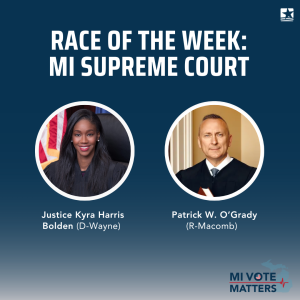
MHA Race of the Week – Michigan Supreme Court

The MHA’s Race of the Week series highlights the most pivotal statewide races for the 2024 General Election. The series will provide hospitals and healthcare advocates with the resources they …


Three Key Takeaways from the MHA Webinar Featuring Health Equity Regulatory Requirements
Earlier this month, the MHA, in partnership with the MHA Keystone Center, hosted a member webinar highlighting the current and future state of health equity priorities and requirements from the Centers for Medicare & Medicaid Services and The Joint Commission that impact …


Keckley Report

Do Healthcare Prices Matter?

“With the election 22 days away and inflation the key issue for voters, the latest Consumer Price Index report from the Bureau of Labor Statistics is especially important. Released last Tuesday, it shows: …

Healthcare prices account for 10.2% of the CPI but attention to these is decidedly less than food, energy, housing and other categories. For consumers, that neglect is harmful’ for industry insiders, it’s a pressure point that’s been avoided. Price estimators, posted chargemasters, open-panel benefits design, website queries and other tactics work OK for now. So…

Do Healthcare Prices Matter? Not much today. But they’re mission critical in healthcare tomorrow.”

Paul Keckley, Oct. 14, 2024


News to Know

The United States Departments of Labor, Health and Human Services and the Treasury issued Sept. 9 a set of final rules on the Mental Health Parity and Addiction Equity Act of 2008.


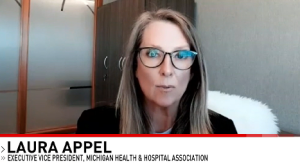
Laura Appel speaks with NBC25 about the Baxter IV solutions shortage.

MHA in the News

The MHA continued to engage with media requests on the Baxter IV solutions shortage during the week of Oct. 14. NBC25/Fox66 in Flint aired a story Oct. 16 on the shortage, which includes an interview …

State Senate Advances Healthcare Legislation

Several bills impacting healthcare and hospitals were advanced through committees in the state Senate during the week of Oct. 14.

Senate Housing and Human Services voted out a package of legislation referred to as the ‘Momnibus.’ Sen. Erika Geiss (D-Taylor) and colleagues Sens. Stephanie Chang (D-Detroit), Sarah Anthony (D-Lansing), Mary Cavanagh (D-Redford Twp.) and Mai Xiong (D-Warren) introduced Senate Bills (SBs) 818, 819, 820, 821, 822, 823 and 825, as well as House Bill (HB) 5826, make alterations to state law to improve outcomes in maternal care. Specifically, these bills increase opportunities for addressing bias in patient care, prohibit discrimination based on pregnancy or lactation status, allow for appropriate information sharing with the Department of Health and Human Services, allow for loan repayment for certified nurse midwives and create the doula scholarship fund. The MHA secured amendments to the bills in committee to ensure that hospitals are trusted partners in this work and recognize hospitals’ commitment to addressing maternal health disparities. The bills were voted out of committee, with the MHA supporting SBs 818, 819, 820, 825 and HB 5826.

Additionally, the Senate Appropriations Committee voted out House Bill (HB) 4361 (Brabec), which creates a one-time individual income tax credit for organ donors. The $10,000 one-time credit can be used to cover expenses incurred from the live organ donation. Specifically, those expenses need to be non-reimbursed expenses that are directly related to the act of living organ donation including things like travel, lodging, lost wages or childcare. The MHA is supportive of HB 4361, which recognizes the costs incurred by organ donors.

Rep. Stephanie Young (D-Detroit) introduced HB 6025, the most recent legislation introduced among a series of bills highlighting the need to review the state’s guardianship system. HB 6025 alters the definition of “relative” for purposes of guardianship of a minor. This change could potentially increase opportunities for relatives, close kin, foster parents or those who are identified as having a special relationship with the minor to be selected as the guardian. Further, the legislation modifies when a minor’s guardian may request financial assistance. If enacted, a minor would have to reside with a relative guardian or foster parent for at least six months before an application for financial assistance. The guardianship process is complex and can be difficult to navigate. For those reasons the MHA has put together the Guide for Michigan’s Adult Guardianship Process to help all those who interact with the system find more success.

Members with questions on state legislation can contact Elizabeth Kutter at the MHA.

MHA Monday Report Oct. 14, 2024

Legislation Impacting Hospitals Advances in State Legislature

A variety of bills impacting hospitals were introduced and discussed in the state legislature during the week of Oct. 7. Gov. Whitmer signed Public Act 132 of 2024, which updates statutory framework for the …


Baxter IV Solutions Shortage Updates

The MHA continues to support Michigan hospitals in response to the Baxter IV solutions shortage that began the week of Sept. 29. Baxter International Inc. temporarily closed its North Cove manufacturing plant in Marion, N.C., …


Reimbursement for Age-Friendly Quality Data Included in FY 2025 Hospital IPPS Final Rule

Included in the Centers for Medicare & Medicaid Services’ Medicare fee-for-service hospital inpatient prospective payment system (IPPS) fiscal year (FY) 2025 final rule is a reimbursement model for hospitals submitting age-friendly quality data. Hospitals …


Healthcare Leaders Discuss Regional Care at Lansing Economic Club
The Lansing Regional Chamber hosted its annual Future of Healthcare in the Lansing Region luncheon Oct. 10 as part of its monthly series of Lansing Economic Club events. This event featured a panel discussion moderated …


New Hospital Reporting Requirements for Respiratory Illness and Bed Capacity
The Centers for Medicare & Medicaid Services recently announced new respiratory disease reporting requirements for hospitals through the National Healthcare Safety Network effective Nov. 1. These requirements replace the previous “Hospital COVID-19 Data” reporting requirements …


MHA Webinar Outlines Strategies to Strengthen Healthcare Worker Well-being

The MHA and the MHA Keystone Center will host the MHA Health Foundation webinar Implementing Evidence-Informed Strategies to Normalize Help-Seeking and Strengthen Wellbeing from 4:30 to 5:30 p.m. Dec 4. This webinar is dedicated to …


MHA Race of the Week – Michigan Supreme Court

The MHA’s Race of the Week series highlights the most pivotal statewide races for the 2024 General Election. The series will provide hospitals and healthcare advocates with the resources they …


MHA Podcast Explores Why Voting Matters to Healthcare in Michigan

The MHA released a new episode of the MiCare Champion Cast featuring Laura Appel, executive vice president of government relations & public policy, MHA, exploring why voting in the 2024 General Election is critical to …


Keckley Report

What is the Medicare Advantage?

“On October 15, the open enrollment period for Medicare begins running through December 7 for coverage starting in January 2025. In this period, 67 million Medicare eligible seniors can review features of Medicare plans offered in their area, switch from traditional Medicare to a Medicare Advantage (MA) plan (or vice versa), change their MA selection and add/change their Medicare Part D prescription drug plans.

In 2024, Medicare Advantage plans enrolled 33 million seniors and Medicare paid private insurers $462 billion to pay for their care. But conditions for Medicare Advantage have changed in recent years prompting many to ask ‘what is the Medicare Advantage?’ …

Its funding comes from payroll taxes paid by employers and their employees, and those who are self-employed PLUS income taxes paid on Social Security benefits, interest earned on the Medicare trust fund’s investments and Part A premiums from people who aren’t eligible for premium-free Part A. …”

Paul Keckley, Oct. 7, 2024


Laura AppelMHA in the News

The MHA received media coverage the week of Oct. 7 that includes coverage on a potential national shortage of IV solutions products, physician retention and rural hospital funding. The closure of a Baxter manufacturing facility …

Legislation Impacting Hospitals Advances in State Legislature

A variety of bills impacting hospitals were introduced and discussed in the state legislature during the week of Oct. 7.

Gov. Whitmer signed Public Act (PA) 132 of 2024, which updates statutory framework for the rural and obstetrical access pools funded in the fiscal year 2025 state budget. The MHA supports PA 132, introduced by Sen. Singh (D-East Lansing), as an additional statutory clarification to highlight the importance of funding for rural providers.

The Senate Health Policy Committee took testimony on Senate Bills (SB) 916 – 918, led by Sen. Hertel (D-Saint Clair Shores). The bills would expand the availability of Assisted Outpatient Treatment (AOT) in Michigan. AOT has been proven to decrease the number of individuals involved in the criminal justice system with behavioral health needs and can decrease the pressure on emergency departments for issues related to behavioral health. The bills expand the healthcare providers eligible to provide testimony for AOT and adds a new mechanism to divert individuals charged with misdemeanor offenses to AOT. The MHA supports the legislation as it awaits a vote of the full committee.

The Senate Finance, Insurance and Consumer Protection Committee took testimony on several sets of bills that impact hospitals this week. SBs 888892, sponsored by Sen. Bayer (D-Keego Harbor), make alterations to the Identity Theft Protection Act and corresponding acts, to require certain security measures and protocols with regard to the protection of personal information from cyberattacks. The MHA worked closely with Sen. Bayer and Attorney General Dana Nessel on the ways to ensure healthcare providers and hospitals can protect patient information, while also allowing alignment with existing reporting and regulatory structures. The MHA continues to work with the sponsor and the attorney general on this legislation, and on other opportunities to support hospitals as victims of cybercrime.

The Committee also heard from proponents of SBs 1021 and 1022, which aim to expand the purview of the current Michigan Consumer Protection Act (MCPA). The MCPA provides a broad exemption for regulated and licensed professional entities, such as healthcare professionals and hospitals. This exemption acknowledges that these highly regulated fields already have proper channels for citizens to seek remedies, when needed. SB 1021 would alter that exemption and subject otherwise regulated and licensed spaces to new lawsuits and challenges. The MHA is opposed to this legislation.

Members with questions can reach out to Elizabeth Kutter at the MHA.

Headline Roundup: IV Solutions Shortage, Physician Retention & More

Laura Appel
Laura Appel
MHA EVP Laura Appel spoke with WJR, Michigan Public and WILX during the week of Oct. 7, 2024.

The MHA received media coverage the week of Oct. 7 that includes coverage on a potential national shortage of IV solutions products, physician retention and rural hospital funding.

The closure of a Baxter manufacturing facility in North Carolina due to Hurricane Helene led to several media stories, as the plant manufactures approximately 60% of the IV solutions used every day in the U.S.

Meanwhile, Bridge Michigan published a story looking at physician retention while Michigan Radio published a story on the recently signed Senate Bill 701, which eliminates the definition of “critical access hospital” and modifies the definition of “rural hospital.” It also raises the population limit to be considered a “rural hospital” to include counties with 195,000 people or less for the rural hospital funding pool.

Several MHA representatives participated in the news coverage, including Brian Peters, CEO; Laura Appel, executive vice president, government relations & public policy; Elizabeth Kutter, senior director, government & political affairs; and John Karasinski, senior director, communications.

Friday, Oct. 11

Thursday, Oct. 10

Wednesday, Oct. 9

Tuesday, Oct. 8

Monday, Oct. 7

Members with any questions regarding media requests should contact John Karasinski at the MHA.

MHA Monday Report Sept. 30, 2024

Legislation Impacting Hospitals Introduced in State Legislature

A variety of bills impacting hospitals and health systems were introduced and discussed in the state legislature during the week of Sept. 23. Senate Bill 701, introduced by Sen. Singh (D-East Lansing), updates the statutory framework for the rural and obstetrical …


NAIC Meeting Evaluates Impact of Pharmaceutical Costs on Rural Hospitals

Michigan Department of Insurance and Financial Services Director Anita Fox invited the MHA and Munson Healthcare to present to the Midwest Zone meeting of the National Association of Insurance Commissioners (NAIC) held Sept. 25. The …


CE Credits Available for Health Equity Regulatory Requirements Webinar

The MHA and the MHA Keystone Center are hosting an educational webinar from 8:30 to 9:30 a.m. Oct. 10 about the current and future state of regulatory and accrediting health equity requirements from the Centers …


2024 Election Materials Available for Michigan Hospitals

The MHA is offering election communication materials geared toward hospital staff, volunteers, patients and visitors to encourage voter participation in the 2024 general election. Additionally, the MHA elections webpage will be updated regularly with relevant …


Keckley Report

The Commonwealth Health System Study in Context: Will it Prompt Meaningful Action in the U.S.?

“Last Thursday, the Commonwealth Fund released its assessment of how the U.S. health system compares to other developed systems of the world. The title says it all: Mirror, Mirror 2024: A Portrait of the Failing U.S. Health System.

The real question prompted by the Commonwealth study is this: is the ineffectiveness of the U.S. system fixable? Private investors, operators and trade groups say yes so long as a transition is smooth and their interests are protected. Systemic change is unwelcome. Healthcare in the U.S. is an industry that does well financially so, for many politicians, pensioners and insiders, they’d prefer it be left alone.

But the majority of Americans, including the majority in the 18-million healthcare workforce, aren’t sure. They see corporate profits, executive compensation, mergers and takeovers as indicators of its corporatization and business acumen but its layoffs, cost-cutting, surprise bills and inexplicable prices as evidence the system puts profit ahead of fixing problems that matter to them.

This study is worth discussion in every Boardroom in healthcare and in every household interested in health reforms. At a minimum, It merits collaborative action led by AHA, AHIP, AMA and others to develop meaningful, long-term solutions to its flaws that subordinate their proprietary preferences for the greater good.”

Paul Keckley, Sept. 23, 2024


MHA CEO Brian Peters

MHA in the News

Detroit’s WJR 760 AM interviewed MHA CEO Brian Peters Sept. 22 for a segment on healthcare as part of “The Capital Report,” a new show focused on exploring issues happening within state politics and Michigan’s …

Legislation Impacting Hospitals Introduced in State Legislature

A variety of bills impacting hospitals and health systems were introduced and discussed in the state legislature during the week of Sept. 23.

Senate Bill (SB) 701, introduced by Sen. Singh (D-East Lansing), updates the statutory framework for the rural and obstetrical access pools funded in the fiscal year 2025 state budget. The MHA supports SB 701 as an additional statutory clarification to highlight the importance of funding for rural providers. The bill now goes to the governor for her signature.

The Senate Health Policy Committee took testimony on SB 1006, introduced by Senator McMorrow (D-Royal Oak), which would require hospitals to stock and offer intrauterine devices (IUDs) for birth control immediately postpartum. The testimony focused on the potential efficacy of the procedure and the potential risks to the patient. The MHA has not yet taken a position on the legislation and has expressed concerns regarding provider discretion, appropriate settings and potential supply chain disruptions. The committee did not take a vote on the legislation.

House Bill (HB) 5964 was introduced by Rep. Conlin (D-Ann Arbor). The legislation would repeal the sunset on the Interstate Medical Licensure Compact, which allows physicians who are licensed and in good standing to practice in any compact state without first getting a state specific license. The MHA supported bill was referred to the House Health Policy Committee.

Rep. Young (D-Detroit) introduced HB 5999, which would prohibit mandatory overtime for nurses working in Michigan’s hospitals. The MHA is opposed to this one-size-fits-all prohibition that does not account for national workforce shortages, risk of patient harm or new restrictions on employer discretion as a result of citizen-initiated laws on earned sick time. The MHA continues to work with lawmakers to understand the impact this bill, along with government mandated nurse staffing ratios, will have on access to healthcare in Michigan. The bill was referred to the House Labor Committee.

Members with questions can reach out to Elizabeth Kutter at the MHA.