
Headline Roundup: House Budget Reaction

The MHA received a host of media coverage from across the state during the week of Aug. 25 after the MHA issued a media statement reacting to the state budget bill passed Aug. 26 by the Michigan House of Representatives.

House Bill 4706 would institute several harmful changes to hospital funding, which could result in more than 20,000 job losses in Michigan hospitals. The statement from MHA CEO Brian Peters expressed the MHA’s strong opposition to this version of the state budget, expressing the harmful consequences it would bring and the need for a state budget that protects existing hospital funding.

Friday, Aug. 29

Thursday, Aug. 28

Wednesday, Aug. 27

Tuesday, Aug. 26

Members with any questions regarding media requests should contact John Karasinski at the MHA.

News Coverage Continues Focus on Medicaid

Laura Appel

The MHA received media coverage during the week of July 28 that continued to focus on the impact the One Big Beautiful Bill Act (OBBBA) will have on Medicaid.

Bridge published an op-ed Aug. 1 from MHA CEO Brian Peters refuting public claims defending Medicaid funding cuts in the OBBBA. Peters describes how the cuts will have real consequences for real people, spanning all populations.

“When hospitals lose Medicaid dollars, the burden shifts to other patients, including those with employer-sponsored insurance,” said Peters. “Costs go up. Wait times increase. Local access to specialty care dries up. Employers and families alike will feel the ripple effects, both in their insurance premiums and at the distance they must travel for care.”

WZZM 13 published a story July 30 on the 60th anniversary of Medicare and Medicaid being established by President Lyndon B. Johnson. The story references a media statement published by the MHA on the subject.

Laura AppelA story also aired July 30 during the FOX 47 evening news broadcast about how Medicaid changes in the One Big Beautiful Bill Act (OBBBA) will impact rural healthcare providers. MHA Executive Vice President Laura Appel was interviewed as part of the story.

Appel also appears in a Crain’s Detroit Business article about healthcare affordability that was sponsored by Blue Cross Blue Shield of Michigan (BCBSM). Representatives from various Michigan businesses and healthcare groups were invited to join BCBSM and Crain’s in the executive roundtable.

Appel spoke to the cost pressures impacting hospitals and the role hospitals have in addressing rising healthcare costs.

“Most hospitals across our state are looking for those partnerships because they can’t afford to do it on their own,” said Appel in relation to hospitals pursuing mergers, acquisitions and joint ventures.

Members with any questions regarding media requests should contact John Karasinski at the MHA.

Headline Roundup: Continued OBBBA Coverage

The MHA continued to receive media coverage during the week of July 14 about the impacts of the federal budget reconciliation bill, officially referred to as the One Big Beautiful Big Act (OBBBA).

Coverage includes references to the association’s financial estimates, as well as quotes from MHA CEO Brian Peters and MHA Executive Vice President Laura Appel.

Wednesday, July 16

Tuesday, July 15

Monday, July 14

Members with any questions regarding media requests should contact John Karasinski at the MHA.

Mental Health Awareness Month Highlights Week of Media Coverage

Lauren LaPine

The MHA received news coverage during the week of May 19 highlighted by stories related to Mental Health Awareness Month and the need to expand state psychiatric bed capacity.

Lauren LaPine, senior director, legislative and public policy, MHA, speaks during a May 21 press conference on Mental Health Awareness Month, addressing long emergency department waits for psychiatric beds among Medicaid patients.

Lauren LaPine, senior director, legislative and public policy, MHA, joined state lawmakers and University of Michigan Health-Sparrow clinicians during a press conference May 21 about Mental Health Awareness Month. LaPine focused her comments on the high number of patients waiting in emergency departments across the state for an inpatient psychiatric bed. Many of these patients are Medicaid beneficiaries and experience further delays awaiting a clinical assessment.

WILX News 10 and WLNS 6 News attended the press event and aired stories during their evening news broadcasts.

“Last year, for over 18 months, we collected data from our hospitals and health systems that told us that on any given day, there are more than 155 patients that are stuck in emergency departments across the state that are looking for behavioral health services,” said LaPine.

Other speakers included:

  • Chandu Vemuri, MD, chief medical officer, University of Michigan Health-Sparrow
  • Dominic Barberio, MD, psychiatrist, University of Michigan Health-Sparrow
  • Rep. Angela Witwer (D-Delta Township)
  • Rep. Matthew Bierlein (R-Vassar)

The MHA also provided comment to several stories related to a hospital drug pricing study released by the Michigan Health Purchasers Coalition. The study uses a limited data set of claims data in an attempt to show pricing variances across hospitals for three prescription drugs. MHA Executive Vice President spoke with Crain’s Grand Rapids and WLNS News 6, explaining the differences between hospital charges and what hospitals actually receive as reimbursement, as well as the myriad of factors that determine hospital financing, including legacy contract agreements, mergers and acquisitions, the presence of group purchasing agreements, patient acuity, and labor and overhead costs.

“There are a lot of drugs out there. Picking and choosing a few of them probably doesn’t tell the whole story about the expensive pharmaceuticals in our health care system,” said Appel to Crain’s. “Everybody in the system is trying to do their best. There’s lots of room for improvement, but I don’t think identifying a few items and saying, ‘look at this’ is a way to get us to solving some of the affordability needs that we have for our system for patients.”

Adam Carlson speaks at a Protect MI Care press conference.

Adam Carlson, senior vice president, advocacy, MHA, also spoke at a Protect MI Care coalition press conference May 21 in Lansing about federal Medicaid cuts. Carlson was quoted in an article by Gongwer discussing how the cuts will impact all Michigan residents.

“It’s going to lead to millions of people losing their health insurance coverage, and these funding cuts to Medicaid, they’ll impact access to care for all Michiganders, not just those with Medicaid as their insurance coverage,” said Carlson. “It’s an important program across all state hospitals, but especially for the 65 rural hospitals that depend on it to keep their doors open.”

Members with any questions regarding media requests should contact John Karasinski at the MHA.


Medicaid Cuts and Hospital Economic & Workforce Impact News Coverage

Laura Appel

Laura AppelThe MHA received news coverage during the week of May 12 related to federal Medicaid funding cuts and the release of the hospital economic and workforce impact data.

Crain’s Detroit Business published an article May 13 following the release of draft bill language from the House Energy and Commerce Committee as part of the budget reconciliation process, which calls for imposing federal work requirements and freezing state directed payment programs for healthcare providers.

MHA Executive Vice President Laura Appel spoke with Crain’s, expressing the MHA’s concerns on the draft language.

“We of course remain deeply concerned about things like doing redetermination of folks’ eligibility for the coverage on less than an annual basis and things like work requirements or community benefit requirements for certain folks who currently qualify for coverage,” said Appel. “All of those things are barriers to folks.”

Second Wave Michigan also published a story May 13 about potential Medicaid funding cuts, as part of their MI Mental Health Series. Lauren LaPine, senior director, legislative and public policy, MHA, is quoted in the piece discussing what impact the cuts would have to hospitals.

“A real consequence of Medicaid cuts will be closures of service lines and even hospitals,” said LaPine. “When hospitals have to cut services because Medicaid is cut, those services are lost for all patients and not just those who receive health care coverage through Medicaid. Medicaid is the single largest payer for long-term care, maternity care, and mental health services. It is a cornerstone of our health care system and keeps people healthy at every stage of life.”

The MHA also received news coverage from Gongwer and dBusiness following the release May 12 of the association’s annual Economic Impact of Healthcare report and hospital workforce survey results.

Lastly, MHA CEO Brian Peters provided a quote of support in a press release issued by U.S. Sen. Gary Peters (D-MI) following introduction of the Mapping America’s Pharmaceutical Supply (MAPS) Act.

Members with any questions regarding media requests should contact John Karasinski at the MHA.

Medicaid Remains Focus of Healthcare News Coverage

The MHA was successful in placing several news stories during the week of April 28 related to potential federal Medicaid funding cuts.

The Lansing State Journal published an op-ed from MHA CEO Brian Peters that was shared as part of the MHA’s participation in the Protect MI Care coalition that is urging members of Congress to protect Medicaid. The op-ed expressed the importance of Medicaid to Michigan’s healthcare system and the consequences to access to care for all Michiganders if significant funding cuts are implemented.

“The effects would ripple far beyond those who rely on Medicaid — every hospital, mental health clinic and nursing home that depends on Medicaid funding would feel the impact,” said Peters. “When facilities close, it’s not just Medicaid patients who lose out — it’s everyone in the community, regardless of what kind of insurance they have.”

MHA Executive Vice President Laura Appel also sat down with WILX News 10 on April 30 to discuss the potential funding cuts and appeared in a story published by Bridge on May 1 about the impact to rural providers.

“When we close intensive care for newborns, when we close labor and delivery units, they are closing for everyone,” said Appel to Bridge.

In other news, Crain’s Detroit Business published an article April 30 committee testimony on legislation that would have Michigan join the nurse licensure compact. MHA Chief Nursing Officer Amy Brown testified in support of the legislation and is quoted in the article.

“In addition to recruitment and coordination of care in our state’s border areas, joining the compact would positively benefit telehealth access,” said Brown. “Compact licensure means residents in Michigan can access more telehealth professionals in other compact states, increasing access points for our state’s residents.”

Appel also appeared on 760 WJR’s All Talk With Kevin Dietz on May 1 to discuss the compact.

Members with any questions regarding media requests should contact John Karasinski at the MHA.

Virtual Media Roundtable Focuses on Medicaid Funding Cut Consequences

MHA CEO Brian Peters speaks during a virtual media roundtable about Medicaid.
MHA CEO Brian Peters speaks April 3 during a virtual media roundtable about Medicaid funding cuts.

A virtual media roundtable hosted April 3 by the Michigan League for Public Policy included MHA CEO Brian Peters as a panelist, where he discussed the consequences for potential Medicaid funding cuts by Congress.

Crain’s Detroit Business, CBS Detroit and MIRS published stories as a result of the roundtable.

“When Medicaid funding reductions force hospitals to curtail services or in fact eliminate entire service lines or in fact close hospitals … the services are no longer available to Medicaid recipients, but they’re no longer available to anyone in the community, either,” said Peters. “The cuts that are being contemplated in Washington, D.C. right now, if those were to be implemented, they would cost jobs. And more importantly, I can tell you, they would cost lives,”

Monique Stanton from the Michigan League for Public Policy.

Joining Peters during the roundtable were:

  • Monique Stanton, President & CEO, Michigan League for Public Policy
  • Russ Kolski, Interim Executive Director, Ingham Community Health Center
  • Susan Harding, Executive Director, Oakland Livingston Human Services Agency
  • Jenny Wagemann, Manager, Allen Farmers Market and Breadbasket Food Pantry

On a separate note, MLive also published a story April 3 that references the MHA’s healthcare workforce data and the 44% reduction in nursing vacancies in Michigan hospitals from 2023 to 2024. The story shares news on a nursing student loan repayment program announced by the Michigan Department of Health and Human Services. The Detroit Free Press also published an article on the program, citing the MHA’s Economic Impact of Healthcare Report.

Members with any questions regarding media requests should contact John Karasinski at the MHA.
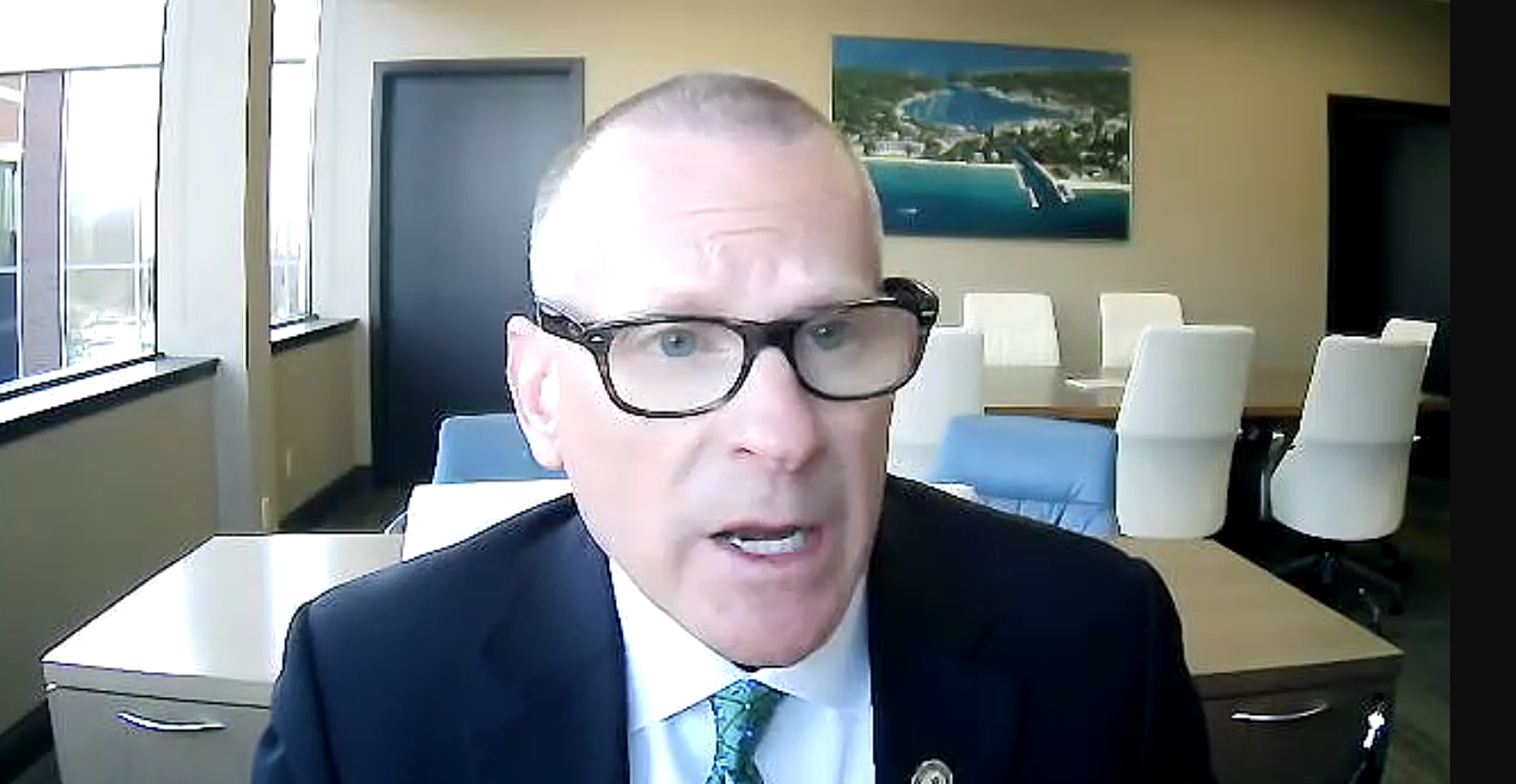
Media Coverage Includes Focus on 340B, Tariffs & Medicaid

Elizabeth Kutter

The MHA received media coverage the week of March 3 on the Michigan Senate passing legislation that protects the 340B program, the potential impact of tariffs on hospitals and healthcare costs, as well as a radio appearance discussing potential federal Medicaid funding cuts.

Michigan Public aired a story March 6 following the broad bi-partisan passage of Senate Bills 94 and 95 by the full chamber. Senate Bill 94 would safeguard the 340B program, ensuring cost savings and preserves access to affordable healthcare services in both urban and rural Michigan communities. Further, this legislation adds first of its kind drug manufacturer transparency requirements, making Michigan’s legislation the strongest in the nation.

Elizabeth KutterElizabeth Kutter, senior director, government and political affairs, MHA, was interviewed by Michigan Public for the story.

“You have to be an entity that proves their eligibility in the program, which by default means that you are serving patients who are extremely vulnerable,” said Kutter. “You’re serving kids. You’re serving cancer patients. You’re serving people who, if your hospital closes or if healthcare access becomes limited, suddenly you’re seeing a very serious hospital desert for patients.”

Gongwer and MIRS also covered the passage of the bills.

In addition, Crain’s Detroit Business published an article March 3 looking at the impact of potential tariffs on a variety of Michigan industries, including healthcare. MHA CEO Brian Peters is quoted in the story addressing the impact to hospitals.

“Implementing tariffs on Canada, Mexico and China without exceptions for medications and medical supplies could jeopardize the availability and further increase the prices of already-expensive vital medications and health care devices Michigan hospitals need to provide appropriate patient care,” said Peters. “Tariffs will particularly exacerbate existing pharmaceutical shortages. China is responsible for providing a significant number of cardiac and oncology drugs, as well as active pharmaceutical ingredients needed to produce prescription drugs domestically. Many healthcare supplies are also produced in China and the United States does not have existing capacity to meet an increased demand for product.”

Peters also appeared on WJR 760AM March 3 to discuss the impact of potential federal Medicaid funding cuts on Michigan hospitals.

Members with any questions regarding media requests should contact John Karasinski at the MHA.

Peters Appears in CNN & Crain’s Stories

MHA CEO Brian PetersThe MHA received media coverage the week of Feb. 26 that includes quotes from MHA CEO Brian Peters appearing in stories by CNN and Crain’s.

CNN published an article Feb. 26 on the Michigan economy and aging population. Included in the story is a section on healthcare emerging as the state’s largest private sector employer. The section highlights how the aging population is leading to an increased need for healthcare services and references the 27,000 job openings in Michigan hospitals.

“Those folks who are headed off to their retirement days, they are the ones who demand more health care services,” said Peters.

Crain’s Detroit Business reported on the Change Healthcare cyberattack in a story published Feb. 29. The story looks at how market consolidation and the growing need for data sharing has led to higher cybersecurity risks for healthcare organizations. Peters mentions how healthcare is the top target for cybercriminals and explains the challenges faced by hospitals.

“These continued cybersecurity challenges stem from the complex and interconnected nature of hospital information technology systems, which often require integration with external software and hardware to support clinical operations, patient care and administrative functions,” said Peters. “Furthermore, hospitals must navigate a regulatory landscape that demands compliance with health information sharing, privacy and security laws, making the management of third-party risks a critical, yet challenging, aspect of their cybersecurity strategy.”

Crain’s Grand Rapids also published an article Feb. 26 on new state laws that increase the penalties for violence committed against healthcare workers or volunteers. The story looks at the increased rates of violence committed against healthcare workers and the issues it creates for workplace safety, recruitment and retention.

“It is flat out inappropriate to physically attack a healthcare employee and there are going to be consequences if and when it happens,” said Peters. “It’s a signal that we’re not going to tolerate this anymore.”

Members with any questions regarding media requests should contact John Karasinski at the MHA.