Bridge: Five reasons health insurance rates are rising so much in Michigan

Bridge published a story Nov. 5 sharing five reasons why health insurance rates are rising at increasing rates in the state, which included workforce challenges, expiring enhanced premium tax credits, inflation and drug prices.

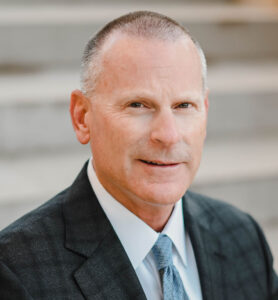
MHA CEO Brian Peters is quoted in the story, discussing the benefits of hospital mergers and acquisitions when it comes to maintaining access to care and affording high fixed hospital costs. He also highlighted the MHA’s federal advocacy efforts to extend the enhanced premium tax credits.

“The cost of electronic medical record infrastructure is extraordinary today. The cost of medical liability insurance coverage, the cost of physician practice subsidization,” said Peters. “You’re better able to bear that underlying cost if you’re part of a larger system that has more capital resources.”

Members with any questions regarding media requests should contact John Karasinski at the MHA.

Headline Roundup: House Budget Reaction

The MHA received a host of media coverage from across the state during the week of Aug. 25 after the MHA issued a media statement reacting to the state budget bill passed Aug. 26 by the Michigan House of Representatives.

House Bill 4706 would institute several harmful changes to hospital funding, which could result in more than 20,000 job losses in Michigan hospitals. The statement from MHA CEO Brian Peters expressed the MHA’s strong opposition to this version of the state budget, expressing the harmful consequences it would bring and the need for a state budget that protects existing hospital funding.

Friday, Aug. 29

Thursday, Aug. 28

Wednesday, Aug. 27

Tuesday, Aug. 26

Members with any questions regarding media requests should contact John Karasinski at the MHA.

Headline Roundup: Medicaid Cuts

The MHA received media coverage during the weeks of June 30 and July 7 on Medicaid cuts included in the federal budget reconciliation bill.

MHA CEO Brian Peters and MHA Executive Vice President Laura Appel participated in a series of print, radio and TV broadcast interviews, outlined below. Additional coverage resulted from a virtual press conference hosted by the Protect MI Care coalition where Peters spoke to the impact Medicaid cuts will have on Michigan hospitals, patients and communities.

Friday, July 11

Thursday, July 10

Wednesday, July 9

Tuesday, July 8

Monday, July 7

Thursday, July 3

Wednesday, July 2

Tuesday, July 1

Members with any questions regarding media requests should contact John Karasinski at the MHA.

Medicaid Remains Focus of Healthcare News Coverage

The MHA was successful in placing several news stories during the week of April 28 related to potential federal Medicaid funding cuts.

The Lansing State Journal published an op-ed from MHA CEO Brian Peters that was shared as part of the MHA’s participation in the Protect MI Care coalition that is urging members of Congress to protect Medicaid. The op-ed expressed the importance of Medicaid to Michigan’s healthcare system and the consequences to access to care for all Michiganders if significant funding cuts are implemented.

“The effects would ripple far beyond those who rely on Medicaid — every hospital, mental health clinic and nursing home that depends on Medicaid funding would feel the impact,” said Peters. “When facilities close, it’s not just Medicaid patients who lose out — it’s everyone in the community, regardless of what kind of insurance they have.”

MHA Executive Vice President Laura Appel also sat down with WILX News 10 on April 30 to discuss the potential funding cuts and appeared in a story published by Bridge on May 1 about the impact to rural providers.

“When we close intensive care for newborns, when we close labor and delivery units, they are closing for everyone,” said Appel to Bridge.

In other news, Crain’s Detroit Business published an article April 30 committee testimony on legislation that would have Michigan join the nurse licensure compact. MHA Chief Nursing Officer Amy Brown testified in support of the legislation and is quoted in the article.

“In addition to recruitment and coordination of care in our state’s border areas, joining the compact would positively benefit telehealth access,” said Brown. “Compact licensure means residents in Michigan can access more telehealth professionals in other compact states, increasing access points for our state’s residents.”

Appel also appeared on 760 WJR’s All Talk With Kevin Dietz on May 1 to discuss the compact.

Members with any questions regarding media requests should contact John Karasinski at the MHA.

Appel Joins WJR Live from Lansing Broadcast

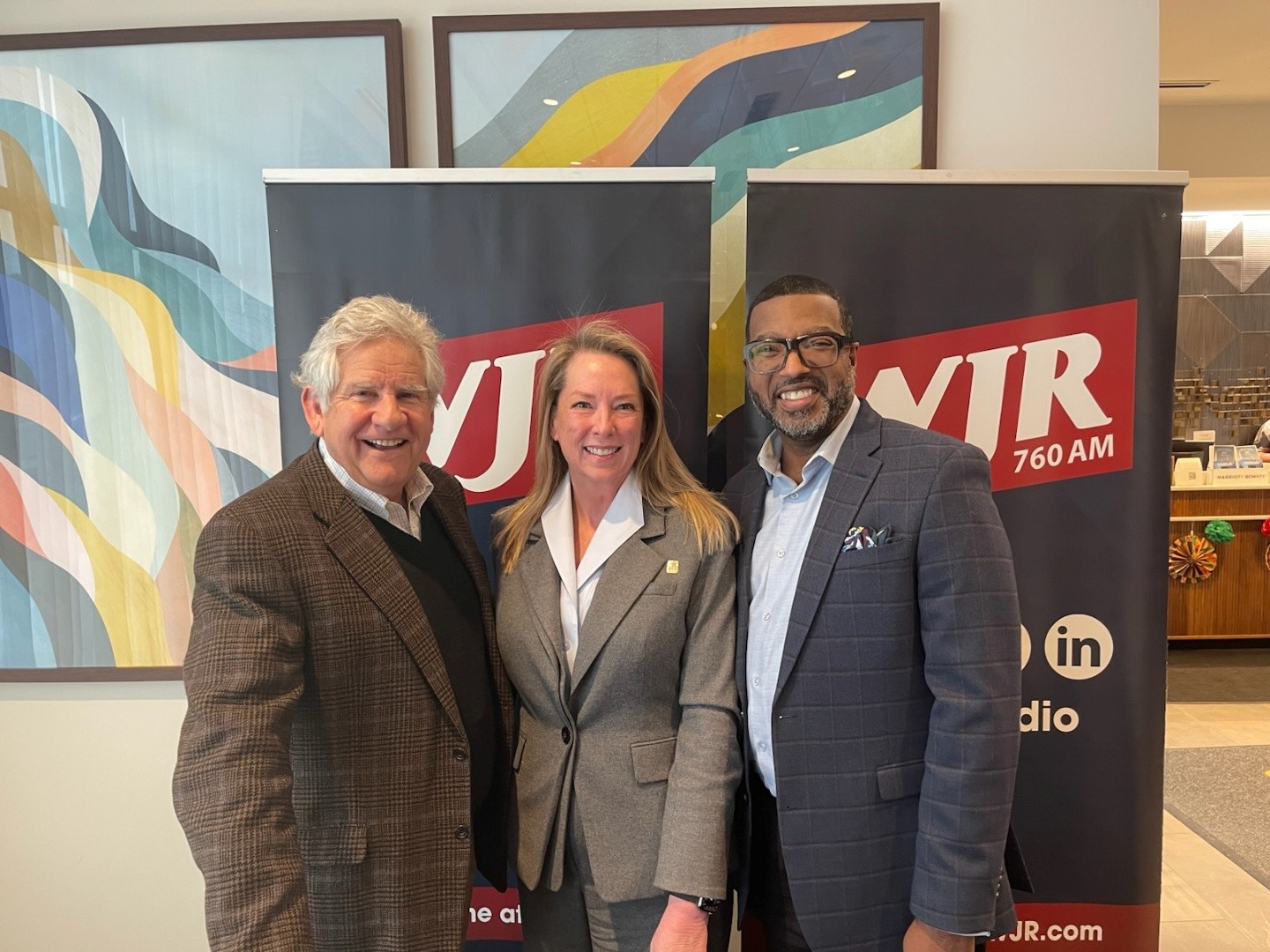
MHA EVP Laura Appel with WJR's Guy Gordon and Lloyd Jackson.
MHA EVP Laura Appel with WJR’s Guy Gordon and Lloyd Jackson.

MHA Executive Vice President Laura Appel appeared on Detroit’s WJR 760 AM’s ‘JR Morning with Guy Gordon, Llyod Jackson and Jamie Edmonds’s “Live from Lansing” broadcast Feb. 26 as part of the station’s annual coverage of legislative and policy issues facing the state the morning after Gov. Gretchen Whitmer’s State of the State address. The MHA sponsored the program, with the broadcast hosted at the Courtyard by Marriott Lansing Downtown.

As part of the program lineup, Appel spoke with Gordon and Jackson about the state of hospitals and the many changes they face, including the healthcare workforce, the 340B program and protecting Medicaid from federal funding cuts. Other notable interviewees during the event included Senate Minority Leader Aric Nesbitt (R-Lawton) and Speaker of the House Matt Hall (R-Richland Township).

Relevant healthcare topics included in the State of the State address included expanded attention towards recruiting males to pursue post-secondary education opportunities and increased state support for forgiving patient medical debt.

Additional media stories published during the week of Feb. 24 included an article picked up by both Bridge and MIRS on the challenges of behavioral health transport services for providers in the Upper Peninsula. Lauren LaPine, senior director of Legislative & Public Policy, MHA, was quoted in the article discussing efforts with the Michigan Department of Health & Human Services to implement and fund behavioral health transportation services at hospitals across the state.

“We believe that a patient shouldn’t have to be transported via police transport for behavioral health needs,” said LaPine.

In addition, the MHA received mention in a Feb. 27 article from MIRS recapping a House Health Policy Committee hearing about the 340B program.

Members with questions should contact John Karasinski at the MHA.

Headline Roundup: IV Solutions Shortage, Physician Retention & More

Laura Appel
Laura Appel
MHA EVP Laura Appel spoke with WJR, Michigan Public and WILX during the week of Oct. 7, 2024.

The MHA received media coverage the week of Oct. 7 that includes coverage on a potential national shortage of IV solutions products, physician retention and rural hospital funding.

The closure of a Baxter manufacturing facility in North Carolina due to Hurricane Helene led to several media stories, as the plant manufactures approximately 60% of the IV solutions used every day in the U.S.

Meanwhile, Bridge Michigan published a story looking at physician retention while Michigan Radio published a story on the recently signed Senate Bill 701, which eliminates the definition of “critical access hospital” and modifies the definition of “rural hospital.” It also raises the population limit to be considered a “rural hospital” to include counties with 195,000 people or less for the rural hospital funding pool.

Several MHA representatives participated in the news coverage, including Brian Peters, CEO; Laura Appel, executive vice president, government relations & public policy; Elizabeth Kutter, senior director, government & political affairs; and John Karasinski, senior director, communications.

Friday, Oct. 11

Thursday, Oct. 10

Wednesday, Oct. 9

Tuesday, Oct. 8

Monday, Oct. 7

Members with any questions regarding media requests should contact John Karasinski at the MHA.