
MHA CEO Report — Protecting Access to Care Through 340B

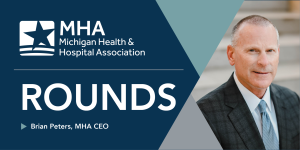
MHA Rounds image of Brian Peters

“I alone cannot change the world, but I can cast a stone across the water to create many ripples.” Mother Teresa

MHA Rounds image of Brian PetersProtecting access to high quality, affordable healthcare for all Michiganders is a key tenet of the MHA. Stated simply, the 340B drug pricing program, created by Congress in 1992, is absolutely crucial to our member hospitals’ ability to maintain this access. And remarkably, since its inception to the current day, it has never required any state or federal taxpayer dollars.

One of my favorite elements of my MHA job is the opportunity to travel around the state and visit with the executives, clinicians and other important employees of our Michigan hospitals. I always ask the question: “What are your highest priorities and how can we help?” One of the most consistent answers for years has been: “We need to protect 340B.” Erosion or elimination of the program would quite literally mean the closure of key service lines, or even the hospital itself, in some cases.

At a time when drug prices are the most rapidly growing expense for hospitals, the 340B program has never been more important. It acts as a force multiplier, allowing hospitals to stretch incredibly scarce resources to provide high quality care for more patients in their communities, including our most vulnerable residents. The savings created from the ability to purchase certain prescription drugs at a discount enables hospitals to keep care in the community in various ways. Examples include funding free or heavily discounted prescription drugs for patients, trauma care, care for people with HIV/AIDs, behavioral health services, oncology clinics, nursing homes and treatment for substance use disorder.

It allows qualifying hospitals, particularly rural hospitals and those serving low-income patients, to deliver care and programming based on the needs of their individual communities. Many larger 340B hospitals are academic medical centers that care for the sickest and most complex patients. They establish arrangements with pharmacies outside of their immediate geographic area so patients who travel long distances to the hospital for specialized care can still access needed drugs at pharmacies near the patient’s home.

Unfortunately, prescription drug manufacturers are working to put arbitrary limits on the 340B program at the state and federal level and Michigan hospitals are at risk of losing their ability to provide affordable, accessible care to those in need. This comes at the same time when costs for new drugs launched by pharmaceutical companies rose by 35% from 2022 to 2023 and for the first time in history, the median price of a new drug is $300,000 – more than four times the median annual household income in the U.S. These attacks will make it more difficult to administer the 340B program and unnecessarily cut needed savings that could be invested in the community. These restrictions threaten access to care by risking the closure of birthing units, nursing homes and even critical access hospitals.

The MHA and Michigan hospitals are currently advocating for the passage of House Bill 5350 to counteract these attacks. The proposed legislation would help protect the 340B drug pricing program at the state level and the healthcare cost-savings generated for hospitals and the communities they serve. We highly encourage you to use our action alert to express the importance of the program to your lawmakers as the bill currently awaits passage out of the House Insurance and Financial Services committee.

Other harmful actions by manufacturers include Johnson & Johnson’s recent attempt to institute an unapproved rebate requirement for two drugs. The MHA opposed that proposal and we’re pleased to see that our advocacy with the Health Resources and Services Administration (HRSA) and our Congressional delegation, along with other hospitals and state hospital associations from across the country, influenced Johnson &  Johnson into discontinuing their pursuit of this unauthorized plan, after multiple HRSA notices of opposition.

This specific work is just the latest example of the MHA’s long-time strident advocacy at the state and federal level related to 340B. We have engaged in the state legislature, Congress, the courts and with our MHA Service Corporation Endorsed Business Partners, demonstrating just how impactful we know this program is.

The 340B program has helped to improve the health and wellness of individuals and communities for 30 years. It operates without any taxpayer-funded support and has positively impacted millions of lives. Attempts at eroding the program would not only harm hospitals, but more importantly patients and communities. As I have often said, the healthcare ecosystem is incredibly complex and there is rarely if ever a single silver bullet solution to any aspect of our challenges. But there is no doubt that the 340B program is one of those critically important stones that creates many positive ripples.

As always, I welcome your thoughts.
MHA CEO Report — Site-Neutral Payment Policies: The Latest Threat to Patient Access

MHA Rounds graphic of Brian Peters

The worst form of inequality is to try to make unequal things equal.” Aristotle

MHA Rounds graphic of Brian PetersOperating a hospital has never been more challenging than it is today. At the most fundamental level, hospitals are small towns that operate 24/7, year-round, built around expert clinicians, as well as a wide variety of highly skilled employees in multiple disciplines. Collectively, they are tasked with the awesome responsibility of delivering a broad spectrum of high-quality healthcare services to everyone in their respective communities, regardless of their health or socio-economic status.

Our MHA Chief Medical Officer, Gary Roth, DO, often says “healthcare is everyone’s destiny.” He’s right: at some point, all of us – or our loved ones – will require the assistance of our healthcare system. And when that day comes, we as patients can and should expect that we have ready access to care. Michigan hospitals take that expectation very seriously, whether that comes in the form of physician recruitment, retention and call coverage, drug acquisition, facilities maintenance and expansion, or ensuring that the latest diagnostic and treatment technology is on-site.

Here is an economic reality: being prepared to care for anyone, for any diagnosis, at any time, creates high fixed costs. In classic business terminology, hospitals are “price takers” when it comes to government payers, because Medicaid and Medicare effectively tell hospitals what they will receive in reimbursement.

Against this backdrop, our field is currently facing a strong push at the federal level to prevent hospitals from receiving Medicare reimbursement at a level that appropriately recognizes the higher fixed and operational costs referenced above. Referred to as “site-neutral payments,” this policy would force hospitals to accept the same rates as those paid at other sites of care. This ignores the fact that the cost structures between the two settings are very different because hospitals go to great lengths to have the infrastructure in place to save lives every day. Non-hospital settings serve a very valuable but different role, and the reimbursement they receive today reflects those differences. In addition to being open 24/7/365 to all patients – including those with multiple comorbidities, and little or no health insurance coverage, hospitals must have redundant systems for energy and water so surgeries and other patient care can continue uninterrupted when the power goes out or other systems are compromised. Physician offices have no such requirements and don’t bear these costs.

Hospital outpatient departments also provide convenient access to care for the most vulnerable and medically complex patients. These settings are more likely to treat Medicare patients who have more chronic and severe conditions, have been recently hospitalized or in an emergency department and are dually eligible for Medicare and Medicaid. These patients are more expensive to care for and rely on hospital outpatient departments for their increased healthcare needs.

Implementing site-neutral payment policies would be detrimental to access to care for patients across Michigan and the country. If reimbursement is slashed across the board, hospitals will be forced to reduce their costs, which will come in the form of reduced hospital beds, service lines or even potentially hospital closures. This plan for inadequate payment can be particularly harmful for hospitals serving a high percentage of vulnerable patients, including rural hospitals. When a hospital closes services due to site-neutral payment policy, they will close to everyone, not just people covered under Medicare.

I was recently honored to be appointed to the American Hospital Association Board of Trustees and this issue is clearly a key focus of their advocacy work on Capitol Hill. The MHA is joining that effort by advocating with Michigan’s members of Congress, and our message is unambiguous: comparing hospitals with other sites of care is not comparing apples and oranges – it’s comparing apples and space shuttles. More importantly, reducing healthcare costs can’t come at the expense of reduced access to care.

As always, I welcome your thoughts.

MHA CEO Report — Adding Value for Hospitals

MHA Rounds graphic of Brian Peters

“Our favorite holding period is forever.” Warren Buffett

I discussed last month how the MHA continues to create highly successful and impactful outcomes for our members through our outstanding advocacy in the public policy arena, at both the state and federal levels. This has long been a hallmark of the MHA, as we have established ourselves as a trusted, credible and powerful leader in Lansing and in Washington, DC.

I am forever mindful of the old business axiom, “If all you have is a hammer, everything starts to look like a nail.” I have always believed the very strongest associations are able to carry a full toolbox to the worksite, to tackle complex challenges in multiple ways. The reality is that there are certain issues that don’t lend themselves – either partially or fully – to a solution that emanates from the halls of the legislature, the executive branch or the courts. The historic work of the MHA Keystone Center, which has created positive, life-saving changes through voluntary improvements in hospital-based safety and quality, is one perfect example of this philosophy at work. I would like to shine a light this month on the impactful work of the MHA Service Corporation, which houses several in-house service lines, as well as partnership offerings.

Unemployment claims cost hospitals significant time and money – the MHA Unemployment Compensation Program (UCP) successfully eliminates that burden for Michigan hospitals and over 700 clients throughout the United States. The UCP has processed thousands of unemployment claims, saving clients millions of dollars every year since 1972. The MHA UCP was also recognized in 2024 by the National Association of State Workforce Agencies (NASWA) for the MHA UCP’s commitment to utilizing the NASWA’s nationwide, web-based system for receiving new claims and responding to state unemployment agencies. This national recognition affirms the MHA UCP’s dedicated work to reduce unemployment liability for its clients, decrease unemployment fraud and prevent waste with state unemployment agencies.

Similarly, the MHA Data Services division has been serving Michigan hospitals since 1975, and now has more than 500 healthcare entities nationwide using our products to formulate market strategies, track community benefits and improve care quality. The State of Michigan, academic researchers and others also rely on the robust data contained in our Michigan inpatient and outpatient databases.

The MHA Graphic Design & Print Services division provides services to Michigan hospitals, as well as large and small clients throughout Michigan. Even our state’s two largest universities – the University of Michigan and Michigan State University – are long-time clients. With state-of-the-art equipment and highly skilled professionals on staff, we are able to consistently provide superior customer service, fast turnaround, competitive pricing and a high quality product.

Finally, the most recent offering in our portfolio is the MHA Endorsed Business Partner program. The MHA meticulously vets all partners to ensure they meet best-in-class quality standards, and that they have an established track record demonstrating their capability and trustworthiness. Among our current Endorsed Business Partners are firms specializing in workforce solutions, revenue cycle management, cybersecurity, behavioral health, supply chain and more.

For nearly the last decade, we have had a dedicated governing board overseeing the operations of the MHA Service Corporation, ensuring that all our current and future programs are on point. I would like to thank our current MHASC Board Chair Kent Riddle, CEO of Mary Free Bed Rehabilitation Hospital, for his tremendous leadership.

All these offerings have three things in common. First, they add tangible, direct value to our member hospitals and other clients. Second, they create revenue streams for the association that support our critical functions and moderate the need for membership dues increases. Lastly, consistent with our corporate culture that has intentionally focused on building, fostering and maintaining genuine, trusting relationships with our members, lawmakers, the media and others in the public policy arena, the same philosophy holds true here. As Warren Buffet has famously articulated, we are not in business for quick gains. We are here for the long haul.

As always, I welcome your thoughts.

Expanding Peer Recovery Coach Services to Improve Patient Outcomes

The fiscal year (FY) 2025 budget includes critical funding to support the work of peer recovery coaches (PRCs) in Michigan hospitals. Kelsey Ostergren, director of health policy initiatives, MHA, and Michelle Norcross, senior director of safety & quality, MHA Keystone Center, share the impact these resources have on patients and communities. 

What is a peer recovery coach, and what role do they play in improving patient outcomes?

Ostergren: Peer recovery coaches (PRCs) are individuals who combine lived experience with technical knowledge to assist individuals with a substance use disorder (SUD) treatment and recovery. In addition to offering patients lifesaving support and resources, PRCs provide an individualized approach to long-term management of SUD.

Peer recovery coaches play a unique role in the hospital setting, engaging with individuals during a time when peer-support is vital. PRCs not only serve as a mentor and role model in recovery, but remove barriers to care by connecting individuals to resources and community.

There is mounting evidence to support the role of PRCs in the recovery process including increased patient retention in treatment programs, sustained reduction in substance use, increased access to social support, decrease criminal justice involvement and decreased use of emergency department services.

Norcross: The MHA and MHA Keystone Center convened member hospitals using PRCs to better understand how these services have been operationalized and what impact they have on Michigan patients. In these discussions, we learned:

  • Hospitals who offer PRC services indicate 87% – 89% of eligible patients accept PRC support and share strong positive feedback about the experience.
  • Patients who work with PRCs are less likely to be readmitted within 30 days compared to their peers who are eligible but don’t accept PRC services.
  • Hospitals with a fully integrated PRC model engage more than 1,000 patients per year across the ED and inpatient settings.
  • PRCs connect 65% – 75% of patients with outpatient treatment and support services upon discharge. This is in stark contrast to a 2022 study revealing that only 11% of Opioid Use Disorder (OUD) patients presenting to the ED were referred for outpatient treatment.

By expanding the use of PRC-delivered support services, Michigan hospitals can improve health outcomes and sustain recovery for at-risk patients and communities.

What is the biggest barrier when it comes to supporting peer recovery services in hospitals?

Ostergren: Many hospitals participating in the MHA Keystone Center Emergency Department Medication for Opioid Use Disorder (ED MOUD) program have highlighted the importance of peer recovery coaches for connecting SUD patients to treatment. Unfortunately, one of the most significant barriers is that these services cannot be reimbursed. Hospitals who want to offer PRCs are often required to fill these roles using temporary funding (i.e. grant dollars) or by contracting community mental health (CMH) agencies. While CMH resources have been critical, hospitals and health systems offer a unique touchpoint for patients with SUD.

How has collaboration helped secure critical funding to maintain PRC services in hospitals?

Ostergren: Beyond the work of the MHA and MHA Keystone Center teams, there have been numerous partnerships that were instrumental in advocating for funding to support PRCs in our hospitals and health systems. Our members participating in the ED MOUD program and those that employ PRCs were critical when it came to understanding this care model and identifying ways to support it. Additional stakeholders who provided insight, direction, guidance and support, include:

  • The Community Foundation for Southeast Michigan (CFSEM)
  • Michigan Department of Health & Human Services (MDHHS)
  • Michigan Public Health Institute (MPHI)
  • Face Addiction Now (FAN, formerly Families Against Narcotics)
  • Michigan Association of Counties (MAC)
  • Opioid Advisory Committee (OAC)
  • Substance Abuse and Mental Health Services Administration (SAMHSA)

Where can Michigan hospitals interested in learning more about peer recovery services and reimbursement opportunities go to learn more?

Norcross: The MHA Keystone Center is partnering with CFSEM to offer two virtual learning collaboratives in September for hospitals interested in learning more about peer recovery services and reimbursement. Members will have the opportunity to learn from and engage with peers who have successfully implemented peer recovery services.

Upcoming Peer Recovery Learning Collaboratives:

Register for peer recovery learning collaboratives here

Introducing New Infection Prevention Education

The MHA Keystone Center, in partnership with the Michigan Department of Health and Human Services (MDHHS), created a series of online learning modules for infection control and prevention education. The modules cater to the needs of Michigan hospitals and are available at no cost.

Niki McGuire, the manager of the multidrug resistant organisms containment unit at MDHHS, and Josh Suire, a senior manager of safety and quality at the MHA Keystone Center, share the purpose of the series and how healthcare providers in Michigan can use the resource to improve infection prevention practices.

What is Project Firstline?

McGuire: Project Firstline is a Centers for Disease Control and Prevention (CDC) training collaborative that aims to provide more accessible infection control education for frontline healthcare workers. MDHHS partnered with the MHA Keystone Center to develop CDC-based education materials for Michigan’s healthcare workers. With a shared goal of creating accessible and applicable content, the MDHHS and MHA Keystone Center worked together to create six online courses. Three courses in the series are geared toward infection preventionists, with an emphasis on quality improvement best practices. The series also offers courses geared toward frontline workers that serve as a great training resource for staff to interact with at their convenience.

Suire: The Project Firstline modules were created with healthcare workers’ needs and preferences at the forefront. As a nurse with bedside experience myself, I understand healthcare providers are stretched thin. We intentionally built all the courses in an online system that allows participants to check in and out of the classroom around their schedule. Each module is also designed to take less than 45 minutes to complete.

What is the commitment associated with participating?

Suire: These resources were created to meet healthcare workers where they are. The courses are available to Michigan healthcare workers at no cost. We encourage participants to engage with the courses at their convenience. While the courses were created to be completed as a series, healthcare workers are welcome to take courses specific to their training needs.

What are the main takeaways a participant will obtain after taking the courses?

McGuire: MDHHS offers the assessment portion of the CDC’s Infection Control Assessment and Response (ICAR) tool to all acute- and long-term care facilities in Michigan.  We are non-regulatory. The first two modules in this series are great for infection preventionists looking to begin the ICAR process – providing background information about the entire process and how to engage with MDHHS Healthcare Associated Infections team. The clinical modules will provide frontline workers with the competencies needed to engage in on-the-spot critical thinking about infection prevention – sharing best practices for hand-hygiene, transmission-based precautions and more.

Suire: The MHA Keystone Center aims to deliver frontline healthcare workers fun, interactive learning modules with basic infection prevention practices that should be implemented in day-to-day patient/resident care activities. It is our hope facilities across the state use these modules as part of their infection control and prevention program. We encourage all Michigan acute- and long-term care facilities to take advantage of this free resource to reduce the preventable spread of infections.

To learn more about the Project Firstline series, visit the module series webpage or contact the MHA Keystone Center.

What I Learned as a Provider Working in Public Policy

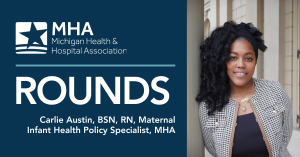
Carlie Austin, BSN, RN, shares her journey serving as the maternal infant health policy specialist at the MHA.

As a clinician, what drew you to a role tied to public policy?

If I had to sum it up in two words, I’d say problems and solutions. The challenges I’ve encountered at the clinical level and my quest for generating solutions at the hospital and community level naturally led me to this role. The reality is that the nursing profession is inherently tied to public policy.

One of my favorite documents to read is the Guide to Nursing’s Social Policy Statement. It essentially tells us that it’s our professional duty to address the problems faced by the people we serve, including disparities and inequities. My favorite line says, “In some instances nursing will be in the vanguard of emerging health-related issues. Nursing will participate in the promulgation of healthcare policy at regional, state, national and global levels. Protection of the public through advocacy also includes whistleblowing.”

Although “whistleblowing” may have a negative connotation, I interpret it as meaning that we all should be productive disruptors of the systems, practices and barriers that make it difficult to deliver equitable care to all of our communities. Public policy is about intentionally targeting problems and creating meaningful solutions to support the greater good.

What are some of the things you learned about public policy in your time at MHA?

I learned that public policy truly requires the engagement of issue experts. The saying “people closest to the problem are closest to the solution” has taken on a new meaning during my time at the MHA. I learned that public policy is reliant on relationship and true collaboration among diverse stakeholders in order to foster solutions that best serve Michigan communities.

How did your clinical background inform or influence conversations around public policy? Why should providers and clinicians be involved in public policy?

To quote my supervisor, Lauren LaPine, Senior Director, Legislative and Public Policy, MHA, “having perspective from the bedside helps the MHA create policy and legislative efforts statewide that are directly informed by experience treating patients. Having your insight helps us more deeply focus on public policy that is patient-centered.”

Lauren’s words perfectly capture why clinical providers should be involved in public policy and the strong influence we can have. Before taking this role, fellow bedside nurses questioned my decision. They saw a public narrative that shaped their perceptions of the health policy environment; however, I took the role to challenge that narrative, to inspire systematic change, and to bridge the voice of the bedside with the power of policy.

I was able to show up authentically because I was a part of a team that granted me the space to challenge our system to be better. I’ve worked on efforts to improve maternal regionalization, used my lived experience to advance health equity solutions and regularly engaged with community stakeholders. We’re facing unprecedented times in healthcare, but serving in this role has shown me what we can accomplish by being more intentional about unifying in areas that often divide us.

How can providers get involved in public policy and healthcare advocacy?

Start where you can. It’s our professional duty as providers to seek solutions for the problems we see. Engage with your executive leadership, community advocates, legislators and associations – including the MHA – that will listen and amplify your voice. Most importantly, be open. Never allow a narrative to deter you from writing your own. Public policy requires us all to creatively color outside of the lines.

MHA CEO Report — A Program Year in Review

MHA Rounds graphic of Brian Peters

“Winning is not a sometime thing, it is an all the time thing. You don’t do things right once in a while…you do them right all the time.”  — Vince Lombardi

MHA Rounds image of Brian PetersI am pleased to share we just completed a successful MHA Annual Meeting, continuing a long-standing June tradition whereby we celebrate the conclusion of one MHA program year, and prepare for the next. Each program year is unique with the different challenges it presents. At this point five years ago, no one could have predicted how the emergence of COVID-19 would flip healthcare on its head and drastically alter the tactical objectives of our association. However, there is a constant: the MHA continues to rise to any challenge presented to us and we deliver results for our membership to improve the health and wellness of individuals and communities.

The 2023-2024 program year focused intensely on workforce, viability and behavioral health, while addressing the various “wildcard” issues that always come up. We were led with great wisdom and compassion by Shannon Striebich, president and CEO, Trinity Health Michigan, as our board chair. Due to Shannon’s commitment and leadership, the MHA accomplished numerous highly successful and impactful outcomes on behalf of our members.

One of the most significant challenges in this past year was the threat posed by government-mandated nurse staffing ratio legislation. This proposed policy had the potential to dramatically reduce access to care for individuals throughout the state. Our advocacy on the issue lasted throughout the entire year but was highlighted by an Advocacy Day we hosted in September that featured more than 150 hospital representatives, primarily consisting of nurse leaders, who came to the Capitol and conducted 118 meetings with lawmakers that day. Later in the year, the MHA successfully advocated our position at a committee hearing, where more than 60 supporters attended on very short notice to push back on false narratives and to support alternative nurse staffing solutions. As a result of our efforts, no committee votes have been scheduled, and momentum on this harmful legislation has been effectively stalled.

While we had to play defense against this harmful proposed legislation, the MHA spent the program year actively engaged in workforce development and efforts to grow the healthcare talent pipeline. The MHA worked with stakeholders to implement new funding designed to expand access to Bachelor of Science in Nursing degrees through partnerships between community colleges and four-year universities, while also engaged in partnerships with other organizations to promote healthcare careers, increase clinical faculty and nurse preceptors, address high turnover rates in rural areas and promote healthcare career options. We continued our award-winning healthcare career marketing campaign designed to attract future workers and also redeployed our annual hospital workforce survey that shows the efforts of Michigan hospitals to recruit, retain and train healthcare workers is making a real difference. Finally, we hired our first-ever chief nursing officer at the MHA, which is already strengthening our ties to the nursing community throughout the state.

The viability of hospitals was another key focus and was largely supported through our legislative advocacy work. MHA funding priorities continued to be protected in the state budget, which includes $163 million for graduate medical education, $45 million for traditional disproportionate share hospitals, $15 million through the rural access pool and an additional $8 million for the obstetrical stabilization fund. The fiscal year 2024 budget also included $60 million annually to support hospitals with Level I and II trauma centers and $34 million annually to support hospitals that provide inpatient psychiatric care. Besides state funding, the MHA protected Medicaid funding, medical liability, the 340B drug pricing program and certificate of need.

The MHA is also intricately involved in in addressing the behavioral health crisis plaguing our state and country. Expanding access to care is a key focus, which included the MHA administrating a $50 million grant program to expand access to pediatric inpatient behavioral health services. The Michigan Department of Health and Human Services (MDHHS) is a close partner in this work and the MHA participated in the MDHHS Advisory Committee on the creation of a psychiatric bed registry. The MHA launched a new member ED boarding survey to quantify the number of patients struggling with behavioral health access in the emergency department and the MHA is using this data when engaging with lawmakers, stakeholders and the public to explain the scope of the program. These learnings informed the creation of a four-bill package of legislation to address board-identified issues in the behavioral and mental health system, such as coverage parity and community mental health shortcomings.

Much of the work in the past year has focused on maternal and infant health and improving maternal health and birth outcomes. And I am pleased to share that our MHA Board of Trustees just approved the full slate of recommendations emanating from the MHA Community Access to Health Task Force, giving us the support to continue this important journey together.

And as usual, we effectively dealt with a long list of “wildcard” issues that emerged during the program year, including drug shortages, guardianship, infection control, patient transport, population growth and safety and quality. We also continued to strengthen our efforts related to the growing cybersecurity threat. Indeed, the Change Healthcare cyberattack was one of the largest and most impactful attacks ever seen and served as a clear reminder of the importance of our work in this space.

At our Annual Meeting, I spoke to our attendees about “the power of zero.” In the 2023-2024 program year, the following were true:

  • The number of Michigan acute care community hospitals and health systems that are not members of our association is zero. We have everyone at the table, which allows us to speak with one powerful, united voice.
  • We passed 39 MHA-supported bills through the state legislature that were enacted into law, with five more on their way to the governor for her signature. The number of MHA-opposed bills that made their way to the finish line was zero.
  • The MHA now has a full-time chief medical officer and a full-time chief nursing officer (as noted above). How many other state hospital associations can say this? Zero.
  • And most importantly, how many other associations – in any sector – are as relevant, as impactful, as mission-driven and successful as the MHA? I believe that number is zero.

I would like to recognize and thank our outstanding MHA Board of Trustees, our members, sponsors and business partners, but most of all, our incredible MHA staff for coming together to achieve such tremendous results for the patients and communities we collectively serve. I hope you will take the opportunity to celebrate these results with us.

As always, I welcome your thoughts.

Protecting Community-based Care Through 340B

MHA Rounds graphic, indicating thought leadership blog style post. Featuring Elizabeth Kutter pictured, woman with blonde hair smiling on the right.

MHA Rounds graphic, indicating thought leadership blog style post. Featuring Elizabeth Kutter pictured, woman with blonde hair smiling on the right. Byline: Elizabeth Kutter, Senior Director, Government & Political Affairs 

Right now, a low-income patient in Northern Michigan is picking up a drug at a discounted price that they wouldn’t otherwise have access to. In another corner of the state, a cancer patient is receiving lifesaving treatment, without having to make decisions between their care and their family’s needs.

Michigan hospitals care for our communities every day because of the savings they receive from the 340B Prescription Drug Pricing Program. Since being established by Congress in the early 1990s, this cost-saving program helps to spread scarce resources and provides a safety net to vulnerable patients and communities with limited or no access to healthcare.

The impact of 340B goes far beyond drug prices. It helps maintain community-based services at Federally Qualified Health Centers, cancer hospitals, HIV/AIDs clinics, critical access hospitals and tribal health centers among many other organizations. The program savings help eligible entities support mobile health clinics, cancer care access, financial assistance programs, meals on wheels, neonatal intensive care transports, behavioral health access and many other programs informed by the communities that benefit from the eligible program participants being in their backyard. 340B hospitals support community informed opportunities to positively impact public health.

In my role at the MHA, I’ve had countless conversations with our members about the benefits of 340B. The sentiment across the board – especially among rural hospitals and urban safety net hospitals – is that the program is essential for meeting patients where they are. The American Hospital Association shares a similar message, noting that 340B generates valuable savings for eligible hospitals to invest in programs that enhance patient services and access to care. The program’s design speaks directly to the ability for 340B covered entities to reflect on their community needs, it’s not a program that attempts to decide where savings need to go but instead focuses on the individual needs of every community being served resulting in increased quality of care and access to healthcare in all corners of Michigan.

Unfortunately, manufacturers and other players at the state and federal level are working to scale back the program and put arbitrary limits on program participation. The most recent and current attempt being to condition 340B contractual pharmacy relationships, harming the program’s ability to extend to patients in the places they live. Because of these attempts to frustrate the program, Michigan hospitals are at risk of losing their ability to provide affordable, accessible care to those in need. Every effort spent to manage the new onslaught of administrative burden created by manufactures, is less savings going directly into communities in need of affordable care.

Rarely are we presented with the opportunity to support meaningful access to drug cost reductions and affordable community care access, but House Bill 5350 allows us to do just that. The proposed legislation helps protect 340B at the state level to maintain healthcare cost-savings for our hospitals and the communities they serve. Contact your lawmaker and tell them how important 340B is to you, your community, and most importantly the patients you serve. Protecting our ability to care for our state’s most vulnerable patients is of the utmost importance, and HB 5350 does just that.

It’s our job to safeguard resources that advance the health of Michigan communities. I hope you’ll join me – and many others – in advocating for my favorite combination of numbers and letter: 340B.

Members with questions may contact me.

MHA CEO Report — Moving the Workforce Needle

MHA Rounds image of Brian Peters

“Luck is not chance, it’s toil; fortune’s expensive smile is earned.” — Emily Dickinson

The healthcare workforce has been one of the MHA’s strategic action priorities for the past several years. As we near completion of our 2023-2024 program year, I’m extremely pleased to see the results of the MHA’s second annual hospital workforce survey, which shows Michigan hospitals are making real progress in reducing staffing shortages. Michigan hospitals hired more than 61,000 employees in 2023, including 13,000 nurses. Overall job vacancies were reduced by 29%, while nursing vacancies dropped by 44%. These gains are seen across nearly all job categories and they’re significant, with double-digit decreases for many of them. I can tell you with certainty: our “luck” in this regard has been earned through extremely hard work.

Michigan hospitals still have 19,000 job openings, including 4,700 for nurses, so more work and investment needs to be done. However, the accomplishments of Michigan hospitals in this area shows the recruitment, retention and training tactics implemented throughout the state are working.

It starts with retaining the existing workforce, which leads to improved morale and reduced recruiting expenses. Michigan hospitals are outperforming hospitals across the country when it comes to registered nurse retention. Michigan’s turnover rate is 3.7 percentage points lower than the national average. Offering better pay, improved benefits, flexible scheduling and integration of technology to improve patient monitoring and reduce the administrative burden on nurses are examples of tactics implemented by Michigan hospitals that are making a difference.

Michigan remains an aging state, and as more people become eligible for Medicare, the demand for healthcare services will continue to grow. In response, our hospitals are very serious about expanding the talent pipeline and increasing awareness of hospital careers to students. Hospitals are expanding educational opportunities and partnerships with higher education institutions to attract more students to healthcare, including clinical positions like nursing. The MHA is assisting by leading the MI Hospital Careers public awareness campaign that targets students and professionals considering a career change to consider healthcare as a great option.

The MHA also recently published the latest results from the Economic Impact of Healthcare in Michigan report, which shows the important role hospitals have in Michigan’s workforce and economy. Healthcare remains Michigan’s largest employer of direct, private-sector jobs. Hospitals provide the largest percentage of healthcare jobs in the state, employing 217,000 full-and part-time employees. Not only are these good-paying, stable jobs, but many offer career pathways that allow employees to further develop their skills and move up the job ladder with additional certifications and/or degrees. Many of Michigan’s communities also depend on their local hospital as one of, if not their very largest, employer.

These results led our conversations last week while a team of MHA staff attended the Detroit Regional Chamber’s annual Mackinac Policy Conference, connecting with business, higher education and political leaders throughout Michigan. In addition to this public announcement, we also produced a palm card and video for event attendees to highlight our work. Our goal is to increase the awareness of the large role hospitals play in the economy and the success they’re having in welcoming new talent to their organizations.

Reducing job vacancies and staffing shortages is a marathon and not a sprint. The Michigan Legislature has played a large part in assisting hospitals, whether it be through direct worker funding or new policies, such as increased penalties for violence committed against healthcare workers or allowing community colleges to offer Bachelor of Science in Nursing degree programs in collaboration with a four-year institution. The MHA is proud to help lead many of these discussions with policymakers to find more ways to reduce barriers to healthcare careers.

Public policy, advocacy and communications are key – but we are using every tool in our toolbox to address our workforce challenges. The MHA Endorsed Business Partner (EBP) program promotes industry-leading firms, carefully vetted by the MHA, that can meet the most pressing needs of our member hospitals and health systems, and we just announced a new endorsement of AMN Healthcare as a national leader in workforce solutions. The MHA has endorsed several of AMN’s legacy brands, including Merritt Hawkins, a physician search division, for many years. As AMN brings its solutions under one brand, we proudly continue this partnership with AMN Healthcare. They are the largest workforce solutions company in the market, which allows them to serve clients more effectively across all levels of healthcare.

Economic development and workforce are not just a one-year strategy. This will continue to remain a priority for hospitals and health systems, and we’re encouraged that at this time next year, we will have a similar story to tell in the reduced number of healthcare vacancies in the state. Until then, please join us and encourage as many people as you can to consider a job in healthcare. Make no mistake: whether clinical or non-clinical, healthcare is hard work; but it truly is one of the most rewarding, mission-driven careers you can pursue.

As always, I welcome your thoughts.

Collaborating to Address EMS Challenges

Following National EMS Week, it’s important to recognize how we can continue to support the dedicated teams providing lifesaving care every day to Michigan patients and communities.

In my role as director of health policy initiatives at the MHA, it’s a priority to identify the challenges facing our EMS workforce so we can bridge solutions with our member hospitals. We continue to be engaged with the state’s EMS Coordination Committee (EMSCC) with extensive discussions around the barriers that have a direct impact on our EMS workforce, hospitals and patients. I’ve outlined a few of these challenges below, along with how teams are responding.

Challenge: EMS teams are limited in where they transport patients for care. Because hospital emergency departments (EDs) are a common and reimbursable destination for the ambulance provider, it leads to a growing number of behavioral health patients presenting to hospital EDs rather than a specialty behavioral health facility.

Response: While hospitals are equipped to stabilize and triage patients, the ED is not the most appropriate care setting for an individual in need of mental or behavioral healthcare. Given the establishment of Crisis Stabilization Units (CSUs) in Michigan, which are designed to provide 24/7 care for emergent behavioral health needs, the MHA wants to ensure that EMS providers are reimbursed for the transport of patients to this care setting. We are working to add CSUs as an approved destination for patient drop-off to ensure timely and appropriate services can be rendered to patients experiencing a behavioral health emergency.

Challenge: Responding to physical and behavioral health emergencies are especially challenging for EMS and ambulatory agencies due to continued staffing shortages.

Response: The MHA is working to identify alternative, appropriate and reimbursable mechanisms to transport patients with behavioral health needs who do not require the medical interventions provided in an ambulance. We also launched an ongoing public awareness campaign to expand interest in healthcare careers in Michigan, targeting messages to high school and college students as well as working professionals.

Challenge: Regulation and reimbursement mechanisms vary between EMS and hospitals, which can lead to conflict when challenges occur on either side.

Response: The MHA convened a group of executive leaders from behavioral health hospitals and EMS services to share some of the challenges each side experiences interacting with the other. One immediate action item from this discussion was the recognition that not all behavioral health hospitals have the same protocols for accepting new admissions, which can be a challenge for EMS providers. In response to this, the MHA deployed a survey that is currently in the field to identify how each hospital accepts patients, what mode of transportation is authorized and whether their admission status (voluntary/involuntary) plays a role. This information will help the MHA and the EMSCC better understand and identify opportunities to standardize the process and ensure a more seamless handoff between EMS and behavioral health hospitals.

The role EMS plays in our world cannot be understated – the MHA is heavily engaged in responding to concerns raised by this group and aligning priorities to continue offering support and collaborating on solutions. We must work together to overcome these challenges.

Members with questions may contact the MHA advocacy team.