MHA Endorsed Business Partner (EBP) CyberForce|Q is hosting the webinar Proactive Cyber Risk Measures from 11 a.m. to noon ET on Jan. 29. The session will feature speakers from Trinity Health, the Michigan State Cyber Command Center and other organizations.
Presenters Adrienne Chase and Sam Khan will walk attendees through a real-world incident, discuss key lessons learned, practical takeaways and the strategies that made the biggest difference when every minute mattered. Michigan State Cyber Command Center leader Tarek Sasy will also provide insights into statewide response efforts and best practices.
Members are encouraged to register for a first-hand look at what happens when a real cyber incident occurs, including proactive steps organizations can take to accelerate recovery and reduce impact. The session is designed for leaders seeking a realistic understanding of incident response, preparation and how proactive defense shapes outcomes when facing real-world attacks.
To learn more about CyberForce|Q, contact Midwest regional sales director, John Kelley. Members interested in solutions offered through the MHA EBP program may contact Rob Wood at the MHA.
“It is our collective and individual responsibility to preserve and tend to the environment in which we all live.” ― Dalai Lama
I recently had the privilege of joining leaders from across the state to discuss the most pressing issues for Michiganders at the annual Detroit Regional Chamber Mackinac Policy Conference. Because our member hospitals and health systems are not only critical providers of care, but also major economic drivers, the MHA once again served as an event sponsor and had a major presence with elected officials, business leaders and the media throughout the week. As you would imagine, we focused our attention on the current Congressional debate over the future of Medicaid and advocated for our 340B legislation and other priorities.
But I was also struck by the airtime given at the conference to the ongoing housing crisis in Michigan, a critical component of health that requires collective action across sectors to address. Over the past year, this has been an issue that our hospital leaders almost always lift up during our site visits, whether in rural or urban settings. The housing issue affects not only patients but hospital employees as well. Housing, along with food insecurity and transportation challenges, make up the core “social drivers of health” that represent one of the most vexing challenges that we confront as leaders.
More than 40% of households in Michigan struggle to cover basic needs like food, healthcare and housing. We also know there is an inextricable link between food and housing insecurity and health. Research has shown that only 20% of health can be attributed to medical care, while socioeconomic factors account for 40%. Individuals with limited access to adequate food are at increased risk for chronic diseases, behavioral health issues and healthcare underuse – which can lead to higher acute care utilization long-term.
Hospital staff are not immune to these challenges. The rising cost of housing often impacts entry-level and non-clinical personnel, including environmental service workers. We need more accessible options, especially in our state’s rural counties, in order to help hospitals recruit and retain staff to care for our communities.
With all this in mind, the MHA is proud to support U.S. Rep. Haley Stevens’ (D-Birmingham) Healthy Affordable Housing Act, which seeks to create affordable housing in locations with easy access to needed services like public transportation, grocery stores and childcare.
Additionally, we’re proud of the innovative efforts underway across our member hospitals to enhance housing security for residents and staff. For example, we have members vetting opportunities to purchase housing near their facilities to provide employees with affordable rent in an accessible location.
Our members are also engaging in collaborative efforts to meet residents where they are. Here are just a few examples:
Corewell Health William Beaumont University Hospital delivers free medical care to individuals experiencing homelessness in Oakland County through their Street Medicine Oakland.
ProMedica is prioritizing public health efforts, investing in ProMedica Farms and their Veggie Mobile to improve access to fresh, affordable produce and nutrition education for the communities it serves.
Trinity Health’s Food is Medicine program also improves nutrition security by distributing locally grown produce directly to patients at medical appointments and to the community via its farm share, farm stand and food pantry.
Henry Ford Health is investing in Detroit’s New Center neighborhood through its campus expansion project, which is a cornerstone of a community-driven plan that will also include a state-of-the-art medical research center alongside mixed-use residential developments offering market-rate and affordable housing, retail spaces, green areas and recreational facilities.
As anchor institutions in their communities, Michigan hospitals will continue prioritizing public health and community benefit efforts. However, we must recognize this is a systemic issue that requires change and investment across industries. The MHA and our members recognize it is our shared responsibility to work alongside partners in the public and private sector to improve the socioeconomic standing of our communities. We look forward to the continued collaboration following the robust conversations on the island.
The MHA released a new episode of the MiCare Champion Cast exploring the role artificial intelligence (AI) plays in healthcare today and what it will look like in the future. The episode features Bruce Brandes, president of Care.ai and Monica Holmes, a PhD candidate in bioinformatics at the University of Michigan and current member of the MHA AI Task Force.
Early in the discussion, Brandes and Holmes highlighted the ways smart technologies have been used for years when it comes to data analysis, disease diagnosis, radiology, clinical documentation, language processing and more.
“For the first time – maybe in my career in healthcare – it’s obvious that the status quo is no longer an acceptable option,” said Brandes, who has over 30 years of experience in executive management and entrepreneurial thought leadership. “This is real – you need to understand it, you need to be intentional and deliberate and have a strategic plan.”
Both Brandes and Holmes emphasized throughout the episode that AI cannot replace the essential role humans play in healthcare. The goal, in most cases, is to optimize a more efficient workflow, improve healthcare quality, advance diagnostics and enhance medical research.
“On the academic side, it’s improving our ability to do better research, which leads to better insights and ultimately better health outcomes for patients when it’s translated over to the bedside,” said Holmes, who also serves on the board of Trinity Health’s Chelsea Hospital as chair of patient quality and safety.
Listeners can expect to learn more about how patients and providers are responding to AI tools (including virtual nursing) and get answers to commonly asked questions related to transparency, health equity, regulation and cybersecurity.
Care.ai, an MHA endorsed business partner, powers more human care through the first and only AI-enabled Smart Care Facility Operating Platform, which deploys smart sensors throughout care facilities. These sensors continuously and ambiently monitor clinical and operational workflows, learning from them to predict, prevent and protect; alerting and engaging care teams in real-time and improving common challenges such as fall prevention, pressure injury prevention, hand hygiene compliance, rounding adherence, automated documentation, virtual rounding, virtual sitting and more.
Henry Ford Health physician residents pictured with Representative Kimberly Edwards (D-Eastpointe).
The MHA Graduate Medical Education (GME) Capitol Day welcomed more than 40 physician residents from a dozen member hospitals to the MHA Capitol Advocacy Center offices May 1 for a day of meetings with members of the Michigan Legislature and their staffs. Each group of residents met with a combination of lawmakers and legislative staff throughout the day, with conversations focusing on the importance of graduate medical education, physician residents in the healthcare continuum and Michigan’s future physician healthcare workforce talent pipeline.
Meetings were held in the Michigan Capitol, the Anderson House Office Building and the Senate Binsfeld Office Building.
Participating lawmaker offices included:
House Speaker Joe Tate (D-Detroit)
House Minority Leader Matt Hall (R-Richland Township)
Written by Mary Rosser, MA, SHRM-CP, Chief Human Resources Officer, Trinity Health Grand Rapids Hospital
The 2024 MHA Human Resources Conference gathered almost 100 healthcare human resource leaders to explore innovative recruitment and succession planning strategies and network with peers from across the state in-person for the first time in four years.
Following panel discussions and learning labs, attendees walked away with innovative, actionable solutions for overcoming human resources challenges within their organization.
Groups shared their ideas at the end of the learning labs, and individuals shared their top takeaways at the end of the event. Below are some of the top takeaways from the event.
Create partnerships with educational institutions (K-12, college-level and beyond) and state agencies to collaborate on solutions to address workforce shortages.
Meet the candidates where they are. Stop expecting candidates to come to your organization or even website. It is important to be where they are and put content where they are.
Understand what sets you apart and promote it! Know what makes you special as an employer. Is it your culture? Is it your benefits or training program? Market your unique value to potential candidates.
Think outside of the box when it comes to recruitment. Highlight the organization in ways that haven’t been done before. Also, be mindful that it doesn’t end with recruitment – provide opportunities for new hires to build their career and meaningful relationships.
Connect with individual team members about their goals and career aspirations. To get ahead on succession planning, make it a regular practice to ask employees about their skillset, personal career goals and any aspirations including their desire (or not) to become a leader within the organization.
Be intentional about communicating with leadership about potential future leaders. As a follow-up to takeaway #6, don’t wait until there is a management role to fill to connect with leadership on the goals and aspirations of team members.
Use tools that makes this process manageable. Leverage technology that creates trackable and frequent conversations between supervisors and employees about career desires, strengths, and opportunities.
Build a culture of trustfrom the top-down. Ensure your healthcare teams feel supported by leaders at every level and comfortable to collaborate with their colleagues, department heads and executives.
Reflect on your role within an organization as an HR leader. Consider how others in the organization may be viewing you and address any misalignment between your perception and others’ perceptions.
At the event, Kerry Ebersole Singh, chief talent & engagement officer, Michigan Economic Development Corporation, presented on what Michigan leaders are doing to attract and retain talent for the state.
Connect
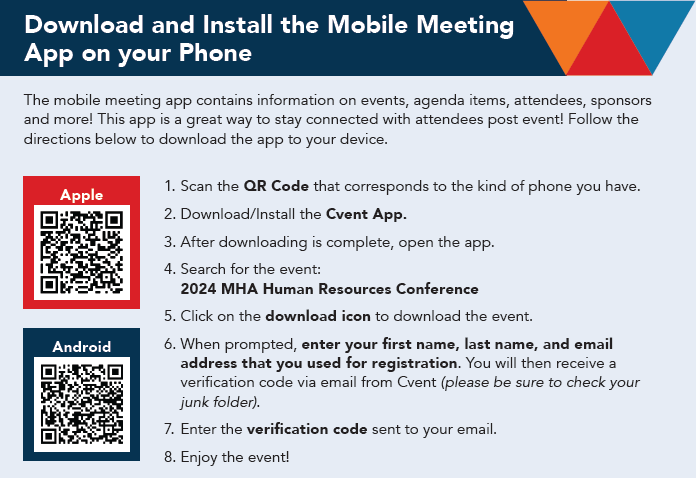
Those interested in connecting with attendees from the event can utilize the event app for up to 90 days after the event to connect with attendees and panelists, including the following individuals:
Jeremy Cannon, VP and chief nursing officer, Kalkaska Memorial Health Center
Jason D. Graves, system manager of recruitment and workforce development, MyMichigan Health
Meleah Mariani, chief nursing officer, Corewell Health Ludington Hospital
Erin Kujawski, regional director – organizational effectiveness, U-M Health Regional Network, UM Health – West, Sparrow Health System
Jeremiah Hodshire, president & chief executive officer, Hillsdale Hospital
Joel W. McDermott, VP, talent & culture, Corewell Health
The MHA has new, updated signage available for MHA members to order at no cost to help hospitals comply with the requirement from Public Acts 271 and 272 of 2023 that hospitals display signage informing …
The Michigan Health & Hospital Association (MHA) Keystone Center celebrated Joni Hunter, MA, and Dorothy Zsenyuk, RN, at Trinity Health IHA Medical Group Nurse Midwives Feb. 8 as Speak-up! Award recipients. The quarterly MHA Keystone …
The MHA released a new episode of the MiCare Champion Cast exploring the impact medical mistrust has on health outcomes for Black Americans featuring Lynn Todman, PhD, vice president of Health Equity and Community Partnerships …
If you’re a U.S. health industry watcher, it would appear the $4.5 trillion system is under fire at every corner. Pressures to lower costs, increase accessibility and affordability to all populations, disclose prices and demonstrate value are hitting every sector. Complicating matters, state and federal legislators are challenging ‘business as usual’ seeking ways to spend tax dollars more wisely with surprisingly strong bipartisan support on many issues. No sector faces these challenges more intensely than hospitals. …
Nonetheless, conflict resolution on these issues must be pursued if hospitals are to be effective, affordable and accessible contributors and/or hubs for community health systems in the future. The risks of inaction for society, the communities served and the 5.48 million (NAICS Bureau of Labor 622) employed in the sector cannot be overstated. The likelihood they can be resolved without the addition of new voices and fresh solutions is unlikely.”
Registration is open for the 2024 MHA Human Resources Conference, scheduled for March 5, 2024 at the ACH Hotel Marriott University Area, Lansing.
MHA Endorsed Business Partner CommerceHealthcare® recently published an annual report on 2024 Healthcare Finance Trends presenting a set of themes that capture the positive momentum, significant challenges and major strategies for provider organizations in 2024 and beyond.
The Joint Commission is hosting a webinar March 26 from 1 to 2:15 p.m. EST to review recent updates to Michigan regulations for Cardiac Systems of Care (STEMI Referring and STEMI Receiving).
Crain’s Grand Rapids published a story Feb. 22 about the decision by the Kalamazoo-based cooperative air ambulance program between Bronson Healthcare and Ascension Borgess Hospital to end flights later this year. MHA CEO Brian Peters …
Joni Hunter, MA, and Dorothy Zsenyuk, RN, at Trinity Health IHA Medical Group Nurse Midwives pictured with MHA CEO Brian Peters and Sarah Scraton, MHA Keystone Center executive director.
The Michigan Health & Hospital Association (MHA) Keystone Center celebrated Joni Hunter, MA, and Dorothy Zsenyuk, RN, at Trinity Health IHA Medical Group Nurse Midwives Feb. 8 as Speak-up! Award recipients.
The quarterly MHA Keystone Center Speak-up! Award celebrates individuals or teams in Michigan hospitals demonstrating a commitment to the prevention of patient or staff harm.
Hunter and Zsenyuk were honored for their proactive intervention during a routine visit with an obstetrics patient managing chronic hypertension. Hunter, knowing the risks associated with hypertension and pregnancy, noticed that weekly screenings were not integrated into the patient’s medical plan.
After notifying Zsenyuk and reviewing the patient’s medical record together, the pair acted.
“Instances like this are a perfect example of why it is important to review all aspects of a patient’s experience and care, even during routine visits,” said Hunter. “I am proud to work alongside colleagues like Dorothy to ensure we are taking all precautions necessary for both the birthing person and baby.”
Zsenyuk and Hunter were able to connect with the patient’s midwife, which led to the patient receiving weekly laboratory tests and monitoring.
“Joni was an incredible advocate for our patient,” said Zsenyuk. “I am honored we were able to provide our patient and her midwife with the tools needed to make an informed decision about her care plan for the duration of her pregnancy.”
In addition to the weekly testing, the patient was referred to Maternal Fetal Medicine for a consult.
“Joni and Dorothy’s action are a direct reflection of the standards we hold ourselves to at Trinity Health IHA Medical Group,” said Cindy Elliott, Trinity Health IHA Medical Group president. “We are incredibly honored to have dedicated clinical staff like them working with our patients each and every day.”
Additional award finalists for the last quarter of 2023 include:
Amanda Frescura, University of Michigan Health-West.
Sydnie Gray, Trinity Health IHA Medical Group.
Brooke Maguire, MyMichigan Hospital Midland.
“It’s an honor to celebrate Michigan healthcare workers who are setting the standard for excellent patient care,” said MHA CEO Brian Peters. “We’re fortunate to have people like Joni and Dorothy who intervened and led this patient to the preventative, life-saving care they needed.”
More information about the MHA Keystone Center Speak-up! Award, including criteria and a nomination form, are available online.