MHA CEO Report — A Year of Progress and Purpose

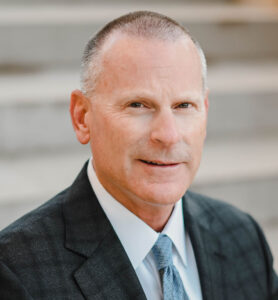
MHA Rounds image of Brian Peters

“There is no power for change greater than a community discovering what it cares about.” — Margaret J. WheatleyMHA Rounds graphic of Brian Peters
With another program year behind us, the MHA Annual Meeting served as a powerful reminder of our shared mission to advance the health and well-being of Michigan’s patients and communities. Despite an evolving political landscape, we’ve made meaningful progress and are moving ahead with clear purpose.

As you can imagine, the 2024-2025 MHA program year was marked by busy periods of state legislative activity and various developments at the federal level. We can attribute a tremendous amount of our success to Dr. Julie Yaroch, president of ProMedica Charles and Virginia Hickman Hospital, who served as board chair. Dr. Yaroch’s leadership, clinical expertise and passion for public health had significant impact across countless areas of work.

It’ll come as no surprise that ensuring access to quality healthcare for all Michiganders continued – and continues – to be a priority. This program year, the MHA successfully prevented proposed government mandated nurse staffing ratio legislation from receiving a committee vote. Advocacy efforts also continued around 340B to maintain access to community-based care and prevent drug manufacturer overreach. This resulted in strong bipartisan support for legislation that passed the Michigan Senate and collaboration at the federal level with Senator Debbie Stabenow on the SUSTAIN 340B Act.

I’d be remiss not to mention our response to proposed federal cuts to Medicaid. The MHA, alongside urban and rural members, has prioritized congressional meetings, grassroots communications, coalition efforts and collaboration with state executive leadership to send a strong, clear message: Michigan needs Medicaid.

All that said, playing defense didn’t define our program year. In an effort to grow and develop our healthcare workforce, the MHA successfully hosted the inaugural Healthcare Careers Conversation and led changes to the Michigan Reconnect Program. This resulted in 4,300 students enrolling in short-term healthcare programs, a complement to our ongoing MI Hospital Careers campaign work. Additionally, we pursued state legislation to address provider credentialing delays, secured key amendments to the Earned Sick Time Act and had a hand in proposed changes to the state’s unemployment compensation benefits, among many other employer-related policies.

I’m also incredibly proud to share that we worked with state legislators to design, draft and introduce legislation that makes assaulting a healthcare worker a felony, while tying it to appropriate criminal justice system diversions. Our MHA Keystone Center collaborated to offer active shooter trainings and workplace violence gap analyses to our members while serving as a founding partner of Lawrence Technological University’s Healthcare Violence Reduction Center (HVAC).

We were fortunate to see several MHA priorities included within the FY 2024 state budget, notably a large sum put toward mental and behavioral health. The MHA team successfully secured $8.3 million to launch a competitive grant program for hospital-based peer recovery coach (PRC) programs while leading the charge on a series of impactful prevention and data-driven efforts. Understanding that gaps in behavioral health continue to effect urban and rural hospitals alike, these successes lay the groundwork for what’s ahead.

Emerging technologies and the integration of artificial intelligence (AI) reinforced our commitment to addressing cybercrime and strengthening cybersecurity policy. With this in mind, the MHA worked directly with the Michigan Attorney General and state policy leaders to ensure hospitals are reflected as victims of cybersecurity events. Simultaneously, we engaged our MHA Service Corporation, MHA AI Task Force, CFO Council and industry experts to deploy a series of cybersecurity events and resources to members.

I’d like to applaud our teams for handling a handful of unforeseen challenges, including working over the course of many months to address critical supply chain needs following the devastating impacts of Hurricane Helene. We also saw impressive engagement across annual member events, from our MHA Human Resources Conference and MHA Keystone Safety & Quality Symposium to the Healthcare Leadership Academy and Excellence in Governance Fellowship.

These milestones are just a glimpse into what we accomplished together this program year. I’m deeply grateful to our MHA Board of Trustees, members, sponsors, business partners and dedicated MHA staff – your unity and unwavering dedication to this work continues to have a lasting impact.

As always, I welcome your thoughts.

Wellpath Supplemental Testimony Highlights Week of Advocacy Efforts

The MHA provided testimony April 30 to the House Appropriations Committee about healthcare services provided to prisoners by Michigan hospitals that have not been reimbursed by Wellpath, a third-party private vendor.

The House Appropriations Committee heard from several key stakeholders, including the MHA, on issues related to Wellpath and their failure to reimburse hospitals and EMS providers for delivering healthcare services to prisoners. Adam Carlson, senior vice president, Advocacy, discussed how hospitals are required by federal EMTALA law to provide healthcare to any person who seeks care, regardless of insurance status or residency – including the prisoner population in the state of Michigan. Further, it was shared that hospitals provided more than $35 million in healthcare services to prisoners from January 2022 through May 2024 that have not been reimbursed from Wellpath, and that the vendor has since filed for bankruptcy.

Adam Carlson, senior vice president, advocacy, MHA provided testimony on a Well Path supplemental appropriation.

Helen Johnson, CEO, Helen Newberry Joy Hospital, followed with her testimony and shared a unique example of how her hospital serves 6,000 residents and 1,100 prisoners in the region, indicating that nearly one-sixth of the hospital’s patient mix are from the nearby correctional facility. As a result, she explained that Helen Newberry Joy Hospital is still owed $800,000 from Wellpath, which represents wages for approximately 25% of the hospital’s nursing staff. This is only one example of several from member hospitals currently experiencing this financial issue with the previously contracted third-party vendor. The MHA will continue efforts to strongly advocate for a state supplemental appropriation of $35 million to offset outstanding payments owed to all member hospitals from Wellpath.

Multiple compact bills supported by the MHA also received a hearing in the new House Rules Committee, which evaluates legislation before it is considered for a full House chamber vote. House Bill 4103, sponsored by Rep. Julie Rogers (D-Kalamazoo), would add Michigan to the occupational therapist licensure compact agreement. Additionally, House Bill 4309, sponsored by Rep. Dave Prestin (R-Cedar River), would create a licensure compact for physician’s assistants in the state. The MHA will continue to support these bills as they move forward in the legislative process.

Also, the Senate MDHHS Appropriations Subcommittee reported its budget recommendation for fiscal year 25-26. Key MHA priorities were protected, including funding for Medicaid, the rural and obstetrical stabilization pools, peer recovery coaches and maternal health. The MHA will continue to support these funding proposals and advocate for more resources dedicated to behavioral health and access.

Members with questions should contact Elizabeth Kutter at the MHA.

Executive Budget Recommendation News Coverage

MHA CEO Brian Peters

A MHA media statement published Feb. 5 was included in stories by Michigan news outlets covering the fiscal year 2026 executive budget recommendation.

The statement, attributed to MHA CEO Brian Peters, was mentioned by WLNS-TV and Gongwer. The WLNS article includes the reactions from numerous leaders, while the Gongwer story focuses specifically on the budget recommendation for the Department of Health and Human Services.

“This budget presented by the Whitmer administration today maintains stability for health care providers across Michigan,” said Peters. “We appreciate the continued protection of funding pools that preserve access to care for Michiganders, whether they require obstetrical services, care at rural and critical access hospitals or coverage from the Healthy Michigan Plan and Michigan’s Medicaid health plans. We are also encouraged to see continued attention towards issues that impact Michigan’s talent pipeline and remove barriers towards pursuing health care careers.”

Members with any questions regarding media requests should contact John Karasinski at the MHA.

Executive Budget Recommendation Maintains Health of Michigan Hospitals

The following statement can be attributed to Brian Peters, CEO of the Michigan Health & Hospital Association.

MHA CEO Brian PetersState funding is critical to the health and viability of Michigan hospitals and their patients. This budget presented by the Whitmer administration today maintains stability for healthcare providers across Michigan. We appreciate the continued protection of funding pools that preserve access to care for Michiganders, whether they require obstetrical services, care at rural and critical access hospitals or coverage from the Healthy Michigan Plan and Michigan’s Medicaid health plans. We are also encouraged to see continued attention towards issues that impact Michigan’s talent pipeline and remove barriers towards pursuing healthcare careers.

Healthcare touches us all, regardless of political affiliation, and we look forward to working with lawmakers from both sides of the aisle during the budget process to make sure Michiganders, their communities and healthcare providers receive the funding support they need.

Expanding Peer Recovery Coach Services to Improve Patient Outcomes

The fiscal year (FY) 2025 budget includes critical funding to support the work of peer recovery coaches (PRCs) in Michigan hospitals. Kelsey Ostergren, director of health policy initiatives, MHA, and Michelle Norcross, senior director of safety & quality, MHA Keystone Center, share the impact these resources have on patients and communities. 

What is a peer recovery coach, and what role do they play in improving patient outcomes?

Ostergren: Peer recovery coaches (PRCs) are individuals who combine lived experience with technical knowledge to assist individuals with a substance use disorder (SUD) treatment and recovery. In addition to offering patients lifesaving support and resources, PRCs provide an individualized approach to long-term management of SUD.

Peer recovery coaches play a unique role in the hospital setting, engaging with individuals during a time when peer-support is vital. PRCs not only serve as a mentor and role model in recovery, but remove barriers to care by connecting individuals to resources and community.

There is mounting evidence to support the role of PRCs in the recovery process including increased patient retention in treatment programs, sustained reduction in substance use, increased access to social support, decrease criminal justice involvement and decreased use of emergency department services.

Norcross: The MHA and MHA Keystone Center convened member hospitals using PRCs to better understand how these services have been operationalized and what impact they have on Michigan patients. In these discussions, we learned:

  • Hospitals who offer PRC services indicate 87% – 89% of eligible patients accept PRC support and share strong positive feedback about the experience.
  • Patients who work with PRCs are less likely to be readmitted within 30 days compared to their peers who are eligible but don’t accept PRC services.
  • Hospitals with a fully integrated PRC model engage more than 1,000 patients per year across the ED and inpatient settings.
  • PRCs connect 65% – 75% of patients with outpatient treatment and support services upon discharge. This is in stark contrast to a 2022 study revealing that only 11% of Opioid Use Disorder (OUD) patients presenting to the ED were referred for outpatient treatment.

By expanding the use of PRC-delivered support services, Michigan hospitals can improve health outcomes and sustain recovery for at-risk patients and communities.

What is the biggest barrier when it comes to supporting peer recovery services in hospitals?

Ostergren: Many hospitals participating in the MHA Keystone Center Emergency Department Medication for Opioid Use Disorder (ED MOUD) program have highlighted the importance of peer recovery coaches for connecting SUD patients to treatment. Unfortunately, one of the most significant barriers is that these services cannot be reimbursed. Hospitals who want to offer PRCs are often required to fill these roles using temporary funding (i.e. grant dollars) or by contracting community mental health (CMH) agencies. While CMH resources have been critical, hospitals and health systems offer a unique touchpoint for patients with SUD.

How has collaboration helped secure critical funding to maintain PRC services in hospitals?

Ostergren: Beyond the work of the MHA and MHA Keystone Center teams, there have been numerous partnerships that were instrumental in advocating for funding to support PRCs in our hospitals and health systems. Our members participating in the ED MOUD program and those that employ PRCs were critical when it came to understanding this care model and identifying ways to support it. Additional stakeholders who provided insight, direction, guidance and support, include:

  • The Community Foundation for Southeast Michigan (CFSEM)
  • Michigan Department of Health & Human Services (MDHHS)
  • Michigan Public Health Institute (MPHI)
  • Face Addiction Now (FAN, formerly Families Against Narcotics)
  • Michigan Association of Counties (MAC)
  • Opioid Advisory Committee (OAC)
  • Substance Abuse and Mental Health Services Administration (SAMHSA)

Where can Michigan hospitals interested in learning more about peer recovery services and reimbursement opportunities go to learn more?

Norcross: The MHA Keystone Center is partnering with CFSEM to offer two virtual learning collaboratives in September for hospitals interested in learning more about peer recovery services and reimbursement. Members will have the opportunity to learn from and engage with peers who have successfully implemented peer recovery services.

Upcoming Peer Recovery Learning Collaboratives:

Register for peer recovery learning collaboratives here

Media Recap: State of Healthcare, State Budget & Public Health Partnerships

MHA CEO Brian Peters

The MHA received media coverage the week of July 15 on healthcare priorities in Michigan, the state budget and the intersection between public health and healthcare.

Hillsdale Hospital published an episode of the Rural Health Rising podcast July 18 featuring an interview with MHA CEO Brian Peters discussing the state of healthcare in Michigan and efforts underway to support rural hospitals.

“We have to really focus on the right strategies – the right tactics – to make sure we can continue providing access to care for all rural Michiganders,” said Peters. “It’s really an honor to be a part of that journey.”

Laura Appel, Executive Vice President, Government Relations and Public Policy, MHA, was also featured as a guest on Hillsdale’s podcast July 11 discussing the fiscal year 2025 state budget.

“The passage [of the state budget] is a culmination of many months,” said Appel. “The big thing we got is direct funding for hospitals to have peer recovery coaches to help people who have substance use issues that come to the ED or into the hospital for any reason.”

Lauren LaPine, Senior Director, Legislative and Public Policy, MHA, was featured July 16 in a story from Model D and Flintside exploring how collaboration between hospitals and public health partners benefits Michigan communities.

“Public health and hospitals working in tandem really protects and promotes community health,” said LaPine. “Public health focuses on prevention while hospitals focus on health intervention.”

Members with any questions regarding media requests should contact John Karasinski at the MHA.

MHA CEO Report — A Program Year in Review

MHA Rounds graphic of Brian Peters

“Winning is not a sometime thing, it is an all the time thing. You don’t do things right once in a while…you do them right all the time.”  — Vince Lombardi

MHA Rounds image of Brian PetersI am pleased to share we just completed a successful MHA Annual Meeting, continuing a long-standing June tradition whereby we celebrate the conclusion of one MHA program year, and prepare for the next. Each program year is unique with the different challenges it presents. At this point five years ago, no one could have predicted how the emergence of COVID-19 would flip healthcare on its head and drastically alter the tactical objectives of our association. However, there is a constant: the MHA continues to rise to any challenge presented to us and we deliver results for our membership to improve the health and wellness of individuals and communities.

The 2023-2024 program year focused intensely on workforce, viability and behavioral health, while addressing the various “wildcard” issues that always come up. We were led with great wisdom and compassion by Shannon Striebich, president and CEO, Trinity Health Michigan, as our board chair. Due to Shannon’s commitment and leadership, the MHA accomplished numerous highly successful and impactful outcomes on behalf of our members.

One of the most significant challenges in this past year was the threat posed by government-mandated nurse staffing ratio legislation. This proposed policy had the potential to dramatically reduce access to care for individuals throughout the state. Our advocacy on the issue lasted throughout the entire year but was highlighted by an Advocacy Day we hosted in September that featured more than 150 hospital representatives, primarily consisting of nurse leaders, who came to the Capitol and conducted 118 meetings with lawmakers that day. Later in the year, the MHA successfully advocated our position at a committee hearing, where more than 60 supporters attended on very short notice to push back on false narratives and to support alternative nurse staffing solutions. As a result of our efforts, no committee votes have been scheduled, and momentum on this harmful legislation has been effectively stalled.

While we had to play defense against this harmful proposed legislation, the MHA spent the program year actively engaged in workforce development and efforts to grow the healthcare talent pipeline. The MHA worked with stakeholders to implement new funding designed to expand access to Bachelor of Science in Nursing degrees through partnerships between community colleges and four-year universities, while also engaged in partnerships with other organizations to promote healthcare careers, increase clinical faculty and nurse preceptors, address high turnover rates in rural areas and promote healthcare career options. We continued our award-winning healthcare career marketing campaign designed to attract future workers and also redeployed our annual hospital workforce survey that shows the efforts of Michigan hospitals to recruit, retain and train healthcare workers is making a real difference. Finally, we hired our first-ever chief nursing officer at the MHA, which is already strengthening our ties to the nursing community throughout the state.

The viability of hospitals was another key focus and was largely supported through our legislative advocacy work. MHA funding priorities continued to be protected in the state budget, which includes $163 million for graduate medical education, $45 million for traditional disproportionate share hospitals, $15 million through the rural access pool and an additional $8 million for the obstetrical stabilization fund. The fiscal year 2024 budget also included $60 million annually to support hospitals with Level I and II trauma centers and $34 million annually to support hospitals that provide inpatient psychiatric care. Besides state funding, the MHA protected Medicaid funding, medical liability, the 340B drug pricing program and certificate of need.

The MHA is also intricately involved in in addressing the behavioral health crisis plaguing our state and country. Expanding access to care is a key focus, which included the MHA administrating a $50 million grant program to expand access to pediatric inpatient behavioral health services. The Michigan Department of Health and Human Services (MDHHS) is a close partner in this work and the MHA participated in the MDHHS Advisory Committee on the creation of a psychiatric bed registry. The MHA launched a new member ED boarding survey to quantify the number of patients struggling with behavioral health access in the emergency department and the MHA is using this data when engaging with lawmakers, stakeholders and the public to explain the scope of the program. These learnings informed the creation of a four-bill package of legislation to address board-identified issues in the behavioral and mental health system, such as coverage parity and community mental health shortcomings.

Much of the work in the past year has focused on maternal and infant health and improving maternal health and birth outcomes. And I am pleased to share that our MHA Board of Trustees just approved the full slate of recommendations emanating from the MHA Community Access to Health Task Force, giving us the support to continue this important journey together.

And as usual, we effectively dealt with a long list of “wildcard” issues that emerged during the program year, including drug shortages, guardianship, infection control, patient transport, population growth and safety and quality. We also continued to strengthen our efforts related to the growing cybersecurity threat. Indeed, the Change Healthcare cyberattack was one of the largest and most impactful attacks ever seen and served as a clear reminder of the importance of our work in this space.

At our Annual Meeting, I spoke to our attendees about “the power of zero.” In the 2023-2024 program year, the following were true:

  • The number of Michigan acute care community hospitals and health systems that are not members of our association is zero. We have everyone at the table, which allows us to speak with one powerful, united voice.
  • We passed 39 MHA-supported bills through the state legislature that were enacted into law, with five more on their way to the governor for her signature. The number of MHA-opposed bills that made their way to the finish line was zero.
  • The MHA now has a full-time chief medical officer and a full-time chief nursing officer (as noted above). How many other state hospital associations can say this? Zero.
  • And most importantly, how many other associations – in any sector – are as relevant, as impactful, as mission-driven and successful as the MHA? I believe that number is zero.

I would like to recognize and thank our outstanding MHA Board of Trustees, our members, sponsors and business partners, but most of all, our incredible MHA staff for coming together to achieve such tremendous results for the patients and communities we collectively serve. I hope you will take the opportunity to celebrate these results with us.

As always, I welcome your thoughts.

Michigan Legislature Champions Healthcare Funding

The following statement can be attributed to Brian Peters, CEO of the Michigan Health & Hospital Association.

MHA CEO Brian PetersThe Michigan Legislature passed a state budget that champions crucial healthcare funding and protects access to vital healthcare services across Michigan communities.

The fiscal year 2025 state budget and fiscal year 2024 supplemental proposals continue funding pools that support rural and critical access hospitals, obstetrical services, the Healthy Michigan Plan and Michigan’s Medicaid populations. Each of these pools help maintain access to care for underserved populations throughout the state.

The budget also includes new funding to support peer recovery coaches in hospitals to enhance substance use disorder services. These individuals are specifically trained to provide advanced peer recovery support services and are proven to help patients overcome obstacles in their substance use disorder recovery. Michigan joins the more than 38 other states in supporting this model of providing needed care.

We look forward to Gov. Whitmer signing this budget, which protects access to care and ensures hospitals can continue to advance the health of individuals and communities.