Investing in Rural Hospitals Means Investing in Rural Michigan

By Jeremiah Hodshire, President & CEO of Hillsdale Hospital

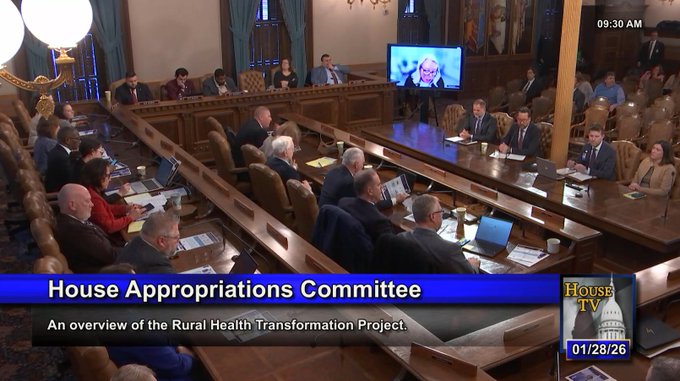
When the One Big Beautiful Bill Act was signed into law in July, it created the Rural Health Transformation Program, a five-year, $50 billion investment in rural healthcare. The MHA Board of Trustees took swift action empowering an MHA board-appointed task force charged with creating recommendations that the Michigan Department of Health & Human Services (MDHHS) could use when submitting the one-time application for funding.

I’ve had the pleasure of chairing the task force and working alongside my colleagues Tonya Darner, UP Health System; Karen Cheeseman, Mackinac Straits Health System; Dr. Ross Ramsey, Schuerer Health; Michael Rose, MyMichigan Health; and Peter Marinoff, Munson Healthcare. This process has been collaborative and informed by other rural hospital leaders across the state through the Rural CEO Town Hall the MHA hosted in late September. I am also deeply indebted to the MHA staff, specifically the driving force behind keeping our committee on task, Lauren LaPine-Ray, who has served as an outstanding ambassador, facilitator, researcher and connector as we navigate the federal guidelines! A few key themes emerged through this process and informed the recommendations shared with MDHHS.

When I look out across our community, I see the same faces that fill our hospital’s halls — farmers, teachers, small business owners and families who trust us to care for them when it matters most. Yet every year, it becomes harder to keep our doors open. Recruiting and retaining obstetricians, gynecologists, social workers, psychologists and primary care physicians has turned into an uphill push. Technology that could connect us to specialists hundreds of miles away remains out of reach due to inadequate broadband and out-of-date electronic medical records platforms. And the gap between what it costs to provide care and what we’re paid to deliver it keeps widening. That’s why the Centers for Medicare & Medicaid Services’ Rural Health Transformation Program matters so much right now. This new federal funding opportunity isn’t just a policy line item — it’s a lifeline. But for Michigan’s small and rural hospitals, it will only make a difference if the dollars actually reach us, the people on the ground.

Our Greatest Need: People

Every rural hospital leader will tell you the same story: we can’t hire fast enough to replace those who’ve left. Nearly 70% of Michigan hospitals report difficulty filling clinical vacancies and rural areas face the longest recruitment times in the state. Nursing wages in large systems have soared, while young physicians are drawn to urban centers where they can earn more and work less on call. Meanwhile, small hospitals like ours are paying bonuses we can’t afford just to keep labor and delivery open or to cover an emergency room shift. The costs to maintain OB/GYNs in rural areas are significant.

If the Rural Health Transformation funds are truly meant to “right-size” care delivery, they must start with stabilizing the workforce that keeps that system running. Rural hospitals should be able to use these funds for loan repayment programs, housing stipends and retention bonuses that reflect the realities of rural practice. Without people, no transformation is possible.

Technology Should Connect, not Divide

Michigan’s rural hospitals have led the way in adopting telehealth, but we are still too often left behind. Broadband is patchy and many of our systems don’t integrate with the larger hospitals where we refer patients. CMS should allow states to dedicate transformation dollars toward technology innovation — helping rural providers invest in electronic health record interoperability, remote patient monitoring and telepsychiatry tools that expand access without expanding costs. When technology works across the system, it saves time, reduces burnout and lets us keep more care local.

Payment Equity Must be Part of Transformation

Even before inflation and staffing shortages, the math didn’t add up. Rural hospitals serve older, sicker populations and depend heavily on Medicare and Medicaid. The number of births occurring in rural hospitals continues to decline, making the ability to cover costs and provide critical care even more challenging. When reimbursement rates don’t cover the cost of care, rural hospitals can’t sustain basic services like obstetrics or behavioral health. Between 2010 and 2023, 11 rural hospitals in Michigan closed or stopped providing inpatient services. Rural Transformation funds should explicitly support provider payments and shared-savings models to ensure critical healthcare access in rural areas is maintained. If rural hospitals can’t afford to pay their doctors and nurses, innovation will stall before it starts.

The Stakes for Michigan

More than 60% of Michigan’s counties are considered rural, with nearly 30 hospitals serving as the only point of care for miles. Every time one closes, an entire region loses not just its emergency room, but also its largest employer and a key part of its safety net. The Michigan Senate Fiscal Agency recently reported nearly 22% of Michigan counties are considered maternity deserts. Michigan needs true investments in rural healthcare to reverse these trends — but only if the funds flow to where they can have the greatest impact: rural hospitals themselves.

These dollars should not get lost in bureaucracy or redirected to administrative projects. They should go toward the people and places that make healthcare possible: our workforce, our technology and our providers.

If we want to build a stronger, more equitable Michigan, we must start by keeping care local, and that begins with investing in the hospitals that keep our communities alive.

MHA Service Corporation Highlights Security Technology Solutions and Action Plan Priorities

The MHA Service Corporation (MHASC) board held its final meeting of the 2024-2025 program year focused on supporting the MHA Strategic Action Plan priorities of protecting access, workforce support, strengthening cybercrime and cybersecurity policy, mental and behavioral health, and creating healthy communities. Members are encouraged to review the recent MHA CEO Report for more information on the association’s efforts to address these ongoing priorities.

The board was joined by Jason Slocum, CEO, i2G Systems, a Michigan-based electronic security technology service provider, for an overview of i2G’s Security Alignment Program. Their revolutionary integrated approach to security allows for hospitals and healthcare systems to measure how well public safety investments are performing against policies in real time. This encompasses a broad spectrum of services and technologies, ranging from access control, advanced surveillance, perimeter and outdoor areas, analytics, visitor/vendor management and emergency response systems. The partnership with i2G Systems aligns with the MHA’s priority to prevent workplace violence and keep healthcare workers, patients and visitors safe. Members may contact Ashtyn DeShais, account manager at i2G Systems to learn more.

The MHASC board had several appointments and reappointments, adding depth and breadth of expertise. The board welcomed new board members Brittany Bogan, associate COO, C.S. Mott Children’s Hospital & Von Voigtlander Women’s Hospital, Michigan Medicine, Ann Arbor; and Christopher Fulks, interim CEO at Lake Huron Medical Center, and regional CFO, Prime Healthcare, Garden City. Fulks also accepted a MHA Ludwig Community Benefit award.

The board affirmed the reappointments of Paul Karsten, CFO, Pine Rest Christian Mental Health Services, as were the following individuals:

  • Peter Marinoff, south region president, Munson Healthcare
  • Andrea Poulopoulos, senior vice president, supply chain, Corewell Health

The board recognized outgoing board member Saju George, regional CEO, Prime Healthcare, and thanked him for continued service on the MHA Board of Trustees. The MHASC board also honored Ruthanne Sudderth, senior vice president and chief strategy officer, for providing strategic planning and oversight of the MHASC, including service as secretary of the board since 2023. Sudderth received a MHA Special Recognition Award and has moved on to a new opportunity outside of the MHA. The board welcomed Lindsay Peters, who will begin serving as vice president of the MHASC and board secretary in July.

The MHASC mission is to deliver innovative solutions that help improve value and performance through its Unemployment Compensation Program, Data Services and Endorsed Business Partner program. Visit the MHA Business Services webpage to learn more about resources available. Questions regarding the MHASC Board should be directed to Lindsay Peters at the MHA.

MHA Monday Report Nov. 18, 2024

Advocacy image tileWorkforce Bills Highlight Healthcare Legislation Advanced in the State Legislature

Several workforce bills highlighted the healthcare legislation that advanced in the state legislature during the week of Nov. 11. The Senate Appropriations Committee approved Senate Bills (SBs) 406 and 407, led by Sen. Sarah Anthony (D-Lansing). The bills provide …


MHA Board of Trustees Considers Election Impact and Association Priorities

The MHA Board of Trustees began its Nov. 13 meeting with a review of the results from the federal election and its potential impact on key association priorities, led by Carlos Jackson and Mike Goodman with Washington D.C.-based Cornerstone Government …


CMS Releases 2025 Physician Fee Schedule Final Rule

The Centers for Medicare & Medicaid Services (CMS) recently released a issued a final rule to update the physician fee schedule payment system effective Jan. 1, 2025. The rule will: Reduce the PFS conversion …


MDHHS Shares 2022 Maternal and Infant Health Statistics

The Michigan Department of Health and Human Services (MDHHS) Maternal and Child Health Epidemiology Section recently led a webinar on 2022 maternal and infant health statistics for the state. Infant mortality refers to the death …


Enrollment Open for 2025 MHA Healthcare Leadership Academy

The MHA is offering its popular Healthcare Leadership Academy program in February and April 2025, with sessions at the MHA headquarters in Okemos. In partnership with Executive Core and Grand Valley State University, two power-packed …


Medical SolutionsBuilding a Culture of Retention

MHA Endorsed Business Partner Medical Solutions recently released an episode of their “Staffing Unplugged” podcast, featuring Chief Human Resources Officer Rich Thompson sharing insights on the critical role of culture in healthcare staffing. He …


Latest AHA Trustee Insights Focuses on Post-Merger Board Restructuring

The November edition of Trustee Insights, the monthly digital package from the American Hospital Association (AHA), includes CEO insights about the integration of two major health systems which resulted in stronger governance. The article explains the …


What’s Top of Mind in Rural Healthcare?

Peter Marinoff, president and CEO, Munson Healthcare’s Southern Region and MHA Small and Rural Hospital Council Chair

The following article was written by Peter Marinoff, president and CEO, Munson Healthcare’s Southern Region and MHA Small and Rural Hospital Council Chair. National Rural Health Day celebrates the remarkable efforts of hospitals, healthcare teams, …


Keckley Report

The Four Core Pillars of Trump Healthcare 2.0

“While speculation swirls around key cabinet appointments in the incoming Trump administration, much is being written about how things might change for industries and the companies that compose them. Healthcare is no exception.

Speculation about possible changes originates from media coverage, healthcare trade associations, law firms, consultancies, think tanks and academics. Their views are primarily based on Trump Healthcare 1.0 initiatives (2017-2021), presumed Trump 2.0 leverage in the U.S. Senate, House and conservative Supreme Court and a belief by the Trump-team leaders that their mandate is to lower costs for “everyday Americans” and tighten border security.

Thus, Trump Healthcare 2.0 policy changes will be extensive, leveraging legislation, executive orders, agency administrative actions, court decisions and appropriations processes to reset the U.S. health system.”

Paul Keckley, Nov. 11, 2024


News to Know

  • The Centers for Medicare & Medicaid Services (CMS) recently announced the 2025 Medicare Part A and B Premiums and Deductibles, with details available in the CMS Fact Sheet.
  • The Michigan Department of Health and Human Services has increased reimbursement rates for Behavioral Health Treatment – Applied Behavior Analysis services to improve autism treatment access for Medicaid beneficiaries.

What’s Top of Mind in Rural Healthcare?

Peter Marinoff, president and CEO, Munson Healthcare’s Southern Region and MHA Small and Rural Hospital Council Chair

The following article was written by Peter Marinoff, president and CEO, Munson Healthcare’s Southern Region and MHA Small and Rural Hospital Council Chair. National Rural Health Day celebrates the remarkable efforts of hospitals, healthcare teams, community organizations and many others who are dedicated to meeting the unique needs of rural patients and communities.

Peter Marinoff, president and CEO, Munson Healthcare’s Southern Region and MHA Small and Rural Hospital Council Chair
Peter Marinoff is president and CEO of Munson Healthcare’s Southern Region.

Every day, I have the honor and privilege of working alongside committed, mission-minded individuals who provide compassionate and patient-centered care to the communities we serve at Munson Healthcare. As I reflect on National Rural Health Day, I want to highlight some of the areas that continue to be top of mind, along with innovative efforts underway to support Michigan’s rural healthcare providers.

Workforce Support

Rural hospitals continue to face staffing shortages in primary care, specialized services and other clinical and non-clinical areas. With this in mind, we’re working to strengthen recruitment and retention efforts while prioritizing healthcare worker well-being.

One notable success from last year was working with the MHA to secure $75 million in workforce funding, which was designed and distributed with small and rural hospitals in mind. Additionally, we worked with the association to successfully advocate for legislation that modernized the scope of practice for certified registered nurse anesthetists (CRNAs) and allows Michigan hospitals to be flexible in choosing the anesthesia care model that best fits their patient and staff needs.

Protecting Access

Knowing our patient population is aging and often required to travel significant distances for care, we’ve had to find innovative ways to keep critical service lines accessible.

We have a phenomenal Ask-A-Nurse program at Munson Healthcare, which is a free, 24/7 call center staffed year-round by registered nurses that offer easy access to health-related information and triage services. I’d also be remiss not to mention our Virtual Urgent Care, which helps deliver care guidance to patients with non-life-threatening symptoms or illness.

Another tool rural providers often tap is the 340B Drug Pricing Program, a cost-savings initiative that helps eligible hospitals spread scarce resources to vulnerable patients with limited or no access to healthcare. My colleagues at Mackinac Straits utilize savings from the program to operate a 24-hour pharmacy, so I know they – along with many others – would echo the sentiment that 340B is essential to making care accessible in our rural communities.

Enhancing Mental and Behavioral Health Services

While there are gaps in mental and behavioral healthcare services across the state, more than 60% of rural Americans live in designated mental health provider shortage areas. With this in mind, we’ve continued to put our heads together to address the disparities impacting rural communities specifically. This includes:

  • Working with the MHA to advocate for an investment of $8.3 million in the 2025 fiscal year state budget to address demand for substance use disorder (SUD) services.
  • Utilizing grant funding specific to small and rural hospitals to expand access to pediatric inpatient psychiatric care.
  • Collaborating with community partners, like our Regional Community Health Opioid Initiative, to focus on efforts that address stigma, ensure safe prescribing and educate both patients and providers on SUD.
  • Advocating for legislation that adds nurse practitioners and physicians’ assistants into the mental health code in rural areas.

Strengthening Cybersecurity

Making sure rural hospitals have the tools and infrastructure to prevent cybercrime is critical in today’s world. Addressing vulnerabilities helps us avoid disruption to care, protect our data and avoid the financial and legal burdens that often fall on hospitals as a result of these crimes.

Thankfully the White House announced in June collaborative efforts aimed at strengthening cybersecurity for rural hospitals across the United States. When it comes to this issue, it’s important that the facilities with less resources are granted the tools necessary to safeguard data to the same degree as our urban counterparts.

I strongly believe what challenges us in rural healthcare is also what sets us apart. Join me in honoring National Rural Health Day by celebrating the compassionate, resilient and community-driven teams I’m inspired by every day.