The Five Things I Love Most About Nurses

Amy Brown, chief nursing officer, field engagement, MHA

In a few short days, I will celebrate one year as the inaugural chief nursing officer for the MHA. This position has given me the privilege of bringing together nurse leaders from across the state and country, gathering insights, sharing best practices and collaborating to drive meaningful change that advances care delivery.

When I visit with hospitals throughout Michigan, one constant remains true: nurses represent the essential foundation that supports our patients and communities. With this in mind, it seems fitting that the theme of National Nurses Week (May 6-12) focuses on recognizing the power of nurses as a driving force behind compassionate care, innovation and transformative changes in healthcare.

Before joining the MHA, I worked as a bedside nurse for six years and in hospital leadership for 16. As I reflect on my career, here are the top five things I love most about this workforce:

  1. Our authenticity: Nothing is off the table, whether you’re out to dinner with colleagues or interacting with patients and their families. Nurses keep it real.
  2. Our speed: Being a fast walker, a fast learner and a fast problem-solver is a must when it comes to this work.
  3. Our ability to connect: Nurses are required to get up close and personal. Because of this, we know how to reach others in a way that is meaningful and genuine.
  4. Our problem-solving skills: When you tell a nurse what you need, they will find a way to get the job done.
  5. Our resilience: Regardless of the hardship we’ve witnessed and endured, we continue to show up for our team, our patients and our communities every day.

I hope you’ll join me in thanking all the dedicated nurses across Michigan for their unwavering commitment to protecting our patients, enhancing care safety and quality and for the countless acts of kindness they perform that make a profound difference every day.

MHA Monday Report April 14, 2025

U.S. House Advances Budget Resolution, Sets Up Potential Medicaid Cuts

The United States House of Representatives advanced a Senate budget resolution April 10 that calls for a minimum of $1.5 trillion in federal spending reductions. A separate budget resolution previously passed by the House in …


Registration Now Open for MHA Annual Membership Meeting

Registration is now open for the MHA Annual Membership Meeting June 25 through 27 at the Grand Hotel on Mackinac Island. The annual meeting will feature an outstanding lineup of speakers, including Geeta Nayyar, MD, …


AHA President and CEO Rick Pollack Addresses MHA Board

The MHA Board of Trustees welcomed AHA President and CEO Rick Pollack to its April 9 meeting at the MHA’s Capitol Advocacy Center in downtown Lansing. The board meeting primarily focused on how to effectively …


MHA to Host GME Capitol Day May 21

The MHA is hosting the 2025 MHA Graduate Medical Education (GME) Capitol Day from 9 a.m. – 3:30 p.m. May 21 in Lansing. The event is an opportunity for Michigan’s physician residents from teaching hospitals …


MI AIM Spring Regional Training Approaching

The Michigan Alliance for Innovation on Maternal Health (MI AIM) is offering regional training sessions for inpatient maternal health providers focused on implementing the hypertension safety bundle and addressing common challenges with implementation. The one-hour …


MHA Virtual Member Forum on Cybersecurity and Cyberattack Response

The MHA, in conjunction with its statewide Health Information Technology Strategy Committee, is hosting the virtual member forum Cybersecurity and Cyberattack Response from 9:30 to 11 a.m. May 9 as an ongoing effort to strengthen …


MHA Shares Medicare and Medicaid Enrollment Analysis
The MHA recently updated its analysis of Medicaid and Medicare enrollment based on February 2025 data. The analysis includes program enrollment as a percentage of each county’s total population and the split between fee-for-service and …


Excellence in Governance Fellowship Offers Meaningful Dialogue Among Trustees and Experts

Applications are now being accepted for the 2025-2026 the MHA Excellence in Governance Fellowship. Launched more than 20 years ago, is a rigorous and comprehensive program delivering tools and knowledge in effective governance, improving quality …


The Power of Patient-Centered Care

It’s no secret that patient experience within hospitals and health systems has evolved over the years – especially following the COVID-19 pandemic. With Patient Experience Week (PX Week) around the corner, it’s a good time to recognize the …


Keckley Report

The 5 Emergent Issues for Boards in Trump-DOGE Healthcare

“This was a week for healthcare that’s unprecedented in modern history …

None of these is a surprise. Since the Trump inauguration January 20, a shake-up in federal government has been promised and last week’s actions show it’s serious.  Polls show a majority of Americans distrust the federal government, Congress, the media and the health system, so disruption is expected. But the nation’s divided about solutions, and healthcare is no exception.  …

The events of last week portend more pressure on healthcare Boards and management to execute. In these 5 areas, each organization should revisit current policies and strategies and refresh where appropriate. And each organization should evaluate current relationships with trade groups with whom advocacy efforts are coordinated to assure they’re responsive to the realities of healthcare in the Trump-DOGE era.”

Paul Keckley, April 6, 2024


New to KnowNews to Know

  • Kara Heck, MHA, BSN, RN-BC, CCRN, chair of the MHA Safety & Quality Committee, shares a testimonial encouraging healthcare leaders to attend the MHA Keystone Center Safety & Quality Symposium, taking place April 28–29, 2025, at the Kellogg Conference Center & Hotel in East Lansing.
  • The American Hospital Association (AHA) is accepting applications for the annual 2026 AHA Foster G. McGaw Prize now through May 6, 2025.

Laura Appel speaks with 9&10 News.

MHA in the News

The MHA received media coverage the week of April 7 on potential Medicaid funding cuts, pediatric behavioral health and healthcare costs. 9& 10 News aired a story April 9 on potential federal Medicaid funding cuts. MHA …

MHA Monday Report April 7, 2025

Deadline Nearing to Register for the MHA Keystone Center Safety & Quality Symposium

The April 18 registration deadline is quickly approaching for the MHA Keystone Center Safety & Quality Symposium, scheduled for April 28 –29, 2025, at the Kellogg Conference Center & Hotel, East Lansing. Multiple breakout sessions, …


New Resources for Patient Rights in Psychiatric Hospitals

The MHA recently collaborated with the Mental Health Association of Michigan and Disability Rights Michigan to develop resources outlining patient rights in psychiatric hospitals across Michigan, Indiana, Wisconsin and Ohio. These assets are modeled after …


Michigan HR Professionals Gather at the MHA Human Resources Conference

More than 100 healthcare human resources (HR) professionals from across the state gathered at the MHA Human Resources Conference March 25 in Lansing. Attendees participated in small group discussions that developed innovative ideas focused on …


MiCare Champion Cast Header PhotoHow Could Medicaid Cuts Impact Michigan?
The MHA released a new episode of the MiCare Champion Cast exploring how proposed reductions to Medicaid could disrupt access to care and harm Michigan hospitals, patients and communities. Laura Appel, executive vice president of …


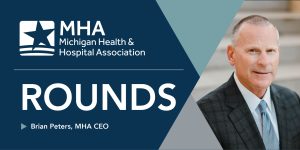
MHA Rounds image of Brian PetersMHA CEO Report — Prioritizing Rural Health

While snow continues to fall in northern Michigan, spring is officially here, and for many, that means our weekend travel plans shift from skiing and snowmobiling to camping, hiking and boating. Rural Michigan is an amazing travel destination for many, …


Keckley Report

Healthcare is Low Hanging Fruit for Trump: Disruption is the Aim

“The health system is low hanging fruit for federal spending hawks and government reformers. It’s increasingly evident the Trump administration’s well aware. …

This week, Congress returns to DC to continue its budget reconciliation deliberations against a backdrop of growing anxiety about an economic downturn and potential recession.  The stock market is down 10% from its February 19 high and consumer sentiment about the economy hit a 12-year low last week. Notably, households of low and middle-income means are experiencing record levels of debt and unpaid bills: these include 4 million in lower-paying healthcare jobs and 3 million unpaid family caregivers who can’t afford to pay for outside care. And physicians, now 3 months into their fifth-year without a Medicare reimbursement increase, are simply mad and burnt-out.

Today, every healthcare organization (public/private) is operating in limbo: leaders are worried, lenders are more cautious, researchers and public health agencies are paralyzed, state and local health officials are preparing for the worst and hospitals, medical practices, ancillary and long-term care providers face an insecure, disgruntled workforce.

The playbook for everyone in U.S. healthcare—payers, providers, suppliers and advisors—is being re-written.”

Paul Keckley, March 30, 2025


News to Know

  • The MHA was recently awarded $2.5 million to expand hospital-based peer recovery coach (PRC) services and is requesting members complete a brief survey by April 11 to assess current use and interest in PRC programs.
  • The Michigan Alliance for Innovation on Maternal Health (MI AIM) is offering regional training sessions April 23 for inpatient maternal health providers focused on implementing the hypertension safety bundle and addressing common challenges with implementation.
  • MHA Endorsed Business Partner AMN Healthcare will host the free webinar Balancing the Complexities of the Healthcare Workforce in Rural Markets from 11 a.m. to noon ET April 10.

MHA CEO Brian Peters speaks during a virtual media roundtable about Medicaid.

MHA in the News

A virtual media roundtable hosted April 3 by the Michigan League for Public Policy included MHA CEO Brian Peters as a panelist, where he discussed the consequences for potential Medicaid funding cuts by Congress. Crain’s …

The Power of Patient-Centered Care

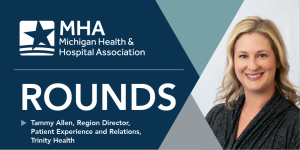
Tammy Allen, Region Director, Patient Experience and Relations, Trinity Health

It’s no secret that patient experience within hospitals and health systems has evolved over the years – especially following the COVID-19 pandemic. In honor of Patient Experience Week (PX Week), it’s a good time to recognize the strong, positive impact of patient-centered care. Now more than ever, healthcare leaders must consider these collaborative, compassionate approaches that not only benefit patients and providers, but also enhance a hospital’s culture, reputation and viability.

What is the philosophy and impact of patient-centered care?

While the terminology often varies across organizations, the foundational concept of any patient-centered care model is to put patients and their caregiver(s) at the center of all decision-making. Oftentimes, these efforts are referred to as Person- and Family-Centered Care (PFCC) or Person and Family Engagement (PFE).

Regardless of what it goes by, the primary goal is to foster collaboration between patients, families and healthcare staff. I can confirm both first-hand and from sources including the National Library of Medicine that implementing patient-centered care can result in better health outcomes, higher patient satisfaction, safer and more desirable workplaces and reduced costs.

Recent changes to the Hospital Consumer Assessment of Healthcare Providers and Systems (HCAHPS) survey help reflect the evolution of patient-centered care, aiming to better capture the complexities of the modern patient experience. These measures focus on:

  • Patient-Centered Communication: Ensuring patients and their caregiver(s) are given clear explanations of diagnoses, treatment and medication instructions.
  • Patient and Family Involvement: Ensuring patients and their caregiver(s) feel well-informed and involved in the decision-making process for every step of the care plan, from intake to discharge.
  • Seamless, Compassionate Care: Ensuring hospital and healthcare teams collaborate and communicate effectively to create a seamless patient experience and prevent lapses in care. This principle also places emphasis on delivering compassionate, personalized care to meet every patient’s unique needs.

What is required to make a patient-centered care model successful and sustainable?

There are few key elements necessary to implement and maintain patient-centered care within a hospital or health system. This includes:

  • Leadership buy-in to access the necessary resources and tools to implement, enhance and sustain a patient-centered care model.
  • Education and training to help healthcare teams understand the value of patient-centered care and effectively implement new practices.
  • Employee engagement to foster a culture that embraces patient-centered care practices and maintains collaboration across teams.

What tools exist for hospitals and health systems looking to adopt a patient-centered care model (especially those with limited resources)?

The MHA Person & Family Engagement (PFE) Roadmap is a great tool that offers guidance on how to introduce or re-engage patient-centered care practices. The roadmap provides standardized definitions, policies and actionable steps for healthcare teams. Later this Spring, members of the MHA PFE Advisory Council will share how to integrate the roadmap in two PFE Improvement Sprint webinars, which are free of charge to MHA members:

What wisdom would you pass along to healthcare teams implementing or re-engaging patient-centered care practices?

If you are a patient experience leader like me, use your voice and expertise to share the far-reaching benefits of patient-centered care. In addition to enhancing the overall clinical experience, these efforts help ensure those who walk through your doors feel valued, involved and understood.

Advancing Community Access to Health for All

Byline: Ewa Panetta, CPPS, Director of Health Equity and Experience, MHA 

Designing Community Access to Health Programs 

Advancing community health access for all Michiganders is a key focus of Gov. Whitmer and the Michigan Department of Health and Human Services, as Gov. Whitmer declared January Social Determinants of Health (SDOH) Month. This opportunity recognizes the importance of addressing social and economic factors that have a greater impact on overall health than factors like biology, behavior or medical care. Successful community health access programs require considering the most impactful SDOH in the local communities to ultimately improve health.

Step one is understanding the factors and barriers that impact the way communities and individuals experience health and healthcare. At the community level, these are referred to as social determinants (drivers) of health (SDOH), while at the individual level, they are referred to as health-related social needs (HRSNs).

It is no surprise that accreditation and regulatory bodies are including requirements and quality measurements that call on hospitals to effectively assess and understand SDOH and HRSNs, with the ultimate goal of improving the quality of care for all patients. By identifying these factors, hospitals can better understand what steps are needed to address patient level needs and inform investment in long-term solutions that improve health outcomes at the community level.

No single organization or sector has sole responsibility for addressing these factors – it takes authentic partnerships, long-term investment and designing programs that are intentional in addressing root causes of poor health outcomes. As we enter a new year, let January serve as a reflection of hospitals’ commitment to the MHA’s mission of advancing the health of all individuals and communities.

Below are resources available to help you and your organization address these factors.

Organizational Level

Assess patient and community social needs and integrate social care navigation into clinical workflows.

  • Use the Guide and Action Plan to Integrating CMS and TJC Health Equity Requirements to identify key data collection requirements across SDOH/HRSNs and design programs and interventions that address these factors. The exclusive MHA-member resource was developed to support hospitals and health systems with establishing and maintaining a program that meets The Joint Commission and CMS requirements and standards by centering quality improvement best practices to guide implementation.

Community Level

Build relationships to address local social, political and economic structures and conditions that affect health outcomes.

The MHA and the MHA Keystone Center remain committed to supporting member hospitals improve health access and to deliver safe, high-quality care! We look forward to sharing additional resources and association activities throughout the program year.


MHA Monday Report Nov. 18, 2024

Advocacy image tileWorkforce Bills Highlight Healthcare Legislation Advanced in the State Legislature

Several workforce bills highlighted the healthcare legislation that advanced in the state legislature during the week of Nov. 11. The Senate Appropriations Committee approved Senate Bills (SBs) 406 and 407, led by Sen. Sarah Anthony (D-Lansing). The bills provide …


MHA Board of Trustees Considers Election Impact and Association Priorities

The MHA Board of Trustees began its Nov. 13 meeting with a review of the results from the federal election and its potential impact on key association priorities, led by Carlos Jackson and Mike Goodman with Washington D.C.-based Cornerstone Government …


CMS Releases 2025 Physician Fee Schedule Final Rule

The Centers for Medicare & Medicaid Services (CMS) recently released a issued a final rule to update the physician fee schedule payment system effective Jan. 1, 2025. The rule will: Reduce the PFS conversion …


MDHHS Shares 2022 Maternal and Infant Health Statistics

The Michigan Department of Health and Human Services (MDHHS) Maternal and Child Health Epidemiology Section recently led a webinar on 2022 maternal and infant health statistics for the state. Infant mortality refers to the death …


Enrollment Open for 2025 MHA Healthcare Leadership Academy

The MHA is offering its popular Healthcare Leadership Academy program in February and April 2025, with sessions at the MHA headquarters in Okemos. In partnership with Executive Core and Grand Valley State University, two power-packed …


Medical SolutionsBuilding a Culture of Retention

MHA Endorsed Business Partner Medical Solutions recently released an episode of their “Staffing Unplugged” podcast, featuring Chief Human Resources Officer Rich Thompson sharing insights on the critical role of culture in healthcare staffing. He …


Latest AHA Trustee Insights Focuses on Post-Merger Board Restructuring

The November edition of Trustee Insights, the monthly digital package from the American Hospital Association (AHA), includes CEO insights about the integration of two major health systems which resulted in stronger governance. The article explains the …


What’s Top of Mind in Rural Healthcare?

Peter Marinoff, president and CEO, Munson Healthcare’s Southern Region and MHA Small and Rural Hospital Council Chair

The following article was written by Peter Marinoff, president and CEO, Munson Healthcare’s Southern Region and MHA Small and Rural Hospital Council Chair. National Rural Health Day celebrates the remarkable efforts of hospitals, healthcare teams, …


Keckley Report

The Four Core Pillars of Trump Healthcare 2.0

“While speculation swirls around key cabinet appointments in the incoming Trump administration, much is being written about how things might change for industries and the companies that compose them. Healthcare is no exception.

Speculation about possible changes originates from media coverage, healthcare trade associations, law firms, consultancies, think tanks and academics. Their views are primarily based on Trump Healthcare 1.0 initiatives (2017-2021), presumed Trump 2.0 leverage in the U.S. Senate, House and conservative Supreme Court and a belief by the Trump-team leaders that their mandate is to lower costs for “everyday Americans” and tighten border security.

Thus, Trump Healthcare 2.0 policy changes will be extensive, leveraging legislation, executive orders, agency administrative actions, court decisions and appropriations processes to reset the U.S. health system.”

Paul Keckley, Nov. 11, 2024


News to Know

  • The Centers for Medicare & Medicaid Services (CMS) recently announced the 2025 Medicare Part A and B Premiums and Deductibles, with details available in the CMS Fact Sheet.
  • The Michigan Department of Health and Human Services has increased reimbursement rates for Behavioral Health Treatment – Applied Behavior Analysis services to improve autism treatment access for Medicaid beneficiaries.

What’s Top of Mind in Rural Healthcare?

Peter Marinoff, president and CEO, Munson Healthcare’s Southern Region and MHA Small and Rural Hospital Council Chair

The following article was written by Peter Marinoff, president and CEO, Munson Healthcare’s Southern Region and MHA Small and Rural Hospital Council Chair. National Rural Health Day celebrates the remarkable efforts of hospitals, healthcare teams, community organizations and many others who are dedicated to meeting the unique needs of rural patients and communities.

Peter Marinoff, president and CEO, Munson Healthcare’s Southern Region and MHA Small and Rural Hospital Council Chair
Peter Marinoff is president and CEO of Munson Healthcare’s Southern Region.

Every day, I have the honor and privilege of working alongside committed, mission-minded individuals who provide compassionate and patient-centered care to the communities we serve at Munson Healthcare. As I reflect on National Rural Health Day, I want to highlight some of the areas that continue to be top of mind, along with innovative efforts underway to support Michigan’s rural healthcare providers.

Workforce Support

Rural hospitals continue to face staffing shortages in primary care, specialized services and other clinical and non-clinical areas. With this in mind, we’re working to strengthen recruitment and retention efforts while prioritizing healthcare worker well-being.

One notable success from last year was working with the MHA to secure $75 million in workforce funding, which was designed and distributed with small and rural hospitals in mind. Additionally, we worked with the association to successfully advocate for legislation that modernized the scope of practice for certified registered nurse anesthetists (CRNAs) and allows Michigan hospitals to be flexible in choosing the anesthesia care model that best fits their patient and staff needs.

Protecting Access

Knowing our patient population is aging and often required to travel significant distances for care, we’ve had to find innovative ways to keep critical service lines accessible.

We have a phenomenal Ask-A-Nurse program at Munson Healthcare, which is a free, 24/7 call center staffed year-round by registered nurses that offer easy access to health-related information and triage services. I’d also be remiss not to mention our Virtual Urgent Care, which helps deliver care guidance to patients with non-life-threatening symptoms or illness.

Another tool rural providers often tap is the 340B Drug Pricing Program, a cost-savings initiative that helps eligible hospitals spread scarce resources to vulnerable patients with limited or no access to healthcare. My colleagues at Mackinac Straits utilize savings from the program to operate a 24-hour pharmacy, so I know they – along with many others – would echo the sentiment that 340B is essential to making care accessible in our rural communities.

Enhancing Mental and Behavioral Health Services

While there are gaps in mental and behavioral healthcare services across the state, more than 60% of rural Americans live in designated mental health provider shortage areas. With this in mind, we’ve continued to put our heads together to address the disparities impacting rural communities specifically. This includes:

  • Working with the MHA to advocate for an investment of $8.3 million in the 2025 fiscal year state budget to address demand for substance use disorder (SUD) services.
  • Utilizing grant funding specific to small and rural hospitals to expand access to pediatric inpatient psychiatric care.
  • Collaborating with community partners, like our Regional Community Health Opioid Initiative, to focus on efforts that address stigma, ensure safe prescribing and educate both patients and providers on SUD.
  • Advocating for legislation that adds nurse practitioners and physicians’ assistants into the mental health code in rural areas.

Strengthening Cybersecurity

Making sure rural hospitals have the tools and infrastructure to prevent cybercrime is critical in today’s world. Addressing vulnerabilities helps us avoid disruption to care, protect our data and avoid the financial and legal burdens that often fall on hospitals as a result of these crimes.

Thankfully the White House announced in June collaborative efforts aimed at strengthening cybersecurity for rural hospitals across the United States. When it comes to this issue, it’s important that the facilities with less resources are granted the tools necessary to safeguard data to the same degree as our urban counterparts.

I strongly believe what challenges us in rural healthcare is also what sets us apart. Join me in honoring National Rural Health Day by celebrating the compassionate, resilient and community-driven teams I’m inspired by every day.

MHA Monday Report Oct. 28, 2024

Obtaining Beyfortus through the Vaccines for Children Program

Vaccination remains a key strategy to mitigate the impact of adverse health outcomes on patients and hospital operations during the 2024-2025 respiratory season. The MHA urges all birthing hospitals to become Vaccines for Children …


Webinar Outlines Policies to Remove Stigma from Credentialing Applications

The MHA and the MHA Keystone Center will host the MHA Health Foundation webinar Implementing Evidence-Informed Strategies to Normalize Help-Seeking and Strengthen Wellbeing from 4:30 to 5:30 p.m. Dec 4. The webinar will outline how …


A Healthier Future: Improving Access for Immigrant Families in Michigan

Accessing healthcare can be a daunting experience for anyone, but it poses unique challenges for immigrants and refugees. I recently participated in a breakout session at the Michigan Association for Local Public Health Conference held in …


Keckley Report

U.S. Healthcare in 2025 and Beyond: Three Major Predictions

“With 15 days before voters decide the composition of the 119th U.S. Congress and the next White House occupant, the immediate future for U.S. healthcare is both predictable and problematic:

  1. States will be the epicenter for healthcare legislation and regulation; federal initiatives will be substantially fewer.  …
  2.  Large employers will take direct action to control their health costs. …
  3.  Private equity and strategic investors will capitalize on healthcare market conditions. …

Combined, these three predictions foretell a U.S. healthcare system that faces a significant pressure to demonstrate value. They require every healthcare organization to assess long-term strategies in the likely context of reduced funding, increased regulation and heightened attention to prices and affordability. This is problematic for insiders accustomed to incrementalism that’s protected them from unwelcome changes for 3 decades.

Announcements last week by Walgreens and CVS about changes to their strategies going forward reflect the industry’s new normal: change is constant, success if not. In 2025, regardless of the election outcome, healthcare will be a major focus for lawmakers, regulators, employers and consumers.”

Paul Keckley, Oct. 21, 2024


News to Know

  • The general election is Tuesday, Nov. 5. Polls open at 7 a.m. and close at 8 p.m. Voters in line at 8 p.m. can still cast ballots.
  • MHA endorsed business partner HSS has officially rebranded as Tarian, following its acquisition in 2022.

MHA EVP Laura Appel speaks with WOOD TV about the Baxter IV solutions shortage.

MHA in the News

The MHA received media coverage the week of Oct. 21 regarding the Baxter IV solutions shortage and the impact hospitals have in their local communities. WOOD TV aired a story Oct. 21 about the impact …

A Healthier Future: Improving Access for Immigrant Families in Michigan

Byline: Lenise Freeman, Government Relations and Public Policy Fellow

Accessing healthcare can be a daunting experience for anyone, but it poses unique challenges for immigrants and refugees. I recently participated in a breakout session at the Michigan Association for Local Public Health (MALPH) Conference held in Muskegon, Michigan, where we explored the challenges immigrant communities face in accessing healthcare. As a first-generation daughter of an immigrant, I know firsthand the barriers my mother faced while navigating the English language in healthcare settings. I often found myself translating medical jargon and filling out forms to ensure she received the care she needed. Hearing similar stories from others at the conference reinforced my commitment to advocate for better support for these individuals.

Insights from the immigrant health needs assessment conducted by the Washtenaw County Health Department reveal key challenges that immigrants and refugees face. Language barriers stand out as one of the most significant obstacles. Many struggle with English, making it hard to understand medical terms and navigate the healthcare system. One participant shared their experience as the only English speaker in their family, responsible for translating sensitive medical information. This scenario is common, underscoring the need for better communication support.

Beyond language challenges, the complexities of the U.S. healthcare system create additional barriers to access. Immigrants may be unfamiliar with fundamental concepts like making appointments or understanding insurance options. This is particularly concerning for immigrant children and pregnant individuals, who are often at greater risk of being uninsured. Legislation like House Bill (HB) 4740 aims to address this issue by suspending the five-year waiting period for immigrant children and pregnant individuals to eligible for Medicaid or the MI Child program. This bill would extend coverage to children up to 21 years of age and pregnant individuals, regardless of their length of residence in the United States. This is a critical step in ensuring these populations receive the healthcare they need, especially in maternal and infant health.

Cultural differences also complicate matters, as traditional healthcare practices may differ from what is available in the U.S. For instance, some cultures may have stigmas surrounding mental health, deterring individuals from seeking necessary help. Additionally, a lack of access to healthy food and unfamiliarity with resources like food assistance programs can adversely impact overall well-being.

To foster a better healthcare community, improving training programs is essential. Hospitals should implement cultural competency training for their staff, equipping them with the skills to understand and respect different practices and beliefs. This training can help alleviate fears among immigrants and refugees about accessing services, particularly in maternal and infant health. Partnering with individuals from immigrant and refugee communities to serve as liaisons or community health workers can further enhance inclusivity. These trusted individuals can bridge communication gaps and build trust, encouraging community members to seek the care they need without fear or hesitation.

The findings from the Washtenaw County Health Department’s immigrant health needs assessment reveal pressing challenges that require our immediate attention. Language barriers and unfamiliarity with the U.S. healthcare system pose significant risks for immigrants and refugees, often preventing them from accessing essential care. That’s why I encourage healthcare providers to prioritize cultural competency training, which helps ensure immigrant children and pregnant individuals have the insurance access they deserve.

I firmly believe everyone deserves the same access to medical care, regardless of their background or language proficiency. It’s crucial to amplify the voices of those who often go unheard, ensuring their needs are recognized and addressed within our healthcare system.

Three Key Takeaways from the MHA Webinar Featuring Health Equity Regulatory Requirements

Written by Ewa Panetta, Director, Community Health Impact and Engagement

Earlier this month, the MHA, in partnership with the MHA Keystone Center, hosted a member webinar highlighting the current and future state of health equity priorities and requirements from the Centers for Medicare & Medicaid Services (CMS) and The Joint Commission (TJC) that impact acute care settings.

Accrediting and regulatory bodies are sending a clear message with the evolving requirements – health equity must be central to all quality improvement efforts. Simply put, high quality care is not attainable if care isn’t equitable.

Levering quality improvement as a tool for advancing health equity is a critical first step that helps hospitals meet the new regulatory standards, but we must move toward intentional actions that foster a culture of equity across healthcare systems.

The MHA Keystone Center created the Guide and Action Plan to Integrating CMS and TJC Health Equity and Health Disparities Requirements to provide guidance for implementing compliant health equity programming that goes above and beyond checking a box.

We collaborated with Julia Finken, senior vice president for accreditation and regulatory compliance, Patton Healthcare Consulting and Barrins & Associates, to facilitate the webinar. The purpose of the virtual meeting was to provide members with tools and resources needed to not only comply with the new quality improvement health equity requirements, but also implement robust health equity programming across their systems.

Here were the top three takeaways from the discussion:

  1. The MHA Keystone Center Health Equity Guide and Action Plan, along with supplemental modules, are valuable tools for implementing CMS/TJC compliant health equity programs. The action plan also provides hospitals with the tools necessary to track progress and document compliance across the regulatory and accrediting standards.
  2. Achieving the new health equity requirements requires embedding equity as a cornerstone of quality improvement efforts – from planning to goal development, design, interventions and measurement. Webinar participants expressed that demographic and social needs data collection and use are persistent challenges. We’ve created data resources to support members.
  3. As accreditation and regulatory requirements evolve, operationalizing the principles of health equity will require integrating equity into every aspect of care delivery and hospital operations.

I encourage members interested in learning more to watch the webinar recording.