
A Healthier Future: Improving Access for Immigrant Families in Michigan
Byline: Lenise Freeman, Government Relations and Public Policy Fellow

Accessing healthcare can be a daunting experience for anyone, but it poses unique challenges for immigrants and refugees. I recently participated in a breakout session at the Michigan Association for Local Public Health (MALPH) Conference held in Muskegon, Michigan, where we explored the challenges immigrant communities face in accessing healthcare. As a first-generation daughter of an immigrant, I know firsthand the barriers my mother faced while navigating the English language in healthcare settings. I often found myself translating medical jargon and filling out forms to ensure she received the care she needed. Hearing similar stories from others at the conference reinforced my commitment to advocate for better support for these individuals.

Insights from the immigrant health needs assessment conducted by the Washtenaw County Health Department reveal key challenges that immigrants and refugees face. Language barriers stand out as one of the most significant obstacles. Many struggle with English, making it hard to understand medical terms and navigate the healthcare system. One participant shared their experience as the only English speaker in their family, responsible for translating sensitive medical information. This scenario is common, underscoring the need for better communication support.

Beyond language challenges, the complexities of the U.S. healthcare system create additional barriers to access. Immigrants may be unfamiliar with fundamental concepts like making appointments or understanding insurance options. This is particularly concerning for immigrant children and pregnant individuals, who are often at greater risk of being uninsured. Legislation like House Bill (HB) 4740 aims to address this issue by suspending the five-year waiting period for immigrant children and pregnant individuals to eligible for Medicaid or the MI Child program. This bill would extend coverage to children up to 21 years of age and pregnant individuals, regardless of their length of residence in the United States. This is a critical step in ensuring these populations receive the healthcare they need, especially in maternal and infant health.

Cultural differences also complicate matters, as traditional healthcare practices may differ from what is available in the U.S. For instance, some cultures may have stigmas surrounding mental health, deterring individuals from seeking necessary help. Additionally, a lack of access to healthy food and unfamiliarity with resources like food assistance programs can adversely impact overall well-being.

To foster a better healthcare community, improving training programs is essential. Hospitals should implement cultural competency training for their staff, equipping them with the skills to understand and respect different practices and beliefs. This training can help alleviate fears among immigrants and refugees about accessing services, particularly in maternal and infant health. Partnering with individuals from immigrant and refugee communities to serve as liaisons or community health workers can further enhance inclusivity. These trusted individuals can bridge communication gaps and build trust, encouraging community members to seek the care they need without fear or hesitation.

The findings from the Washtenaw County Health Department’s immigrant health needs assessment reveal pressing challenges that require our immediate attention. Language barriers and unfamiliarity with the U.S. healthcare system pose significant risks for immigrants and refugees, often preventing them from accessing essential care. That’s why I encourage healthcare providers to prioritize cultural competency training, which helps ensure immigrant children and pregnant individuals have the insurance access they deserve.

I firmly believe everyone deserves the same access to medical care, regardless of their background or language proficiency. It’s crucial to amplify the voices of those who often go unheard, ensuring their needs are recognized and addressed within our healthcare system.

Three Key Takeaways from the MHA Webinar Featuring Health Equity Regulatory Requirements

Written by Ewa Panetta, Director, Community Health Impact and Engagement

Earlier this month, the MHA, in partnership with the MHA Keystone Center, hosted a member webinar highlighting the current and future state of health equity priorities and requirements from the Centers for Medicare & Medicaid Services (CMS) and The Joint Commission (TJC) that impact acute care settings.

Accrediting and regulatory bodies are sending a clear message with the evolving requirements – health equity must be central to all quality improvement efforts. Simply put, high quality care is not attainable if care isn’t equitable.

Levering quality improvement as a tool for advancing health equity is a critical first step that helps hospitals meet the new regulatory standards, but we must move toward intentional actions that foster a culture of equity across healthcare systems.

The MHA Keystone Center created the Guide and Action Plan to Integrating CMS and TJC Health Equity and Health Disparities Requirements to provide guidance for implementing compliant health equity programming that goes above and beyond checking a box.

We collaborated with Julia Finken, senior vice president for accreditation and regulatory compliance, Patton Healthcare Consulting and Barrins & Associates, to facilitate the webinar. The purpose of the virtual meeting was to provide members with tools and resources needed to not only comply with the new quality improvement health equity requirements, but also implement robust health equity programming across their systems.

Here were the top three takeaways from the discussion:

  1. The MHA Keystone Center Health Equity Guide and Action Plan, along with supplemental modules, are valuable tools for implementing CMS/TJC compliant health equity programs. The action plan also provides hospitals with the tools necessary to track progress and document compliance across the regulatory and accrediting standards.
  2. Achieving the new health equity requirements requires embedding equity as a cornerstone of quality improvement efforts – from planning to goal development, design, interventions and measurement. Webinar participants expressed that demographic and social needs data collection and use are persistent challenges. We’ve created data resources to support members.
  3. As accreditation and regulatory requirements evolve, operationalizing the principles of health equity will require integrating equity into every aspect of care delivery and hospital operations.

I encourage members interested in learning more to watch the webinar recording.

MHA Monday Report Sept. 9, 2024

MHA Updates Medicaid and Medicare Enrollment Analysis
The MHA updated its analysis of Medicaid and Medicare enrollment to reflect July 2024 data. The analysis now includes program enrollment as a percentage of each county’s total population and the split between fee-for-service and …


Oct 10 Webinar to Explore Health Equity Regulatory Requirements

The MHA and the MHA Keystone Center is hosting an educational webinar from 8:30 to 9:30 a.m. Oct 10 about the current and future state of regulatory and accrediting health equity requirements from the Centers …


Deadline Extended for Michigan Reconnect Scholarship Program

The Department of Lifelong Education, Advancement, and Potential extended its deadline to enroll in the Michigan Reconnect scholarship program. Those interested now have until Dec. 31, 2024 to apply. Michigan Reconnect is a program …


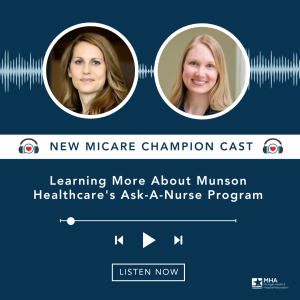
Learn More About Munson Healthcare’s Ask-A-Nurse Program
The MHA released a new episode of the MiCare Champion Cast focused on Munson Healthcare’s innovative Ask-A-Nurse program. The free, 24/7 call center is staffed year-round by registered nurses and offers easy access to health-related …


MHA Rounds graphic of Brian PetersMHA CEO Report — Site-Neutral Payment Policies: The Latest Threat to Patient Access

Operating a hospital has never been more challenging than it is today. At the most fundamental level, hospitals are small towns that operate 24/7, year-round, built around expert clinicians, as well as a wide variety …


Keckley Report

The Four Questions Healthcare Boards must Answer

“In 63 days, Americans will know the composition of the 119th Congress and the new occupants of the White House and 11 Governor’s mansions. We’ll learn results of referenda in 10 states about abortion rights (AZ, CO, FL, MD, MO, MT, NE, NV, NY, SD) and see how insurance coverage for infertility (IVF therapy) fares as Californians vote on SB 729. But what we will not learn is the future of the U.S. health system at a critical time of uncertainty. …

For Boards of U.S. healthcare organizations, the imperative for transformational change is urgent: the future of the U.S. system is not a repeat of its past. But most Boards fail to analyze the future and construct future-state scenarios systematically. Lessons from other industries are instructive. …

Until and unless healthcare leaders recognize the imperative for transformational change, the system will calcify its victim-mindset and each sector will fend for itself with diminishing results. No sector—hospitals, insurers, drug companies, physicians—has all the answers and every sector faces enormous headwinds. Perhaps it’s time for a cross-sector coalition to step up with transformational change as the goal and the public’s well-being the moral compass.”

Paul Keckley, Sept. 3, 2024


MHA CEO Brian Peters

MHA in the News

Becker’s Hospital Review published an article Sept. 3 that provides responses from 87 healthcare executives sharing their ideas on ways to boost the patient experience. MHA CEO Brian Peters provided a response, mentioning the MHA …

MHA Monday Report Aug. 26, 2024

Register for MHA 2024-25 Strategic Action Plan Webinar

The MHA is hosting a virtual member forum 11 a.m. to noon Oct. 14 to outline the MHA 2024 – 2025 strategic action plan approved by the MHA Board of Trustees. The plan will include …


MHA Submits Comments on Proposed MDHHS Medicaid Behavioral Health Policies
The MHA submitted comments to the Michigan Department of Health and Human Services (MDHHS) regarding two Medicaid proposed policies Aug. 20 pertaining to the establishment of Intensive Care Coordination with Wraparound and the implementation …


Kelley Cawthorne Ad


Guide for Michigan’s Adult Guardianship Process Available Digitally

The MHA published a resource for hospital and healthcare teams to support patients and families navigating the guardianship process. A printable copy as well as digital version are now available. The Guide for Michigan’s Adult Guardianship …


MHA CEO Report — Adding Value for Hospitals

I discussed last month how the MHA continues to create highly successful and impactful outcomes for our members through our outstanding advocacy in the public policy arena, at both the state and federal levels. …


The Keckley Report

The Two Tipping Points prompting Outsider Demand for Health System Transformation

“As Democrats gather in Chicago and Epic users convene in Verona WI this week, the future of the healthcare system will be on the agenda for both gatherings, but with a different focus: …

In Chicago and Verona, opportunities to improve the U.S. system are readily acknowledged. Which flaws deserve attention first, how and how fast reflect contrasting views. But perhaps as never before, the direction of the system is impacted by two convergent realities …

As congregants assemble in Chicago and Verona this week, outsiders hope they’ll look beyond incrementalism and pursue transformational change. They’re tired of waiting. It’s reached its tipping point. …”

Paul Keckley, Aug. 19, 2024


News to Know

  • MHA offices will be closed and no formal meetings will be scheduled Sept. 2 in honor of Labor Day.
  • Due to the holiday, Monday Report will not be published Sept. 2 and will resume its normal schedule Sept. 9.
  • MHA Endorsed Business Partner CorroHealth will host the webinar Investing Wisely in the Healthcare Continuum Aug. 28 to share strategic solutions for integrating utilization management, clinical documentation integrity and denials management into a unified revenue integrity framework.

MHA CEO Brian Peters

MHA in the News

MHA CEO Brian Peters joined The Common Bridge podcast for an episode published Aug. 18 to discuss various healthcare policy topics, particularly those impacting rural Michigan.  Areas of focus include the Affordable Care Act, the impact of Medicaid provider taxes …

Introducing New Infection Prevention Education

The MHA Keystone Center, in partnership with the Michigan Department of Health and Human Services (MDHHS), created a series of online learning modules for infection control and prevention education. The modules cater to the needs of Michigan hospitals and are available at no cost.

Niki McGuire, the manager of the multidrug resistant organisms containment unit at MDHHS, and Josh Suire, a senior manager of safety and quality at the MHA Keystone Center, share the purpose of the series and how healthcare providers in Michigan can use the resource to improve infection prevention practices.

What is Project Firstline?

McGuire: Project Firstline is a Centers for Disease Control and Prevention (CDC) training collaborative that aims to provide more accessible infection control education for frontline healthcare workers. MDHHS partnered with the MHA Keystone Center to develop CDC-based education materials for Michigan’s healthcare workers. With a shared goal of creating accessible and applicable content, the MDHHS and MHA Keystone Center worked together to create six online courses. Three courses in the series are geared toward infection preventionists, with an emphasis on quality improvement best practices. The series also offers courses geared toward frontline workers that serve as a great training resource for staff to interact with at their convenience.

Suire: The Project Firstline modules were created with healthcare workers’ needs and preferences at the forefront. As a nurse with bedside experience myself, I understand healthcare providers are stretched thin. We intentionally built all the courses in an online system that allows participants to check in and out of the classroom around their schedule. Each module is also designed to take less than 45 minutes to complete.

What is the commitment associated with participating?

Suire: These resources were created to meet healthcare workers where they are. The courses are available to Michigan healthcare workers at no cost. We encourage participants to engage with the courses at their convenience. While the courses were created to be completed as a series, healthcare workers are welcome to take courses specific to their training needs.

What are the main takeaways a participant will obtain after taking the courses?

McGuire: MDHHS offers the assessment portion of the CDC’s Infection Control Assessment and Response (ICAR) tool to all acute- and long-term care facilities in Michigan.  We are non-regulatory. The first two modules in this series are great for infection preventionists looking to begin the ICAR process – providing background information about the entire process and how to engage with MDHHS Healthcare Associated Infections team. The clinical modules will provide frontline workers with the competencies needed to engage in on-the-spot critical thinking about infection prevention – sharing best practices for hand-hygiene, transmission-based precautions and more.

Suire: The MHA Keystone Center aims to deliver frontline healthcare workers fun, interactive learning modules with basic infection prevention practices that should be implemented in day-to-day patient/resident care activities. It is our hope facilities across the state use these modules as part of their infection control and prevention program. We encourage all Michigan acute- and long-term care facilities to take advantage of this free resource to reduce the preventable spread of infections.

To learn more about the Project Firstline series, visit the module series webpage or contact the MHA Keystone Center.

Protecting Community-based Care Through 340B

MHA Rounds graphic, indicating thought leadership blog style post. Featuring Elizabeth Kutter pictured, woman with blonde hair smiling on the right.

MHA Rounds graphic, indicating thought leadership blog style post. Featuring Elizabeth Kutter pictured, woman with blonde hair smiling on the right. Byline: Elizabeth Kutter, Senior Director, Government & Political Affairs 

Right now, a low-income patient in Northern Michigan is picking up a drug at a discounted price that they wouldn’t otherwise have access to. In another corner of the state, a cancer patient is receiving lifesaving treatment, without having to make decisions between their care and their family’s needs.

Michigan hospitals care for our communities every day because of the savings they receive from the 340B Prescription Drug Pricing Program. Since being established by Congress in the early 1990s, this cost-saving program helps to spread scarce resources and provides a safety net to vulnerable patients and communities with limited or no access to healthcare.

The impact of 340B goes far beyond drug prices. It helps maintain community-based services at Federally Qualified Health Centers, cancer hospitals, HIV/AIDs clinics, critical access hospitals and tribal health centers among many other organizations. The program savings help eligible entities support mobile health clinics, cancer care access, financial assistance programs, meals on wheels, neonatal intensive care transports, behavioral health access and many other programs informed by the communities that benefit from the eligible program participants being in their backyard. 340B hospitals support community informed opportunities to positively impact public health.

In my role at the MHA, I’ve had countless conversations with our members about the benefits of 340B. The sentiment across the board – especially among rural hospitals and urban safety net hospitals – is that the program is essential for meeting patients where they are. The American Hospital Association shares a similar message, noting that 340B generates valuable savings for eligible hospitals to invest in programs that enhance patient services and access to care. The program’s design speaks directly to the ability for 340B covered entities to reflect on their community needs, it’s not a program that attempts to decide where savings need to go but instead focuses on the individual needs of every community being served resulting in increased quality of care and access to healthcare in all corners of Michigan.

Unfortunately, manufacturers and other players at the state and federal level are working to scale back the program and put arbitrary limits on program participation. The most recent and current attempt being to condition 340B contractual pharmacy relationships, harming the program’s ability to extend to patients in the places they live. Because of these attempts to frustrate the program, Michigan hospitals are at risk of losing their ability to provide affordable, accessible care to those in need. Every effort spent to manage the new onslaught of administrative burden created by manufactures, is less savings going directly into communities in need of affordable care.

Rarely are we presented with the opportunity to support meaningful access to drug cost reductions and affordable community care access, but House Bill 5350 allows us to do just that. The proposed legislation helps protect 340B at the state level to maintain healthcare cost-savings for our hospitals and the communities they serve. Contact your lawmaker and tell them how important 340B is to you, your community, and most importantly the patients you serve. Protecting our ability to care for our state’s most vulnerable patients is of the utmost importance, and HB 5350 does just that.

It’s our job to safeguard resources that advance the health of Michigan communities. I hope you’ll join me – and many others – in advocating for my favorite combination of numbers and letter: 340B.

Members with questions may contact me.

Collaborating to Address EMS Challenges

Following National EMS Week, it’s important to recognize how we can continue to support the dedicated teams providing lifesaving care every day to Michigan patients and communities.

In my role as director of health policy initiatives at the MHA, it’s a priority to identify the challenges facing our EMS workforce so we can bridge solutions with our member hospitals. We continue to be engaged with the state’s EMS Coordination Committee (EMSCC) with extensive discussions around the barriers that have a direct impact on our EMS workforce, hospitals and patients. I’ve outlined a few of these challenges below, along with how teams are responding.

Challenge: EMS teams are limited in where they transport patients for care. Because hospital emergency departments (EDs) are a common and reimbursable destination for the ambulance provider, it leads to a growing number of behavioral health patients presenting to hospital EDs rather than a specialty behavioral health facility.

Response: While hospitals are equipped to stabilize and triage patients, the ED is not the most appropriate care setting for an individual in need of mental or behavioral healthcare. Given the establishment of Crisis Stabilization Units (CSUs) in Michigan, which are designed to provide 24/7 care for emergent behavioral health needs, the MHA wants to ensure that EMS providers are reimbursed for the transport of patients to this care setting. We are working to add CSUs as an approved destination for patient drop-off to ensure timely and appropriate services can be rendered to patients experiencing a behavioral health emergency.

Challenge: Responding to physical and behavioral health emergencies are especially challenging for EMS and ambulatory agencies due to continued staffing shortages.

Response: The MHA is working to identify alternative, appropriate and reimbursable mechanisms to transport patients with behavioral health needs who do not require the medical interventions provided in an ambulance. We also launched an ongoing public awareness campaign to expand interest in healthcare careers in Michigan, targeting messages to high school and college students as well as working professionals.

Challenge: Regulation and reimbursement mechanisms vary between EMS and hospitals, which can lead to conflict when challenges occur on either side.

Response: The MHA convened a group of executive leaders from behavioral health hospitals and EMS services to share some of the challenges each side experiences interacting with the other. One immediate action item from this discussion was the recognition that not all behavioral health hospitals have the same protocols for accepting new admissions, which can be a challenge for EMS providers. In response to this, the MHA deployed a survey that is currently in the field to identify how each hospital accepts patients, what mode of transportation is authorized and whether their admission status (voluntary/involuntary) plays a role. This information will help the MHA and the EMSCC better understand and identify opportunities to standardize the process and ensure a more seamless handoff between EMS and behavioral health hospitals.

The role EMS plays in our world cannot be understated – the MHA is heavily engaged in responding to concerns raised by this group and aligning priorities to continue offering support and collaborating on solutions. We must work together to overcome these challenges.

Members with questions may contact the MHA advocacy team.