MHA Trustee Webinar Outlines Information and Planning for the OBBBA

The MHA will host the webinar Understanding the One Big Beautiful Bill Act (OBBBA) and Board Planning for the Impact, from 8 to 9 a.m. ET Sept. 24. The session will explore how the OBBBA would enact nearly $1 trillion in cuts to the Medicaid program, potentially reducing access to care across the country.

The webinar will cover several board-level considerations, including:

  • The Medicaid provisions within the OBBBA, such as state budgeting reductions, state-directed payments and Medicaid work requirements.
  • The Rural Health Transformation Program and eligible funding activities.
  • Strategies for positive messaging and healthcare policy advocacy.

Hospital board of trustees and other healthcare leaders are encouraged to register. The webinar is free of charge to MHA members.

Questions about MHA membership or registration should be directed to Brenda Carr at the MHA.

MHA Monday Report Aug. 4, 2025

HRSA Announces 340B Rebate Pilot; President Trump Pens Letter on Most Favored Nation Pricing

The Health Resources and Services Administration (HRSA) issued guidance July 31 on a proposal to shift a portion of the 340B drug pricing program away from an upfront discount model to a rebate model. HRSA …


MDHHS to Discuss 2026 Draft Rates for MichiCANS and LOCUS Assessments

The Michigan Department of Health and Human Services (MDHHS) invites qualified mental health providers to attend a MichiCANS Screener and Level of Care Utilization System (LOCUS) All Provider Draft Rate meeting scheduled from 1 – 2 p.m. …


CMS Releases CY 26 PFS Proposed Rule

The Centers for Medicare & Medicaid Services (CMS) recently released a proposed rule to update the physician fee schedule (PFS) for calendar year (CY) 2026. Highlights of the proposal include: Implementing the one-time 2.5% statutory …


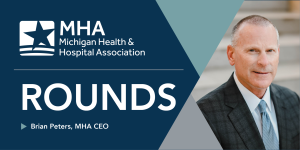
MHA Rounds graphic of Brian PetersMHA CEO Report — Hospitals Are Focused on Saving Both Lives and Costs

Hospitals exist to save lives and improve health. Every day, across every ZIP code in Michigan, our community hospitals are the place where babies are born, cancer is fought, lives are saved and families turn in their most vulnerable moments for hope, help and healing. …


Keckley Report

Medicare Report Card on its 60th Birthday: Incomplete

“Wednesday marks the 60th anniversary of Medicare. On July 30, 1965, President Lyndon Johnson signed the Social Security Act (HR 6675) at the Harry S. Truman Presidential Library in Independence, MO issuing the first Medicare card to “Give ‘em hell Harry” who had proposed universal coverage in 1945 against fierce opposition from the American Medical Association who labelled it socialized medicine.

The program began in January 1966 enrolling 19 million in its Part A (hospital) and Part B (ambulatory, physicians) programs. The country was divided over the contentious war in Vietnam and civil rights at home. In the six decades since, the Medicare program has expanded to become the industry’s most important program and society’s most valued safety net. …

So, on Medicare’s 60th birthday, its legacy is a mixed bag: it has provided needed health services to three generations of seniors, but its costs and failure to hardwire an appropriate balance between preventive, chronic and acute and long-term care services remain work not completed.”

Paul Keckley, July 27, 2025


New to KnowNews to Know

  • Registration is open for the 2025 MHA Communications Retreat from 8 a.m. to 4 p.m. on Wednesday, Oct. 1 at the Henry Center for Executive Development in Lansing.
  • The AHA is accepting applications through Sept. 9 for the Quest for Quality Prize, an annual award that honors hospitals and health systems committed to leadership and innovation in improving quality and advancing health.

Laura AppelMHA in the News

The MHA received media coverage during the week of July 28 that continued to focus on the impact the One Big Beautiful Bill Act (OBBBA) will have on Medicaid. WZZM 13 published a story July …

News Coverage Continues Focus on Medicaid

Laura Appel

The MHA received media coverage during the week of July 28 that continued to focus on the impact the One Big Beautiful Bill Act (OBBBA) will have on Medicaid.

Bridge published an op-ed Aug. 1 from MHA CEO Brian Peters refuting public claims defending Medicaid funding cuts in the OBBBA. Peters describes how the cuts will have real consequences for real people, spanning all populations.

“When hospitals lose Medicaid dollars, the burden shifts to other patients, including those with employer-sponsored insurance,” said Peters. “Costs go up. Wait times increase. Local access to specialty care dries up. Employers and families alike will feel the ripple effects, both in their insurance premiums and at the distance they must travel for care.”

WZZM 13 published a story July 30 on the 60th anniversary of Medicare and Medicaid being established by President Lyndon B. Johnson. The story references a media statement published by the MHA on the subject.

Laura AppelA story also aired July 30 during the FOX 47 evening news broadcast about how Medicaid changes in the One Big Beautiful Bill Act (OBBBA) will impact rural healthcare providers. MHA Executive Vice President Laura Appel was interviewed as part of the story.

Appel also appears in a Crain’s Detroit Business article about healthcare affordability that was sponsored by Blue Cross Blue Shield of Michigan (BCBSM). Representatives from various Michigan businesses and healthcare groups were invited to join BCBSM and Crain’s in the executive roundtable.

Appel spoke to the cost pressures impacting hospitals and the role hospitals have in addressing rising healthcare costs.

“Most hospitals across our state are looking for those partnerships because they can’t afford to do it on their own,” said Appel in relation to hospitals pursuing mergers, acquisitions and joint ventures.

Members with any questions regarding media requests should contact John Karasinski at the MHA.

Medicare & Medicaid Improve Michigan’s Health for 60 Years

The following statement can be attributed to Brian Peters, CEO of the Michigan Health & Hospital Association.

Today marks the 60th anniversary of Medicare and Medicaid making a monumental difference in improving the health of Michiganders and supporting healthcare providers.

This anniversary reminds all of us about the value these programs bring to the health of our citizens and access to care throughout Michigan. At a time when the federal government has taken steps to limit these programs that will result in Michigan hospitals losing $6 billion over the next ten years, healthcare providers will continue to do everything in our power to protect these vital programs and the people they serve.

Nearly half of Michigan residents receive health coverage from these two insurance programs, and 40% of all babies born in the state every year are covered by Medicaid, demonstrating the reliance our state has on publicly available health insurance coverage. These programs help vulnerable Michiganders receive preventative care, cancer treatment, and important hospital and post-acute services during their time of need.

Our message to lawmakers is clear: act now to protect these programs before it is too late. If the harmful policies signed into law earlier this month come to pass, we will see less healthcare services offered in all areas of the state, more uninsured and sicker patients, and longer wait times in emergency departments.

The creation of these programs was a huge step forward for the health of our country. We can’t afford to go backwards by undermining Medicare and Medicaid and what they do for millions of Michiganders.

MHA Shares Recent Medicare and Medicaid Enrollment Analysis

The MHA recently updated its analysis of Medicaid and Medicare enrollment based on June 2025 data. The analysis includes program enrollment as a percentage of each county’s total population and the split between fee-for-service and managed care organizations. More than 26% of Michigan’s total population is enrolled in Medicaid and 23% is enrolled in Medicare.

Roughly two-thirds of Michigan’s 2.63 million Medicaid beneficiaries are enrolled in one of nine managed care plans.

Total Medicare enrollment is 2.27 million, with 63% of beneficiaries enrolled in a Medicaid Advantage (MA) plans, and only two counties having less than 50% of total Medicare enrollment in MA plans. MA enrollment by county ranges from 46% to 79%, and 73 counties having 55% or more of their Medicare population enrolled in an MA plan as highlighted below.


June enrollment is spread across 46 MA plans with up to 29 plans covering beneficiaries in several Michigan counties and a minimum of five plans available in each county.

Members with enrollment questions should contact the Health Finance team at the MHA.

New PwC Report Warns of Rising Hospital Costs and Mounting Financial Pressure on U.S. Healthcare System

The Michigan Health & Hospital Association (MHA) is drawing attention to a new national report from PricewaterhouseCoopers (PwC) that outlines the severe financial challenges facing hospitals across the country that could soon jeopardize patient care if urgent policy action is not taken.

The report, Inflator: Hospital Costs, from Wages to Hospital Gowns, highlights the mounting pressures on hospitals due to surging costs, workforce shortages and skyrocketing demand for behavioral health services, all while proposed tax cuts and Medicaid funding reductions threaten to widen the gap between costs and revenue.

“This report confirms what hospitals in Michigan and across the country are living every day: skyrocketing costs, growing demand and shrinking margins,” said MHA CEO Brian Peters. “We cannot afford policies that slash Medicaid funding or shift more financial burden to hospitals and patients. Without sustainable support, hospitals – especially those in rural and underserved areas – face real threats of closure.”

Key findings from the PwC report include:

  • Hospital margins have plummeted, dropping from an average of 7% in 2019 to just 2.1% in 2024, with additional declines reported in early 2025.
  • Drug spending surged by $50 billion (11.4%) in 2024, more than double the increase seen in 2023, largely driven by high-cost therapeutics in chronic disease areas like oncology, obesity and diabetes.
  • Behavioral health claims soared, with inpatient claims increasing by 80% and outpatient claims by 40% over a two-year span, reflecting the intensifying behavioral health crisis.
  • Tariffs and supply chain challenges continue to drive up the cost of everyday medical supplies, compounding inflationary pressures.
  • Medicaid cuts and federal tax policies could force the closure of service lines at facilities that rely heavily on government payers, impacting access to care for all residents.

The report also outlines how hospitals are working to offset financial pressures by investing in revenue cycle improvements and value-based payment models. Still, the report emphasizes that system-wide stability will require collaboration between payers, providers, policymakers and employers, especially as rural hospitals face ongoing threats of closure.

The MHA is supporting Michigan hospitals facing these mounting challenges through the following actions:

  • Advocating to preserve and strengthen the federal 340B program, which enables hospitals to purchase outpatient medications at discounted rates, freeing up resources to serve low-income and uninsured patients.
  • Working with state policymakers to expand access to mental health and substance use treatment, reduce emergency department (ED) strain and support hospitals’ efforts to meet growing behavioral health needs. This includes Senate Bill 806, which expands the three-hour assessment responsibility by allowing clinically-qualified staff to conduct pre-admission screenings for behavioral health patients seeking care in the ED.
  • Leading efforts to expand the healthcare workforce pipeline through partnerships with post-secondary educators, awareness campaigns and recruitment and retention initiatives to help hospitals manage staffing costs while maintaining high-quality care.
  • Working to add Michigan to the Nurse Licensure Compact, allowing nurses to practice across state lines without the burden of obtaining additional licenses.
  • Advocating against Medicaid cuts and pushing for reimbursement rates that reflect the true cost of care, especially for safety net and rural hospitals that disproportionately rely on public payers.

The full report is available on the PwC website.

Headline Roundup: Continued OBBBA Coverage

The MHA continued to receive media coverage during the week of July 14 about the impacts of the federal budget reconciliation bill, officially referred to as the One Big Beautiful Big Act (OBBBA).

Coverage includes references to the association’s financial estimates, as well as quotes from MHA CEO Brian Peters and MHA Executive Vice President Laura Appel.

Wednesday, July 16

Tuesday, July 15

Monday, July 14

Members with any questions regarding media requests should contact John Karasinski at the MHA.

Headline Roundup: Medicaid Cuts

The MHA received media coverage during the weeks of June 30 and July 7 on Medicaid cuts included in the federal budget reconciliation bill.

MHA CEO Brian Peters and MHA Executive Vice President Laura Appel participated in a series of print, radio and TV broadcast interviews, outlined below. Additional coverage resulted from a virtual press conference hosted by the Protect MI Care coalition where Peters spoke to the impact Medicaid cuts will have on Michigan hospitals, patients and communities.

Friday, July 11

Thursday, July 10

Wednesday, July 9

Tuesday, July 8

Monday, July 7

Thursday, July 3

Wednesday, July 2

Tuesday, July 1

Members with any questions regarding media requests should contact John Karasinski at the MHA.

Medicaid Funding Cuts Are Disastrous for Michigan Healthcare

The following statement can be attributed to Brian Peters, CEO of the Michigan Health & Hospital Association.

The budget reconciliation bill passed by Congress is disastrous for access to care for Michiganders and the healthcare providers who care for them.

Cuts to funding are cuts to care. Limiting how states can fund their Medicaid programs puts Michigan in an extremely difficult position. If the state can no longer provide the same reimbursement, hospitals will be faced with difficult choices that will include eliminating service lines or even entire facilities. The added bureaucratic requirements for Michiganders to maintain their health insurance will also take away health insurance benefits from our neighbors, friends and family, resulting in increased uncompensated care for healthcare providers. In total, this bill will cost Michigan hospitals more than $6 billion in total Medicaid funding over the next ten years.

This bill is an attack on Medicaid, expanded health insurance coverage and healthcare access. We are extremely disappointed with the actions taken by Congress. Today is an extremely large step backwards for making and keeping our communities healthier.

MHA CEO Report — A Year of Progress and Purpose

MHA Rounds image of Brian Peters

“There is no power for change greater than a community discovering what it cares about.” — Margaret J. WheatleyMHA Rounds graphic of Brian Peters

With another program year behind us, the MHA Annual Meeting served as a powerful reminder of our shared mission to advance the health and well-being of Michigan’s patients and communities. Despite an evolving political landscape, we’ve made meaningful progress and are moving ahead with clear purpose.

As you can imagine, the 2024-2025 MHA program year was marked by busy periods of state legislative activity and various developments at the federal level. We can attribute a tremendous amount of our success to Dr. Julie Yaroch, president of ProMedica Charles and Virginia Hickman Hospital, who served as board chair. Dr. Yaroch’s leadership, clinical expertise and passion for public health had significant impact across countless areas of work.

It’ll come as no surprise that ensuring access to quality healthcare for all Michiganders continued – and continues – to be a priority. This program year, the MHA successfully prevented proposed government mandated nurse staffing ratio legislation from receiving a committee vote. Advocacy efforts also continued around 340B to maintain access to community-based care and prevent drug manufacturer overreach. This resulted in strong bipartisan support for legislation that passed the Michigan Senate and collaboration at the federal level with Senator Debbie Stabenow on the SUSTAIN 340B Act.

I’d be remiss not to mention our response to proposed federal cuts to Medicaid. The MHA, alongside urban and rural members, has prioritized congressional meetings, grassroots communications, coalition efforts and collaboration with state executive leadership to send a strong, clear message: Michigan needs Medicaid.

All that said, playing defense didn’t define our program year. In an effort to grow and develop our healthcare workforce, the MHA successfully hosted the inaugural Healthcare Careers Conversation and led changes to the Michigan Reconnect Program. This resulted in 4,300 students enrolling in short-term healthcare programs, a complement to our ongoing MI Hospital Careers campaign work. Additionally, we pursued state legislation to address provider credentialing delays, secured key amendments to the Earned Sick Time Act and had a hand in proposed changes to the state’s unemployment compensation benefits, among many other employer-related policies.

I’m also incredibly proud to share that we worked with state legislators to design, draft and introduce legislation that makes assaulting a healthcare worker a felony, while tying it to appropriate criminal justice system diversions. Our MHA Keystone Center collaborated to offer active shooter trainings and workplace violence gap analyses to our members while serving as a founding partner of Lawrence Technological University’s Healthcare Violence Reduction Center (HVAC).

We were fortunate to see several MHA priorities included within the FY 2024 state budget, notably a large sum put toward mental and behavioral health. The MHA team successfully secured $8.3 million to launch a competitive grant program for hospital-based peer recovery coach (PRC) programs while leading the charge on a series of impactful prevention and data-driven efforts. Understanding that gaps in behavioral health continue to effect urban and rural hospitals alike, these successes lay the groundwork for what’s ahead.

Emerging technologies and the integration of artificial intelligence (AI) reinforced our commitment to addressing cybercrime and strengthening cybersecurity policy. With this in mind, the MHA worked directly with the Michigan Attorney General and state policy leaders to ensure hospitals are reflected as victims of cybersecurity events. Simultaneously, we engaged our MHA Service Corporation, MHA AI Task Force, CFO Council and industry experts to deploy a series of cybersecurity events and resources to members.

I’d like to applaud our teams for handling a handful of unforeseen challenges, including working over the course of many months to address critical supply chain needs following the devastating impacts of Hurricane Helene. We also saw impressive engagement across annual member events, from our MHA Human Resources Conference and MHA Keystone Safety & Quality Symposium to the Healthcare Leadership Academy and Excellence in Governance Fellowship.

These milestones are just a glimpse into what we accomplished together this program year. I’m deeply grateful to our MHA Board of Trustees, members, sponsors, business partners and dedicated MHA staff – your unity and unwavering dedication to this work continues to have a lasting impact.

As always, I welcome your thoughts.