Michigan Rural Health Transformation Program Application Diminishes Potential Impact

The following statement can be attributed to Brian Peters, CEO of the Michigan Health & Hospital Association.

We are disappointed the Michigan Rural Health Transformation Program application submitted by the Michigan Department of Health and Human Services does not include explicit support for Michigan’s 73 rural hospitals.

The application lists four initiatives, none of which include recommendations from Michigan’s rural hospital leaders, who know rural healthcare needs best. Michigan hospitals are set to lose more than $6 billion over the next 10 years due to the federal H.R. 1 Reconciliation Bill. It’s unfortunate Michigan’s application ignored this impact and the intent of Congress to assist rural hospitals most impacted by these federal changes through this program.

This application provided an opportunity to maximize the healthcare impact for rural communities by providing the resources needed by rural Michigan’s leading healthcare providers. While the four initiatives are well intended, the application as submitted fails to maintain access to care in the most meaningful way.

Medicaid Funding Cuts Are Disastrous for Michigan Healthcare

The following statement can be attributed to Brian Peters, CEO of the Michigan Health & Hospital Association.

The budget reconciliation bill passed by Congress is disastrous for access to care for Michiganders and the healthcare providers who care for them.

Cuts to funding are cuts to care. Limiting how states can fund their Medicaid programs puts Michigan in an extremely difficult position. If the state can no longer provide the same reimbursement, hospitals will be faced with difficult choices that will include eliminating service lines or even entire facilities. The added bureaucratic requirements for Michiganders to maintain their health insurance will also take away health insurance benefits from our neighbors, friends and family, resulting in increased uncompensated care for healthcare providers. In total, this bill will cost Michigan hospitals more than $6 billion in total Medicaid funding over the next ten years.

This bill is an attack on Medicaid, expanded health insurance coverage and healthcare access. We are extremely disappointed with the actions taken by Congress. Today is an extremely large step backwards for making and keeping our communities healthier.

The Majority of Michiganders Oppose Medicaid Cuts, New Statewide Polling Shows

New statewide polling shows 83% of Michiganders want to see Medicaid spending increased or kept about the same as Congress considers cutting hundreds of billions of dollars from the Medicaid program, which would terminate healthcare for thousands of Michigan residents. The local results mirror national polls from the Kaiser Family Foundation, Modern Medicaid Alliance, and others that consistently show a lack of support for Medicaid cuts.

EPIC·MRA, with support from the Community Mental Health Association of Michigan, Michigan Association of Health Plans, Michigan Health & Hospital Association, Michigan Primary Care Association, and Protect MI Care, conducted the new statewide poll to determine where Michiganders stand on proposed cuts to Medicaid.

Across political views and party affiliations, the percentage of Michiganders who want to see Medicaid spending decreased does not exceed 20% for any specific group, with only 19% of self-identifying Republicans seeking reduced Medicaid support.

Results reveal that 62% of Michigan residents believe the changes Congress is considering making to the Medicaid program are more about reducing federal spending than improving how the program works for people. Furthermore, 82% of Michigan residents oppose cutting Medicaid spending to pay for tax cuts, and 71% oppose cutting Medicaid in ways that would create a deficit in Michigan’s state budget.

Reflecting on the significance of Medicaid in Michigan, the poll found that 86% of Michigan residents feel Medicaid is important for people in their local community, and 76% express that Medicaid is important for their family members and friends. Michiganders’ feelings about the impact of Medicaid in their communities showed up statewide, with over 80% of people agreeing that Medicaid is important in their community across all regions of the state (From 86% in Wayne, Oakland, and Macomb Counties to 91% in West Michigan, 80% in Central Michigan, and 87% in Northern Michigan).

“This data sends a clear message: Michiganders from across the state and all walks of life see Medicaid as the important lifeline it is,” said MPCA CEO Phillip Bergquist. “Medicaid cuts under consideration in Congress threaten the health and financial stability of families across our state, and Michiganders don’t support them.”

2.6 million people get their health insurance through Medicaid in Michigan, representing approximately one in four Michiganders. Medicaid provides coverage for 38% of births in Michigan, 2 in 5 children, 3 in 5 nursing home residents, and 3 in 8 working-age adults with disabilities. And, Michigan’s Medicaid program is efficient, with per-enrollee costs among the ten lowest states in the country.

“These results show Michiganders understand that funding cuts to Medicaid are cuts to everyone,” said MHA CEO Brian Peters. “Medicaid allows healthcare providers to continue to offer access to care and healthcare services throughout the state and Michigan residents are clear in expressing the need to protect these services.”

Virtual Media Roundtable Focuses on Medicaid Funding Cut Consequences

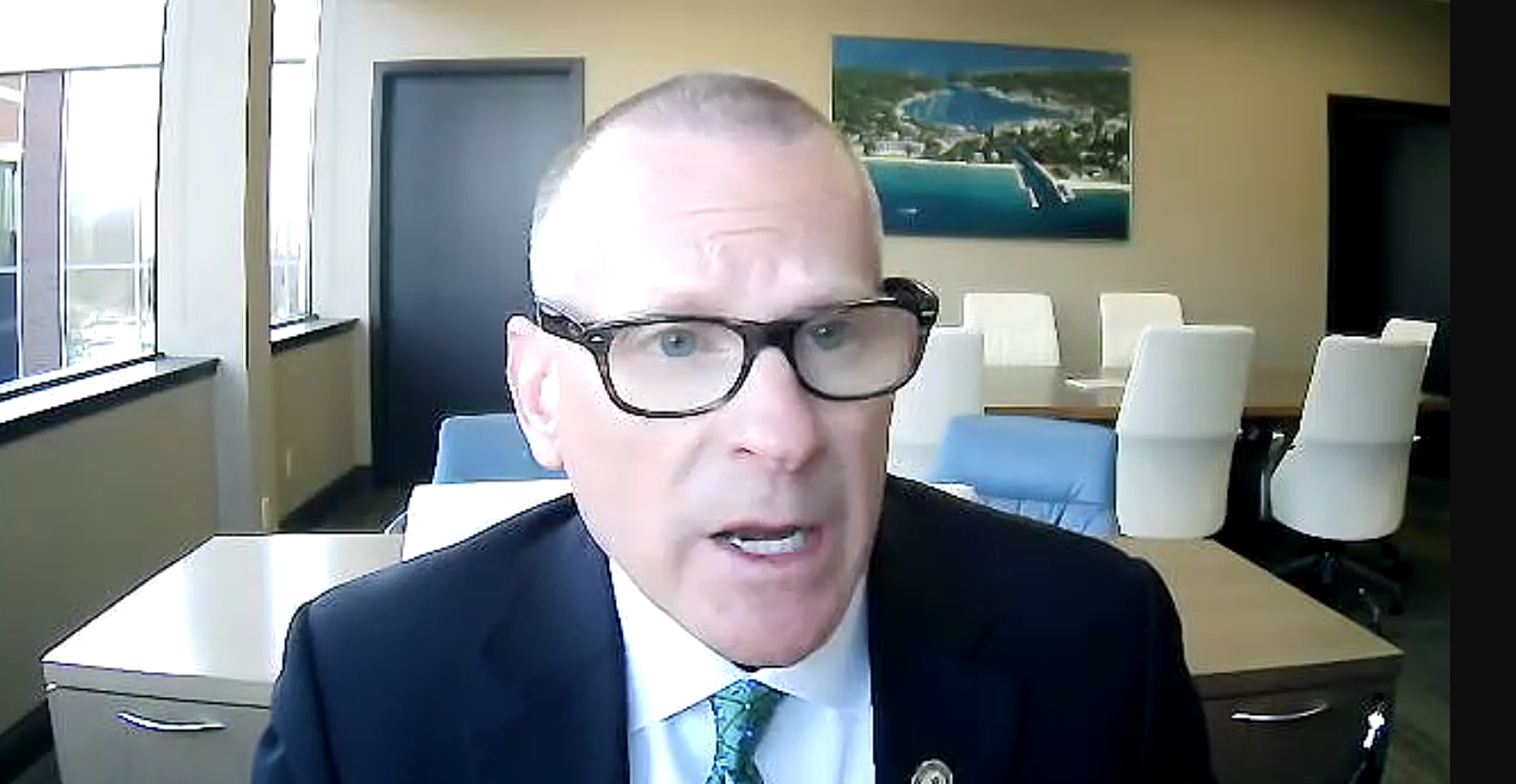
MHA CEO Brian Peters speaks during a virtual media roundtable about Medicaid.
MHA CEO Brian Peters speaks April 3 during a virtual media roundtable about Medicaid funding cuts.

A virtual media roundtable hosted April 3 by the Michigan League for Public Policy included MHA CEO Brian Peters as a panelist, where he discussed the consequences for potential Medicaid funding cuts by Congress.

Crain’s Detroit Business, CBS Detroit and MIRS published stories as a result of the roundtable.

“When Medicaid funding reductions force hospitals to curtail services or in fact eliminate entire service lines or in fact close hospitals … the services are no longer available to Medicaid recipients, but they’re no longer available to anyone in the community, either,” said Peters. “The cuts that are being contemplated in Washington, D.C. right now, if those were to be implemented, they would cost jobs. And more importantly, I can tell you, they would cost lives,”

Monique Stanton from the Michigan League for Public Policy.

Joining Peters during the roundtable were:

  • Monique Stanton, President & CEO, Michigan League for Public Policy
  • Russ Kolski, Interim Executive Director, Ingham Community Health Center
  • Susan Harding, Executive Director, Oakland Livingston Human Services Agency
  • Jenny Wagemann, Manager, Allen Farmers Market and Breadbasket Food Pantry

On a separate note, MLive also published a story April 3 that references the MHA’s healthcare workforce data and the 44% reduction in nursing vacancies in Michigan hospitals from 2023 to 2024. The story shares news on a nursing student loan repayment program announced by the Michigan Department of Health and Human Services. The Detroit Free Press also published an article on the program, citing the MHA’s Economic Impact of Healthcare Report.

Members with any questions regarding media requests should contact John Karasinski at the MHA.

MHA CEO Report — Lame Duck is Here

MHA Rounds graphic of Brian Peters

“Even though you are on the right track, you will get run over if you just sit there.” Will Rogers

MHA Rounds graphic of Brian Peters

The balance of power at both the state and federal levels will change in 2025. Yet lawmakers still have several weeks remaining, a period we refer to as lame duck where a number of elected officials finish their terms with the opportunity to pass bills and create policy prior to leaving office at the end of the year.

Republicans regained majority in the Michigan House of Representatives, changing the balance of power from Democrats controlling both the House, Senate and executive office. This scenario can create a hectic environment where the party in power attempts to push many bills through before they lose influence next term. In many instances, lawmakers may trade their support for completely unrelated bills to gain the necessary support to pass legislation.

This period keeps associations and lobbyists up late at night – both figuratively and literally, as sessions that run into the wee hours are common. The MHA remains vigilant through those many hours and votes on any issues that impact access to care and hospital’s ability to care for Michiganders. The two most important examples are separate bills that would address government mandated nursing staffing ratios and create protections for the 340B drug pricing program.

The MHA has successfully to this point held off any movement on the government mandated nurse staffing ratio legislation, which was introduced in May 2023 and received a committee hearing in the House in November of last year. These bills would severely hamper a hospital’s ability to provide care, with the potential to lead to the closure of up to 5,100 hospitals beds across the state. The MHA has dedicated significant time and resources in educating lawmakers about the practical impacts of these bills and the lengths to which hospitals are going to address workforce challenges and to support their nurses. Our “Think it Through” messaging, which includes billboards in strategic locations as well as digital advertising, is the latest addition to our multi-faceted advocacy on this critical topic. It is safe to say we are counting down the days remaining in the session while these bills remain a threat.

While our association plays defense on nurse staffing mandates, we are playing offense with respect to 340B. We continue to advocate for the passage of House Bill 5350, which would prohibit manufacturers from discriminating against program participants based on their contract pharmacy relationships. A significant number of Michigan hospitals use 340B savings as a force multiplier, allowing these hospitals to stretch incredibly scarce resources to provide care for more patients in their communities, increasing access to care and the quality of care for Michigan’s most vulnerable residents. We’re encouraged that we will see this bill move through both chambers during lame duck and hope you will lend your support to the issue by contacting your state lawmakers through our MHA action alert.

Congress will have their own lame-duck session, which has the potential to impact additional health policy. While it remains to be seen how much activity occurs on Capitol Hill, site-neutral payment policies remain a threat to access to care for patients across Michigan and the country. As with government mandated nurse staffing ratios, policies that add cost or reduce reimbursement can lead to reduced hospital beds, service lines or even potentially hospital closures.

We’re in the home stretch of the 2023-24 legislative sessions in both Lansing and Washington DC. Be rest assured that the MHA is taking every opportunity during lame duck to meet with our state and federal lawmakers, and advocate on behalf of advancing the health and wellness of our patients and communities. While 2025 will present its own unique set of challenges and unpredictability, our focus remains on these final days of session until the last gavel signifies adjournment and sine die.

The bottom line: we are on the right track with respect to our advocacy priorities, but we will never be guilty of sitting still. I encourage all of you to join us and continue to “run through the tape” with these critical efforts during our lame-duck session.

As always, I welcome your thoughts.

MHA CEO Report — Protecting Access to Care Through 340B

MHA Rounds image of Brian Peters

“I alone cannot change the world, but I can cast a stone across the water to create many ripples.” Mother Teresa

MHA Rounds image of Brian PetersProtecting access to high quality, affordable healthcare for all Michiganders is a key tenet of the MHA. Stated simply, the 340B drug pricing program, created by Congress in 1992, is absolutely crucial to our member hospitals’ ability to maintain this access. And remarkably, since its inception to the current day, it has never required any state or federal taxpayer dollars.

One of my favorite elements of my MHA job is the opportunity to travel around the state and visit with the executives, clinicians and other important employees of our Michigan hospitals. I always ask the question: “What are your highest priorities and how can we help?” One of the most consistent answers for years has been: “We need to protect 340B.” Erosion or elimination of the program would quite literally mean the closure of key service lines, or even the hospital itself, in some cases.

At a time when drug prices are the most rapidly growing expense for hospitals, the 340B program has never been more important. It acts as a force multiplier, allowing hospitals to stretch incredibly scarce resources to provide high quality care for more patients in their communities, including our most vulnerable residents. The savings created from the ability to purchase certain prescription drugs at a discount enables hospitals to keep care in the community in various ways. Examples include funding free or heavily discounted prescription drugs for patients, trauma care, care for people with HIV/AIDs, behavioral health services, oncology clinics, nursing homes and treatment for substance use disorder.

It allows qualifying hospitals, particularly rural hospitals and those serving low-income patients, to deliver care and programming based on the needs of their individual communities. Many larger 340B hospitals are academic medical centers that care for the sickest and most complex patients. They establish arrangements with pharmacies outside of their immediate geographic area so patients who travel long distances to the hospital for specialized care can still access needed drugs at pharmacies near the patient’s home.

Unfortunately, prescription drug manufacturers are working to put arbitrary limits on the 340B program at the state and federal level and Michigan hospitals are at risk of losing their ability to provide affordable, accessible care to those in need. This comes at the same time when costs for new drugs launched by pharmaceutical companies rose by 35% from 2022 to 2023 and for the first time in history, the median price of a new drug is $300,000 – more than four times the median annual household income in the U.S. These attacks will make it more difficult to administer the 340B program and unnecessarily cut needed savings that could be invested in the community. These restrictions threaten access to care by risking the closure of birthing units, nursing homes and even critical access hospitals.

The MHA and Michigan hospitals are currently advocating for the passage of House Bill 5350 to counteract these attacks. The proposed legislation would help protect the 340B drug pricing program at the state level and the healthcare cost-savings generated for hospitals and the communities they serve. We highly encourage you to use our action alert to express the importance of the program to your lawmakers as the bill currently awaits passage out of the House Insurance and Financial Services committee.

Other harmful actions by manufacturers include Johnson & Johnson’s recent attempt to institute an unapproved rebate requirement for two drugs. The MHA opposed that proposal and we’re pleased to see that our advocacy with the Health Resources and Services Administration (HRSA) and our Congressional delegation, along with other hospitals and state hospital associations from across the country, influenced Johnson &  Johnson into discontinuing their pursuit of this unauthorized plan, after multiple HRSA notices of opposition.

This specific work is just the latest example of the MHA’s long-time strident advocacy at the state and federal level related to 340B. We have engaged in the state legislature, Congress, the courts and with our MHA Service Corporation Endorsed Business Partners, demonstrating just how impactful we know this program is.

The 340B program has helped to improve the health and wellness of individuals and communities for 30 years. It operates without any taxpayer-funded support and has positively impacted millions of lives. Attempts at eroding the program would not only harm hospitals, but more importantly patients and communities. As I have often said, the healthcare ecosystem is incredibly complex and there is rarely if ever a single silver bullet solution to any aspect of our challenges. But there is no doubt that the 340B program is one of those critically important stones that creates many positive ripples.

As always, I welcome your thoughts.