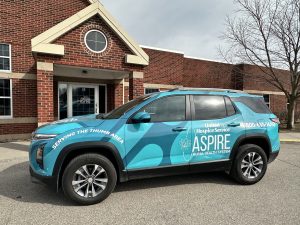
Hospitals Help: Aspire Rural Health System Offers Lifeline to Families in the Thumb

The Transitions program offers case management, referral services and specially trained Transitions volunteers to provide support, friendship, practical assistance and respite breaks for family and caregivers in the thumb region.

Transitions, offered through Aspire Rural Health System, is a free community-based program dedicated to supporting individuals with chronic or life-limiting illnesses, as well as their families, across Michigan’s thumb region. The program provides a compassionate bridge between healthcare and daily living, ensuring that no one has to navigate these challenges alone.

At the heart of Transitions is a dedicated coordinator who offers case management, referral services and personalized guidance. Specially trained Transitions volunteers extend this support by providing companionship, respite breaks for caregivers and practical assistance with everyday tasks such as light housekeeping, meal preparation and errands.

Families are also guided through advance healthcare directives and connected with community resources, helping them plan ahead and reduce stress during difficult times.

In 2024, the Transitions program supported more than 120 individuals and families to ensure patients received emotional and practical care in addition to medical treatment. These efforts not only improve quality of life but also strengthen community connections by fostering dignity, comfort and peace of mind.

“Transitions has been a lifeline for families in the thumb region,” said Angela McConnachie, co-chief executive officer, Aspire Health System. “By pairing compassionate care and resources for those who need them most, we’re able to provide relief, friendship and advocacy at a time when it matters most.”

For more information and hospital stories, check out the 2025 Community Impact Report. Members with questions may contact Lucy Ciaramitaro at the MHA.

Hospitals Help: Henry Ford Health’s Hospital-Based Doula Program

To help address the alarming rate of maternal and infant mortality, Detroit-based Henry Ford Health established a hospital-based doula program in 2024 that makes a trained professional available to provide emotional, physical and educational support before, during and after pregnancy to patients with Medicaid Health Plans. The program is believed to be the first of its kind in the country.

Members of the Henry Ford Health Doula Program team.
Members of the Henry Ford Health doula program team.

Studies suggest that care from a doula can make labor and delivery safer for pregnant people and babies. Through the program, eligible patients can request a doula at any time during their pregnancy. If an individual arrives at the hospital to deliver a baby and staff learn they’ve had little or no prenatal care, they can offer the services of an on-call doula, who provides an added layer of care during and after delivery. In its first year, nearly 200 pregnant people enrolled in the doula program.

Research conducted at Henry Ford Health after the implementation of the doula program found that those with greater social risk were more likely to engage in doula care when services were integrated and accessible, underscoring the importance of tailoring programs and outreach.

“Far too often individuals arrive at the hospital to give birth having had no prenatal care,” said Dr. D’Angela Pitts, maternal fetal medicine, Henry Ford Health. “These patients are most at-risk for complications during and after birth. That’s why we took the extra step of having doulas on call in the hospitals.”

For more information and hospital stories, check out the 2025 Community Impact Report. Members with questions may contact Lucy Ciaramitaro at the MHA.

Report: Access, Affordability & Community Health Improved by Hospital Programming, Investments

2025 MHA Community Impact Report

The Michigan Health & Hospital Association (MHA) released today its 2025 Community Impact Report highlighting community programming and investments from Michigan hospitals that are improving access to care, addressing affordability and advancing the health of communities across every region of the state.

The report showcases 12 hospital-led programs that go beyond the traditional care setting to address community health needs across the state. It also outlines investments totaling more than $4.5 billion in community benefit activities in fiscal year (FY) 2023, from education and prevention services to clinical research, healthcare workforce support and more.

“Michigan hospitals continue to redefine care delivery and create new, innovative access points across the state,” said MHA CEO Brian Peters. “The MHA Community Impact Report is a strong reminder that our hospitals are committed to listening – and responding – to the needs of their communities.”

Programs featured in the report include University of Michigan Health-Sparrow’s mobile health clinic; Henry Ford Health’s hospital-based doula program; Corewell Health Gerber Hospital’s vaping cessation initiative; Mackinac Straits Health System’s retail pharmacy; and efforts by Bronson Battle Creek Hospital to address food insecurity; among many others. This work is a result of strategic investments, local partnerships and support from state and federal healthcare champions.

“Improving community health goes beyond the bedside,” said MHA Board Chair Bill Manns, president and CEO, Bronson Healthcare. “When we invest in programs that address socioeconomic challenges like food insecurity, we’re helping people overcome the barriers that stand between them and a healthier life.”

The full report and community impact stories from hospitals across the state can be accessed on the MHA website.

Based in Greater Lansing, the MHA is the statewide leader representing all community hospitals in Michigan. Established in 1919, the MHA represents the interests of its member hospitals and health systems in both the legislative and regulatory arenas on key issues and supports their efforts to provide quality, cost-effective and accessible care. The MHA’s mission is to advance the health of individuals and communities.

MHA CEO Report — Highlighting Hospitals

MHA Rounds image of Brian Peters

“Sometimes when you sacrifice something precious, you’re not really losing it. You’re just passing it on to someone else.” ― Mitch Albom, The Five People You Meet in Heaven

MHA Rounds image of Brian PetersThis month’s CEO Report is being filed from Washington, DC, where I am honored to join my colleagues from throughout our state and nation at the American Hospital Association’s Annual Meeting. On the agenda are robust conversations about the many challenges confronted by the healthcare field amid a tumultuous and often unpredictable political environment. The timing is fortuitous, as we officially celebrate our healthcare providers with National Nurses Week beginning May 5, followed by National Hospital Week. These honorary weeks shine a spotlight on the amazing dedication of hospital and healthcare workers in service to their patients and communities and encourage us to show our deep appreciation.

Our nurses, and many other healthcare workers, were widely hailed as heroes throughout the pandemic, and the reality is that they continue to show extraordinary commitment to service on a regular basis.  Just one recent example: northern Michigan was ravaged by a devasting ice storm earlier this year and despite power outages that were measured in weeks, the healthcare providers in that region did whatever was necessary to make sure people received the medications and care they needed. This included utilizing snowmobiles and ATVs for patient and staff transport when countless roads remained inaccessible due to downed trees and power lines.

Hospitals annually quantify the benefits they provide to the community through the IRS 990 form, and the MHA disseminates our own Community Impact Report. However, in reality, it is impossible to adequately document or fully do justice to the examples shared above, and countless others.  Healthcare interactions change people forever. And I’m not talking about the physical changes from surgery or treatment, but the emotional impact that saving a life, lending a helping hand or crying shoulder can make for someone. In times of need, emergency and disaster, hospitals – and more specifically, the people who work inside of them – are there WHEN and WHERE you need them. The sacrifices made by these extraordinary people are real, and they do so for our benefit.

Later this month we’ll be able to share our latest economic impact and workforce data for Michigan hospitals and healthcare. While the data may be slightly different, the overall story remains the same: healthcare is the leading private-sector employer in Michigan and the demand and reliance on healthcare has never been greater. So, what can we do to help? May is a time to unite behind our healthcare institutions and the work they do every day to touch and change lives, improving the health and wellness of our communities. While Congress continues to contemplate potential Medicaid funding cuts that would have devasting consequences to healthcare access for all Michiganders, please join us in speaking up and sharing the importance Medicaid plays in our state. You can do so by using the MHA’s action alert to send a personalized message to your member of Congress. Your local hospitals – and more importantly, the nurses, doctors and other healthcare workers who work there – need your help.

As always, I welcome your thoughts.

Report: Michigan Hospital Programming, Investments Improve Health and Well-being of Residents

2024 MHA Community Impact Report

The Michigan Health & Hospital Association (MHA) released the 2024 Community Impact Report highlighting how Michigan hospitals are strengthening the healthcare workforce, enhancing access to care and building community health and wellness. This report shares 15 hospital-led community impact programs from nearly every region of the state.2024 MHA Community Impact Report

Michigan hospitals are advancing the health of patients and communities beyond the traditional healthcare setting with a variety of community-focused programs. These efforts are a result of strategic community benefit investments, in addition to local partnerships and support from state and federal healthcare champions.

“The MHA Community Impact Report demonstrates a long-standing commitment by Michigan hospitals to advance the well-being of patients and communities beyond the traditional four walls of the hospital,” said MHA CEO Brian Peters. “It also showcases the strong, lasting impact of investments in health education, community outreach services, clinical research and workforce development.”

Examples of stories include Corewell Health William Beaumont University Hospital’s Street Medicine Oakland program that provides free medical care to patients experiencing homelessness; MyMichigan Health’s Grow Our Own initiative, which provides financial assistance to individuals who want to further their education in healthcare; and Schoolcraft Memorial Hospital’s Community Connect program that is reducing health disparities related to mental health, substance abuse and adverse childhood events.

The investments total more than $4.5 billion in community impact activities in fiscal year (FY) 2022, from education and prevention services to community outreach, research and workforce development.

“At ProMedica Health, we’re always looking for innovative ways to address the specific health needs of our patient population and reach communities where they are,” said MHA Board Chair Julie Yaroch, DO, president of ProMedica Charles and Virginia Hickman Hospital. “It’s inspiring to see the work of other hospitals featured in the report that are focused on bringing solutions to the table, especially when it comes to closing gaps in public health and enhancing access to care in rural communities.”

The full report and community impact stories from hospitals across the state can be accessed on the MHA website.

MHA CEO Report — Impacting Communities

MHA Rounds image of Brian Peters

“People will forget what you said, people will forget what you did, but people will never forget how you made them feel.” Maya Angelou

MHA Rounds graphic of Brian PetersAs we turn the page on 2024 (and celebrate our success in preventing harmful government-mandated nurse staffing ratio legislation, as well as harmful changes to our medical liability system, during the lame-duck session of the legislature), it is appropriate to reflect on the fact that Michigan hospitals and health systems are there for our communities 24 hours a day, 365 days a year in ways that reach far beyond their four walls. What they do adheres to this simple theme: Hospitals help.

Hospitals help strengthen the healthcare workforce, enhance access to care, build healthier communities, serve as an economic driver and more. They provide essential resources and programming that help patients, hospital employees, community groups and local businesses thrive.

We highlight and summarize the impact of these activities annually. We will publish in the coming days the 2024 Community Impact Report, which reflects some of the outstanding ways Michigan hospitals are advancing the health and well-being of patients, our healthcare workforce and communities across nearly every region of the state.

These efforts are made possible through strategic investments, innovative programming, local partnerships and support from state and federal healthcare champions. The stories featured in the report paint a picture of the impact hospitals have on our everyday lives beyond traditional patient care. While there are many other efforts underway, we’re honored to uplift a handful of strong examples in this publication.

Visit our MiCareMatters website to read stories that showcase how Michigan hospitals positively impact their communities every day. And as we look forward to the new year, I invite everyone to join us and consider how you can support these vital organizations and the amazing people who work there. I promise that no matter how you engage with hospitals, it feels good to help.

As always, I welcome your thoughts.