MHA CEO Report — Hospitals Are Focused on Saving Both Lives and Costs

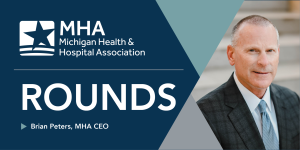
MHA Rounds graphic of Brian Peters

MHA Rounds graphic of Brian Peters“Persistence and resilience only come from having been given the chance to work through difficult problems.” — Gever Tulley

Hospitals exist to save lives and improve health. Every day, across every ZIP code in Michigan, our community hospitals are the place where babies are born, cancer is fought, lives are saved and families turn in their most vulnerable moments for hope, help and healing.

Nearly every Michigander has a story about a provider, nurse or physician whose care brought them peace and support during one of their most difficult moments. Which is why it’s so disheartening to see recent headlines that cast hospitals as profiteers rather than what they truly are — the lifeblood of our communities, doing everything possible to ensure access to high-quality, compassionate care.

Healthcare providers use every option to make sure patients receive the care they need in the right setting, regardless of their ability to pay. While public dialogue about healthcare affordability is vital, we cannot disregard the complexity of drug pricing, payment models and hospital care itself in these conversations.

One of the most common misconceptions about healthcare costs is that hospitals are profiting by inflating prescription drug prices, but hospitals do not manufacture drugs nor set their list prices. They purchase and administer these drugs, often under the most difficult circumstances in intensive care units, cancer infusion centers or operating rooms. A vial of medicine isn’t just handed over: it’s carefully stored, handled, prepared and delivered by an entire team of trained professionals with the expertise to ensure the right drug gets to the right patient at the right time.

That process involves significant investment in safety, staffing, technology and compliance — not to mention the rising labor and supply costs all hospitals across the nation are facing. In fact, labor costs are up 45% since 2014, compared to a 28% increase in inflation. These expenses are especially heavy for hospitals in rural or underserved areas, where resources are stretched thin but commitment to care cannot and will not waver.

It’s also important to note what hospitals charge is completely different from what a hospital is paid, and it’s certainly not what most patients pay. Nearly all Michiganders have health insurance, and insurance plans negotiate rates with hospitals that are often far lower than the list price. In fact, hospitals are price takers, typically collecting only a fraction of the charges listed on publicly posted pricing files: files that are shared in the name of transparency, even if those figures are easily manipulated to be taken out of context.

Moreover, hospital care isn’t one-size-fits-all. Treatment decisions are based on a patient’s specific condition, care setting and coverage. Drug prices can vary based on location, the severity of a patient’s condition, who is covering the cost of care—whether it’s private insurance, Medicare, Medicaid or the patient themselves—as well as dosage and method of administration. A medication delivered through an outpatient clinic may have vastly different requirements (and prices) than one used during an inpatient stay after surgery or trauma. Comparing these prices without explaining that nuance, as well as the frequency of use causes confusion, not clarity.

Despite these challenges, hospitals are actively working to make care more affordable. Michigan hospitals have embraced the use of biosimilars and generics, participate in discount programs and offer financial assistance for uninsured patients. Hospitals actively invest in community health, run outreach clinics and help patients access the medications and services they need to thrive. This is all despite the fact that Michigan is one of only four states in the country where hospitals had, on average, a negative margin, according to the Kaiser Family Foundation.

Every hospital in Michigan is part of a larger effort to strengthen our healthcare system — not just for today’s patients, but for future generations. We are employers, safety nets, disaster responders and anchors of trust. If hospitals close due to financial challenges, where will patients in those communities turn when they need lifesaving care?

Of course, affordability matters. But solutions should be rooted in partnership. We welcome conversations about how to increase transparency, reduce costs and improve care.

Michigan hospitals are essential to the solution and will be the first at the table to offer collaboration, just as we are the first place Michiganders go when they need life-saving care.

As always, I welcome your thoughts.

MHA CEO Report — A Year of Progress and Purpose

MHA Rounds image of Brian Peters

“There is no power for change greater than a community discovering what it cares about.” — Margaret J. WheatleyMHA Rounds graphic of Brian Peters

With another program year behind us, the MHA Annual Meeting served as a powerful reminder of our shared mission to advance the health and well-being of Michigan’s patients and communities. Despite an evolving political landscape, we’ve made meaningful progress and are moving ahead with clear purpose.

As you can imagine, the 2024-2025 MHA program year was marked by busy periods of state legislative activity and various developments at the federal level. We can attribute a tremendous amount of our success to Dr. Julie Yaroch, president of ProMedica Charles and Virginia Hickman Hospital, who served as board chair. Dr. Yaroch’s leadership, clinical expertise and passion for public health had significant impact across countless areas of work.

It’ll come as no surprise that ensuring access to quality healthcare for all Michiganders continued – and continues – to be a priority. This program year, the MHA successfully prevented proposed government mandated nurse staffing ratio legislation from receiving a committee vote. Advocacy efforts also continued around 340B to maintain access to community-based care and prevent drug manufacturer overreach. This resulted in strong bipartisan support for legislation that passed the Michigan Senate and collaboration at the federal level with Senator Debbie Stabenow on the SUSTAIN 340B Act.

I’d be remiss not to mention our response to proposed federal cuts to Medicaid. The MHA, alongside urban and rural members, has prioritized congressional meetings, grassroots communications, coalition efforts and collaboration with state executive leadership to send a strong, clear message: Michigan needs Medicaid.

All that said, playing defense didn’t define our program year. In an effort to grow and develop our healthcare workforce, the MHA successfully hosted the inaugural Healthcare Careers Conversation and led changes to the Michigan Reconnect Program. This resulted in 4,300 students enrolling in short-term healthcare programs, a complement to our ongoing MI Hospital Careers campaign work. Additionally, we pursued state legislation to address provider credentialing delays, secured key amendments to the Earned Sick Time Act and had a hand in proposed changes to the state’s unemployment compensation benefits, among many other employer-related policies.

I’m also incredibly proud to share that we worked with state legislators to design, draft and introduce legislation that makes assaulting a healthcare worker a felony, while tying it to appropriate criminal justice system diversions. Our MHA Keystone Center collaborated to offer active shooter trainings and workplace violence gap analyses to our members while serving as a founding partner of Lawrence Technological University’s Healthcare Violence Reduction Center (HVAC).

We were fortunate to see several MHA priorities included within the FY 2024 state budget, notably a large sum put toward mental and behavioral health. The MHA team successfully secured $8.3 million to launch a competitive grant program for hospital-based peer recovery coach (PRC) programs while leading the charge on a series of impactful prevention and data-driven efforts. Understanding that gaps in behavioral health continue to effect urban and rural hospitals alike, these successes lay the groundwork for what’s ahead.

Emerging technologies and the integration of artificial intelligence (AI) reinforced our commitment to addressing cybercrime and strengthening cybersecurity policy. With this in mind, the MHA worked directly with the Michigan Attorney General and state policy leaders to ensure hospitals are reflected as victims of cybersecurity events. Simultaneously, we engaged our MHA Service Corporation, MHA AI Task Force, CFO Council and industry experts to deploy a series of cybersecurity events and resources to members.

I’d like to applaud our teams for handling a handful of unforeseen challenges, including working over the course of many months to address critical supply chain needs following the devastating impacts of Hurricane Helene. We also saw impressive engagement across annual member events, from our MHA Human Resources Conference and MHA Keystone Safety & Quality Symposium to the Healthcare Leadership Academy and Excellence in Governance Fellowship.

These milestones are just a glimpse into what we accomplished together this program year. I’m deeply grateful to our MHA Board of Trustees, members, sponsors, business partners and dedicated MHA staff – your unity and unwavering dedication to this work continues to have a lasting impact.

As always, I welcome your thoughts.

MHA CEO Report ― Addressing Food and Housing Insecurity

MHA Rounds graphic of Brian Peters

MHA Rounds graphic of Brian Peters“It is our collective and individual responsibility to preserve and tend to the environment in which we all live.” ― Dalai Lama

I recently had the privilege of joining leaders from across the state to discuss the most pressing issues for Michiganders at the annual Detroit Regional Chamber Mackinac Policy Conference. Because our member hospitals and health systems are not only critical providers of care, but also major economic drivers, the MHA once again served as an event sponsor and had a major presence with elected officials, business leaders and the media throughout the week. As you would imagine, we focused our attention on the current Congressional debate over the future of Medicaid and advocated for our 340B legislation and other priorities.

But I was also struck by the airtime given at the conference to the ongoing housing crisis in Michigan, a critical component of health that requires collective action across sectors to address. Over the past year, this has been an issue that our hospital leaders almost always lift up during our site visits, whether in rural or urban settings.  The housing issue affects not only patients but hospital employees as well. Housing, along with food insecurity and transportation challenges, make up the core “social drivers of health” that represent one of the most vexing challenges that we confront as leaders.

More than 40% of households in Michigan struggle to cover basic needs like food, healthcare and housing. We also know there is an inextricable link between food and housing insecurity and health. Research has shown that only 20% of health can be attributed to medical care, while socioeconomic factors account for 40%. Individuals with limited access to adequate food are at increased risk for chronic diseases, behavioral health issues and healthcare underuse – which can lead to higher acute care utilization long-term.

Hospital staff are not immune to these challenges. The rising cost of housing often impacts entry-level and non-clinical personnel, including environmental service workers. We need more accessible options, especially in our state’s rural counties, in order to help hospitals recruit and retain staff to care for our communities.

With all this in mind, the MHA is proud to support U.S. Rep. Haley Stevens’ (D-Birmingham) Healthy Affordable Housing Act, which seeks to create affordable housing in locations with easy access to needed services like public transportation, grocery stores and childcare.

Additionally, we’re proud of the innovative efforts underway across our member hospitals to enhance housing security for residents and staff. For example, we have members vetting opportunities to purchase housing near their facilities to provide employees with affordable rent in an accessible location.

Our members are also engaging in collaborative efforts to meet residents where they are. Here are just a few examples:

  • Corewell Health William Beaumont University Hospital delivers free medical care to individuals experiencing homelessness in Oakland County through their Street Medicine Oakland.
  • ProMedica is prioritizing public health efforts, investing in ProMedica Farms and their Veggie Mobile to improve access to fresh, affordable produce and nutrition education for the communities it serves.
  • Trinity Health’s Food is Medicine program also improves nutrition security by distributing locally grown produce directly to patients at medical appointments and to the community via its farm share, farm stand and food pantry.
  • Henry Ford Health is investing in Detroit’s New Center neighborhood through its campus expansion project, which is a cornerstone of a community-driven plan that will also include a state-of-the-art medical research center alongside mixed-use residential developments offering market-rate and affordable housing, retail spaces, green areas and recreational facilities.

As anchor institutions in their communities, Michigan hospitals will continue prioritizing public health and community benefit efforts. However, we must recognize this is a systemic issue that requires change and investment across industries. The MHA and our members recognize it is our shared responsibility to work alongside partners in the public and private sector to improve the socioeconomic standing of our communities. We look forward to the continued collaboration following the robust conversations on the island.

As always, I welcome your thoughts.

Prioritizing a Culture of Safety — For Everyone in Healthcare

Amy Brown, chief nursing officer, field engagement, MHA

The MHA proudly affirms our commitment to the safety and well-being of our patients AND healthcare workers. Which is why we are diligently working to address the alarming rise in violence against healthcare workers and continue to advocate for federal legislation to make assaulting a healthcare worker a federal crime.

As the chief nursing officer for the association, I have the privilege of overseeing the MHA Keystone Center, the safety and quality arm of the association. In addition to supporting MHA’s advocacy on healthcare worker safety, the Keystone Center is a founding partner of Lawrence Technological University’s Healthcare Violence Reduction Center (HVAC). The HVAC is conducting critical, multidisciplinary research to develop innovative solutions to reduce violence against healthcare workers. We’ve also partnered with MHA Endorsed Business Partner, Tarian to offer resources that address violence.

These efforts are more urgent than ever considering new data from the American Hospital Association. Their recent report, The Burden of Violence to U.S. Hospitals, found that hospitals incurred an estimated $18.27 billion in costs related to violence in 2023 alone. Beyond the financial implications, the report also highlights the significant challenges in staff recruitment and retention and the psychological toll on healthcare workers.

Promoting a culture of safety means more than protecting patients – it means protecting those who care for them. We must not only condemn violence against healthcare workers, but also ensure that our workforce strategies and budgets prioritize protecting those who care for others.

Please join me in recognizing the American Hospital Association’s Hospitals Against Violence Day by participating in the online dialogue about how hospitals are addressing violence in healthcare settings. Use the hashtag #HAVhope to share your voice.

Together, we can create a culture where safety is universal.

Language, Trust and Care: Reflections from the AHA Behavioral Health Workshop

Byline: Lenise Freeman, Government Relations and Public Policy Fellow

I had the opportunity to attend at the end of April a Behavioral Health Workshop in New Orleans hosted by the American Hospital Association. This interactive event brought together hospital leaders, clinical teams and behavioral health professionals to co-design care strategies that improve outcomes, particularly for individuals managing mental health and substance use conditions.

The workshop focused on person-centered care, with the clear message of how we communicate with patients is just as important as the services we deliver. In one session, we discussed “how might we” questions, such as how to align care with patients’ language needs and how to involve families and caregivers in treatment planning.

We explored practical solutions like hiring staff who speak multiple languages, giving patients the option to search for providers based on language and adding visual tools and multilingual signage to clinical spaces. Among the discussion, the value of training teams to use clear, respectful language and to be mindful of different communication preferences from patients was highlighted.

One message that stood out to me was how often communication gaps point to broader challenges in the healthcare system. When patients don’t have access to language support or feel uncomfortable speaking up, it becomes harder to build trust and deliver effective care. Attendees raised long-standing issues such as staffing shortages, outdated licensing rules and underdeveloped data systems.

There was a shared urgency to address these concerns. Participants emphasized the need for national standards on language access, better career pathways for multilingual professionals and increased resources for staff training. Many also talked about the importance of building stronger relationships between providers and the communities they serve.

This discussion reminded me of Michigan hospitals’ commitment to prioritizing the patient voice. Across the state, hospitals continue to invest in patient advocacy and support services. The MHA has worked with several organizations through its Endorsed Business Partner Program to connect members with solutions that improve access to care, including tools and resources for language services.

My biggest takeaway is that thoughtful care requires intention at every level. From how we design spaces and prepare staff to how we listen and respond to patient feedback, every detail matters.

This workshop was a meaningful reminder that improving behavioral healthcare starts with listening and that progress is possible when we commit to clear, consistent action.

Today’s Students Are Tomorrow’s Workforce

Byline: Katelin Wiersma, Director of Marketing and Branding, MHA

The healthcare workforce has been a top priority for MHA’s members, an active pillar in the annual strategic action plan for several years. The healthcare profession is arguably one of the most rewarding career fields, leaving lasting impacts on communities. With a strong personal connection to the healthcare field with 15 years under my belt, I found myself working in healthcare by chance, I tried leaving the field for one year and quickly came back to it. Even as a non-clinician, I felt a strong sense of purpose in healthcare. It has given me the opportunity to tell remarkable stories of heroism, provide lifesaving education and most recently, help others discover how rewarding a career in healthcare can be.

One of the first projects I embarked on at the MHA was the MiHospitalCareers campaign. An effort to raise awareness and interest in hospital-based careers. This campaign showcases the breadth and depth of positions within a hospital and the sense of purpose and meaning a healthcare career can provide. This campaign began in the spring of 2023 and has grown to reach new and different audiences. One way of reaching people has been attending in-person events with career-minded high school students. The state of Michigan is fortunate to have many organizations with similar missions working together to help students get exposure to professions and the education and training needed to prepare Michigan’s workforce of tomorrow.

Many of these organizations have events that provide an opportunity to have meaningful conversations and connect directly with students. This spring, I had the opportunity to attend the Michigan HOSA State Leadership Conference held April 17 and 18 in Acme and the Youth Solutions Career Development Conference held May 1 in Lansing. During both events, students offered energy and excitement that is unmatched. They are eager to learn and are still dreaming of what their future will be. I engaged with students who had many questions about opportunities and how their futures may involve healthcare and hospitals. The professionalism and poise exemplified by these students was, to say the least, impressive. Several MHA member hospitals attended these events too, and they shared similar feedback, stating things such as: “I wish I could offer these students jobs on the spot.”

As many of us are entrenched in our daily responsibilities, it is easy to forget that we all have the opportunity to shape the youth and caregivers of tomorrow. It is also easy to overlook that many students are actively seeking guidance, mentorship and insight into their future career and education paths. If you find yourself feeling stuck or lacking enthusiasm for your own career, I encourage you to connect with students in any way you can. Let their excitement for future potential and zest for life be a reminder of why you chose your path.

Students are not only the future of our workforce, they are the future of Michigan and of healthcare itself. Let’s invest in them and make them aware of how we can help guide them. After spending time at several events with these students, I feel proud and at ease knowing that Michigan’s future is in exceptional hands.

Because today’s students truly are tomorrow’s workforce.

The Reality for Medicaid Patients Entering the ED With a Behavioral Health Crisis

Marianne E. Huff, LMSW, President and CEO, Mental Health Association in Michigan

Imagine this: You enter a hospital emergency department for chest pain. The clinicians onsite confirm you’re having a heart attack, but before can receive lifesaving care, you must wait for a second pre-admission screening from an agency outside of the hospital. The process could take hours – maybe even days.

The odds of that happening are not likely; However, it’s often the reality for Medicaid beneficiaries who come to the emergency department experiencing a behavioral health crisis.

In my role at the Mental Health Association in Michigan, I’ve had the privilege of advocating for patients and communities across the state who are living with mental illness. Unfortunately, a part of this job is having to witness the lasting impact that barriers in the system have on patients, providers and the overall care landscape.

When it comes to getting patients with Medicaid coverage inpatient behavioral healthcare, there are a series of unnecessary hurdles. One of the most time-consuming steps is that following an assessment by qualified ED clinicians, a patient with Medicaid must receive a secondary pre-admission screening from a community mental health (CMH) agency. Although it’s required for a CMH to perform the pre-admission assessment in a three-hour window, that’s rarely the case.

This effects people at all walks of life, but I’ve seen a troubling number of pediatric patients suffering as a result. In one case, a mother sat in the emergency department for weeks with her young daughter who was in dire need of inpatient behavioral healthcare services.

Sadly, that experience is not uncommon. I’ve seen parents put their jobs at risk to accompany children boarded in the ED. Oftentimes mental health conditions are compounded with acute medical issues, which further complicates the process of finding care.

As an association, we strive to transform the way our state and nation approaches mental illness. This is not possible if we don’t uphold a system that supports early intervention and gets patients the care they need without unnecessary delays.

Alongside the MHA and Michigan hospitals, our association agrees that one solution is to expand the three-hour assessment responsibility to allow clinically qualified ED staff to conduct pre-admission screenings. As a result, we can help improve the delivery of care for behavioral health patients who enter hospital EDs across Michigan.

The Mental Health Association in Michigan is the only statewide, non-governmental agency concerned with the broad spectrum of mental illness across all age groups.

In the Middle of Nowhere and Everything: Why Our Community Hospital Matters

Laura Peariso, Senior Director, Healthcare Information, MHA, written in honor of National Hospital Week

I live in a rural town—what I call the middle of nowhere, and everywhere. We’re miles from the nearest city, surrounded by open space instead of traffic. But out here, you learn to value what’s close. In the city, everything is nearby. Out here, everything is a drive—but what’s nearby is priceless.

One week before my son turned ten, my husband, Doug, was diagnosed with pancreatic cancer. That moment shattered our world, but it also showed us the quiet strength of something we’d always had: our community hospital.

I sent Doug to Memorial Healthcare’s Emergency Department because I knew he would be seen quickly. Their ED is efficient, sharp with diagnostics, and will transfer you if needed. But for the next 16 months, Memorial became more than just a place that could help—it became our medical home.

We consulted with other hospitals for opinions and eventually surgery. But nearly all of Doug’s care happened just 10 miles down the road. That mattered more than I can explain. When you’re going through something as intense and draining as cancer treatment, being at home matters. Being where you’re comfortable, where your son can visit after school, where you can drive back to him after a long day holding him and help him prepare for what no child should have to face.

There are so many appointments for cancer treatment.  Doug completed 28 rounds of chemo. On days I couldn’t be there, he had access to a volunteer ride service to safely get him to treatment. Small town, big heart.

When it came time to make end-of-life decisions, we had a choice: transfer to another hospital for one more procedure—or enter hospice. He needed to be home. And home wasn’t just our house. It was Memorial. It was the physicians, nurses and staff who had walked this journey with us. It was familiar faces, voices that knew his name, and caregivers who understood our story without needing to be told. From diagnosis to after his last breath he was home.

Doug’s hospice nurse had a daughter in our son’s class. That’s what it’s like here. You see the people who cared for your husband at the grocery store. At the school pickup line. At church. These aren’t just healthcare providers. They are neighbors. They are the people who held us up during the hardest days of our lives.

This is what a community hospital means. It’s not just about proximity. It’s about trust, dignity, and being surrounded by people who care—not just because it’s their job, but because it’s personal.

I will never stop being grateful for that.

That’s why supporting our local hospitals matters—because they support us when we need it most. If you can, donate. Volunteer. Advocate. Share your story. Community hospitals don’t just heal bodies—they hold families together.

MHA CEO Report — Highlighting Hospitals

MHA Rounds image of Brian Peters

“Sometimes when you sacrifice something precious, you’re not really losing it. You’re just passing it on to someone else.” ― Mitch Albom, The Five People You Meet in Heaven

MHA Rounds image of Brian PetersThis month’s CEO Report is being filed from Washington, DC, where I am honored to join my colleagues from throughout our state and nation at the American Hospital Association’s Annual Meeting. On the agenda are robust conversations about the many challenges confronted by the healthcare field amid a tumultuous and often unpredictable political environment. The timing is fortuitous, as we officially celebrate our healthcare providers with National Nurses Week beginning May 5, followed by National Hospital Week. These honorary weeks shine a spotlight on the amazing dedication of hospital and healthcare workers in service to their patients and communities and encourage us to show our deep appreciation.

Our nurses, and many other healthcare workers, were widely hailed as heroes throughout the pandemic, and the reality is that they continue to show extraordinary commitment to service on a regular basis.  Just one recent example: northern Michigan was ravaged by a devasting ice storm earlier this year and despite power outages that were measured in weeks, the healthcare providers in that region did whatever was necessary to make sure people received the medications and care they needed. This included utilizing snowmobiles and ATVs for patient and staff transport when countless roads remained inaccessible due to downed trees and power lines.

Hospitals annually quantify the benefits they provide to the community through the IRS 990 form, and the MHA disseminates our own Community Impact Report. However, in reality, it is impossible to adequately document or fully do justice to the examples shared above, and countless others.  Healthcare interactions change people forever. And I’m not talking about the physical changes from surgery or treatment, but the emotional impact that saving a life, lending a helping hand or crying shoulder can make for someone. In times of need, emergency and disaster, hospitals – and more specifically, the people who work inside of them – are there WHEN and WHERE you need them. The sacrifices made by these extraordinary people are real, and they do so for our benefit.

Later this month we’ll be able to share our latest economic impact and workforce data for Michigan hospitals and healthcare. While the data may be slightly different, the overall story remains the same: healthcare is the leading private-sector employer in Michigan and the demand and reliance on healthcare has never been greater. So, what can we do to help? May is a time to unite behind our healthcare institutions and the work they do every day to touch and change lives, improving the health and wellness of our communities. While Congress continues to contemplate potential Medicaid funding cuts that would have devasting consequences to healthcare access for all Michiganders, please join us in speaking up and sharing the importance Medicaid plays in our state. You can do so by using the MHA’s action alert to send a personalized message to your member of Congress. Your local hospitals – and more importantly, the nurses, doctors and other healthcare workers who work there – need your help.

As always, I welcome your thoughts.

The Five Things I Love Most About Nurses

Amy Brown, chief nursing officer, field engagement, MHA

In a few short days, I will celebrate one year as the inaugural chief nursing officer for the MHA. This position has given me the privilege of bringing together nurse leaders from across the state and country, gathering insights, sharing best practices and collaborating to drive meaningful change that advances care delivery.

When I visit with hospitals throughout Michigan, one constant remains true: nurses represent the essential foundation that supports our patients and communities. With this in mind, it seems fitting that the theme of National Nurses Week (May 6-12) focuses on recognizing the power of nurses as a driving force behind compassionate care, innovation and transformative changes in healthcare.

Before joining the MHA, I worked as a bedside nurse for six years and in hospital leadership for 16. As I reflect on my career, here are the top five things I love most about this workforce:

  1. Our authenticity: Nothing is off the table, whether you’re out to dinner with colleagues or interacting with patients and their families. Nurses keep it real.
  2. Our speed: Being a fast walker, a fast learner and a fast problem-solver is a must when it comes to this work.
  3. Our ability to connect: Nurses are required to get up close and personal. Because of this, we know how to reach others in a way that is meaningful and genuine.
  4. Our problem-solving skills: When you tell a nurse what you need, they will find a way to get the job done.
  5. Our resilience: Regardless of the hardship we’ve witnessed and endured, we continue to show up for our team, our patients and our communities every day.

I hope you’ll join me in thanking all the dedicated nurses across Michigan for their unwavering commitment to protecting our patients, enhancing care safety and quality and for the countless acts of kindness they perform that make a profound difference every day.