MHA Monday Report Oct. 6, 2025

Michigan Legislature Passes State Budget, Preserves Healthcare Funding

The Michigan House of Representatives and Michigan Senate passed a state budget protecting all existing healthcare funding on Oct. 3. House Bill 4706, sponsored by Rep. Ann Bollin (R-Brighton), passed by both chambers, includes …


CMS Shares Updates for Medicare Operations During Federal Shutdown

The Centers for Medicare and Medicaid Services (CMS) recently directed Medicare Administrative Contractors to hold Medicare fee-for-service claims for ten business days due to the expiration of several Medicare payment provisions and the Oct. …


Hospital Communicators Gather at MHA Communications Retreat

The 2025 MHA Communications Retreat brought together about 100 communications, marketing and public relations professionals from MHA-member facilities Oct. 1 to network and learn from peers across the state. The agenda featured sessions on reputation management …


CE Credits Available for Maternal Health Quality Improvement Modules

Continuing education (CE) credits are now available for obstetric teams that complete the Michigan Alliance for Innovation on Maternal Health (MI AIM) virtual modules. The approximately three-hour series consists of the following modules: MI AIM …


MDHHS Introduces New Provider Updates Under Michigan’s Mental Health Framework

The Michigan Department of Health and Human Services (MDHHS) recently introduced new requirements under the state’s Mental Health Framework to strengthen assessments, referrals and care coordination for Medicaid enrollees. These changes take effect beginning October …


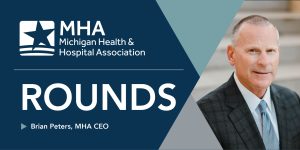
MHA Rounds image of Brian PetersMHA CEO Report — Launching Collaboratives to Improve Community Health

In the healthcare community, we know that a person’s health is shaped outside the four walls of a hospital and our support must expand beyond acute care. The MHA recently launched community benefit collaboratives with …


Keckley Report

Who Owns the Public’s Health?

“September 2025 marks a significant shift in U.S. health policy, especially its approach to the public’s health. …

Public health is a vital part of the U.S. health system but a stepchild to its major players. In reality, the U.S. operates a dual system: one that serves those with insurance (public and private) and another for those without. Public health programs like SNAP, HeadStart, Federally Qualified Health Centers et. al., serve lower income and under-insured populations and integrate with local delivery systems emergency services and during mass-events like pandemics, mass-casualties and disease outbreaks. Funding for public health programs is 2-5% of total health spending shared between local, state and federal governments.

Studies show food, housing and income insecurity—areas targeted by public health– correlate to chronic disease prevalence and health costs. Unlike most developed systems of the world which operate at a lower cost and produce better population-health outcomes, our system perpetuates a structural divide between healthcare and public health. Integrating the two is a necessary strategy for system transformation, but a difficult task given entrenched animosity toward “the system” held by public health leaders and funding pressures.  The bridge between public health and the healthcare delivery systems is a two-lane road with lots of potholes at the federal level, and sometimes better in local communities. But funding seems to be an afterthought unless local communities deem it vital.”

Paul Keckley, Sept. 28, 2025


New to Know

News to Know

  • MHA Endorsed Business Partner (EBP) SunRx is hosting a 340B Regulatory Brief webinar Nov. 4 at 2 p.m. EDT with Bharath Krishnamurthy, health policy & analytics, American Hospital Association.
  • The American Hospital Association (AHA) is accepting applications for the AHA’s 2026 Dick Davidson NOVA Award.


Language, Trust and Care: Reflections from the AHA Behavioral Health Workshop

Byline: Lenise Freeman, Government Relations and Public Policy Fellow

I had the opportunity to attend at the end of April a Behavioral Health Workshop in New Orleans hosted by the American Hospital Association. This interactive event brought together hospital leaders, clinical teams and behavioral health professionals to co-design care strategies that improve outcomes, particularly for individuals managing mental health and substance use conditions.

The workshop focused on person-centered care, with the clear message of how we communicate with patients is just as important as the services we deliver. In one session, we discussed “how might we” questions, such as how to align care with patients’ language needs and how to involve families and caregivers in treatment planning.

We explored practical solutions like hiring staff who speak multiple languages, giving patients the option to search for providers based on language and adding visual tools and multilingual signage to clinical spaces. Among the discussion, the value of training teams to use clear, respectful language and to be mindful of different communication preferences from patients was highlighted.

One message that stood out to me was how often communication gaps point to broader challenges in the healthcare system. When patients don’t have access to language support or feel uncomfortable speaking up, it becomes harder to build trust and deliver effective care. Attendees raised long-standing issues such as staffing shortages, outdated licensing rules and underdeveloped data systems.

There was a shared urgency to address these concerns. Participants emphasized the need for national standards on language access, better career pathways for multilingual professionals and increased resources for staff training. Many also talked about the importance of building stronger relationships between providers and the communities they serve.

This discussion reminded me of Michigan hospitals’ commitment to prioritizing the patient voice. Across the state, hospitals continue to invest in patient advocacy and support services. The MHA has worked with several organizations through its Endorsed Business Partner Program to connect members with solutions that improve access to care, including tools and resources for language services.

My biggest takeaway is that thoughtful care requires intention at every level. From how we design spaces and prepare staff to how we listen and respond to patient feedback, every detail matters.

This workshop was a meaningful reminder that improving behavioral healthcare starts with listening and that progress is possible when we commit to clear, consistent action.

MHA Testifies in House Oversight Subcommittee, IMLC and AOT Legislation Passes Senate

The MHA provided testimony May 21 to the House Oversight Subcommittee on Public Health & Food Security on certain challenges related to behavioral health patients and the need for inpatient psychiatric beds across the state.

The House Oversight Subcommittee on Public Health & Food Security heard about patients facing behavioral health crises and their experiences with emergency department boarding based on insurance status. Taylor Alpert, government relations manager, advocacy, MHA shared data the association began collecting in 2023 on emergency department length of stay for patients with a behavioral health diagnosis. The data revealed more than 155 patients with a behavioral health diagnosis waiting in a hospital emergency department daily. Patients with Medicaid coverage experience longer wait times than those with commercial insurance, with one in three Medicaid patients spending more than 48 hours in the emergency department before being admitted or discharged.

Adam Carlson, senior vice president, advocacy, MHA outlined the process of the current preadmission screening assessment completed by providers for patients with a behavioral health diagnosis and illustrated for the committee how the process is unnecessarily complicated for those with Medicaid coverage. Carlson provided information on how member hospitals in the state are actively trying to expand or undergo capacity improvement projects to address this growing issue, but federal Medicaid threats, staffing gaps and state behavioral health beds per capita remain a challenge.

The MHA has been exploring opportunities to address this issue at the state level and has been working with the legislature on changing the statutory requirements for preadmissions screening timelines. Senate Bill (SB) 316, sponsored by Sen. Roger Hauck (R-Mount Pleasant), enforces a three week timeline for completing a preadmission screening requirement for patients covered by Medicaid and was introduced earlier this week. The MHA will continue to educate legislators on this issue and support SB 316 to expand the assessment responsibility to improve the delivery of care for behavioral health patients in Michigan.

Additional behavioral health legislation advanced in the Senate this week:

  • SB 303, also sponsored by Sen. Roger Hauck, renews Michigan’s participation in the Interstate Medical Licensure Compact. It passed unanimously in the Senate and now moves to the House Health Policy Committee.
  • SBs 219–222, introduced by Sen. Kevin Hertel (D-St. Clair Shores), update procedures for Assisted Outpatient Treatment to improve care for individuals experiencing behavioral health crises.

In the House, the Rules Committee passed House Bill 4246, sponsored by Rep. Phil Green (R-Millington), which would establish a nurse licensure compact agreement in Michigan. The MHA has expressed support for each of these legislative efforts.

Members with additional questions should contact Elizabeth Kutter at the MHA.

A Healthier Future: Improving Access for Immigrant Families in Michigan

Byline: Lenise Freeman, Government Relations and Public Policy Fellow

Accessing healthcare can be a daunting experience for anyone, but it poses unique challenges for immigrants and refugees. I recently participated in a breakout session at the Michigan Association for Local Public Health (MALPH) Conference held in Muskegon, Michigan, where we explored the challenges immigrant communities face in accessing healthcare. As a first-generation daughter of an immigrant, I know firsthand the barriers my mother faced while navigating the English language in healthcare settings. I often found myself translating medical jargon and filling out forms to ensure she received the care she needed. Hearing similar stories from others at the conference reinforced my commitment to advocate for better support for these individuals.

Insights from the immigrant health needs assessment conducted by the Washtenaw County Health Department reveal key challenges that immigrants and refugees face. Language barriers stand out as one of the most significant obstacles. Many struggle with English, making it hard to understand medical terms and navigate the healthcare system. One participant shared their experience as the only English speaker in their family, responsible for translating sensitive medical information. This scenario is common, underscoring the need for better communication support.

Beyond language challenges, the complexities of the U.S. healthcare system create additional barriers to access. Immigrants may be unfamiliar with fundamental concepts like making appointments or understanding insurance options. This is particularly concerning for immigrant children and pregnant individuals, who are often at greater risk of being uninsured. Legislation like House Bill (HB) 4740 aims to address this issue by suspending the five-year waiting period for immigrant children and pregnant individuals to eligible for Medicaid or the MI Child program. This bill would extend coverage to children up to 21 years of age and pregnant individuals, regardless of their length of residence in the United States. This is a critical step in ensuring these populations receive the healthcare they need, especially in maternal and infant health.

Cultural differences also complicate matters, as traditional healthcare practices may differ from what is available in the U.S. For instance, some cultures may have stigmas surrounding mental health, deterring individuals from seeking necessary help. Additionally, a lack of access to healthy food and unfamiliarity with resources like food assistance programs can adversely impact overall well-being.

To foster a better healthcare community, improving training programs is essential. Hospitals should implement cultural competency training for their staff, equipping them with the skills to understand and respect different practices and beliefs. This training can help alleviate fears among immigrants and refugees about accessing services, particularly in maternal and infant health. Partnering with individuals from immigrant and refugee communities to serve as liaisons or community health workers can further enhance inclusivity. These trusted individuals can bridge communication gaps and build trust, encouraging community members to seek the care they need without fear or hesitation.

The findings from the Washtenaw County Health Department’s immigrant health needs assessment reveal pressing challenges that require our immediate attention. Language barriers and unfamiliarity with the U.S. healthcare system pose significant risks for immigrants and refugees, often preventing them from accessing essential care. That’s why I encourage healthcare providers to prioritize cultural competency training, which helps ensure immigrant children and pregnant individuals have the insurance access they deserve.

I firmly believe everyone deserves the same access to medical care, regardless of their background or language proficiency. It’s crucial to amplify the voices of those who often go unheard, ensuring their needs are recognized and addressed within our healthcare system.

Highly Pathogenic Avian Influenza Preparedness and Resources

News of Highly Pathogenic Avian Influenza (HPAI) H5N1, commonly referred to as bird flu, is spreading across the country with concerns for animal-to-human transmission. The MHA and its partners are monitoring the situation closely with data and resources available:

  • HPAI was confirmed in Michigan on March 29, 2024, and has been detected within 10 cattle farms and six poultry facilities across the state.
  • Only one human case of HPAI has been identified so far, in an individual in Texas, and transmission risk remains low risk to the general public.
  • Natasha Bagdasarian, chief medical executive for the State of Michigan, released a Public Health Bulletin on May 6 with information about the current situation, five action items and additional resources.
  • According to the USDA, commercial dairy products remain safe for consumption due to the pasteurization process. There is limited information available about whether HPAI can be transmitted through consumption of raw milk, however it is understood that unpasteurized milk can pose serious health risks to consumers due to the presence of other dangerous microorganisms such as Campylobacter, E. coli and Salmonella. The Michigan Department of Health and Human Services released a Raw Milk Risks document, which can be printed and shared.
  • Members should refer to the April 24 MI HAN “Clinical Recommendations: Highly Pathogenic Avian Influenza A(H5N1) Virus” for more information, as well as the April 5 CDC Health Advisory.
  • Hospital infection prevention and control and infectious disease providers are encouraged to use the new HPAI Playbook released by the Association for Professionals in Infection Control and Epidemiology for additional information on identification, patient care, occupational health, outreach considerations and other supplemental resources.

Members with questions may contact Kelsey Ostergren at the MHA.