Media Recap: State Budget & Vaccines

The MHA received media coverage the week of Sept. 1 on the state budget and COVID-19 vaccines.

Several news outlets published stories related to the harmful impacts to healthcare found in the state budget bill passed by the Michigan House of Representatives.

Adam Carlson9&10 News aired a story Sept. 2 that includes an interview with Adam Carlson, senior vice president, advocacy, MHA, explaining the cuts found in the bill.

“It includes billions of dollars in cuts that impact things like maternal health care payments to physicians and all sorts of other healthcare related cuts that are completely unnecessary,” said Carlson.

The MHA issued a press release Sept. 3 sharing the House version of the budget endangers 20,000 hospital jobs and a $4.9 billion economic loss to the state. This led to a critical reaction from the House Speaker, resulting in stories from The Detroit News and Gongwer. A MHA media statement shared responding to the Speaker’s criticism was released that evening.

“We will not be bullied away from defending our patients. We remain steadfast in our commitment to protecting healthcare access throughout Michigan,” said Peters in the statement, that was included in the Gongwer story.

Lastly, Bridge published an article Sept. 4 providing information on how to access the COVID-19 vaccine. The MHA provided a comment for the story from Gary Roth, DO, chief medical officer, MHA.

“Our role is to support hospitals in their efforts to increase overall vaccination uptake and avoid the spread of vaccine preventable diseases, as the evidence is indisputable that vaccines are the best tool available to prevent severe illness and save lives,” said Roth.

Members with any questions regarding media requests should contact John Karasinski at the MHA.

MHA CEO Brian Peters Responds to House Speaker Comments

MHA CEO Brian Peters responded to negative comments made by Michigan House Speaker Matt Hall (R-Richland Township) during a press conference on Sept. 3.

Speaker Hall’s press conference presentation included a segment on hospital funding, in which he continually refuted information provided by the MHA regarding House Bill 4706 and its harmful cuts to hospital funding and access to healthcare. Further, the Speaker made direct personal attacks to MHA CEO Brian Peters during the press conference.

Following the press conference, the MHA issued a statement reaffirming Peters’ commitment to protecting healthcare access throughout Michigan.

“The Speaker is wasting Michiganders’ time and resources doubling down on defending these disastrous budget cuts and resorting to personal attacks. Attacking me does not change the real cuts his budget threatens to make against patients, healthcare workers and hospitals. I’m happy to be the target of his outrage and criticism if that distracts him from cutting funding for those who report to work every day to save lives,” said Peters.

The MHA encourages members to contact their lawmakers through its action alert and continue to advocate for a real budget by Sept. 30 that puts patients, providers and hospitals first.

Members with questions may contact the MHA advocacy team.

MHA Monday Report Sept. 1, 2025

House Budget Includes Harmful Hospital Funding Cuts

The Michigan House of Representatives voted 59-45 on Aug. 26 for a state budget that includes harmful cuts to hospital funding and healthcare measures. This proposed budget includes: New language placing $2.5 billion of hospital …


DIFS Finalizes Newborn Insurance Enrollment Document for Hospitals

The Michigan Department of Insurance and Financial Services (DIFS) recently finalized the educational document that hospitals are now required to provide to parents of newborns under Public Act 250 of 2024 (House Bill 4173 of …


Speakers Announced for 2025 Communications Retreat

The MHA has confirmed speakers and topics for the 2025 MHA Communications Retreat scheduled Wednesday, Oct. 1 from 8 a.m. to 4 p.m. at the Henry Center for Executive Development in Lansing. The lineup features: …


ACP and MDHHS to Host Vaccine Policy and Practice Webinar

The American College of Physicians (ACP), in collaboration with the Michigan Department of Health and Human Services (MDHHS), will host the public health webinar, From Policy to Practice: What Internists Need to Know About the …


MDHHS Updates Mental Health Framework Webpage

The Michigan Department of Health and Human Services (MDHHS) has updated its Mental Health Framework (MHF) webpage with new resources for providers. Recordings and slide decks for the MHF 101 webinar and the MichiCANS Screener …


Registration Open for the Michigan Food as Medicine Summit

Registration is open for the inaugural Michigan Food as Medicine Summit, scheduled for Oct. 7-8 at the Kellogg Hotel and Conference Center in East Lansing. The event will bring together healthcare, food systems, policy and …


AMN Physician Incentive Survey Results

MHA Endorsed Business Partner AMN Healthcare recently released the 2025 Review of Physician and Advanced Practitioner Recruiting Incentives, produced by its Physician Solutions division (formerly Merritt Hawkins). For 32 years, the Review has been a key …


Catching Up on All Things Healthcare with Tina Freese Decker

The MHA released a new episode of the MiCare Champion Cast exploring state and federal healthcare priorities with Tina Freese Decker, MHA, MSIE, FACHE, President & CEO, Corewell Health and 2025 Chair of the American …


Latest AHA Trustee Insights Examines the Role of Boards in Workforce Strategy

The August edition of Trustee Insights, the American Hospital Association’s (AHA) monthly digital package, highlights podcasts, videos, webinars and other resources on today’s most pressing issues. The issue includes a special-edition paper on trends shaping care …


Keckley Report

Is Health Insurer Criticism Justified?

“Since the murder of UnitedHealth executive Brian Thompson in New York City December 4, 2024, attention to health insurers has heightened. National media coverage has been brutal. Polls have chronicled the public’s disdain for rising premiums and increased denials. Hospitals and physicians have amped-up campaigns against prior authorization and inadequate reimbursement. …

Most Americans think not having health insurance is a bigger risk than going without. But most also think healthcare is fundamental right and the government should guarantee access through universal coverage. Having private insurance is not the issue: having insurance that ensures access to doctors and hospitals when needed reliably and affordably is their unmet need. …

Criticism of the health insurance industry is justified for the most part but the rest of the story is key. The U.S. system is broken and everyone knows it. But health insurers are not alone in bearing responsibility for its failure though their role is significant.”

Paul Keckley, Aug. 24, 2025


New to KnowNews to Know

MHA offices will be closed and no formal meetings will be scheduled Sept. 1 in observance of Labor Day.


MHA in the News

The MHA received a host of media coverage from across the state during the week of Aug. 25 after the MHA issued a media statement reacting to the state budget bill passed Aug. 26 by …

House Budget Includes Harmful Hospital Funding Cuts

The Michigan House of Representatives voted 59-45 on Aug. 26 for a state budget that includes harmful cuts to hospital funding and healthcare measures.

This proposed budget includes:

  • New language placing $2.5 billion of hospital provider-tax funded payments in contingency, requiring unnecessary administrative and legislative actions that could jeopardize timely hospital payments.
  • Elimination of at least $100 million of funding from the Specialty Network Access Fee (SNAF), which provides reimbursement to support physicians caring for patients with Medicaid coverage.
  • Elimination of $10 million to support the Maternal Levels of Care verification for birthing hospitals.
  • No funding to support providers who have not been reimbursed by the Michigan Department of Corrections contractor Wellpath.

Furthermore, Michigan hospitals already stand to lose more than $6 billion over the next 10 years due to federal budget cuts. Further reducing funding that supports delivering healthcare services and the nurses, physicians and other staff employed by hospitals harms Michigan and its more than 10 million residents.

The MHA will continue to oppose all threats to hospital funding and work with the state legislature to advocate for a real budget by Sept. 30 that supports healthcare and the hospital workforce who serve Michigan communities.

Following the vote, the MHA issued a media statement from MHA CEO Brian Peters and an action alert encouraging members to contact legislators to protect hospital funding in Michigan.

Members with additional questions should contact the MHA advocacy team.

MHA Monday Report Aug. 25, 2025

CMS Releases FY 2026 Final Rule for Skilled Nursing Facilities

The Centers for Medicare & Medicaid Services (CMS) recently released a final rule to update the Medicare fee-for-service prospective payment system for skilled nursing facilities for fiscal year (FY) 2026. Key provisions include: Increasing the per-diem federal rate …


MHA Community Benefits Survey for FY 2024 Now Open

The MHA is now accepting submissions for the fiscal year (FY) 2024 Community Benefits Survey. Member hospitals are encouraged to participate, as the survey results are vital to demonstrating the value of hospital community benefit …


Trustee Webinar Outlines the OBBBA Impact

The MHA will host the webinar Understanding the One Big Beautiful Bill Act (OBBBA) and Board Planning for the Impact from 8 to 9 a.m. Sept. 24. The session is designed for trustees and hospital leaders and will highlight considerations …


MHA EBP care.ai Shares Case Study on Virtual Care Expansion

MHA Endorsed Business Partner (EBP) care.ai recently shared an insightful case study on how a 22-bed virtual care pilot with Henry Ford Health is expanding across 13-acute care hospitals, including a chief nursing informatics …


Keckley Report

The Medical Profession at a Crossroad

“When I was a grad student at Ohio State in the ‘70’s, one of the most challenging courses I took was “Primary Research Methods in Analyzing Public Data” –an elective. …

The data show the majority of physicians are unhappy and uncertain about the future of the profession. The data show they’re working harder and doing more with less. The data show they’re concerned about the future of the health system and think it’s heading in the wrong direction. The data show employed physicians are increasingly dissatisfied in their hospital and private equity relationships. The data show that physicians share of the growing health spending pie is shrinking: from 21.1% in 2000, to 20.1% in 2023 and projected to 19.9% in 2025 and 19.5% in 2033. And data show the profession, along with nurses and pharmacists, enjoys the public’s trust to figure things out. …

Might defining a vision for a transformed ‘U.S. System of Health’ be the focus for the medical profession? There’s plenty of data to digest to deliberate objectively. Its willingness and ability to set aside its factionalism for the greater good is the biggest question facing the profession. And the widely-recognized dysfunction of the current U.S. health system presents the urgent opportunity for the profession to step forward. That’s the cross facing the profession.”

Paul Keckley, August 17, 2025


New to KnowNews to Know

The MHA is developing its 2025-2026 events and education calendar, featuring professional development opportunities, networking events and timely, relevant offerings for members.


MHA in the News

The MHA received media coverage during the week of Aug. 18 that continued to focus on the impact the One Big Beautiful Bill Act will have on Medicaid as well as comments related to …

MHA Monday Report Aug. 18, 2025

CMS Releases FY 2026 LTCH Prospective Payment System Final Rule

The Centers for Medicare & Medicaid Services (CMS) recently released a final rule to update the Medicare fee-for-service long-term care hospital (LTCH) prospective payment system for fiscal year (FY) 2026. Specifically, the …


MHA Keystone Center and MI AIM Announce Recipients of Maternal Health Education Grant

The MHA Keystone Center, in collaboration with the Michigan Alliance for Innovation on Maternal Health (MI AIM), recently announced a partnership with UnitedHealthcare to offer $25,000 grants to birthing hospitals in Michigan to purchase equipment …


CMS Releases FY 2026 Final Rule for Inpatient Rehabilitation Facilities

The Centers for Medicare & Medicaid Services (CMS) recently released a final rule to update the Medicare fee-for-service prospective payment system for inpatient rehabilitation facilities for fiscal year (FY) 2026. Key provisions include: …


Keckley Report

Health Industry Notoriety is a Two-Edged Sword: Four Considerations as the Mid-Term Elections Near

“Keeping track of all things healthcare is a formidable task.  Last week’s news is no exception: …

These events and actions illustrate the administration’s “flood the zone” strategy and its propensity to dictate news cycles in media coverage. They also reflect the ubiquitous role played by healthcare in our society as an employer and economic engine.

Collectively, they appear to cast the industry in a negative light reinforcing populist’ suspicions about affordability, price transparency, corporatization and cost-containment. And they lend to growing disfavor among lawmakers, employers and critics. …”

Paul Keckley, Aug. 10, 2025


New to KnowNews to Know

  • Registration is open for the 2025 MHA Communications Retreat from 8 a.m. to 4 p.m. on Wednesday, Oct. 1 at the Henry Center for Executive Development in Lansing.
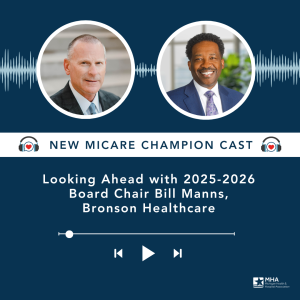
  • In the latest episode of the MiCare Champion Cast, MHA CEO Brian Peters and MHA Board Chair Bill Manns, president and CEO, Bronson Healthcare, explore what’s top of mind in healthcare as the 2025-2026 program year kicks off.

MHA Monday Report Aug. 11, 2025

MHA Trustee Webinar Outlines Information and Planning for the OBBBA

The MHA will host the webinar Understanding the One Big Beautiful Bill Act (OBBBA) and Board Planning for the Impact from 8 to 9 a.m. ET Sept. 24. The session will explore how the OBBBA …


CMS Releases FY 2026 Final Rule for Inpatient Psychiatric Facilities

The Centers for Medicare & Medicaid Services (CMS) recently released a final rule to update the Medicare fee-for-service prospective payment system for inpatient psychiatric facilities for fiscal year (FY) 2026. Key provisions …


CMS Releases FY 2026 Hospital Inpatient Prospective Payment System Final Rule

The Centers for Medicare & Medicaid Services (CMS) recently released a final rule to update the Medicare fee-for-service inpatient prospective payment system for fiscal year (FY) 2026. Highlights of the final rule include: …


MHA Podcast Explores Healthcare Priorities with 2025-2026 Board Chair Bill Manns

The MHA released a new episode of the MiCare Champion Cast exploring what’s top of mind in healthcare as the 2025-2026 program year kicks off. The episode, hosted by MHA CEO Brian Peters, features MHA …


Keckley Report

July 2025 Actions are the Turning Point for U.S. Healthcare

“July 2025 will be the month U.S. healthcare leaders recognize as the industry’s modern turning point. Consider…

Collectively, these actions reflect rejection of the health industry by the GOP-led Congress. It follows 15 years of support vis a vis the Affordable Care Act (2010) and pandemic recovery emergency funding (2020-2021). In that 15-year period, the bigger players got bigger in each sector, investment of private equity in each sector became more prevalent, costs increased, affordability for consumers and employers decreased, and the public’s overall satisfaction with the health system declined precipitously. …

The landscape for U.S. healthcare is fundamentally changed as a result of the July actions noted above. It is compounded by public anxiety about the economy at home and global tensions abroad.

These July actions were a turning point for the industry: responding appropriately will require fresh ideas and statesmanship. Transparency about prices, costs, incentives and performance is table stakes. Leaders dedicated to the greater good will be the difference.”

Paul Keckley, Aug. 3, 2025


New to KnowNews to Know

MHA Endorsed Business Partner Vault Verify is hosting a live webinar on HR’s Growing Role in Data Protection from 1 to 2 p.m. ET Aug. 13.


Lauren LaPineMHA in the News

The MHA received media coverage the week of Aug. 4 on hospital cost pressures, behavioral health partnerships and the impact of Medicaid cuts. Gongwer published a story Aug. 4 about a PricewaterhouseCoopers report that reviews …

Media Recap: Hospital Cost Pressures and Behavioral Health Partnerships

Lauren LaPine

The MHA received media coverage the week of Aug. 4 on hospital cost pressures, behavioral health partnerships and the impact of Medicaid cuts.

Gongwer published a story Aug. 4 about a PricewaterhouseCoopers report that reviews the trends in the medical sector that are continuing to result in higher costs for services that are placing growing pressure on hospitals. The report shows that factors that include growth in drug spending and reductions in federal funding are leading to decreased hospital margins.

“This report confirms what hospitals in Michigan and across the country are living every day: skyrocketing costs, growing demand and shrinking margins,” said MHA CEO Brian Peters. “We cannot afford policies that slash Medicaid funding or shift more financial burden to hospitals and patients. Without sustainable support, hospitals – especially those in rural and underserved areas – face real threats of closure.”

Second Wave Michigan also published an article Aug. 5 about behavioral health partnerships that hospitals have in the state. The story looks at both policy solutions such as Senate Bill 316, as well as the partnership between Network180 and Trinity Health Grand Rapids in establishing The Behavioral Health Crisis Center to divert patients in crisis from emergency departments and jails.

Lauren LaPine“If you come to a hospital emergency department and you’re in some level of a behavioral health crisis, that hospital has to work with the CMH in the area where the patient lives,” said Lauren LaPine, senior director of legislative and public policy, MHA. “That takes a lot of time and a lot of coordination.”

MLive and Michigan Public also published stories that include mentions of the MHA following U.S. Sen. Elissa Slotkin’s visit to Helen DeVos Childre’s Hospital. The stories reference the MHA’s estimate that Michigan hospitals will lose $6 billion over the next ten years from the One Big Beautiful Bill Act.

Members with any questions regarding media requests should contact John Karasinski at the MHA.

MHA Monday Report Aug. 4, 2025

HRSA Announces 340B Rebate Pilot; President Trump Pens Letter on Most Favored Nation Pricing

The Health Resources and Services Administration (HRSA) issued guidance July 31 on a proposal to shift a portion of the 340B drug pricing program away from an upfront discount model to a rebate model. HRSA …


MDHHS to Discuss 2026 Draft Rates for MichiCANS and LOCUS Assessments

The Michigan Department of Health and Human Services (MDHHS) invites qualified mental health providers to attend a MichiCANS Screener and Level of Care Utilization System (LOCUS) All Provider Draft Rate meeting scheduled from 1 – 2 p.m. …


CMS Releases CY 26 PFS Proposed Rule

The Centers for Medicare & Medicaid Services (CMS) recently released a proposed rule to update the physician fee schedule (PFS) for calendar year (CY) 2026. Highlights of the proposal include: Implementing the one-time 2.5% statutory …


MHA Rounds graphic of Brian PetersMHA CEO Report — Hospitals Are Focused on Saving Both Lives and Costs

Hospitals exist to save lives and improve health. Every day, across every ZIP code in Michigan, our community hospitals are the place where babies are born, cancer is fought, lives are saved and families turn in their most vulnerable moments for hope, help and healing. …


Keckley Report

Medicare Report Card on its 60th Birthday: Incomplete

“Wednesday marks the 60th anniversary of Medicare. On July 30, 1965, President Lyndon Johnson signed the Social Security Act (HR 6675) at the Harry S. Truman Presidential Library in Independence, MO issuing the first Medicare card to “Give ‘em hell Harry” who had proposed universal coverage in 1945 against fierce opposition from the American Medical Association who labelled it socialized medicine.

The program began in January 1966 enrolling 19 million in its Part A (hospital) and Part B (ambulatory, physicians) programs. The country was divided over the contentious war in Vietnam and civil rights at home. In the six decades since, the Medicare program has expanded to become the industry’s most important program and society’s most valued safety net. …

So, on Medicare’s 60th birthday, its legacy is a mixed bag: it has provided needed health services to three generations of seniors, but its costs and failure to hardwire an appropriate balance between preventive, chronic and acute and long-term care services remain work not completed.”

Paul Keckley, July 27, 2025


New to KnowNews to Know

  • Registration is open for the 2025 MHA Communications Retreat from 8 a.m. to 4 p.m. on Wednesday, Oct. 1 at the Henry Center for Executive Development in Lansing.
  • The AHA is accepting applications through Sept. 9 for the Quest for Quality Prize, an annual award that honors hospitals and health systems committed to leadership and innovation in improving quality and advancing health.

Laura AppelMHA in the News

The MHA received media coverage during the week of July 28 that continued to focus on the impact the One Big Beautiful Bill Act (OBBBA) will have on Medicaid. WZZM 13 published a story July …

MHA CEO Report — Hospitals Are Focused on Saving Both Lives and Costs

MHA Rounds graphic of Brian Peters

MHA Rounds graphic of Brian Peters“Persistence and resilience only come from having been given the chance to work through difficult problems.” — Gever Tulley

Hospitals exist to save lives and improve health. Every day, across every ZIP code in Michigan, our community hospitals are the place where babies are born, cancer is fought, lives are saved and families turn in their most vulnerable moments for hope, help and healing.

Nearly every Michigander has a story about a provider, nurse or physician whose care brought them peace and support during one of their most difficult moments. Which is why it’s so disheartening to see recent headlines that cast hospitals as profiteers rather than what they truly are — the lifeblood of our communities, doing everything possible to ensure access to high-quality, compassionate care.

Healthcare providers use every option to make sure patients receive the care they need in the right setting, regardless of their ability to pay. While public dialogue about healthcare affordability is vital, we cannot disregard the complexity of drug pricing, payment models and hospital care itself in these conversations.

One of the most common misconceptions about healthcare costs is that hospitals are profiting by inflating prescription drug prices, but hospitals do not manufacture drugs nor set their list prices. They purchase and administer these drugs, often under the most difficult circumstances in intensive care units, cancer infusion centers or operating rooms. A vial of medicine isn’t just handed over: it’s carefully stored, handled, prepared and delivered by an entire team of trained professionals with the expertise to ensure the right drug gets to the right patient at the right time.

That process involves significant investment in safety, staffing, technology and compliance — not to mention the rising labor and supply costs all hospitals across the nation are facing. In fact, labor costs are up 45% since 2014, compared to a 28% increase in inflation. These expenses are especially heavy for hospitals in rural or underserved areas, where resources are stretched thin but commitment to care cannot and will not waver.

It’s also important to note what hospitals charge is completely different from what a hospital is paid, and it’s certainly not what most patients pay. Nearly all Michiganders have health insurance, and insurance plans negotiate rates with hospitals that are often far lower than the list price. In fact, hospitals are price takers, typically collecting only a fraction of the charges listed on publicly posted pricing files: files that are shared in the name of transparency, even if those figures are easily manipulated to be taken out of context.

Moreover, hospital care isn’t one-size-fits-all. Treatment decisions are based on a patient’s specific condition, care setting and coverage. Drug prices can vary based on location, the severity of a patient’s condition, who is covering the cost of care—whether it’s private insurance, Medicare, Medicaid or the patient themselves—as well as dosage and method of administration. A medication delivered through an outpatient clinic may have vastly different requirements (and prices) than one used during an inpatient stay after surgery or trauma. Comparing these prices without explaining that nuance, as well as the frequency of use causes confusion, not clarity.

Despite these challenges, hospitals are actively working to make care more affordable. Michigan hospitals have embraced the use of biosimilars and generics, participate in discount programs and offer financial assistance for uninsured patients. Hospitals actively invest in community health, run outreach clinics and help patients access the medications and services they need to thrive. This is all despite the fact that Michigan is one of only four states in the country where hospitals had, on average, a negative margin, according to the Kaiser Family Foundation.

Every hospital in Michigan is part of a larger effort to strengthen our healthcare system — not just for today’s patients, but for future generations. We are employers, safety nets, disaster responders and anchors of trust. If hospitals close due to financial challenges, where will patients in those communities turn when they need lifesaving care?

Of course, affordability matters. But solutions should be rooted in partnership. We welcome conversations about how to increase transparency, reduce costs and improve care.

Michigan hospitals are essential to the solution and will be the first at the table to offer collaboration, just as we are the first place Michiganders go when they need life-saving care.

As always, I welcome your thoughts.