Peters Appears on Becker’s Healthcare Podcast

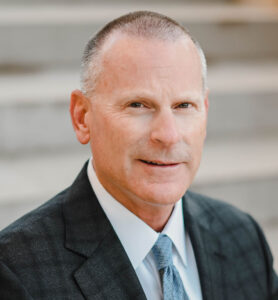
Headshot of Brian Peters

The Becker’s Healthcare Podcast published an episode June 16 that features MHA CEO Brian Peters joining host Scott Becker to discuss the current healthcare landscape and what the future looks like.

Peters spent time discussing how relationships, advocacy and values-driven leadership help to maintain member unity at the MHA. Other topics of discussion include Medicaid policy, building lasting networks and lessons for emerging leaders.

“It is very rare to see a state hospital association that has literally every single hospital and health system in the state inside the membership,” said Peters. “We have every single member organization actively engaged with our organization and that really is the strength of the MHA.”

The Detroit News also published an article June 20 on the cuts to Medicaid funding included in the Senate Finance Committee’s proposed version of the budget reconciliation bill that includes an interview with MHA Executive Vice President Laura Appel. She focused on how the proposed reductions to provider taxes will impact patients and all Michiganders, regardless of insurance coverage.

“What’s in the Senate version, I want to be very clear, is specifically cutting Medicaid. It’s not addressing waste, fraud and abuse,” said Appel. “It’s cutting the funding that Michigan uses ― as do 48 other states ― to support Medicaid.”

Members with any questions regarding media requests should contact John Karasinski at the MHA.

MDHHS Launches New Mental Health Framework

The Michigan Department of Health and Human Services (MDHHS) is launching a new approach to mental health care under Medicaid as part of its MIHealthyLife initiative.

The “Mental Health Framework” is designed to make care more person-centered and better coordinated by clearly outlining whether a Medicaid Health Plan or a Prepaid Inpatient Health Plan is responsible for an individual’s care, based on their level of mental health need.

To support implementation, all qualified mental health providers contracted with Medicaid Health Plans (MHPs) or Prepaid Inpatient Health Plans (PHPs) must use these standardized assessment tools and follow the new referral protocols beginning in October 2025. Additionally, providers offering services such as inpatient psychiatric care, crisis residentials and partial hospitalization for individuals with lower-level needs will need to contract with MHPs to ensure coverage by 2026.

MHPs will begin covering most mental health services for enrollees with lower levels of mental health need in October 2026, while PIHPs will continue serving those with higher acuity. A state standardized assessment tool, MichCANs for children and LOCUS for adults, will guide this determination. A streamlined referral process and shared platform will also be introduced to help providers and enrollees navigate between systems.

MDHHS is offering free training, eligible for CME/CEU credit, on these tools and processes. Providers are encouraged to complete a form to receive updates and register for training.

Members with questions may contact Lauren LaPine at the MHA.

News to Know – June 2, 2025

New to Know

New to KnowIn the latest episode of the MiCare Champion Cast, Lauren LaPine, senior director of legislative & public policy, MHA, joined to provide insight on how Michigan continues to experience issues with timely access to behavioral health services. Listeners can also expect to learn more about the need to expand the pre-admission screening assessment for behavioral health providers and how and why Medicaid patients experiencing a behavioral health crisis are often stuck in emergency departments (EDs) longer than those who are commercially insured. The episode is available to stream on Apple PodcastsSpotifySoundCloud and YouTube.

MHA Provides Powerful Testimony on Federal Threats to Medicaid

The Senate Health Policy Committee held a nearly two-hour hearing June 4 on federal threats to Medicaid.

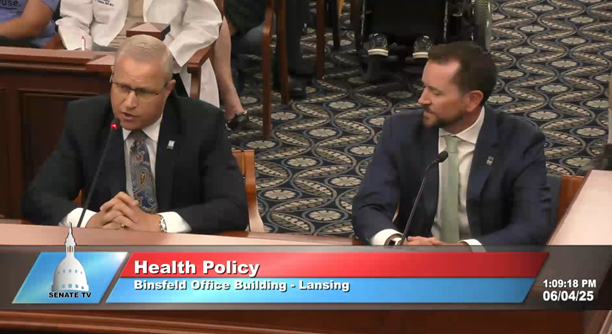
The Senate Health Policy Committee heard from several healthcare stakeholders and members of the Protect MI Care Coalition on the potential impacts of federal Medicaid cuts. Adam Carlson, senior vice president, advocacy, MHA and JJ Hodshire, president and CEO, Hillsdale Hospital, testified on behalf of the MHA to discuss key impacts for hospitals and communities if currently proposed cuts to Medicaid are fully passed by Congress.

Image
Adam Carlson, senior vice president, advocacy, MHA, and JJ Hodshire, president and CEO, Hillsdale Hospital, testified on behalf of the MHA to discuss key impacts of federal Medicaid cuts.

Carlson shared how the reconciliation package passed by the U.S. House of Representatives will result in more than 13 million people losing their healthcare coverage. Other restrictions in the legislation will reduce state revenues that help fund Medicaid and have been in place for years. Carlson noted that Medicaid is vital for continued access to healthcare for all Michiganders, not just those covered by Medicaid.

Hodshire spoke about the impact to rural communities. Medicaid recipients in rural counties are essential to keeping hospital doors open because they make up nearly 40% of patient volume. Hodshire spoke about how Medicaid helps enrollees get and keep jobs and how the state’s Healthy Michigan program reduces the uninsured rate and supports economic stability. Hospitals are often the largest employer in rural areas, as it was emphasized that cuts to Medicaid could result in hospitals closing units like labor and delivery or psychiatric, or in some cases – closing their doors completely. Hodshire made it clear that making cuts to Medicaid at the federal level would be devastating for rural patients, hospitals and communities.

Members with questions regarding Medicaid may contact Adam Carlson at the MHA.

Healthcare Legislation Advances in House, Senate

Numerous healthcare bills including the Nurse Licensure Compact, Interstate Medical Licensure Compact and the Michigan Department of Health & Human Services (MDHHS) budget advanced in the Michigan Legislature during the week of May 12.

House Bill (HB) 4246, sponsored by Rep. Phil Green (R-Millington), passed out of the House Health Policy Committee this week and will now move to the House Rules Committee for further consideration. HB 4246 adds Michigan to the Nurse Licensure Compact agreement and allows for nurses to practice in multiple states without the burden of applying for additional licenses. For Michigan, joining the Compact will help increase access to care, especially through telehealth services and support nurse recruitment and retention efforts. The MHA continues to support this legislation as it advances in the legislature.

Additionally, a bill to add Michigan back into the Interstate Medical Licensure Compact was introduced this week by Sen. Roger Hauck (R-Mount Pleasant). After formal introduction, Senate Bill (SB) 303 was sent to the Senate Health Policy Committee for further consideration. The MHA fully supports the re-enactment of Michigan in the Interstate Medical Licensure Compact agreement.

Lastly, the MDHHS Appropriations Budget for fiscal year 2025-26 passed through the full Senate chamber. No significant hospital changes were made in this final Senate budget iteration after the bill was previously reported out of its subcommittee. The MHA’s priorities, including funding for Medicaid, the rural and obstetrical stabilization pools, peer recovery coaches and maternal health, were maintained. The MHA will continue to support these funding proposals and advocate for more resources dedicated to behavioral health and access.

Members with questions should contact Elizabeth Kutter at the MHA.

Medicaid Cuts and Hospital Economic & Workforce Impact News Coverage

Laura Appel

Laura AppelThe MHA received news coverage during the week of May 12 related to federal Medicaid funding cuts and the release of the hospital economic and workforce impact data.

Crain’s Detroit Business published an article May 13 following the release of draft bill language from the House Energy and Commerce Committee as part of the budget reconciliation process, which calls for imposing federal work requirements and freezing state directed payment programs for healthcare providers.

MHA Executive Vice President Laura Appel spoke with Crain’s, expressing the MHA’s concerns on the draft language.

“We of course remain deeply concerned about things like doing redetermination of folks’ eligibility for the coverage on less than an annual basis and things like work requirements or community benefit requirements for certain folks who currently qualify for coverage,” said Appel. “All of those things are barriers to folks.”

Second Wave Michigan also published a story May 13 about potential Medicaid funding cuts, as part of their MI Mental Health Series. Lauren LaPine, senior director, legislative and public policy, MHA, is quoted in the piece discussing what impact the cuts would have to hospitals.

“A real consequence of Medicaid cuts will be closures of service lines and even hospitals,” said LaPine. “When hospitals have to cut services because Medicaid is cut, those services are lost for all patients and not just those who receive health care coverage through Medicaid. Medicaid is the single largest payer for long-term care, maternity care, and mental health services. It is a cornerstone of our health care system and keeps people healthy at every stage of life.”

The MHA also received news coverage from Gongwer and dBusiness following the release May 12 of the association’s annual Economic Impact of Healthcare report and hospital workforce survey results.

Lastly, MHA CEO Brian Peters provided a quote of support in a press release issued by U.S. Sen. Gary Peters (D-MI) following introduction of the Mapping America’s Pharmaceutical Supply (MAPS) Act.

Members with any questions regarding media requests should contact John Karasinski at the MHA.

The Reality for Medicaid Patients Entering the ED With a Behavioral Health Crisis

Marianne E. Huff, LMSW, President and CEO, Mental Health Association in Michigan

Imagine this: You enter a hospital emergency department for chest pain. The clinicians onsite confirm you’re having a heart attack, but before can receive lifesaving care, you must wait for a second pre-admission screening from an agency outside of the hospital. The process could take hours – maybe even days.

The odds of that happening are not likely; However, it’s often the reality for Medicaid beneficiaries who come to the emergency department experiencing a behavioral health crisis.

In my role at the Mental Health Association in Michigan, I’ve had the privilege of advocating for patients and communities across the state who are living with mental illness. Unfortunately, a part of this job is having to witness the lasting impact that barriers in the system have on patients, providers and the overall care landscape.

When it comes to getting patients with Medicaid coverage inpatient behavioral healthcare, there are a series of unnecessary hurdles. One of the most time-consuming steps is that following an assessment by qualified ED clinicians, a patient with Medicaid must receive a secondary pre-admission screening from a community mental health (CMH) agency. Although it’s required for a CMH to perform the pre-admission assessment in a three-hour window, that’s rarely the case.

This effects people at all walks of life, but I’ve seen a troubling number of pediatric patients suffering as a result. In one case, a mother sat in the emergency department for weeks with her young daughter who was in dire need of inpatient behavioral healthcare services.

Sadly, that experience is not uncommon. I’ve seen parents put their jobs at risk to accompany children boarded in the ED. Oftentimes mental health conditions are compounded with acute medical issues, which further complicates the process of finding care.

As an association, we strive to transform the way our state and nation approaches mental illness. This is not possible if we don’t uphold a system that supports early intervention and gets patients the care they need without unnecessary delays.

Alongside the MHA and Michigan hospitals, our association agrees that one solution is to expand the three-hour assessment responsibility to allow clinically qualified ED staff to conduct pre-admission screenings. As a result, we can help improve the delivery of care for behavioral health patients who enter hospital EDs across Michigan.

The Mental Health Association in Michigan is the only statewide, non-governmental agency concerned with the broad spectrum of mental illness across all age groups.

Michigan Senate Hears MHA Testimony on ED Boarding Challenges, MHA Opposes Introduced MCPA Bill

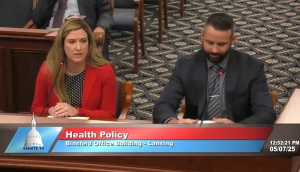
The MHA provided testimony May 7 to the Senate Health Policy Committee on certain challenges related to hospital emergency department boarding for behavioral health patients.

The Senate Health Policy Committee heard about patients facing behavioral health crises and their experiences with emergency department boarding based on insurance status. Lauren LaPine, senior director, legislative & public policy, MHA  discussed how the association collected data, starting in 2023, from hospital emergency departments on length of stay for patients with a behavioral health diagnosis. Initial findings within this data showed there were over 150 patients with a behavioral health diagnosis waiting in a hospital emergency department daily. Furthermore, behavioral health-related patients with Medicaid coverage spent longer time in hospital emergency departments than their counterparts with commercial insurance and one of every three patients with Medicaid spent more than 48 hours in a hospital emergency department waiting to be accepted for inpatient hospitalization or discharged.

Lauren LaPine, senior director, legislative & public policy, MHA and Kyle Hoffmaster, director, patient access, Pine Rest Christian Mental Health Services provided testimony May 7 on patients facing behavioral health crises and their experiences with emergency department boarding based on insurance status.

LaPine explained the process of the pre-admission screening assessment completed by providers for these patients with a behavioral health diagnosis and illustrated for the committee how the process is unnecessarily complicated for those with Medicaid coverage.

Kyle Hoffmaster, director, patient access, Pine Rest Christian Mental Health Services also provided testimony on the challenges faced by their organization in helping serve behavioral health patients seeking care. He shared how waiting for another provider from the community mental health (CMH) organizations to complete a pre-admission assessment for patients covered by Medicaid can cause significant delays in these patients receiving the care they need. Patients covered through Medicaid are forced to go to a hospital emergency department per guidelines from the CMHs to receive the assessment in that specific setting, causing more unnecessary stress and costs for families and providers alike. Sharing personal experiences from Pine Rest Christian Mental Health Services illuminated the need for serious change on this issue. The MHA will continue to educate lawmakers on this challenge and work to expand the assessment responsibility to improve the delivery of care for behavioral health patients in Michigan.

In addition, the Senate Finance, Insurance and Consumer Protection Committee took testimony on Senate Bill (SB) 134, sponsored by Sen. Sam Singh (D-East Lansing), which repeals the regulatory compliance exemption under the Michigan Consumer Protection Act (MCPA). If signed into law, this legislation would significantly increase the potential for class-action lawsuits under the MCPA purview against the hospital industry in the state without protecting consumers. The MHA, along with several other businesses and industries stands opposes to this harmful legislation.

Members with additional questions should contact Elizabeth Kutter at the MHA.

Protect MI Care Coalition Partners Share Majority of Michiganders Oppose Medicaid Cuts

The MHA joined other Protect MI Care Coalition partners in releasing public polling results that show 83% of Michiganders want to see Medicaid spending increased or kept the same as Congress considers cutting hundreds of billions of dollars from the Medicaid Program.

The MHA joined the Community Mental Health Association of MichiganMichigan Association of Health Plans and Michigan Primary Care Association in commissioning the public polling from EPIC-MRA, which was shared through the new Protect MI Care coalition that was created to protect the federal Medicaid program from potential funding cuts.

Other results include:

  • 82% of Michigan residents oppose cutting Medicaid spending to pay for tax cuts.
  • 86% of Michigan residents feel Medicaid is important for people in their local community.
  • 76% express Medicaid is important for their family members and friends.

The results are featured in a stories published by Crain’s Detroit Business, WLNS 6 News and Gongwer.

Separate the from the public polling release, FOX 47 published a segment May 7 on Medicaid funding cuts with MHA Executive Vice President Laura Appel. This interview is part of a series of local TV news spots the MHA is recording to raise awareness of the funding threat.

The Protect MI Care coalition was launched April 17 and is made up of more than 140 organizations across a variety of sectors, including healthcare, education and community organizations. The MHA is one of eight groups serving on the coalition’s steering committee, providing direction and guidance to the coalition’s activities. Other steering committee members include the Michigan League for Public Policy and previously mentioned associations.

The coalition website includes advocacy tools, news updates and social media links to assist members of the public and participating groups in their advocacy efforts.

Gov. Gretchen Whitmer also release a report May 8 from the Michigan Department of Health and Human Services about the potential consequences of proposed Medicaid cuts. The report estimates limiting provider taxes would lead to a $2.3 billion decrease in payments to hospitals and imposing Medicaid work requirements would cost the state between $75 million to $155 million a year to implement a reporting program. In addition, converting to a block grant or a per-capita cap system would result in the loss of $4.1 billion to $13.4 billion for Michigan over the next decade.

MHA members are encouraged to continue to use the MHA’s action alert to contact their member of Congress and express the importance of protecting Medicaid from any funding cuts.

Members with any questions regarding media requests should contact John Karasinski at the MHA.
The Majority of Michiganders Oppose Medicaid Cuts, New Statewide Polling Shows

New statewide polling shows 83% of Michiganders want to see Medicaid spending increased or kept about the same as Congress considers cutting hundreds of billions of dollars from the Medicaid program, which would terminate healthcare for thousands of Michigan residents. The local results mirror national polls from the Kaiser Family Foundation, Modern Medicaid Alliance, and others that consistently show a lack of support for Medicaid cuts.

EPIC·MRA, with support from the Community Mental Health Association of Michigan, Michigan Association of Health Plans, Michigan Health & Hospital Association, Michigan Primary Care Association, and Protect MI Care, conducted the new statewide poll to determine where Michiganders stand on proposed cuts to Medicaid.

Across political views and party affiliations, the percentage of Michiganders who want to see Medicaid spending decreased does not exceed 20% for any specific group, with only 19% of self-identifying Republicans seeking reduced Medicaid support.

Results reveal that 62% of Michigan residents believe the changes Congress is considering making to the Medicaid program are more about reducing federal spending than improving how the program works for people. Furthermore, 82% of Michigan residents oppose cutting Medicaid spending to pay for tax cuts, and 71% oppose cutting Medicaid in ways that would create a deficit in Michigan’s state budget.

Reflecting on the significance of Medicaid in Michigan, the poll found that 86% of Michigan residents feel Medicaid is important for people in their local community, and 76% express that Medicaid is important for their family members and friends. Michiganders’ feelings about the impact of Medicaid in their communities showed up statewide, with over 80% of people agreeing that Medicaid is important in their community across all regions of the state (From 86% in Wayne, Oakland, and Macomb Counties to 91% in West Michigan, 80% in Central Michigan, and 87% in Northern Michigan).

“This data sends a clear message: Michiganders from across the state and all walks of life see Medicaid as the important lifeline it is,” said MPCA CEO Phillip Bergquist. “Medicaid cuts under consideration in Congress threaten the health and financial stability of families across our state, and Michiganders don’t support them.”

2.6 million people get their health insurance through Medicaid in Michigan, representing approximately one in four Michiganders. Medicaid provides coverage for 38% of births in Michigan, 2 in 5 children, 3 in 5 nursing home residents, and 3 in 8 working-age adults with disabilities. And, Michigan’s Medicaid program is efficient, with per-enrollee costs among the ten lowest states in the country.

“These results show Michiganders understand that funding cuts to Medicaid are cuts to everyone,” said MHA CEO Brian Peters. “Medicaid allows healthcare providers to continue to offer access to care and healthcare services throughout the state and Michigan residents are clear in expressing the need to protect these services.”