MHA CEO Report ― Addressing Food and Housing Insecurity

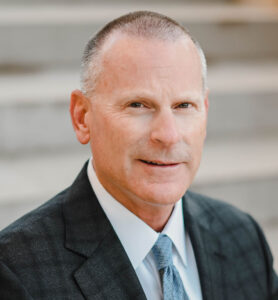
MHA Rounds graphic of Brian Peters

MHA Rounds graphic of Brian Peters“It is our collective and individual responsibility to preserve and tend to the environment in which we all live.” ― Dalai Lama

I recently had the privilege of joining leaders from across the state to discuss the most pressing issues for Michiganders at the annual Detroit Regional Chamber Mackinac Policy Conference. Because our member hospitals and health systems are not only critical providers of care, but also major economic drivers, the MHA once again served as an event sponsor and had a major presence with elected officials, business leaders and the media throughout the week. As you would imagine, we focused our attention on the current Congressional debate over the future of Medicaid and advocated for our 340B legislation and other priorities.

But I was also struck by the airtime given at the conference to the ongoing housing crisis in Michigan, a critical component of health that requires collective action across sectors to address. Over the past year, this has been an issue that our hospital leaders almost always lift up during our site visits, whether in rural or urban settings.  The housing issue affects not only patients but hospital employees as well. Housing, along with food insecurity and transportation challenges, make up the core “social drivers of health” that represent one of the most vexing challenges that we confront as leaders.

More than 40% of households in Michigan struggle to cover basic needs like food, healthcare and housing. We also know there is an inextricable link between food and housing insecurity and health. Research has shown that only 20% of health can be attributed to medical care, while socioeconomic factors account for 40%. Individuals with limited access to adequate food are at increased risk for chronic diseases, behavioral health issues and healthcare underuse – which can lead to higher acute care utilization long-term.

Hospital staff are not immune to these challenges. The rising cost of housing often impacts entry-level and non-clinical personnel, including environmental service workers. We need more accessible options, especially in our state’s rural counties, in order to help hospitals recruit and retain staff to care for our communities.

With all this in mind, the MHA is proud to support U.S. Rep. Haley Stevens’ (D-Birmingham) Healthy Affordable Housing Act, which seeks to create affordable housing in locations with easy access to needed services like public transportation, grocery stores and childcare.

Additionally, we’re proud of the innovative efforts underway across our member hospitals to enhance housing security for residents and staff. For example, we have members vetting opportunities to purchase housing near their facilities to provide employees with affordable rent in an accessible location.

Our members are also engaging in collaborative efforts to meet residents where they are. Here are just a few examples:

  • Corewell Health William Beaumont University Hospital delivers free medical care to individuals experiencing homelessness in Oakland County through their Street Medicine Oakland.
  • ProMedica is prioritizing public health efforts, investing in ProMedica Farms and their Veggie Mobile to improve access to fresh, affordable produce and nutrition education for the communities it serves.
  • Trinity Health’s Food is Medicine program also improves nutrition security by distributing locally grown produce directly to patients at medical appointments and to the community via its farm share, farm stand and food pantry.
  • Henry Ford Health is investing in Detroit’s New Center neighborhood through its campus expansion project, which is a cornerstone of a community-driven plan that will also include a state-of-the-art medical research center alongside mixed-use residential developments offering market-rate and affordable housing, retail spaces, green areas and recreational facilities.

As anchor institutions in their communities, Michigan hospitals will continue prioritizing public health and community benefit efforts. However, we must recognize this is a systemic issue that requires change and investment across industries. The MHA and our members recognize it is our shared responsibility to work alongside partners in the public and private sector to improve the socioeconomic standing of our communities. We look forward to the continued collaboration following the robust conversations on the island.

As always, I welcome your thoughts.

WLUC TV6 Focuses on Shortage of Behavioral Health Beds

Laura Appel

WLUC TV6 in Michigan’s Upper Peninsula published a story May 29 on the shortage of inpatient psychiatric beds in Michigan, placing a heavy focus on the testimony the MHA delivered May 20 before the House Oversight Subcommittee on Public Health and Food Security.

The story references results from the MHA’s emergency department boarding survey and the annual hospital workforce survey, while also mentioning several proposed solutions.

Laura AppelWNEM-TV also aired a segment May 26 discussing the impact of federal Medicaid funding cuts on the state. MHA Executive Vice President Laura Appel appears in the segment sharing the consequences of the current federal budget reconciliation bill.

Appel was also quoted in a Detroit Free Press story reacting to a hospital drug pricing report published by the Michigan Health Purchasers Coalition. The study uses a limited data set that was not published with the findings to make broad claims about pharmaceutical drug prices in hospitals. Appel discussed the complexity of hospital financing and mentioned the many factors not considered in the study that impact drug pricing.

“We’re all paying attention to affordability and trying to make sure that patients get the care they need without being financially burdened, but we don’t think that the place to start is by placing blame on hospitals, which are really, to some extent, price takers from drug manufacturers,” said Appel.

Members with any questions regarding media requests should contact John Karasinski at the MHA.


Mental Health Awareness Month Highlights Week of Media Coverage

Lauren LaPine

The MHA received news coverage during the week of May 19 highlighted by stories related to Mental Health Awareness Month and the need to expand state psychiatric bed capacity.

Lauren LaPine, senior director, legislative and public policy, MHA, speaks during a May 21 press conference on Mental Health Awareness Month, addressing long emergency department waits for psychiatric beds among Medicaid patients.

Lauren LaPine, senior director, legislative and public policy, MHA, joined state lawmakers and University of Michigan Health-Sparrow clinicians during a press conference May 21 about Mental Health Awareness Month. LaPine focused her comments on the high number of patients waiting in emergency departments across the state for an inpatient psychiatric bed. Many of these patients are Medicaid beneficiaries and experience further delays awaiting a clinical assessment.

WILX News 10 and WLNS 6 News attended the press event and aired stories during their evening news broadcasts.

“Last year, for over 18 months, we collected data from our hospitals and health systems that told us that on any given day, there are more than 155 patients that are stuck in emergency departments across the state that are looking for behavioral health services,” said LaPine.

Other speakers included:

  • Chandu Vemuri, MD, chief medical officer, University of Michigan Health-Sparrow
  • Dominic Barberio, MD, psychiatrist, University of Michigan Health-Sparrow
  • Rep. Angela Witwer (D-Delta Township)
  • Rep. Matthew Bierlein (R-Vassar)

The MHA also provided comment to several stories related to a hospital drug pricing study released by the Michigan Health Purchasers Coalition. The study uses a limited data set of claims data in an attempt to show pricing variances across hospitals for three prescription drugs. MHA Executive Vice President spoke with Crain’s Grand Rapids and WLNS News 6, explaining the differences between hospital charges and what hospitals actually receive as reimbursement, as well as the myriad of factors that determine hospital financing, including legacy contract agreements, mergers and acquisitions, the presence of group purchasing agreements, patient acuity, and labor and overhead costs.

“There are a lot of drugs out there. Picking and choosing a few of them probably doesn’t tell the whole story about the expensive pharmaceuticals in our health care system,” said Appel to Crain’s. “Everybody in the system is trying to do their best. There’s lots of room for improvement, but I don’t think identifying a few items and saying, ‘look at this’ is a way to get us to solving some of the affordability needs that we have for our system for patients.”

Adam Carlson speaks at a Protect MI Care press conference.

Adam Carlson, senior vice president, advocacy, MHA, also spoke at a Protect MI Care coalition press conference May 21 in Lansing about federal Medicaid cuts. Carlson was quoted in an article by Gongwer discussing how the cuts will impact all Michigan residents.

“It’s going to lead to millions of people losing their health insurance coverage, and these funding cuts to Medicaid, they’ll impact access to care for all Michiganders, not just those with Medicaid as their insurance coverage,” said Carlson. “It’s an important program across all state hospitals, but especially for the 65 rural hospitals that depend on it to keep their doors open.”

Members with any questions regarding media requests should contact John Karasinski at the MHA.


Medicaid Cuts and Hospital Economic & Workforce Impact News Coverage

Laura Appel

Laura AppelThe MHA received news coverage during the week of May 12 related to federal Medicaid funding cuts and the release of the hospital economic and workforce impact data.

Crain’s Detroit Business published an article May 13 following the release of draft bill language from the House Energy and Commerce Committee as part of the budget reconciliation process, which calls for imposing federal work requirements and freezing state directed payment programs for healthcare providers.

MHA Executive Vice President Laura Appel spoke with Crain’s, expressing the MHA’s concerns on the draft language.

“We of course remain deeply concerned about things like doing redetermination of folks’ eligibility for the coverage on less than an annual basis and things like work requirements or community benefit requirements for certain folks who currently qualify for coverage,” said Appel. “All of those things are barriers to folks.”

Second Wave Michigan also published a story May 13 about potential Medicaid funding cuts, as part of their MI Mental Health Series. Lauren LaPine, senior director, legislative and public policy, MHA, is quoted in the piece discussing what impact the cuts would have to hospitals.

“A real consequence of Medicaid cuts will be closures of service lines and even hospitals,” said LaPine. “When hospitals have to cut services because Medicaid is cut, those services are lost for all patients and not just those who receive health care coverage through Medicaid. Medicaid is the single largest payer for long-term care, maternity care, and mental health services. It is a cornerstone of our health care system and keeps people healthy at every stage of life.”

The MHA also received news coverage from Gongwer and dBusiness following the release May 12 of the association’s annual Economic Impact of Healthcare report and hospital workforce survey results.

Lastly, MHA CEO Brian Peters provided a quote of support in a press release issued by U.S. Sen. Gary Peters (D-MI) following introduction of the Mapping America’s Pharmaceutical Supply (MAPS) Act.

Members with any questions regarding media requests should contact John Karasinski at the MHA.

Healthcare Makes $100+ Billion Impact to Michigan’s Economy

Healthcare Remains the Largest Private-Sector Employer in Michigan & Demand for Healthcare Jobs Remains High

The Michigan Health & Hospital Association published results from the 2025 Economic Impact of Healthcare in Michigan report as part of National Hospital Week (May 11-17), demonstrating a $106 billion total economic impact healthcare had in fiscal year 2023, the most recent data available.

More than one million jobs are either directly, indirectly or induced by healthcare in the state, contributing $79 billion a year in wages, salaries and benefits and an additional $23.6 billion a year in tax revenue. Hospitals alone provide more than 222,000 direct jobs and $10.7 billion a year in tax revenue, representing 44% of healthcare’s direct tax revenue and remaining the largest healthcare sector in the state. Overall, healthcare remains the state’s largest employer of direct, private-sector jobs.

Also released are the results from the MHA’s third annual Michigan hospital workforce survey, which shows the demand for hospital workers remains high, with hospitals hiring 58,000 employees in calendar year in 2024 and having 23,000 open positions statewide. The survey includes responses from more than 95% of all Michigan acute-care inpatient hospitals.

The results also show Michigan hospitals continue to outperform national nurse retention rates. The registered nurse (RN) turnover rate for Michigan hospitals is 2.3 percentage points lower than the national average of 16.4%. Collectively, Michigan hospitals now employ roughly 64,500 RNs.

“The success of Michigan’s economy is closely connected with the strength of our healthcare system,” said Michigan Health & Hospital Association CEO Brian Peters. “Healthcare is the foundation for many local communities. As Michigan ages and more individuals need complex care, the demand for healthcare services and workers continues to grow – and hospitals must meet that demand. As we celebrate National Hospital Week, we commend the hospital workers who show up to work every day to care for us and make Michigan healthy.”

To complement the hiring efforts of individual hospitals, the MHA continues to operate the statewide MI Hospital Careers public awareness campaign. Originally launched in 2023, it targets Michigan students and professionals considering a career change to express the value of healthcare careers.

The 20th edition of The Economic Impact of Healthcare in Michigan was compiled using IMPLAN® cloud software to quantify healthcare’s significant economic impact in the state. The data represents direct, indirect[1] and induced[2] healthcare jobs; taxes paid by those workers and their employers; and salaries, wages and benefits earned. The report is an online, interactive tool that allows users to examine these economic impacts from a statewide perspective and by region, county or congressional district. It is available at www.economicimpact.org.

[1] Indirect jobs are those created to support a larger employer or industry (for example, a laundry that cleans linens for a hospital).

[2] Induced jobs are those created by the spending of people who work in the indirect jobs (for example, a restaurant waiter who serves the laundry workers).

Protect MI Care Coalition Partners Share Majority of Michiganders Oppose Medicaid Cuts

The MHA joined other Protect MI Care Coalition partners in releasing public polling results that show 83% of Michiganders want to see Medicaid spending increased or kept the same as Congress considers cutting hundreds of billions of dollars from the Medicaid Program.

The MHA joined the Community Mental Health Association of MichiganMichigan Association of Health Plans and Michigan Primary Care Association in commissioning the public polling from EPIC-MRA, which was shared through the new Protect MI Care coalition that was created to protect the federal Medicaid program from potential funding cuts.

Other results include:

  • 82% of Michigan residents oppose cutting Medicaid spending to pay for tax cuts.
  • 86% of Michigan residents feel Medicaid is important for people in their local community.
  • 76% express Medicaid is important for their family members and friends.

The results are featured in a stories published by Crain’s Detroit Business, WLNS 6 News and Gongwer.

Separate the from the public polling release, FOX 47 published a segment May 7 on Medicaid funding cuts with MHA Executive Vice President Laura Appel. This interview is part of a series of local TV news spots the MHA is recording to raise awareness of the funding threat.

The Protect MI Care coalition was launched April 17 and is made up of more than 140 organizations across a variety of sectors, including healthcare, education and community organizations. The MHA is one of eight groups serving on the coalition’s steering committee, providing direction and guidance to the coalition’s activities. Other steering committee members include the Michigan League for Public Policy and previously mentioned associations.

The coalition website includes advocacy tools, news updates and social media links to assist members of the public and participating groups in their advocacy efforts.

Gov. Gretchen Whitmer also release a report May 8 from the Michigan Department of Health and Human Services about the potential consequences of proposed Medicaid cuts. The report estimates limiting provider taxes would lead to a $2.3 billion decrease in payments to hospitals and imposing Medicaid work requirements would cost the state between $75 million to $155 million a year to implement a reporting program. In addition, converting to a block grant or a per-capita cap system would result in the loss of $4.1 billion to $13.4 billion for Michigan over the next decade.

MHA members are encouraged to continue to use the MHA’s action alert to contact their member of Congress and express the importance of protecting Medicaid from any funding cuts.

Members with any questions regarding media requests should contact John Karasinski at the MHA.

The Majority of Michiganders Oppose Medicaid Cuts, New Statewide Polling Shows

New statewide polling shows 83% of Michiganders want to see Medicaid spending increased or kept about the same as Congress considers cutting hundreds of billions of dollars from the Medicaid program, which would terminate healthcare for thousands of Michigan residents. The local results mirror national polls from the Kaiser Family Foundation, Modern Medicaid Alliance, and others that consistently show a lack of support for Medicaid cuts.

EPIC·MRA, with support from the Community Mental Health Association of Michigan, Michigan Association of Health Plans, Michigan Health & Hospital Association, Michigan Primary Care Association, and Protect MI Care, conducted the new statewide poll to determine where Michiganders stand on proposed cuts to Medicaid.

Across political views and party affiliations, the percentage of Michiganders who want to see Medicaid spending decreased does not exceed 20% for any specific group, with only 19% of self-identifying Republicans seeking reduced Medicaid support.

Results reveal that 62% of Michigan residents believe the changes Congress is considering making to the Medicaid program are more about reducing federal spending than improving how the program works for people. Furthermore, 82% of Michigan residents oppose cutting Medicaid spending to pay for tax cuts, and 71% oppose cutting Medicaid in ways that would create a deficit in Michigan’s state budget.

Reflecting on the significance of Medicaid in Michigan, the poll found that 86% of Michigan residents feel Medicaid is important for people in their local community, and 76% express that Medicaid is important for their family members and friends. Michiganders’ feelings about the impact of Medicaid in their communities showed up statewide, with over 80% of people agreeing that Medicaid is important in their community across all regions of the state (From 86% in Wayne, Oakland, and Macomb Counties to 91% in West Michigan, 80% in Central Michigan, and 87% in Northern Michigan).

“This data sends a clear message: Michiganders from across the state and all walks of life see Medicaid as the important lifeline it is,” said MPCA CEO Phillip Bergquist. “Medicaid cuts under consideration in Congress threaten the health and financial stability of families across our state, and Michiganders don’t support them.”

2.6 million people get their health insurance through Medicaid in Michigan, representing approximately one in four Michiganders. Medicaid provides coverage for 38% of births in Michigan, 2 in 5 children, 3 in 5 nursing home residents, and 3 in 8 working-age adults with disabilities. And, Michigan’s Medicaid program is efficient, with per-enrollee costs among the ten lowest states in the country.

“These results show Michiganders understand that funding cuts to Medicaid are cuts to everyone,” said MHA CEO Brian Peters. “Medicaid allows healthcare providers to continue to offer access to care and healthcare services throughout the state and Michigan residents are clear in expressing the need to protect these services.”

MHA CEO Report — Highlighting Hospitals

MHA Rounds image of Brian Peters

“Sometimes when you sacrifice something precious, you’re not really losing it. You’re just passing it on to someone else.” ― Mitch Albom, The Five People You Meet in Heaven

MHA Rounds image of Brian PetersThis month’s CEO Report is being filed from Washington, DC, where I am honored to join my colleagues from throughout our state and nation at the American Hospital Association’s Annual Meeting. On the agenda are robust conversations about the many challenges confronted by the healthcare field amid a tumultuous and often unpredictable political environment. The timing is fortuitous, as we officially celebrate our healthcare providers with National Nurses Week beginning May 5, followed by National Hospital Week. These honorary weeks shine a spotlight on the amazing dedication of hospital and healthcare workers in service to their patients and communities and encourage us to show our deep appreciation.

Our nurses, and many other healthcare workers, were widely hailed as heroes throughout the pandemic, and the reality is that they continue to show extraordinary commitment to service on a regular basis.  Just one recent example: northern Michigan was ravaged by a devasting ice storm earlier this year and despite power outages that were measured in weeks, the healthcare providers in that region did whatever was necessary to make sure people received the medications and care they needed. This included utilizing snowmobiles and ATVs for patient and staff transport when countless roads remained inaccessible due to downed trees and power lines.

Hospitals annually quantify the benefits they provide to the community through the IRS 990 form, and the MHA disseminates our own Community Impact Report. However, in reality, it is impossible to adequately document or fully do justice to the examples shared above, and countless others.  Healthcare interactions change people forever. And I’m not talking about the physical changes from surgery or treatment, but the emotional impact that saving a life, lending a helping hand or crying shoulder can make for someone. In times of need, emergency and disaster, hospitals – and more specifically, the people who work inside of them – are there WHEN and WHERE you need them. The sacrifices made by these extraordinary people are real, and they do so for our benefit.

Later this month we’ll be able to share our latest economic impact and workforce data for Michigan hospitals and healthcare. While the data may be slightly different, the overall story remains the same: healthcare is the leading private-sector employer in Michigan and the demand and reliance on healthcare has never been greater. So, what can we do to help? May is a time to unite behind our healthcare institutions and the work they do every day to touch and change lives, improving the health and wellness of our communities. While Congress continues to contemplate potential Medicaid funding cuts that would have devasting consequences to healthcare access for all Michiganders, please join us in speaking up and sharing the importance Medicaid plays in our state. You can do so by using the MHA’s action alert to send a personalized message to your member of Congress. Your local hospitals – and more importantly, the nurses, doctors and other healthcare workers who work there – need your help.

As always, I welcome your thoughts.

Medicaid Remains Focus of Healthcare News Coverage

The MHA was successful in placing several news stories during the week of April 28 related to potential federal Medicaid funding cuts.

The Lansing State Journal published an op-ed from MHA CEO Brian Peters that was shared as part of the MHA’s participation in the Protect MI Care coalition that is urging members of Congress to protect Medicaid. The op-ed expressed the importance of Medicaid to Michigan’s healthcare system and the consequences to access to care for all Michiganders if significant funding cuts are implemented.

“The effects would ripple far beyond those who rely on Medicaid — every hospital, mental health clinic and nursing home that depends on Medicaid funding would feel the impact,” said Peters. “When facilities close, it’s not just Medicaid patients who lose out — it’s everyone in the community, regardless of what kind of insurance they have.”

MHA Executive Vice President Laura Appel also sat down with WILX News 10 on April 30 to discuss the potential funding cuts and appeared in a story published by Bridge on May 1 about the impact to rural providers.

“When we close intensive care for newborns, when we close labor and delivery units, they are closing for everyone,” said Appel to Bridge.

In other news, Crain’s Detroit Business published an article April 30 committee testimony on legislation that would have Michigan join the nurse licensure compact. MHA Chief Nursing Officer Amy Brown testified in support of the legislation and is quoted in the article.

“In addition to recruitment and coordination of care in our state’s border areas, joining the compact would positively benefit telehealth access,” said Brown. “Compact licensure means residents in Michigan can access more telehealth professionals in other compact states, increasing access points for our state’s residents.”

Appel also appeared on 760 WJR’s All Talk With Kevin Dietz on May 1 to discuss the compact.

Members with any questions regarding media requests should contact John Karasinski at the MHA.

Lee Discusses AI in Healthcare

Jim Lee speaks with Mid-Michigan NOW about AI.

Jim Lee, senior vice president, data policy & analytics, MHA, appeared in a story about artificial intelligence (AI) in healthcare aired by Mid-Michigan NOW on April 23.

Lee discussed how AI is being used by hospitals and providers to assist with medical data and information and to reduce administrative burden.

“AI and healthcare is sort of like having a super smart assistant that helps doctors and nurses by quickly sorting through mountains of data and medical information,” said Lee.

Lansing political news outlet Gongwer also published two articles on April 23 that quote MHA representatives.

MHA CEO Brian Peters appeared in a story covering the newly launch Protect MI Care coalition to protect against Medicaid funding cuts.

“[Medicaid is] the financial lifeline that keeps hospitals, mental health providers and nursing homes open,” said Peters. “Cuts at this scale would lead to facility closures, creating health care deserts that hurt everyone, regardless of how they’re insured.”

MHA Chief Nursing Officer Amy Brown also appeared in an article following her testimony in the House Health Policy Committee in support of House Bill 4246, which would add Michigan to the nurse licensure compact.

“An important tactic to improve our ability as a state to attract talent and make it easy for nurses to choose Michigan to practice is to join the nurse license compact,” said Brown. “Hospitals continue to prioritize recruitment and retention efforts, but with the aging demographics of our state and the lack of participation in the compact hinder our ability to recruit younger nurses to replace the many nurses nearing and entering retirement.”

Members with any questions regarding media requests should contact John Karasinski at the MHA.