

MHA Monday Report Oct. 21, 2024

State Senate Advances Healthcare Legislation

Several bills impacting healthcare and hospitals were advanced through committees in the state Senate during the week of Oct. 14. Senate Housing and Human Services voted out a package of legislation referred to as the …


MHA Continues to Monitor Baxter IV Solutions Shortage

The MHA continues to support Michigan hospitals in response to the Baxter IV solutions shortage that began the week of Sept. 29. Baxter International Inc. temporarily closed its North Cove manufacturing plant in Marion, N.C., …


LARA to Evaluate Non-Long Term Care Provider Licensures

The Department of Licensing and Regulatory Affairs (LARA) is required by MCL 333.20155 to make at least one visit to each licensed Non-Long Term Care provider every three years to evaluate licensure. LARA may waive …


MHA Webinar Explores Leadership Strategic Planning for AI

The MHA will host the webinar How Boards and Leaders Can Deploy AI Responsibly and Ethically, scheduled 4:30 – 6 p.m. ET, Dec. 3. The webinar will cover a framework to govern the approach, policies …


CMS Finalizes Medicare Appeals Process for Beneficiary Status Change

The Centers for Medicare & Medicaid Services (CMS) and the United States Department of Health and Human Services recently released a final rule, effective Oct. 11, 2024, implementing a federal district court order that …


Rural Health Research Gateway Releases Report on the First Year of REHs

The Rural Health Research Gateway recently published a report on Rural Emergency Hospitals (REHs) highlighting data from the first year of the designation. Under the Consolidated Appropriations Act of 2021, the Rural Emergency Hospital provider type …


MHA Race of the Week – Michigan Supreme Court

The MHA’s Race of the Week series highlights the most pivotal statewide races for the 2024 General Election. The series will provide hospitals and healthcare advocates with the resources they …


Three Key Takeaways from the MHA Webinar Featuring Health Equity Regulatory Requirements

Earlier this month, the MHA, in partnership with the MHA Keystone Center, hosted a member webinar highlighting the current and future state of health equity priorities and requirements from the Centers for Medicare & Medicaid Services and The Joint Commission that impact …


Keckley Report

Do Healthcare Prices Matter?

“With the election 22 days away and inflation the key issue for voters, the latest Consumer Price Index report from the Bureau of Labor Statistics is especially important. Released last Tuesday, it shows: …

Healthcare prices account for 10.2% of the CPI but attention to these is decidedly less than food, energy, housing and other categories. For consumers, that neglect is harmful’ for industry insiders, it’s a pressure point that’s been avoided. Price estimators, posted chargemasters, open-panel benefits design, website queries and other tactics work OK for now. So…

Do Healthcare Prices Matter? Not much today. But they’re mission critical in healthcare tomorrow.”

Paul Keckley, Oct. 14, 2024


News to Know

The United States Departments of Labor, Health and Human Services and the Treasury issued Sept. 9 a set of final rules on the Mental Health Parity and Addiction Equity Act of 2008.


Laura Appel speaks with NBC25 about the Baxter IV solutions shortage.

MHA in the News

The MHA continued to engage with media requests on the Baxter IV solutions shortage during the week of Oct. 14. NBC25/Fox66 in Flint aired a story Oct. 16 on the shortage, which includes an interview …

Three Key Takeaways from the MHA Webinar Featuring Health Equity Regulatory Requirements

Written by Ewa Panetta, Director, Community Health Impact and Engagement

Earlier this month, the MHA, in partnership with the MHA Keystone Center, hosted a member webinar highlighting the current and future state of health equity priorities and requirements from the Centers for Medicare & Medicaid Services (CMS) and The Joint Commission (TJC) that impact acute care settings.

Accrediting and regulatory bodies are sending a clear message with the evolving requirements – health equity must be central to all quality improvement efforts. Simply put, high quality care is not attainable if care isn’t equitable.

Levering quality improvement as a tool for advancing health equity is a critical first step that helps hospitals meet the new regulatory standards, but we must move toward intentional actions that foster a culture of equity across healthcare systems.

The MHA Keystone Center created the Guide and Action Plan to Integrating CMS and TJC Health Equity and Health Disparities Requirements to provide guidance for implementing compliant health equity programming that goes above and beyond checking a box.

We collaborated with Julia Finken, senior vice president for accreditation and regulatory compliance, Patton Healthcare Consulting and Barrins & Associates, to facilitate the webinar. The purpose of the virtual meeting was to provide members with tools and resources needed to not only comply with the new quality improvement health equity requirements, but also implement robust health equity programming across their systems.

Here were the top three takeaways from the discussion:

  1. The MHA Keystone Center Health Equity Guide and Action Plan, along with supplemental modules, are valuable tools for implementing CMS/TJC compliant health equity programs. The action plan also provides hospitals with the tools necessary to track progress and document compliance across the regulatory and accrediting standards.
  2. Achieving the new health equity requirements requires embedding equity as a cornerstone of quality improvement efforts – from planning to goal development, design, interventions and measurement. Webinar participants expressed that demographic and social needs data collection and use are persistent challenges. We’ve created data resources to support members.
  3. As accreditation and regulatory requirements evolve, operationalizing the principles of health equity will require integrating equity into every aspect of care delivery and hospital operations.

I encourage members interested in learning more to watch the webinar recording.

MHA Continues to Monitor Baxter IV Solutions Shortage

The MHA continues to support Michigan hospitals in response to the Baxter IV solutions shortage that began the week of Sept. 29. Baxter International Inc. temporarily closed its North Cove manufacturing plant in Marion, N.C., due to flooding caused by Hurricane Helene. As the largest IV solutions plant in the country, North Cove produces 1.5 million bags of IV solution per day and supplies 60% of the nation’s IV solutions, including critical products like saline, sterile water and peritoneal dialysis solutions.

The MHA continues to hold discussions with healthcare leaders across the state to address the ongoing shortage. These conversations allow hospitals to share insights on supply challenges and explore collaborative strategies for managing the shortage. The MHA continues to gather feedback from its members to advocate for solutions and provide updates on the evolving situation.

Baxter launched a new webpage Oct. 14 with resources that hospitals can use for product management and conservation strategies. The webpage contains resources from Baxter, the federal government and other groups. In addition, Baxter said shipments to the U.S. from two Baxter sites abroad “started last week and more are on the way.”

The Centers for Disease Control and Prevention (CDC) issued a Health Alert Network (HAN) Health Advisory Oct. 12 to inform healthcare providers, pharmacists, healthcare administrators and health departments of a supply disruption affecting peritoneal dialysis (PD) and IV solutions. This shortage also stems from damage to the Baxter facility.

In response, the advisory includes recommendations from the Food and Drug Administration (FDA), the American Society of Health-System Pharmacists (ASHP), the American Society of Nephrology, and other key organizations to help healthcare providers manage the shortage. ASHP also updated its conservation resource Oct. 11 to provide guidance for managing fluid shortages and conserving supplies.

The FDA also released guidance Oct. 11 that is effective immediately for compounding certain parenteral drug products in response to the effects of recent hurricanes, including the closure of the Baxter manufacturing plant.

The Baxter Hurricane Helene webpage continues to serve as a single source of information, providing the latest company updates about allocation plans. Updates will be provided on Mondays and Thursdays. Members are encouraged to contact Baxter for questions related to the IV solution situation, particularly if they are in dire need of product. The American Hospital Association is also maintaining a Baxter resource webpage too.

The MHA encourages Michigan residents to consult with their healthcare providers for updates on the shortage and its impact on hospital operations in their area.

Members with questions should contact Laura Appel at the MHA.

Rural Health Research Gateway Releases Report on the First Year of REHs

The Rural Health Research Gateway recently published a report on Rural Emergency Hospitals (REHs) highlighting data from the first year of the designation. Under the Consolidated Appropriations Act of 2021, the Rural Emergency Hospital provider type was created to address rural hospital closures. There is one REH in the state of Michigan, Sturgis Hospital located in Sturgis, MI. Additionally, there are 18 other REHs across the country (four REHs in Texas, three in Mississippi, three in Oklahoma, two in Arkansas, two in Georgia, and one in each of Kansas, Louisiana, New Mexico and Tennessee).

The report found that a majority of the REHs operating at the end of 2023 were in the south. The brief also found that REHs tend to serve under resourced counties that face a myriad of challenges, such as increased poverty and uninsured rates, along with a shortage of primary care and mental health providers. Counties with REHs also tend to have higher rates of premature deaths. These findings suggest that counties with REHs are facing more severe challenges than their other rural counterparts.

As REHs continue into their second year, further monitoring will provide more information on the long-term impact of REHs on healthcare outcomes in rural areas.

Members with questions may contact Lauren LaPine at the MHA.

State Senate Advances Healthcare Legislation

Several bills impacting healthcare and hospitals were advanced through committees in the state Senate during the week of Oct. 14.

Senate Housing and Human Services voted out a package of legislation referred to as the ‘Momnibus.’ Sen. Erika Geiss (D-Taylor) and colleagues Sens. Stephanie Chang (D-Detroit), Sarah Anthony (D-Lansing), Mary Cavanagh (D-Redford Twp.) and Mai Xiong (D-Warren) introduced Senate Bills (SBs) 818, 819, 820, 821, 822, 823 and 825, as well as House Bill (HB) 5826, make alterations to state law to improve outcomes in maternal care. Specifically, these bills increase opportunities for addressing bias in patient care, prohibit discrimination based on pregnancy or lactation status, allow for appropriate information sharing with the Department of Health and Human Services, allow for loan repayment for certified nurse midwives and create the doula scholarship fund. The MHA secured amendments to the bills in committee to ensure that hospitals are trusted partners in this work and recognize hospitals’ commitment to addressing maternal health disparities. The bills were voted out of committee, with the MHA supporting SBs 818, 819, 820, 825 and HB 5826.

Additionally, the Senate Appropriations Committee voted out House Bill (HB) 4361 (Brabec), which creates a one-time individual income tax credit for organ donors. The $10,000 one-time credit can be used to cover expenses incurred from the live organ donation. Specifically, those expenses need to be non-reimbursed expenses that are directly related to the act of living organ donation including things like travel, lodging, lost wages or childcare. The MHA is supportive of HB 4361, which recognizes the costs incurred by organ donors.

Rep. Stephanie Young (D-Detroit) introduced HB 6025, the most recent legislation introduced among a series of bills highlighting the need to review the state’s guardianship system. HB 6025 alters the definition of “relative” for purposes of guardianship of a minor. This change could potentially increase opportunities for relatives, close kin, foster parents or those who are identified as having a special relationship with the minor to be selected as the guardian. Further, the legislation modifies when a minor’s guardian may request financial assistance. If enacted, a minor would have to reside with a relative guardian or foster parent for at least six months before an application for financial assistance. The guardianship process is complex and can be difficult to navigate. For those reasons the MHA has put together the Guide for Michigan’s Adult Guardianship Process to help all those who interact with the system find more success.

Members with questions on state legislation can contact Elizabeth Kutter at the MHA.

LARA to Evaluate Non-Long Term Care Provider Licensures

The Department of Licensing and Regulatory Affairs (LARA) is required by MCL 333.20155 to make at least one visit to each licensed Non-Long Term Care provider every three years to evaluate licensure. 

LARA may waive this required visit if the provider requests a waiver and presents evidence of accreditation from an accrediting body. The department will perform a review of any documentation submitted, rather than an on-site visit.

These waivers are offered each year, but not every facility is eligible due to the three-year survey cycle or if a waiver has already recently been granted.

The MHA encourages members to review eligibility and reference additional information on the waivers. Waiver requests must be submitted by Oct. 31, 2024.

Members with questions are encouraged to email LARA’s Non-Long-Term Care State Licensing Section.

MHA Webinar Explores Leadership Strategic Planning for AI

The MHA will host the webinar How Boards and Leaders Can Deploy AI Responsibly and Ethically, scheduled 4:30 – 6 p.m. ET, Dec. 3. The webinar will cover a framework to govern the approach, policies and procedures around the responsible and safe use of AI.

National and state experts will outline why anchoring AI strategies around value, risk tolerance and scalability are critical, the importance of monitoring regulatory AI guidance and requirements and being a strong advocate. Attendees will also review the findings of the MHA AI Task Force and its AI Framework for Healthcare.

CEOs and governing board members are encouraged to attend the webinar, which is free of charge to MHA members.

Questions about MHA membership or registration should be directed to Brenda Carr at the MHA.

CMS Finalizes Medicare Appeals Process for Beneficiary Status Change

The Centers for Medicare & Medicaid Services (CMS) and the United States Department of Health and Human Services (HHS) recently released a final rule, effective Oct. 11, 2024, implementing a federal district court order that requires the HHS to establish appeals processes for Medicare beneficiaries initially admitted as hospital inpatients, but who are subsequently reclassified as outpatients receiving observation services during their hospital stay.  The change in status from inpatient to outpatient results in a denial of coverage for the hospital stay under Medicare Part A.

The processes include:

  • Expedited appeals – Beneficiaries will be entitled to request an expedited appeal prior to hospital discharge when they disagree with the hospital’s decision to reclassify their status from inpatient to outpatient receiving observation services. Appeals will be conducted by a Beneficiary & Family Centered Care – Quality Improvement Organization.
  • Standard appeals – This process will be available to beneficiaries who file an appeal after hospital discharge. These standard appeals will follow procedures similar to expedited appeals, but without the expedited filing and decision timeframes.
  • Retrospective appeals – This process is available for beneficiaries to appeal denials of Part A coverage for specific inpatient admissions involving status changes that occurred back to Jan. 1, 2009. Medicare Administrative Contractors will perform the first level of appeal, followed by Qualified Independent Contractor reconsiderations, Administrative Law Judge hearings, review by the Medicare Appeals Council and judicial review. Eligible beneficiaries have 365 calendar days from the implementation date of this rule to request a retrospective appeal.

The CMS updated regulations and appeal procedures based on the final rule to include:

  • Increasing the timeframe for providers to submit a claim following a favorable decision from 180 to 365 calendar days.
  • Extending the timeframe for submission of provider records as requested by a contractor from 60 to 120 calendar days.

The rule clarifies the effect of a favorable appeal decision in various instances:

  • The hospital must refund any payments received for the Part B outpatient claim before submitting the Part A inpatient claim. If a Part A claim is submitted, the previous Part B outpatient claim will be reopened and canceled, with any Medicare payments recouped to prevent duplicate payment.
  • The hospital must refund any payments collected for the outpatient services if the hospital chooses not to submit a Part A claim for a beneficiary who was not enrolled in Medicare Part B at the time of hospitalization.
  • The hospital must refund any payments collected for the outpatient hospital services only if the hospital chooses to submit a Part A claim for beneficiaries who were enrolled in Medicare Part B at the time of hospitalization.
  • Out-of-pocket payments made by a family member on behalf of a beneficiary for skilled nursing facility services may include payments made by individuals who are not biologically related to the beneficiary such as a close friend, roommate or former spouse.

Members with questions regarding the Medicare appeal process should contact Vickie Kunz at the MHA.

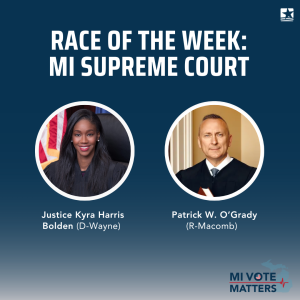
MHA Race of the Week – Michigan Supreme Court

MHA RACE OF THE WEEK

The MHA’s Race of the Week series highlights the most pivotal statewide races for the 2024 General Election. The series will provide hospitals and healthcare advocates with the resources they need to make informed decisions on Election Day, including candidates’ views and background.

There will be two races for Michigan Supreme Court on the 2024 General Election ballot: One partial and one full-term seat. This Race of the Week highlights full-term candidates only. Once elected, this individual will take office at the start of the new term and serve for a full eight years.

CANDIDATES FOR MICHIGAN SUPREME COURT (FULL-TERM)

Kimberly Ann Thomas is a law professor at the University of Michigan Law School and co-founder of the university’s Juvenile Justice Clinic. Thomas also served on the bipartisan Michigan Task Force on Juvenile Justice Reform, which took a data-driven approach to understanding and making recommendations for improvement of our state’s juvenile system.

Thomas previously taught at the University College Cork School of Law in Cork, Ireland and was a U.S. Fulbright Scholar award recipient. She has been recognized for her service by the Criminal Defense Attorneys of Michigan and has served as an expert for the American Bar Association (ABA) Rule of Law Initiative. Thomas received her undergraduate degree from the University of Maryland, College Park and her law degree from Harvard Law School. For more information, visit  www.electkimberlythomas.com.

Andrew Fink (District 35) was elected to the state legislature in 2020 and currently serves as Republican vice chair of the House Judiciary Committee. Last term, Fink served as vice chair of the House Appropriations Subcommittee on Military and Veterans Affairs and State Police and also as a member of the House Licensing and Regulatory Affairs, Insurance and Financial Services and General Government Appropriations subcommittees, as well as the Health Policy Committee.

As a member of the House Judiciary Committee, Fink has taken up legislation related to trial court funding, estate planning, probate court rules, appeals court judge compensation, treatment courts, and many other issues. Fink graduated from Hillsdale College in 2006 with a B.A. in Politics and later earned his J.D. from the University of Michigan Law school in 2010. Prior to this, Fink was a Judge Advocate in the United States Marine Corps. To learn more, visit www.finkformichigan.com.

WHY IT MATTERS

The Michigan Supreme Court is the cornerstone of Michigan’s legal system and responsible for the general administrative supervision of all courts in the state. Those elected must set important legal precedents, ensure that laws and policies align with constitutional principles and maintain the checks and balances of the judicial system. Supreme Court officials play a critical role in healthcare policy and often have the final say when it comes to things like healthcare provider liability, public health policy, Medicaid expansion and insurance regulation. The decisions made by these elected officials have a direct impact on access to care for Michigan patients and communities.

For more information or to request 2024 Election materials, visit the MHA Election webpage or contact the MHA.

MHA Monday Report Oct. 14, 2024

Legislation Impacting Hospitals Advances in State Legislature

A variety of bills impacting hospitals were introduced and discussed in the state legislature during the week of Oct. 7. Gov. Whitmer signed Public Act 132 of 2024, which updates statutory framework for the …


Baxter IV Solutions Shortage Updates

The MHA continues to support Michigan hospitals in response to the Baxter IV solutions shortage that began the week of Sept. 29. Baxter International Inc. temporarily closed its North Cove manufacturing plant in Marion, N.C., …


Reimbursement for Age-Friendly Quality Data Included in FY 2025 Hospital IPPS Final Rule

Included in the Centers for Medicare & Medicaid Services’ Medicare fee-for-service hospital inpatient prospective payment system (IPPS) fiscal year (FY) 2025 final rule is a reimbursement model for hospitals submitting age-friendly quality data. Hospitals …


Healthcare Leaders Discuss Regional Care at Lansing Economic Club
The Lansing Regional Chamber hosted its annual Future of Healthcare in the Lansing Region luncheon Oct. 10 as part of its monthly series of Lansing Economic Club events. This event featured a panel discussion moderated …


New Hospital Reporting Requirements for Respiratory Illness and Bed Capacity
The Centers for Medicare & Medicaid Services recently announced new respiratory disease reporting requirements for hospitals through the National Healthcare Safety Network effective Nov. 1. These requirements replace the previous “Hospital COVID-19 Data” reporting requirements …


MHA Webinar Outlines Strategies to Strengthen Healthcare Worker Well-being

The MHA and the MHA Keystone Center will host the MHA Health Foundation webinar Implementing Evidence-Informed Strategies to Normalize Help-Seeking and Strengthen Wellbeing from 4:30 to 5:30 p.m. Dec 4. This webinar is dedicated to …


MHA Race of the Week – Michigan Supreme Court

The MHA’s Race of the Week series highlights the most pivotal statewide races for the 2024 General Election. The series will provide hospitals and healthcare advocates with the resources they …


MHA Podcast Explores Why Voting Matters to Healthcare in Michigan

The MHA released a new episode of the MiCare Champion Cast featuring Laura Appel, executive vice president of government relations & public policy, MHA, exploring why voting in the 2024 General Election is critical to …


Keckley Report

What is the Medicare Advantage?

“On October 15, the open enrollment period for Medicare begins running through December 7 for coverage starting in January 2025. In this period, 67 million Medicare eligible seniors can review features of Medicare plans offered in their area, switch from traditional Medicare to a Medicare Advantage (MA) plan (or vice versa), change their MA selection and add/change their Medicare Part D prescription drug plans.

In 2024, Medicare Advantage plans enrolled 33 million seniors and Medicare paid private insurers $462 billion to pay for their care. But conditions for Medicare Advantage have changed in recent years prompting many to ask ‘what is the Medicare Advantage?’ …

Its funding comes from payroll taxes paid by employers and their employees, and those who are self-employed PLUS income taxes paid on Social Security benefits, interest earned on the Medicare trust fund’s investments and Part A premiums from people who aren’t eligible for premium-free Part A. …”

Paul Keckley, Oct. 7, 2024


Laura AppelMHA in the News

The MHA received media coverage the week of Oct. 7 that includes coverage on a potential national shortage of IV solutions products, physician retention and rural hospital funding. The closure of a Baxter manufacturing facility …