New PwC Report Warns of Rising Hospital Costs and Mounting Financial Pressure on U.S. Healthcare System

The Michigan Health & Hospital Association (MHA) is drawing attention to a new national report from PricewaterhouseCoopers (PwC) that outlines the severe financial challenges facing hospitals across the country that could soon jeopardize patient care if urgent policy action is not taken.

The report, Inflator: Hospital Costs, from Wages to Hospital Gowns, highlights the mounting pressures on hospitals due to surging costs, workforce shortages and skyrocketing demand for behavioral health services, all while proposed tax cuts and Medicaid funding reductions threaten to widen the gap between costs and revenue.

“This report confirms what hospitals in Michigan and across the country are living every day: skyrocketing costs, growing demand and shrinking margins,” said MHA CEO Brian Peters. “We cannot afford policies that slash Medicaid funding or shift more financial burden to hospitals and patients. Without sustainable support, hospitals – especially those in rural and underserved areas – face real threats of closure.”

Key findings from the PwC report include:

  • Hospital margins have plummeted, dropping from an average of 7% in 2019 to just 2.1% in 2024, with additional declines reported in early 2025.
  • Drug spending surged by $50 billion (11.4%) in 2024, more than double the increase seen in 2023, largely driven by high-cost therapeutics in chronic disease areas like oncology, obesity and diabetes.
  • Behavioral health claims soared, with inpatient claims increasing by 80% and outpatient claims by 40% over a two-year span, reflecting the intensifying behavioral health crisis.
  • Tariffs and supply chain challenges continue to drive up the cost of everyday medical supplies, compounding inflationary pressures.
  • Medicaid cuts and federal tax policies could force the closure of service lines at facilities that rely heavily on government payers, impacting access to care for all residents.

The report also outlines how hospitals are working to offset financial pressures by investing in revenue cycle improvements and value-based payment models. Still, the report emphasizes that system-wide stability will require collaboration between payers, providers, policymakers and employers, especially as rural hospitals face ongoing threats of closure.

The MHA is supporting Michigan hospitals facing these mounting challenges through the following actions:

  • Advocating to preserve and strengthen the federal 340B program, which enables hospitals to purchase outpatient medications at discounted rates, freeing up resources to serve low-income and uninsured patients.
  • Working with state policymakers to expand access to mental health and substance use treatment, reduce emergency department (ED) strain and support hospitals’ efforts to meet growing behavioral health needs. This includes Senate Bill 806, which expands the three-hour assessment responsibility by allowing clinically-qualified staff to conduct pre-admission screenings for behavioral health patients seeking care in the ED.
  • Leading efforts to expand the healthcare workforce pipeline through partnerships with post-secondary educators, awareness campaigns and recruitment and retention initiatives to help hospitals manage staffing costs while maintaining high-quality care.
  • Working to add Michigan to the Nurse Licensure Compact, allowing nurses to practice across state lines without the burden of obtaining additional licenses.
  • Advocating against Medicaid cuts and pushing for reimbursement rates that reflect the true cost of care, especially for safety net and rural hospitals that disproportionately rely on public payers.

The full report is available on the PwC website.
Media Recap: Healthcare Workplace Violence Research & Community Mental Health

The MHA received media coverage the week of Nov. 21 on healthcare workplace violence research and the relationship between hospitals and community mental health organizations.

The Oakland Press published a story Nov. 18 on the new Healthcare Violence Reduction Center at Lawrence Technological University in Southfield, MI. The MHA Keystone Center is a founding partner of the center as it seeks to develop strategies to reduce violence, enhance safety and improve patient care.

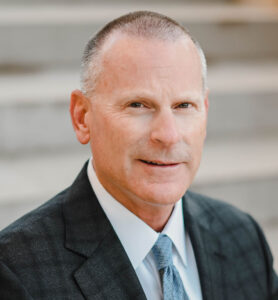
MHA CEO Brian PetersMHA CEO Brian Peters was interviewed for the story, highlighting the importance of increased penalties for individuals who assault a healthcare worker.

“It occurs in small rural hospitals in the UP to big medical centers and everything in between,” said Peters. “We haven’t signaled to the public that it is not OK,” he said.

Second Wave Media also published an article Nov. 20 on the benefits of collaboration between Michigan hospitals and community mental health agencies.

Lauren LaPine“In Michigan, our hospital members work with community mental health agencies on a daily basis all the time to make sure that patients that come to the emergency department for behavioral health care are getting the care that they need, where and when they need it,” said Lauren LaPine, senior director of legislative and public policy, MHA.

LaPine discussed a state grant to expand inpatient site capacity statewide and provided examples from several hospitals across the state about how they’re using the funds. She also mentioned Senate Bill 806, which expands the three-hour assessment responsibility by allowing clinically qualified staff to conduct pre-admission screenings for a patient presenting in an emergency department.

Members with any questions regarding media requests should contact John Karasinski at the MHA.

MHA CEO Report — Implementing Behavioral Health Solutions

MHA Rounds graphic of Brian Peters

“If you can’t fly, run. If you can’t run, walk. If you can’t walk, crawl, but by all means, keep moving.” — Martin Luther King, Jr.

Behavioral health is one of the four key strategic pillars for the MHA this program year. The MHA Board of Trustees tasked our association with prioritizing the issue and to identify solutions that can make a meaningful difference for patients and providers. This issue is particularly important to current MHA Board Chair Shannon Striebich, president and CEO of Trinity Health Michigan, who specifically focused on this topic during her opening remarks as chair during the 2023 MHA Annual Meeting last June. At Chair Striebich’s direction, the MHA team is hard at work on a variety of initiatives that I’m happy to share.

The MHA Behavioral Health Integration Council, chaired by Linda Peterson, MD, from McLaren Greater Lansing, and staffed by Lauren LaPine, senior director, legislative and public policy, MHA, guides our policy efforts for behavioral and physical health integration. The council develops recommendations addressing access to behavioral healthcare services and fostering integration with the greater healthcare delivery system. Their agendas are robust and the member engagement is fantastic.

The MHA collects data through a weekly survey of our member hospitals to better understand and document our behavioral health challenges in real time. This data shows more than 150 patients, including children, are sitting in a Michigan hospital emergency department (ED) every day waiting for the appropriate healthcare services. Many are waiting for an available behavioral health bed, while one-third are waiting just for an evaluation to determine treatment needs. And many of these patients are the most vulnerable in our community, supported by Medicaid or Medicare. Unfortunately, we know 33% of the Medicaid patients will spend more than 48 hours waiting in the ED. These patients are not in the appropriate setting to receive the services and care they need, while hospitals are spending significant resources to care for these patients until they find placement. This includes anything from attending to basic needs, including food and clothing, to their clinical needs, whether that is through psychiatric services, prescription drugs and additional safety and facility needs.

With the council’s encouragement, the MHA last year was successful in securing new funding from the state in the amount of $50 million to support a competitive grant program for Michigan healthcare entities to expand access to pediatric inpatient behavioral health services. The MHA was the fiduciary of this program and disseminated the funding to our members in a timely fashion.

The MHA is an advocacy organization, and in addition to funding like this, the concept of identifying public policy that can help to address specific healthcare challenges is one of our core competencies. In that vein, we worked very hard with our members, and subsequently with our legislative champions, to draft and introduce important behavioral health legislation. We are very pleased that just last month, several bills were formally introduced that will address some of the challenges hospitals experience when behavioral health patients seek care in the ED. The four bills would require sharing the availability of community based mental health and substance use disorder services (Senate Bill 802), expanding pre-admission screening responsibilities in the ED to more clinically qualified staff (Senate Bill 806), expanding hospital swing bed eligibility to include inpatient behavioral health patients (Senate Bill 811) and removing arbitrary commercial insurance limitations on the duration of inpatient behavioral health admissions (Senate Bill 833).

These bills will be a focus for our advocacy and policy teams for the remainder of this legislative session. We developed an infographic that is now available and will be shared with lawmakers to help them understand the significance of the behavioral health crisis, but also the solutions that can help patients receive the care they need in a timely manner, while alleviating the stress placed on healthcare workers and hospitals.

The Michigan Department of Health and Human Services (MDHHS) is a key partner in this work and the MHA is engaged with the MDHHS on several initiatives. First is collaborating with the MDHHS to create a statewide psychiatric bed registry, as outlined in state law signed in 2018. Such a registry has the potential to better inform healthcare providers of bed availability to reduce the amount of time patients are waiting to receive available placement. The MHA is also participating in a committee to improve behavioral health patient transport. Lastly, our organizations are working closely to expand access to Psychiatric Residential Treatment Facilities (PRTFs), with the aim to establish 150 PRTF beds across the state.

The MHA also represents the interests of hospitals and health systems in several workgroups. Those include the Michigan Judicial Council Behavioral Health Improvements Workgroup to develop new strategies to divert adults and youth with mental health and substance use disorders away from the justice system and to connect them with needed behavioral health services. The MHA also participates in the Assisted Outpatient Treatment (AOT) Workgroup, which developed an AOT toolkit for courts, community mental health agencies, jails and hospitals and health systems to use to expand statewide access to AOT. These workgroups demonstrate the breadth of the MHA’s work and the number of stakeholders involved across the state on this issue.

We know our behavioral health challenges will not be solved overnight, and it would be easy to throw up our hands and shift our attention and energy to “easier” issues.  Many behavioral health patients have complex needs that require many partners working together to fill in the gaps within the system and to improve access to care. The good news is there has never been a brighter light shined on this issue, and the stigma associated with behavioral health challenges is beginning to fade. The MHA is proud to work with our member hospitals and all our partners in this critical work, and I am confident that we are making a real difference. As Dr. King encouraged, we need to keep moving.

As always, I welcome your thoughts.