FORHP Updates Definition of Rural Area

The Federal Office of Rural Health Policy (FORHP) recently announced updates to its definition of “rural area” to improve healthcare resource allocations in rural areas. A key addition is the use of the Rural Ruggedness Scale (RRS) to classify certain rugged census tracts in metropolitan counties as rural. This addition increases the number of FORHP-designated rural census tracts by 84, adding approximately 305,000 people to the 60.8 million already living in rural areas.

While none of the newly designated tracts are in Michigan, this update provides valuable context for rural members by highlighting changes in rural policy language. The updated definition also redefines “outlying metropolitan counties” as those with no population from an urban area of 50,000 or more, aligning with Census standards.

These updates took effect Nov. 21, 2024 and will apply to funding opportunities beginning in fiscal year 2025.

The new definitions cover five main categories:

  • Non-metropolitan counties
  • Outlying metro counties with no urbanized population of 50,000 or more
  • Census tracts with specific Rural-Urban Commuting Area (RUCA) codes (4-10) in metro counties
  • Large census tracts with low population density and RUCA codes 2-3
  • Rugged census tracts in metro counties with RRS 5 and RUCA codes 2-3.

FORHP online tools, including the Rural Health Grants Eligibility Analyzer and the Am I Rural? Tool, are being updated with full data files to reflect the changes.

Members with questions may contact Lauren LaPine at the MHA.
 

Media Recap: Healthcare Workplace Violence Research & Community Mental Health

The MHA received media coverage the week of Nov. 21 on healthcare workplace violence research and the relationship between hospitals and community mental health organizations.

The Oakland Press published a story Nov. 18 on the new Healthcare Violence Reduction Center at Lawrence Technological University in Southfield, MI. The MHA Keystone Center is a founding partner of the center as it seeks to develop strategies to reduce violence, enhance safety and improve patient care.

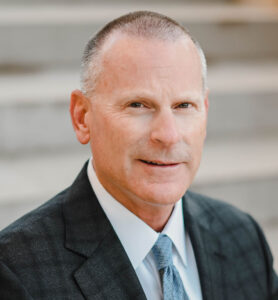
MHA CEO Brian PetersMHA CEO Brian Peters was interviewed for the story, highlighting the importance of increased penalties for individuals who assault a healthcare worker.

“It occurs in small rural hospitals in the UP to big medical centers and everything in between,” said Peters. “We haven’t signaled to the public that it is not OK,” he said.

Second Wave Media also published an article Nov. 20 on the benefits of collaboration between Michigan hospitals and community mental health agencies.

Lauren LaPine“In Michigan, our hospital members work with community mental health agencies on a daily basis all the time to make sure that patients that come to the emergency department for behavioral health care are getting the care that they need, where and when they need it,” said Lauren LaPine, senior director of legislative and public policy, MHA.

LaPine discussed a state grant to expand inpatient site capacity statewide and provided examples from several hospitals across the state about how they’re using the funds. She also mentioned Senate Bill 806, which expands the three-hour assessment responsibility by allowing clinically qualified staff to conduct pre-admission screenings for a patient presenting in an emergency department.

Members with any questions regarding media requests should contact John Karasinski at the MHA.

News to Know – Nov. 18, 2024

  • The Centers for Medicare & Medicaid Services (CMS) recently announced the 2025 Medicare Part A and B Premiums and Deductibles, with details available in the CMS Fact Sheet. The Medicare Part A inpatient hospital deductible will increase to $1,676, up $44 from the current $1,632. Members with questions may contact the Health Finance team at the MHA.
  • The Michigan Department of Health and Human Services has increased reimbursement rates for Behavioral Health Treatment (BHT) – Applied Behavior Analysis (ABA) services to improve autism treatment access for Medicaid beneficiaries. Effective Nov. 1, 2024, Prepaid Inpatient Health Plans (PIHPs) must reimburse providers for BHT-ABA services at a minimum rate of $16.50 per unit, or $66.00 per hour. This policy is funded by the state general fund, with additional federal matching funds passed to PIHPs through adjusted capitation payments. Members with questions may contact Lauren LaPine at the MHA.

News to Know – Oct. 21, 2024

New to Know

The United States Departments of Labor, Health and Human Services and the Treasury issued Sept. 9 a set of final rules on the Mental Health Parity and Addiction Equity Act (MHPAEA) of 2008. As an update, the regulations clarify that disorders, such as eating disorders, autism spectrum disorder and gender dysphoria, are considered mental health conditions under the current standards and are protected under the new rule. Telehealth benefits must also be included when assessing MHPAEA compliance.

Members with questions may contact Lauren LaPine at the MHA.

Rural Health Research Gateway Releases Report on the First Year of REHs

The Rural Health Research Gateway recently published a report on Rural Emergency Hospitals (REHs) highlighting data from the first year of the designation. Under the Consolidated Appropriations Act of 2021, the Rural Emergency Hospital provider type was created to address rural hospital closures. There is one REH in the state of Michigan, Sturgis Hospital located in Sturgis, MI. Additionally, there are 18 other REHs across the country (four REHs in Texas, three in Mississippi, three in Oklahoma, two in Arkansas, two in Georgia, and one in each of Kansas, Louisiana, New Mexico and Tennessee).

The report found that a majority of the REHs operating at the end of 2023 were in the south. The brief also found that REHs tend to serve under resourced counties that face a myriad of challenges, such as increased poverty and uninsured rates, along with a shortage of primary care and mental health providers. Counties with REHs also tend to have higher rates of premature deaths. These findings suggest that counties with REHs are facing more severe challenges than their other rural counterparts.

As REHs continue into their second year, further monitoring will provide more information on the long-term impact of REHs on healthcare outcomes in rural areas.

Members with questions may contact Lauren LaPine at the MHA.

MDHHS Releases Medicaid Doula Services Proposed Policy

The Michigan Department of Health and Human Services (MDHHS) recently released a proposed policy updating Medicaid coverage for doula services, effective Oct. 1, 2024. Key updates include increasing the number of covered doula visits to 12 per pregnancy, raising reimbursement rates to $1,500 for labor and delivery support and $100 per prenatal and postpartum visit. Additionally, beneficiaries may qualify for up to six extra visits if more support is needed, based on criteria such as promoting health literacy, emotional support, addressing social determinants of health and more.

These changes aim to improve maternal and infant outcomes, support birth equity and reduce disparities. Doulas provide essential emotional, physical and educational support during pregnancy, leading to better birth outcomes.

Members are encouraged to review and provide feedback on the proposed changes to Kimberly Lorick at LorickK1@michigan.gov. Comments must be submitted by Oct. 31, 2024.

Members with questions may contact Lauren LaPine at the MHA.

MHA Highlights Behavioral Health Priorities at Michigan Children and Families Summit

Lauren LaPine, senior director, legislative and public policy, MHA (middle) pictured during Michigan Children and Families Summit.

Lauren LaPine, senior director, legislative and public policy, MHA, participated in a discussion Oct. 3 in Grand Rapids during the Michigan Children and Families Summit hosted by the Steelcase Foundation. The summit explored the results of a Harvard study on the impact of loneliness in Michigan families that the foundation supported with the national nonpartisan think tank Capita.

The summit was a continuation of a collaborative roundtable held in May, where participants explored the growing epidemic of loneliness affecting families across America, with a particular focus on its impact in Michigan.

The event brought together a diverse group of stakeholders, including representatives from government, associations and nonprofit organizations, all deeply engaged in addressing the rising levels of loneliness among Michigan families and identifying the key factors contributing to this concerning trend.

LaPine discussed the state of behavioral health and its contribution to the topic. The conversation also delved into the critical challenges confronting Michigan hospitals, with a focus on the behavioral health priorities the MHA is leading to address these issues within the state.

The event was led by Daniel Williams, president, Steelcase Foundation, and Tracie Coffman, program officer, W.K. Kellog Foundation. Other speakers during the event included Joe Waters, founder and CEO, Capita; Elliot Haspel, senior fellow, Capita; State Senate Majority Leader Winnie Brinks; U.S. Representative Hillary Scholten; Kent County Commissioner and Chair Stan Stek; Dr. Kim Carter, Battle Creek Public Schools and Jacob Maas, West MiWorks!.

Members with questions about the event or behavioral health are encouraged to contact Lauren LaPine at the MHA.

Final Rules Strengthen Access to Mental Health, Substance Use Disorder Benefits

The United States Departments of Labor, Health and Human Services and the Treasury issued a set of final rules Sept. 9 on the Mental Health Parity and Addiction Equity Act (MHPAEA) of 2008.

The rulings aim to promote equitable access to mental health and Substance Use Disorder (SUD) benefits and reduce barriers to accessing these services. They also reinforce the requirement that mental health and SUD benefits be on par with medical and surgical benefits (M/S).

If a health plan provides benefits for a mental health condition or SUD, it must provide meaningful benefits for that condition or disorder in every classification for which meaningful M/S benefits are offered. The rulings also restrict self-funded, non-federal governmental plans from opting out of providing mental health/SUD benefits. Additionally, it provides concrete factors used to determine out-of-network reimbursement rates.

The final rules also provide protection from non-quantitative treatment limitations (NQTLs) on mental health and substance use disorder benefits. NQTLs are conditions that restrict the scope of benefits, such as prior authorization requirements. The rulings prohibit insurance plans from using biased information when applying NQTLs. Issuers must also collect and assess data on the NQTLs they place and adapt accordingly if the data shows they are negatively impacting access to MH/SUD services compared to M/S benefits.

The final rules apply to:

  • Group health insurance coverage beginning on or after Jan. 1, 2025. The meaningful benefits standard, the prohibition on discriminatory factors and evidentiary standards, the relevant data evaluation requirements and the related requirements in the provisions for comparative analyses will apply beginning on or after Jan. 1, 2026.
  • Health insurance issuers offering individual health insurance coverage for policy years beginning on or after Jan. 1, 2026.

Members with questions may contact Lauren LaPine at the MHA.

MDHHS Issues Final Maternal Infant Health Services Policy

The Michigan Department of Health and Human Services (MDHHS) issued a final Medicaid Policy Bulletin Sept. 9 to expand coverage for Maternal Infant Health Program (MIHP) services. ​​

The final policy was issued in response to Section 1302 of the MDHHS FY 2025 budget appropriations (Public Act 121 of 2024), which directed MDHHS to expand coverage of MIHP services. MIHP services are preventive health services that aim to reduce infant mortality and morbidity rates, while promoting healthy pregnancies and healthy infant development.

Expanded coverage includes reimbursement for additional home visits, enhanced care coordination services and discharge visits. The enhanced care management services will allow providers to assist families with stable housing, employment, parenting support and mental health challenges.

The reimbursement rates for the additional MHIP services covered are as follows:

  • Additional home visits have a payment rate of $92.09.
  • Complex home visits with additional face-to-face time have a payment rate of $138.14.
  • Enhanced care coordination has a rate of $77.06.
  • Discharge visits have a payment rate of $108.89.

The policy will go into effect Oct. 1, 2024. ​​Members with questions may contact Lauren LaPine at the MHA.

Michigan Doula Advisory Council Membership Application Opens

The Michigan Doula Advisory Council (DAC) invites doulas across the state to apply for membership as its first council term ends in Dec. 2024. The DAC works to improve doula services in Michigan, particularly with the new Medicaid doula reimbursement policy, and features a diverse group of doulas from various communities and settings.

Doulas interested in the DAC are encouraged to submit an application by Sept. 23, 2024 to MDHHS-MIDoula@michigan.gov. Although not required, submitting a resume or cover letter is encouraged. New members will start a two-year term in January 2025. For more details, members may refer to the Doula Advisory Membership Guidelines.

Members with questions may contact Lauren LaPine at the MHA.