RFP Available for Hospital-Based Peer Recovery Coach Services

The MHA is issuing a request for proposal (RFP) for a $2.5 million competitive grant program for Michigan healthcare entities to expand access to hospital-based peer recovery coach (PRC) services. The funding was appropriated by the Michigan Legislature as part of the state fiscal year 2025 budget to prepare hospitals for implementation of PRC billing to Medicaid in FY 2026.

The grant program will award funds to entities across the state of Michigan who wish to develop, or expand, hospital-based peer recovery coach programs. All facilities are eligible to apply, regardless of whether they currently employ peer recovery coaches or not.

Further information about the RFP application process, as well as templates, are available on the MHA Behavioral Health webpage.

The MHA will accept online applications through May 9, 2025. All applications will be blindly reviewed and scored to determine funding allocations. No email or hard copy applications will be accepted.

Members with questions may contact Kelsey Ostergren at the MHA.

News to Know – April 7, 2025

New to Know
  • New to KnowThe MHA was recently awarded $2.5 million to expand hospital-based peer recovery coach (PRC) services and is requesting members complete a brief survey by April 11 to assess current use and interest in PRC programs. Members with questions may contact Kelsey Ostergren at the MHA.
  • The Michigan Alliance for Innovation on Maternal Health (MI AIM) is offering regional training sessions April 23 for inpatient maternal health providers focused on implementing the hypertension safety bundle and addressing common challenges with implementation. The one-hour sessions will include time for discussion and collaboration among regional hospital teams following the presentation. Nurses, physicians and other maternal health inpatient clinicians are encouraged to attend and may choose from either a morning session from 8 to 9 a.m.or an evening session from 5 to 6 p.m.. There is no cost to participate, but registration is required with the links provided. Members may contact the MHA Keystone Center for registration questions. Dominique Abram and Meagan Chuey at the Michigan Department of Health and Human Services are available for event related questions.
  • MHA Endorsed Business Partner AMN Healthcare will host the free webinar Balancing the Complexities of the Healthcare Workforce in Rural Markets from 11 a.m. to noon ET April 10. Speakers John Higgins, vice president of talent management at Essentia Health, and Steven Endsley, vice president of Workforce Solutions at AMN Healthcare, will provide valuable insights to MHA members on workforce challenges and innovative talent strategies. The webinar will highlight effective approaches to talent acquisition, retention and workforce transformation – in rural healthcare settings and beyond. To learn more, visit the AMN Healthcare page or contact Steven Endsley at AMN Healthcare.

New Resources for Patient Rights in Psychiatric Hospitals

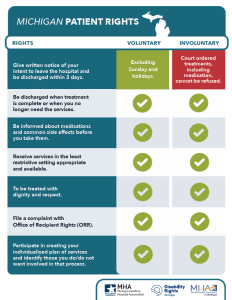
The MHA recently collaborated with the Mental Health Association of Michigan and Disability Rights Michigan to develop resources outlining patient rights in psychiatric hospitals across Michigan, Indiana, Wisconsin and Ohio. These assets are modeled after Disability Rights Ohio’s voluntary and involuntary patient rights materials in psychiatric hospitals.

The MHA’s continued dedication to expanding access to behavioral health services and its commitment to the full care continuum involves addressing challenges such as finding appropriate placement for individuals requiring inpatient hospitalization. The MHA is aware of instances where patients are transferred out of state for inpatient psychiatric care due to diagnosis or acuity level.

This underscores the importance of ensuring patients and families have clear, accessible information about their rights, especially when care extends across state lines.

These resources aim to help individuals, families and advocates understand key rights, including access to treatment, communication and safety. Whether an individual is a patient, caregiver or community advocate, these documents are designed to inform and empower.

Available in accessible formats such as PDF, Word and Large Print, these quick guides ensure equal access to critical rights information for people with disabilities, including those using screen readers or requiring larger text in psychiatric hospitals.

Members are encouraged to share these resources with other colleagues and contacts. Indiana and Wisconsin’s resources can also be found on the MHA behavioral health webpage.

Members with questions can contact Kelsey Ostergren at the MHA.

Feedback Requested for Peer Recovery Coach Funding

The MHA was recently awarded $2.5 million to expand access to hospital-based peer recovery coach (PRC) services. The funding was appropriated by the Michigan Legislature as part of the state fiscal year 2025 budget to prepare hospitals for implementation of PRC billing to Medicaid in FY 2026.

Currently, the plans are to distribute funds to hospitals in two ways:

  1. For hospitals who currently employ PRCs, funds will be made available to support ongoing programmatic expenses.
  2. For hospitals who do not currently employ PRCs but are interested in doing so, the MHA will issue a request for proposals in which sites can apply for seed grants to support program development and implementation.

The MHA will share more information about both opportunities in the upcoming weeks.  Updates will be guided by responses to a brief survey, which will help the MHA understand how hospitals currently use PRCs, and for those that do not, the level of interest in developing a hospital-based PRC program.

Members must complete the survey no later than April 11. Members with questions may contact Kelsey Ostergren at the MHA.

MHA Monday Report Jan. 27, 2025

Legislation on Maternal Healthcare Access and Preserving Healthy Michigan Plan Coverage Becomes Law

Gov. Whitmer signed several bills Jan. 21 aimed at improving maternal healthcare access, equity and outcomes, as well as preserving eligibility for those under the Healthy Michigan Plan. The MHA worked extensively with bill sponsors …


Legislative Policy Panel Acts on AI & Credentialing Policy

The MHA Legislative Policy Panel met virtually Jan. 22 to develop recommendations on legislative and policy issues impacting Michigan hospitals. The meeting began with Carlos Jackson from The Cornerstone Group, the MHA’s Washington DC-based government …


Now Accepting Nominations for the 2025 MHA Ludwig Community Benefit Award

The MHA is now accepting nominations for its 2025 MHA Ludwig Community Benefit Award. Michigan hospitals and health systems have a long-standing commitment to offering a wide range of services that enhance the health and …


Medicare and Medicaid Enrollment Update

The MHA updated its analysis of Medicaid and Medicare enrollment based on December 2024 data. The analysis includes program enrollment as a percentage of each county’s total population and the split between fee-for-service and …


Registration Open for 2025 Human Resources Conference

Registration is now open for the 2025 MHA Human Resources Conference, scheduled for March 25 from 8:30 a.m. to 3:30 p.m. at the Crowne Plaza Lansing. The event offers attendees an opportunity to expand their …


YesRx Hosts Cancer Medication Donation Drive

The MHA is committed to efforts that expand access to services and mitigate barriers to timely and effective treatments. YesRx is a statewide cancer drug repository program, accepting donations of unopened cancer medications through partnerships …


MHA Podcast Explores Strategies to Enhance Workplace Safety, Security

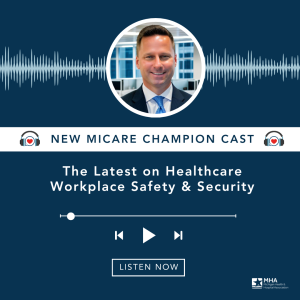
The MHA released a new episode of the MiCare Champion Cast exploring the latest on healthcare workplace safety with Brian Uridge, MPA, CPP, CHPA, CTM, senior director at the University of Michigan Department of Public …


Keckley Report

Game On: Team Trump aims to Shake up Healthcare with Rules, Laws, Appointments and Swagger

“Hovering over Team Trump’s agenda is the reality that Americans think the country is heading in the wrong direction and trust in its institutions including the health system is at a historic low. Restoring confidence will be a gargantuan task.

Team Trump will use Executive Orders, personnel appointments, court challenges, and legislation to advance its healthcare agenda powered by its ‘take no prisoners’ operating mode whereby the ends are justified by means. Every sector in healthcare will be impacted, some more than others. … Reacting to changes in the current environment of U.S. healthcare resulting from Team Trump is necessary and time-consuming, but neglecting thoughtful consideration about the system’s long-term future and its role in “improving the state of the world” is fatalistic.  Both need attention.”

Paul Keckley, Jan. 20, 2024


News to Know

The MHA will host the webinar How Federal Grant Funding Covers IT Department Costs Feb. 7 with Endorsed Business Partner Scaled Data Health to share how government funding, along with their innovative programs, can save hospitals significant dollars.


YesRx Hosts Cancer Medication Donation Drive

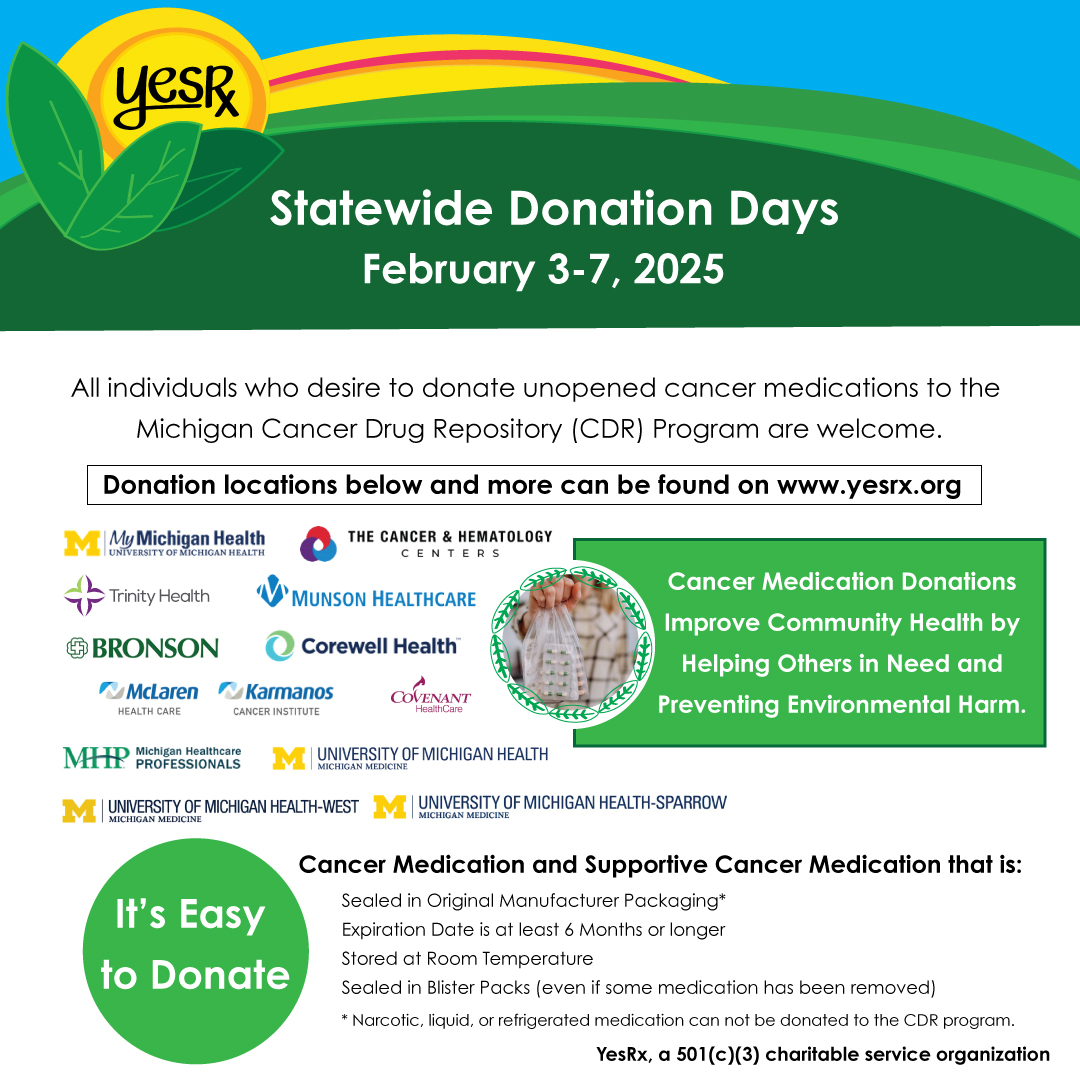
The MHA is committed to efforts that expand access to services and mitigate barriers to timely and effective treatments. YesRx is a statewide cancer drug repository program, accepting donations of unopened cancer medications through partnerships with clinicians to repurpose unused cancer medications. Medication are then donated to patients in need, thereby eliminating waste and expanding access for vulnerable and underserved patients.

More than 50% of patients diagnosed with cancer experience a financial hardship and YesRx is designed to fill that need. Since program inception, the YesRx network has provided more than $10 million in cancer medications to Michigan patients for free.

YesRx’s first donation drive for 2025 will be held Feb. 3-7, with medications being collected at numerous sites across the state.

Members can help by donating:

  • Medications used to treat cancer, or side-effects of chemotherapy.
  • Medication that is unopened and still in the original manufacturer packaging.
  • Medication with an expiration date that is more than six months.

Members are encouraged to share the donation drive flyer and social post with relevant provider teams.

Members with questions may reach out to Kelsey Ostergren at the MHA or YesRx.

MHA Webinar Promoting Effective Peer Recovery Coaching Programs

The MHA will host a webinar Building Effective Peer Recovery Coaching Programs in Hospitals Feb. 12 from 8:30 to 9:30 a.m. to help hospitals create hospital-based peer recovery coach (PRC) programs, providing background information and insights from hospitals currently doing the work.

The webinar will explore the critical role of PRCs in a hospital setting, focusing on how improving care for patients with substance use disorders (SUD). Hospital staff, administrators and healthcare leaders will learn about the value of integrating PRCs into their teams, how to start and scale a PRC program and funding mechanisms available to support this work.

Registration is free and open to MHA members. Members working closely with patients who have a substance use disorder, manage emergency department operations or a clinical practice, or support patient’s needs at the time of discharge, are encouraged to register.

Members with questions about the webinar should contact Erica Leyko at the MHA. Members with questions about the MHA’s PRC efforts and programming should contact Kelsey Ostergren at the MHA.

Obtaining Beyfortus through the VFC Program

Through an ongoing partnership with the Michigan Department of Health & Human Services (MDHHS), Michigan birthing hospitals are reminded to enroll as a Vaccine for Children (VFC) Specialty Provider in order to administer the respiratory syncytial virus (RSV) monoclonal antibody Beyfortus (nirsevimab) to VFC eligible patients.

Beyfortus is recommended for children ages 19 months and younger and ideally should be administered during the birth hospitalization. The CDC recommends that Beyfortus be administered prior to the start of the RSV season, but can be administered during the RSV season as well. One dose of Beyfortus is expected to last at least five months and can be co-administered with other immunizations, including the birth dose of the hepatitis B vaccine.

The CDC strongly recommends that birthing hospitals who are currently enrolled in the VFC program as a universal Hepatitis B provider carry and administer nirsevimab throughout the 2024-2025 respiratory season. To do so, birthing hospitals should become a VFC specialty provider, which allow facilities to administer both the Hepatitis B vaccine and Beyfortus to VFC eligible patients.

MDHHS and local health departments have worked diligently to streamline VFC specialty provider enrollment and are encouraging sites to enroll. To begin the process, members are encouraged to complete the Beyfortus Eligibility Screening Plan and email it to the MDHHS Division of Immunizations.

More information about the distinction on VFC provider types can be found in the MHA newsroom.

Members with questions may contact Kelsey Ostergren at the MHA. Questions related to VFC program enrollment can be directed to the MDHHS Division of Immunizations.

DEA Extends Telemedicine Rule for Controlled Substances Through 2025

The Drug Enforcement Administration (DEA) and the Department of Health and Human Services (HHS) recently issued a rule extending telemedicine prescribing flexibilities for controlled substances through Dec. 31, 2025. This extension continues pandemic-era provisions, allowing controlled substances to be prescribed via telemedicine without requiring a prior in-person visit, which is crucial for Michigan hospitals, particularly in rural and underserved communities.

The rule will:

  • Extend the ability to prescribe Schedule II-V controlled substances, including medications like buprenorphine for opioid use disorder, via telemedicine.
  • Allow flexibilities to apply to all practitioner-patient relationships, not just those established during the COVID-19 public health emergency.
  • Serve as an effort to ensure continued access to essential healthcare, reduce requirement of in-person evaluations and provide critical medications, especially for opioid use disorder.

While the rule extends telemedicine prescribing flexibilities, certain conditions remain in place:

  • The prescription must be issued for a legitimate medical purpose and within the usual course of professional practice.
  • The prescription must be issued through an interactive telecommunications system, ensuring that the patient and practitioner are engaged in a real-time communication.
  • The practitioner must be authorized to prescribe the controlled substance under their DEA registration or be exempt from the need for a registration.
  • The prescription must comply with all relevant legal and regulatory requirements for controlled substances.

This extension provides the DEA and HHS more time to continue reviewing and evaluating telemedicine and controlled substance policies. The MHA submitted a comment letter advocating for expanded access to telehealth and will remain actively involved in these efforts throughout 2025.

Members with questions may contact Kelsey Ostergren at the MHA.

Obtaining Beyfortus through the Vaccines for Children Program

Vaccination remains a key strategy to mitigate the impact of adverse health outcomes on patients and hospital operations during the 2024-2025 respiratory season. The MHA urges all birthing hospitals to become Vaccines for Children (VFC) specialty providers to offer Beyfortus and expand access to eligible patients ahead of the upcoming respiratory season.

Beyfortus was approved by the FDA in July 2023 for preventing RSV lower respiratory tract disease in infants. Hospitals can acquire Beyfortus through direct/private purchase or through the VFC program. However, doses obtained through the VFC program can only be administered to patients who are eligible for the VFC program.

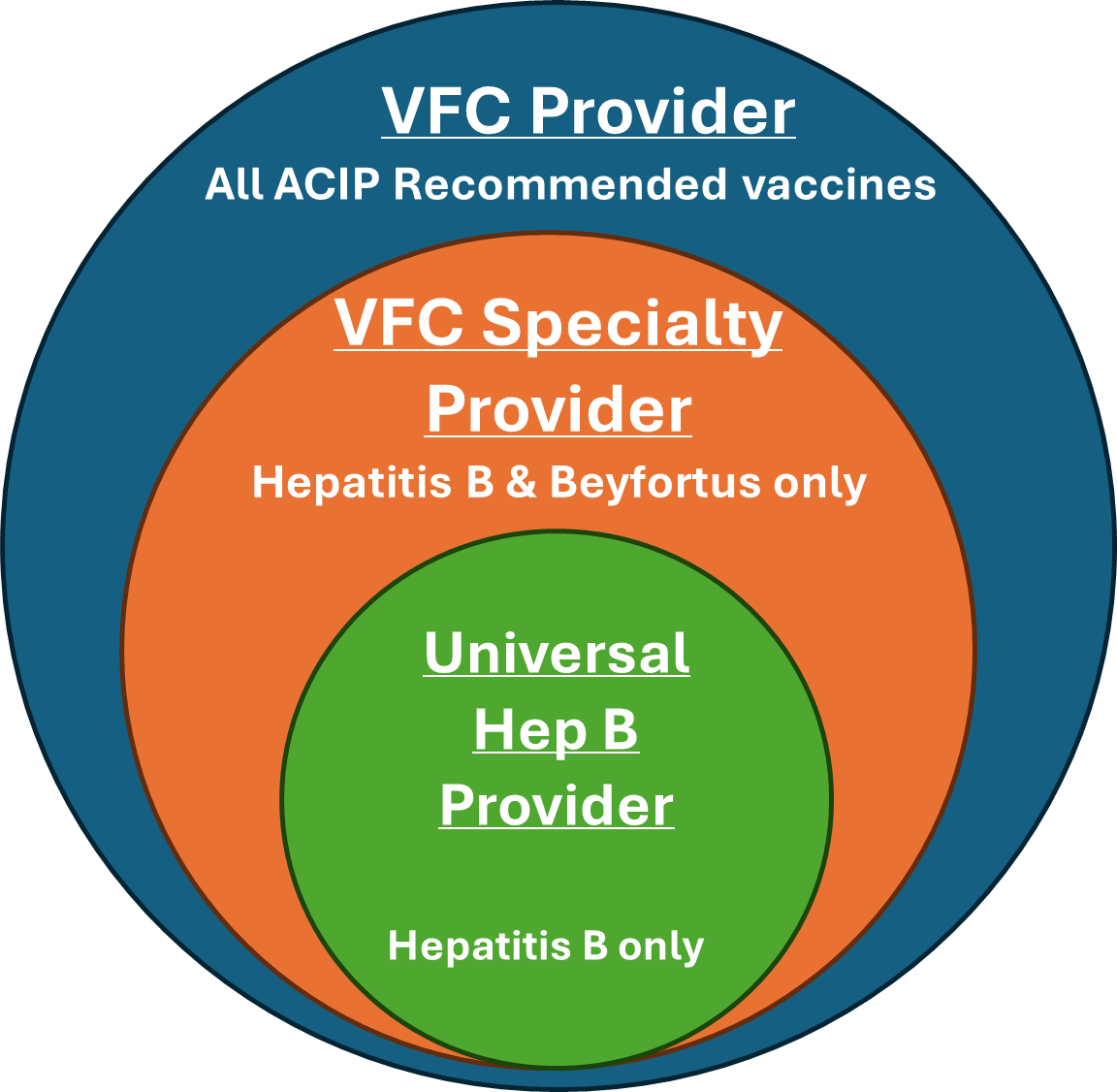
Birthing hospitals must become a VFC enrolled provider to order Beyfortus through the program. While there are three different types of VFC participation, only two allow for administration of Beyfortus:

  1. VFC Provider (providing all ACIP recommended vaccines)
  2. VFC Specialty Provider (providing Hepatitis B & Beyfortus only)

The Michigan Department of Health and Human Services (MDHHS) and the Centers for Disease Control are encouraging all birthing hospitals to become a VFC Specialty Provider to protect Michigan infants against Hepatitis B and RSV. The process to become a VFC Specialty Provider differs slightly, depending on if a hospital is participating with the VFC as a Universal Hepatitis B Provider or not at all.

The steps in the graphic below outline how birthing hospitals can become a VFC Specialty Provider:

1 – MDHHS has created a Beyfortus Eligibility Tool to help birthing facilities with this process. Use of the tool is optional, however if it is used, it should be noted in the Eligibility Screening Plan in step two.
2 – Facilities should complete the Eligibility Screening Plan and submit it to the local health department.

Members with questions may contact Kelsey Ostergren at the MHA. Questions related to VFC program enrollment can be directed to the MDHHS Division of Immunizations.