
MHA Monday Report May 13, 2024

House Advancing Medicaid Budget Highlights Legislative Work
The Michigan House of Representatives advanced its state fiscal year 2025 Michigan Department of Health and Human Services budget recommendations during the week of May 5. Importantly, the chamber’s budget recommendation continues vital …


MHA EventsMHA Annual Membership Meeting Registration Deadline Approaching

The registration deadline is May 24 for the MHA Annual Membership Meeting June 26 through 28 at the Grand Hotel on Mackinac Island. The MHA Annual Membership Meeting is an opportunity to learn, network and …


Highly Pathogenic Avian Influenza Preparedness and Resources
News of Highly Pathogenic Avian Influenza H5N1, commonly referred to as bird flu, is spreading across the country with concerns for animal-to-human transmission. The MHA and its partners are monitoring the situation closely with …


Registration Open for Caregiver Engagement Webinar

The MHA Keystone Center is hosting the Identifying and Engaging Family Caregivers Webinar at 1 p.m., Thursday, June 6. The event, facilitated by RUSH University’s Center for Excellence in Aging, is free to MHA members. …


MHA EventsMHA and CyberForce|Q In-Person Cybersecurity Workshop

The MHA is partnering with Endorsed Business Partner CyberForce|Q to offer the in-person workshop Enhancing Your Cybersecurity: Tabletop Training and Incident Response Workshop from 9:00 a.m. to noon, May 22 at the MHA headquarters …


MHA EventsPublic Relations Professionals Gather at MHA Communications Retreat

The 2024 MHA Communications Retreat brought together nearly 100 communications, marketing and public relations professionals from MHA-member facilities May 7 to network and learn from peers across the state. Topics on the agenda included artificial …


MHA Hosts Successful Virtual Care Models Webinar

The MHA hosted nearly 100 healthcare staff in patient experience, nursing, quality and human resources roles May 2 during the webinar Virtual Care Models that Improve Engagement and Support Staff. Representatives from Henry Ford Health …


The Keckley Report

Is the Health System the Next Target for Campus Unrest?

“In my 4Q 2023 Keckley Poll, distinctions between the views of the college-age population and older adults about the health system were surprising: though college age adults use the health system less than others, they share a widespread belief it’s flawed and in need of fundamental change. They believe the profit in healthcare is more important than its caring and they’re open to government policies that might rein in its corporatization. …

The U.S. system is an unlikely target for campus unrest today but a likely target tomorrow. College student interaction with the health system is episodic: student health is a backstop for their bouts with depression, substance abuse, STIs, chronic conditions and accidents. Insurance and payment are concerns, and impressions from childhood household circumstances flavor their impressions of how the system operates. But what they’re seeing is key: the most heralded organizations in healthcare are associated with their size, financial success and the personal wealth of their executives. In college circles, Wall Street success seems more important than Main Street authenticity, transparency, environmental consciousness, fairness and humility. Like the majority of Americans, their views about the health system are anecdotal and regretfully negative. …”

Paul Keckley, May 6, 2024


News to Know

  • MHA Endorsed Business Partner Managed Care Advisory Group, Inc. provided an update on the Visa Mastercard class action settlement.
  • The MHA Keystone Center is partnering with the Michigan Regional Perinatal Quality Collaborative to offer an additional networking opportunity for members attending the Michigan Maternal & Infant Health Summit.
  • In partnership with the Michigan Department of Health and Human Services, the MHA Keystone Center developed a series of online learning modules for infection control and prevention education.

MHA CEO Brian PetersMHA in the News

U.S. Representative Haley Stevens (D-MI) issued a press release May 9 highlighting her introduction of the Stop Nurse Shortages Act that included a quote of support from MHA CEO Brian Peters. The bipartisan bill, introduced …

MHA and CyberForce|Q In-Person Cybersecurity Workshop

MHA Events

MHA EventsThe MHA is partnering with Endorsed Business Partner (EBP) CyberForce|Q to offer the in-person workshop Enhancing Your Cybersecurity: Tabletop Training and Incident Response Workshop from 9:00 a.m. to noon, May 22 at the MHA headquarters in Okemos. Led by Alex Sabin, participant success leader, CyberForce|Q , the workshop will guide participants through an engaging, informative and interactive Incident Response Tabletop Exercise.

Throughout the workshop, attendees will explore three critical phases of a simulated cyber-attack:

  1. Intricacies of social engineering aimed at the IT Help Desk.
  2. Complexities of living-off-the-land attacks.
  3. Challenges of detecting and preventing data exfiltration techniques.

By attending this workshop, attendees will:

  • Experience a sense of challenge during tabletop exercises, leading to the identification of potential unnoticed gaps in an Incident Response Plan.
  • Engage in hands-on group activities that will provide a tangible understanding of potential cyber-attacks, enabling collaborative discussions within teams to refine decision-making processes and procedures.
  • Gain a profound understanding of the critical significance of roles, responsibilities and communication protocols in effective incident response.

With over 25 years of experience in providing cybersecurity services, CyberForce|Q has developed and implemented quantifiable programs that assess and execute safety measures for organizations of all sizes, with proven results. Providing a wide range of services to a diverse group of industries, including hospitals and healthcare, CyberForce|Q meets organizations where they are in their cybersecurity journey. Its goal is to enhance the current capabilities of its partners, utilizing technology-agnostic solutions that can be integrated with an organization’s current technologies and systems.

The event is free of charge and open only to MHA member organizations and invitees. Members are encouraged to register, as this event will only be held in-person and seating is limited. Light breakfast and refreshments will be provided. Registrations will be accepted up to one day before the event date, if space is available.

Members with questions should Rob Wood at the MHA. To learn more about CyberForce|Q, contact John Kelley, regional sales director – Midwest, CyberForce|Q.

MHA Monday Report May 6 2024


Medical Residents Converge for GME Capitol Day
The MHA Graduate Medical Education (GME) Capitol Day welcomed more than 40 physician residents from a dozen member hospitals to the MHA Capitol Advocacy Center offices May 1 for a day of meetings with members …


Medicaid Budget Bills Advance, Other Health Issues Move Forward

The House and Senate appropriations committees advanced recommendations during the week of April 28 for the Department of Health and Human Services as a part of the state fiscal year 2025 budget. The MHA is …


The Rural 340B Access Act of 2024 Introduced in the U.S. House

The bipartisan Rural 340B Access Act of 2024 was introduced April 29 in the U.S. House of Representatives. Introduced by Reps. Jack Bergman (MI-01) and Debbie Dingell (MI-06), the legislation aims to enhance the Rural …


speak upCorewell Health William Beaumont University Hospital Nurse Receives Q1 MHA Keystone Center Speak-up! Award
The Michigan Health & Hospital Association Keystone Center celebrated Jennie Lynn, RN, at Corewell Health William Beaumont University Hospital, April 30 as its quarterly MHA Keystone Center Speak-up! Award recipient. The quarterly MHA Keystone …


Registration Open for Safe Table on Structured Communication Models

The MHA Keystone Center Patient Safety Organization is hosting the Structured Communication Hand-Off Safe Table from 12:30 to 4 p.m., Wednesday, June 12 at the MHA headquarters in Okemos, MI. The peer-led discussion about …


MHA Keystone Center Offers Infection Control & Prevention Online Courses

The MHA Keystone Center partnered with the Michigan Department of Health and Human Services to create a series of online learning modules for infection control and prevention education. The modules cater to the needs …


MHA Podcast Explores Healthcare Cybersecurity with Michigan Medicine

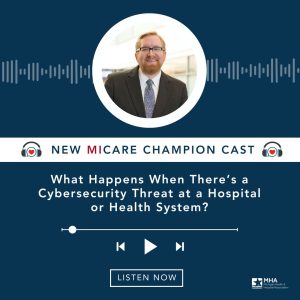
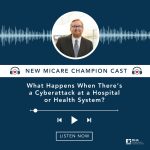
The MHA released a new episode of the MiCare Champion Cast exploring what happens when a hospital or health system experiences a cyberattack featuring Jack Kufahl, chief information security officer at Michigan Medicine. In his …


MHA CEO Report — Implementing Behavioral Health Solutions
Behavioral health is one of the four key strategic pillars for the MHA this program year. The MHA Board of Trustees tasked our association with prioritizing the issue and to identify solutions that can make a meaningful difference for patients and …


The Keckley Report

Four Implicit Messages to Healthcare in the FTC Non-Compete Rule

“Last Tuesday (April 23), the Federal Trade Commission (FTC) issued a 570-page final rule in a partisan 3-2 vote prohibiting employers from binding most American workers to post-employment non-competition agreements (the “Final Rule”): …

Odds are this rule will not become law anytime soon allowing healthcare organizations to consider alternatives to the non-competes they use. Work-arounds for protection of intellectual property, talent acquisition, employment agreements are likely as HR professionals, benefits and compensation consultancies huddle to consider what’s next. …

What’s clear is that the FTC and regulators in DC and many states are watching the industry closely and many aren’t buying what we’re selling.”

Paul Keckley, April 29, 2024


News to Know

The Michigan Department of Licensing and Regulatory Affairs, Bureau of Professional Licensing is seeking new expert witnesses to review standard of care investigation cases.


MHA CEO Brian PetersMHA in the News

The MHA received media coverage the week of April 28 that includes coverage on the national shortage of radiologists and radiology technicians, recently introduced bills at the federal level and rural hospital challenges. Below is …

MHA Podcast Explores Healthcare Cybersecurity with Michigan Medicine

The MHA released a new episode of the MiCare Champion Cast exploring what happens when a hospital or health system experiences a cyberattack featuring Jack Kufahl, chief information security officer at Michigan Medicine.

In his role, Kufahl is responsible for planning, developing, implementing, and maintaining information assurance activities across the academic medical center. Although the health system wasn’t majorly impacted by the Change Healthcare breach, Kufahl shared how his team responded and valuable insight on how to improve cybersecurity measures.

“I think one of the most important things any hospital or healthcare organization can do is start establishing a long-term [cybersecurity] framework so that you can measure improvement over time,” said Kufahl, noting there are many accessible resources that accommodate monetary limitations.

According to the FBI, healthcare organizations are the top target of cybercriminals across the globe and attacks have increased significantly in the last two years. On top of the significant financial burden this can cause for a hospital, many face penalties that further threaten patient access to care – especially among small and rural providers serving vulnerable communities.

“Some companies don’t have the ability to invest in cybersecurity and hard choices have to be made,” said Kufahl, who also serves as one of the incorporating officers and board members of the Michigan Healthcare Cybersecurity Council. “If you penalize the victims of a cybersecurity crime, we’re not leveraging the legislative angle to our benefit.”

Fostering partnerships and collaborating is another way Michigan Medicine stays proactive in their cybersecurity efforts. Kufahl noted that working with CyberForce|Q, an MHA Endorsed Business Partner (EBP), helps his team regularly assess security programming and stay connected with a broad network of experts across industries.

“It is really important to not be alone in cybersecurity in healthcare,” said Kufahl. “The tone and temperature of collaborating across companies has improved dramatically…that is the most meaningful fabric we can reinforce. I would encourage anyone to reach out and engage.”

The MHA is partnering with CyberForce|Q to offer the Enhancing Your Cybersecurity: Tabletop Training and Incident Response Workshop 9 a.m. – Noon May 22. The in-person event is free of charge for MHA member organizations and invitees. Throughout the workshop, attendees will explore three critical phases of a simulated cyberattack.


The episode is available to stream on Spotify, Apple Podcasts, SoundCloud and YouTube. Those interested in learning more about CyberForce|Q or the MHA EBP program can visit the business services webpage or contact Rob Wood at the MHA. Questions or idea submissions for future MiCare Champion Cast episodes can be sent to Lucy Ciaramitaro at the MHA.

MHA Monday Report April 26, 2024

MHA Member Testifies on Healthcare Legislation, Staffing Agency Bill Introduced

Hills and Dales Hospital President and CEO Andrew Daniels testified April 25 in the House Health Policy Committee on legislation removing timelines on disposal of sharps containers. Senate Bill 482, which was initiated by …


MDHHS Announces $10 Million Maternal Health Reimbursement Opportunity

The Michigan Department of Health and Human Services (MDHHS) announced April 22 its intention to reimburse Michigan birthing hospitals for committing to participate in The Joint Commission Maternal Levels of Care Verification Program and …


CMS Seeks Comments on Proposed Transforming Episode Accountability Model
The Centers for Medicare & Medicaid Services (CMS) included a proposal to create a new mandatory alternative payment model, the Transforming Episode Accountability Model, in the fiscal year 2025 hospital inpatient prospective payment system …


LEO Launches Second Round of Going Pro Talent Fund Grants

The Michigan Department of Labor and Economic Opportunities (LEO) recently opened the second round of Going Pro Talent Fund grants, which will distribute a portion of the $11 million remaining from the first round of …


MHA EventsFinal Reminder: Register Now for the 2024 Communications Retreat

It is not too late to register for the 2024 MHA Communications Retreat, scheduled from 8:30 a.m. to 4 p.m. May 7 at the Henry Center for Executive Development in Lansing. Members are encouraged to …


Requests for Information Required for SLCGP Grant

The Michigan Cybersecurity Planning Committee is requesting additional information from applicants who previously expressed an interest in participating in the Fiscal Year 2022 State and Local Cybersecurity Grant Program Funds (SLCGP). This program aims to …


CMS Releases FY 2025 LTCH PPS Proposed Rule

The Centers for Medicare & Medicaid Services (CMS) recently released a proposed rule to update the Medicare fee-for-service long-term care hospital (LTCH) prospective payment system (PPS) for fiscal year 2025. Specifically, the rule proposes: …


The Keckley Report

Hospitals declare War on Corporate Insurance: Handicapping the Players

“At the Annual Meeting of the American Hospital Association in DC last week, its all-out attack on “corporate insurance” was a prominent theme. In the meeting recap, AHA CEO Rick Pollack made the influential organization’s case:

“This year, there was special focus on educating policymakers that our health care system is suffering from multiple chronic conditions. These include continued government underpayment, cyberattacks, workforce shortages, broken supply chains, access to behavioral health, and irresponsible behavior by corporate commercial health insurance companies, among others — that put access to services in serious jeopardy.” …

This war has been simmering. It’s now a blaze. The outcome is uncertain despite the considerable resources both will spend to win.”

Paul Keckley, April 22, 2024


News to Know

MHA Endorsed Business Partner Medical Solutions is hosting a free webinar Empowering Rural Care: Dynamic Staffing Solutions and Retention Methods from noon – 1 p.m. ET May 8 with special guest, Patti Artley, chief nursing officer at Medical Solutions.


Requests for Information Required for SLCGP Grant

The Michigan Cybersecurity Planning Committee is requesting additional information from applicants who previously expressed an interest in participating in the Fiscal Year (FY) 2022 State and Local Cybersecurity Grant Program Funds (SLCGP). This program aims to enhance cybersecurity infrastructure across various entities, including rural hospitals.

The request for information must be submitted by 11:59 p.m. on May 1 to be considered for these funds. Selected applicants must have a current unique entity identification (UEI) registered through SAM.gov and a vendor identification number from the state. Applicants who have neither IDs should initiate the process of obtaining them immediately, as they are necessary for funding and reimbursements.

The FY 2022 SLCGP funds will be distributed as a direct sub-grant through the Michigan State Police, aimed at reimbursing local government for costs incurred in implementing approved SLGCP Projects. For the FY 2022 grant cycle, funding will be available for only two approved projects:

  • Subscriptions and licensing for Endpoint Detection & Response.
  • Cybersecurity assessments conducted under Michigan MiDEAL approved contract.

The MHA recommends members work with CyberForce|Q, an MHA Endorsed Partner and an approved MiDEAL vendor. CyberForceIQ has 28 years of experience in architecting and implementing measurable cybersecurity programs for organizations of all sizes, ensuring proven cybersecurity program advancement.

Members with questions may contact Rob Wood at the MHA.

MHA CEO Report — Cybersecurity Takes Center Stage

MHA Rounds image of Brian Peters

“There are only two types of companies: those that have been hacked, and those that will be.”  – Robert Mueller

“Dear Health Care Leaders,

As you know, last month Change Healthcare was the target of a cyberattack that has had significant impacts on much of the nation’s health care system. The effects of this attack are far-reaching; Change Healthcare, owned by UnitedHealth Group (UHG), processes 15 billion health care transactions annually and is involved in one in every three patient records. The attack has impacted payments to hospitals, physicians, pharmacists, and other health care providers across the country. Many of these providers are concerned about their ability to offer care in the absence of timely payments, but providers persist despite the need for numerous onerous workarounds and cash flow uncertainty.”

So began a letter dated March 10 from Xavier Becerra, the Secretary of the U.S. Department of Health and Human Services (HHS), referencing what is emerging as one of the most extensive and impactful cyberattacks in U.S. history. The scrutiny directed at Change’s parent company UnitedHeath Group – from Congress, HHS, the media and others – is only just beginning, and there is no telling what sort of new regulations, penalties and associated policy change will be the end result. In the meantime, the MHA has stepped up to support our members by sharing as much information and intelligence as possible, and by advocating for flexibility and relief from both private payers and the state Medicaid program.

America’s hospitals are no strangers to external events creating seismic upheaval in our daily operations. Sometimes those events emanate from the world of public policy and politics, sometimes they come in the form of a localized natural disaster or tragic mass casualty event, and no one needs to be reminded of the impact of the global COVID-19 pandemic. But in the wake of the Change Healthcare crisis, there is no doubt cybersecurity now deserves to be on the top of the list of concerns for hospital leaders across the country, and right here in Michigan.

For some time now, the FBI has stated that healthcare organizations are the top target of cybercriminals across the globe, and these attacks have increased significantly in the last two years. Data sharing requirements in healthcare and the connectivity of health information – while well-intended – creates many potential risks for cybercriminals to exploit. Hospitals take these attacks extremely seriously. They are threat-to-life crimes because of the impact they can have on patient safety and access to care, and are formally treated as such by the FBI.

Again, this is not a new issue. A year and a half ago, cybersecurity was the topic for my CEO Report, where we expressed the potential for cybercrimes to cripple an organization. At that time, we saw how multi-national organizations with U.S.-based operations were impacted when Ukrainian government and critical infrastructure organizations were victims of cyberattacks during the Russian invasion of Ukraine. Yet again, we saw how the breach of one organization can cause rippling consequences for an entire industry; one that accounts for 17.3% of our nation’s Gross Domestic Product.

This is why the MHA has been engaged on this topic for many years and goes to great lengths to assist our members. The MHA was closely involved in the creation of the Michigan Healthcare Security Operations Center (HSOC) to help monitor and react to cyber risks with participating member organizations. We also partner with MHA Service Corporation Endorsed Business Partner CyberForceQ, a leader in the field, to assist members who need cybersecurity assistance. For the first time, we also have our very own MHA Vice President and Chief Information Security Officer, Mike Nowak, who works closely with the HSOC, our member CISOs and our external partners in this space. And Jim Lee, our senior vice president, data policy & analytics, continues to lead our MHA Health Information Technology Strategy Council, which is providing meaningful insight on the impact of this latest attack.

It can take months for a third-party review to determine what information was breached and ultimately taken. But from the hospital perspective, it is clear the Change Healthcare cyberattack is yet another example of a breach that initiates with an outside vendor, and those vendors are not always completely transparent and forthcoming with those organizations directly impacted by the breach. One thing we know for sure: our hospitals are victims in these situations and should be treated as such. We want to work with state and federal policymakers and regulatory agencies to prevent cyberattacks, and to root out and punish the criminals who perpetrate these crimes. We will be very concerned about any proposals that unfairly punish hospitals or create new barriers to our ability to provide timely access to quality care.

Our members are going to great lengths to mitigate potential risk. However, more can be done at a federal level to thwart bad actors. Hospitals and health systems are part of critical infrastructure, so our law enforcement agencies need the funding and staff to defend against cybercriminals. The American Hospital Association urged the government to use all diplomatic, financial, law enforcement, intelligence and military cyber capabilities to disrupt these criminal organizations, much like what was done in the global fight against terrorism in the wake of 9/11.

Thankfully, it appears our hospitals and health systems in Michigan have been able to manage this crisis better than counterparts in other states. The work of the MHA and our partners has helped make Michigan a leader in this space and to be prepared to respond to these situations. Our cybersecurity efforts are constantly at work, 24/7 year-round, mirroring the same cadence of our hospitals and their patient care. Yet the human component of healthcare is the most vulnerable. It only takes one individual to not notice a phishing or social engineering attempt for yet another failure that can impact hundreds of organizations, thousands of healthcare workers and tens of thousands of patients. This is why we must remain constantly vigilant as the cyber threat landscape continues to grow.

As always, I welcome your thoughts.